

![Kristoffer Gildenlöw – [Humanised]](https://theprogspace.com/wp-content/uploads/2026/07/Front-Cover-150x150.webp)




Epica – Arcane Dimensions Tour @ COS Torwar, Warsaw (17.03.2026)
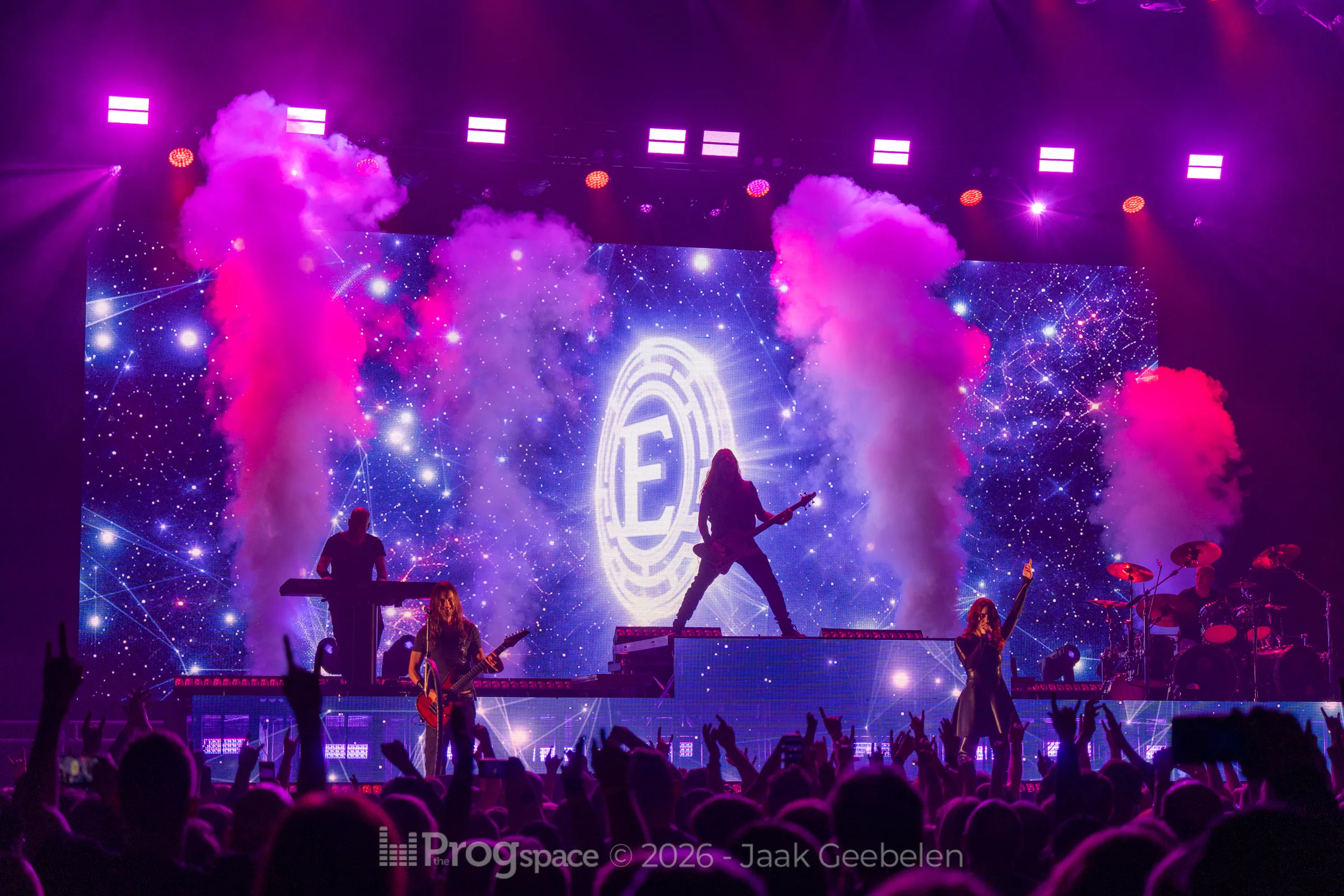
Epica – Arcane Dimensions Tour @ COS Torwar, Warsaw
Epica’s performance at COS Torwar in Warsaw marked the closing chapter of an evening that was opened by Charlotte Wessels and Amaranthe — two sets that are covered separately elsewhere on this website.
Some bands you see once. Others grow with you, almost unnoticed — until you suddenly find yourself standing in a venue that makes that evolution unmistakably clear. Epica is one of those bands.
More than 13 years ago, I photographed Delain with Charlotte Wessels as frontwoman, and witnessed how Epica gradually evolved from an ambitious symphonic metal band into a firmly established name on the European stage. Around that same time, I also photographed Amaranthe in 2012 at MFVF in Wieze (Belgium). It was a period in which these bands were each beginning to carve out their own identity within the genre.
Epica had already outgrown the smaller clubs back then and was increasingly performing in larger venues across the Low Countries. Yet the distance still felt closer, the energy more tangible. These were shows that, as a concert photographer, offered something real to work with: dramatic lighting, strong stage presence, expressive front figures.
During the Arcane Dimensions tour, alongside Amaranthe, they now perform in front of more than a thousand people. At COS Torwar in Warsaw — a venue designed for sports events and large-scale productions — the space is vast, though not fully occupied. Attendance remains noticeably below full capacity, but this does little to diminish the experience: the scale, the production, and the intensity are unmistakably on a completely different level than before.
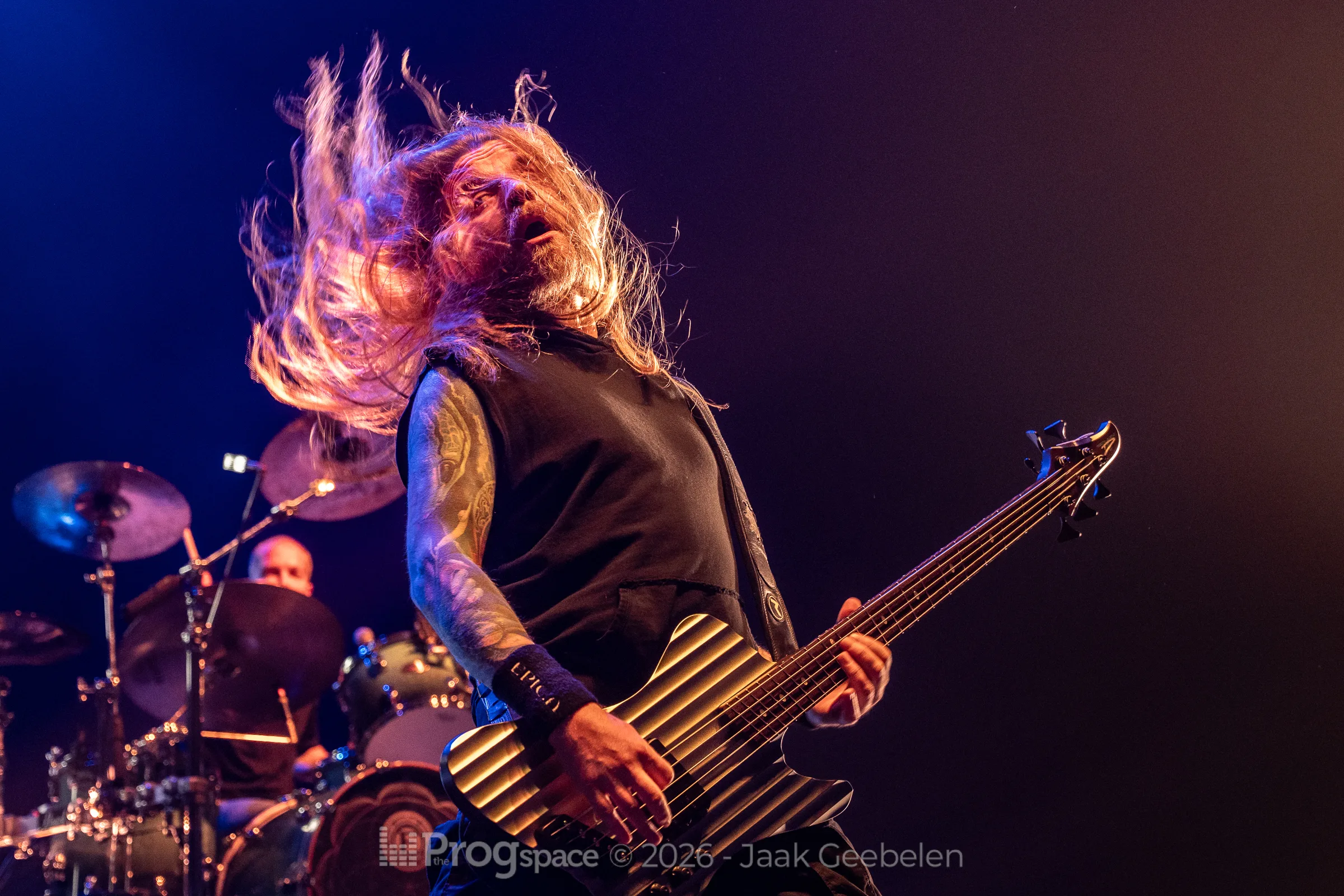
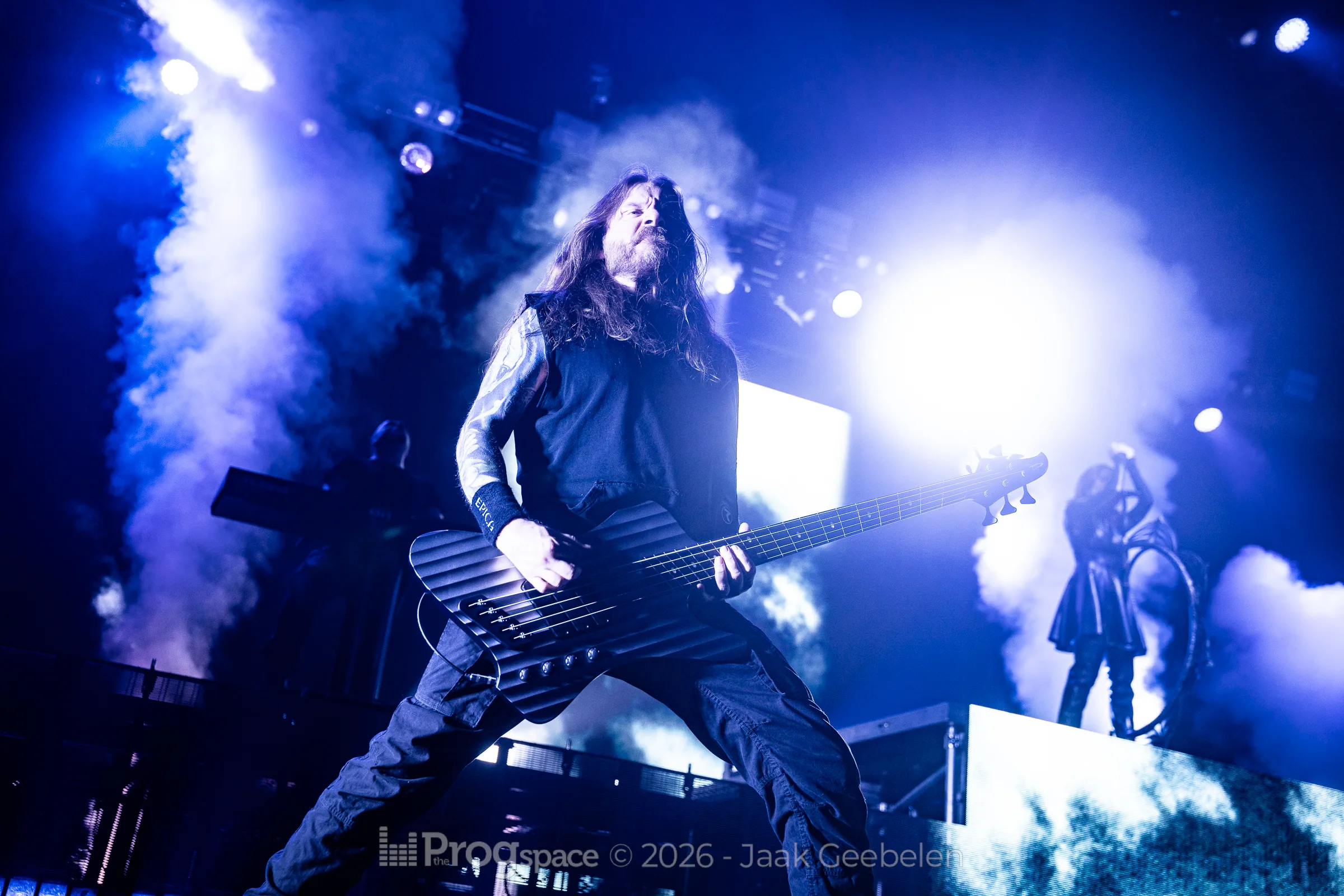
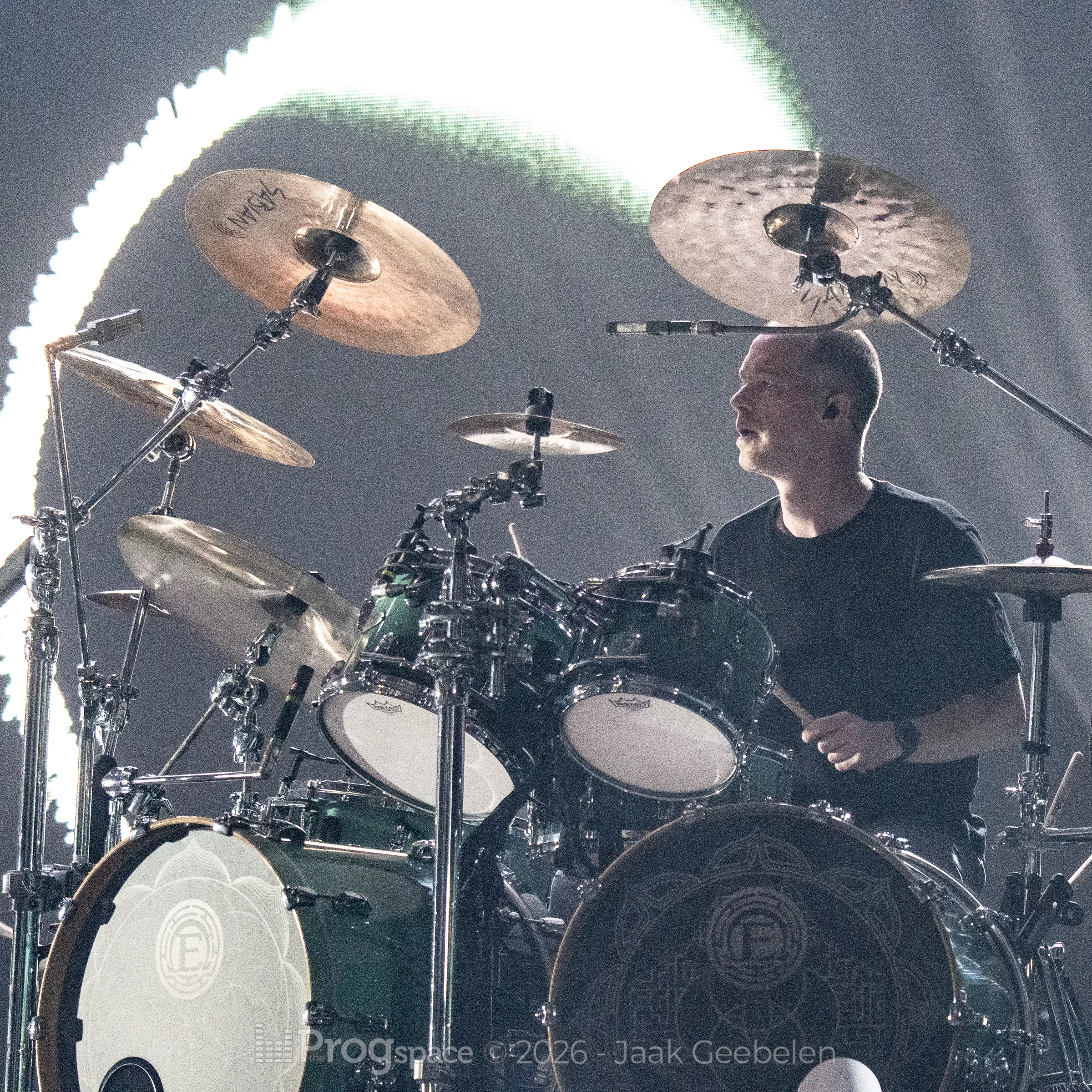
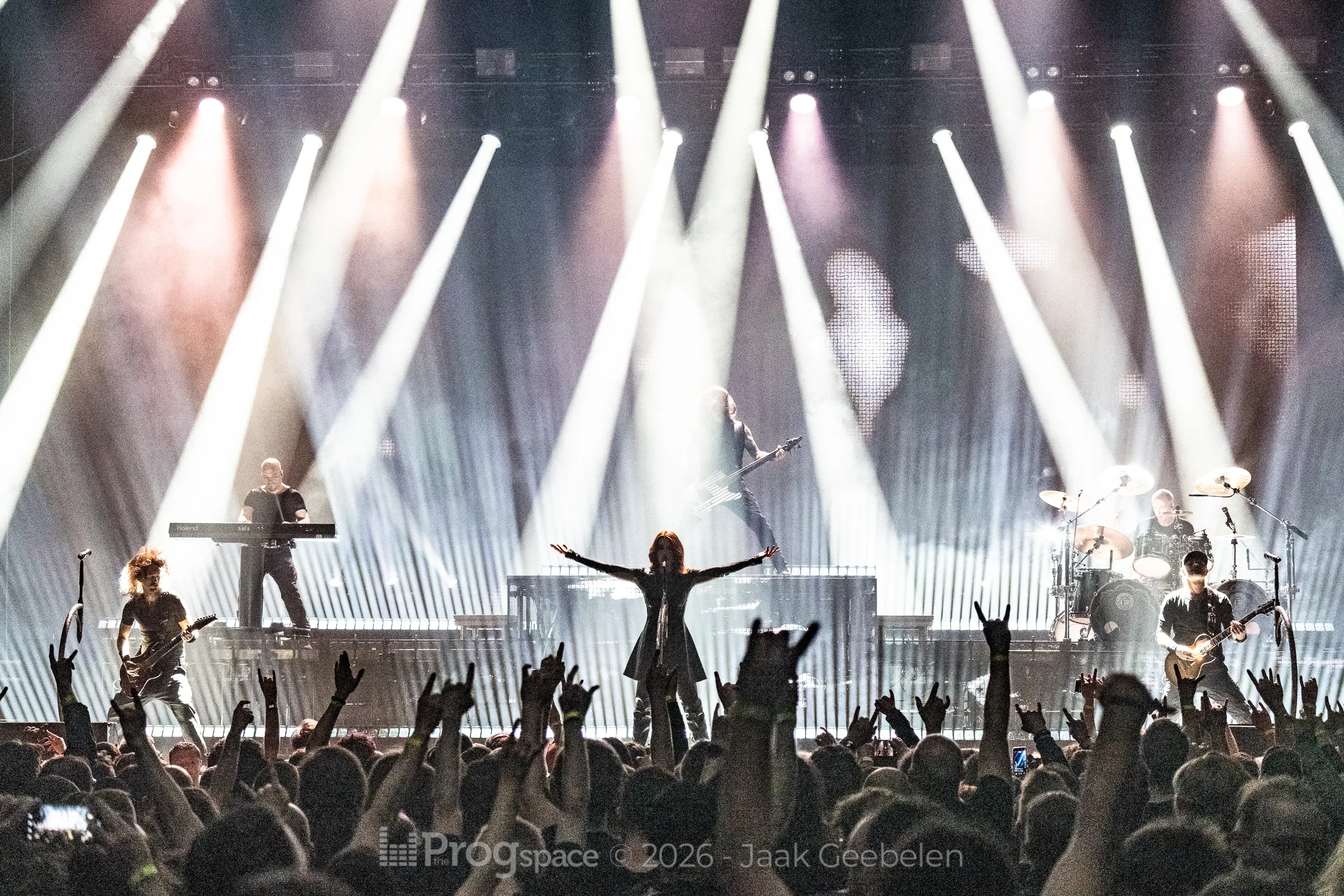
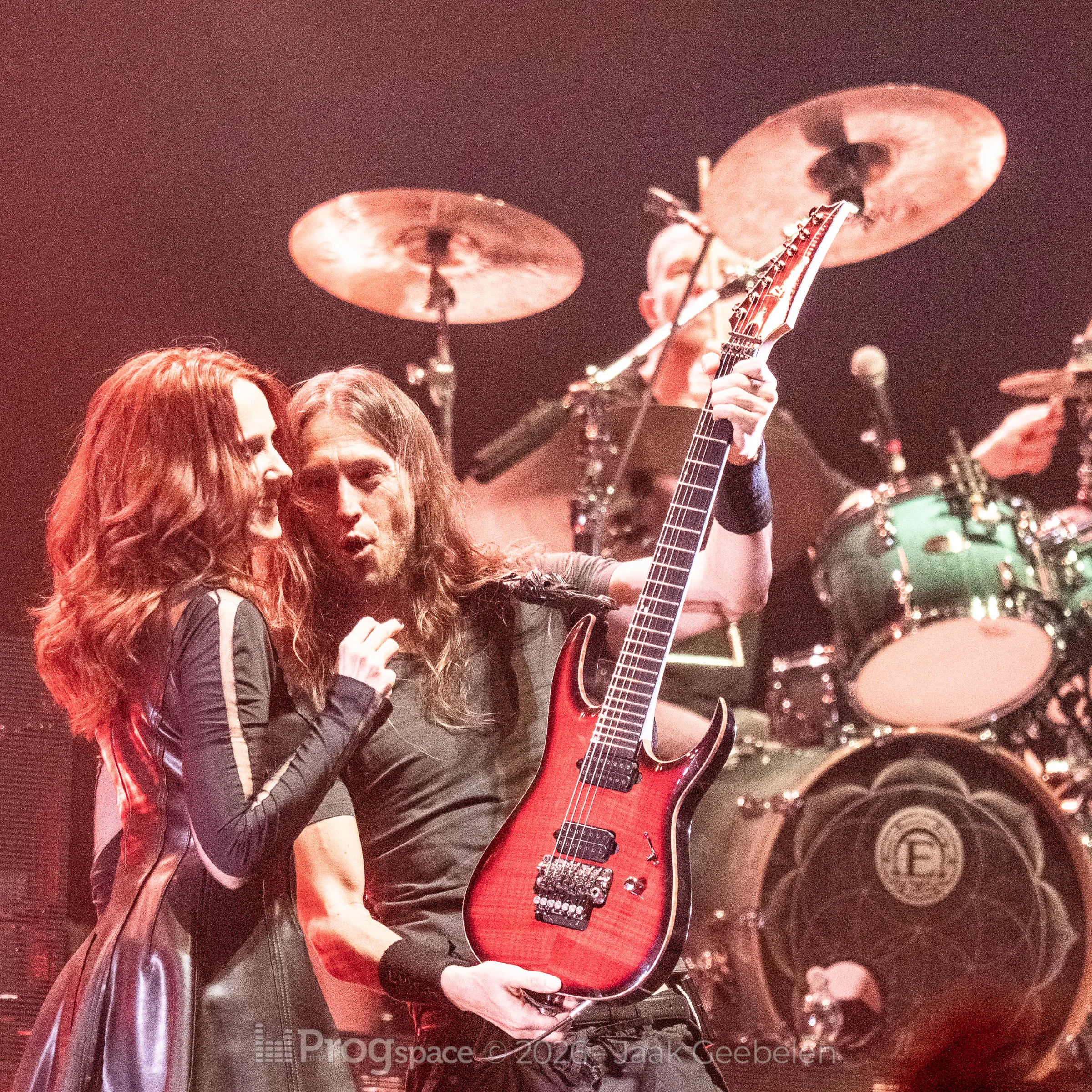
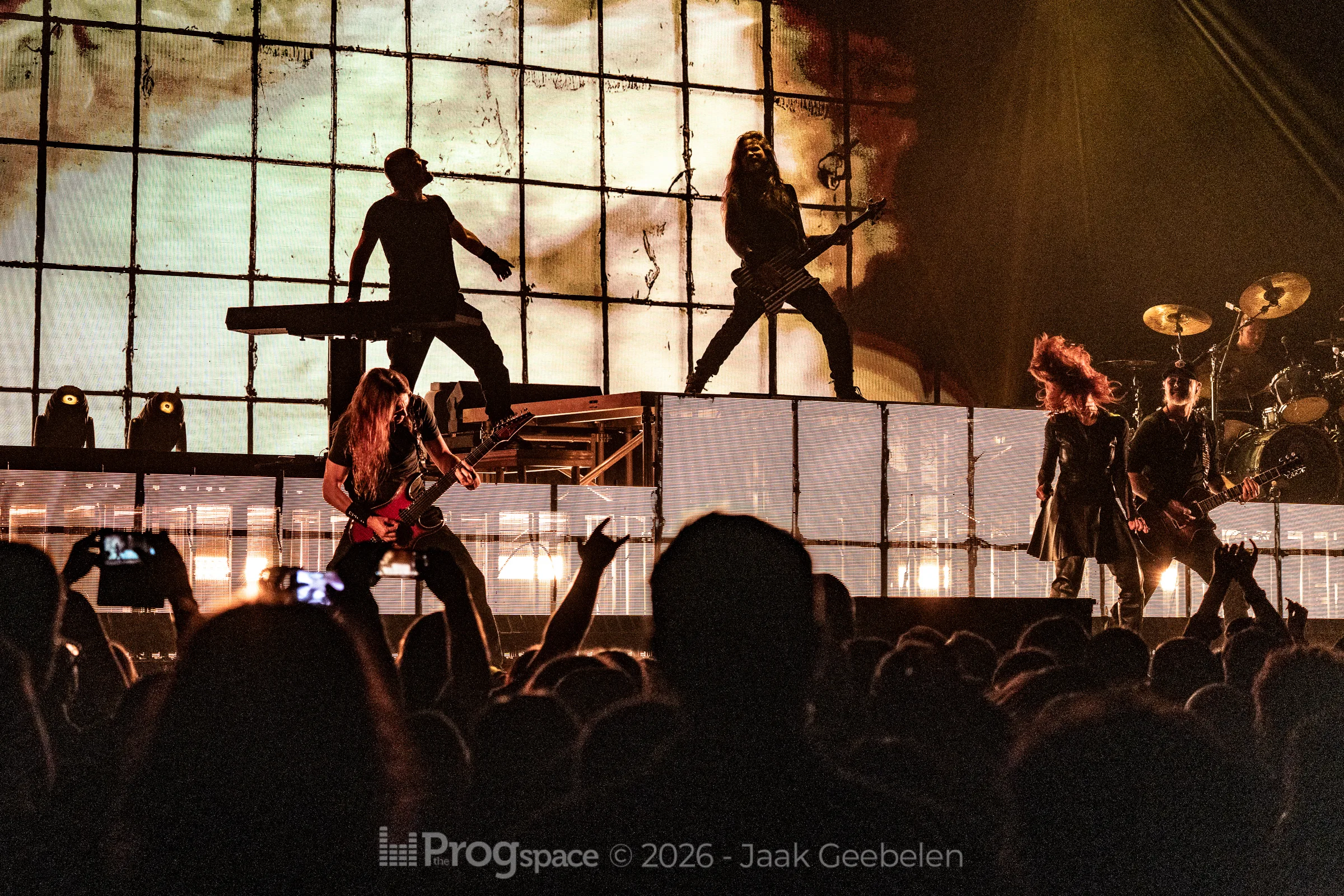
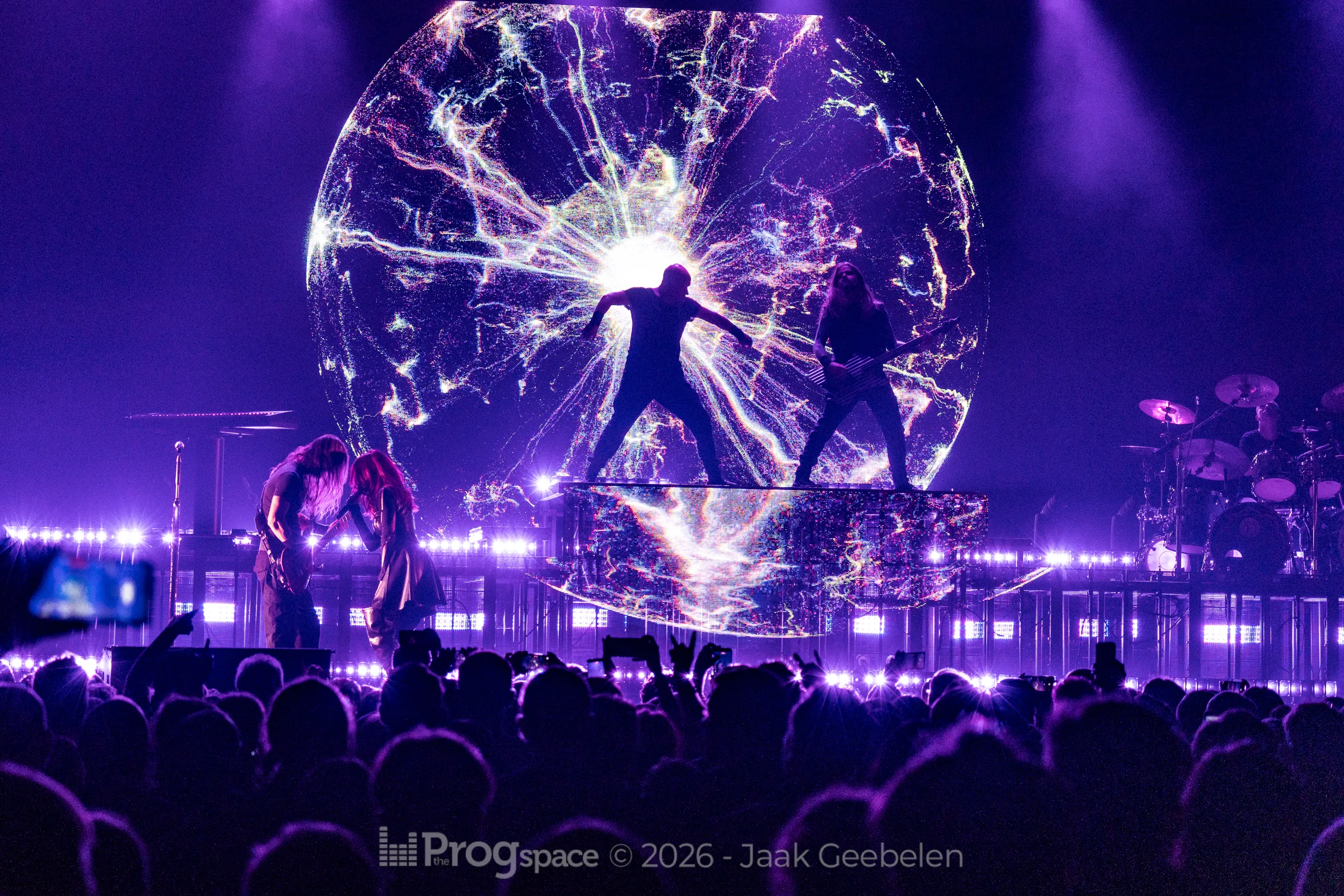
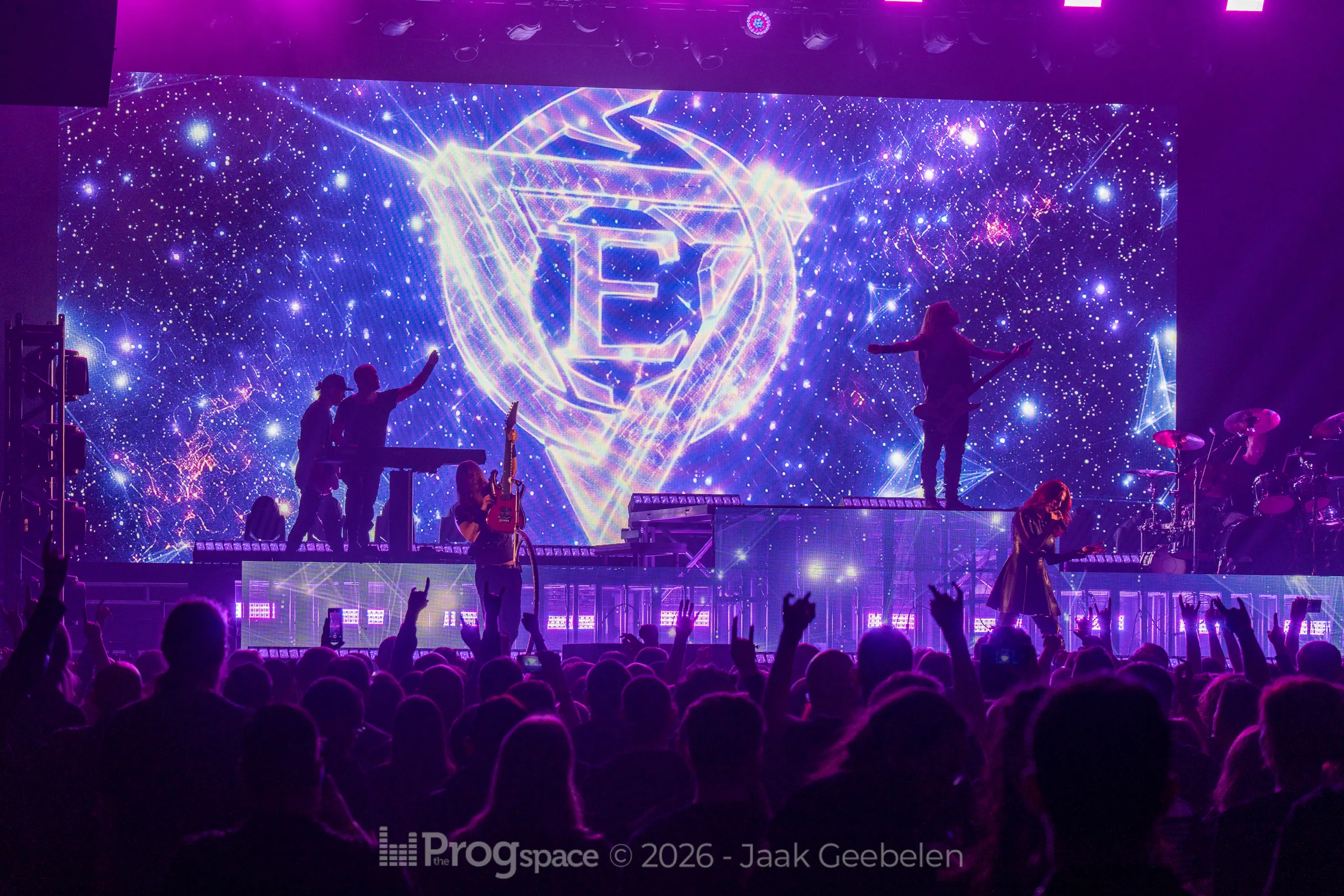
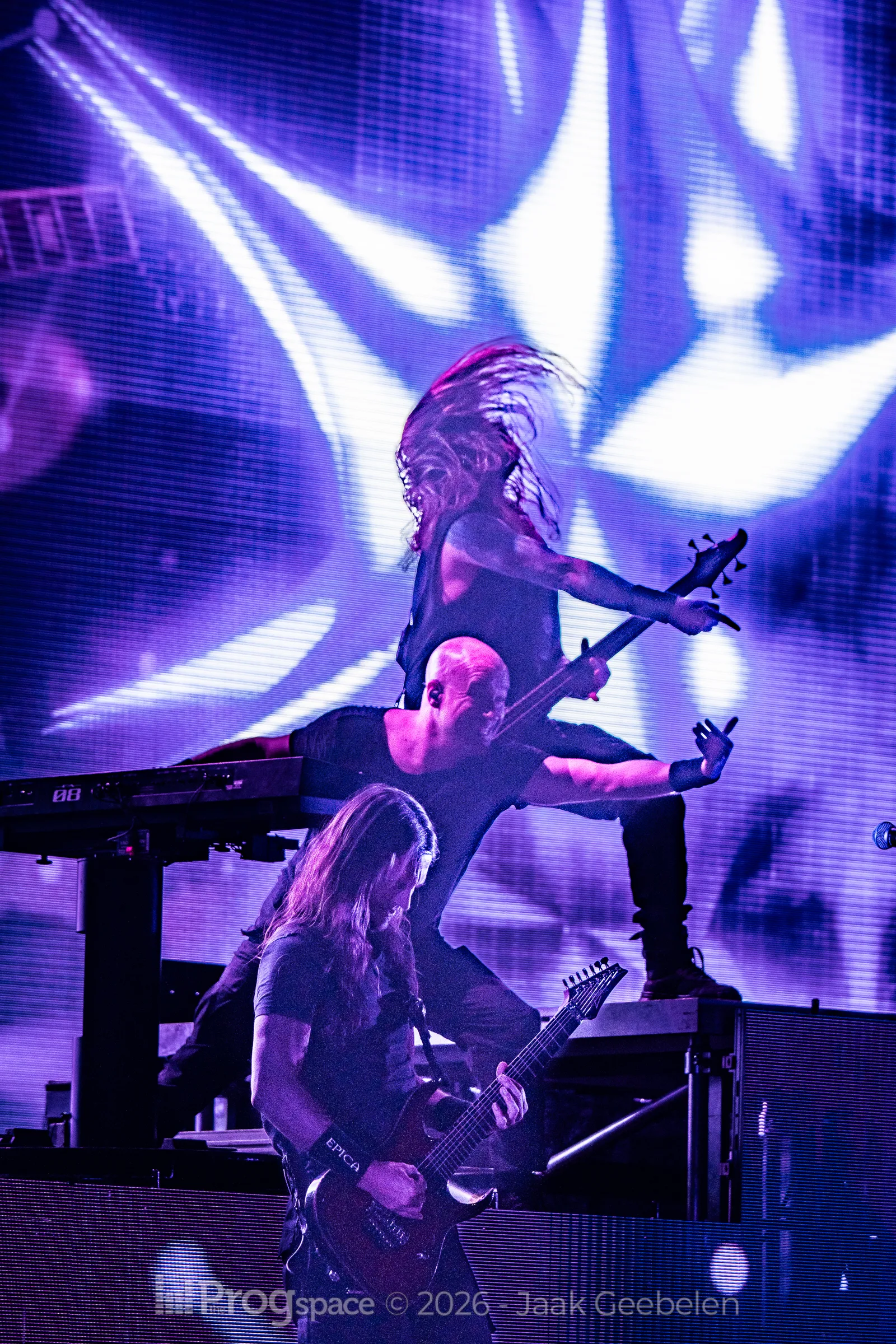
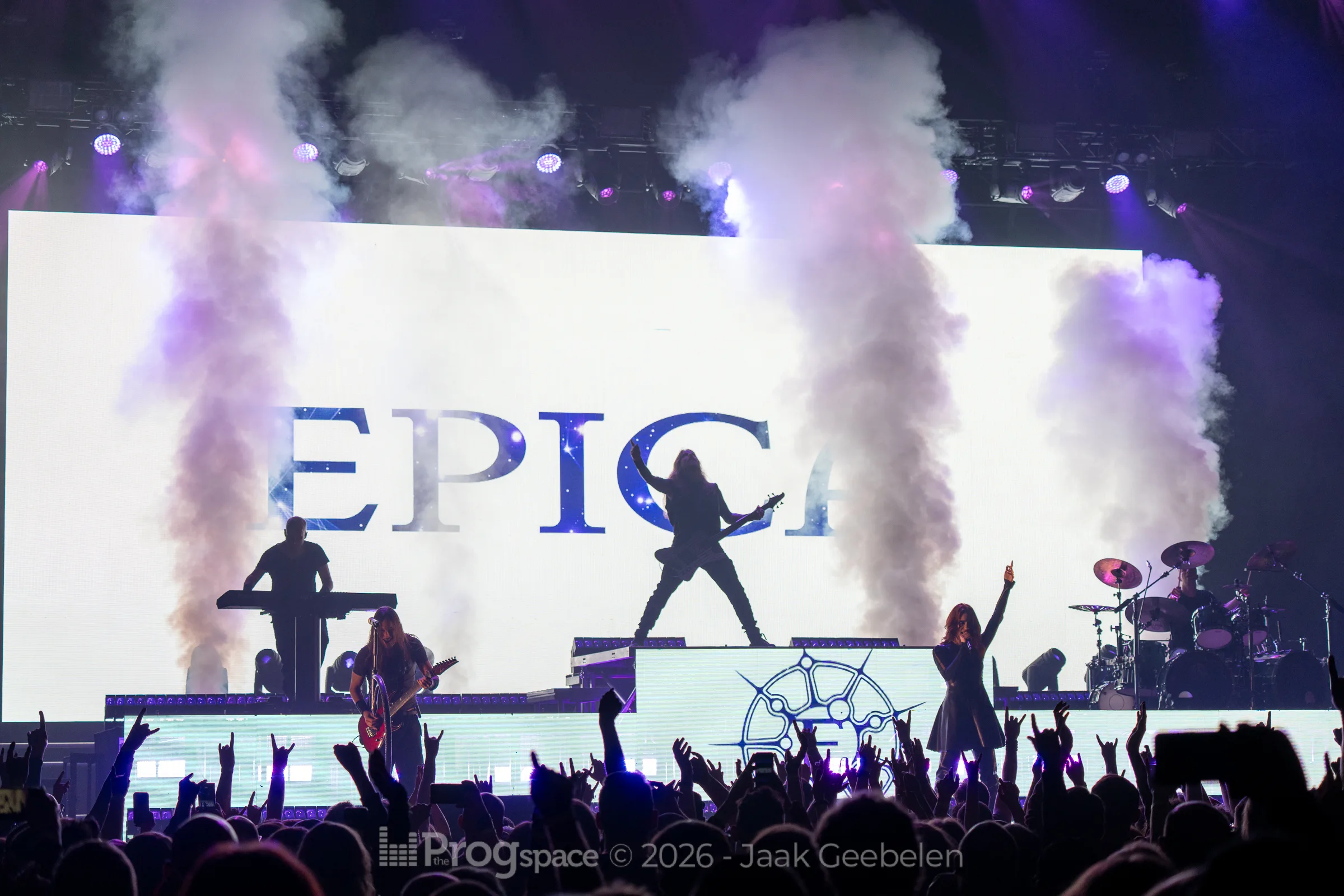
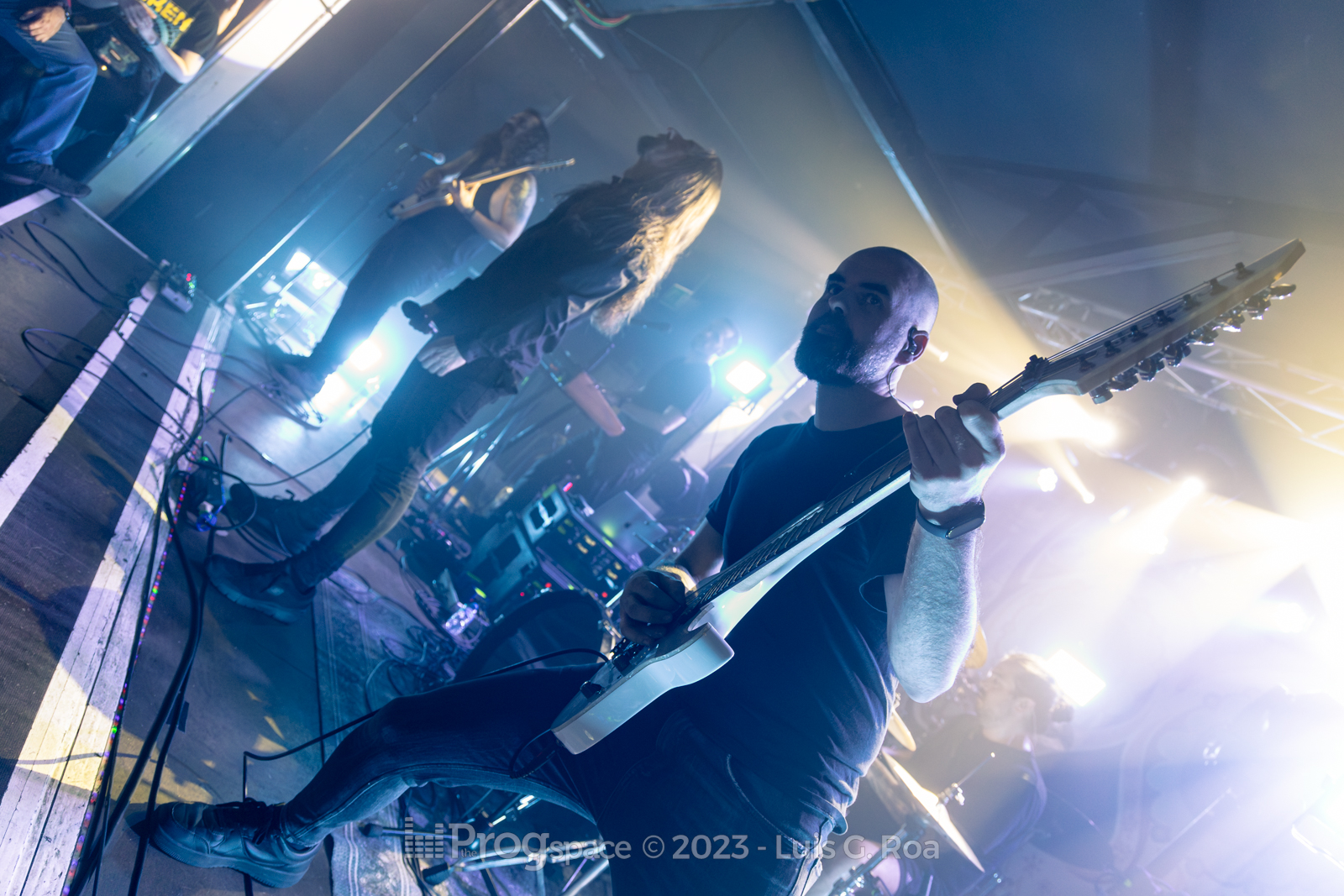
The theatrical tone was already set before the first notes were played, through a video message in which a masked figure (Kevin) urged the audience to put their phones away and truly experience the moment. From the instant the lights go down, it becomes clear that Epica is aiming for a total experience. The stage is built across multiple levels, with a central elevated platform used interchangeably by Simone Simons and the musicians. To the right, Ariën van Weesenbeek’s drum kit is positioned slightly higher, while the keyboards occupy the left side. This layered setup not only creates visual depth, but also allows for continuous movement without ever losing clarity.
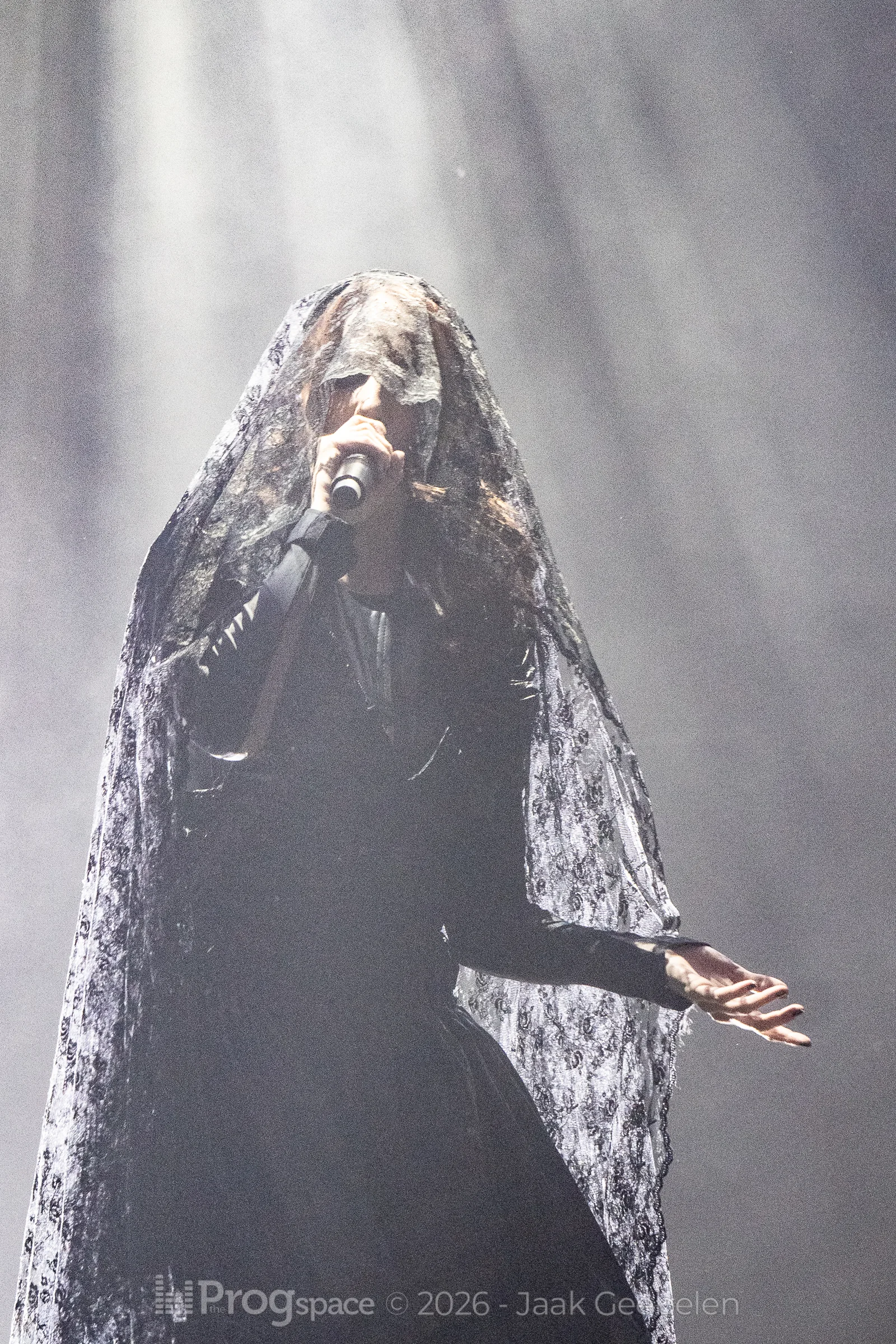
When the set truly kicks off with “Apparition,” it becomes immediately clear that Epica is not opting for a gradual build-up, but for direct impact. Pounding drums and heavily driven guitars surge through the venue, while sharp overhead lighting reveals Simone Simons as an almost ritualistic figure beneath her veil. The image is both forceful and ceremonial — not an introspective opening, but a decisive statement that sets the tone for everything that follows.
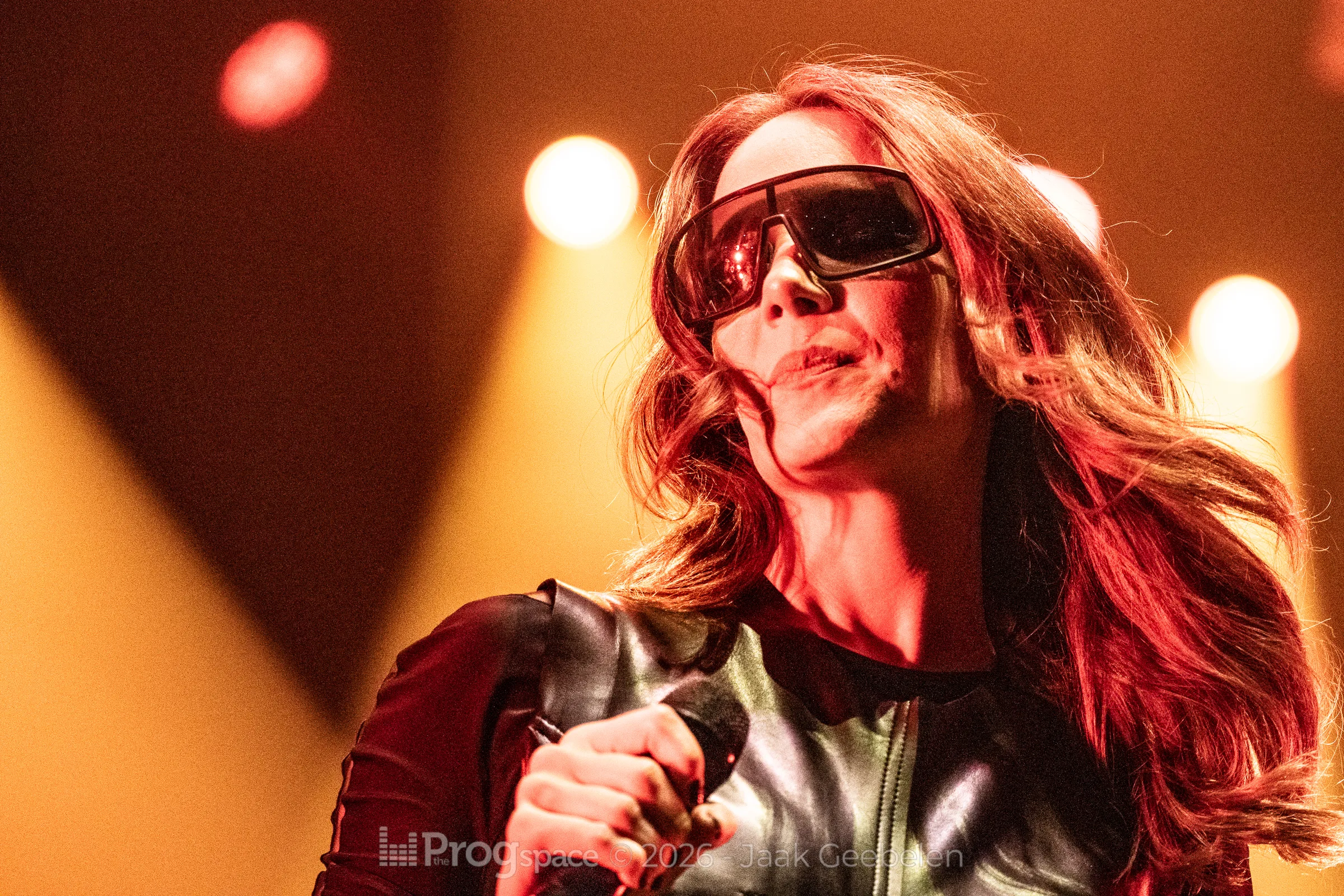
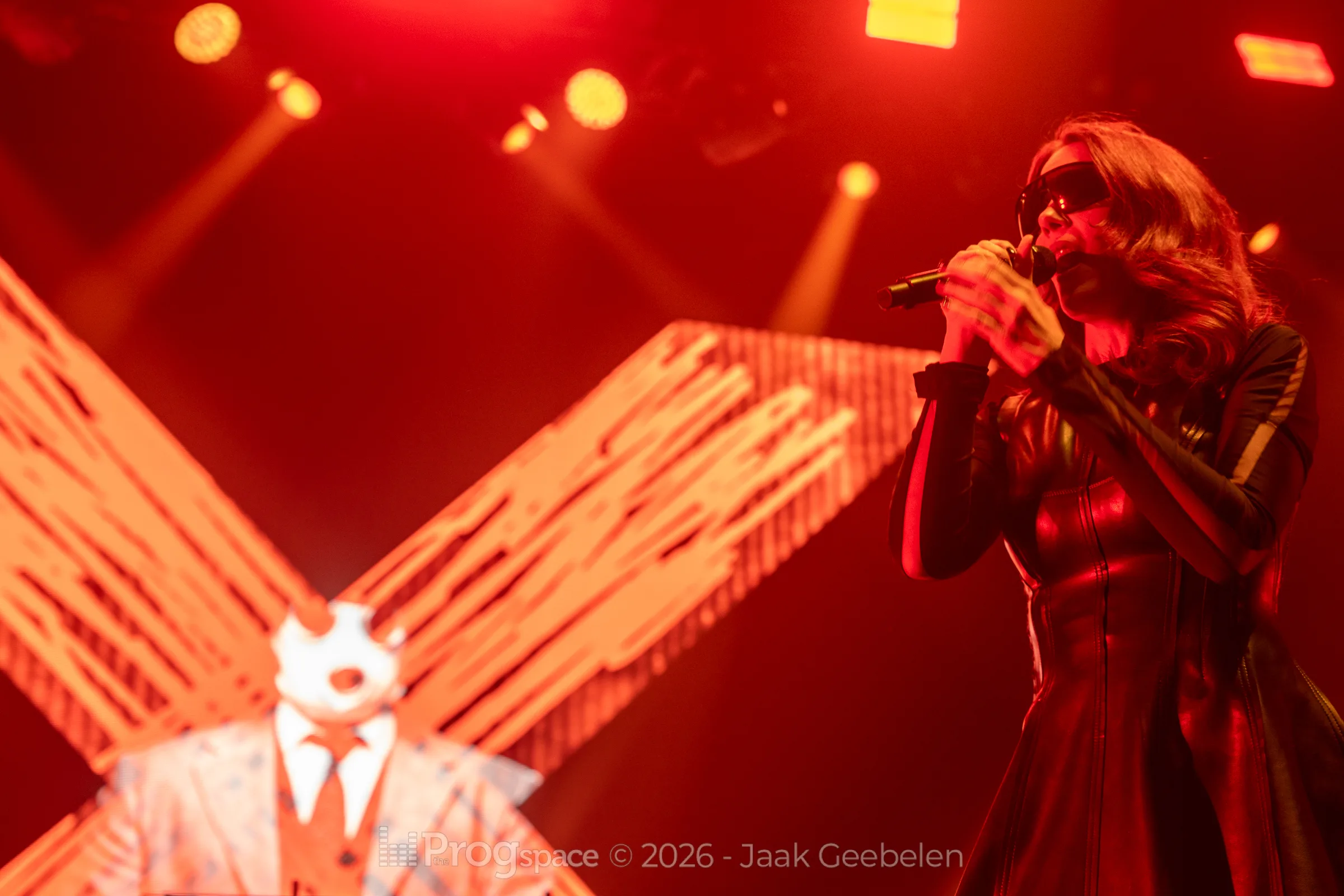
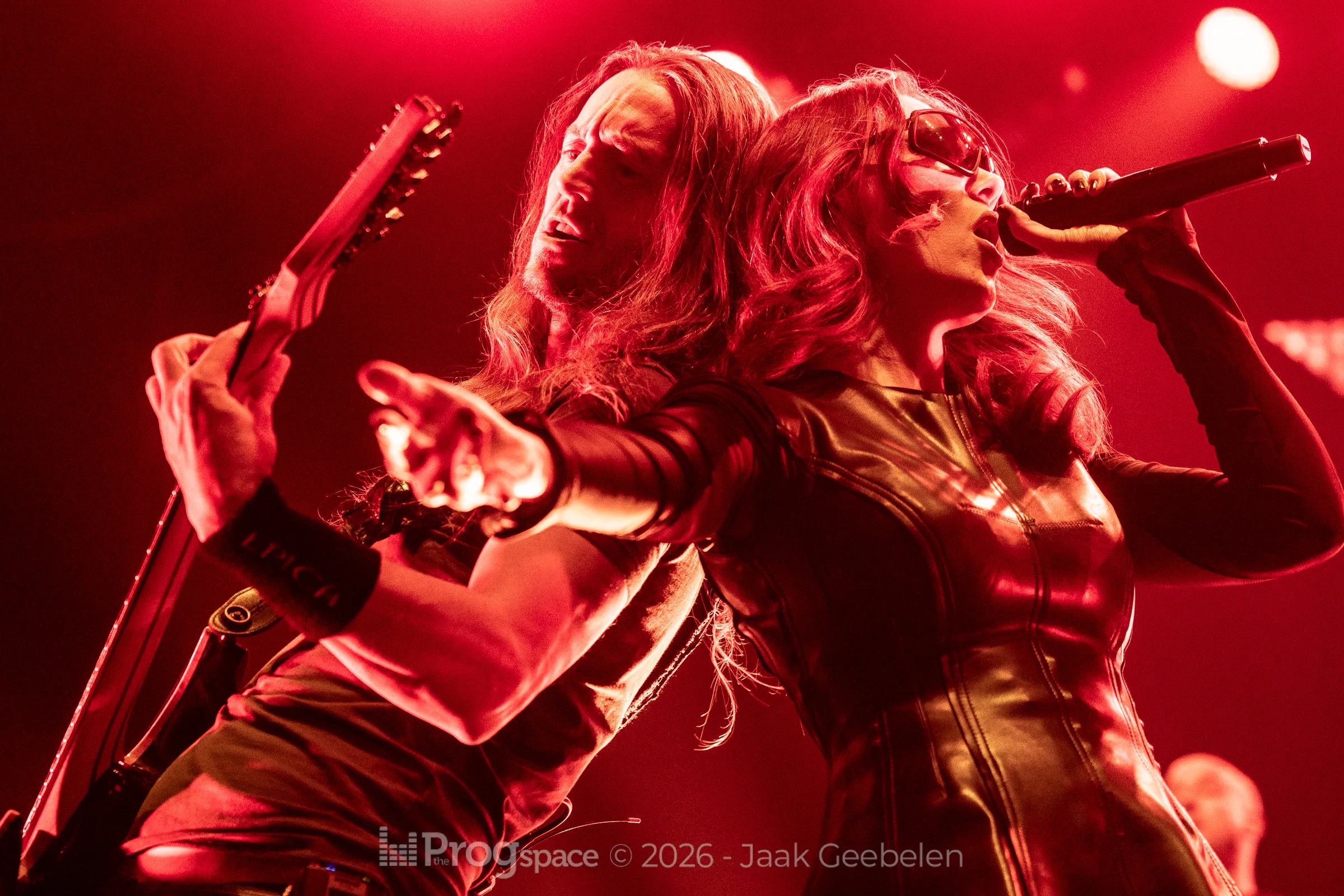
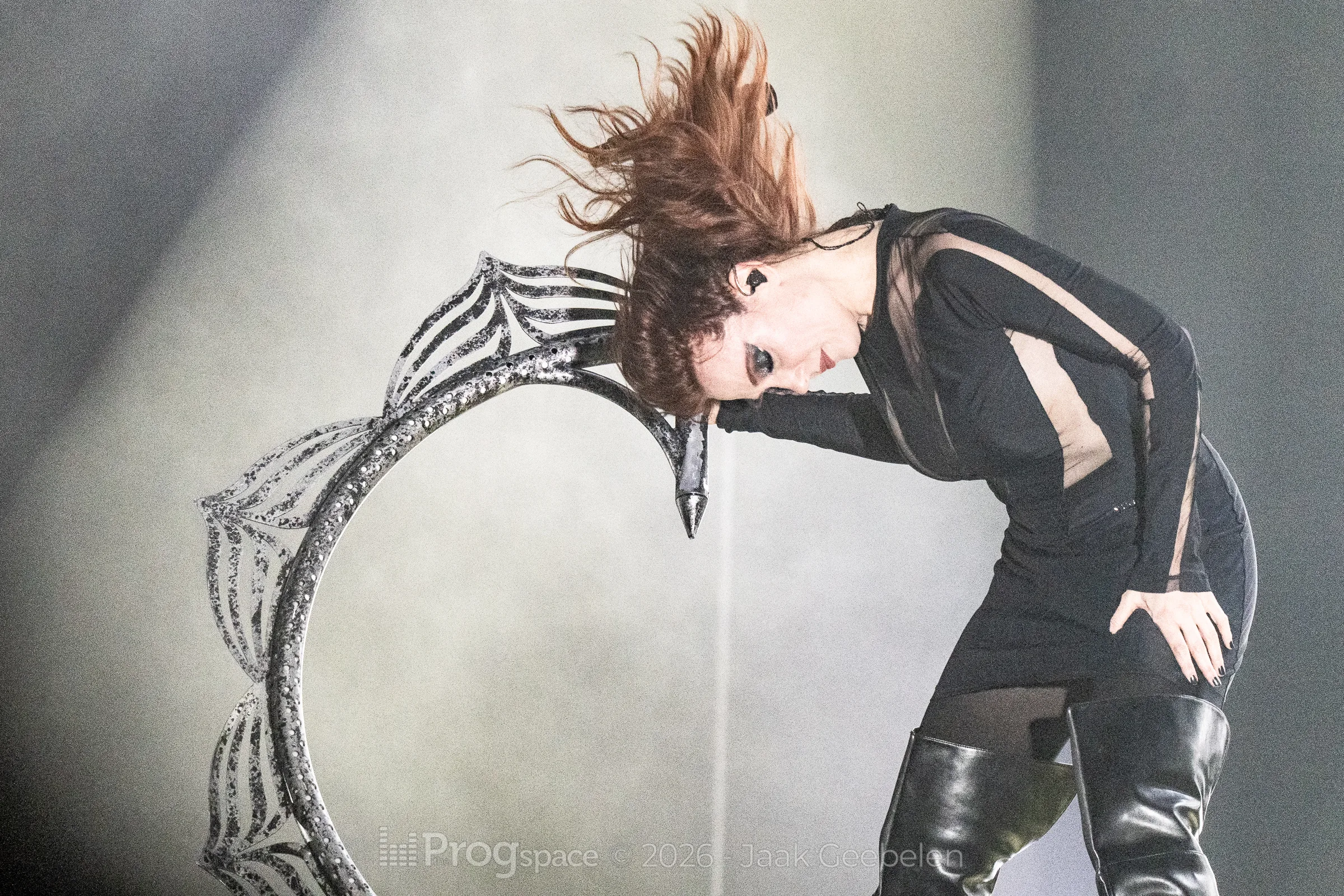
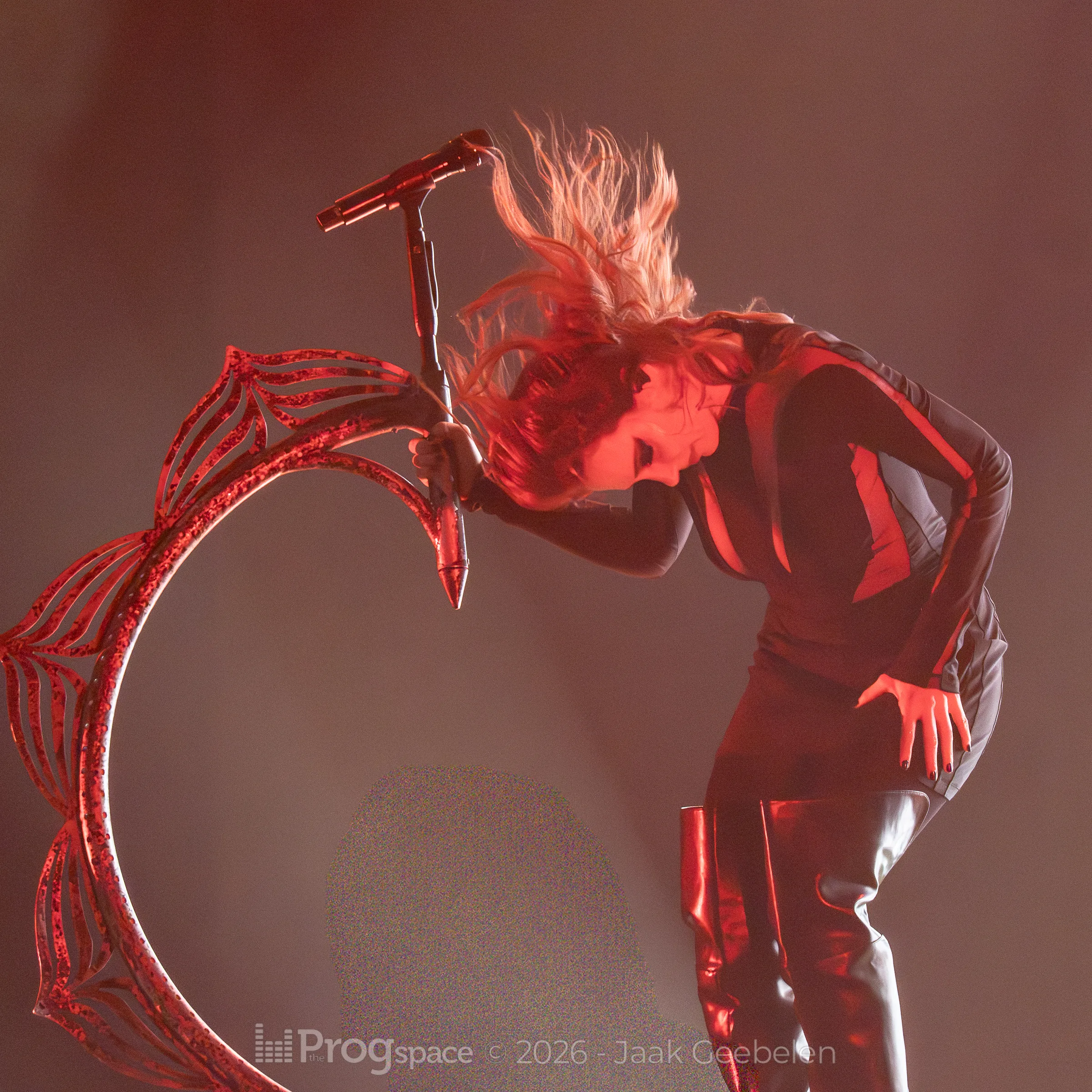
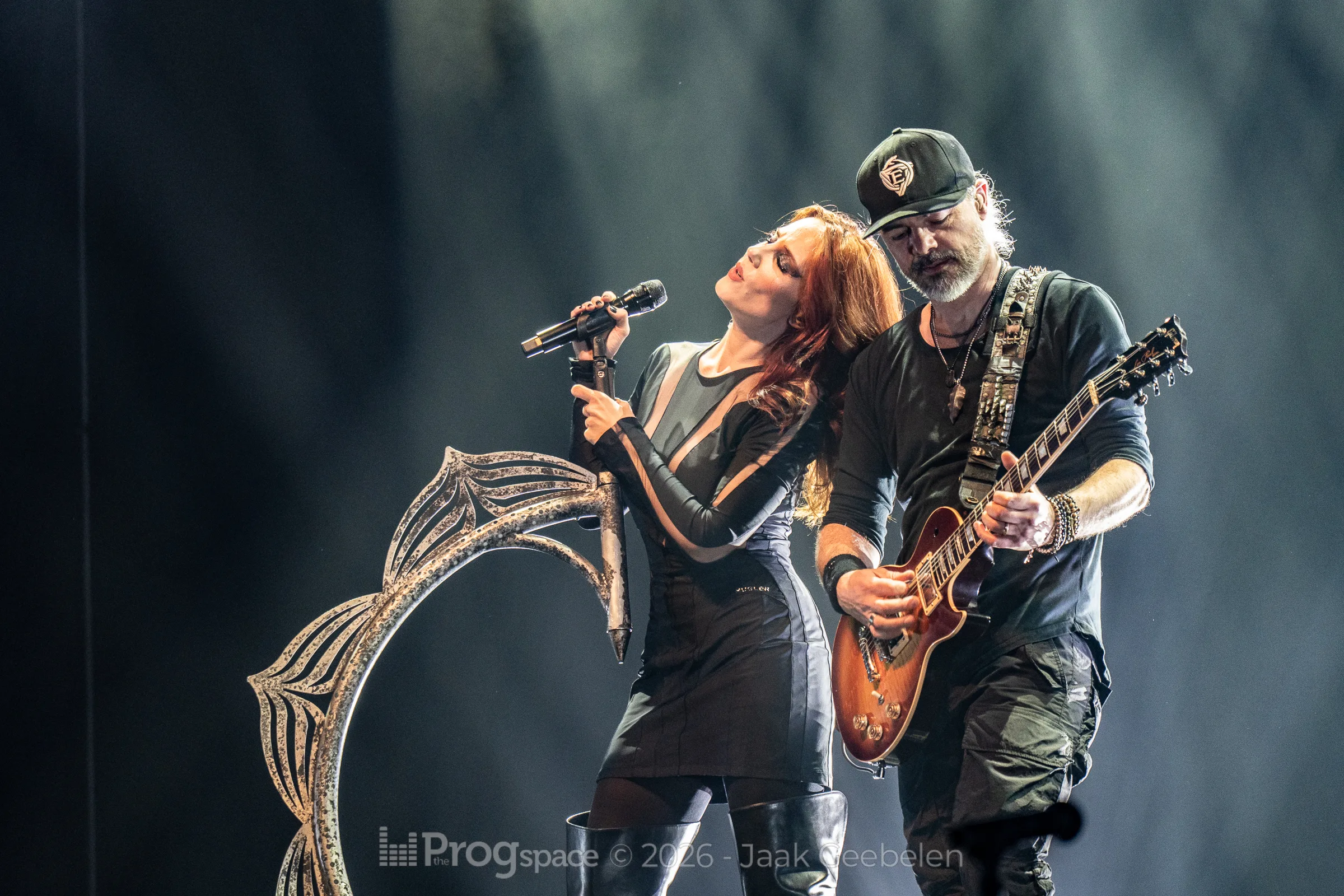
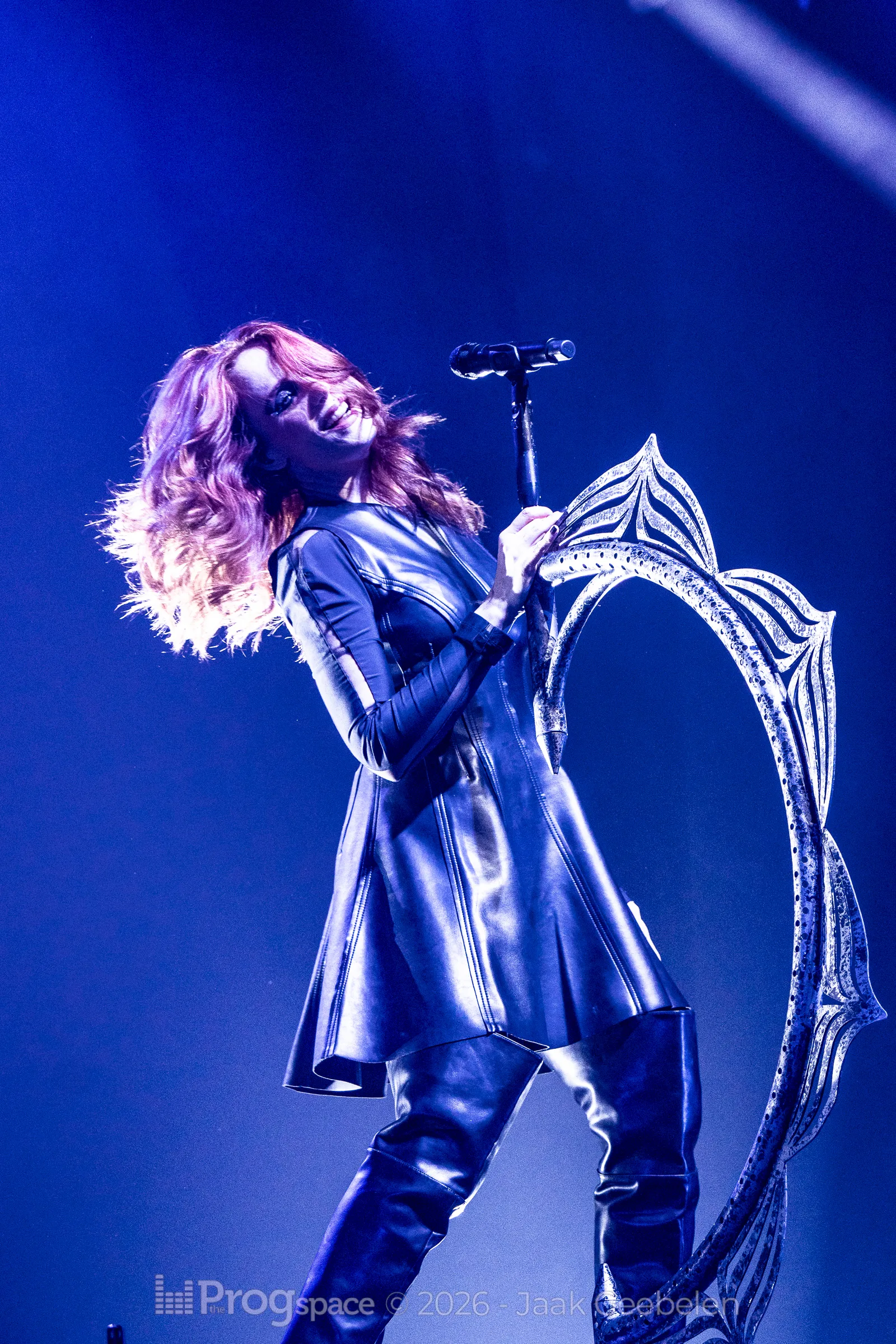
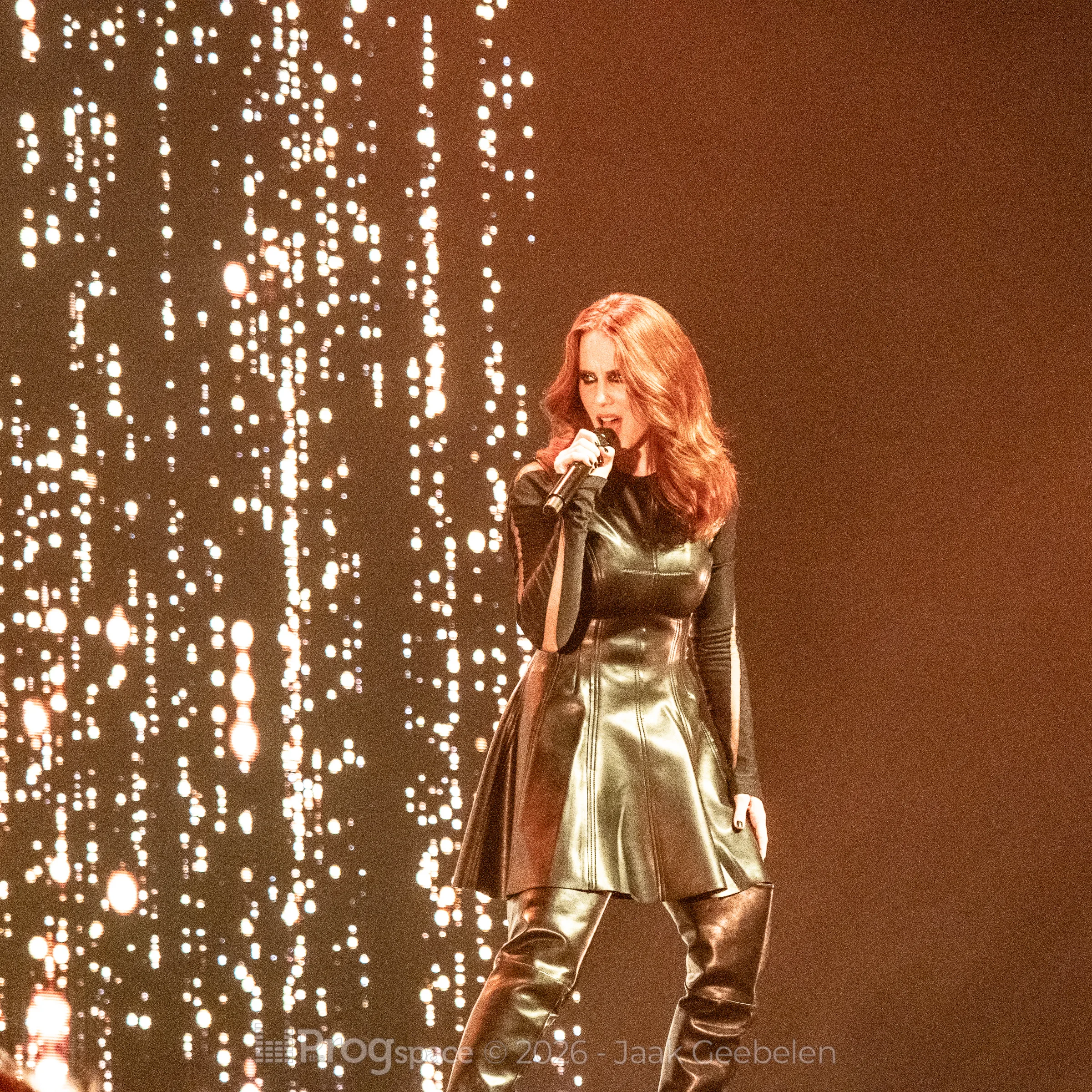
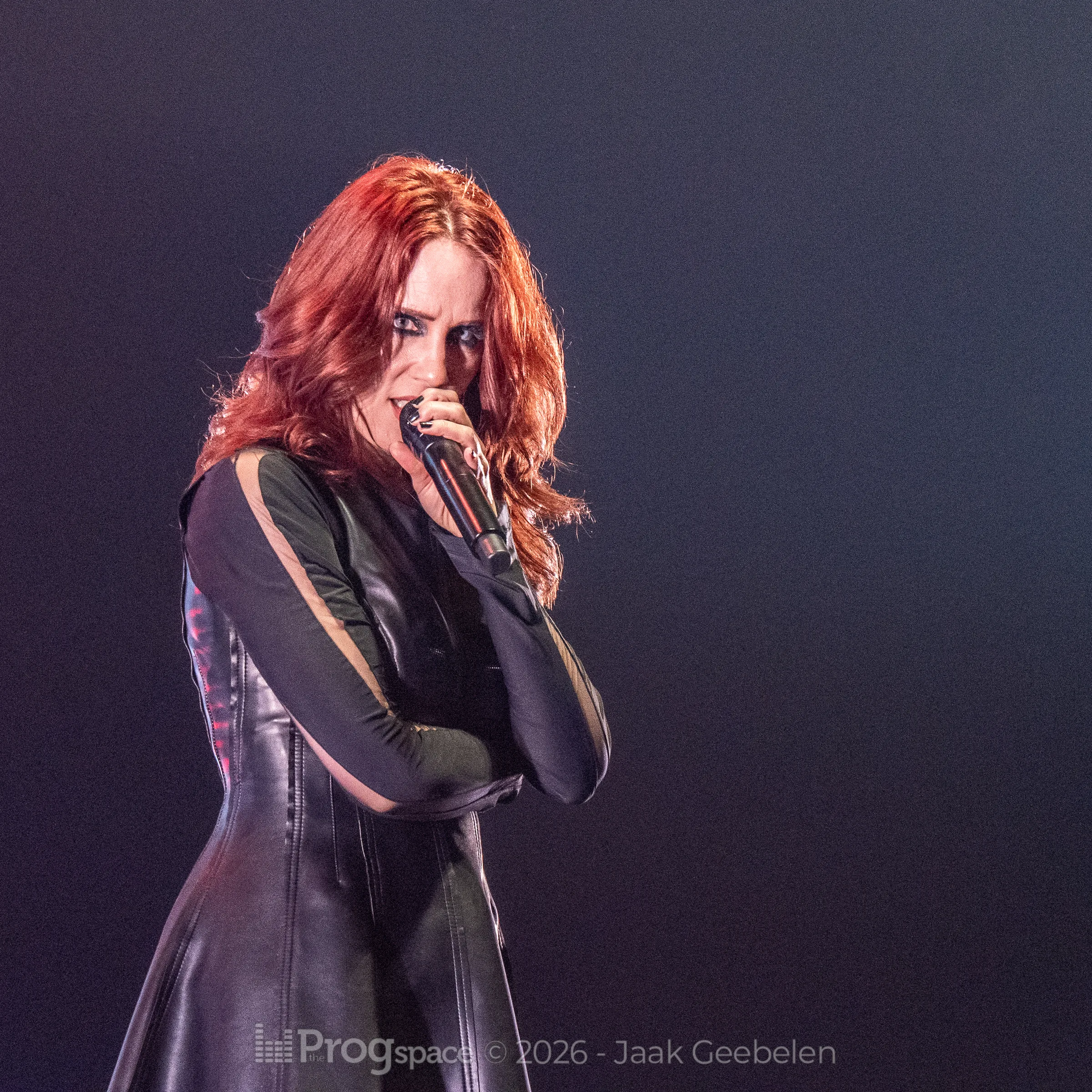
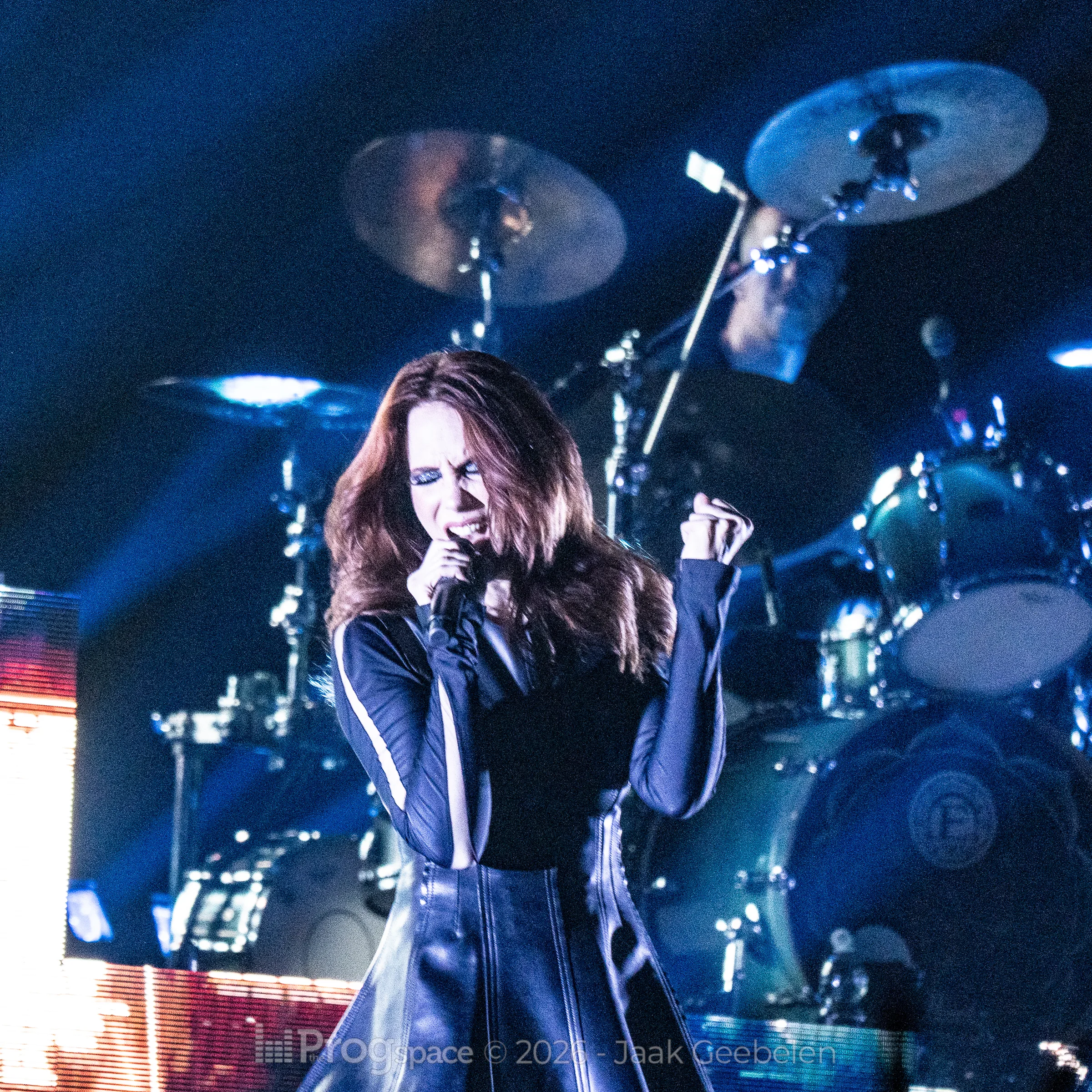
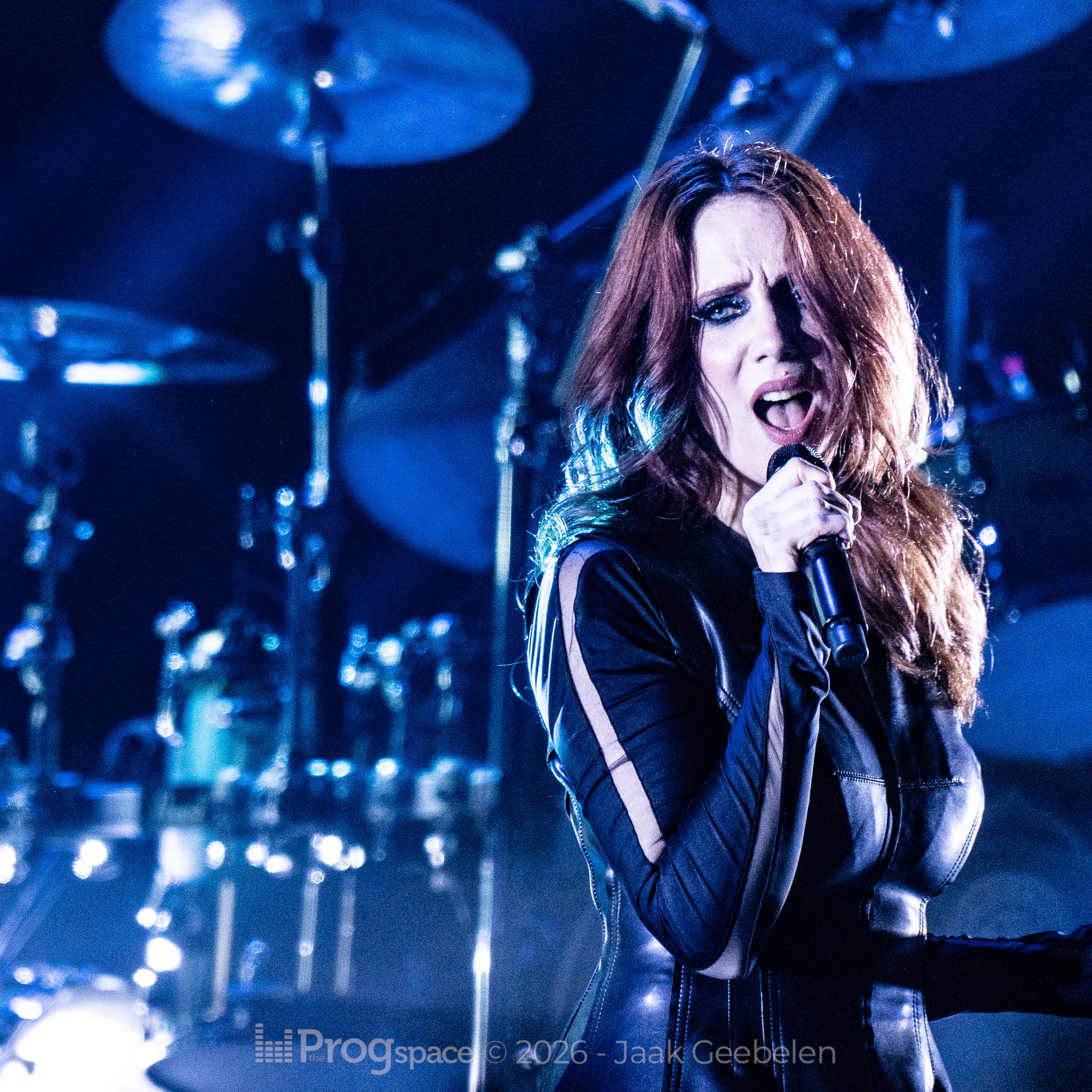
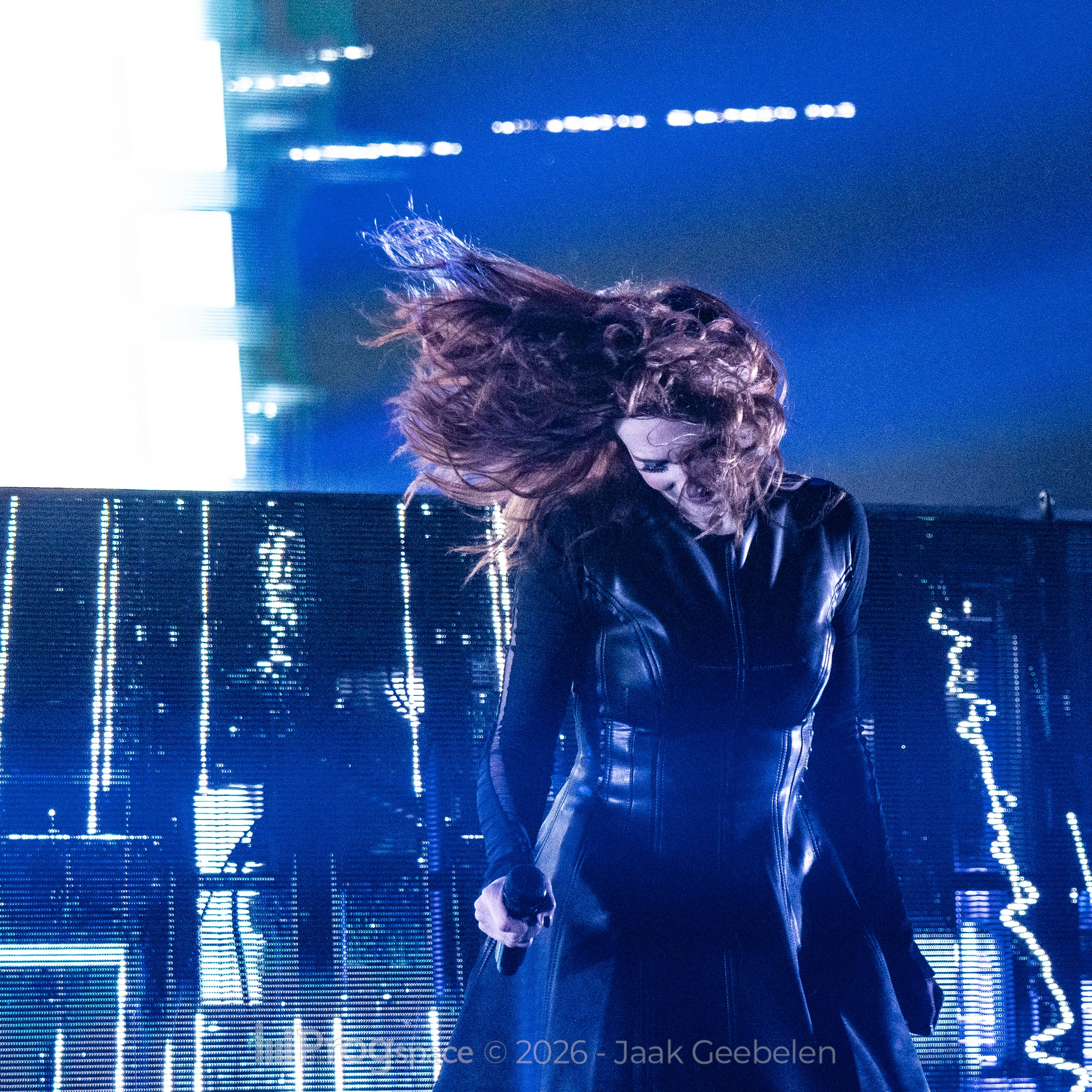
As “Cross the Divide” begins, the atmosphere shifts into something more open and dynamic. Simone now appears without the veil, wearing large sunglasses that give her a slightly distant, self-assured presence. It is also the moment when her outfit becomes fully visible: a fitted black leather dress with long sleeves and a pronounced silhouette, paired with high boots. The material and cut give her a powerful and controlled appearance — less ethereal, more grounded in a rock aesthetic — contrasting effectively with the symphonic layers of the music.
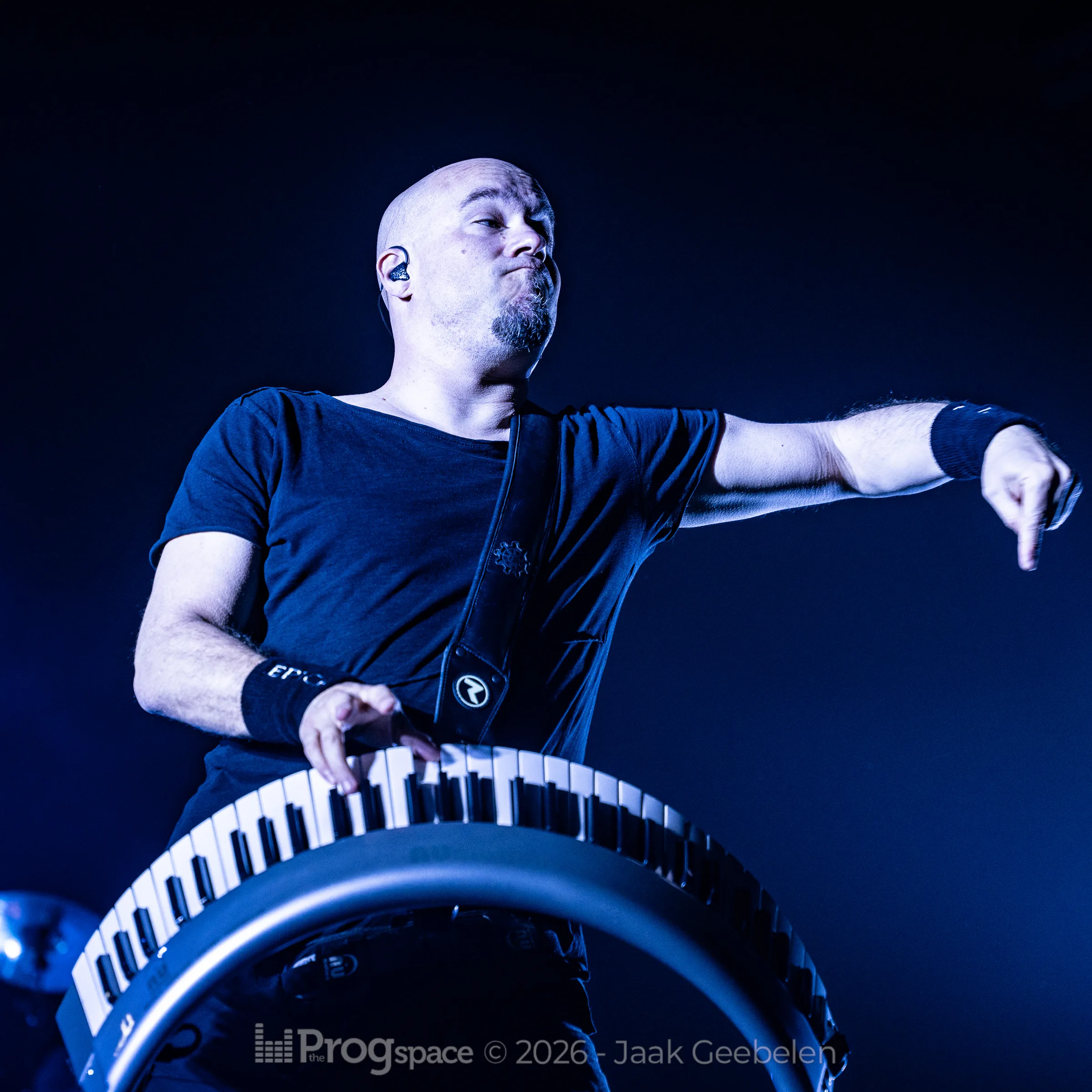
With “Martyr of the Free Word,” an extra layer of movement is introduced as keyboardist Coen Janssen leaves his fixed position and steps forward with his portable keyboard. This adds interaction and energy to the front line, as he visibly engages with the audience and opens up the stage dynamic.
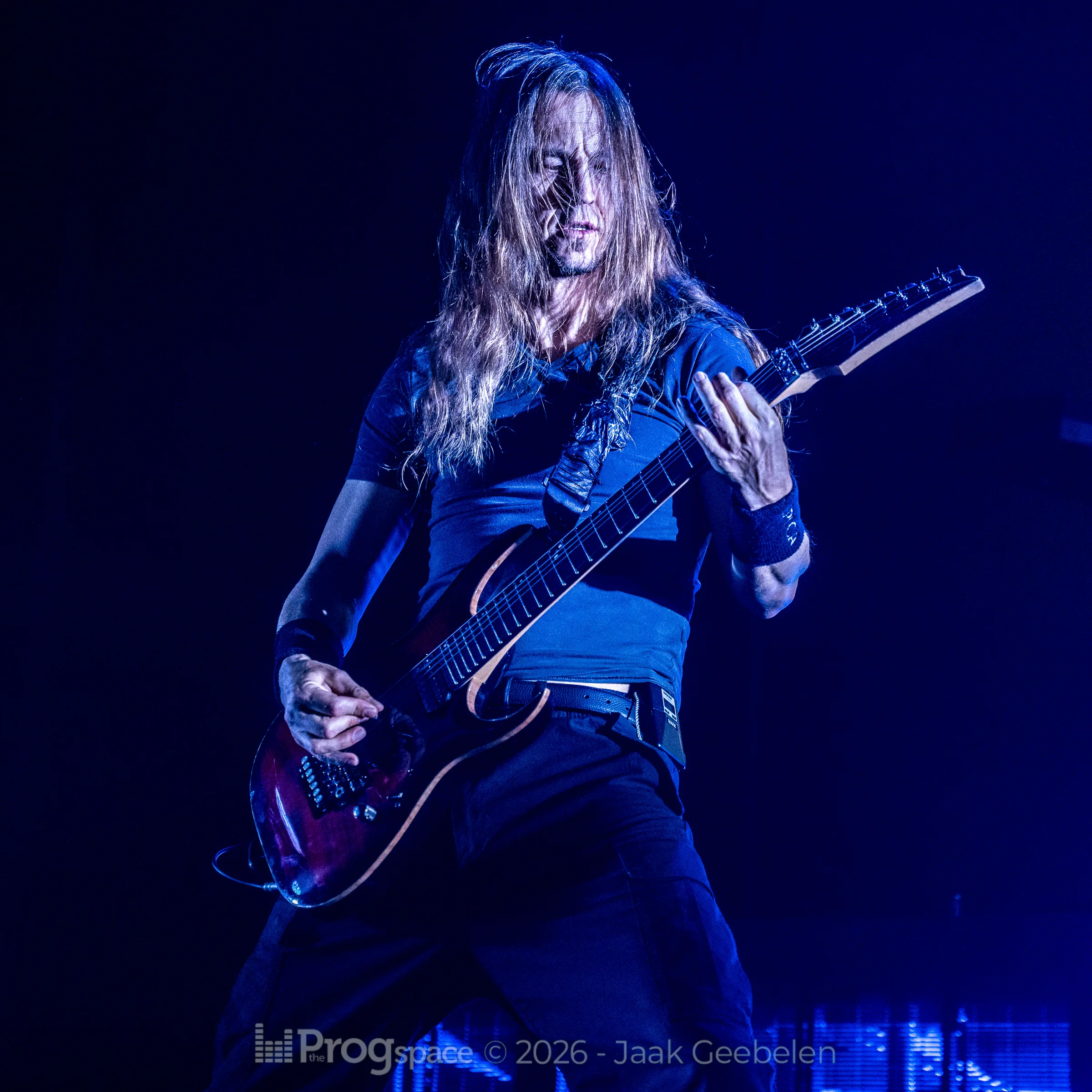
The first true visual peak of the evening follows with “Eye of the Storm.” Thunder effects and flashes of lightning lead into a powerful explosion of deep blue tones, diagonal beams of light, and rapidly shifting LED visuals. Simone stands elevated above the band on the central platform, while below her the guitarists and Mark Jansen drive the heavier elements. The interplay between Simone’s clear vocals and Mark’s grunts finds a visual counterpart here: high versus low, light versus shadow, melody versus aggression.
After this intensity, “Unleashed” reveals the more majestic and melodic side of Epica. Golden light cascades across the LED screens, while vertical sparks at the front of the stage give the song a strong arena presence — even without large-scale pyrotechnics, the effect remains convincing.
“Never Enough” follows as a more direct and accessible moment, with wide beams of light extending into the audience and a chorus that is sung along en masse.
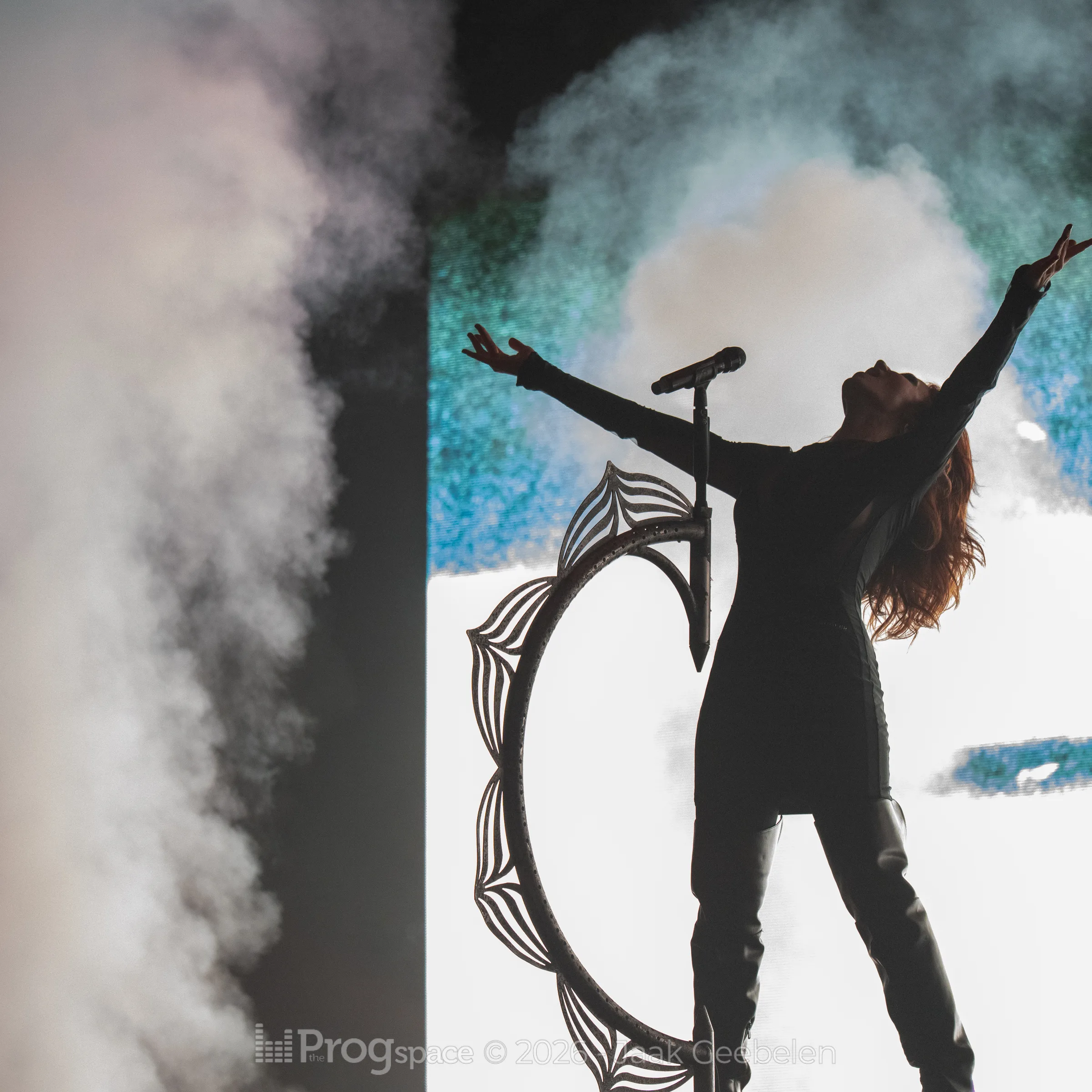
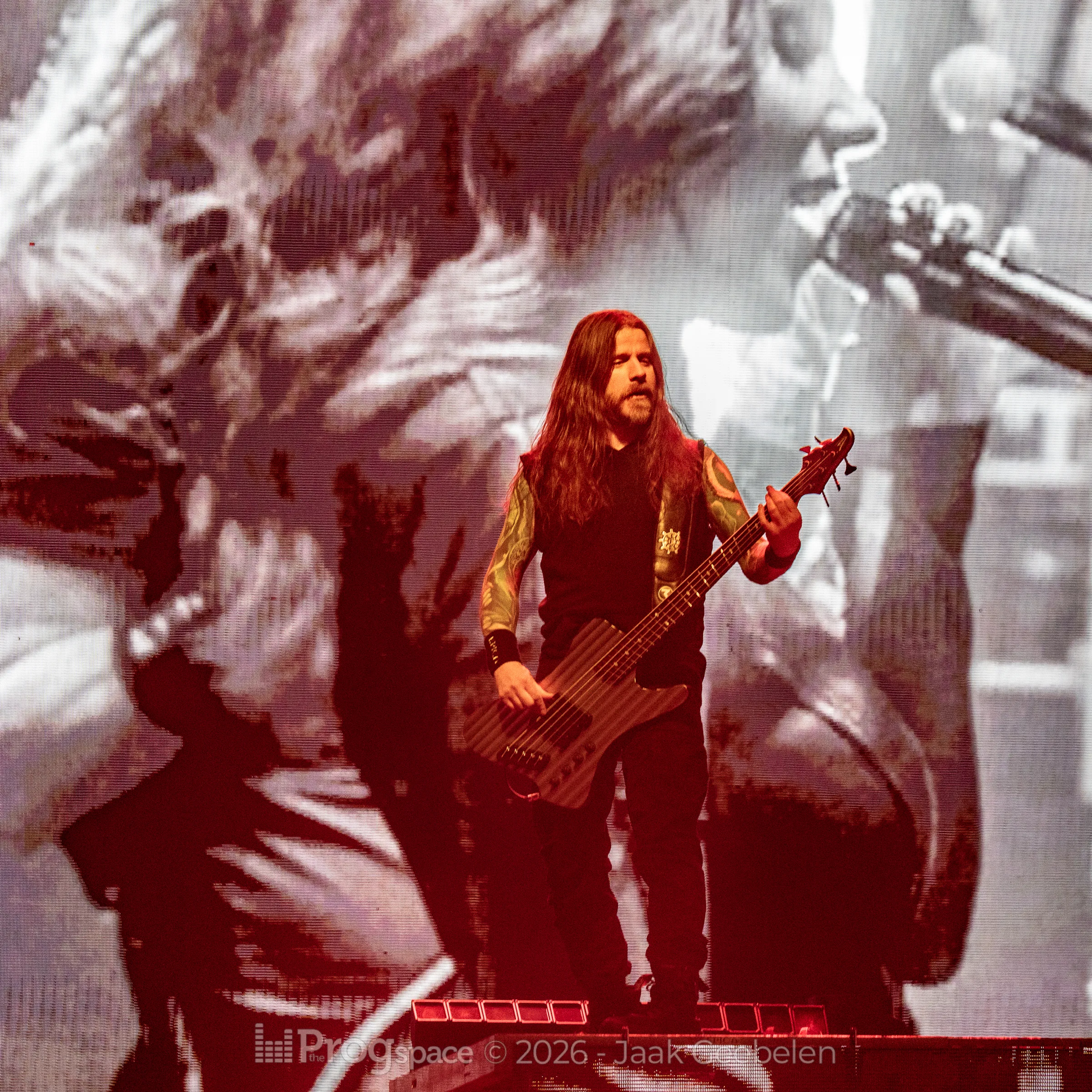
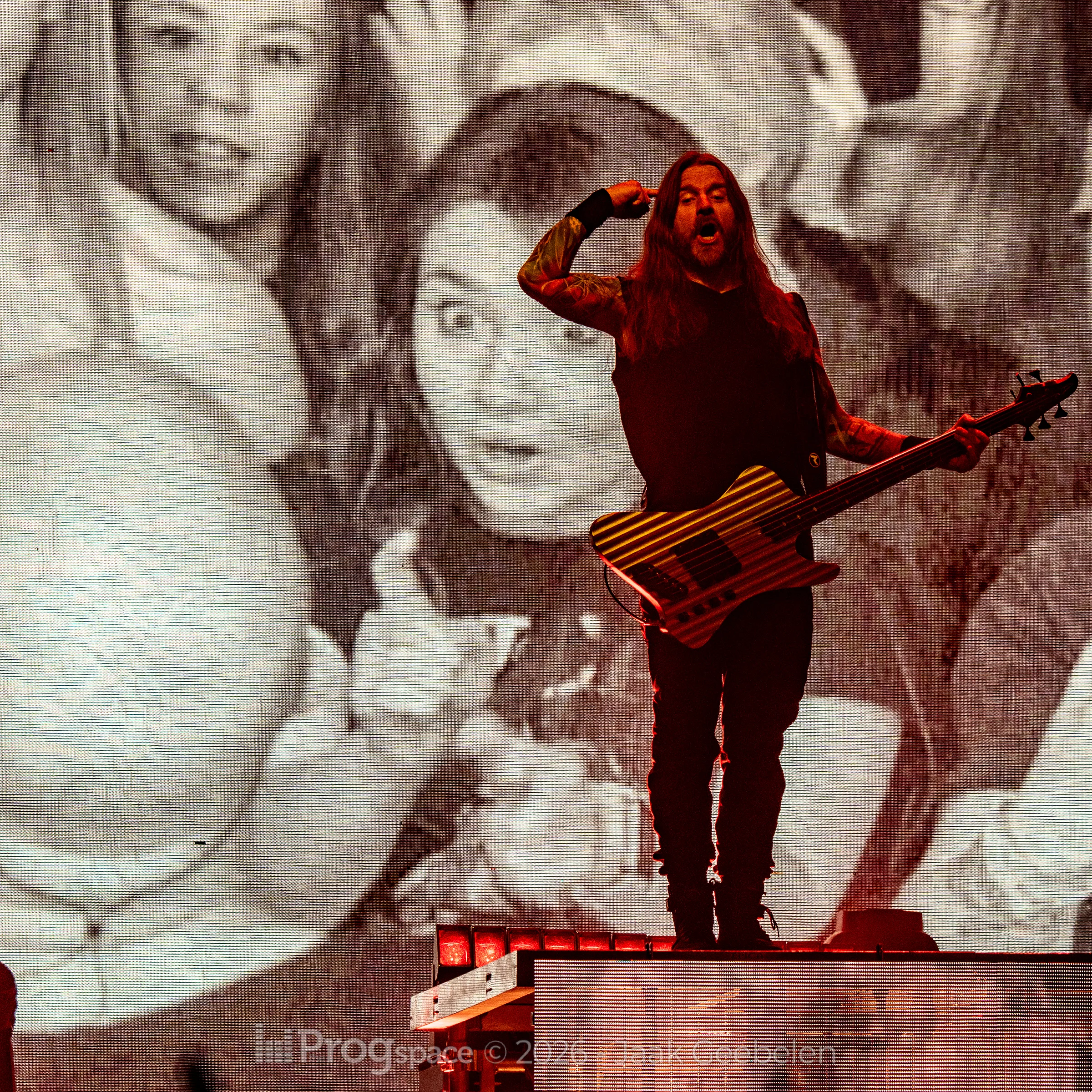
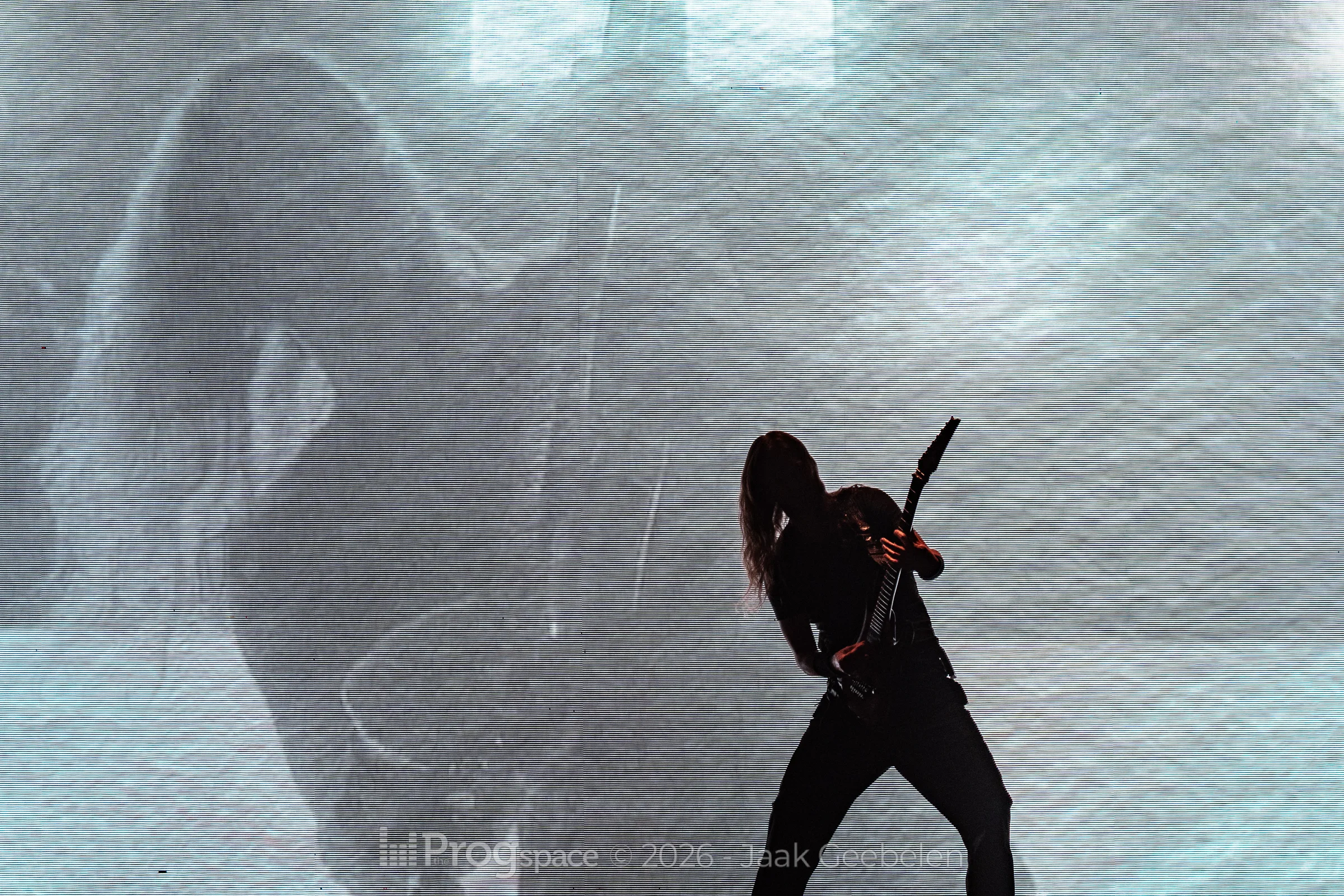
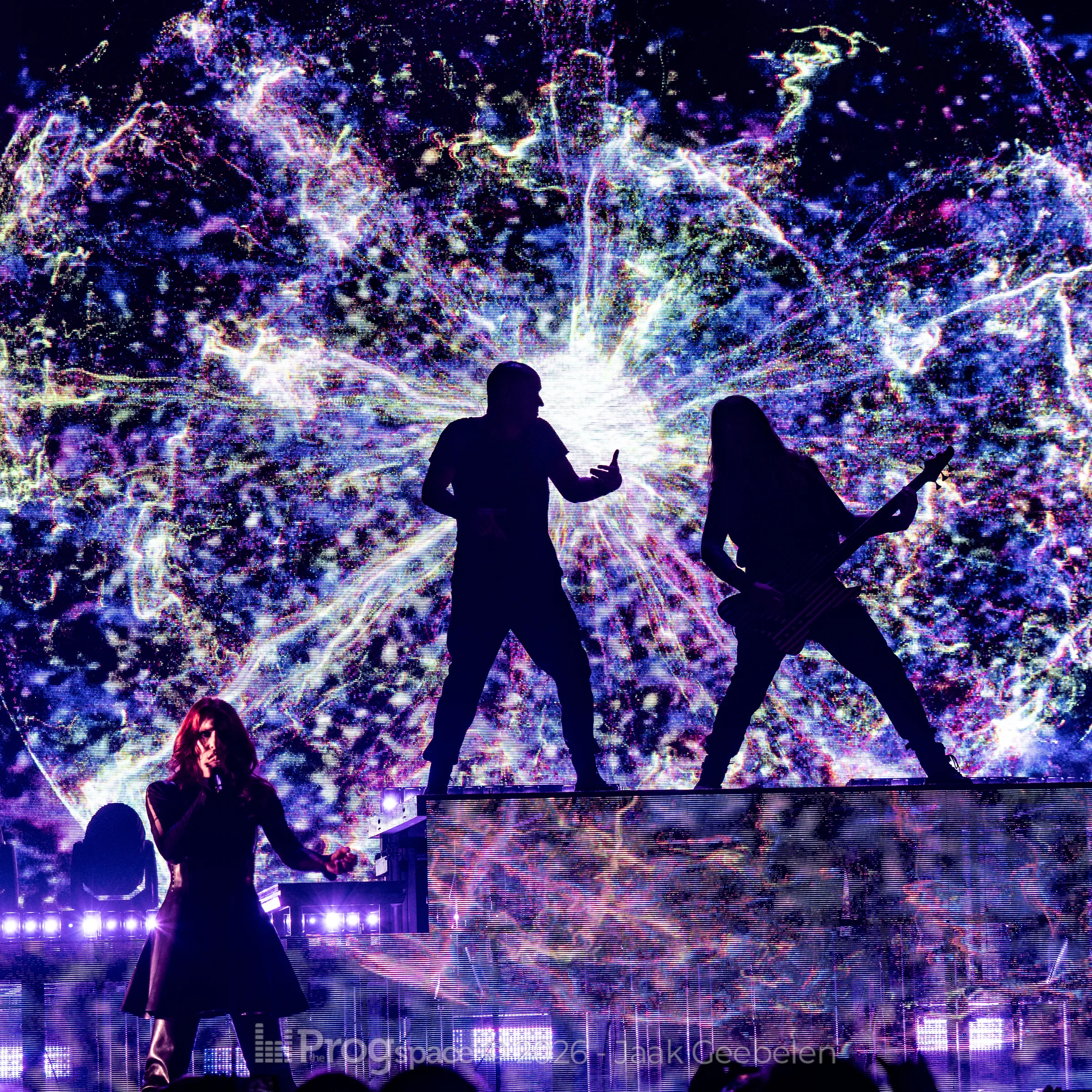
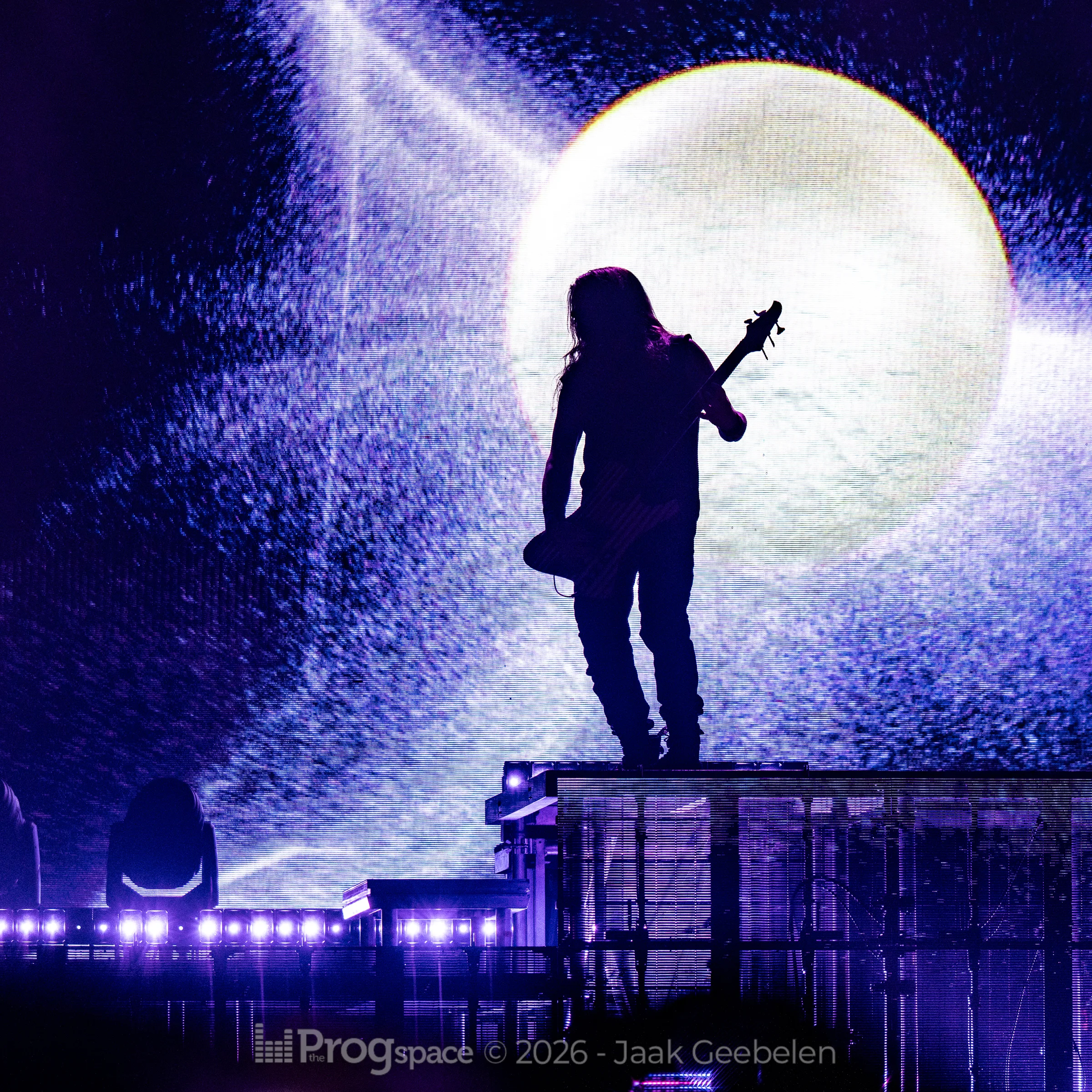
Throughout the set, it becomes increasingly clear that the visuals on the large screens are not merely supportive, but an essential part of the experience. Epica deliberately plays with contrast and scale: from abstract patterns and cosmic imagery to grainy, almost documentary-like shots of an audience in full engagement. At times, the band members themselves appear as silhouettes against an overwhelming visual backdrop — small figures within a larger, almost cinematic whole.
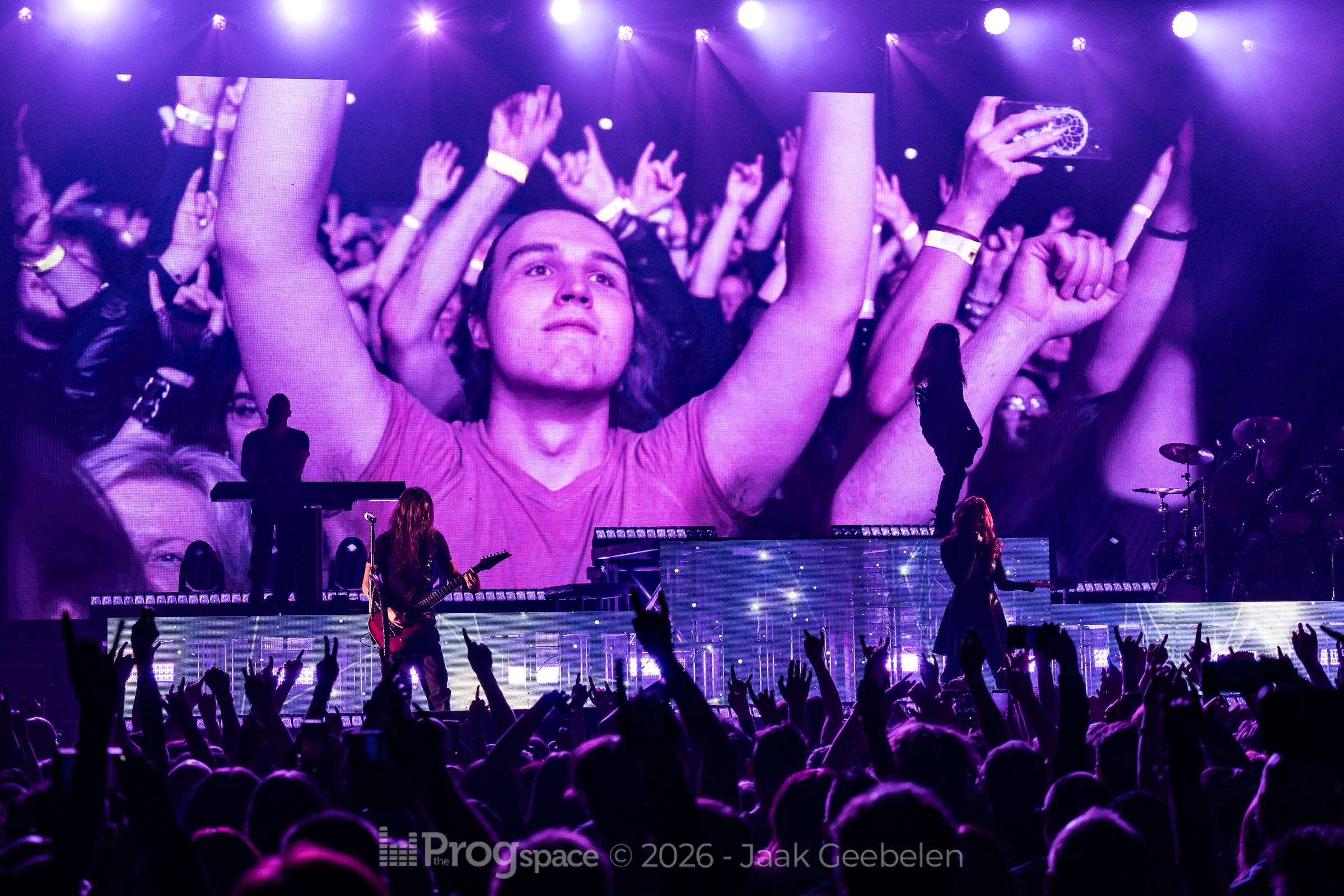
Later in the set, this visual language shifts in a subtle but effective way. The audience becomes part of the show as close-ups from the crowd are projected onto the massive screen. Raised arms, singing faces, the collective energy of many people — it is magnified and reflected back into the arena. This exchange between stage and audience enhances the sense of involvement: what happens at the front is mirrored to the back, blurring the line between performer and spectator.
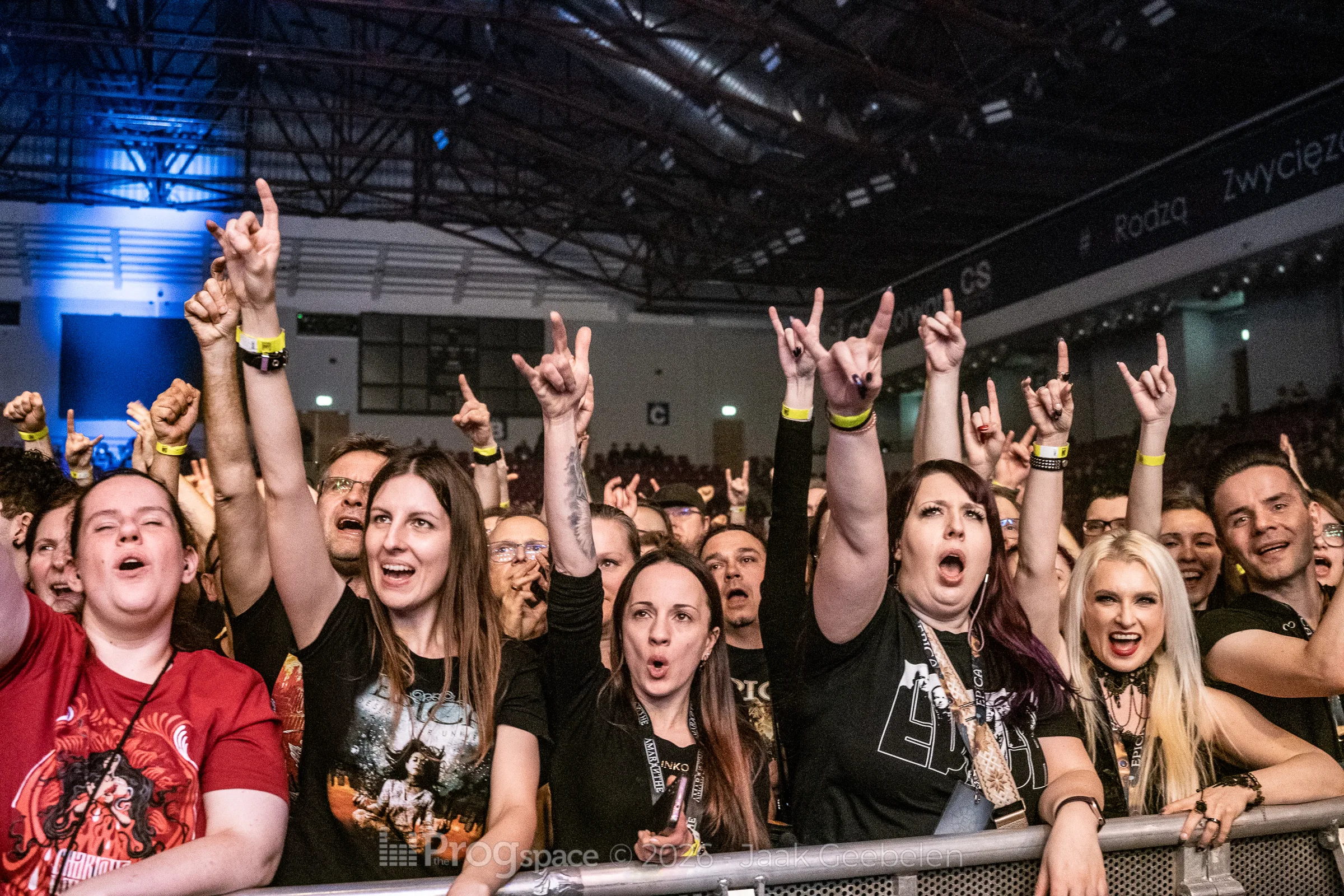
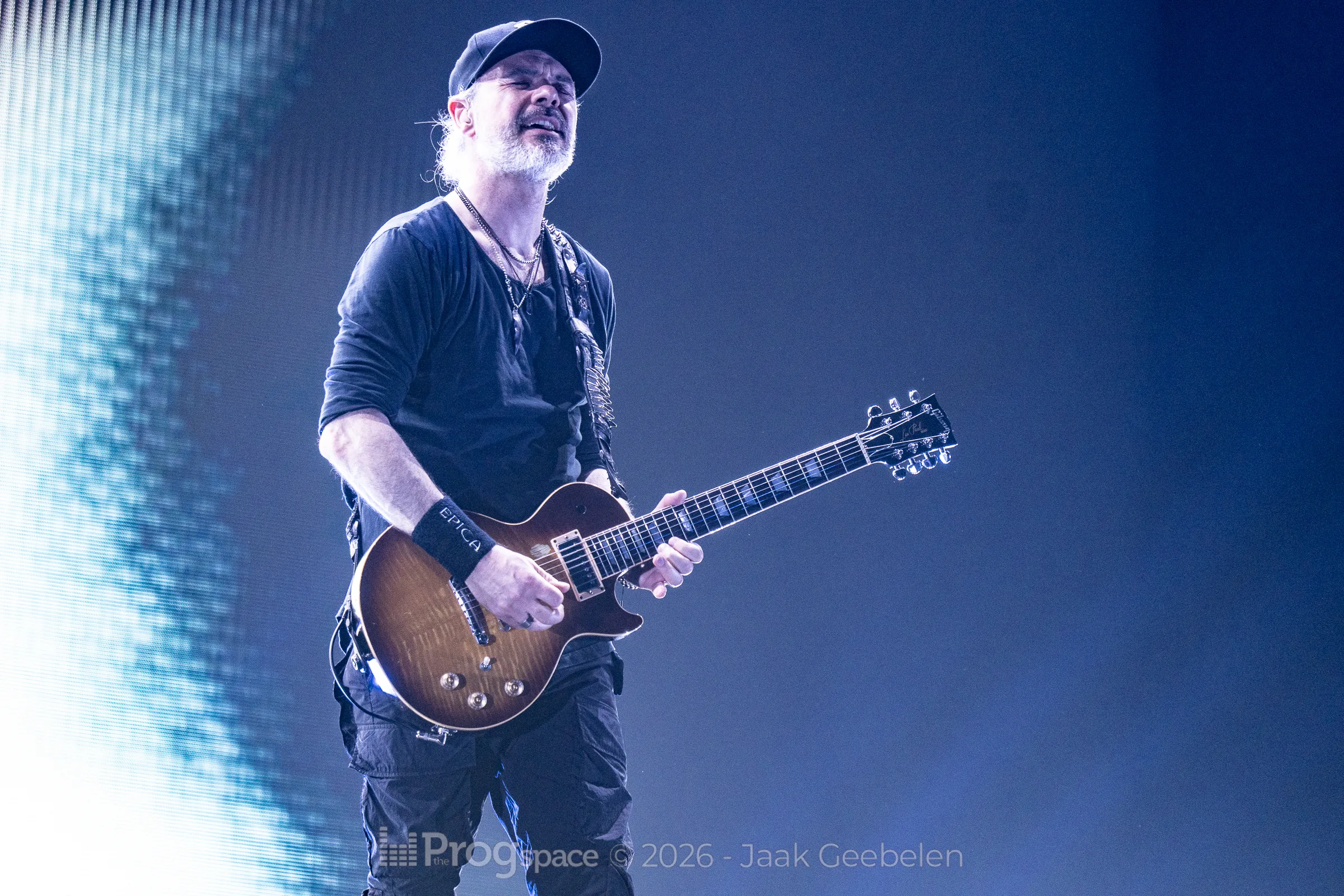
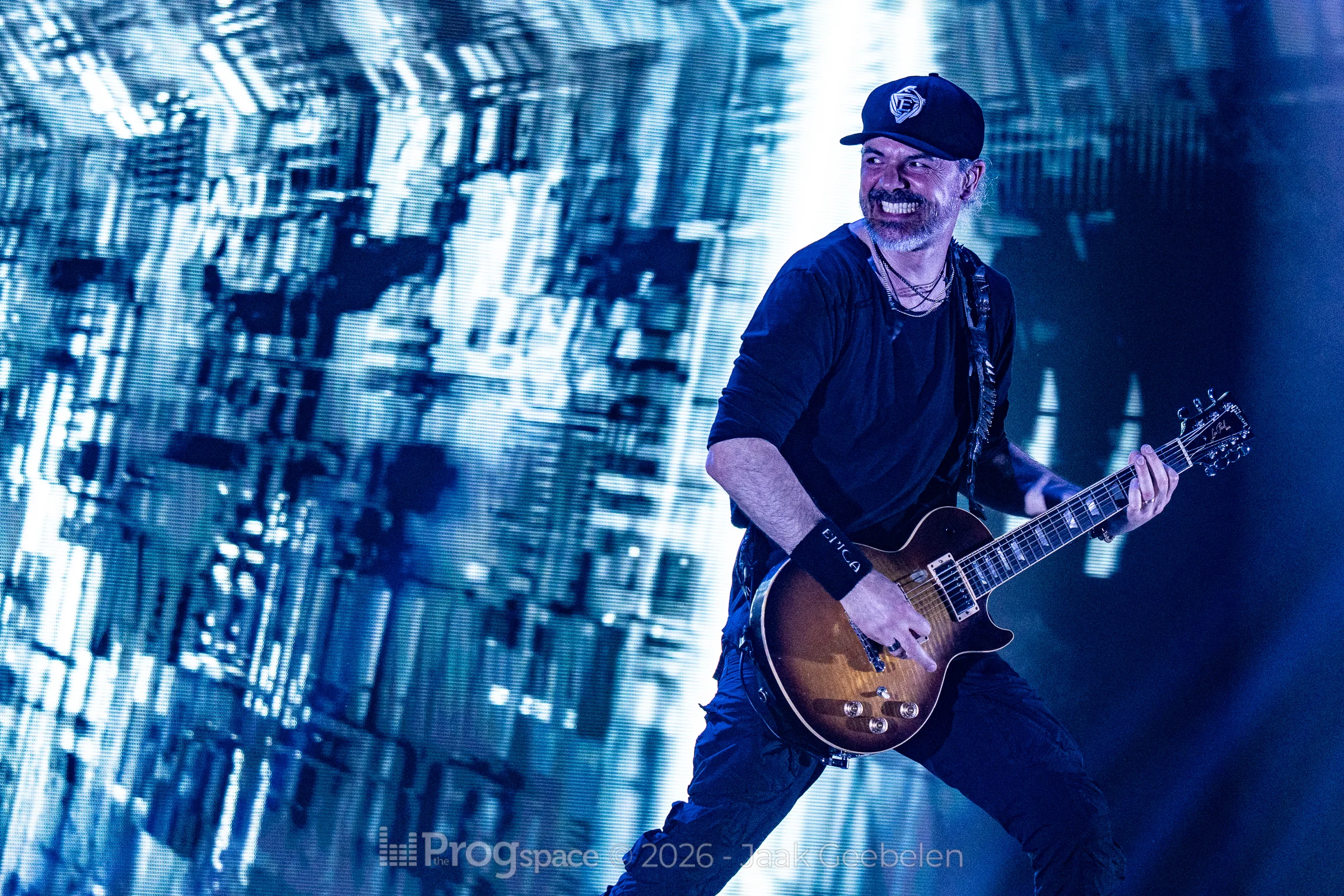
Nowhere is this more evident than at the barricade. Here stand the most dedicated fans — arms raised, singing along, fully immersed in the moment. Their reactions are intense and unfiltered, faces following every riff and melodic line. These are the people who make the energy of the evening tangible, and who, like the band itself, have grown alongside this music for years.
This decision to literally put the audience on screen works particularly well in a setting like this. Where the scale of an arena can sometimes create distance, these visuals instead foster connection. It transforms the show from a one-way performance into a shared experience, where band and audience continuously reflect one another.
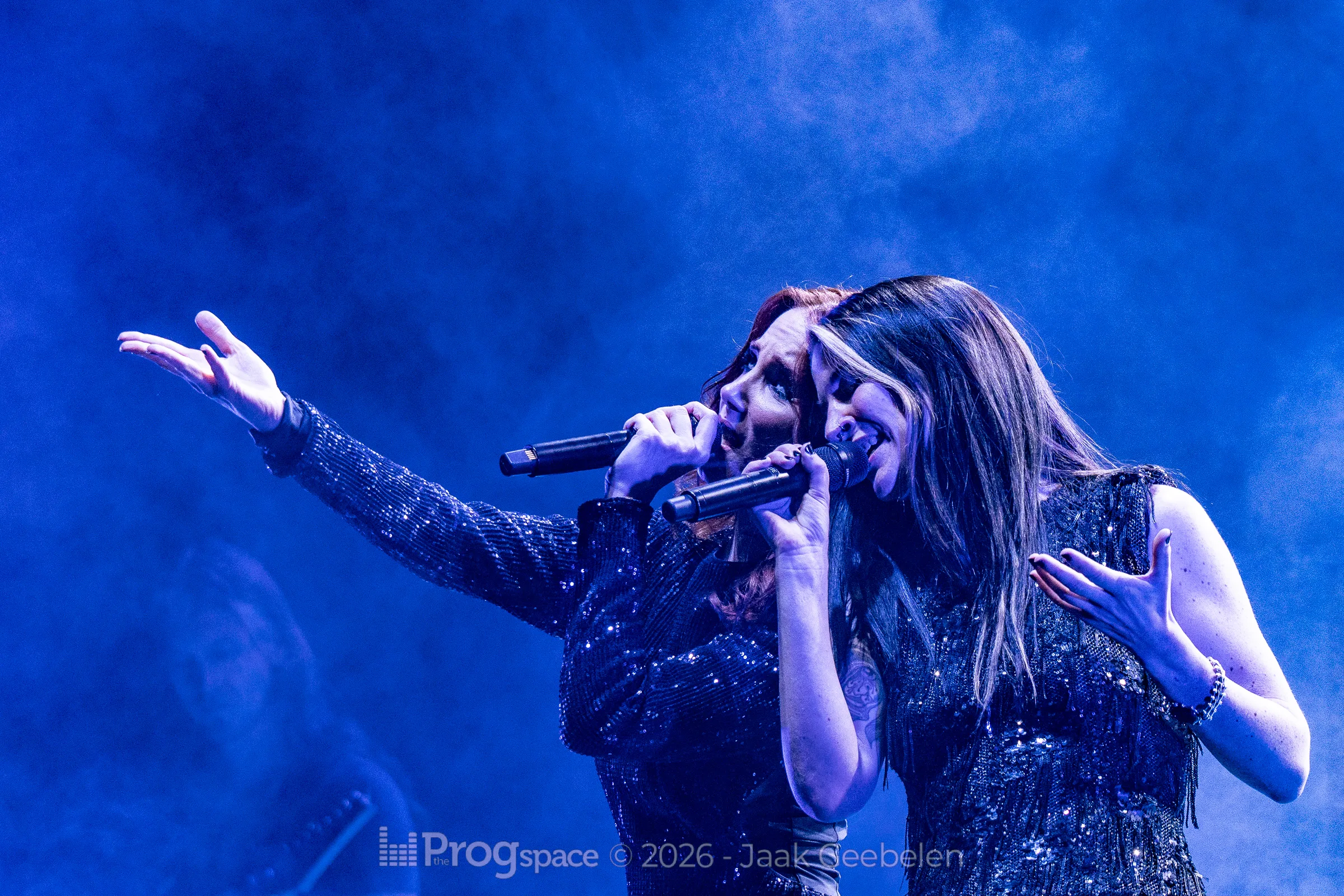
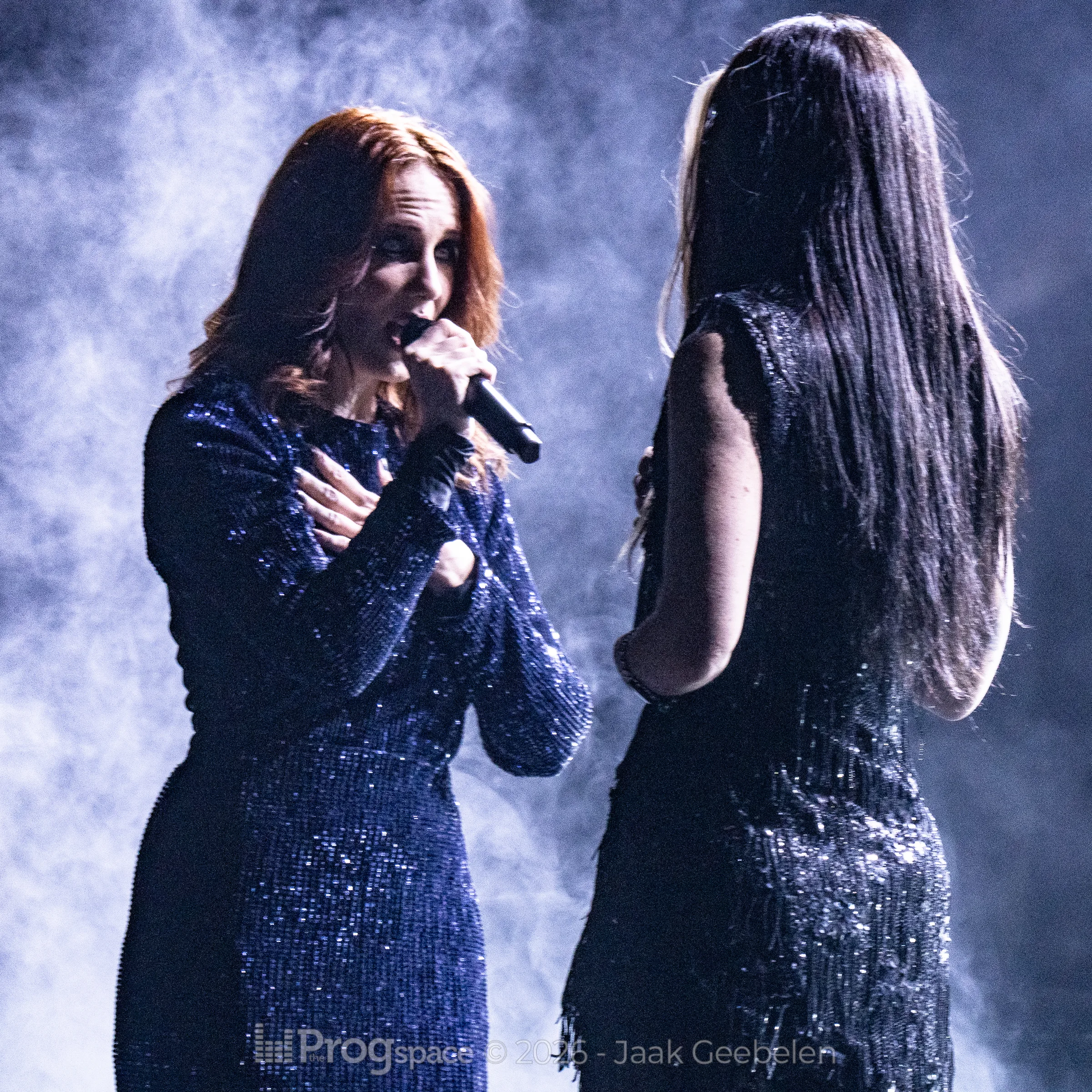
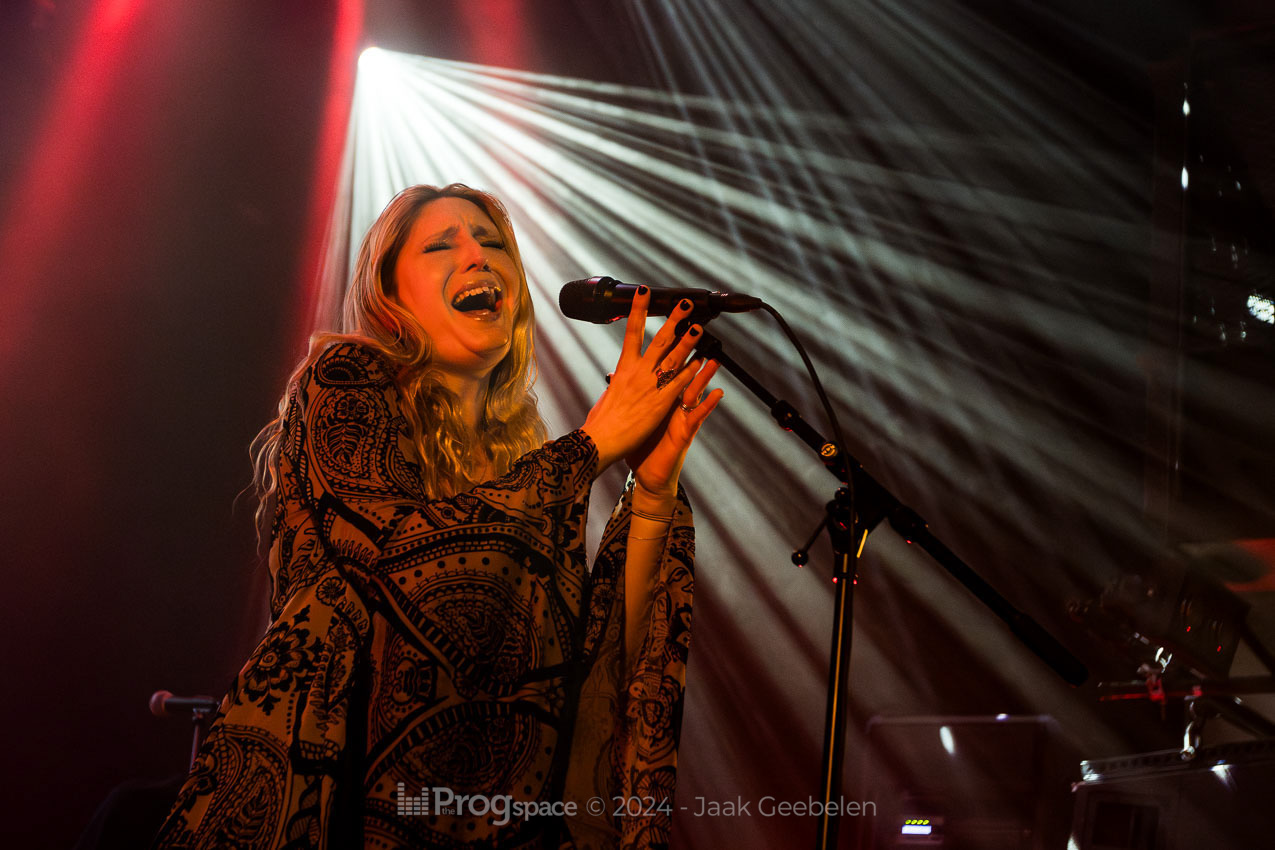
Midway through the set, “Sirens – Of Blood and Water” provides a standout moment, as Simone Simons is joined on stage by Charlotte Wessels. Their voices complement each other beautifully: Simone’s remains powerful and controlled, while Wessels brings a more fragile, direct emotional layer. Together, they create one of the most atmospheric moments of the evening.
Visually, this is also one of the most restrained yet powerful segments of the set. Both singers stand close together, almost in dialogue, dressed in dark, subtly shimmering outfits that softly catch the light.
This is followed by “Tides of Time,” performed almost like an arena ballad. Coen Janssen appears at the piano, while Simone stands elevated behind her characteristic circular microphone stand. The moment offers a brief pause in the set and once again highlights the band’s melodic strength.
With “The Grand Saga of Existence,” the newer material from Aspiral takes center stage. Kaleidoscopic visuals fill the screens, while broad, expansive riffs give the song a distinctly epic scale.
In the final part of the set, Epica returns to grand gestures. “Cry for the Moon,” from their debut album The Phantom Agony, remains one of the band’s defining live classics and once again resonates strongly with the audience.
This is followed by “Fight to Survive” and “The Last Crusade,” the latter in particular growing into a powerful crowd moment driven by call-and-response interaction.
Finally, “Beyond the Matrix” brings the evening to a triumphant close. Cosmic patterns fill the LED screens as the lighting design reaches its peak, without ever tipping into excess.
With their new material from Aspiral and a visually compelling production, Epica once again proves how convincingly they can combine arena-scale performance with theatrical finesse. After more than twenty years, they appear stronger than ever: confident, technically refined, and still driven by the raw energy of Mark Jansen’s growls and the theatrical strength of Simone Simons.
In Warsaw, this results in a show where style and substance align seamlessly — a symphonic metal production that convinces both musically and visually, and clearly demonstrates how far the band has come. What once began as a band growing out of the club circuit now stands as a fully realized arena act — without ever losing the essence of its music.
Special thanks to Ela Williamson for her valuable support, sharp observations, and assistance throughout the evening.




 We’re a group of Prog-lovers who started a journey to share with you our thoughts about albums, concerts, tours and festivals, the photo galleries of the Prog concerts we visit, as well interviews with upcoming or established musicians or prog-related people. Follow our Facebook page for frequent updates and news around the Progniverse.