





SPACE Quartet in Tienen – Progressive Spirit, Pure Improvisation
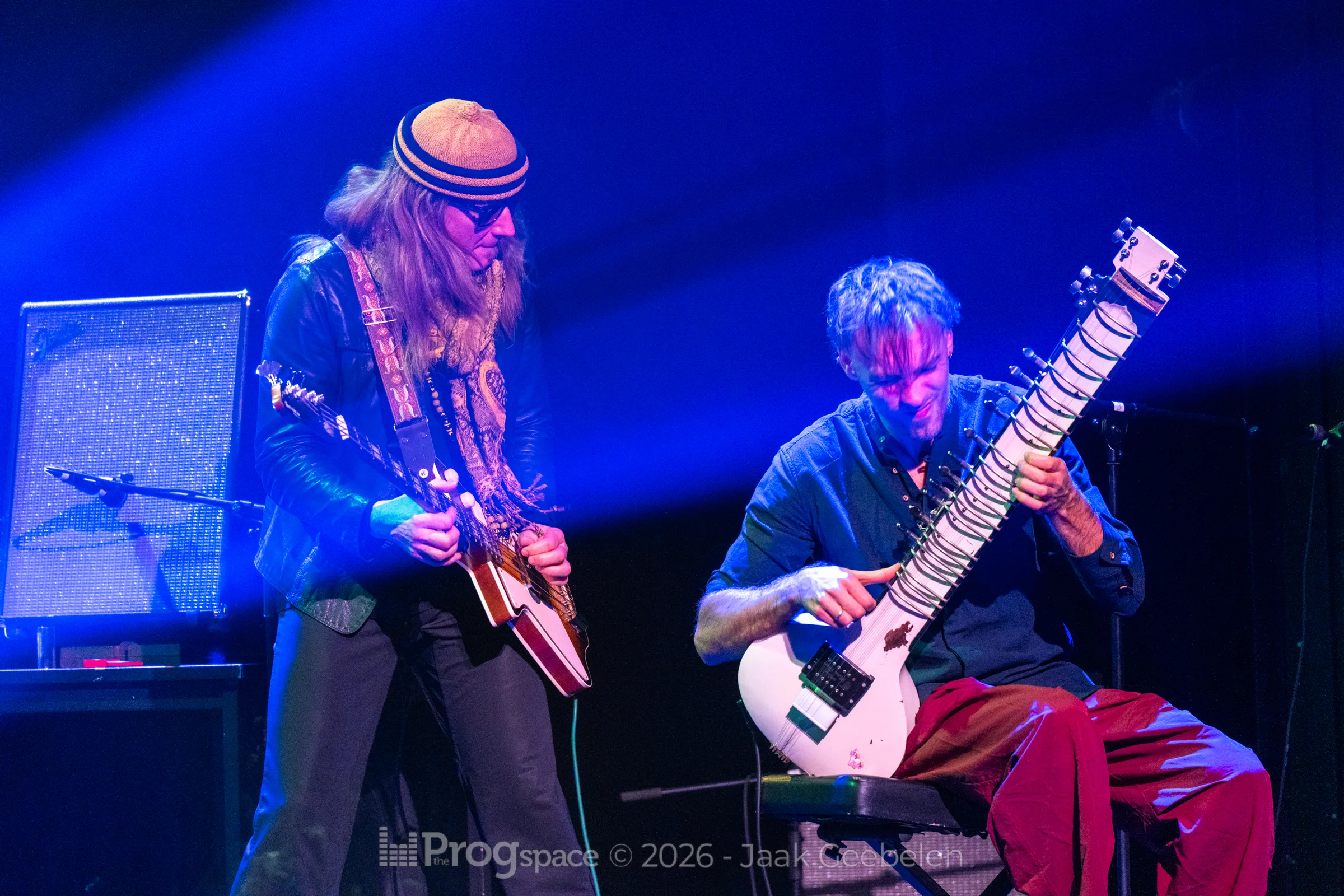
At first glance, SPACE Quartet might not seem like an obvious feature for an international progressive rock platform. A Belgian improvisation collective built around an electric sitar does not fit neatly into the conventional prog canon. Yet that is precisely why it deserves attention. Progressive music has always been about exploration, risk and the dismantling of fixed structures. In that sense, Nicolas Mortelmans’ SPACE Quartet operates firmly within the progressive tradition — not by reproducing the sound of the past, but by embodying its spirit.
At CC De Kruisboog in Tienen, the quartet delivered an evening that refused to conform to the traditional concert format. What Mortelmans presents with this project is not a collection of songs, but a real-time act of collective creation.
The venue proved ideal for such an experience. CC De Kruisboog, with its warm wooden interior and seated auditorium layout, fosters attentive listening rather than casual consumption. The audience reflected that atmosphere: a focused, mature crowd clearly present to experience the music rather than simply to be entertained. There was a quiet expectancy in the room before the first note sounded — not club energy, but concentration.
The project originated from a spontaneous jam session connected to Mortelmans’ debut album MĀYĀ, which ultimately led to the fully improvised album SPACE. Live, that principle is carried through uncompromisingly: no fixed structures, no predictable climaxes, no pre-determined arcs. Everything emerges in the moment.
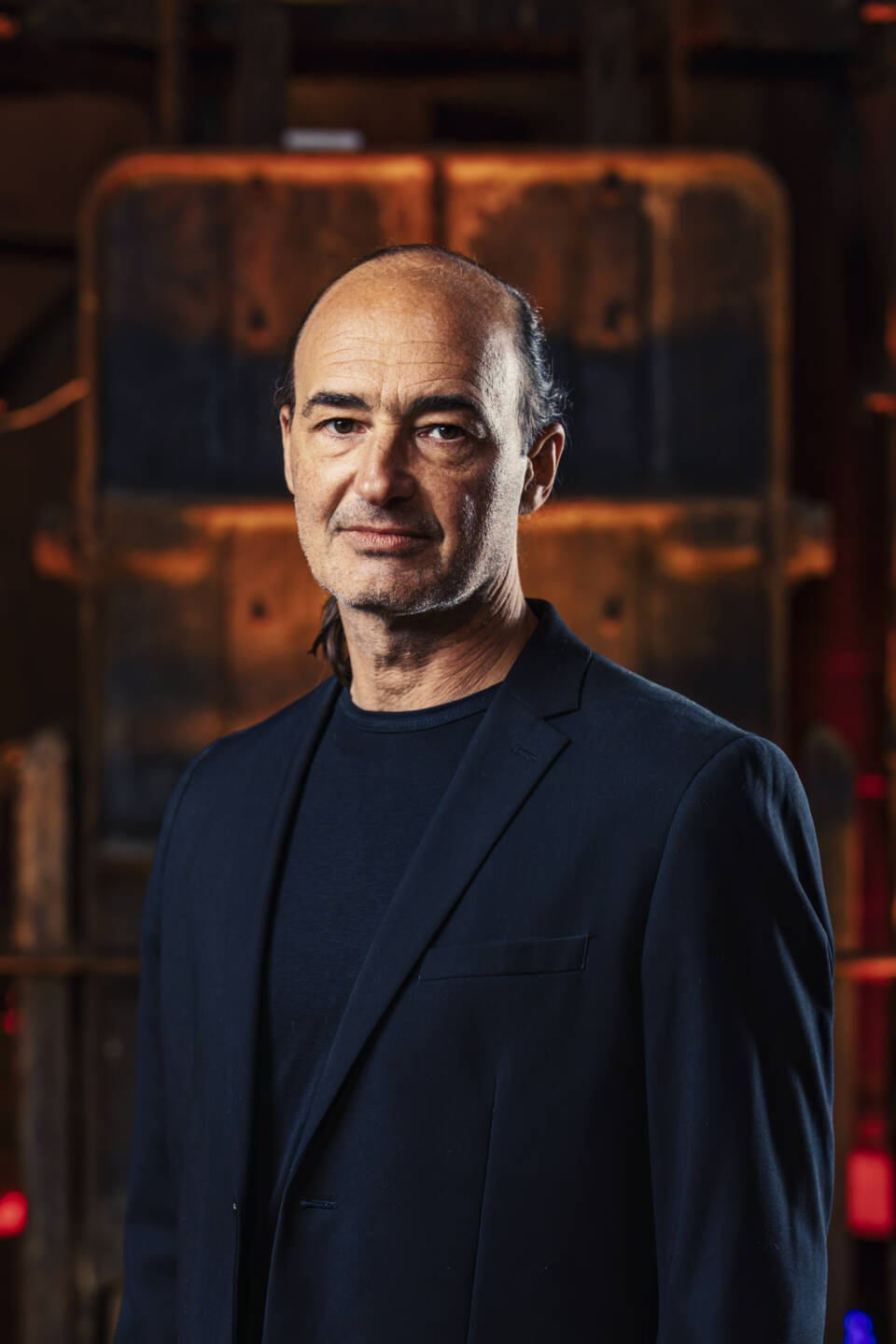
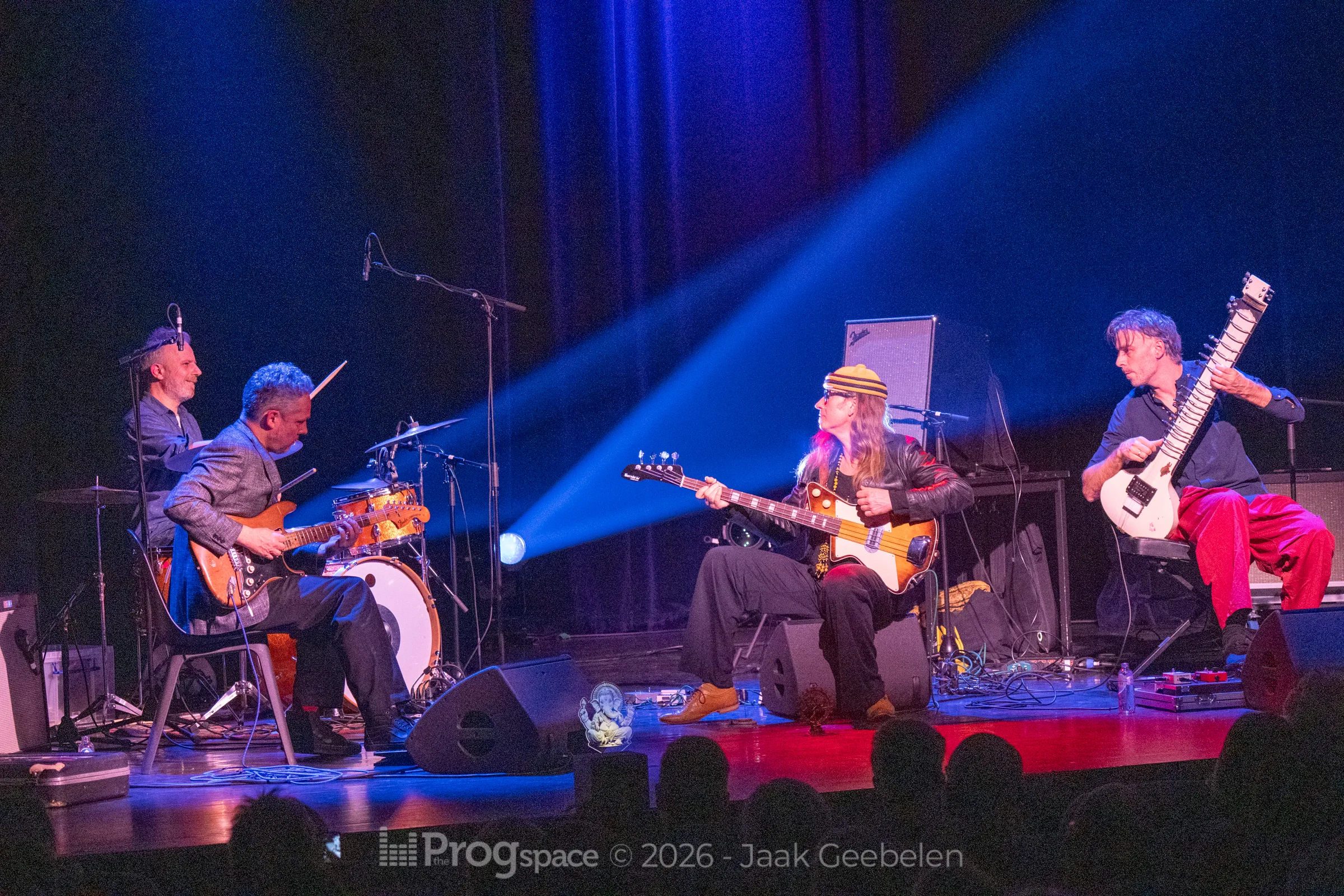
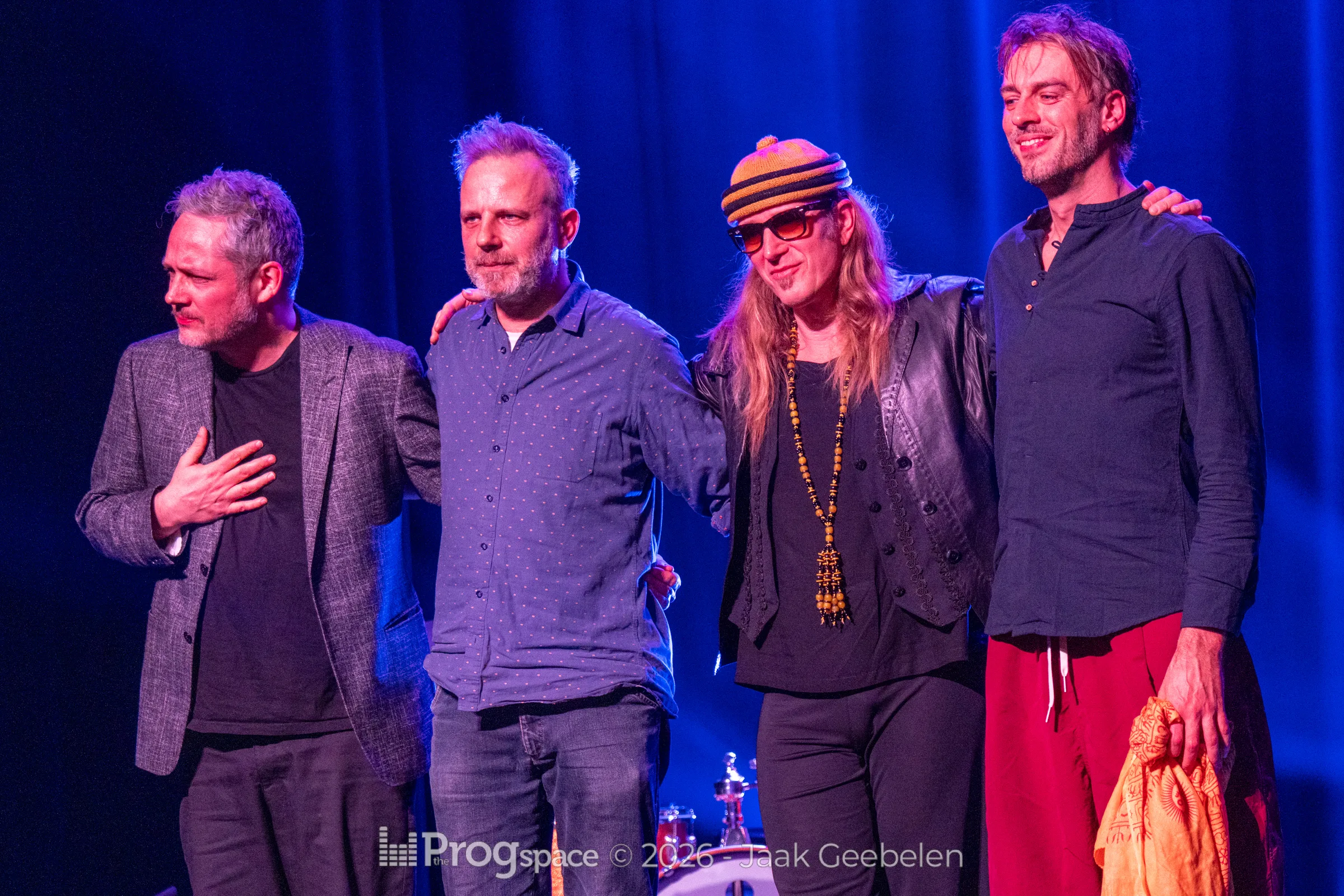
The lineup is formidable: Mortelmans on electric sitar, Stef Kamil Carlens on bass, Tim Vanhamel on guitar and electronics, and Teun Verbruggen on drums. Roland Van Campenhout participated in the original studio session, but for this live series his role is taken over by Vanhamel, who integrates seamlessly into the concept.
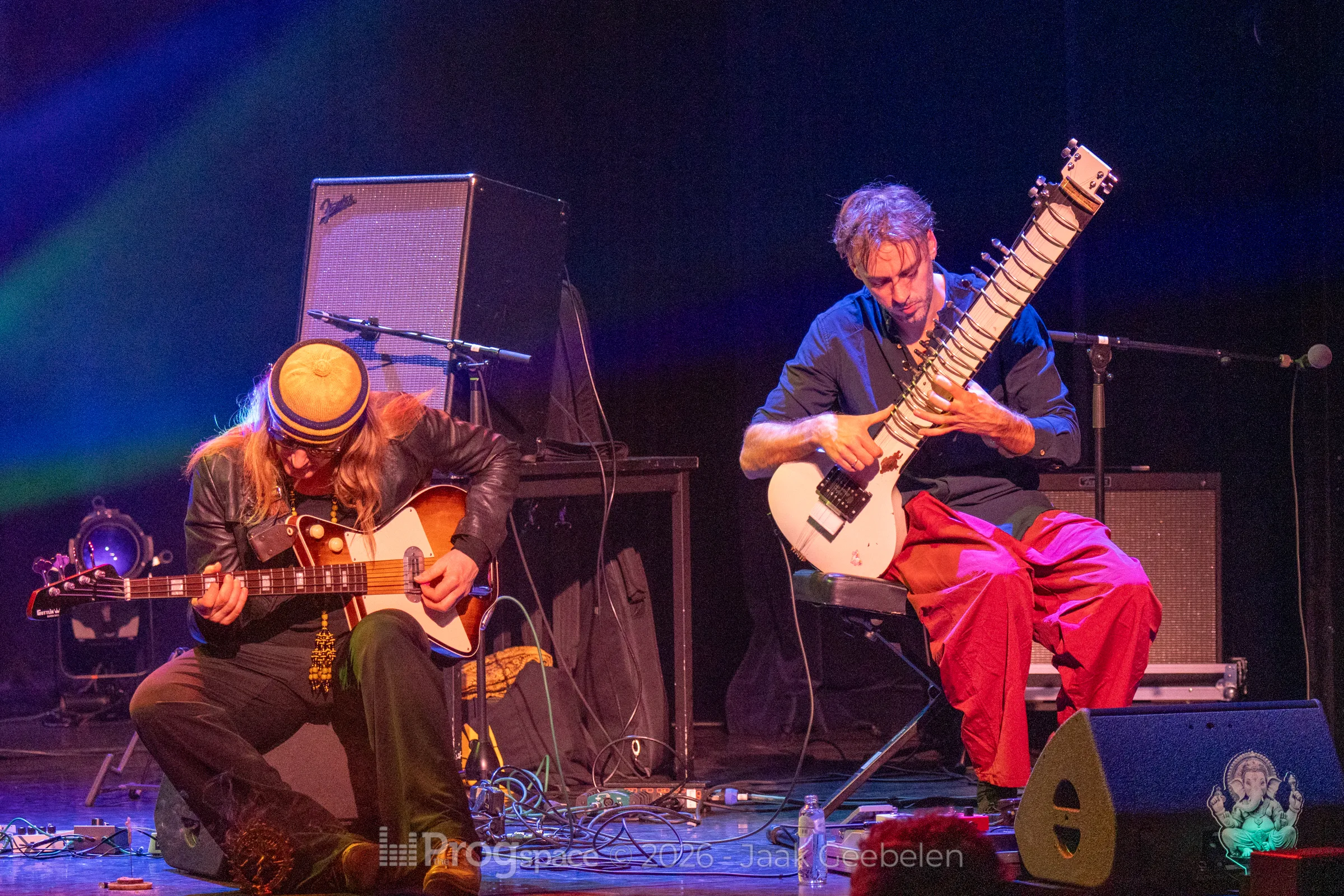
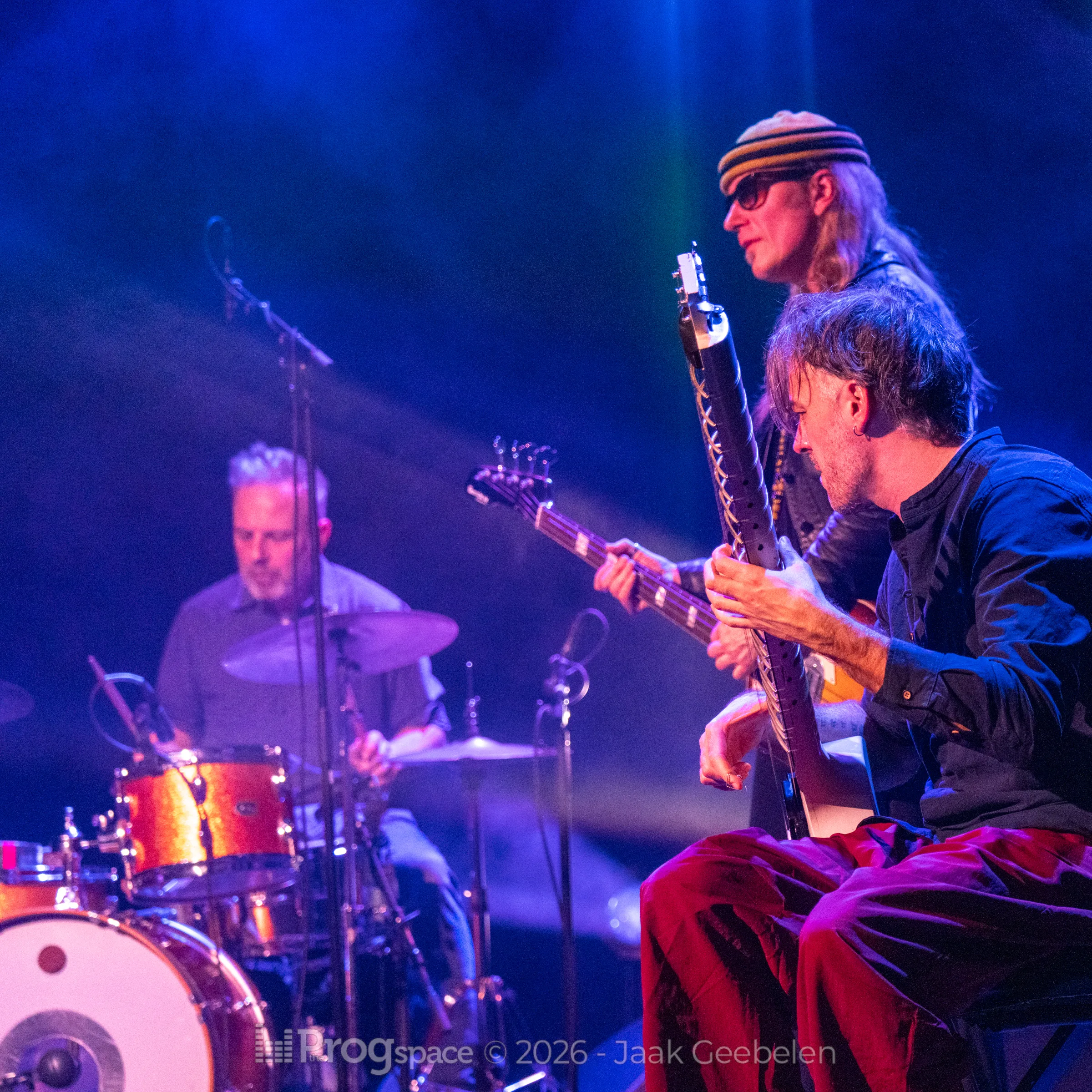
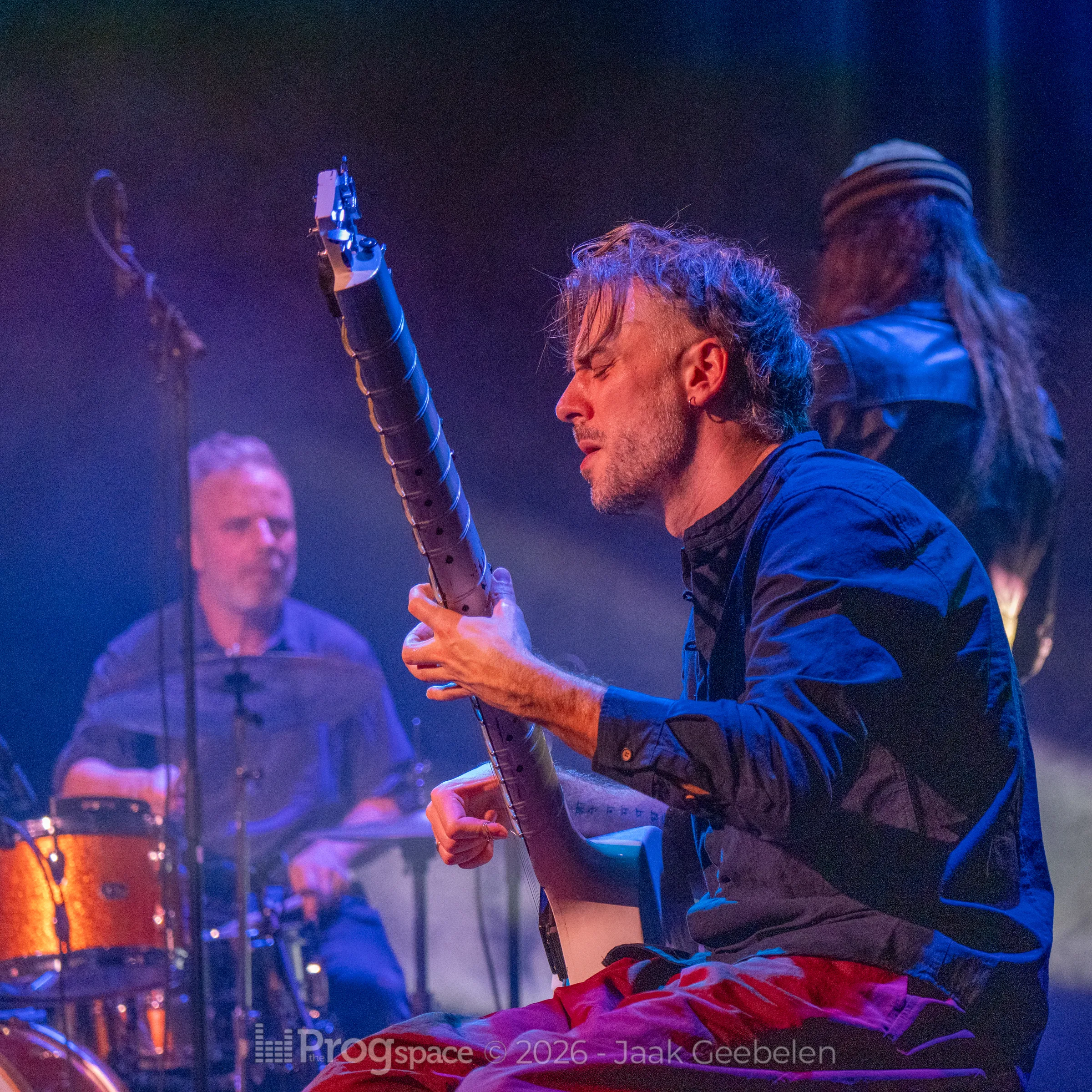
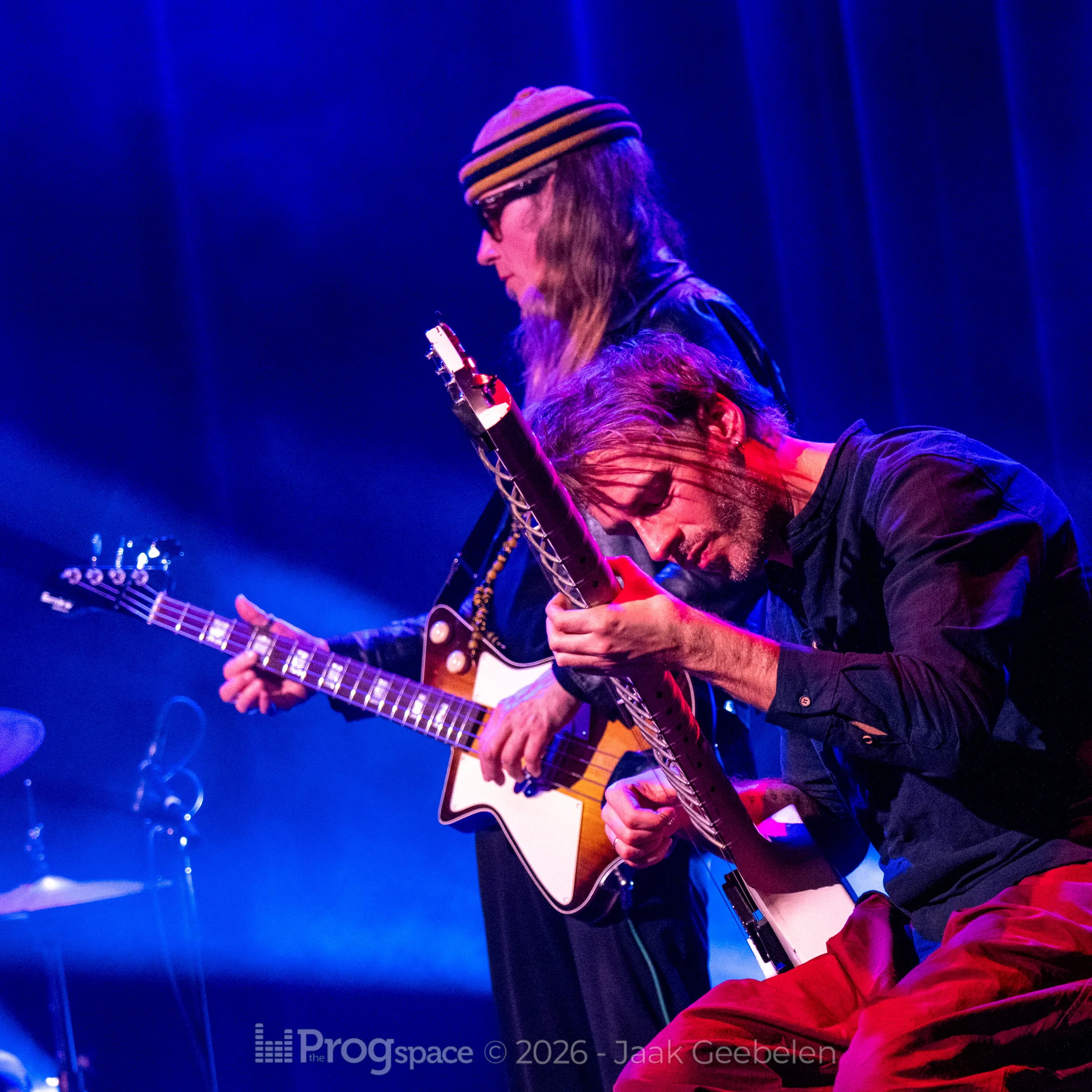
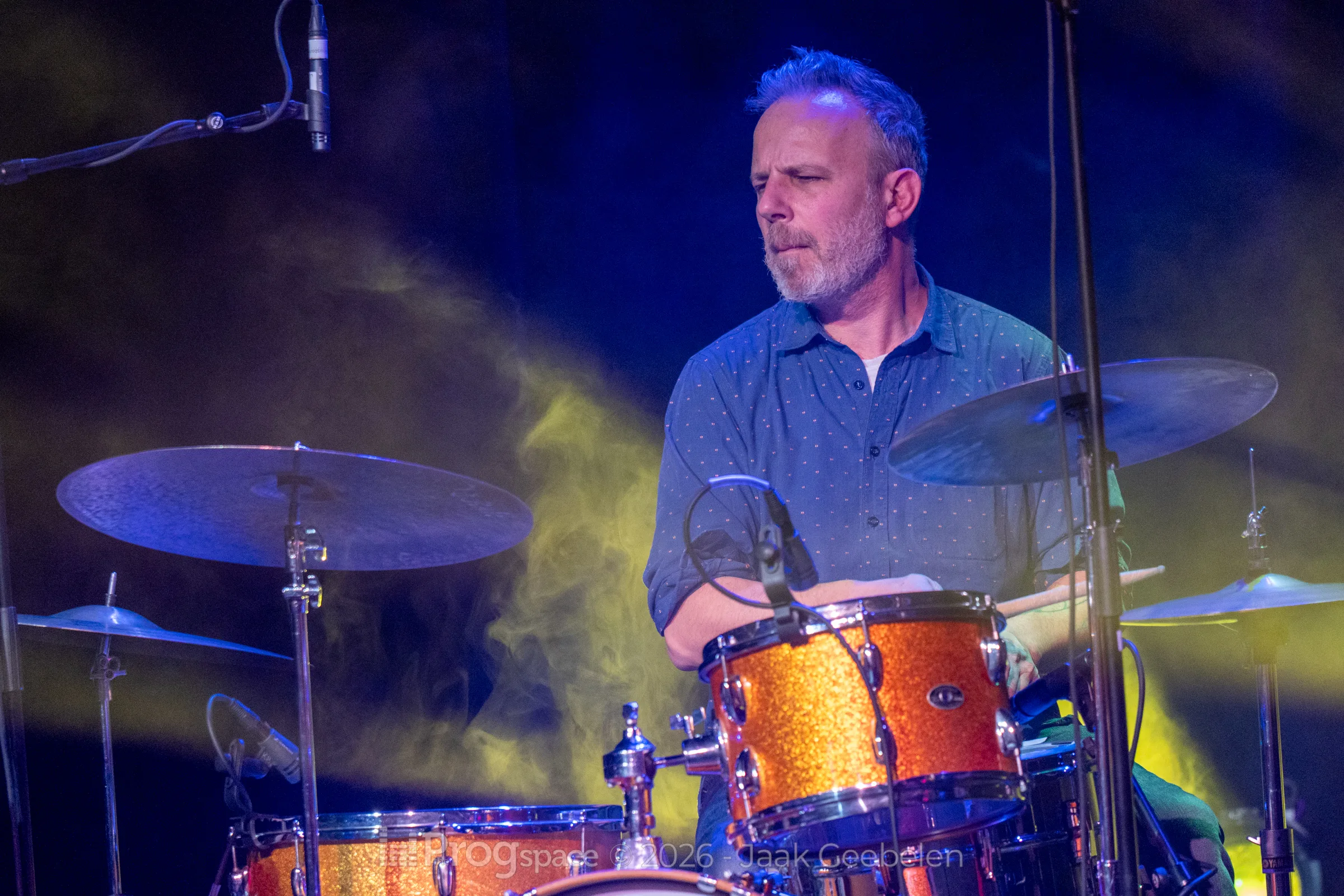
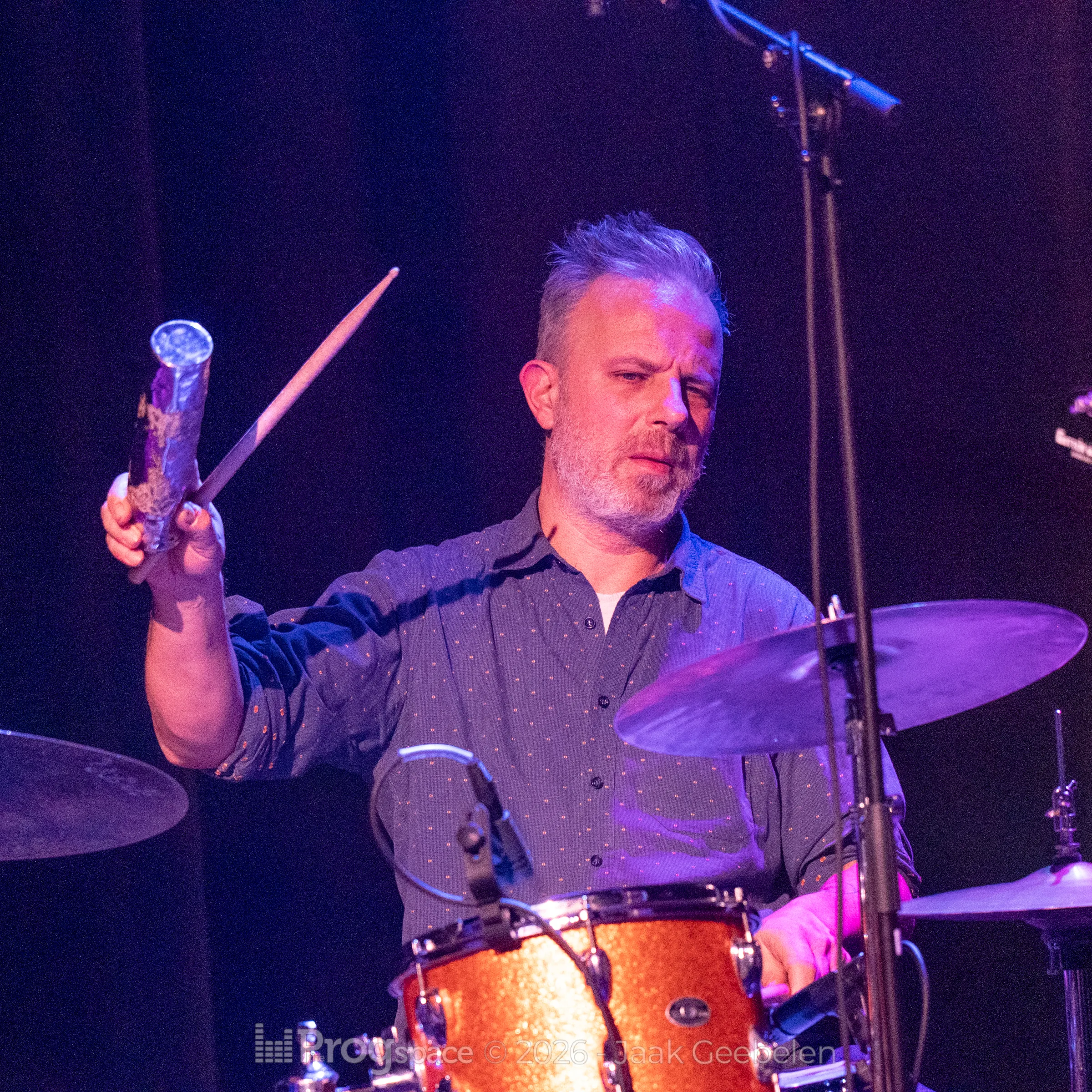
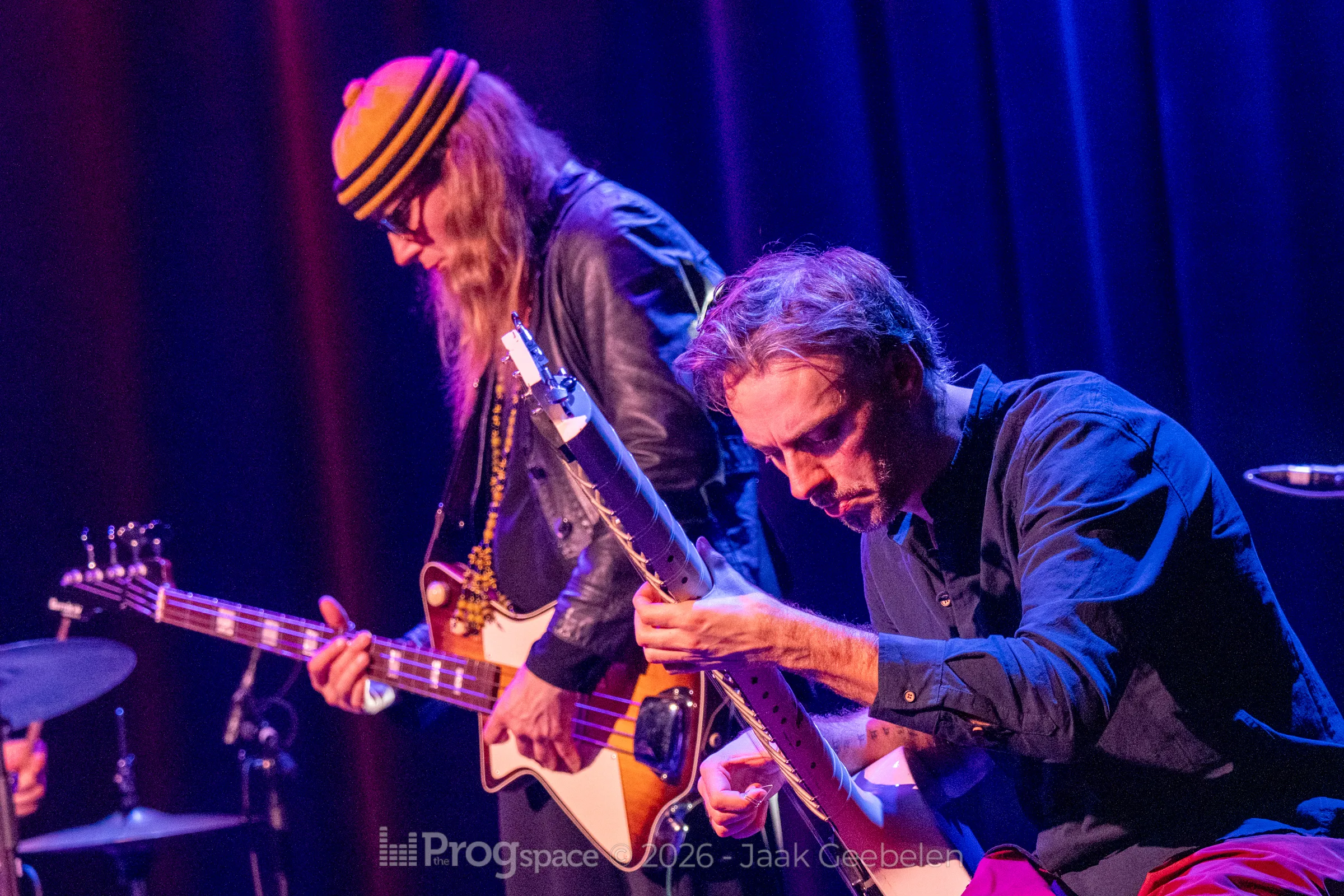
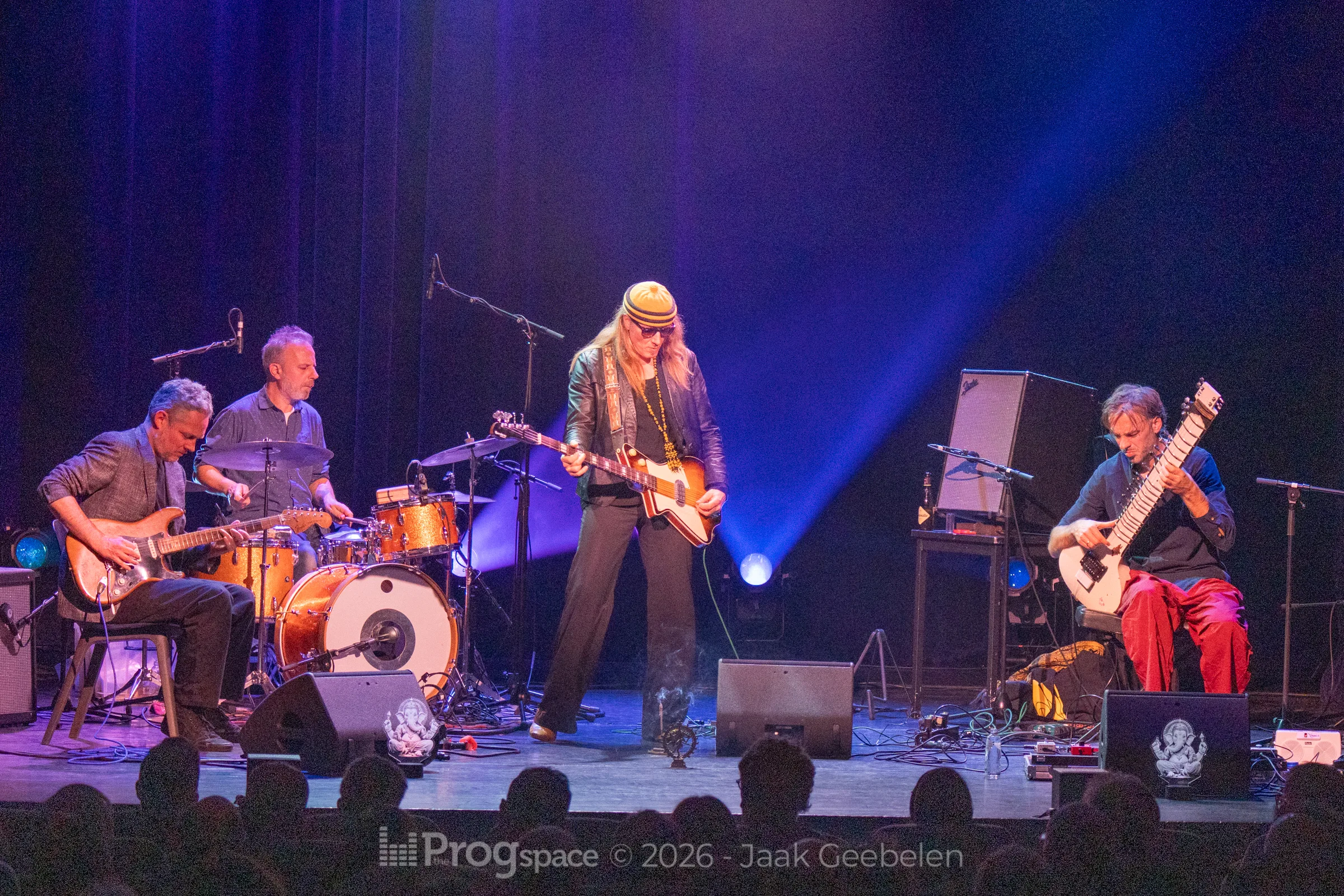
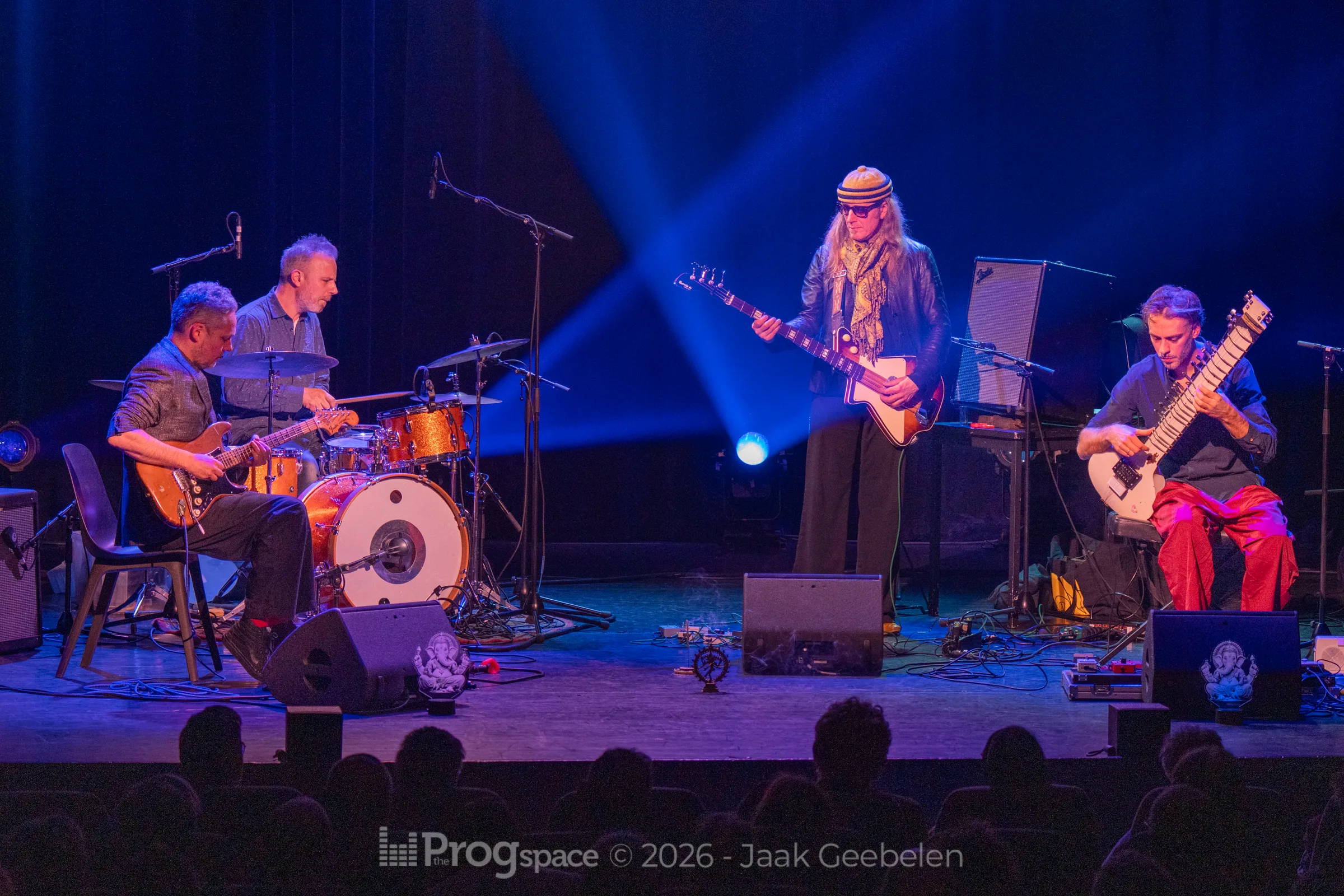
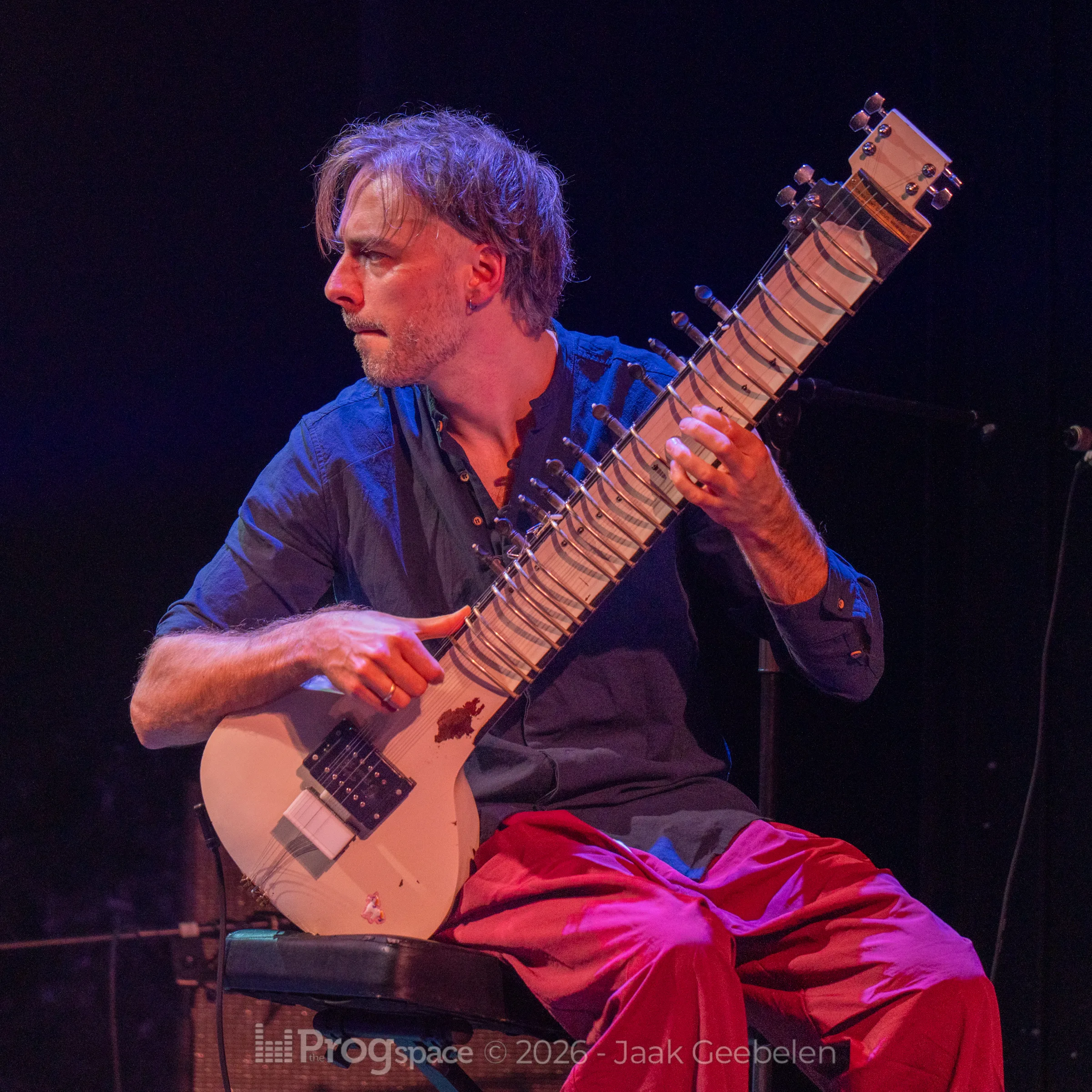
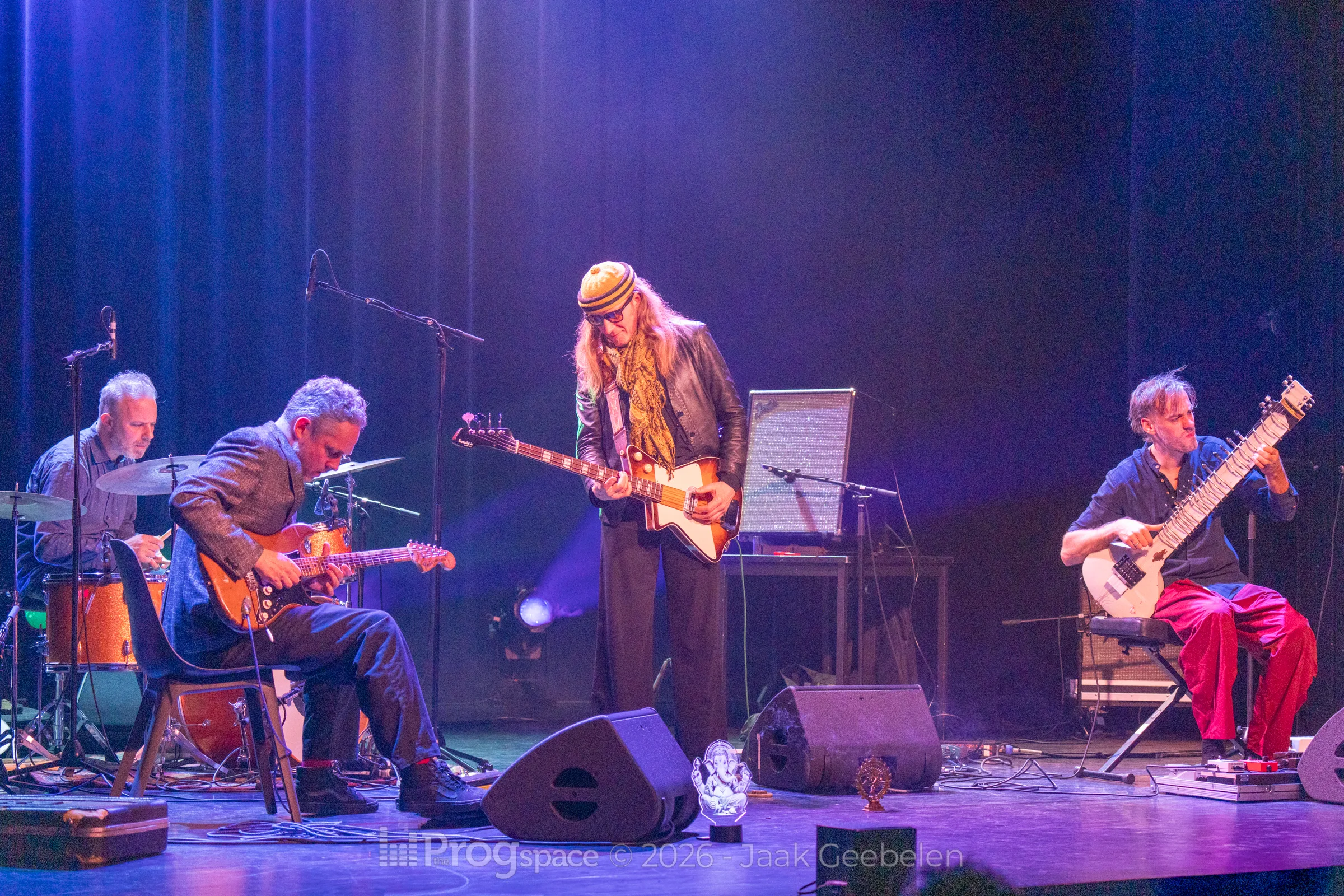
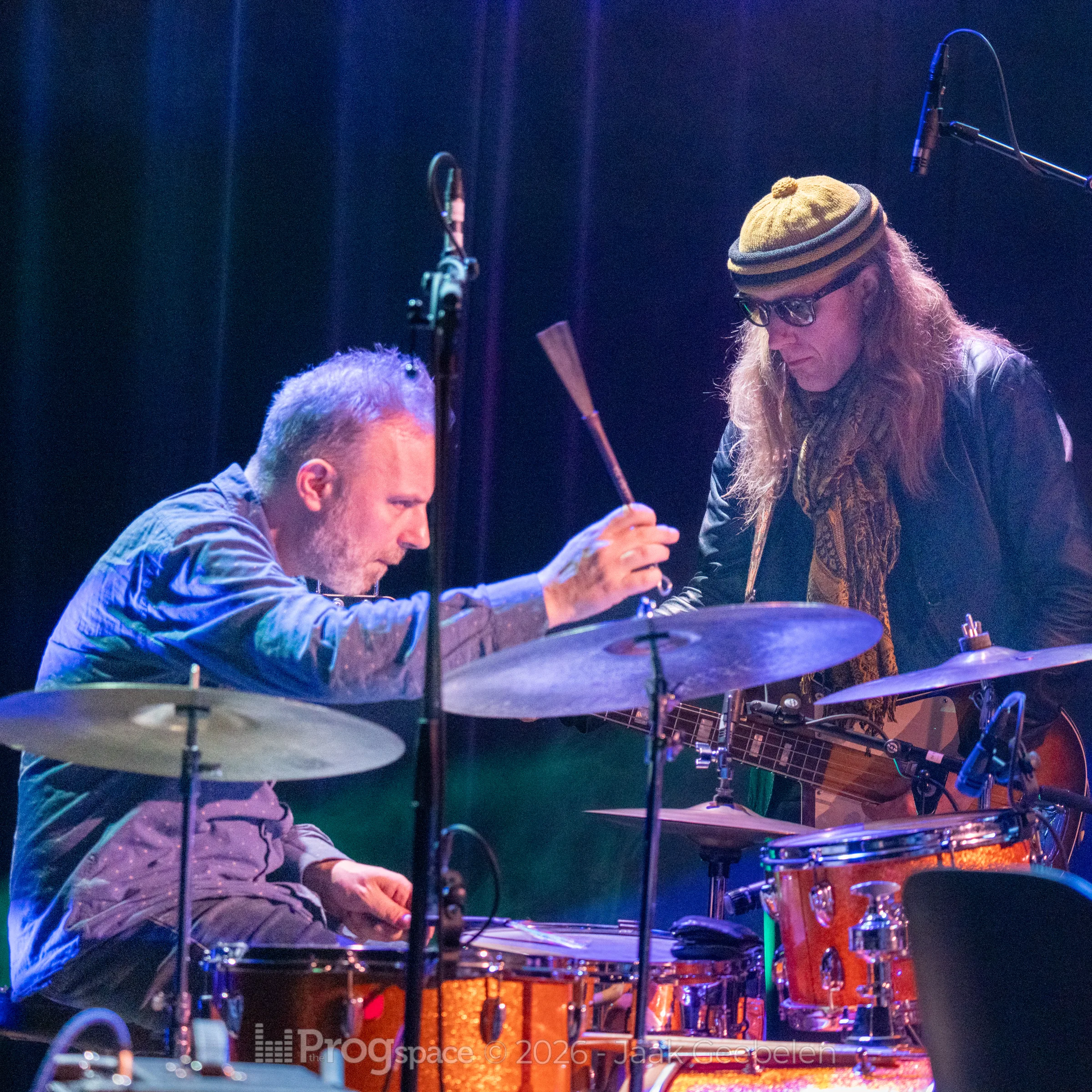
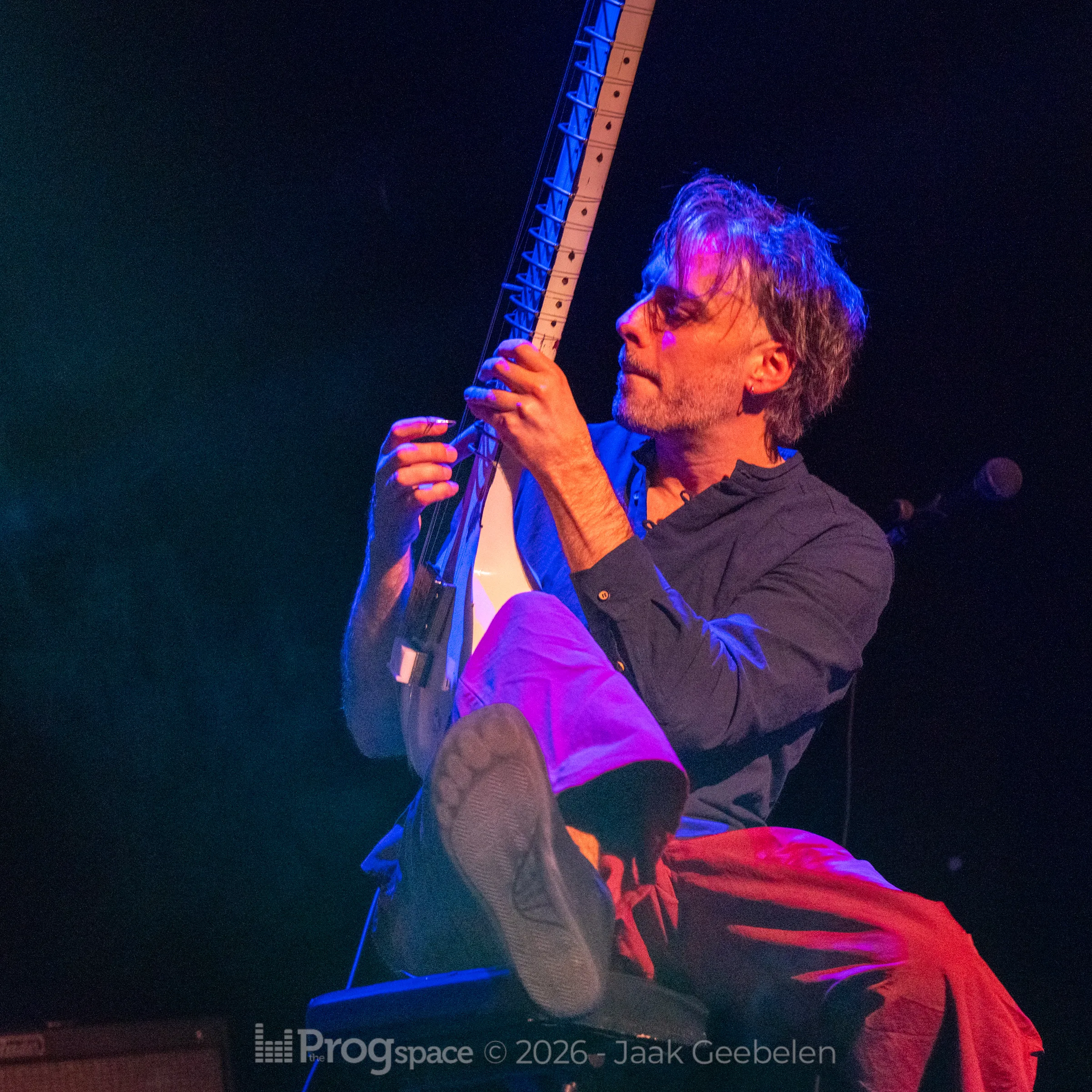
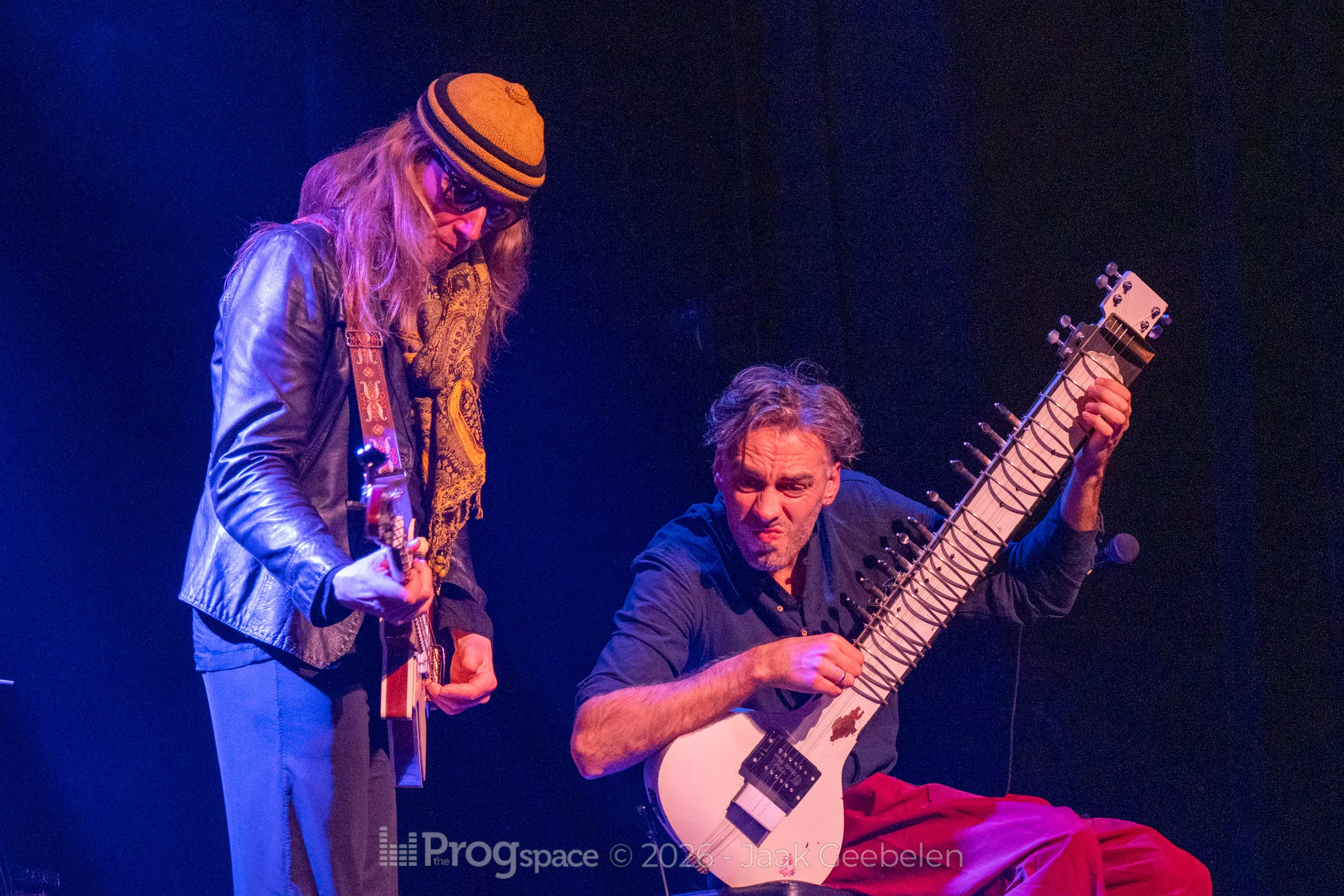
Visually, the stage setup was clear and balanced. Mortelmans remained seated on the right side of the stage throughout the entire set, deeply focused, almost meditative as he leaned over his instrument. Vanhamel also played seated for the full duration, slightly hunched forward, immersed in texture and detail. Carlens stood for most of the performance, moving and actively engaging with the others. Verbruggen sat behind a compact drum setup, constantly listening and responding. The lighting, dominated by blues and purples with occasional warmer accents, created a psychedelic yet restrained atmosphere — no visual excess, but concentrated ambience.
From the opening minutes, the dramaturgy of the set became clear. A thin, almost saw-like sitar-esque drone hovered as a permanent undercurrent beneath the music. At its best it functioned as a field of tension, but when it lingered too insistently, it reduced the dynamic breathing space of the performance. Especially during the build-up of several pieces, that underlying layer strongly shaped the sonic landscape.
The structural development of the music was consistently slow and organic. Fragments began minimally: a subtle sitar motif, a shimmering cymbal texture, a searching bass line. Gradually, intensity accumulated. Carlens introduced pulse, Vanhamel layered textured guitar patterns, Verbruggen subtly shifted the rhythmic centre of gravity. Only after extended exploration did certain passages evolve into pronounced uptempo eruptions. That controlled acceleration gave the evening its dramatic force.
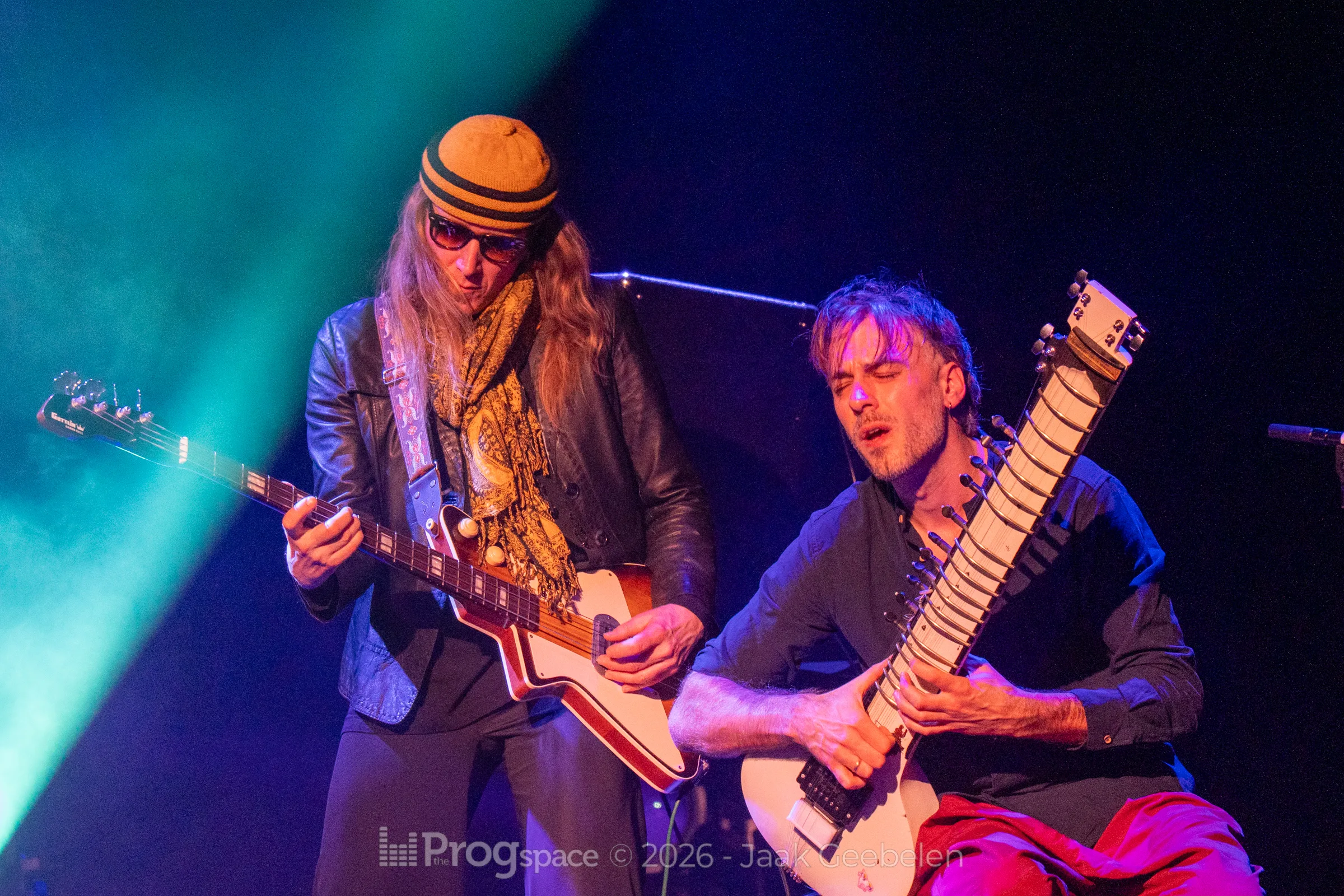
Mortelmans functioned as the spiritual axis. His electric sitar balanced Indian classical phrasing with Western psychedelia — at times repetitive and trance-inducing, at others sharp and angular. He never positioned himself as a soloist towering above the band, but as a catalyst within a collective dynamic.
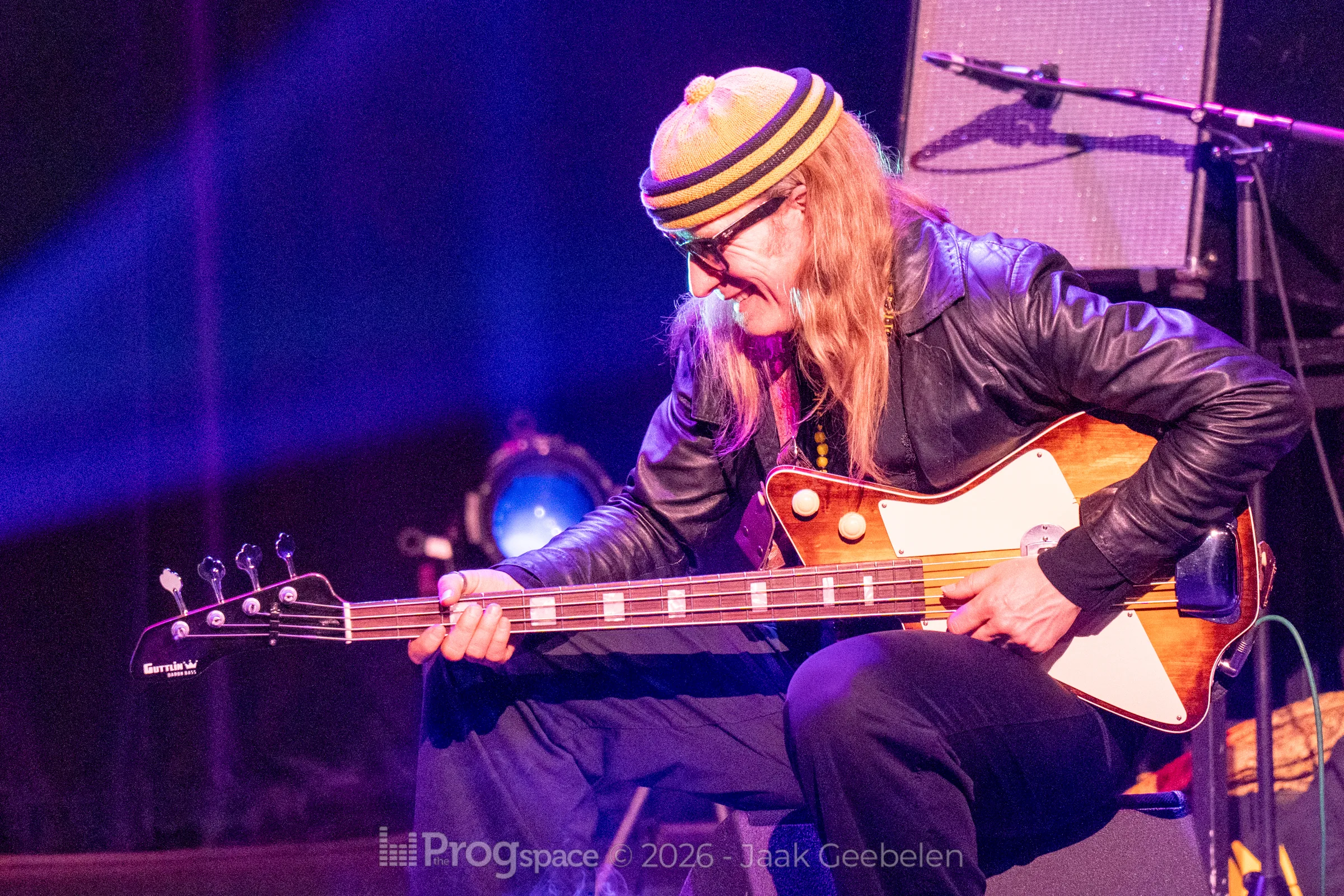
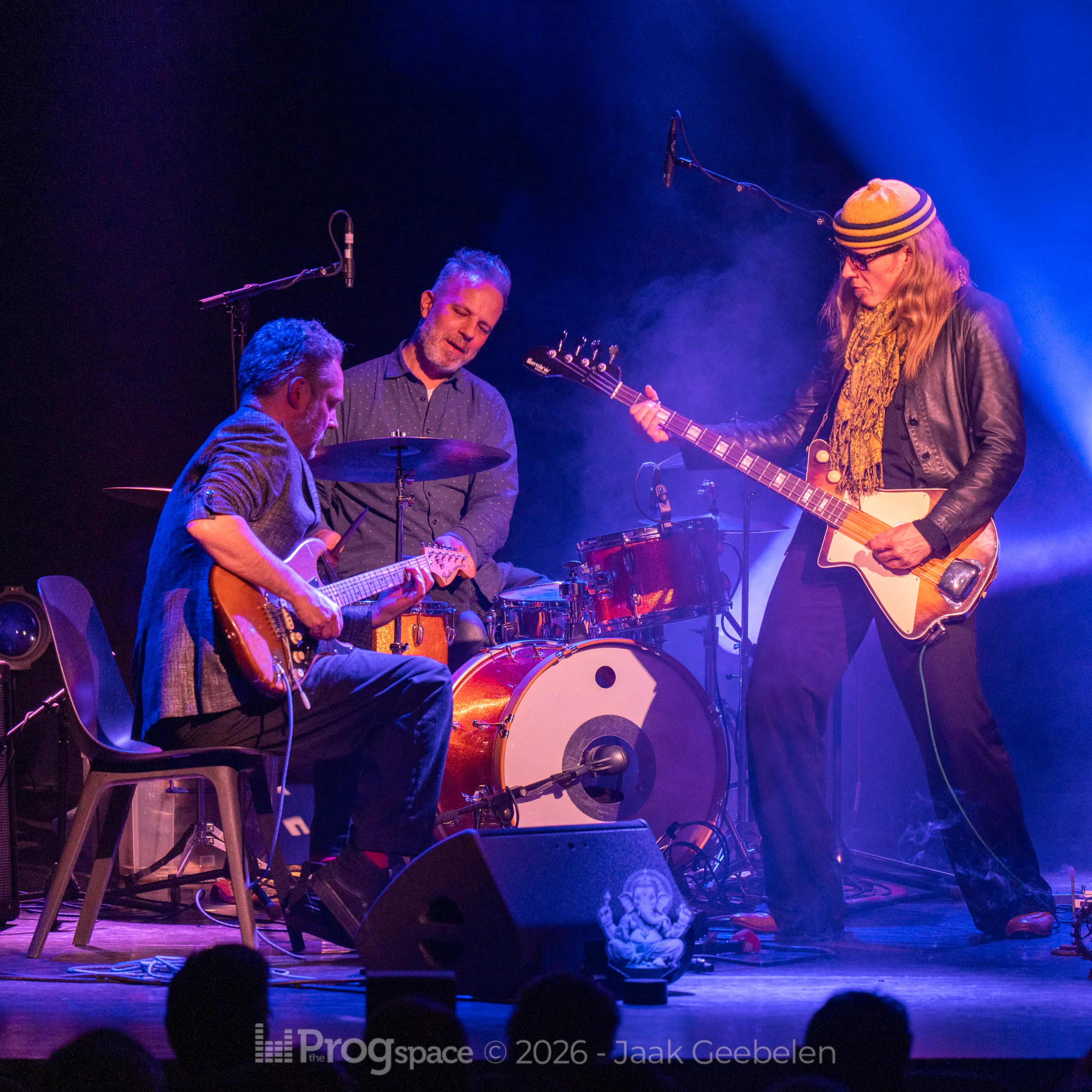
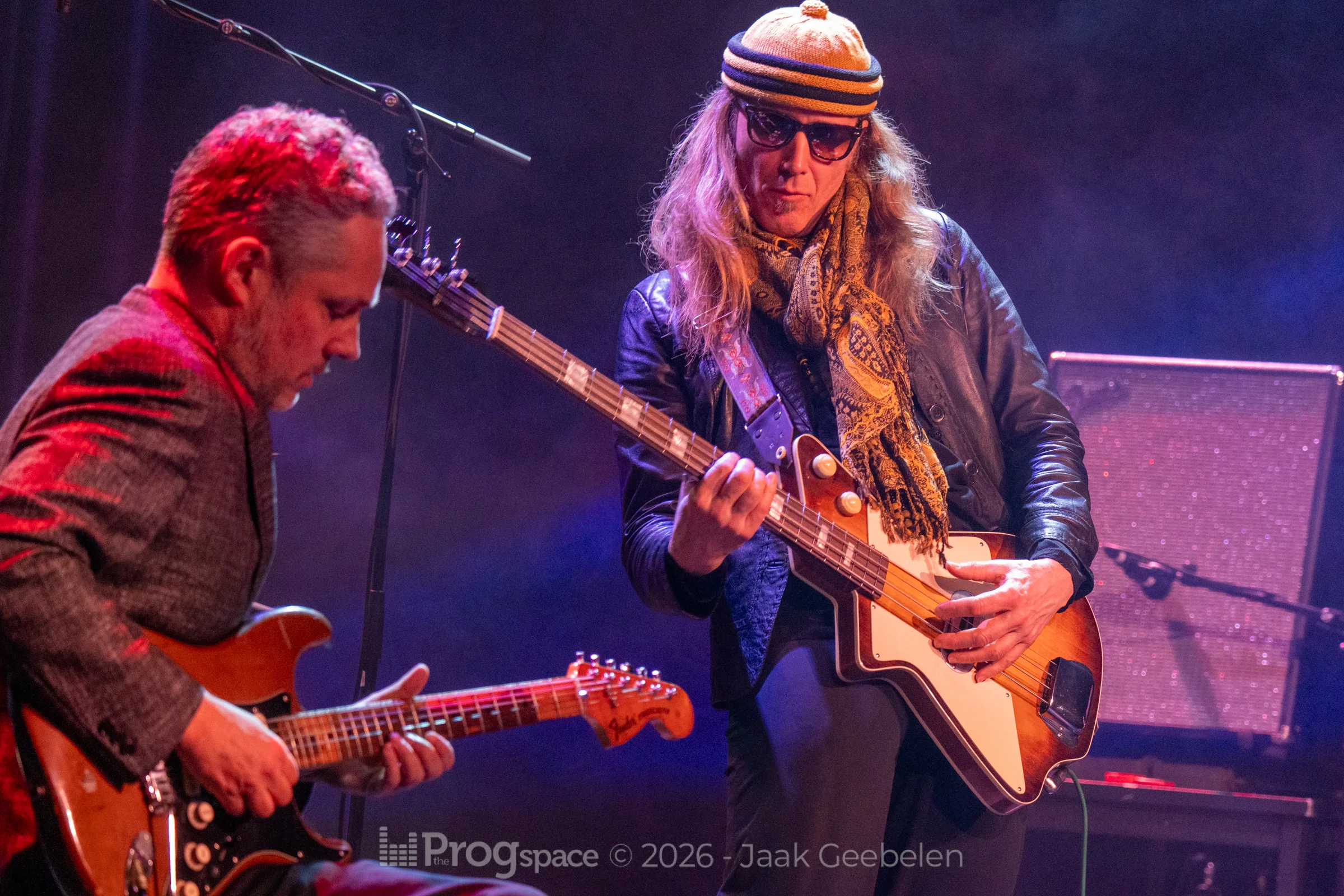
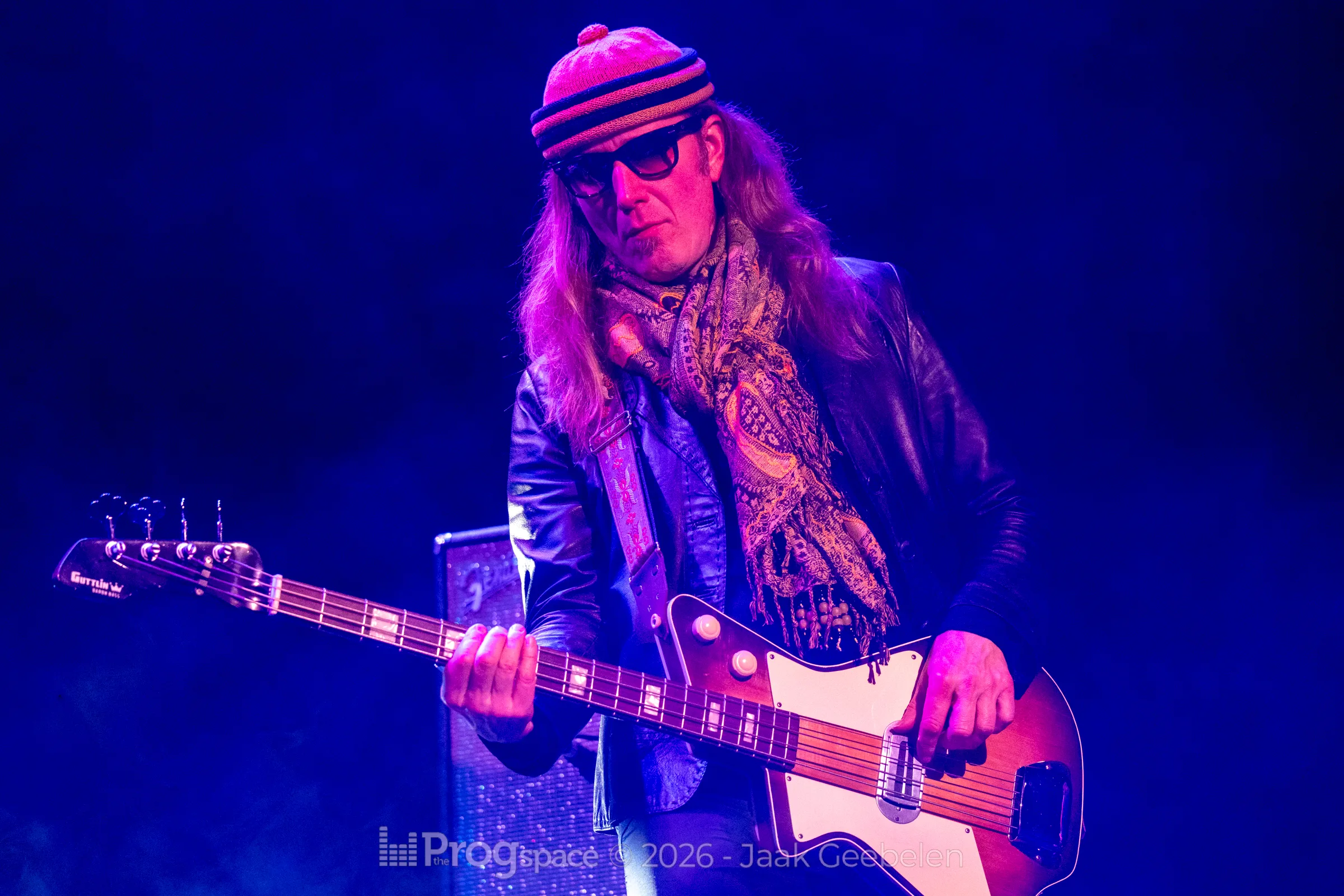
Carlens brought physical presence. In leather jacket, scarf, distinctive knitted hat and dark sunglasses, he embodied something between cosmic troubadour and seasoned rock figure. His bass lines were melodic and propulsive, occasionally almost leading. His body language — turning toward Verbruggen, stepping toward Vanhamel, seeking eye contact with Mortelmans — became part of the musical dialogue itself.
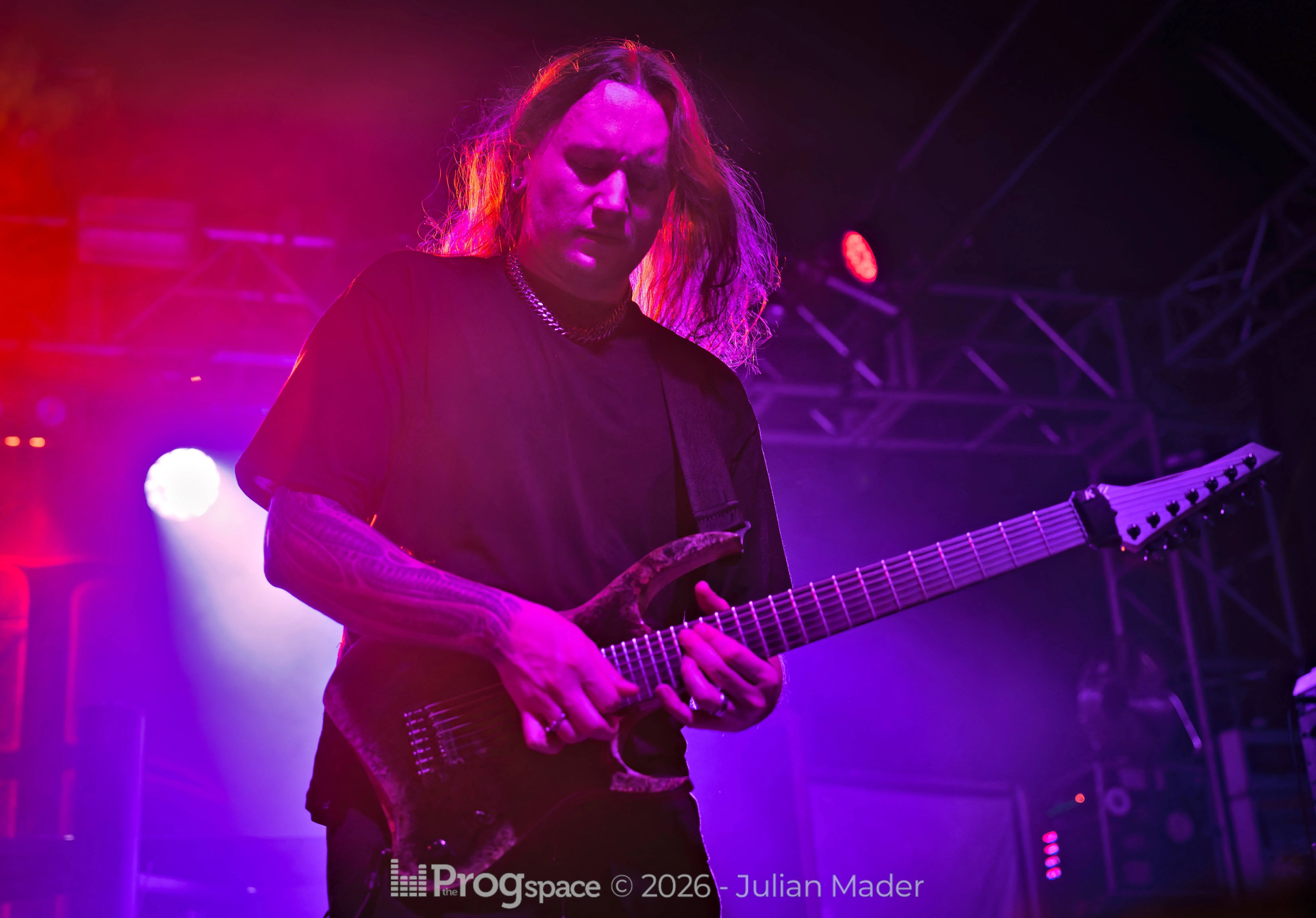
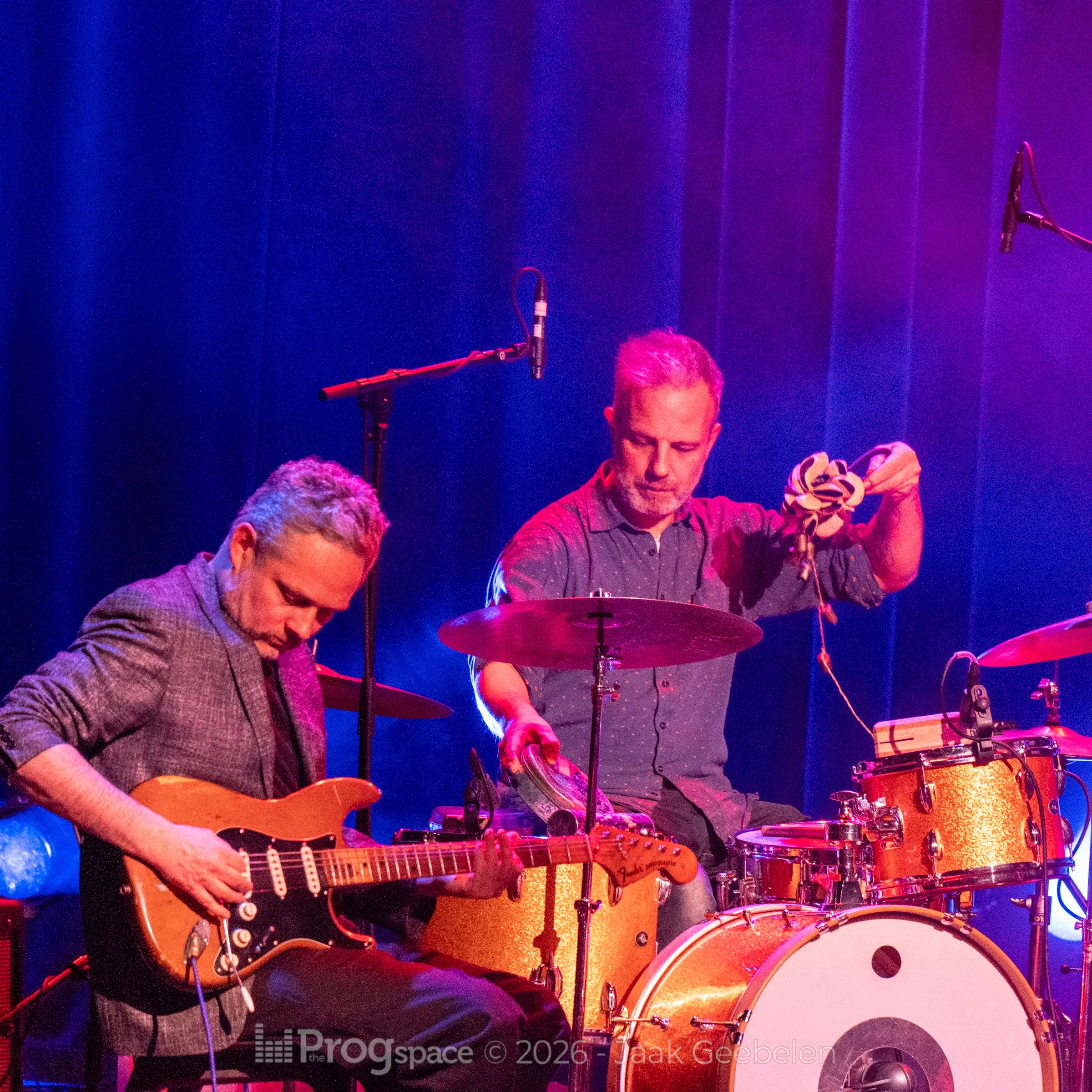
Vanhamel, seated throughout, acted as the silent architect. His guitar work focused less on riffs than on colour. Delay, sustain and subtle feedback lent certain passages a post-rock atmosphere. Where Carlens moved, Vanhamel constructed.
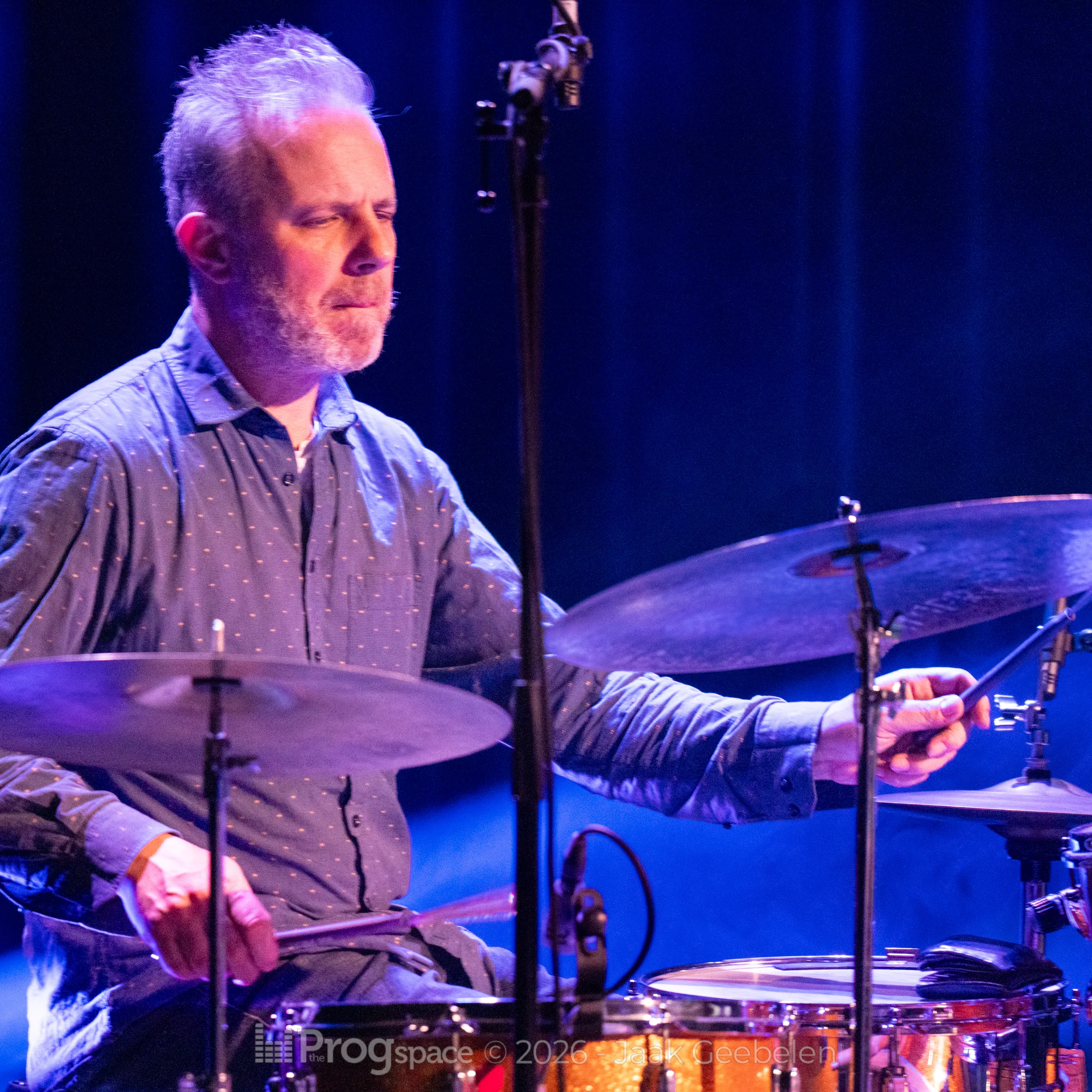
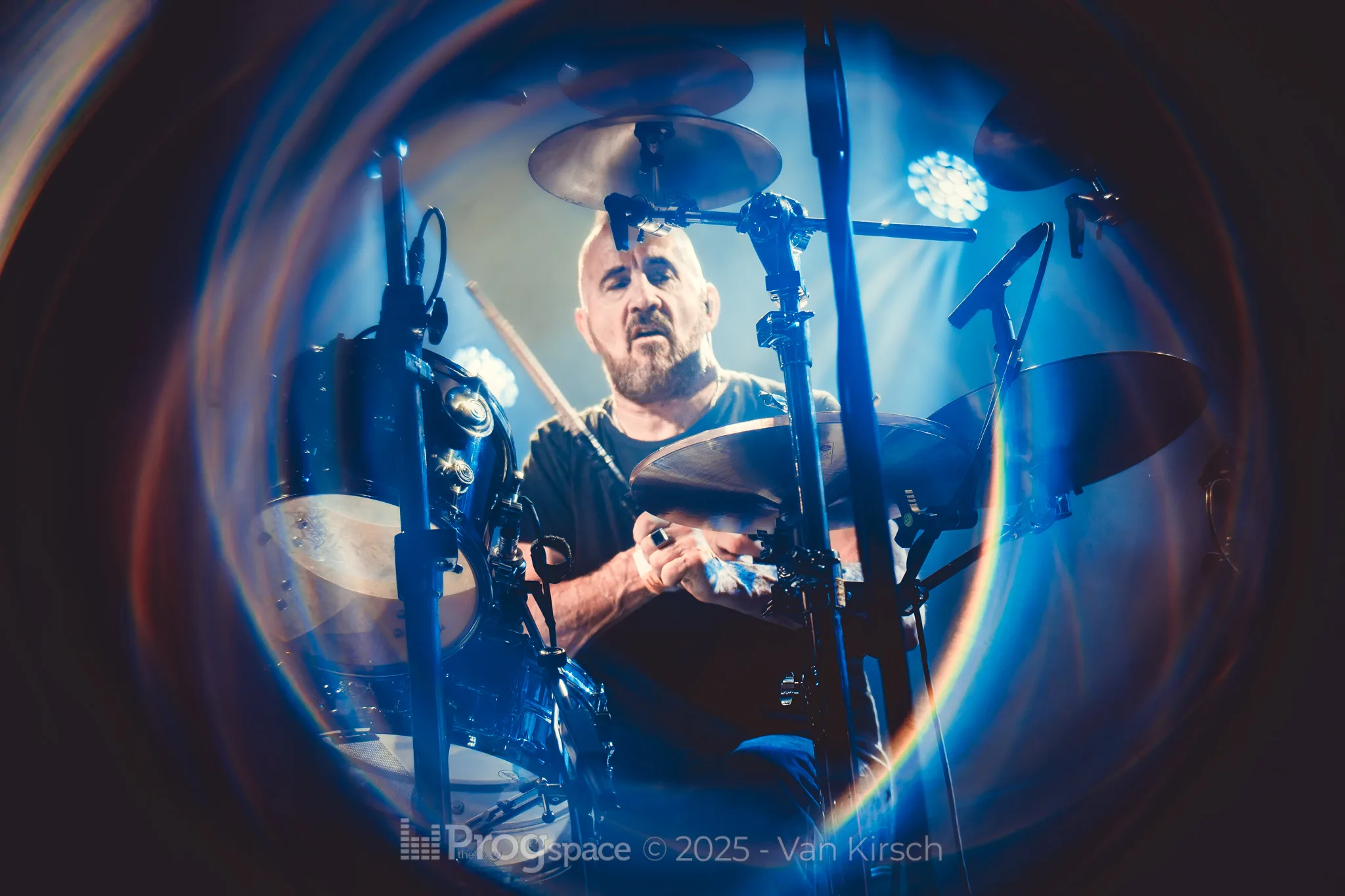
Verbruggen proved to be one of the evening’s revelations. His playing occasionally recalled Nick Mason in Pink Floyd’s early psychedelic phase: atmospheric, never overpowering, always in service of the whole. His use of brushes, rods and additional percussive elements allowed him to shape texture rather than simply mark time. Frequently tapping on the wooden shells of his drums, he maintained a remarkably clear and open sound. His approach was distinctly jazz-oriented: listening, responding, colouring.
For those seeking historical parallels, the collective psychedelic exploration inevitably evokes Amon Düül II in the Yetiera — particularly the extended improvisational suite. The same meandering development, the same emphasis on group dynamic over individual display. Yet unlike that earlier German counterpart, SPACE Quartet operates without vocals, resulting in a more concentrated and abstract sonic language. At times, the long-form builds and gradual crescendos also ventured into post-rock territory.
What SPACE Quartet demonstrated in Tienen was not nostalgic psychedelia nor academic jazz, but a controlled form of freedom. Four musicians listening, responding and constructing a sonic universe that can only exist in that precise moment.
No hits. No fixed structures. No certainty.
But concentration, interaction and a shared pursuit of sound.
And that is precisely why this Belgian project belongs on an international progressive platform.



 We’re a group of Prog-lovers who started a journey to share with you our thoughts about albums, concerts, tours and festivals, the photo galleries of the Prog concerts we visit, as well interviews with upcoming or established musicians or prog-related people. Follow our Facebook page for frequent updates and news around the Progniverse.