




![Kristoffer Gildenlöw – [Humanised]](https://theprogspace.com/wp-content/uploads/2026/07/Front-Cover-440x440.webp)









The Guru Guru – Down The Hill Festival, Rillaar, Belgium – 22 August 2026
The Guru Guru was one of those bands on the Down The Hill bill that, at first glance, seemed to sit somewhat outside the traditional spectrum of progressive rock. The Belgian group is usually filed under art rock, noise rock and math rock, but during this performance it quickly became clear that those labels only tell part of the story. The band constantly searches for unusual rhythmic structures, shifting accents, strong dynamic contrasts and guitar parts that seem to exist alongside rather than above one another. That is precisely where the connections with the more adventurous side of the prog scene begin to emerge.
To describe The Guru Guru simply as noise rock would therefore do them a disservice. There is certainly abrasion and nervous energy in their music, but there is also a striking amount of attention to structure and layering. Especially the way bass, drums and guitars operate as independent voices gives the music its own logic, at times almost mathematical in nature.
Having seen BEAT only shortly before, I was repeatedly struck by how familiar some of the terminology felt: angular guitars, polyrhythms, unexpected accents, independent instrumental lines. The Guru Guru obviously does not sound like King Crimson, but the way different parts interlock and then seem to pull apart again occasionally suggests a related kind of rhythmic architecture. Here, however, that precision is filtered through a much rougher mix of noise rock, post-punk and alternative art rock.
The musical highlight for me was “Joke’s on You (Under Over)”. This was the moment where I found myself strongly reminded of Reine Fiske, particularly in the guitar approach. Not because the song as a whole sounds like Landberk, but because of the way the guitars leave space, hover around the composition and add colour and tension rather than constantly taking the lead. Those open, airy guitar textures, combined with the gradual build in intensity, briefly brought that distinctive Fiske atmosphere to mind. The song also unfolded layer by layer towards an emotional climax, making it one of the clearest progressive moments in the set from a compositional point of view.
Elsewhere, it was just as obvious how broadly the band thinks. At times the emphasis was on groove, at others on pure rhythmic disruption, and then on fragile passages that suddenly broke open into much harder eruptions. The Guru Guru constantly shifted between compactness and complexity without ever falling into technical showmanship. The music can be intricate when it needs to be, but never seems designed merely to impress with virtuosity.
At least as important as the musical side of the performance was the stage presence.
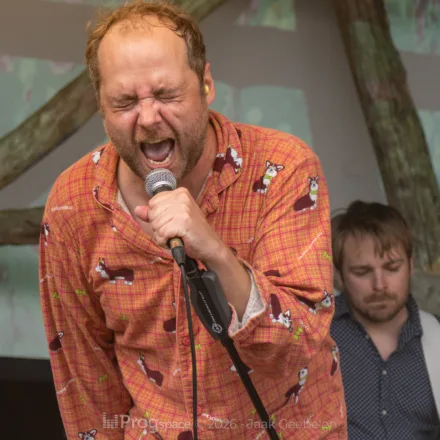
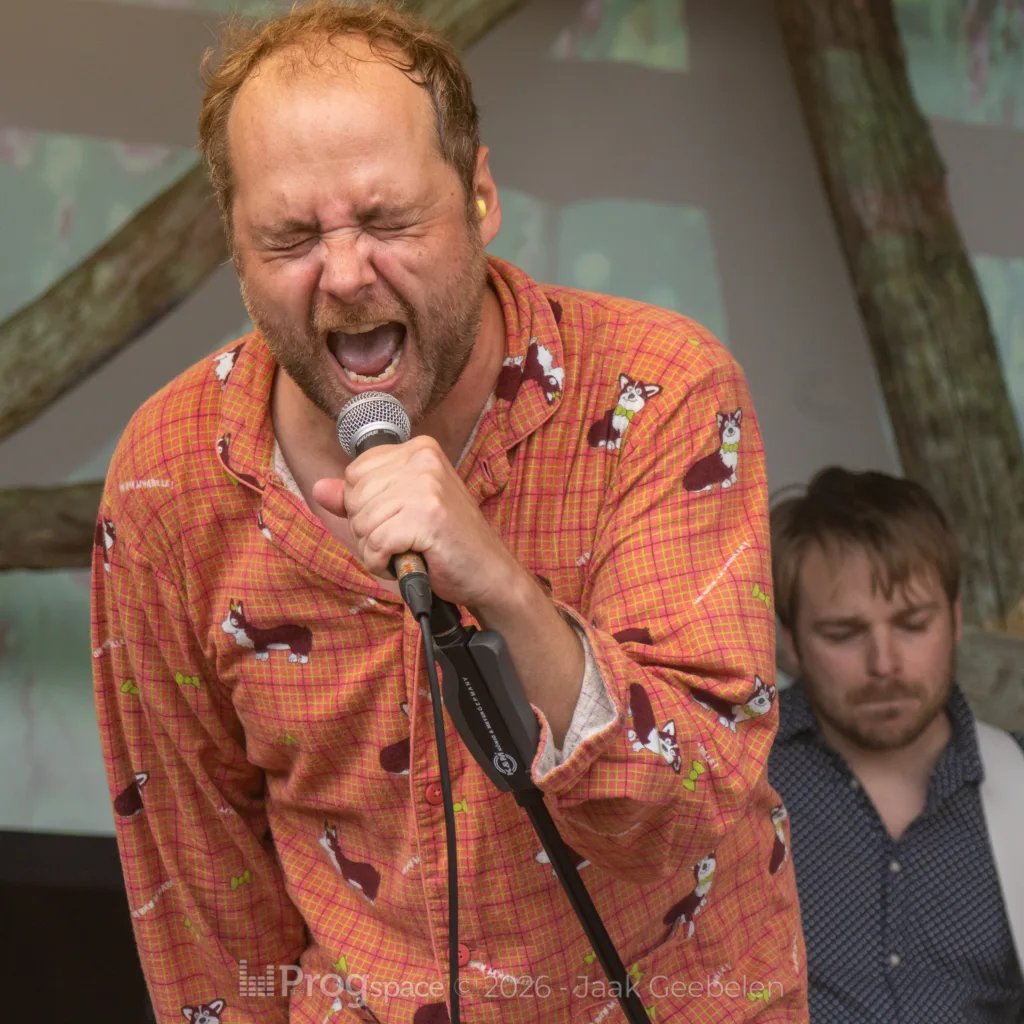
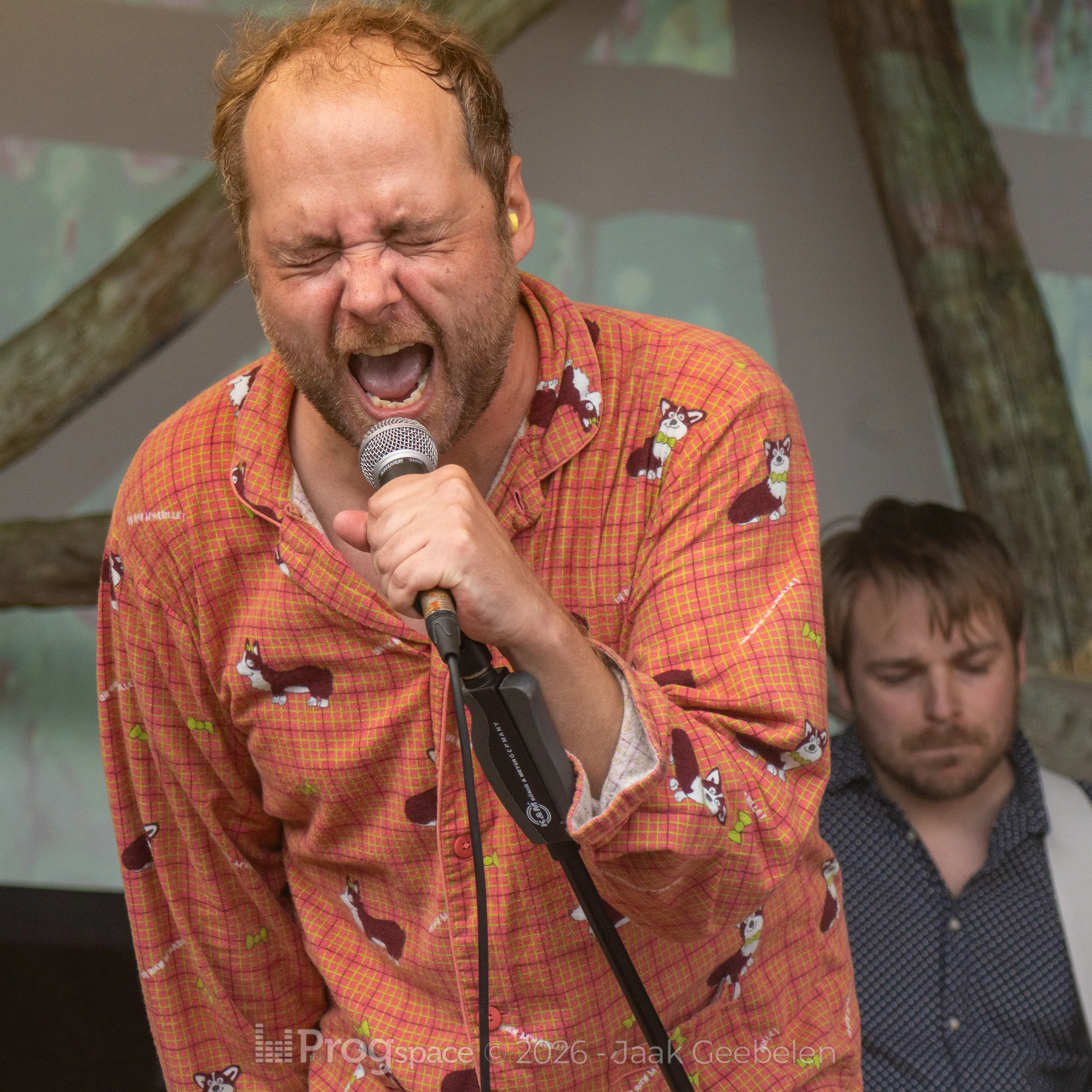
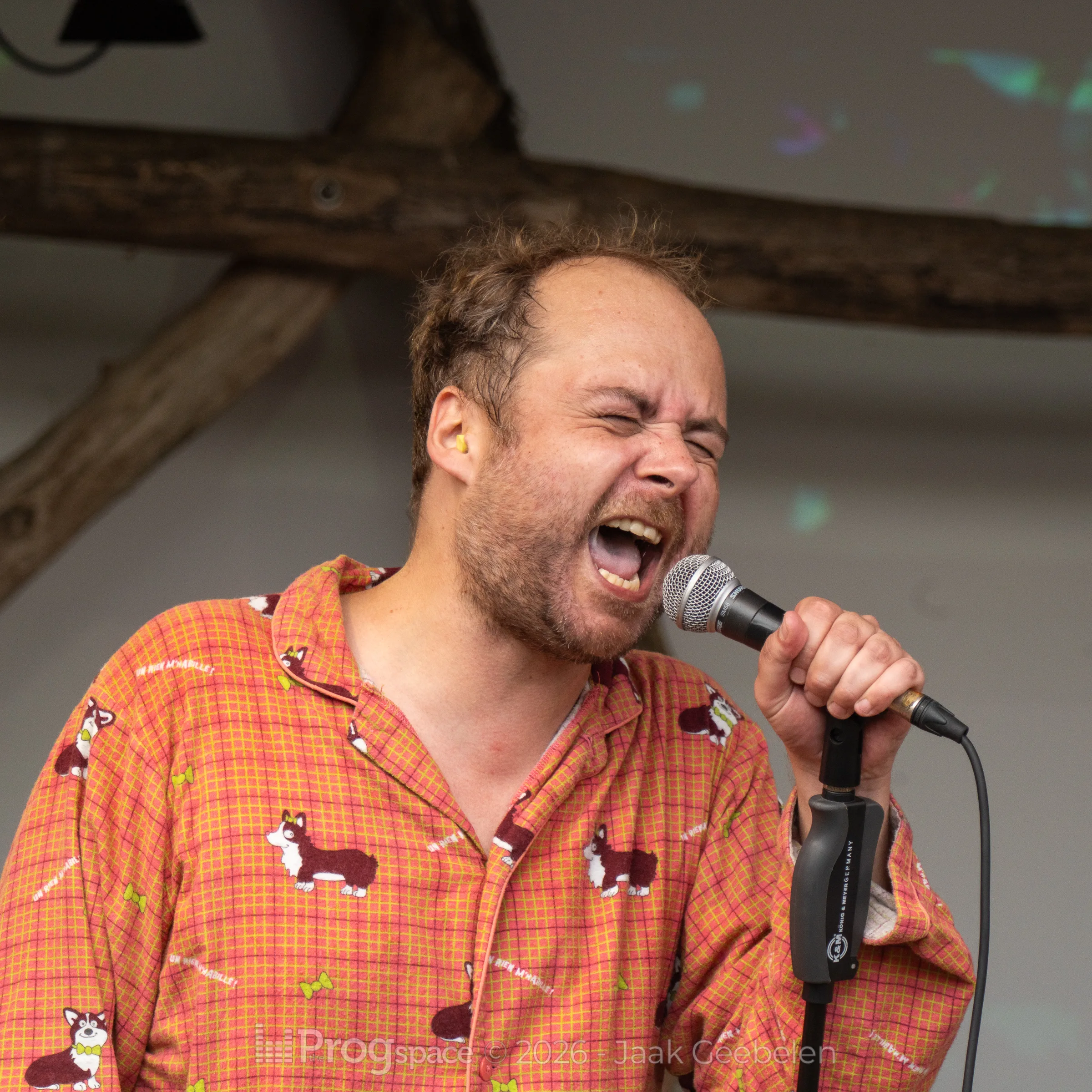
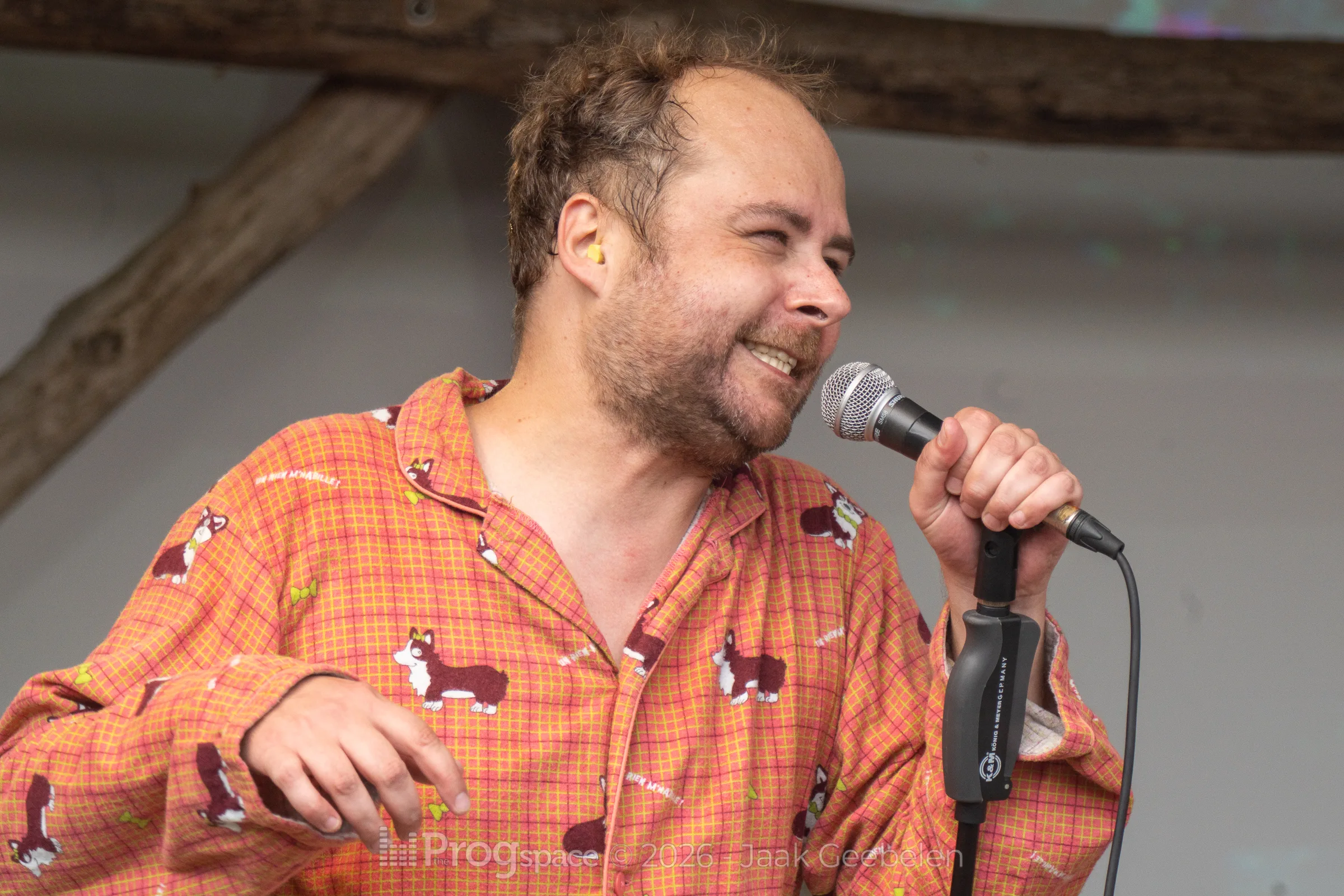
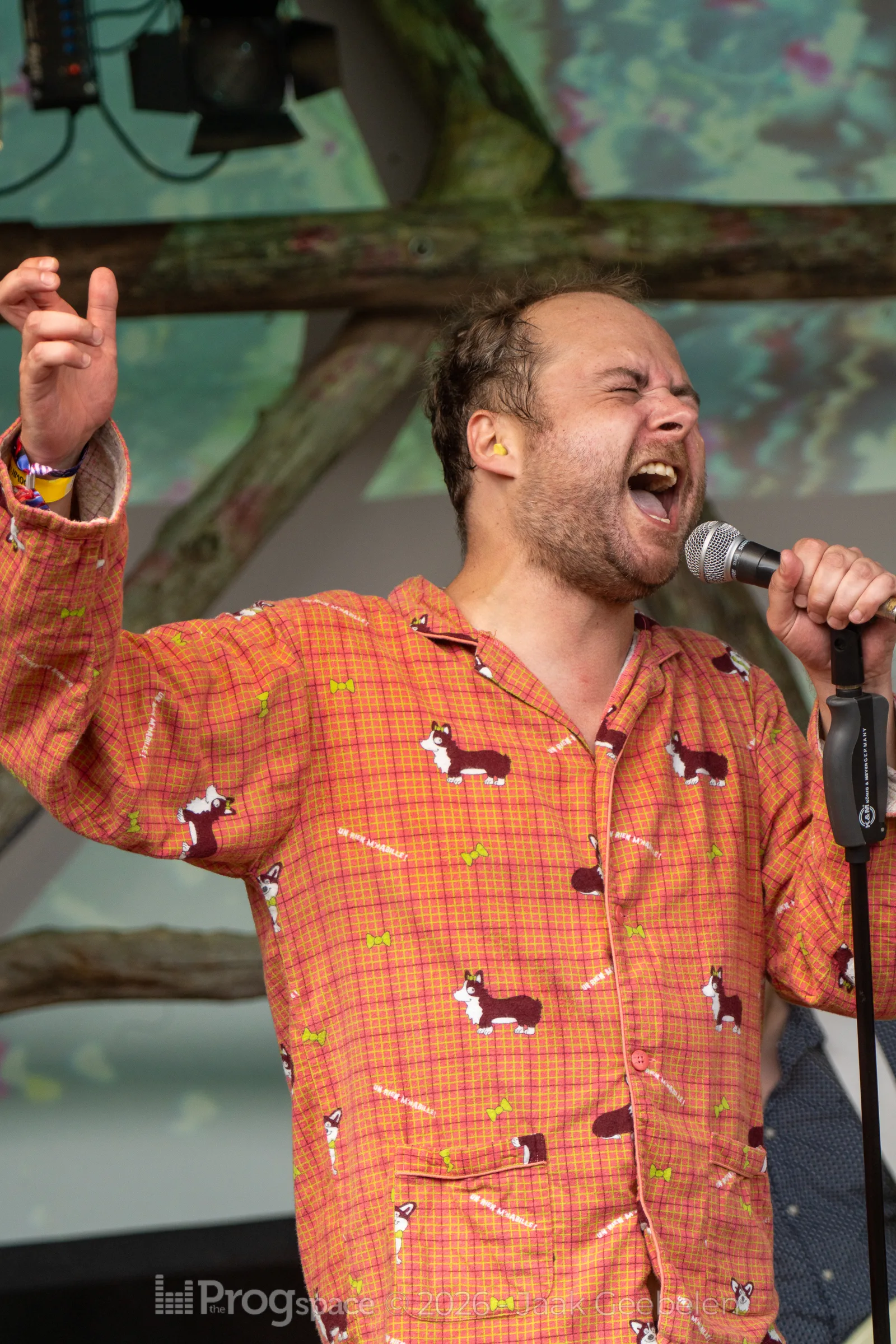
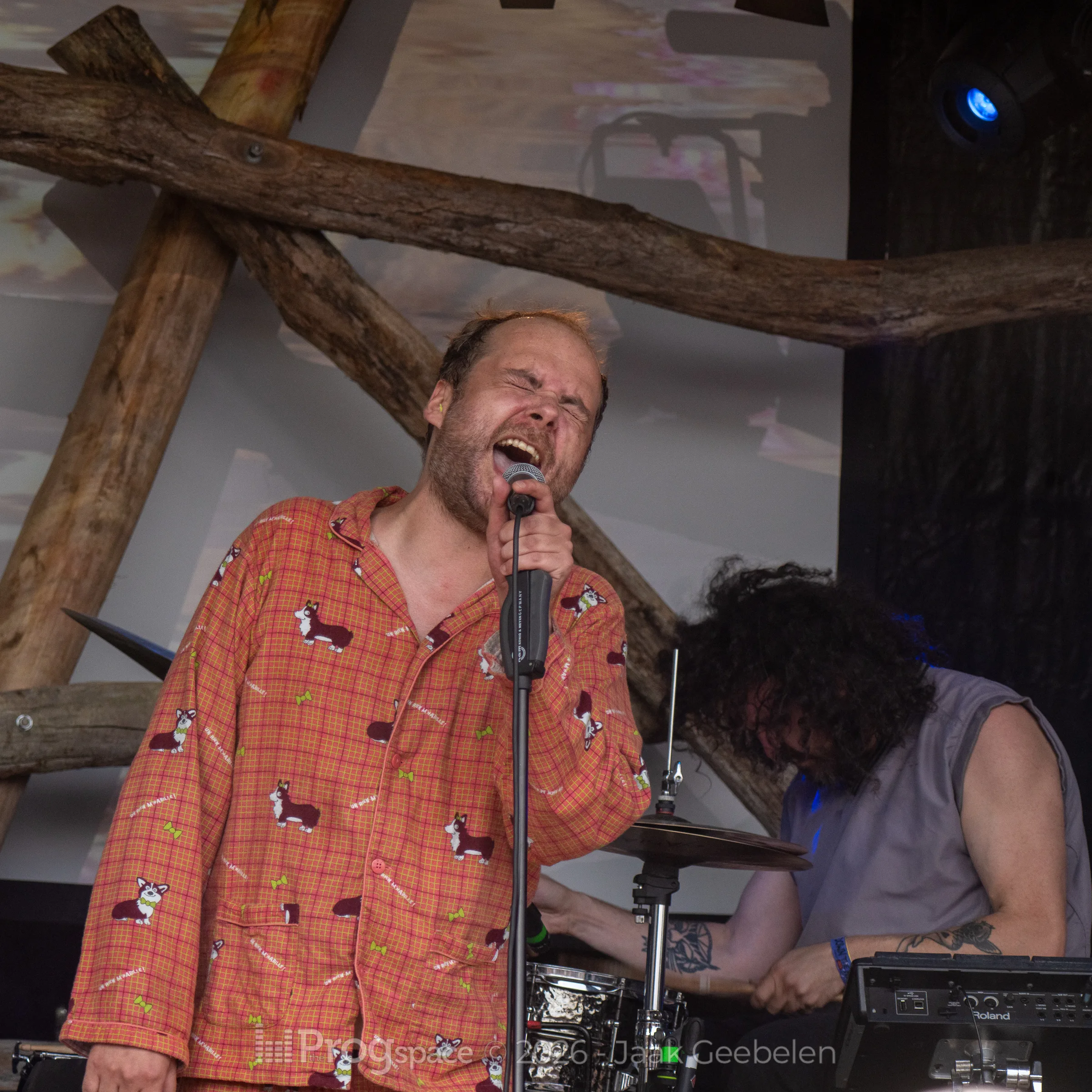
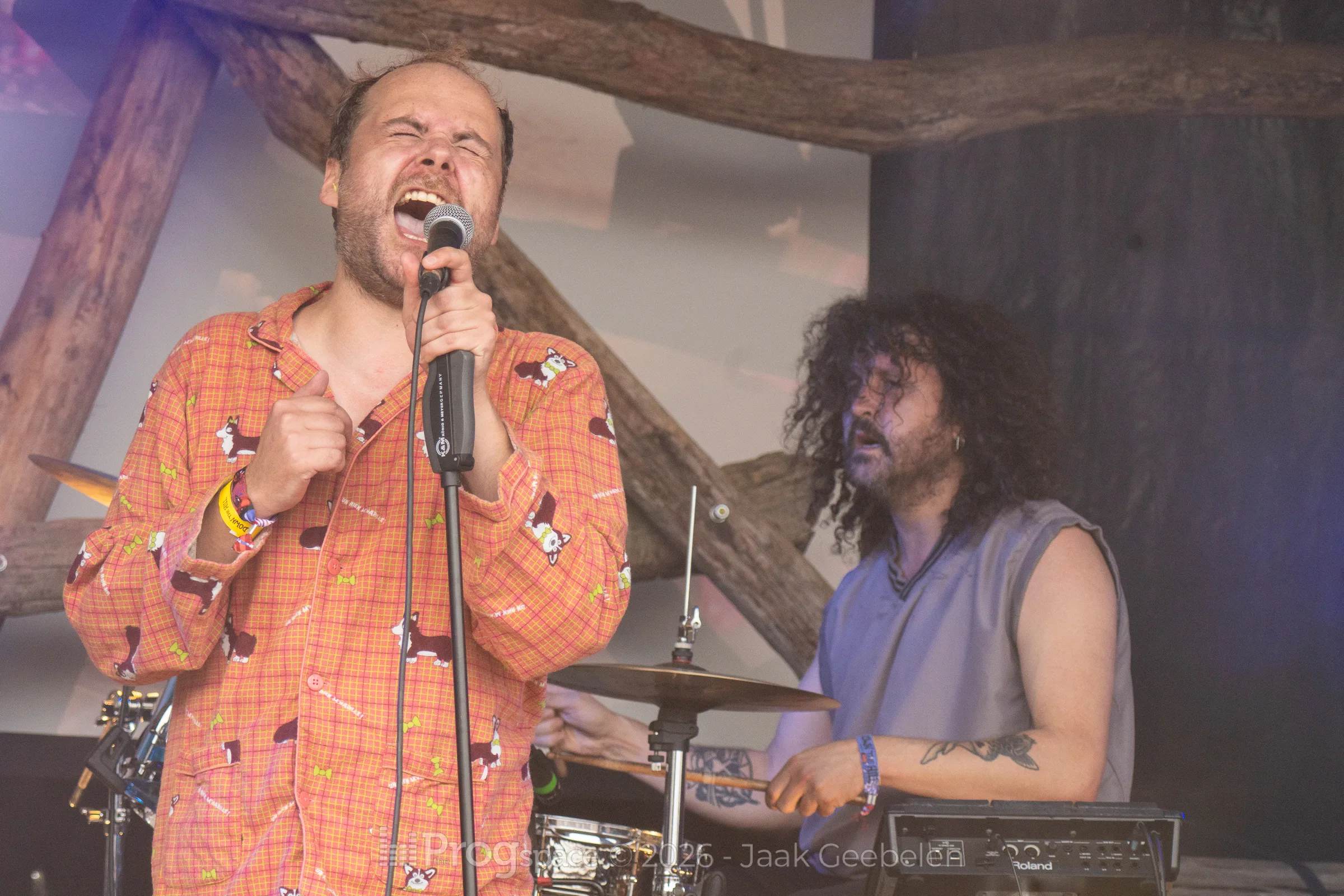
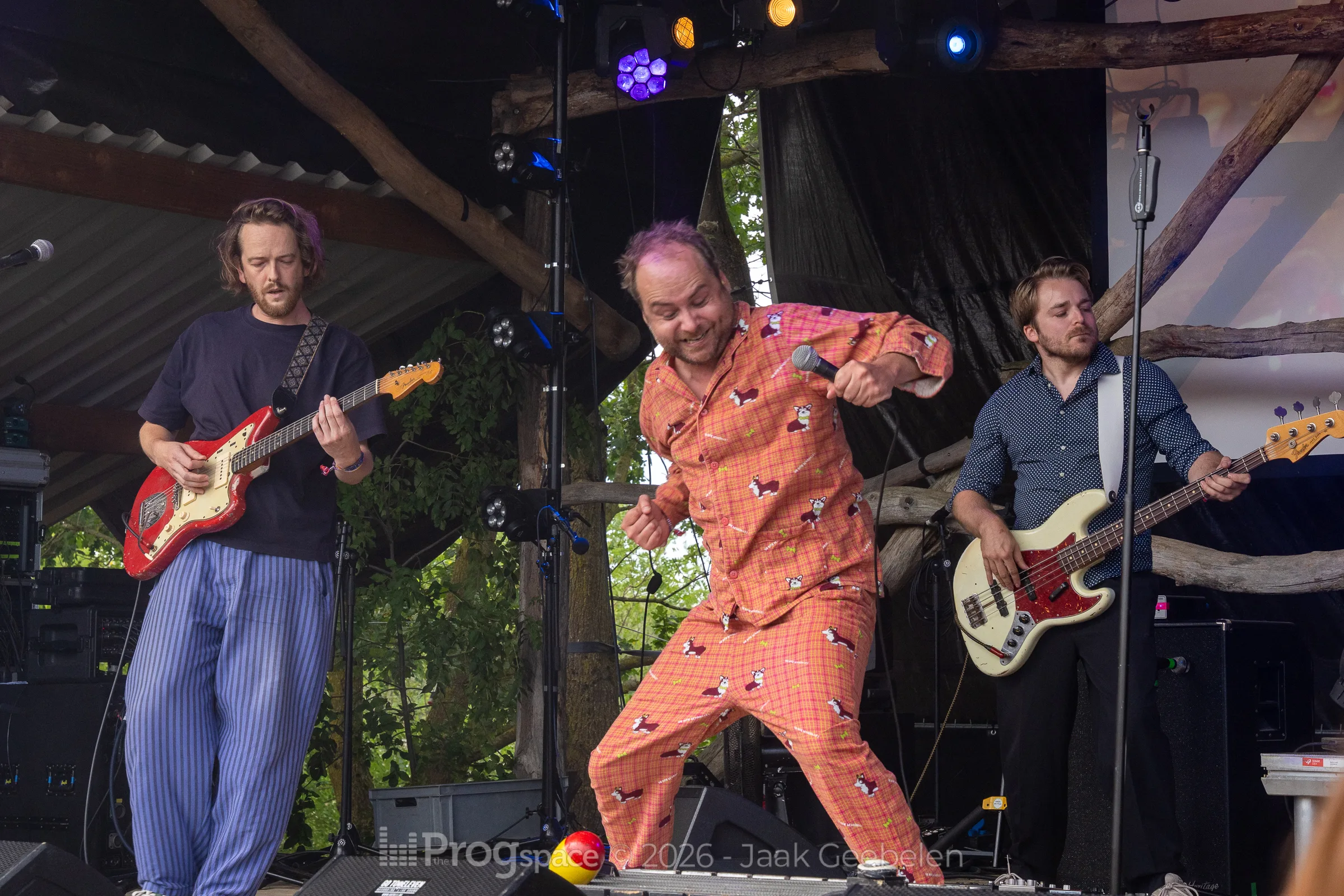
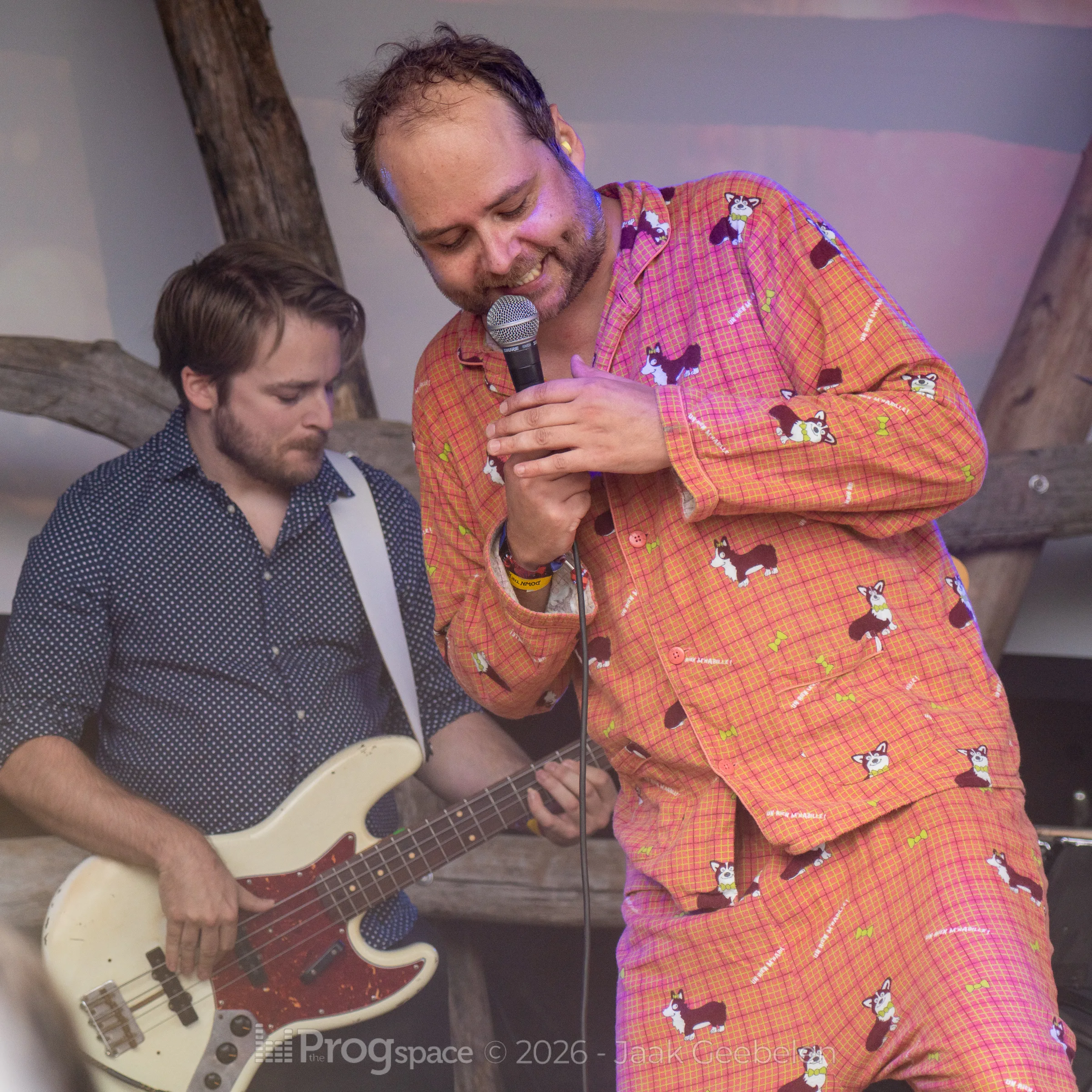
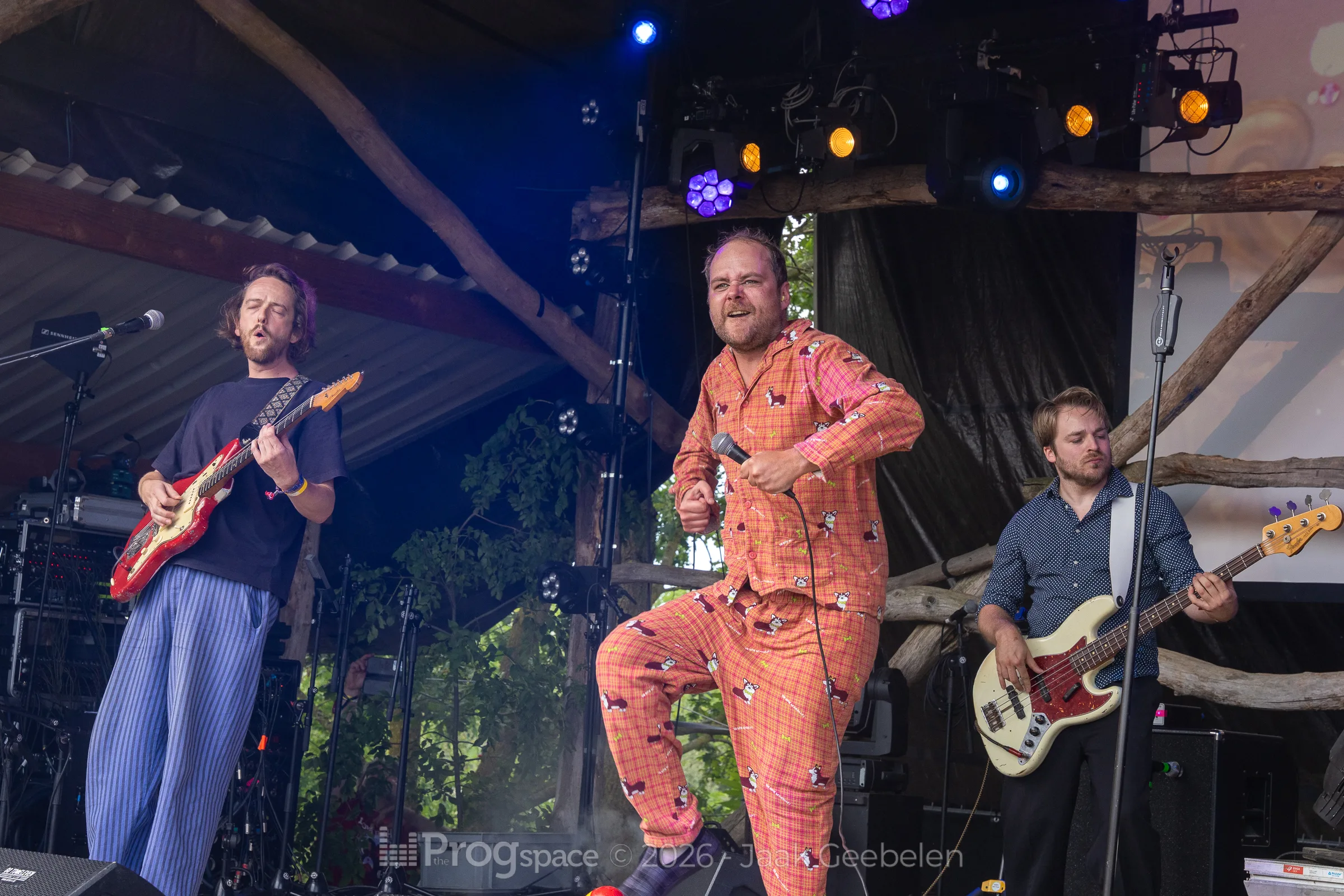
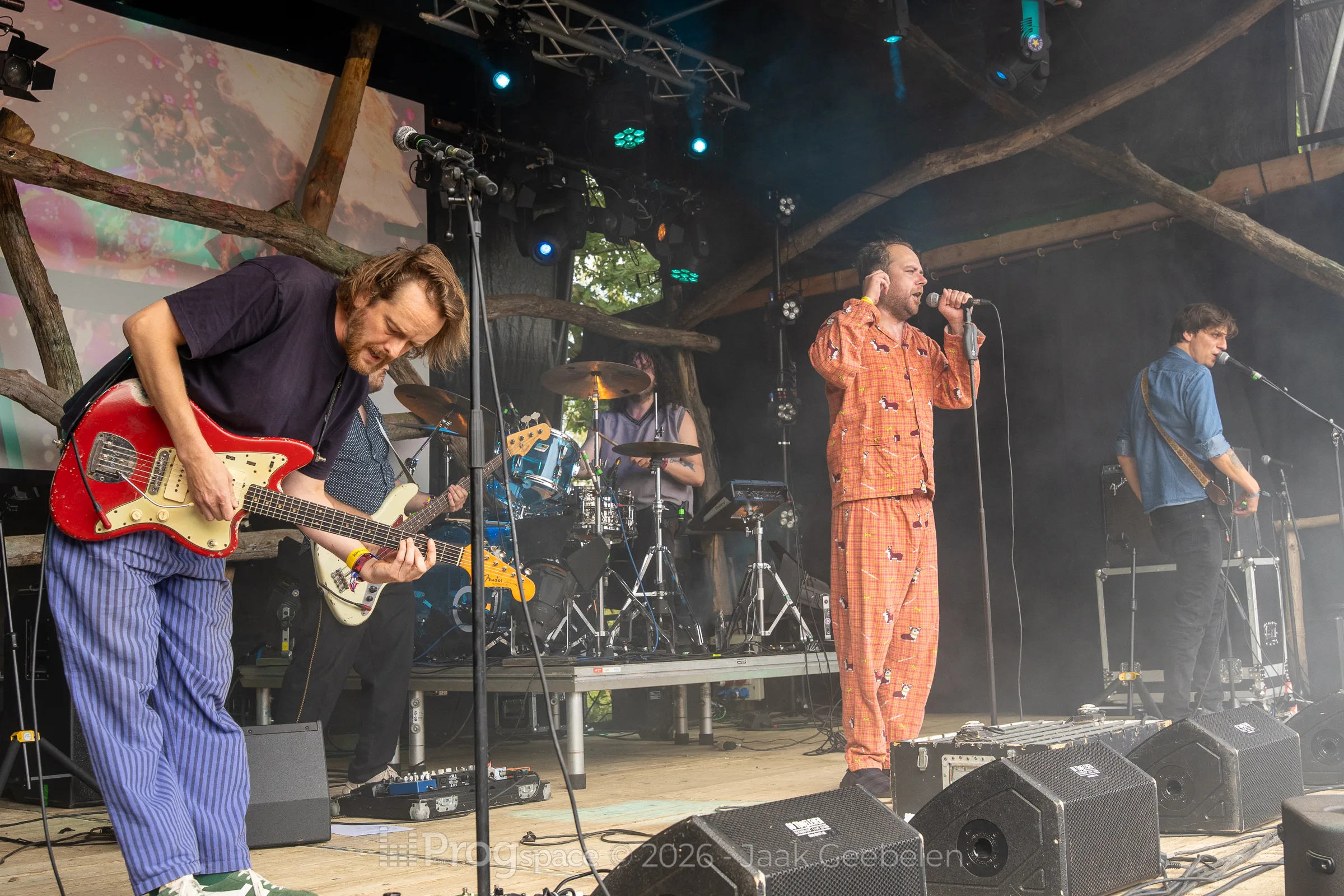
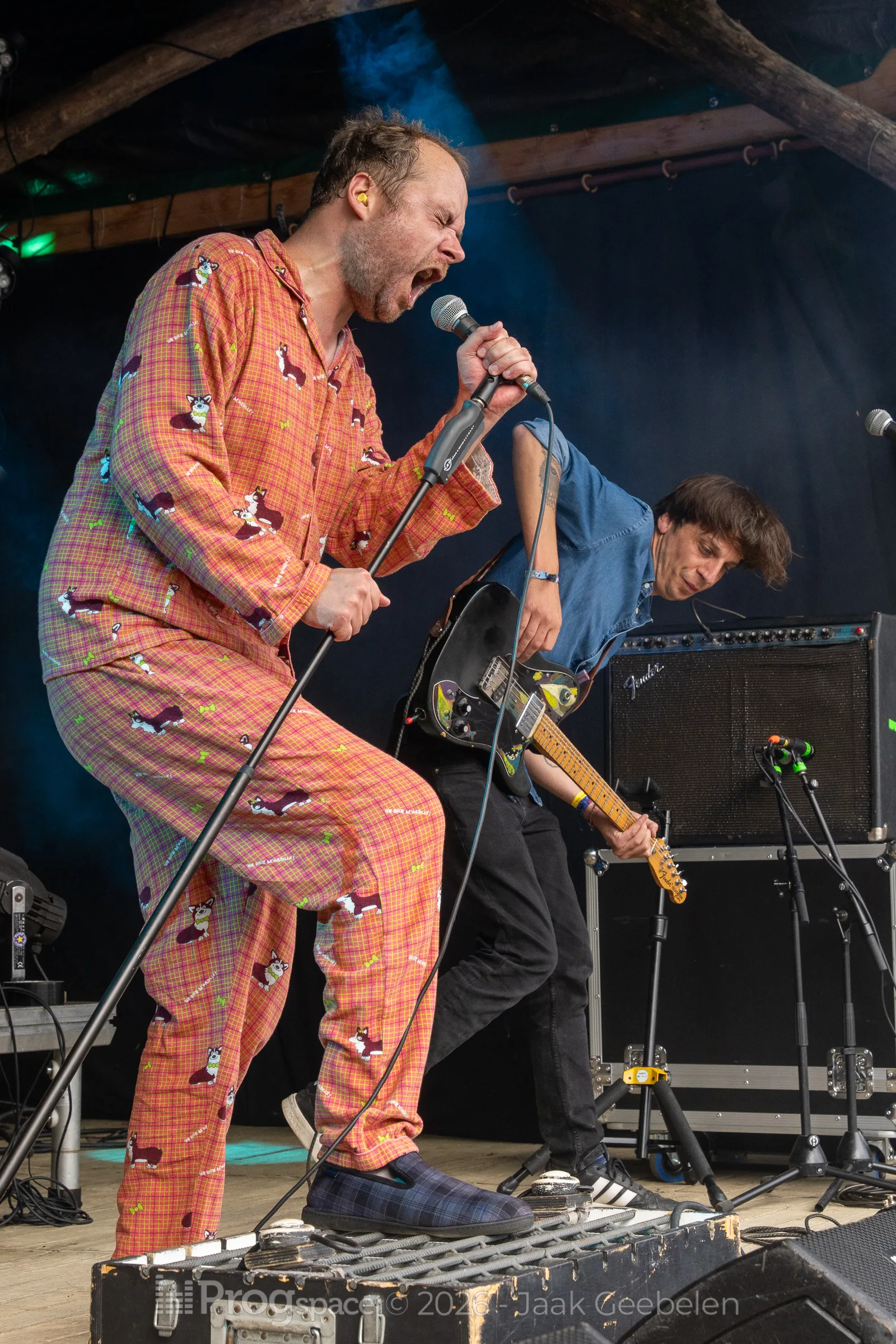
Frontman Tom Adriaenssens was visually impossible to ignore. Dressed in a bright orange pyjama covered in little dogs, he looked less like a conventional rock singer than someone who had wandered out of an absurdist stage play. The outfit was comic, disarming and slightly unsettling at the same time, but it fitted his performance style perfectly.
His whole body seemed involved in the act of singing. Eyes squeezed shut, shoulders raised, hands gripping the microphone, his face constantly shifted between pain, humour and complete abandon. At times he appeared to scream as if the music itself had become physically uncomfortable; moments later he would smile broadly or lean towards the audience with something almost conspiratorial in his expression.
As a result, the performance became much more than simply vocal delivery. Adriaenssens constantly hovered between rock frontman, actor and performance artist. His expression was large, at times grotesque, but never gratuitous. It fitted perfectly with music that constantly threatens to derail without ever actually losing control.
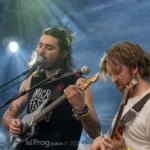
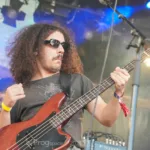
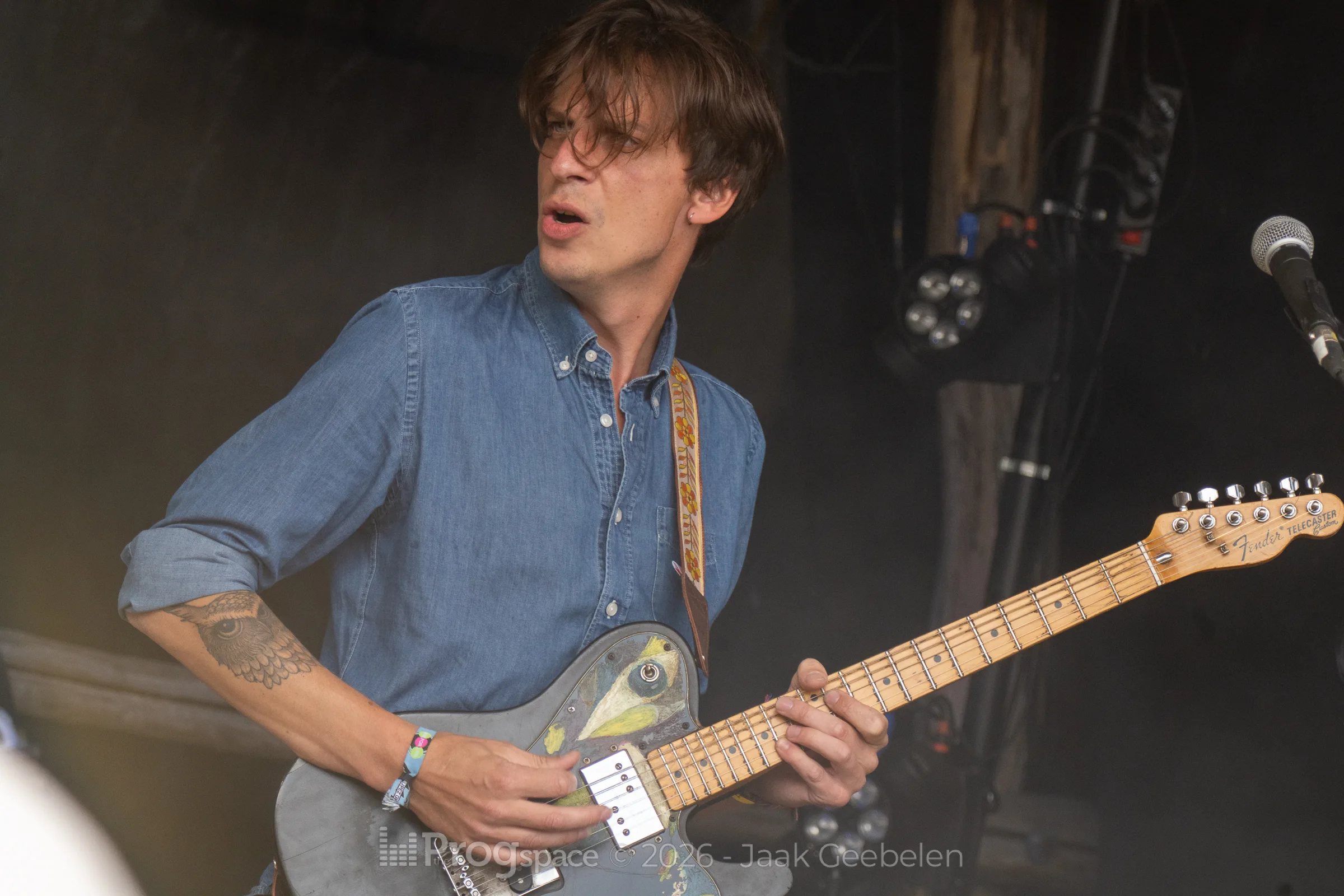
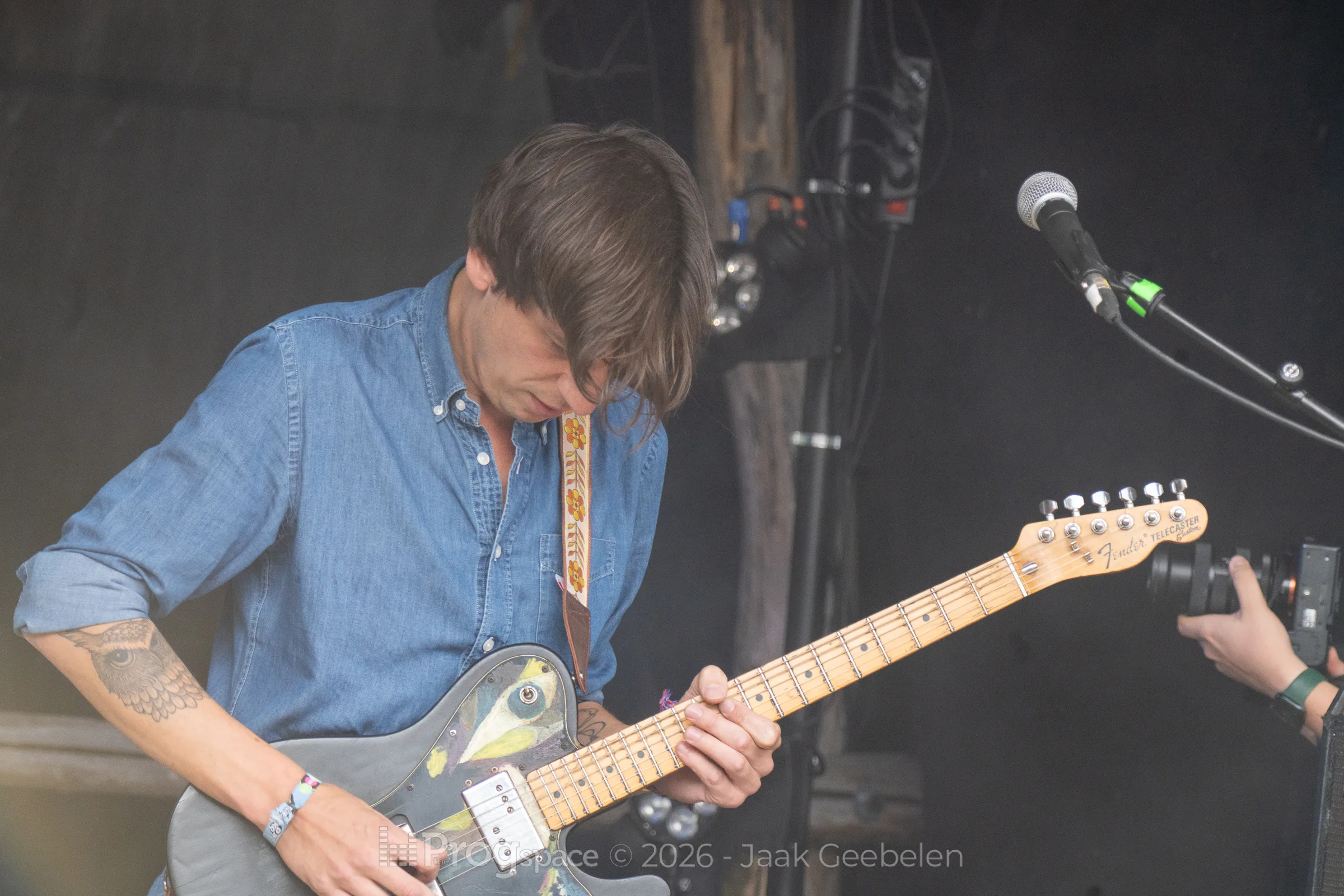
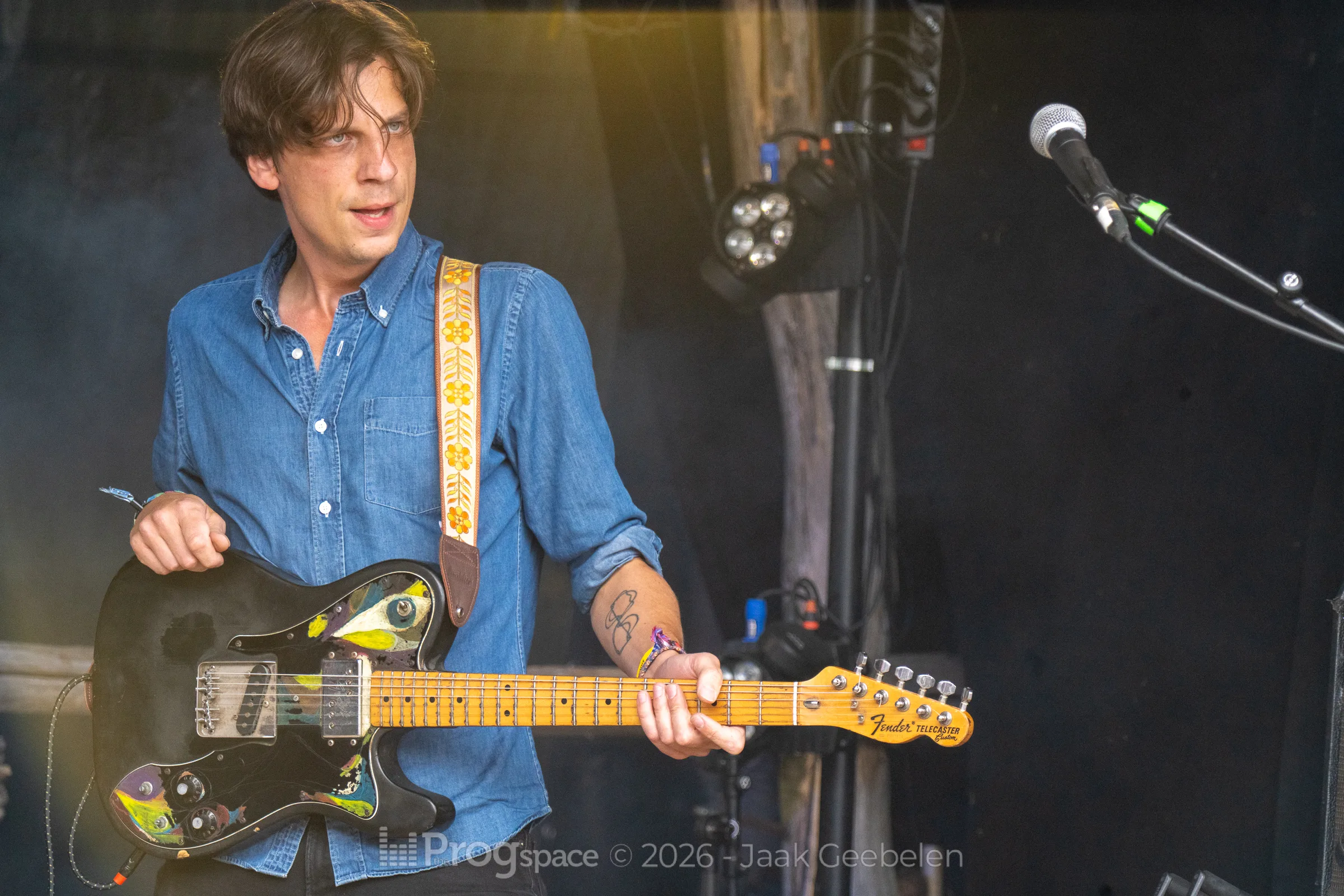
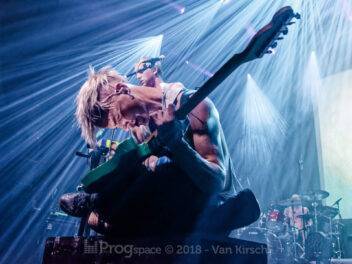
That contrast became even stronger because of the musicians around him. The guitarists often appeared far more inward-looking and concentrated. One of them, playing a strikingly decorated Telecaster, seemed completely absorbed in the instrument, head down and attention fixed on his hands and the detail of the part. The bassist projected more calm and functioned both musically and visually as an anchor point.
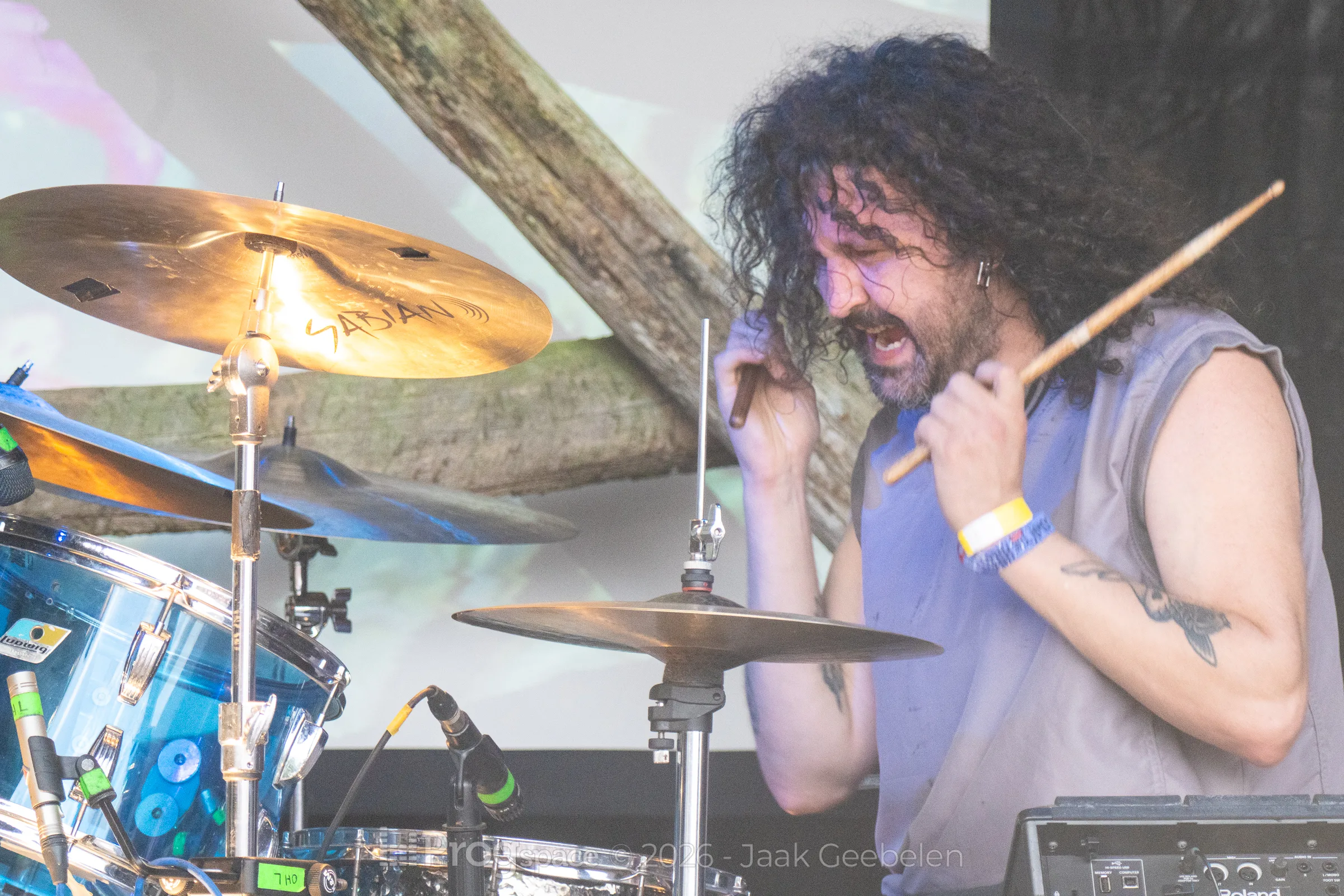
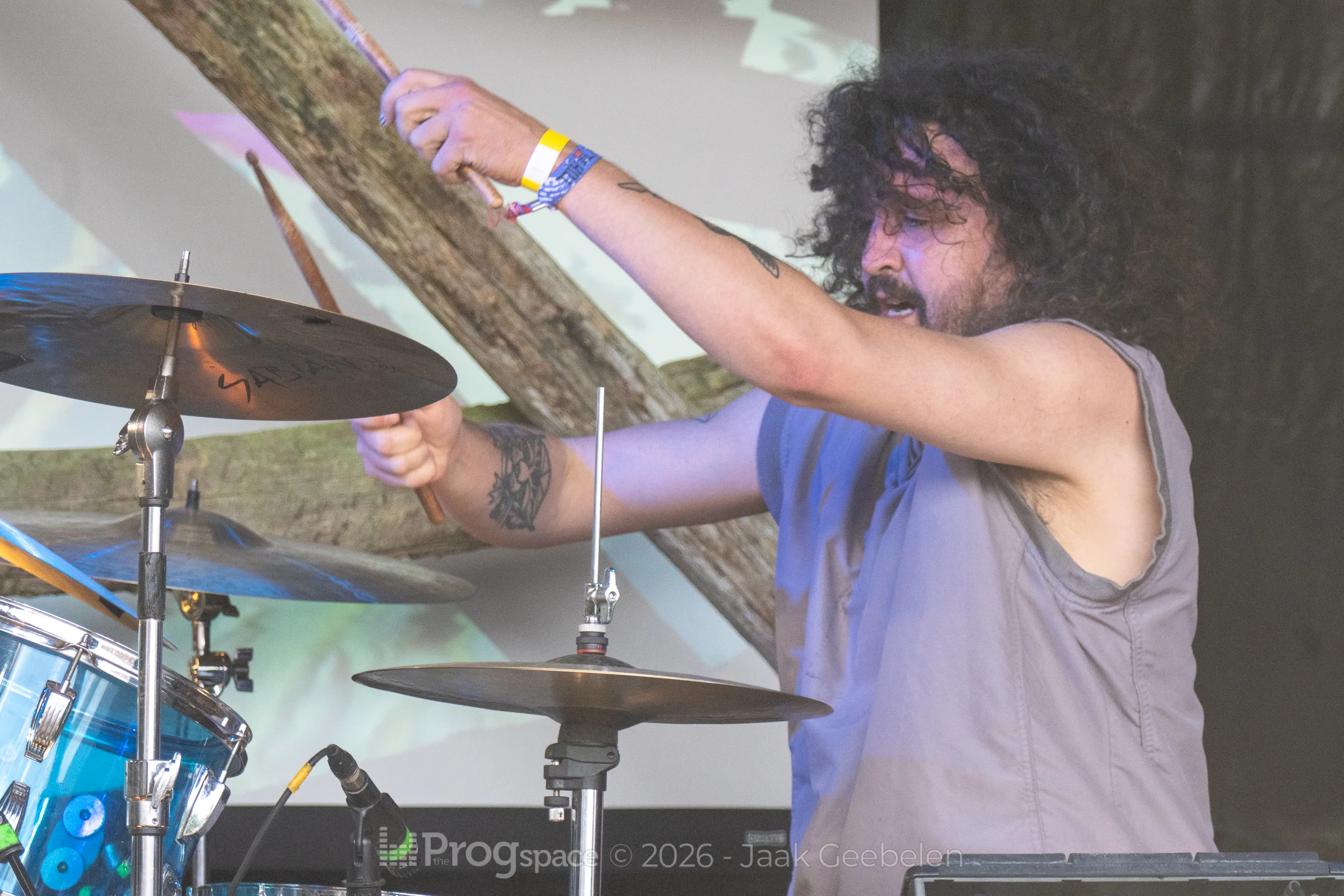
The drummer occupied the opposite end of that spectrum. Large arm movements, visible physical effort and a playing style that made the rhythmic complexity almost athletic to watch. Together, they created a compelling tension: the singer suggested chaos, while the rest of the band revealed how carefully that chaos had been constructed.
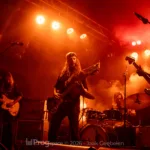
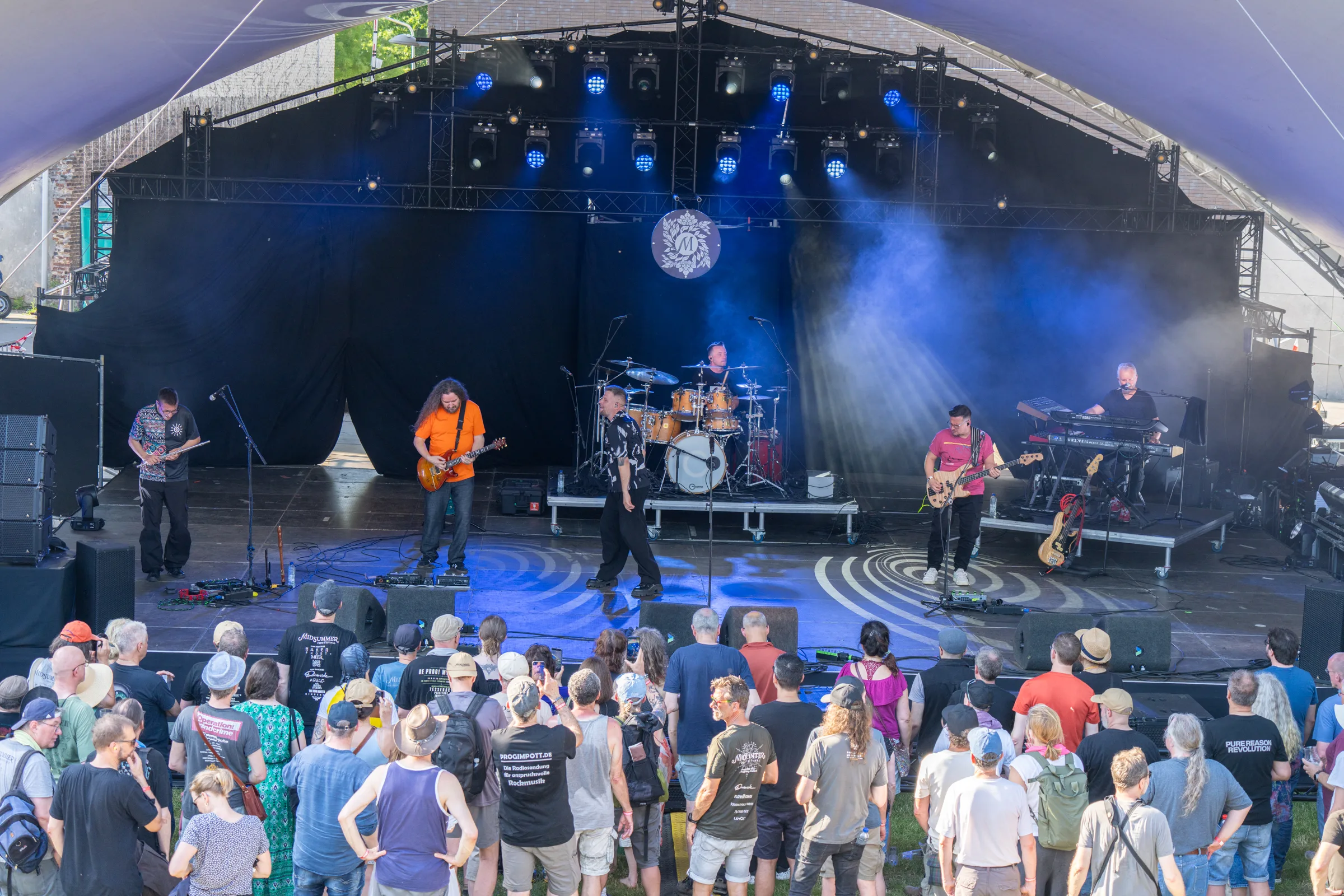
The Down The Hill stage itself contributed greatly to the atmosphere. The rough wooden beams, projections, coloured light accents and a light haze made the setting feel far more organic than a standard festival stage. The irregular wooden structures cut through the scene almost like part of an installation. Against that backdrop, Adriaenssens’ orange pyjama looked even stranger and, somehow, even more appropriate.
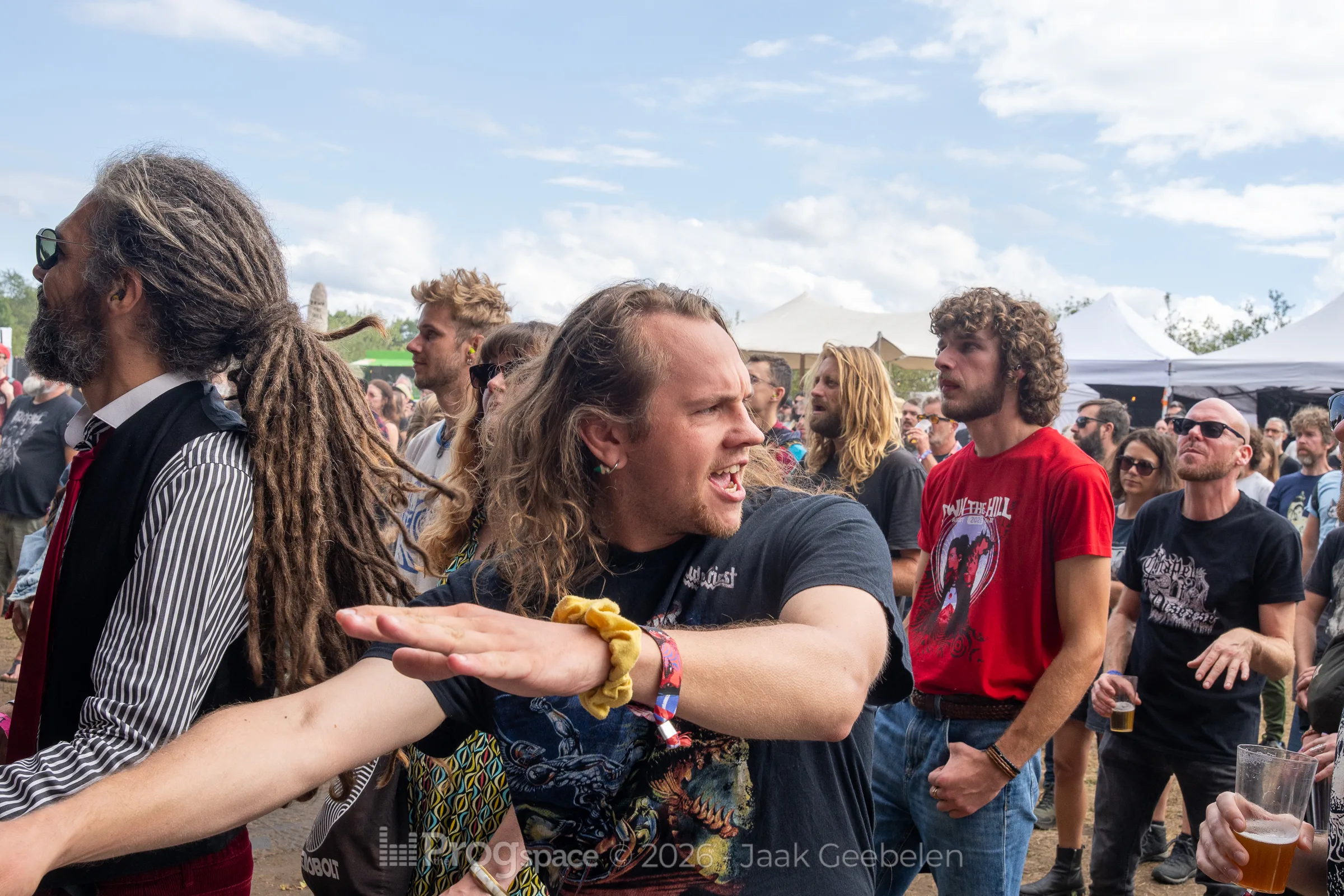
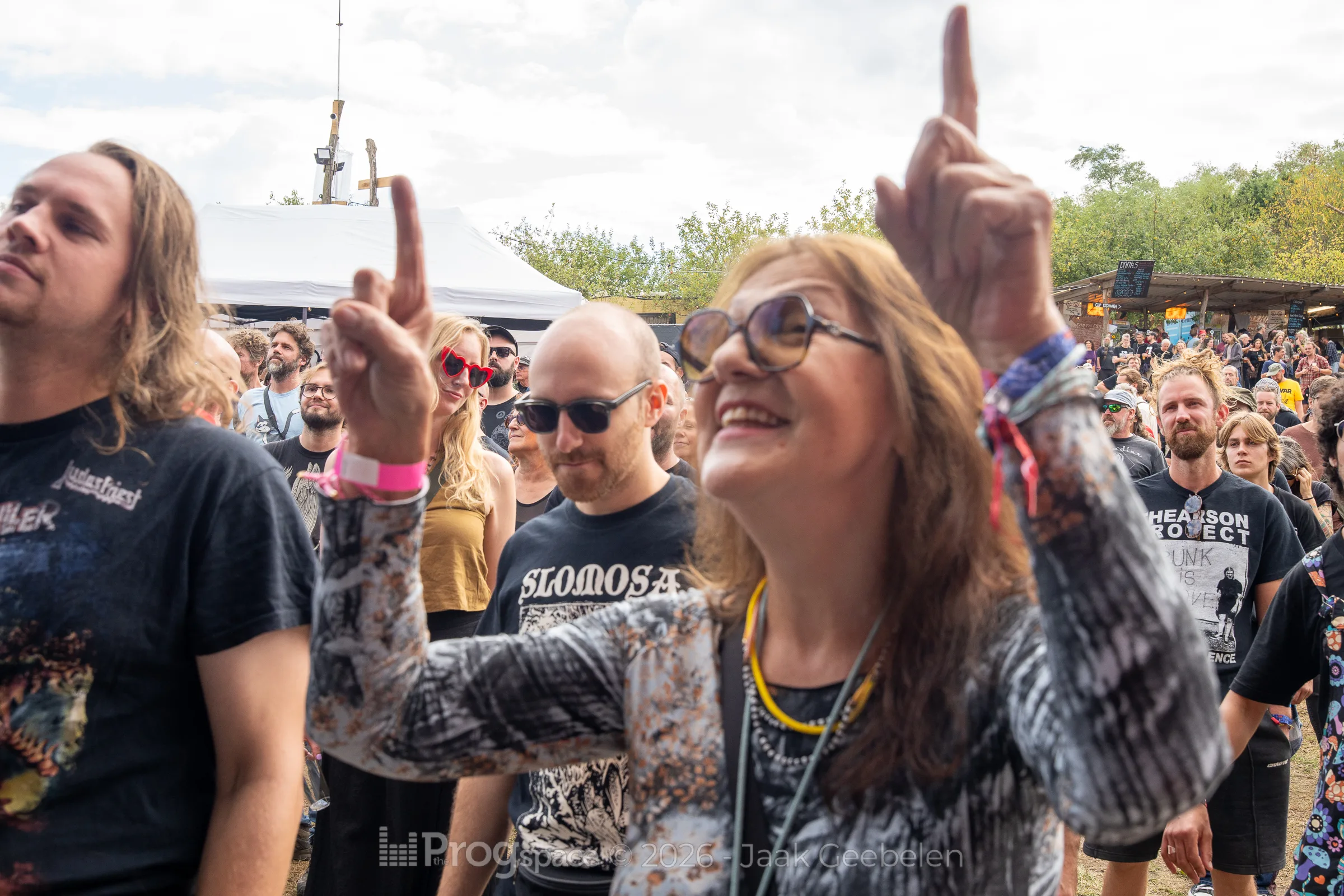
Meanwhile, a second story was unfolding in front of the stage.
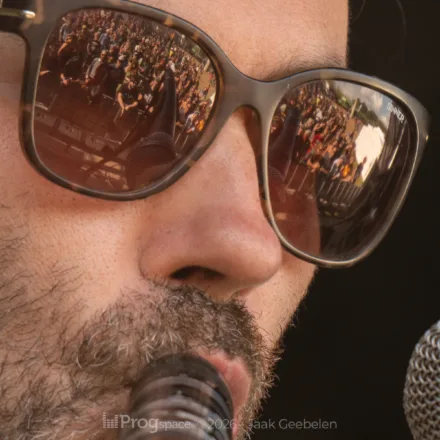
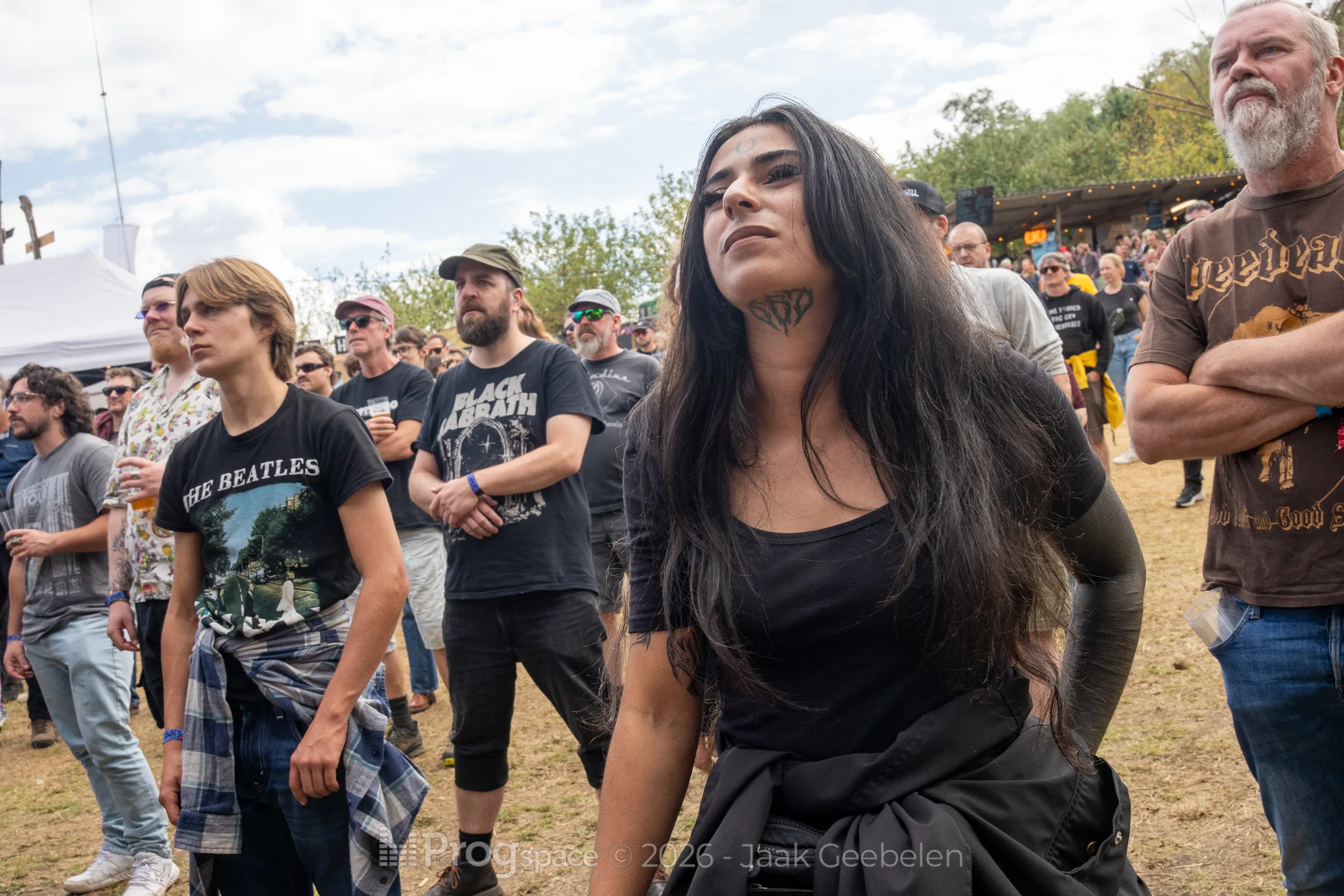
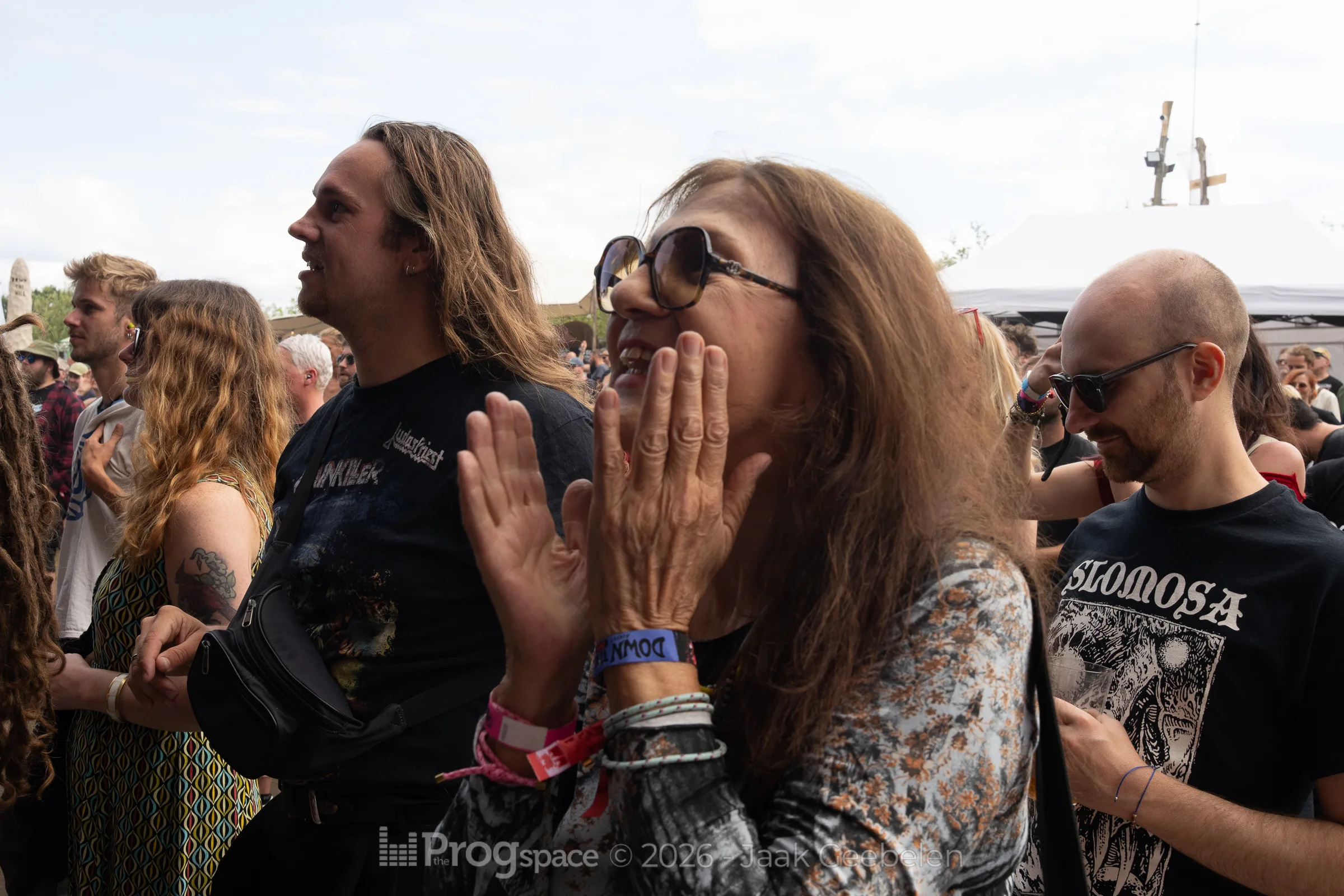
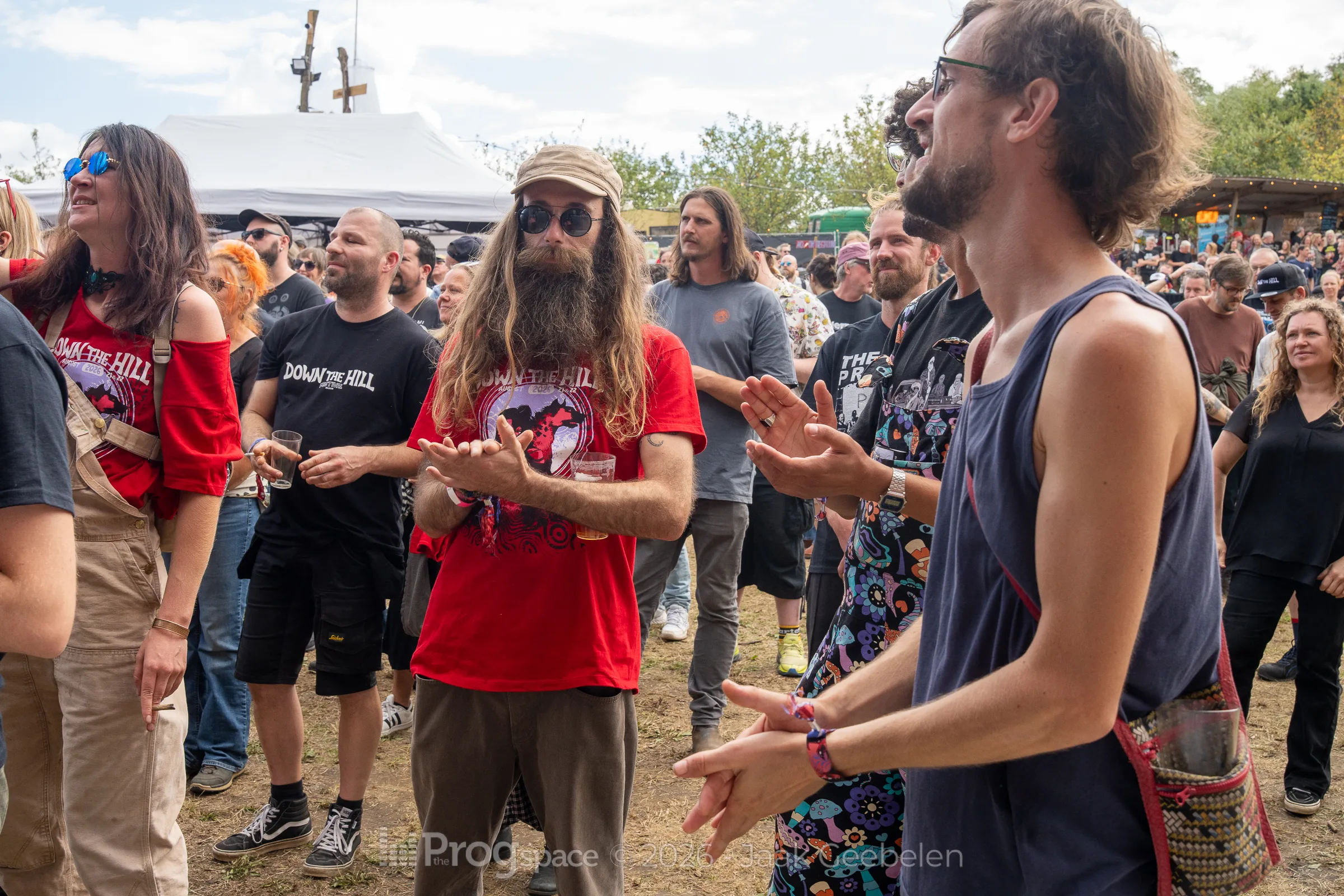
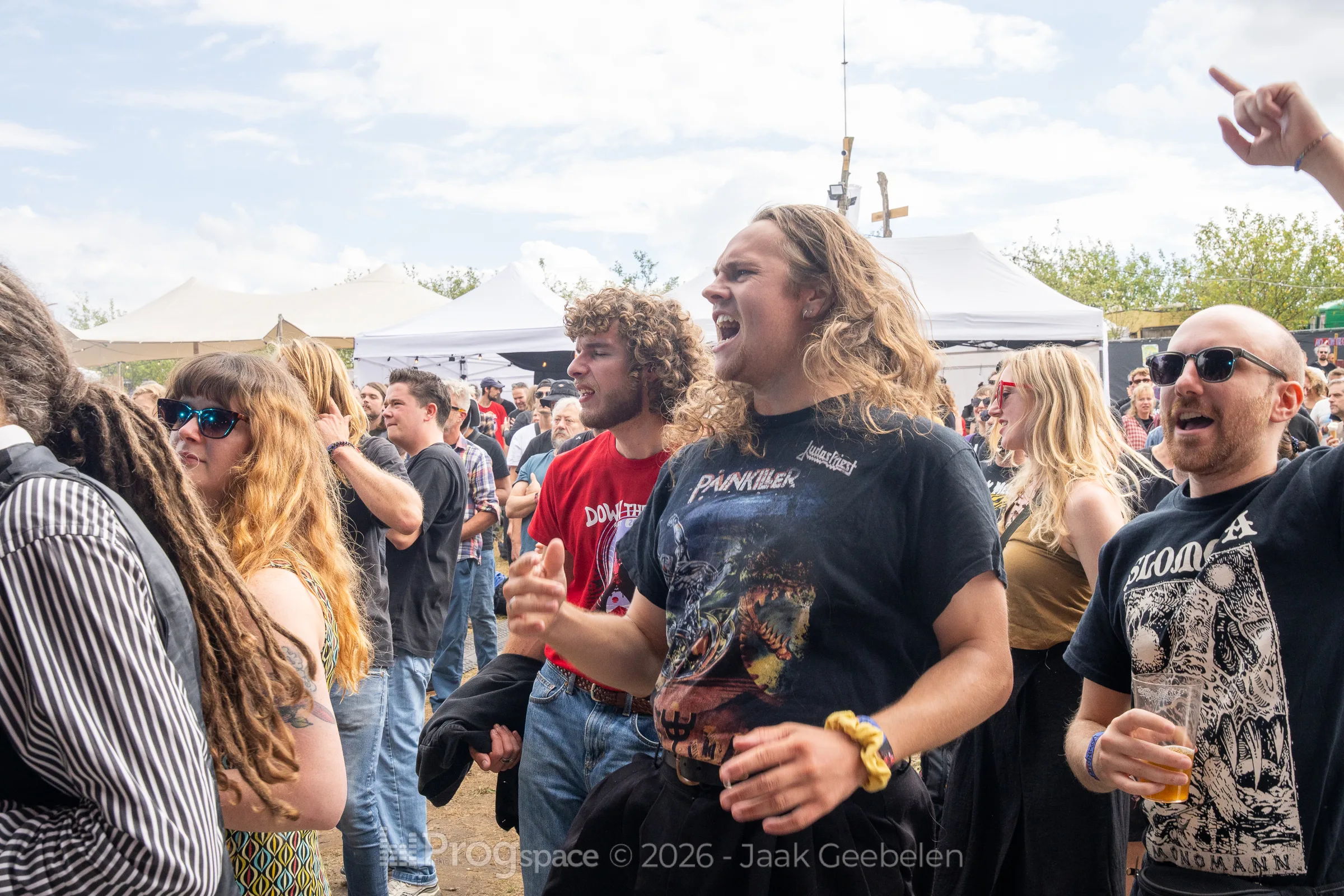
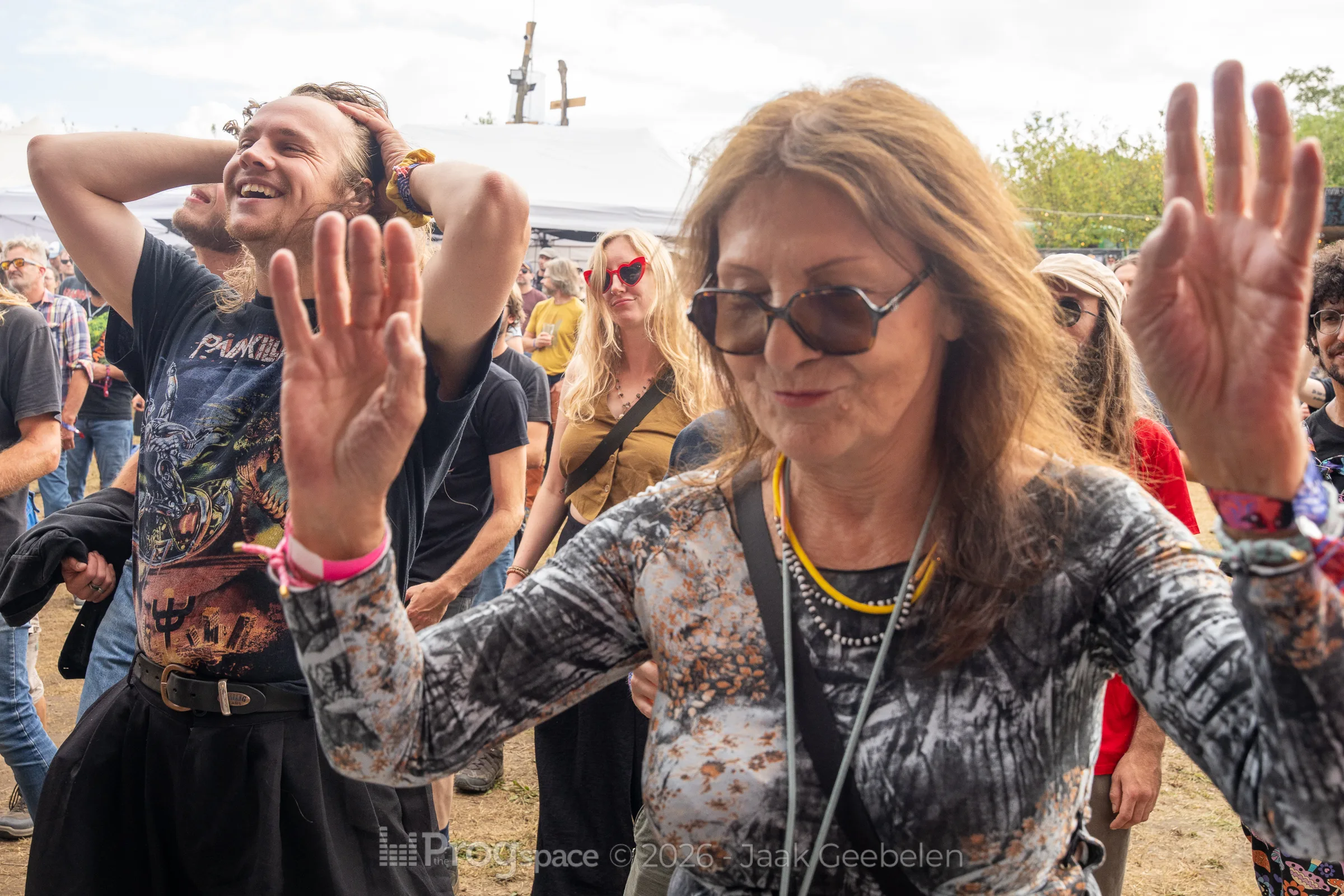
At first, part of the audience seemed to be watching the band with a certain degree of concentration, as if trying to work out exactly what was happening. That is hardly surprising with a group that does not reveal itself immediately. But as the set progressed, the body language in the crowd visibly changed. People began moving, singing, pointing towards the stage, clapping and eventually throwing their arms into the air.
The audience response therefore grew from curiosity into genuine involvement. What had initially felt somewhat observational became increasingly physical. People danced, sang along and clearly allowed themselves to be drawn into the performance. By the end, the distance between band and audience had largely disappeared.
That may be one of The Guru Guru’s strongest qualities as a live band. On record, their music can at times sound calculated, fragmented or deliberately awkward. On stage, those same qualities become physical. The odd rhythms and angular riffs stop being analytical details and turn into movement, tension and release.
For a prog audience, The Guru Guru is therefore a particularly interesting band. Not because they play progressive rock in the traditional sense, but because they share a similar curiosity towards form, rhythm, texture and unpredictability. Their roots lie at least as much in noise rock, post-punk and math rock, yet they use that language in a way that regularly leans towards progressive music.
For me, the most convincing point of contact came in “Joke’s on You (Under Over)”, where the guitar texture in particular brought Reine Fiske to mind. Elsewhere, it was more the rhythmic structures that recalled the more adventurous side of King Crimson.
At Down The Hill, The Guru Guru ultimately proved that progressive music does not necessarily have to sound like progressive rock.
Sometimes it simply shows up in a bright orange pyjama covered in little dogs.
Special thanks to Ela Williamson for her help and support.




 We’re a group of Prog-lovers who started a journey to share with you our thoughts about albums, concerts, tours and festivals, the photo galleries of the Prog concerts we visit, as well interviews with upcoming or established musicians or prog-related people. Follow our Facebook page for frequent updates and news around the Progniverse.