

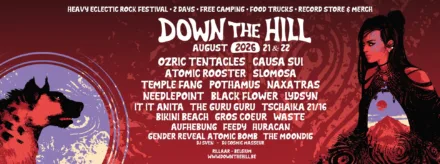

Down The Hill Festival 2026 – Saturday 22 August
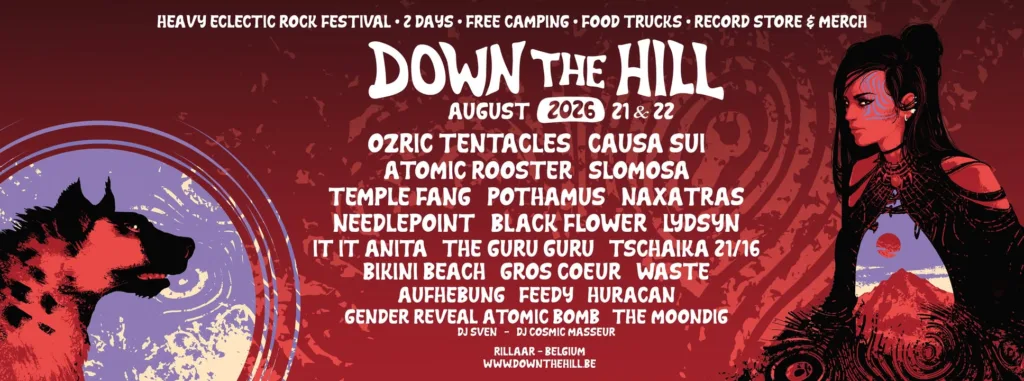
Down The Hill Festival 2026 – Saturday 22 August
Rillaar, Belgium
(We had consciously chosen to attend only the Saturday)
Review & photography by Jaak Geebelen
This coverage would not have been possible without the invaluable assistance of Ela Williamson.
Down The Hill had already started before we even reached the festival gates.
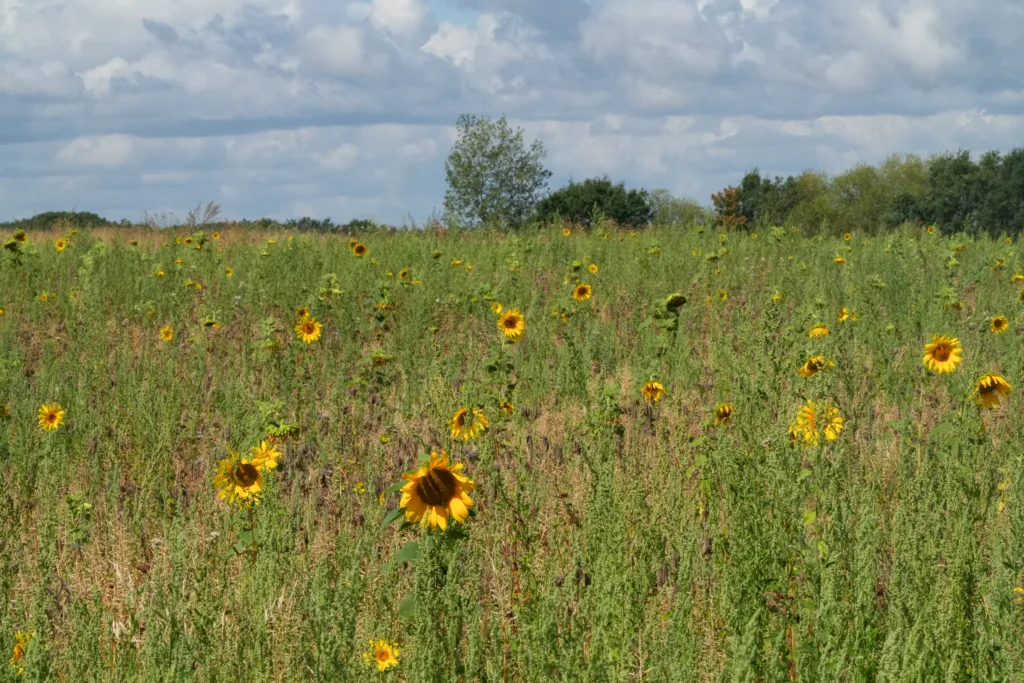
Leaving the main road, we turned onto a narrow country lane winding through the Hageland countryside. Almost immediately we passed a magnificent field of sunflowers glowing in the late-summer light. It was one of those small moments that somehow sets the mood before anything has actually happened. The city seemed far away, the road became narrower, and somewhere beyond those fields a festival was waiting.
By the time we drove onto the free parking area, Gender Reveal Atomic Bomb had just started their opening number. And they sounded remarkably close. No kilometre-long walk and no endless maze of fences: the festival site was right there.
That first impression would prove quite accurate. Down The Hill is compact, accessible and refreshingly human in scale.
Growing without wanting to become big
Down The Hill did not appear out of nowhere.
The site already had a local festival history through Yellowstock Festival and the more family-oriented Mestfest. When it became clear around 2017 that the Yellowstock story might be coming to an end, some of the people involved did not want that local festival spirit simply to disappear.
The first Down The Hill took place in 2018, initially as a modest one-evening event. It gradually expanded to a full festival day, then to two days, and from 2023 onwards to the present format with two stages.
The ambitions of the booking grew much faster than the physical scale of the festival. Over the years, artists such as Earthless, Arthur Brown, Focus, Gong, Causa Sui and others found their way to Rillaar. In 2026 the programme included names such as Atomic Rooster, Temple Fang, Naxatras, Needlepoint and Ozric Tentacles.
Yet Down The Hill has resisted the temptation to turn that growth into mass tourism. The 2026 edition sold out at roughly a thousand visitors per day. Perhaps that is the key to understanding this festival:
Down The Hill has grown without wanting to become big.
A festival site with its own personality
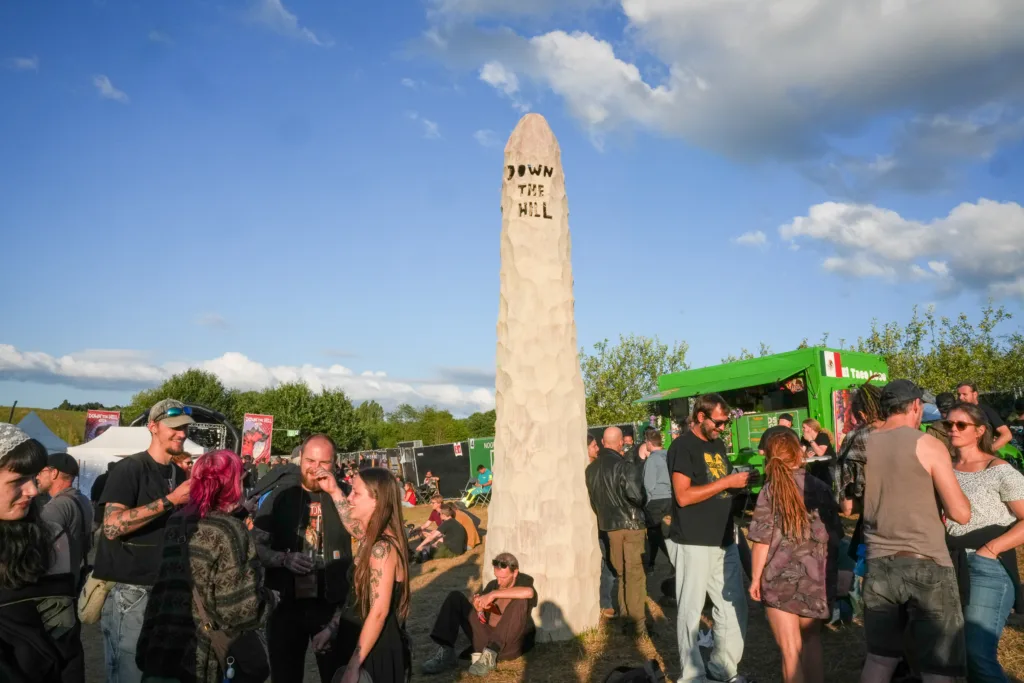
The first thing that catches the eye inside is the large wooden Down The Hill structure standing in the middle of the field. Part menhir, part totem and — depending on your imagination — undeniably somewhat phallic, it has become a natural landmark. People sit against it, meet beside it and use it as a visual point of orientation.
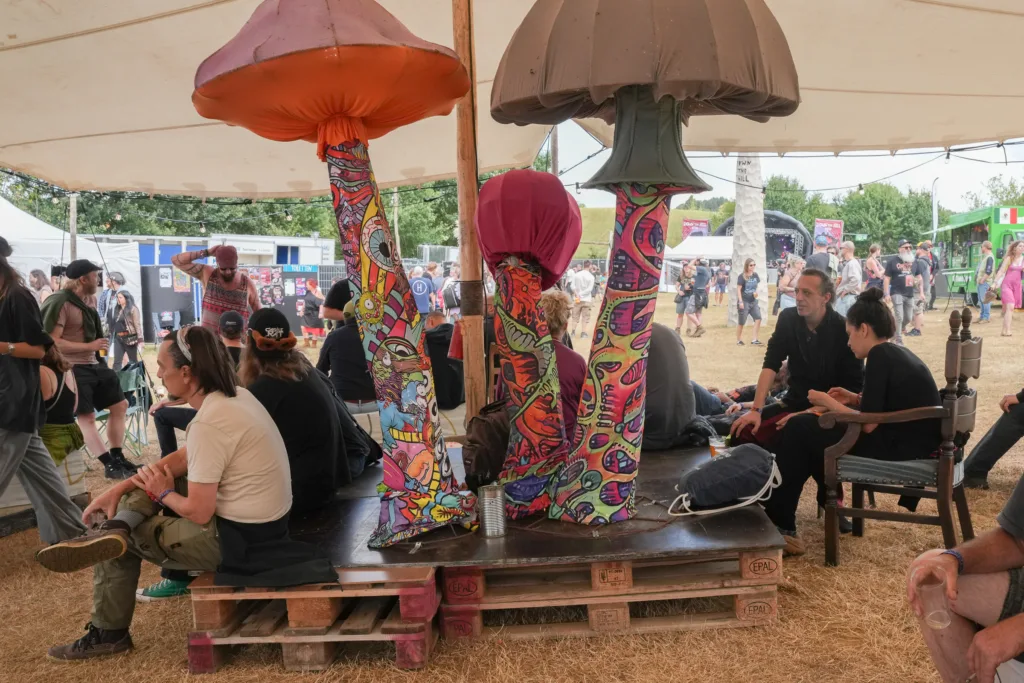
A little further on, another installation pushes the site much more openly into psychedelic territory: a covered chill-out area built around enormous mushroom sculptures.
The combination of rough wood, pallets, improvised seating, handmade constructions and colourful objects gives the place a character that would be difficult to reproduce with professional event furniture. Nothing looks polished for the sake of looking polished. Instead, the site feels handmade, playful and slightly eccentric. There are places to sit everywhere. On wooden benches, pallets, blankets, directly on the grass. People are not constantly pushed from one attraction to another. You can simply stop. And people do. They talk, drink a beer, eat something, lie in the grass, watch from a distance or disappear for twenty minutes into conversation.
The festival has been designed not only for watching bands, but also for spending a day somewhere.The audience may be one of the most attractive aspects of Down The Hill.
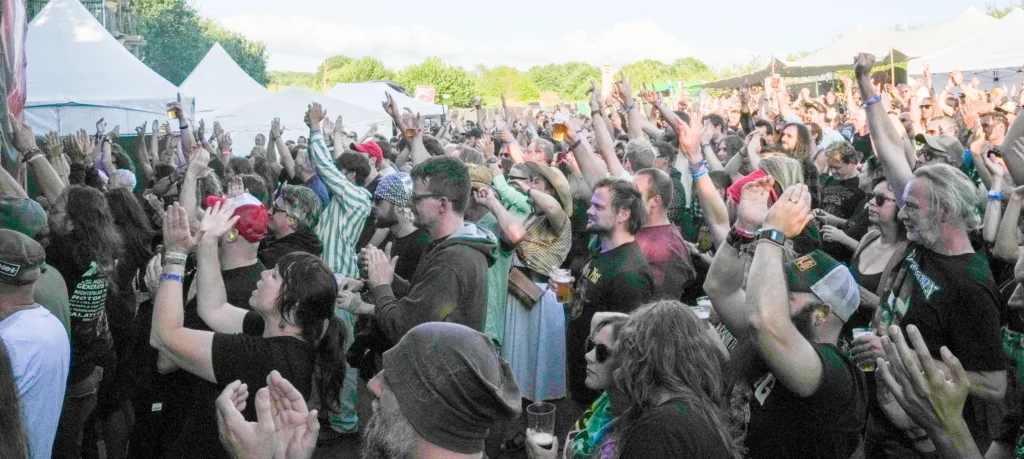
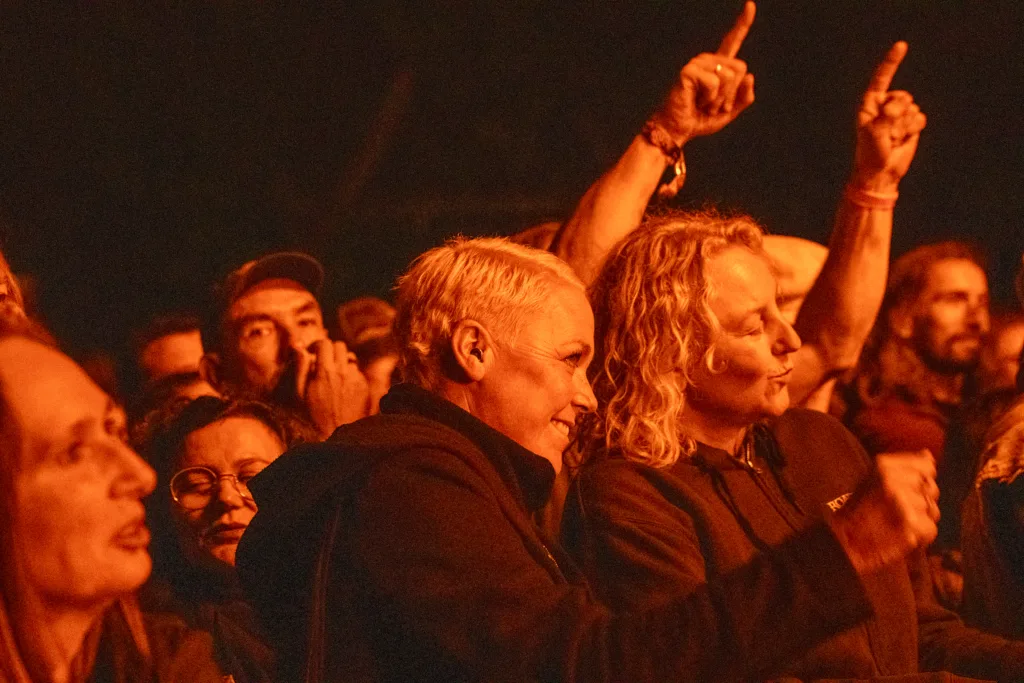
There is no single uniform festival look. Young visitors with tattoos, piercings, dreadlocks and colourful clothes stand beside people in their sixties and seventies wearing old band shirts, checked shirts or baseball caps. Black is naturally well represented, but so are bright colours, vintage clothes, unusual glasses, hats and all sorts of highly individual combinations.
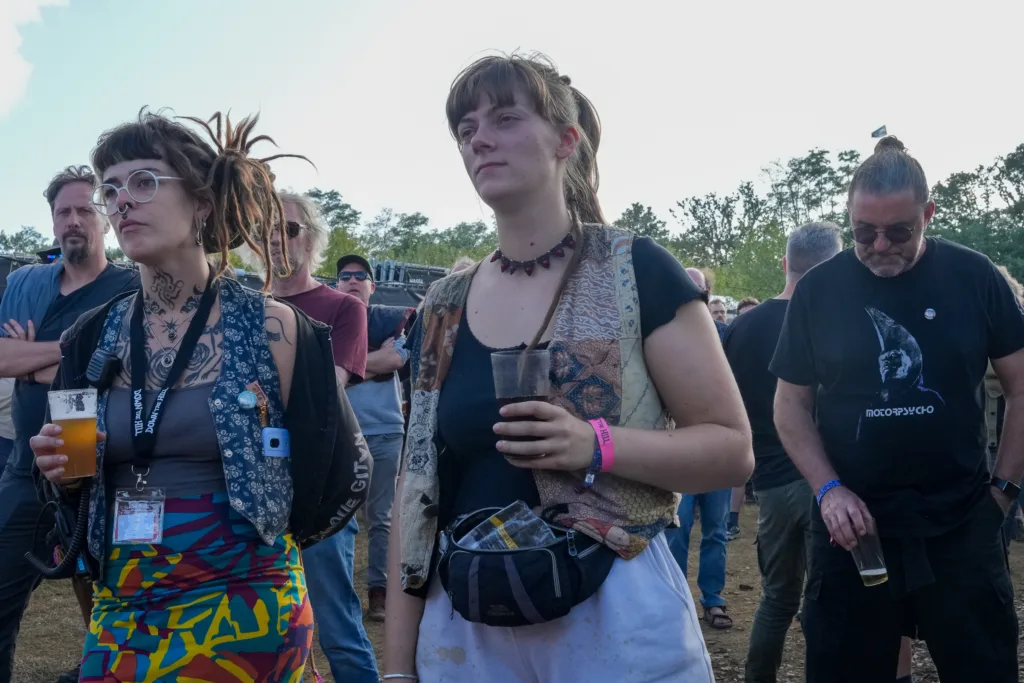
What struck us most was how naturally the generations mixed. They were not separate groups occupying different corners of the site. Young and old stood together at the barrier, sat together in the grass and moved between the same stages. Some people looked as though they had attended underground festivals for forty years. Others may have been discovering this world for the first time.
Nobody seemed out of place. That creates an atmosphere quite different from a festival dominated by one particular scene or generation. Down The Hill feels less like a collection of target groups and more like a temporary alternative village community.
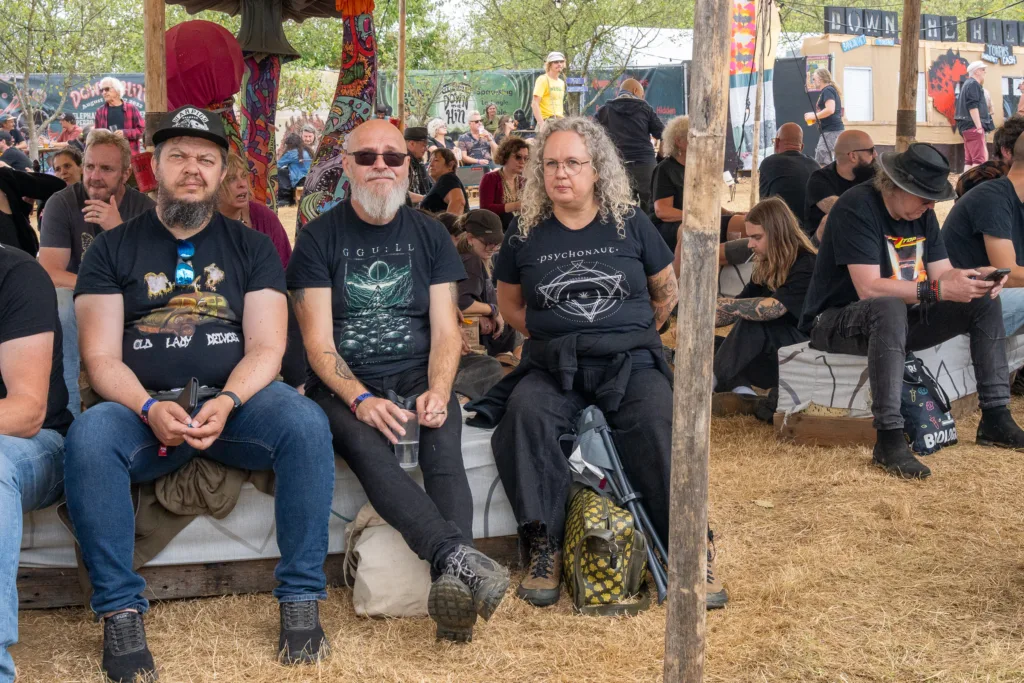
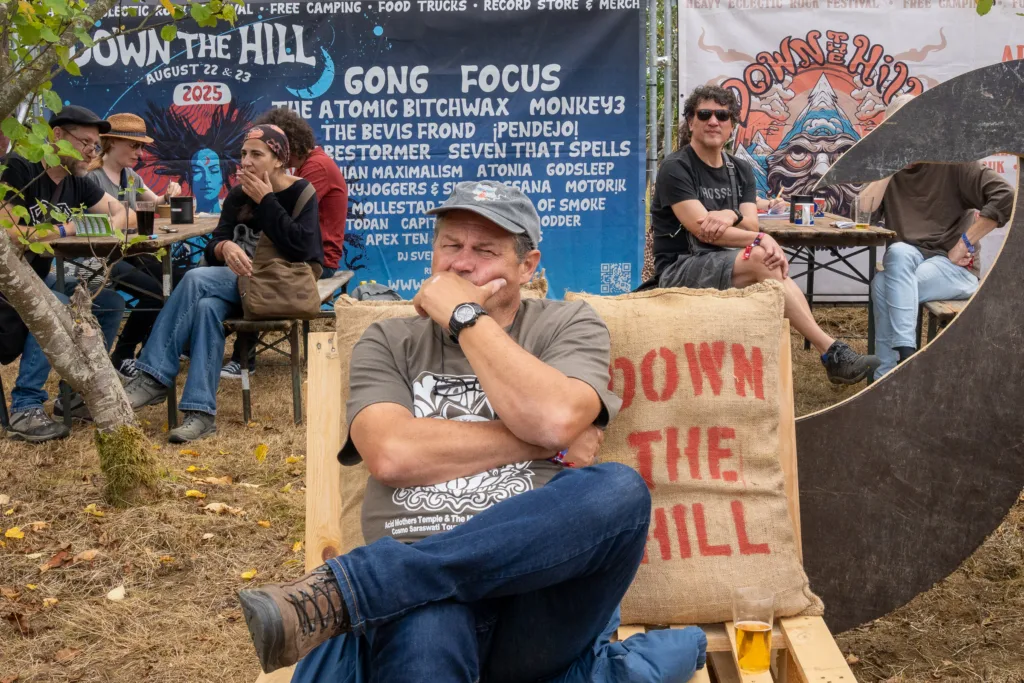
During the afternoon, that community was remarkably relaxed. People wandered around with a beer, sat down, chatted or listened quietly.As evening arrived, the same crowd became noticeably more physical. More dancing, more raised arms, more people pushing towards the front — and eventually even crowdsurfing. Yet it never felt aggressive. The intensity increased; the friendliness remained.
Two stages – and no impossible choices
One of the smartest aspects of Down The Hill is its two-stage system. The Wooden Stage and Field Stage alternate. There are no simultaneous concerts. While one band performs, the other stage can be prepared. When the set finishes, the audience simply walks a short distance and the next concert begins.
It means no agonising timetable decisions and very few lengthy changeovers.
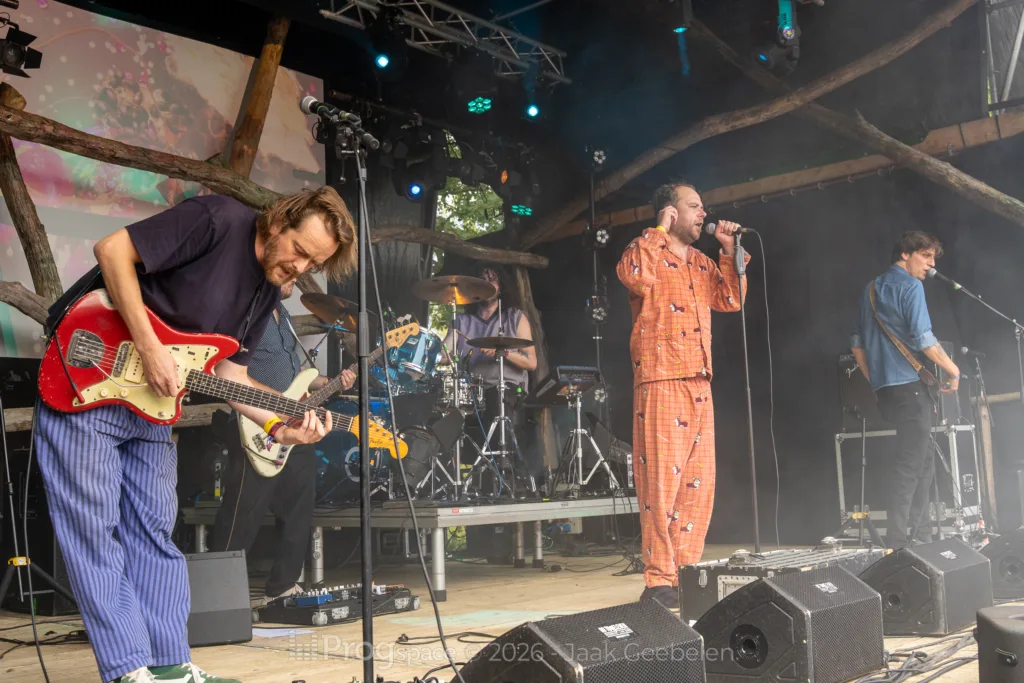
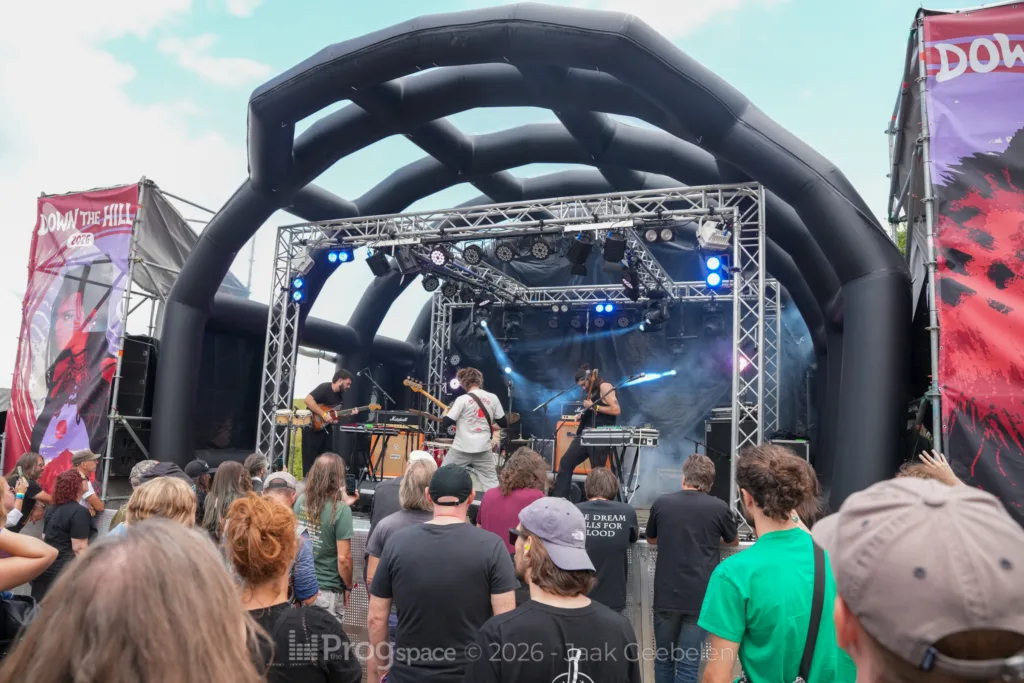
The two stages also look and feel completely different. The Field Stage is the more traditional outdoor stage: open, spacious and exposed to daylight. The Wooden Stage has much more character. Its timber structure, haze, lights and projections create a warmer, enclosed and distinctly psychedelic environment. That contrast is generally a major strength, although not every band benefits equally from every setting. Some of the more atmospheric and cosmic music would undoubtedly have gained additional visual impact from darkness and projections rather than bright afternoon sunshine. But aesthetically, the difference between the two stages prevents the festival from ever feeling visually repetitive.
Small practical things that matter
The organisation impressed us. The welcome was friendly, the site easy to understand, the parking was free and close to the entrance, and there was enough catering without absurd waiting times. Our chips were admittedly not the gastronomic highlight of the day. A beer cost €3.20 — a very reasonable price for a festival. The weather was kind to the festival. Most of Saturday was beautifully dry and sunny, but after sunset late August reminded us that autumn was not infinitely far away. The temperature dropped quickly and jackets began appearing throughout the audience.
We had consciously chosen to attend only the Saturday. Two complete days of concerts from afternoon until well after midnight might once have sounded irresistible. These days we know ourselves a little better.
And even one day would turn out to be quite a marathon.
Eleven bands, ten proper listens and one necessary food break
Musically, Saturday unfolded as an extraordinary journey.
What looked on paper like a broadly psychedelic line-up actually moved through prog-punk, krautrock, garage fuzz, art rock, Ethio-jazz, Canterbury, jazz-rock, heavy psych, classic progressive hard rock and space rock.
We have already covered almost every band in a separate review and photo gallery on The Progspace. Rather than repeat those full reviews here, we will keep the individual impressions concise.
Each band gets one or two images in this festival feature; the links lead to the more extensive reports.
Gender Reveal Atomic Bomb
By the time we reached the site, Gender Reveal Atomic Bomb were already underway.
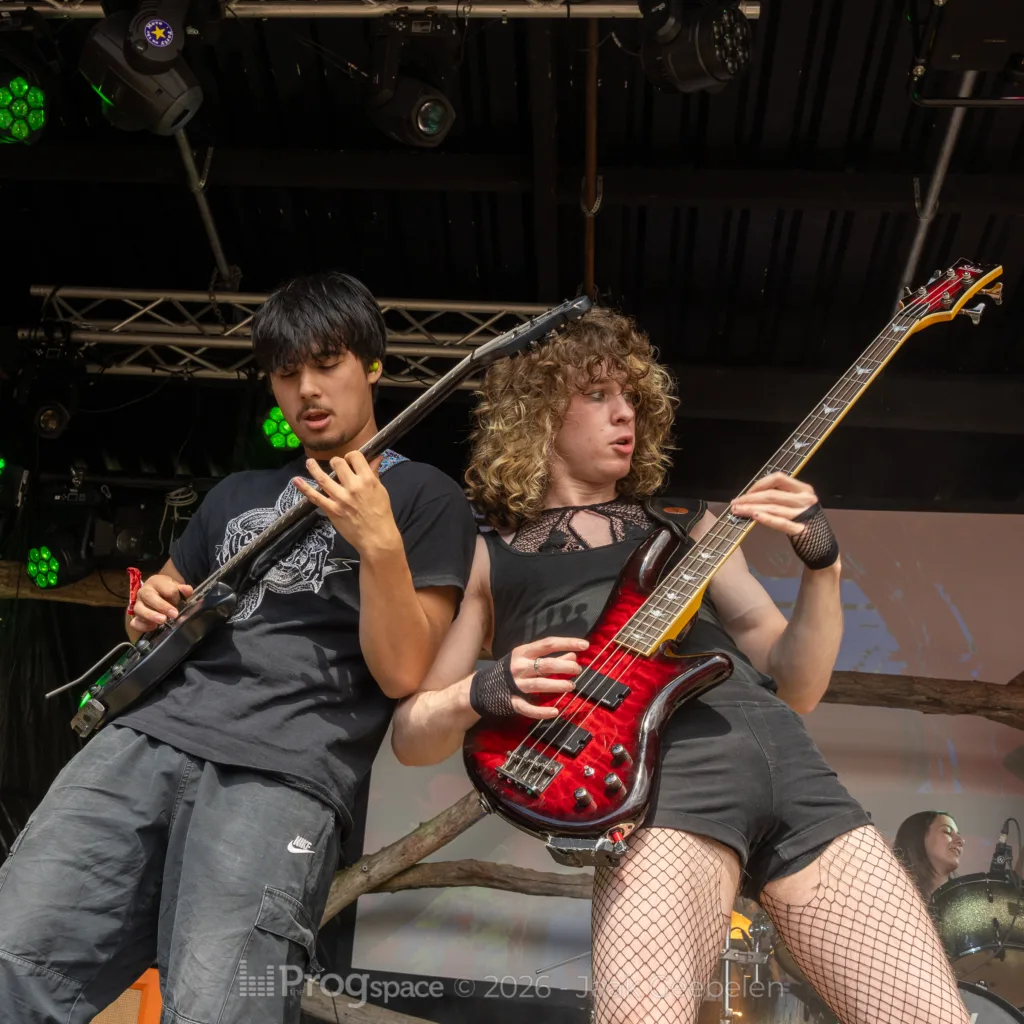
Their mixture of punk energy, angular rhythms and unexpected structural turns proved an ideal opening shot. Raw, youthful and direct, yet sufficiently quirky to suggest that the word “prog” can have a meaning far removed from traditional symphonic rock.
Gros Cœur
With Gros Cœur, the emphasis shifted immediately towards rhythm, repetition and movement.
Krautrock, psychedelia, funk and eastern colours grew out of hypnotic grooves. This was music that invited the body to react before the brain had finished deciding exactly which genre it belonged to.
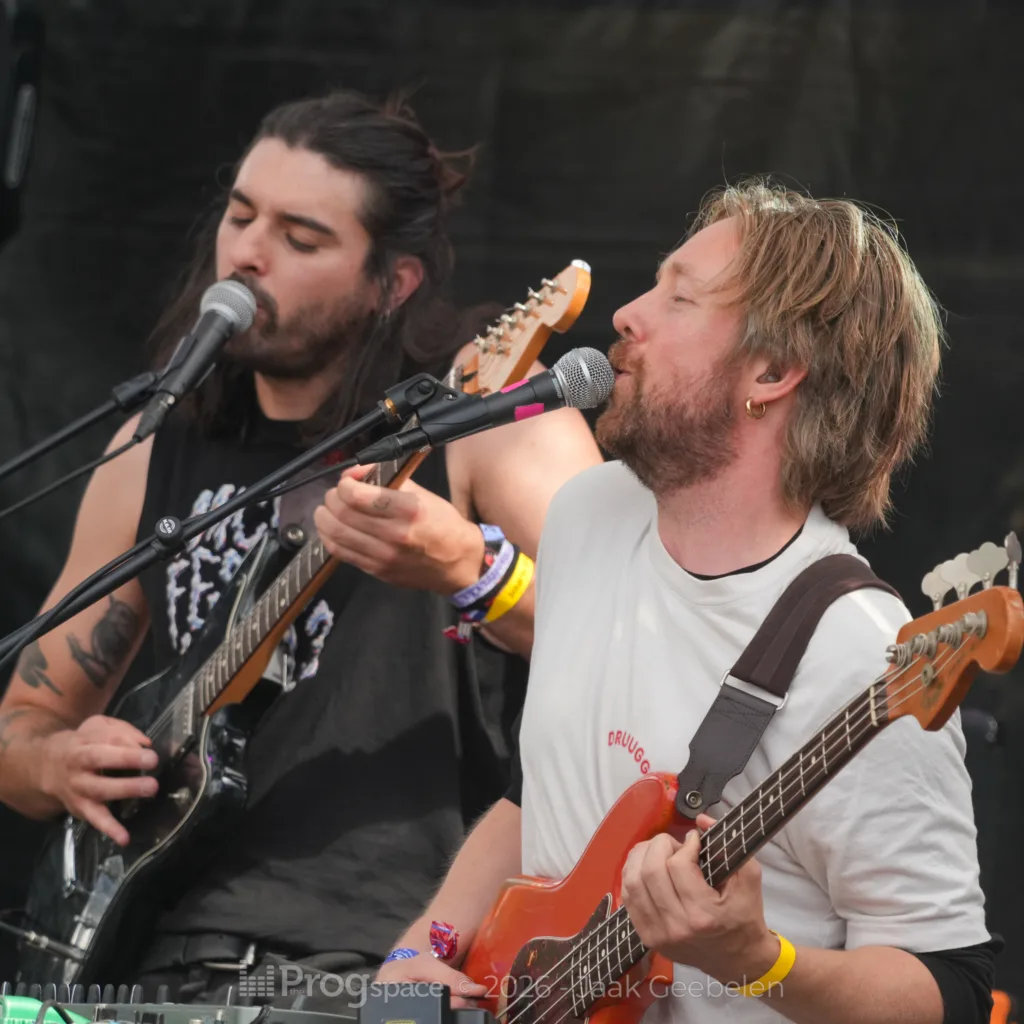
Full review & photo gallery:
https://theprogspace.com/gros-coeur-down-the-hill-festival-rillaar-belgium-22-august-2026/
The Guru Guru
The Guru Guru delivered one of the afternoon’s most eccentric performances.
Math rock, noise, post-punk and art rock collided beneath the theatrical presence of Tom Adriaenssens. During “Joke’s on You (Under Over)”, the guitar even made me think briefly of Reine Fiske — not because the bands sound alike, but because of the way space, colour and tension were allowed to matter as much as notes.
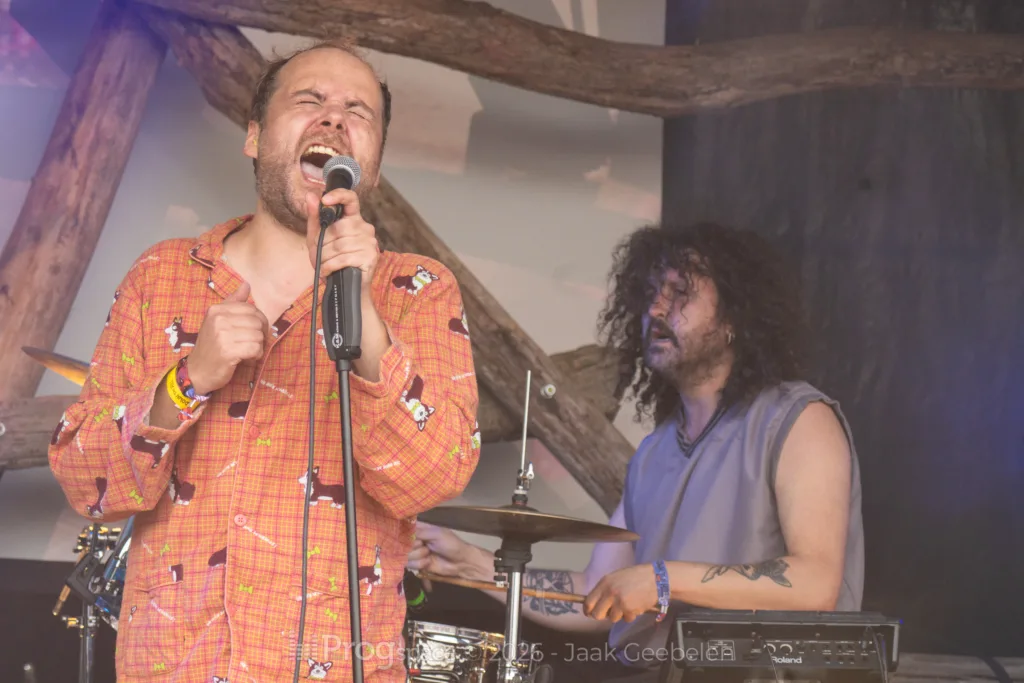
Full review & photo gallery:
https://theprogspace.com/the-guru-guru-down-the-hill-festival-rillaar-belgium-22-august-2026/
Bikini Beach
At first encounter, Bikini Beach and GRAB had seemed almost related: raw guitars, youthful energy and plenty of immediacy.
Bikini Beach, however, quickly revealed a different centre of gravity — much more garage, fuzz, surf and psychedelic rock.
This was not music demanding careful analysis. It demanded movement.
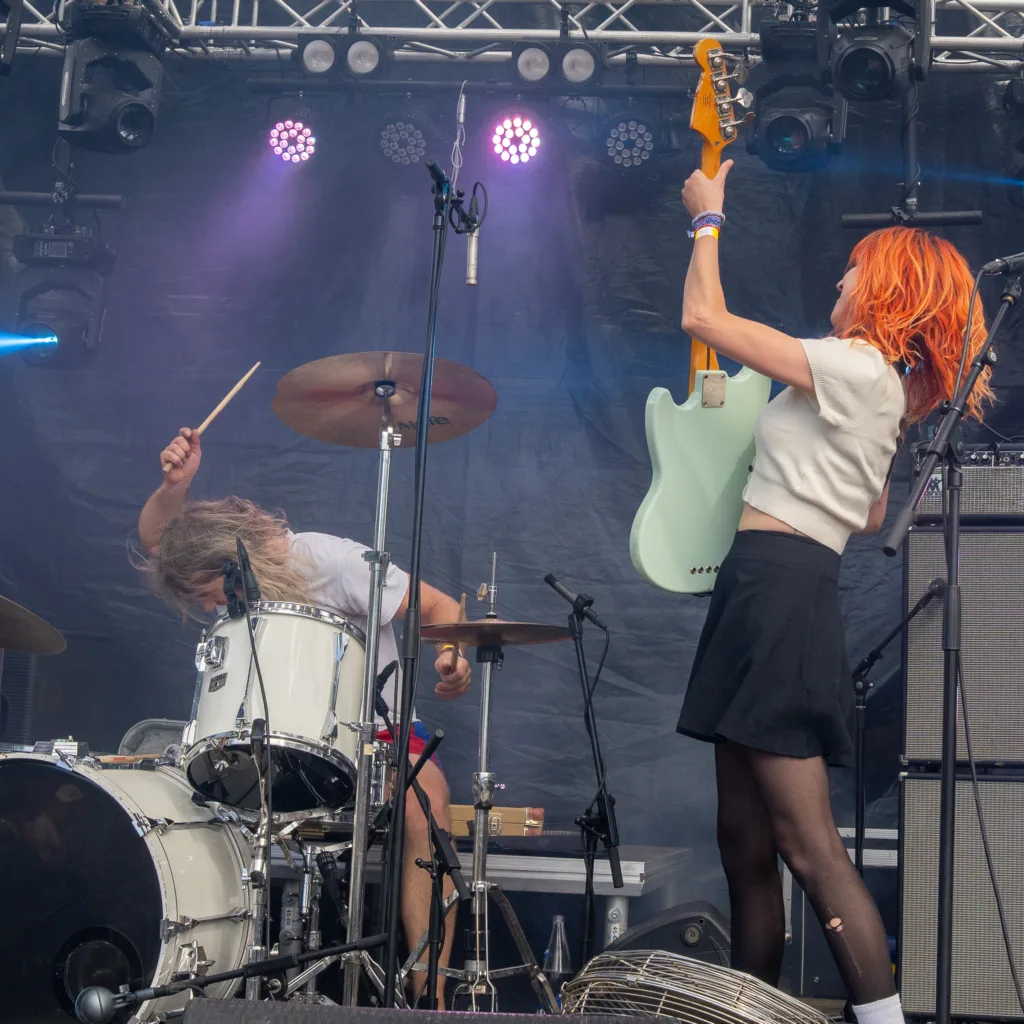
Full review & photo gallery:
https://theprogspace.com/gender-reveal-atomic-bomb-bikini-beach-down-the-hill-festival-rillaar-belgium-22-august-2026/
Black Flower
Then Black Flower changed the musical language completely.
Ethio-jazz, afrobeat, dub and psychedelia became intertwined with flute and brass. On the Wooden Stage, surrounded by timber, projection and haze, the music seemed to have found its natural habitat.
Not conventional prog by any stretch — but thoroughly progressive in its curiosity.
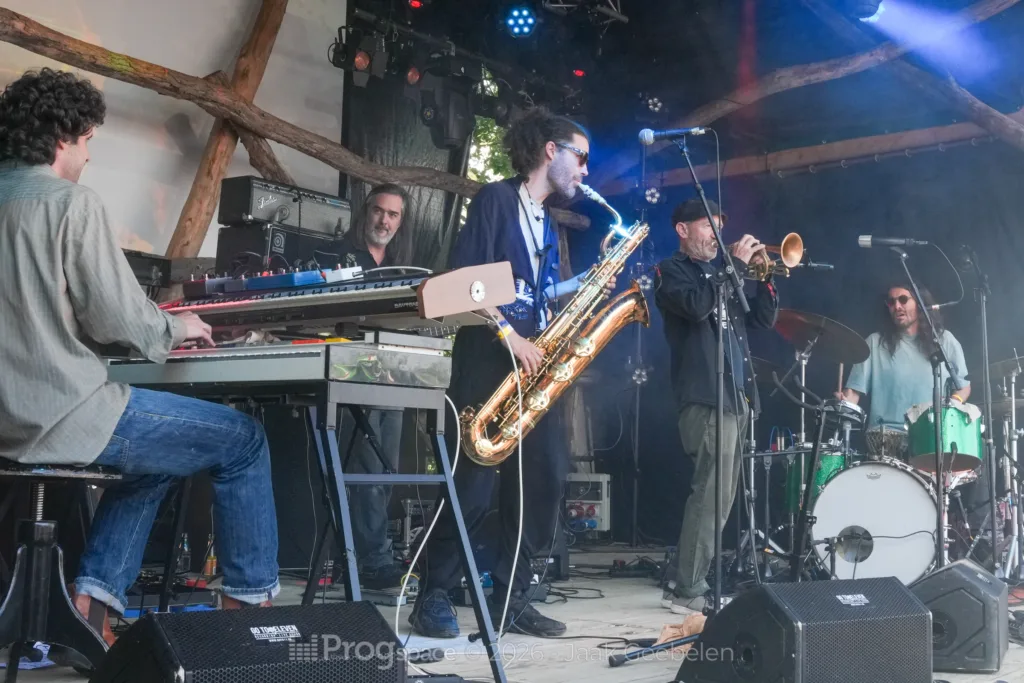
Full review & photo gallery:
https://theprogspace.com/black-flower-down-the-hill-festival-rillaar-belgium-22-august-2026/
Needlepoint
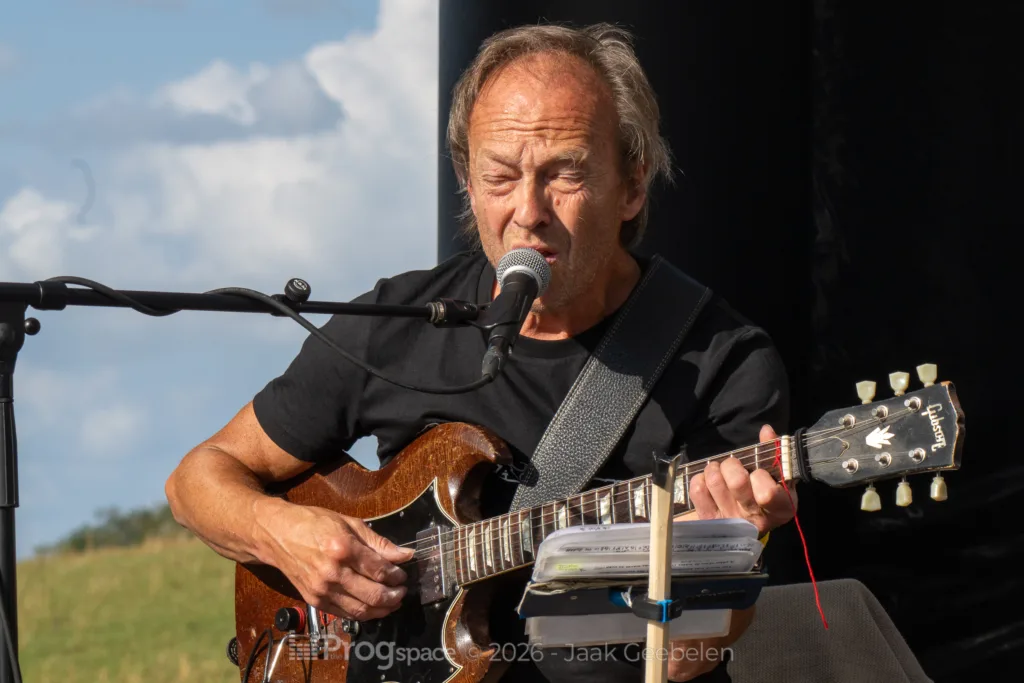
For me, Needlepoint became one of the highlights of the entire day.
Their relationship with the Canterbury scene and particularly the jazzier world around Soft Machine was impossible to miss. Bjørn Klakegg performed seated at the side of the stage; unfortunately his vocals did not always come through strongly enough in the mix. The bass playing particularly caught my attention, repeatedly bringing Hugh Hopper to mind. Rhodes, guitar, bass and drums moved around one another with remarkable freedom while leaving plenty of breathing space.
Needlepoint never needed to shout for attention. That may be precisely why they made such an impression.
Full review & photo gallery:
https://theprogspace.com/needlepoint-down-the-hill-festival-rillaar-belgium-22-august-2026/
Naxatras
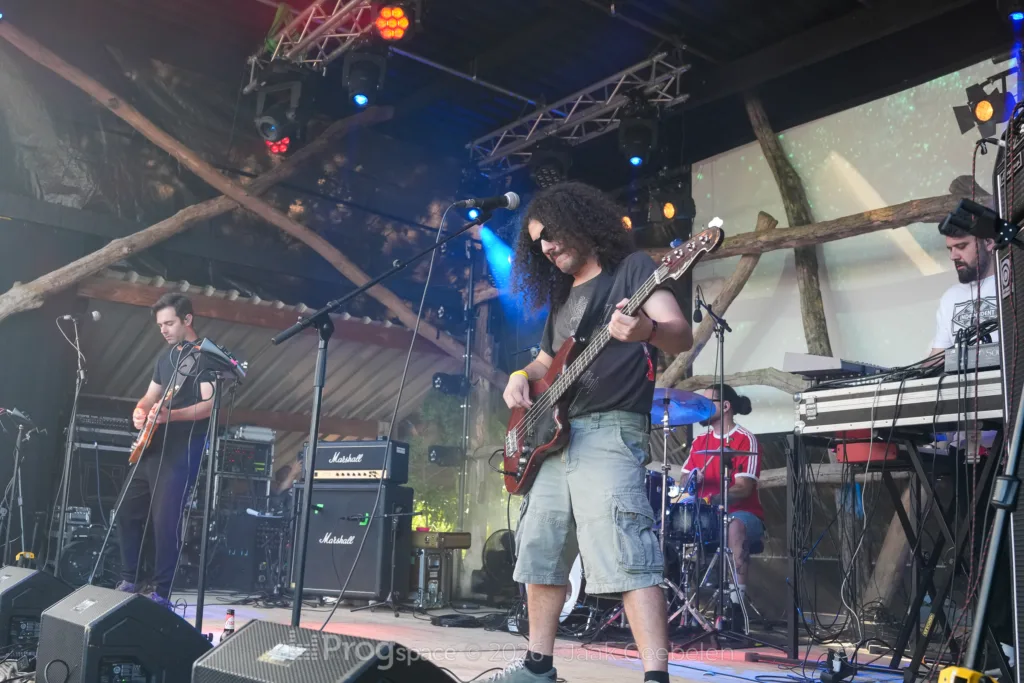
With Naxatras, the afternoon began drifting decisively towards the cosmic.
Warm bass grooves, fluid guitars, keyboards and eastern touches showed how far the Greek band has travelled from its early identity as a psychedelic jam trio. There is much more prog and space rock in the current sound.
Musically convincing, although some passages seemed almost to ask for darkness, lasers and projections rather than daylight.
Full review & photo gallery:
https://theprogspace.com/naxatras-down-the-hill-festival-rillaar-belgium-22-08-2026/
Lydsyn
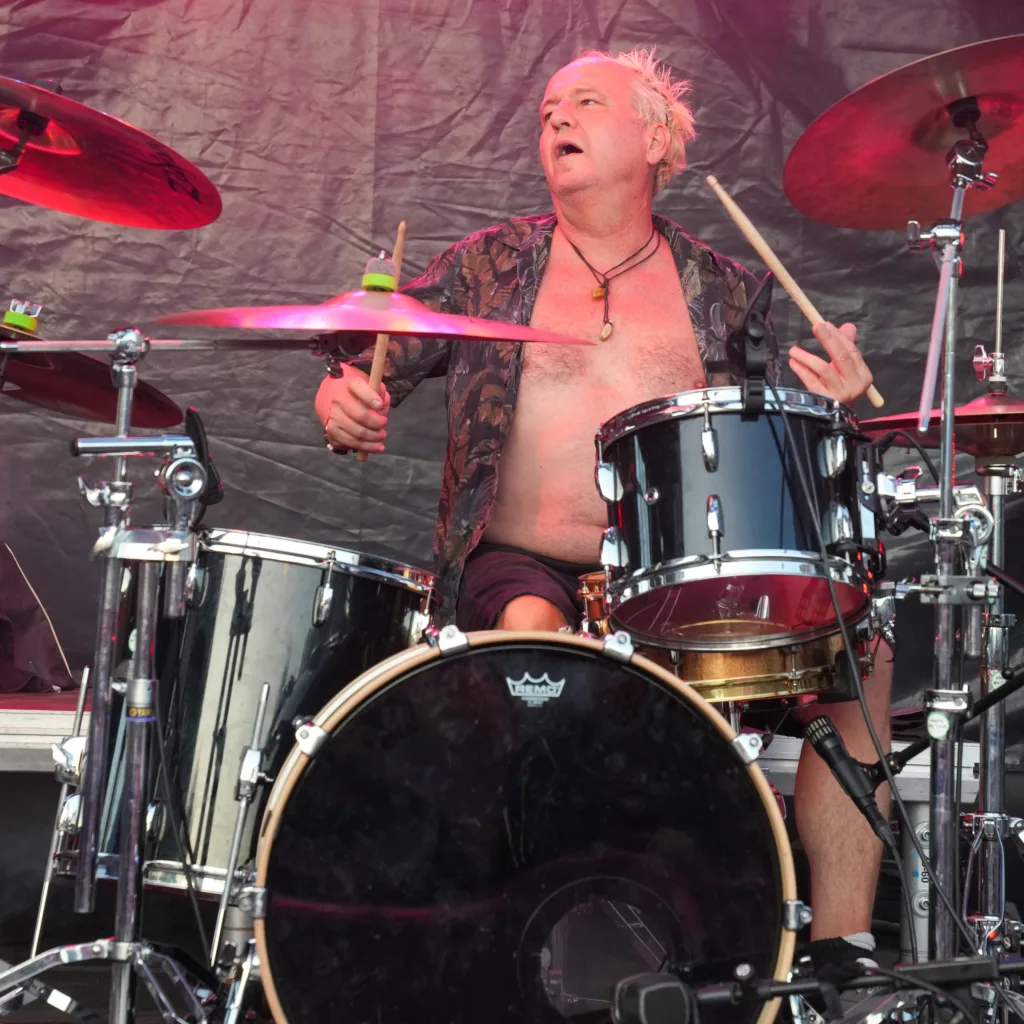
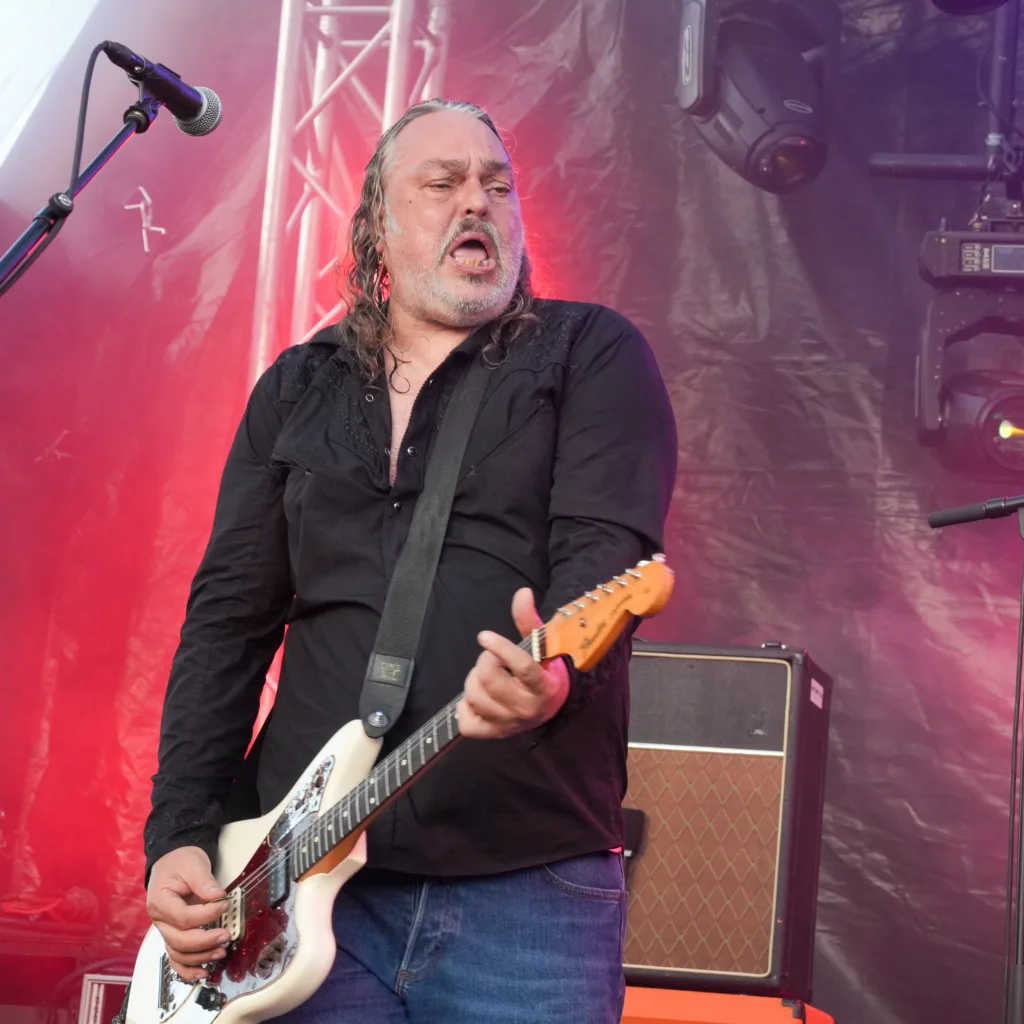
And then came Lydsyn. Or, in our case, food.
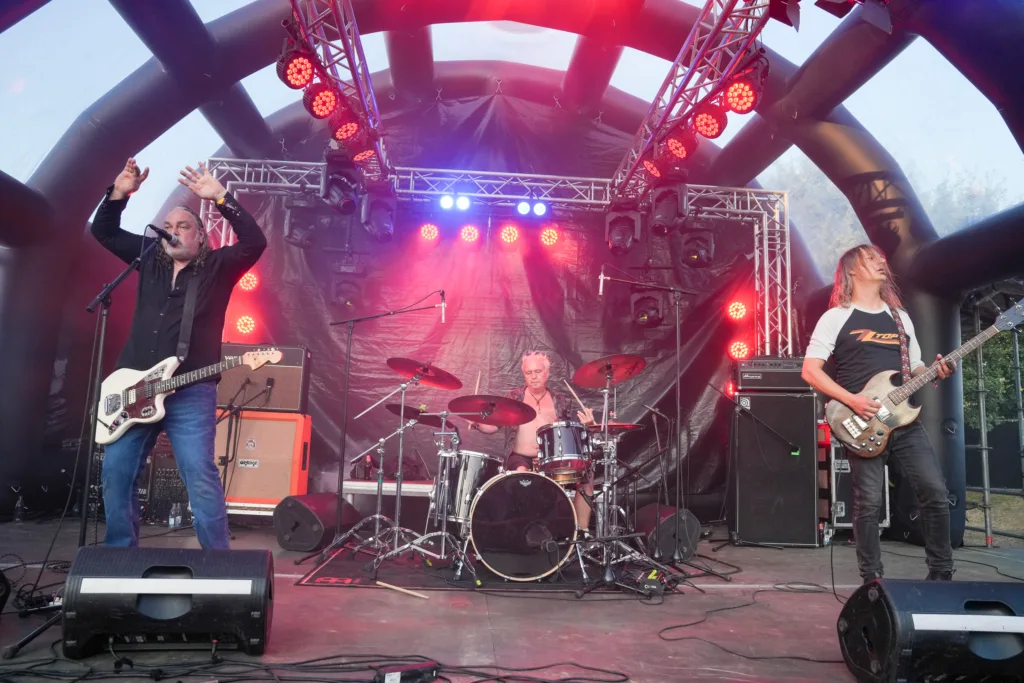
After hours of photographing, listening, taking notes and moving back and forth between stages, reality eventually intervened. Lydsyn therefore became the only band of the day we could not properly follow from beginning to end.
We did catch enough to take photographs.
But even festival reviewers occasionally require calories.
Atomic Rooster
After that break, we suddenly found ourselves face to face with British rock history.
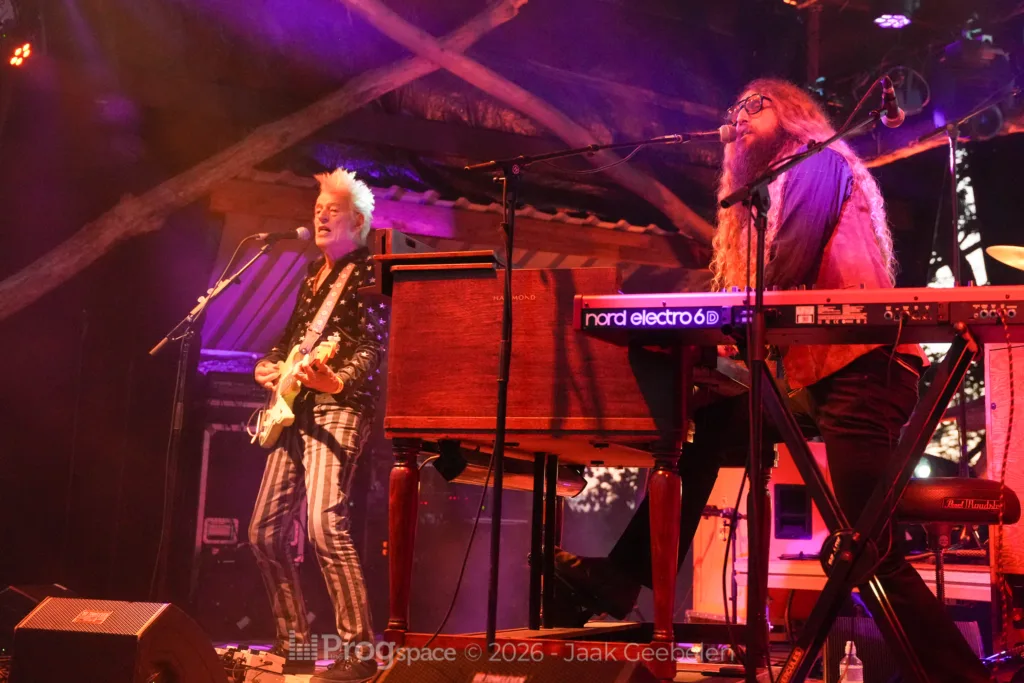
Atomic Rooster, founded in 1969, still revolves around that unmistakable heavy Hammond sound. It gives the music its characteristic meeting point between hard rock, blues and early progressive rock.
The balance between classic material and newer compositions prevented the concert from becoming a simple exercise in nostalgia.
Full review & photo gallery:
https://theprogspace.com/atomic-rooster-down-the-hill-festival-rillaar-belgium-22-august-2026/
Temple Fang
By the time Temple Fang appeared, darkness had finally settled over Rillaar. That suited them perfectly.
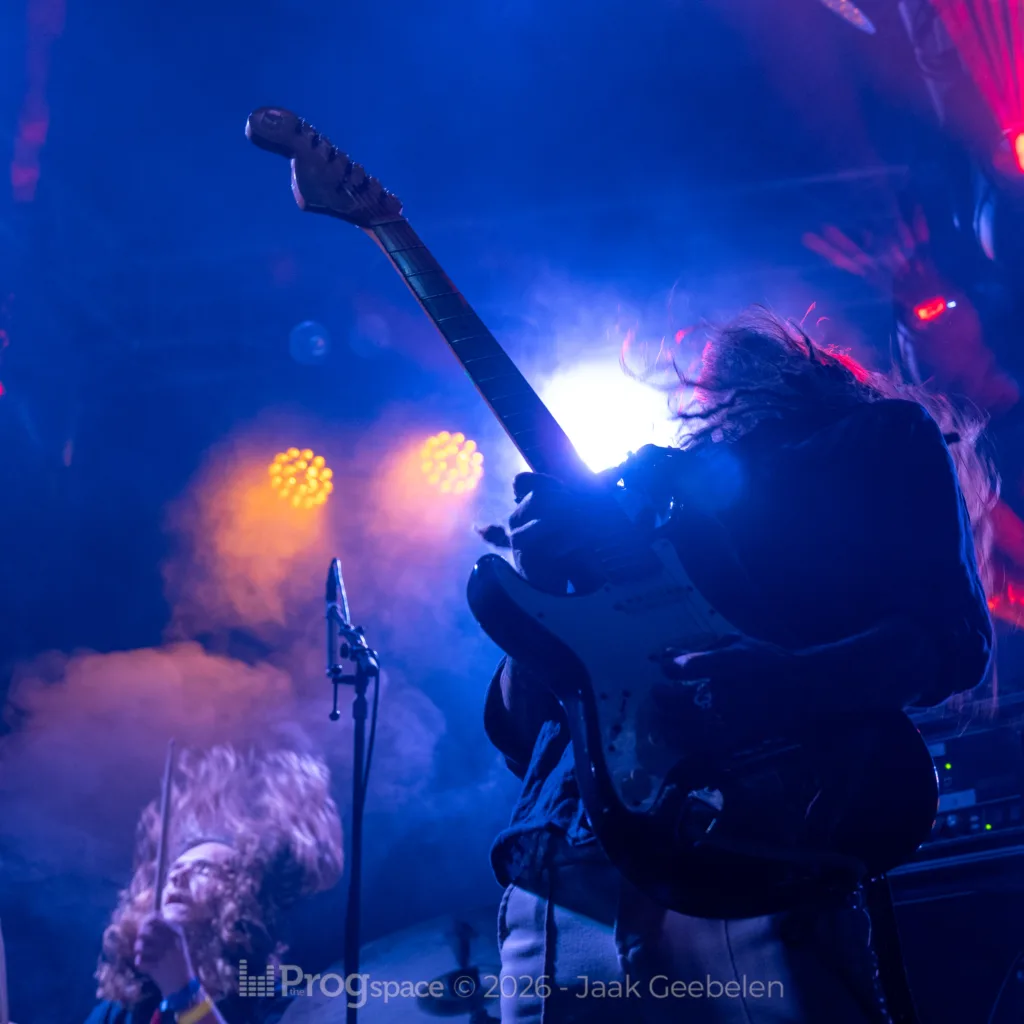
Their long compositions moved patiently from quiet, spacious passages towards enormous peaks, with guitars, bass and drums gradually changing shape along the way. The band’s own description — longform rock — probably says more than any attempt to divide them between psych, prog, space rock and heavy rock.
At its best, the concert no longer felt like a series of songs at all. It became one continuous journey.
Full review & photo gallery:
https://theprogspace.com/temple-fang-down-the-hill-festival-rillaar-belgium-22-august-2026/
Ozric Tentacles
And finally there were Ozric Tentacles.
After everything that had happened earlier — psych, jazz, prog, groove, improvisation and space rock — their mixture of fusion, electronics, world music and cosmic rock felt almost like the logical conclusion to the entire day.
We had seen them in 013 Tilburg in 2025, so comparison was unavoidable. Several familiar pieces returned, but the surroundings could hardly have been more different: not a large indoor venue, but a small field in the Belgian countryside late at night.
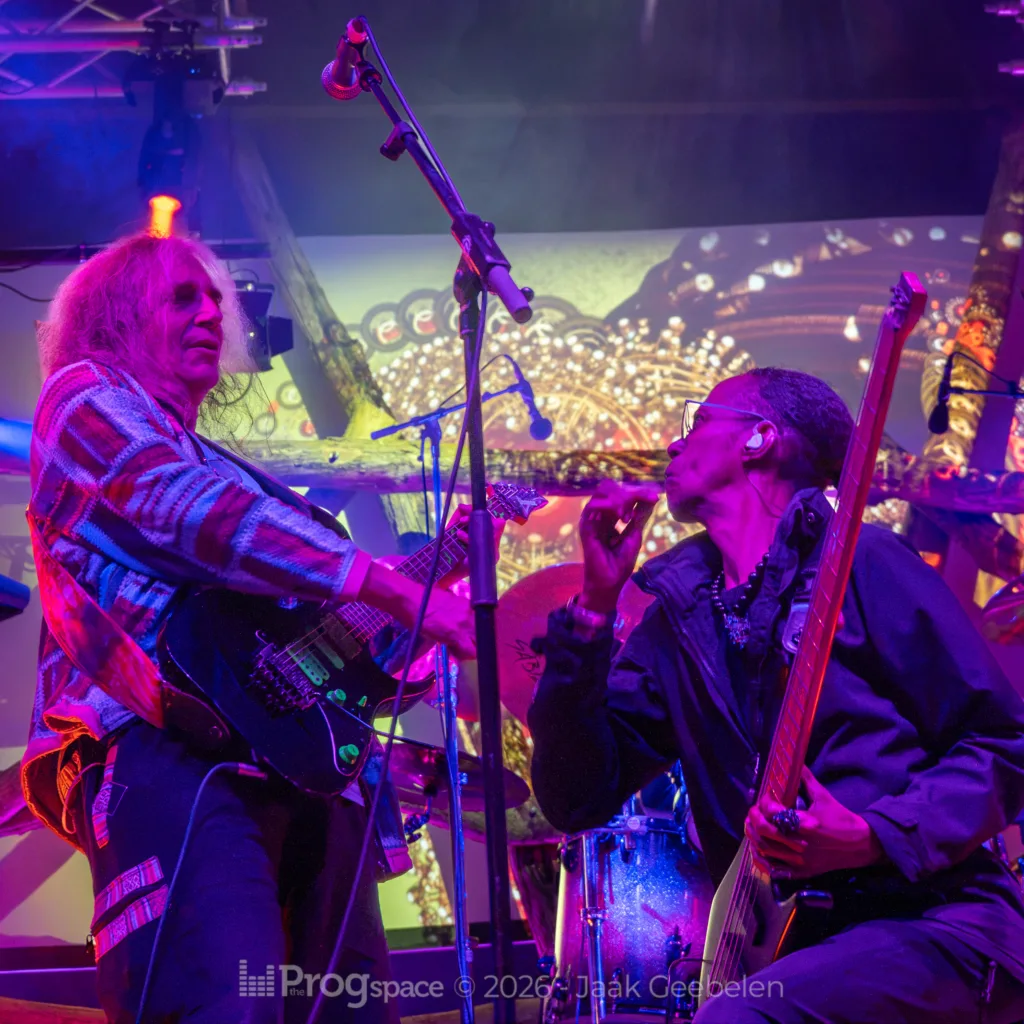
Ed Wynne’s guitar, the synthesizers and the increasingly colourful instrumental interplay gradually pulled the audience into one final trip. Later, flute added another organic layer and eventually the distance between stage and audience disappeared altogether in the form of crowdsurfing.
We ourselves did not quite make it to the absolute final note.
After more than eleven hours, our batteries — unfortunately not the rechargeable kind — were finally running down.
Full review & photo gallery:
https://theprogspace.com/ozric-tentacles-down-the-hill-festival-rillaar-belgium-22-08-2026/
From punk to space rock
Looking back, the musical arc of the Saturday programme was remarkably coherent despite the stylistic variety.
We began with the youthful prog-punk of Gender Reveal Atomic Bomb and ended more than twelve hours later inside the cosmic universe of Ozric Tentacles.
In between came krautrock, garage fuzz, Ethio-jazz, Canterbury, heavy psychedelia, historic British prog and long improvisational journeys.
Not every band was progressive rock.
Thankfully.
What connected them was something more interesting: curiosity.
A willingness to mix influences, ignore convenient boundaries and allow music to move somewhere unexpected.
And perhaps that same description applies to Down The Hill itself.
An increasingly international programme, two completely different stages, approximately a thousand visitors, a sunflower field on the approach road, psychedelic mushrooms beneath a shelter, people from several generations sitting together in the grass — and somehow none of it felt oversized or impersonal.
Down The Hill may programme adventurous music.
Its greatest achievement, however, may be that it has managed to become more ambitious without sacrificing intimacy.
It has grown.
It simply has not allowed itself to become too big.


 We’re a group of Prog-lovers who started a journey to share with you our thoughts about albums, concerts, tours and festivals, the photo galleries of the Prog concerts we visit, as well interviews with upcoming or established musicians or prog-related people. Follow our Facebook page for frequent updates and news around the Progniverse.
Wauw! What a great review! Thank you so very much! It makes our efforts easy and worthy and a confirmation that we do what we do best: getting people together through music!
Lut, Backstage Band Manager, Down the Hill