

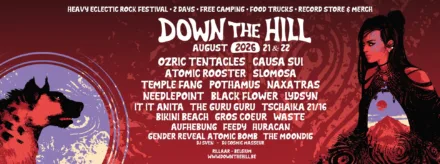

Atomic Rooster – Down The Hill Festival, Rillaar, Belgium – 22 August 2026
Atomic Rooster – A Past That Can Still Move Forward
There are bands whose past becomes so significant that it eventually threatens to overshadow their present. With Atomic Rooster, that danger is certainly there. Formed in 1969 around keyboardist Vincent Crane, with Carl Palmer among the members of the original line-up, the band quickly developed a distinctive sound in which progressive rock, hard rock, blues, psychedelia and jazz found common ground. Particularly during the first half of the seventies, Atomic Rooster left behind an impressive legacy with albums such as Death Walks Behind You, In Hearing of Atomic Rooster and Made in England, alongside classics like “Tomorrow Night” and “Devil’s Answer”.
After countless line-up changes, an initial break-up and a revival around 1980, the death of Vincent Crane in 1989 seemed to bring the story to a definitive end. Yet Atomic Rooster returned in 2016, with guitarist Steve ‘Boltz’ Bolton providing an important historical link. Bolton had, after all, already been a member of the band in the early seventies. Keyboardist Adrian Gautrey later joined the fold, while bassist Shug Millidge and drummer Paul Everett complete the current line-up. Since the departure of Pete French, Gautrey has also taken over lead vocals alongside his duties on keyboards and Hammond.
So the inevitable question before their appearance at Down The Hill was: what does Atomic Rooster still represent in 2026? Is this mainly a celebration of a glorious past, or is there still a band here with a genuine reason to exist?
After their performance at Down The Hill, I would strongly argue for the latter.
No Greatest-Hits Machine
That Atomic Rooster are not surviving on nostalgia alone already became apparent with Circle The Sun, their recent album of new material. The record deliberately reconnects with the darker side of the classic Atomic Rooster sound: heavy riffs, blues, psychedelic undercurrents and, above all, that unmistakable Hammond sound. The result feels familiar without becoming a slavish reconstruction of the seventies.
That same attitude shaped their performance at Down The Hill. No fewer than six of the eighteen songs on the setlist came from Circle The Sun. For a band with a history stretching back more than half a century, that is a remarkable choice. Newer songs such as “Fly or Die”, “Circle the Sun”, “Rebel Devil”, “No More”, “Walk With Me” and “First Impression” were not conveniently grouped together into a promotional section either, but woven throughout the older material.
The result was an intriguing dialogue between past and present.
That became clear immediately. Atomic Rooster did not open with one of their best-known songs, but with the instrumental “Gershatzer” from Death Walks Behind You. With “Fly or Die” and “Circle the Sun” following directly afterwards, we suddenly jumped forward more than half a century.
Strangely enough, that leap did not feel particularly large.
Perhaps that is the greatest achievement of the current incarnation of Atomic Rooster. The new songs do not attempt to copy the old ones, but they do speak much the same musical language: a heavy Hammond foundation, angular riffs, blues, groove and an underlying sense of darkness.
The Hammond Still Rules
To speak of Atomic Rooster is inevitably to speak of the Hammond.
In many rock bands, keyboards provide an additional layer of colour. In Atomic Rooster, they often form the architecture of the music itself. That was the case with Vincent Crane, and it remains essential today. Adrian Gautrey therefore faces an unenviable task. Trying to imitate Crane would be pointless; Crane’s musical personality was simply too distinctive.
Fortunately, Gautrey takes a different approach.
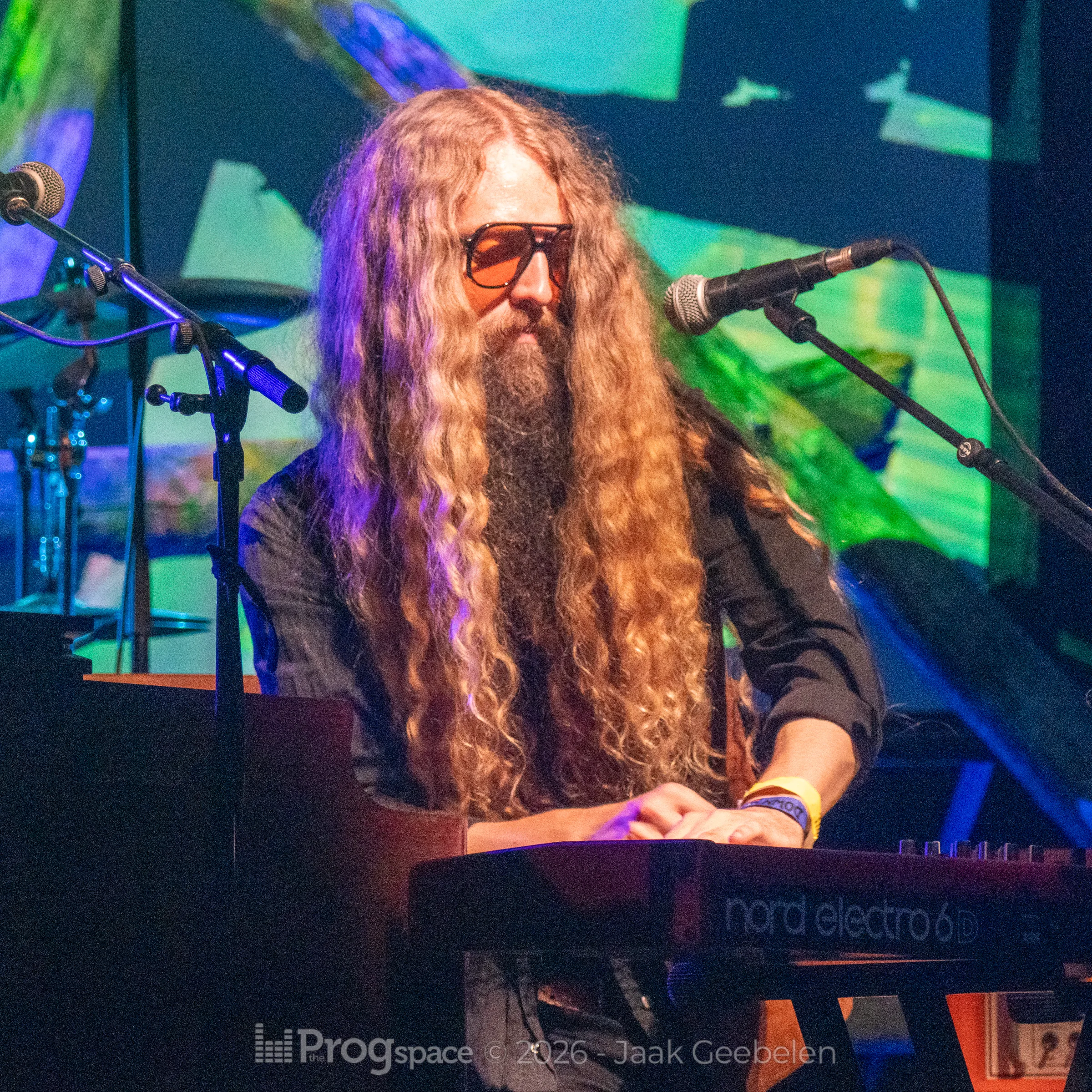
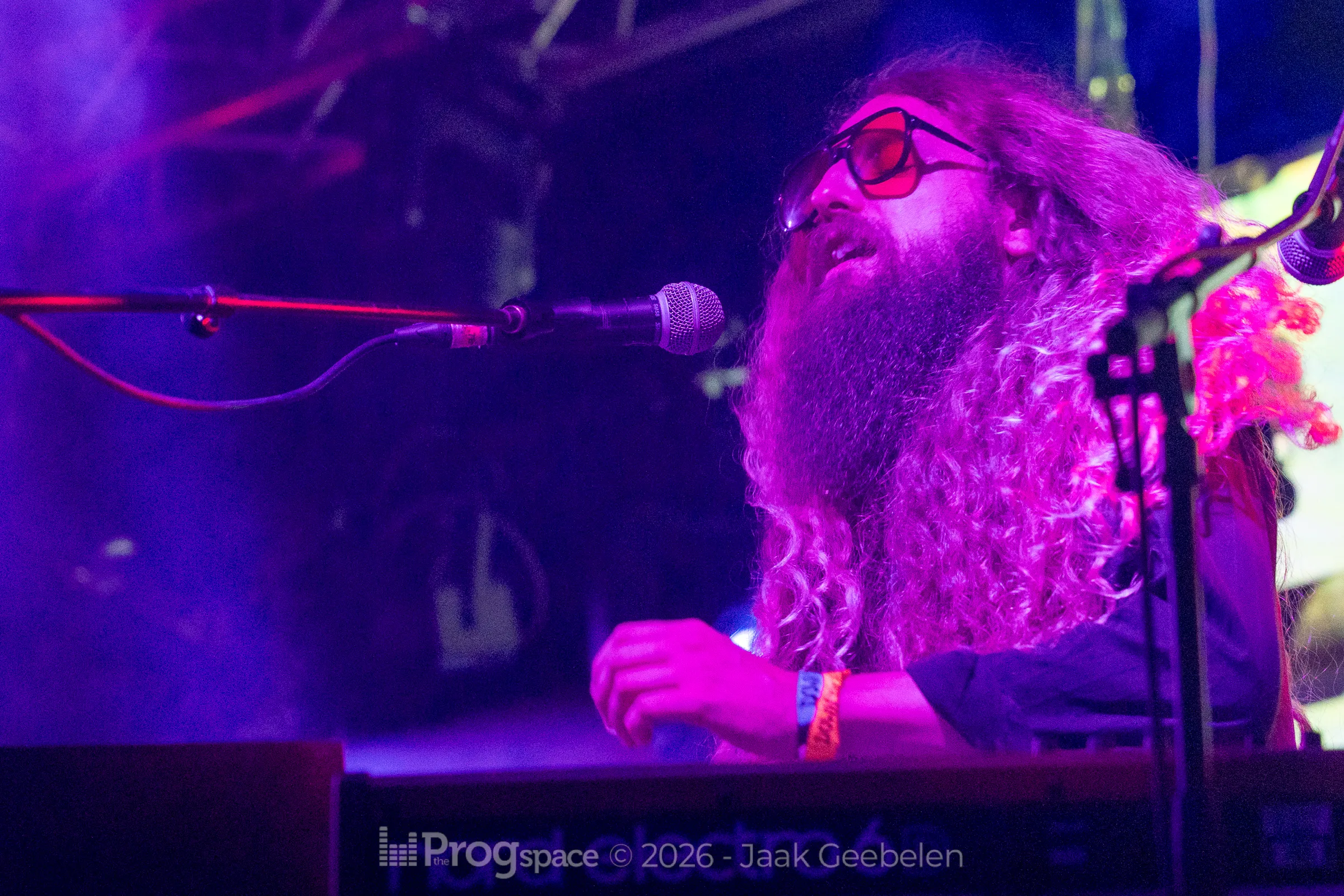
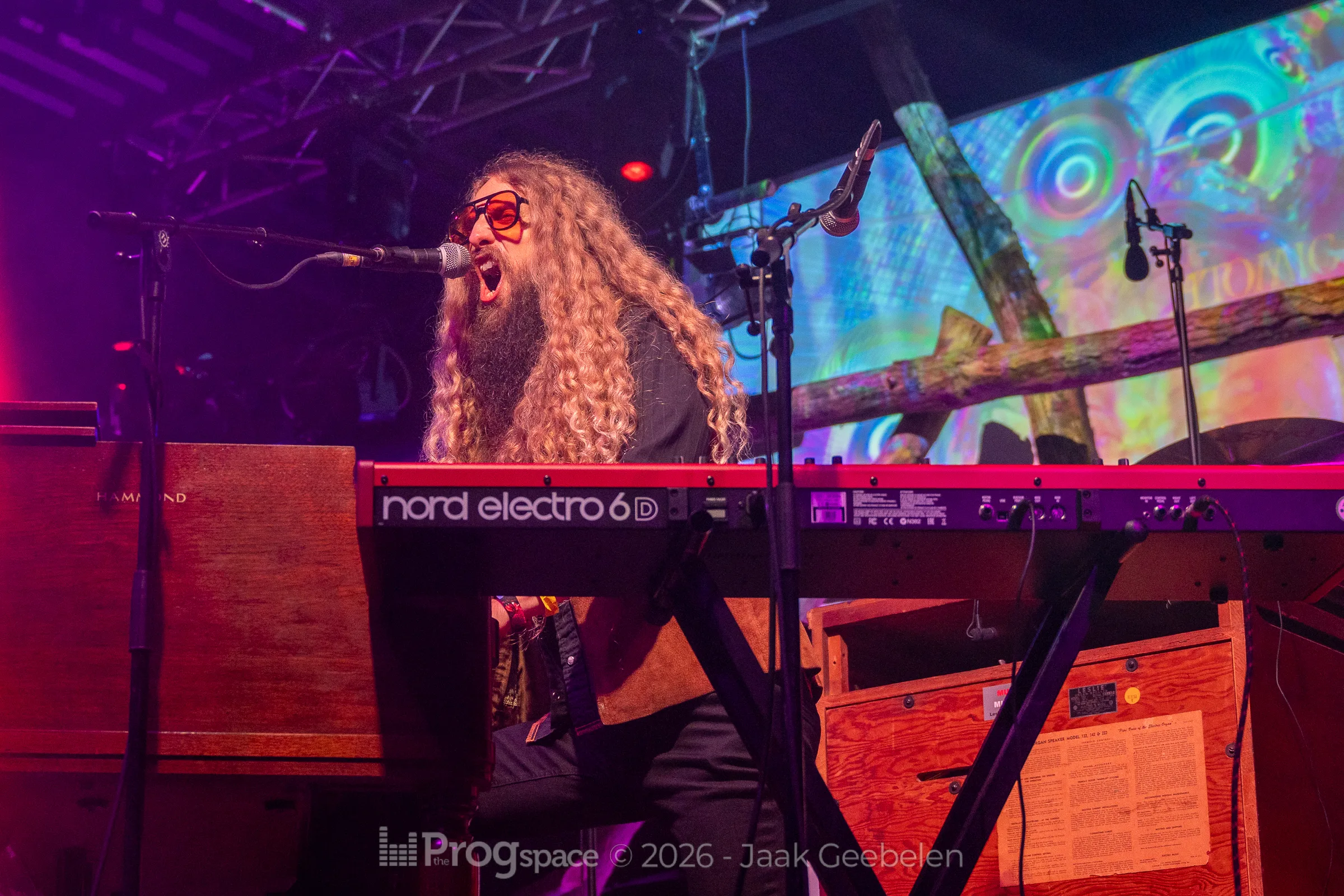
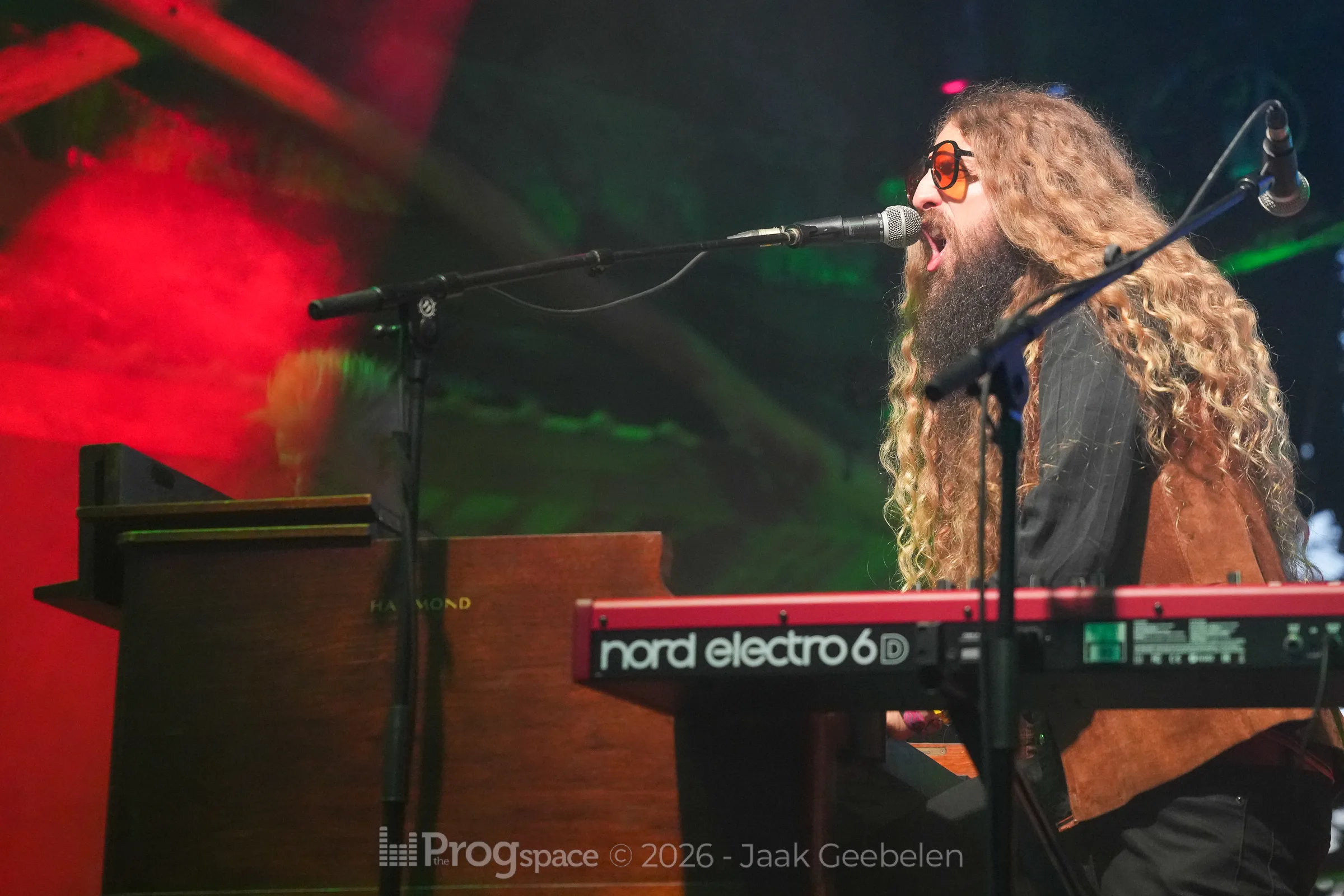
He retains the weight, menace and occasionally sinister atmosphere associated with Crane’s instrument, while playing with a personality of his own. His role has become even more important since he also took over the lead vocals.
At Down The Hill, he was very much one of the musical focal points of the band.
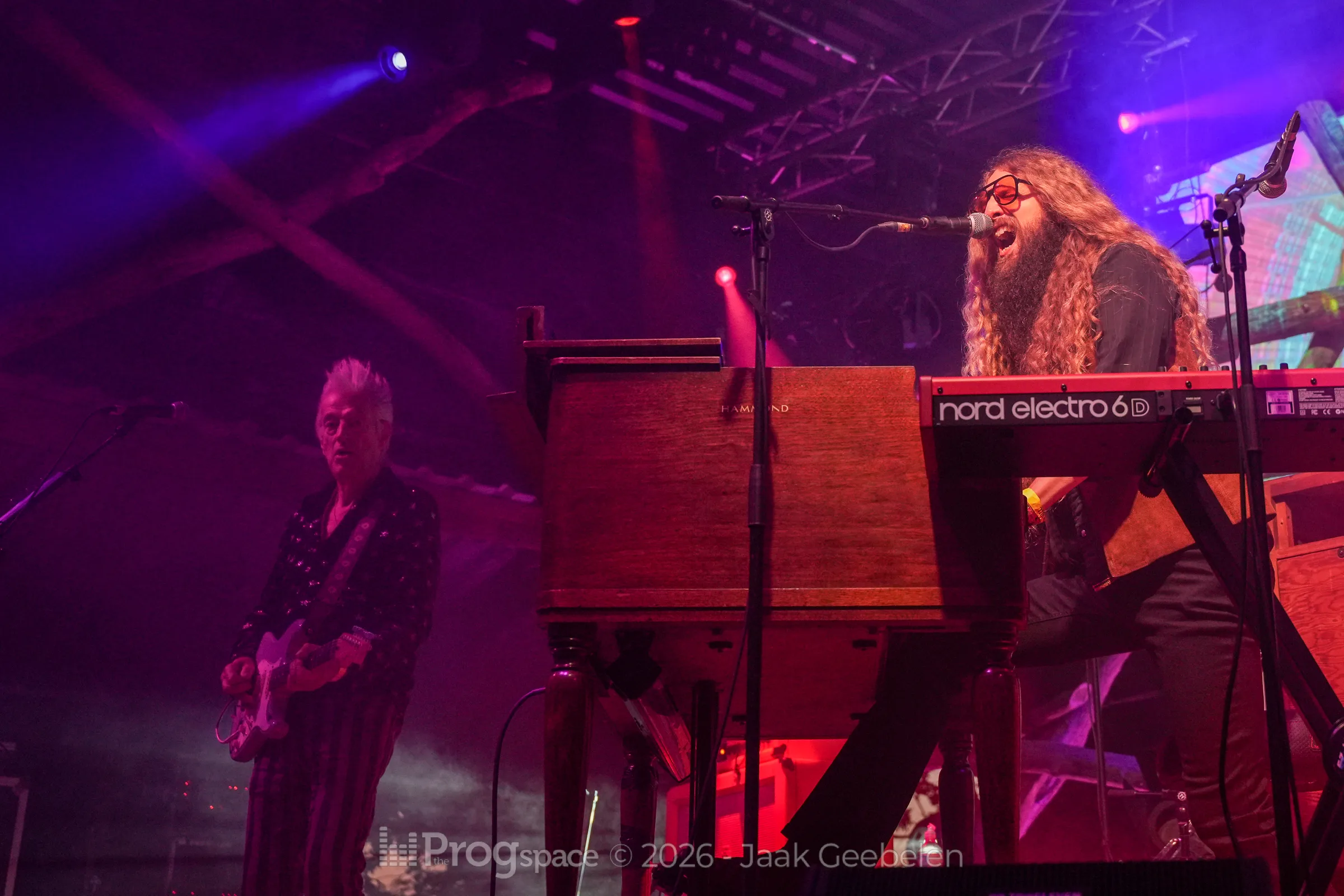
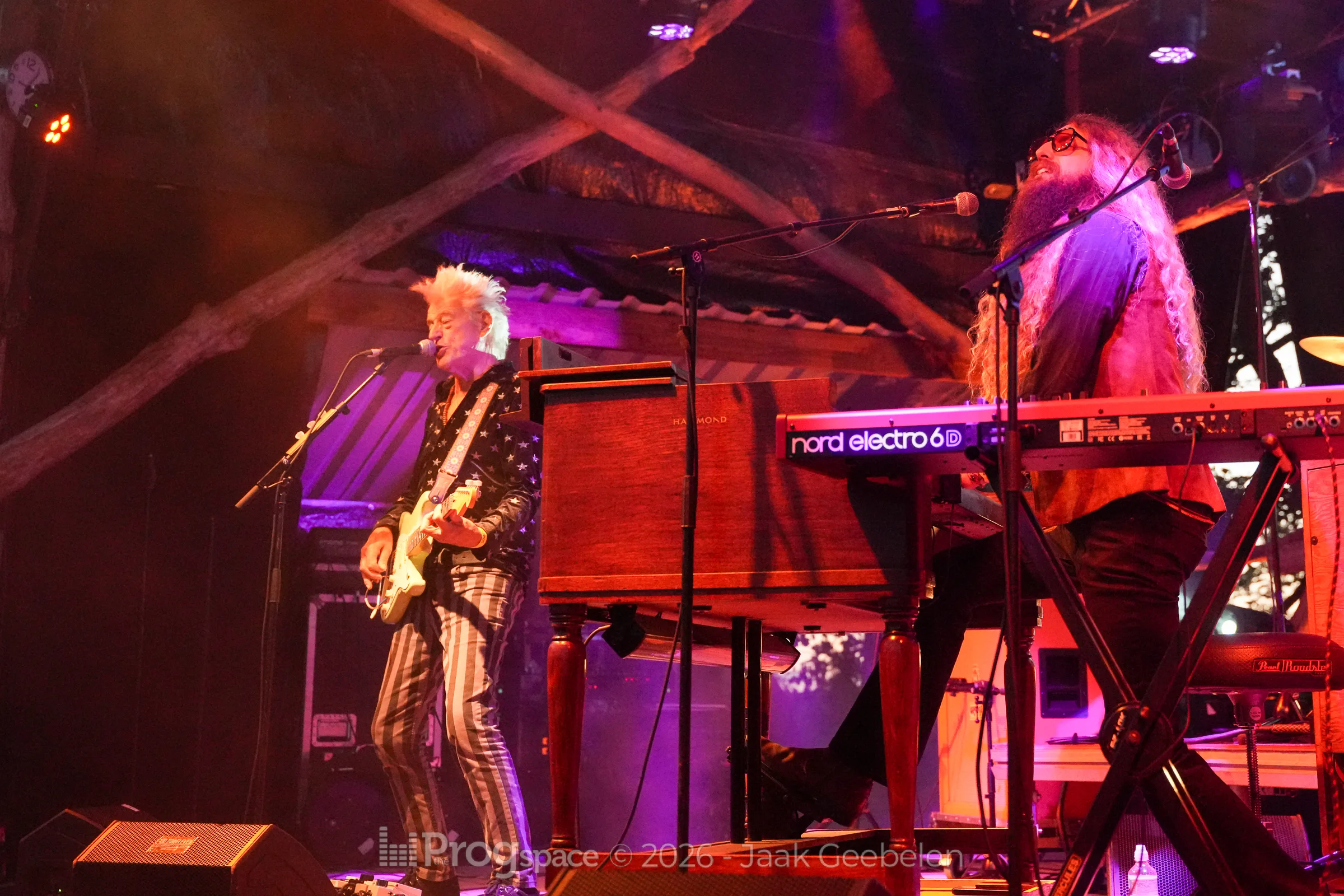
At the same time, there was a constant and fascinating interaction with Bolton. This is rarely simply guitar accompanied by keyboards. Guitar and Hammond push and pull against each other, answer one another and continually exchange roles. Particularly during the instrumental passages, it became obvious just how fundamental this dialogue remains to the Atomic Rooster sound.
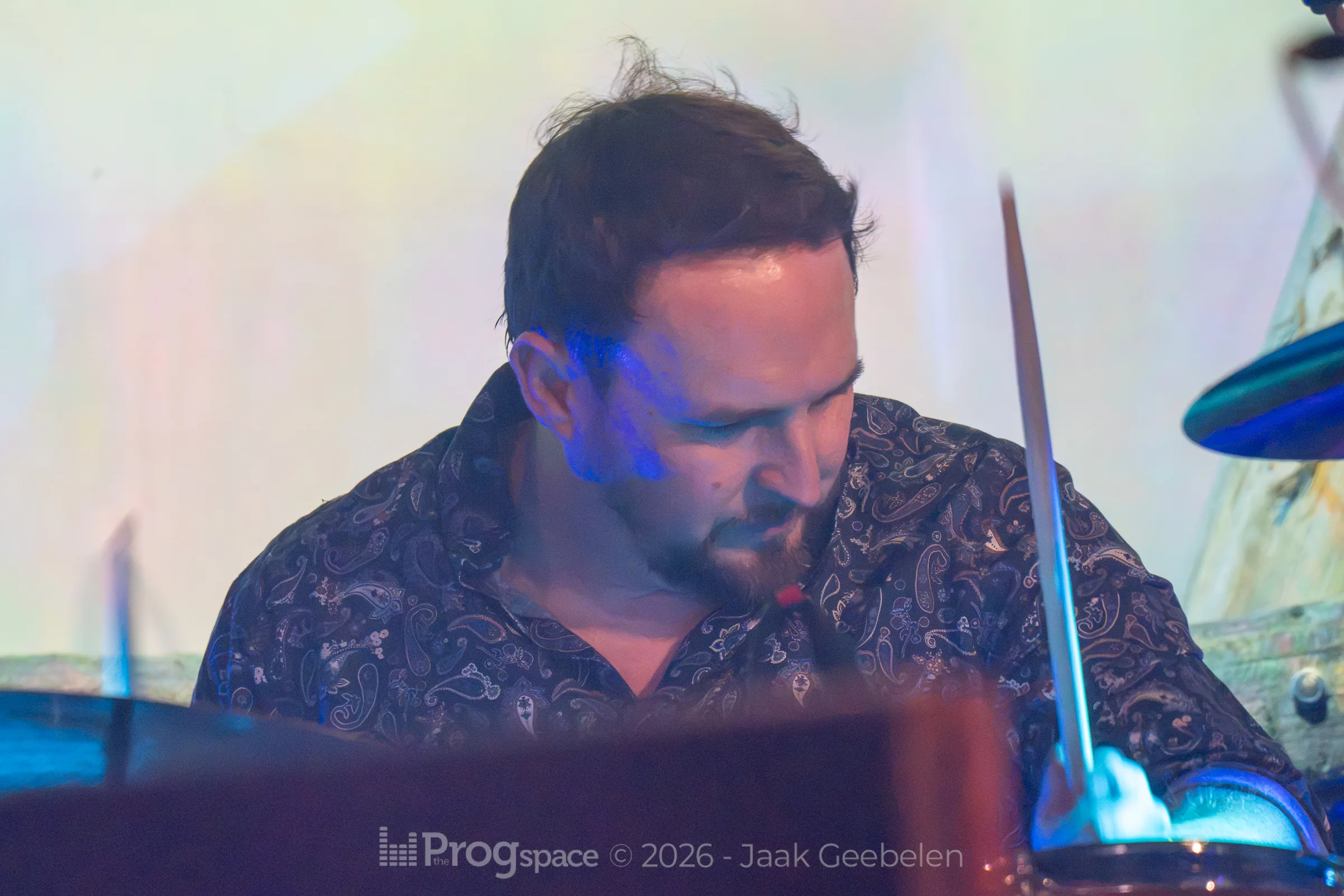
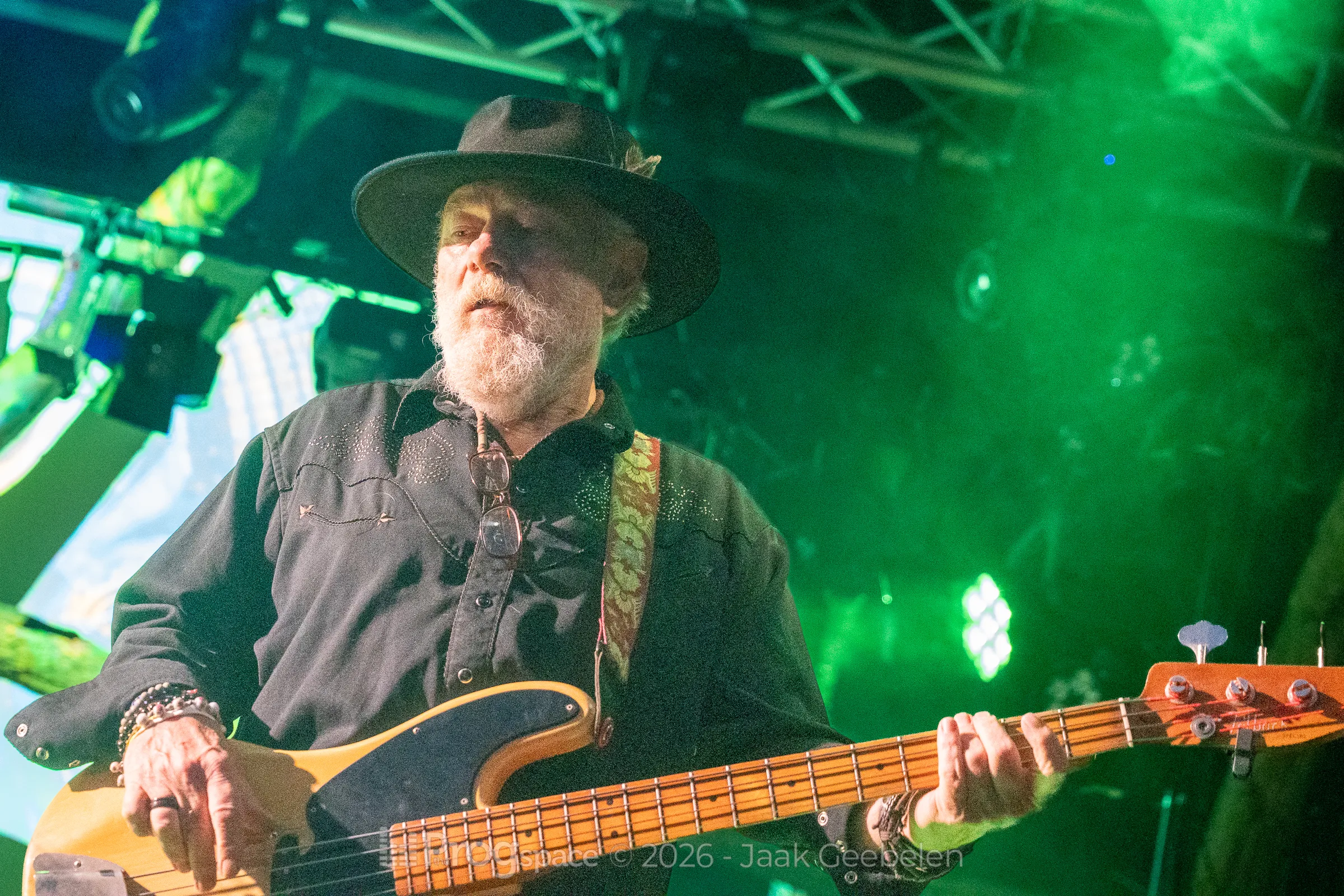
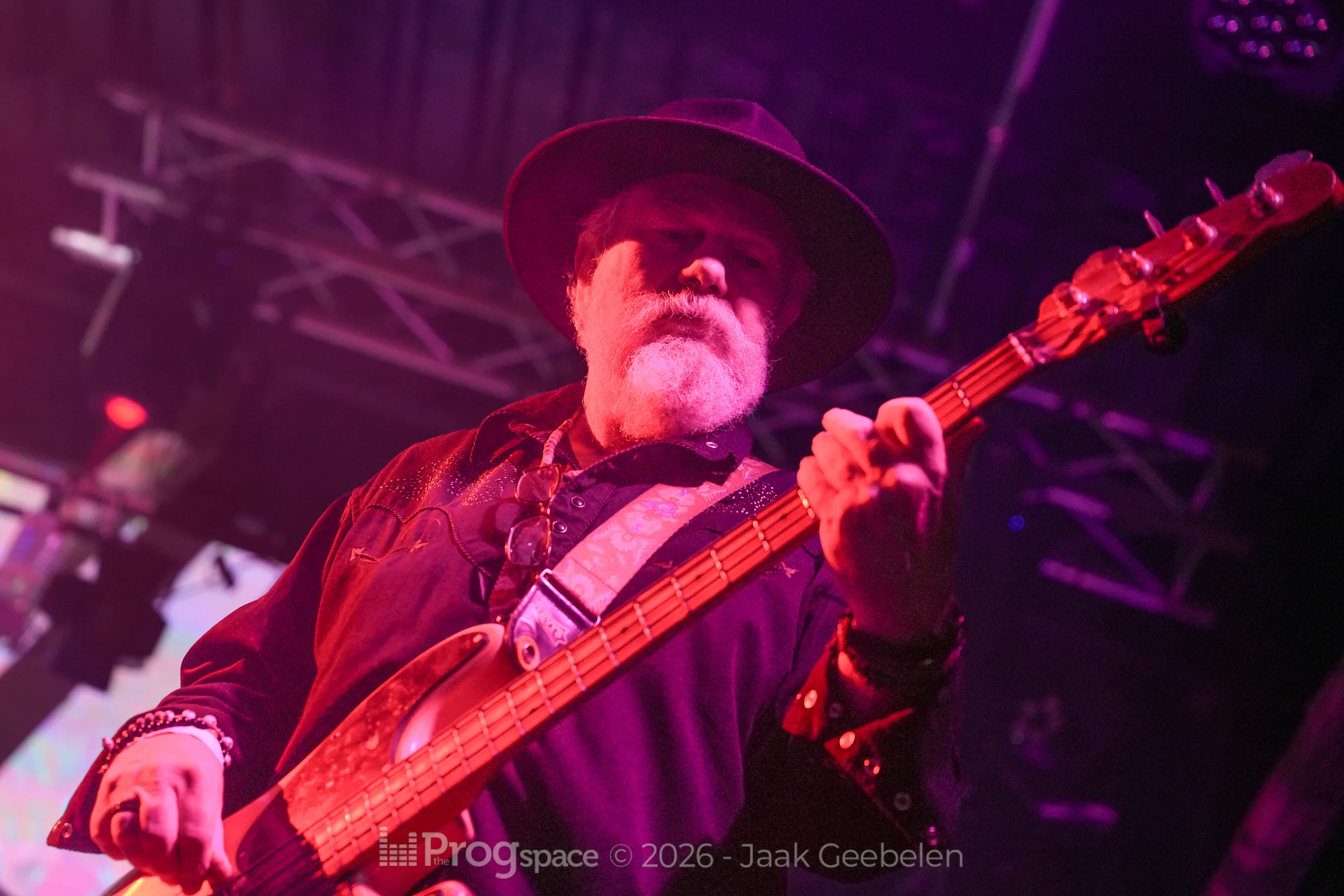
Beneath them stood an impressively solid rhythm section. Shug Millidge was visually more restrained, but his bass supplied much of the music’s considerable weight, while Paul Everett brought plenty of energy and dynamics from behind the drum kit. There was nothing overly careful or reverential about the way this material was played.
A Band That Never Fitted Neatly into One Box
The setlist also demonstrated how stylistically diverse Atomic Rooster have always been. The dark heavy prog of Death Walks Behind You is quite a distance removed from the funkier and more soul-inflected elements of Made in England. Between those extremes lie blues, psychedelia, jazz-flavoured improvisation and, at times, surprisingly direct rock.
That is also what makes Atomic Rooster’s historical position so interesting.
This was never symphonic prog in the tradition of Yes or Genesis. The music was too raw, too rooted in the blues and often too heavy for that. Yet straightforward hard rock does not adequately describe it either. Particularly in the early material there is a darkness and sheer weight that, with hindsight, can easily be regarded as proto-metal.
That is precisely why Atomic Rooster felt remarkably at home at Down The Hill.
Throughout the day we had heard much younger bands combining psychedelia, heavy riffs, repetition, improvisation and progressive structures. When Atomic Rooster subsequently took the stage, it became apparent just how much of that musical vocabulary was already being explored more than half a century ago.
Rather than appearing as some historical outsider at a festival dominated by heavy psych and psychedelic rock, they fitted in surprisingly naturally.
The Strength of the Final Stretch
As the concert progressed, the emphasis gradually shifted towards the classic period. From “Decision/Indecision” onwards, the new material disappeared entirely and the band embarked on a formidable final stretch that included “Death Walks Behind You”, the instrumental “A Spoonful of Bromide Helps the Pulse Rate Go Down”, and finally crowd favourites “Devil’s Answer”, “Tomorrow Night” and “Breakthrough”.
“Death Walks Behind You” remains particularly impressive. More than fifty-five years after it was written, it still sounds deeply unsettling. It is easy to understand here why Atomic Rooster have been embraced by progressive rock, hard rock and metal audiences alike.
“A Spoonful of Bromide Helps the Pulse Rate Go Down”, meanwhile, provided room for something these musicians do particularly well: playing with dynamics and challenging one another musically. The interaction between guitar and Hammond came beautifully to the fore.
It was also striking that “Devil’s Answer” appeared so late in the set. Atomic Rooster could easily have built the entire performance around their two or three most recognisable songs. They deliberately chose not to. Instead, we were first given a broad cross-section of their history and their current work. Only then did the major points of recognition arrive.
And you could see the effect in front of the stage.
From Concentration to Celebration
Visually, there was very little museum-like about Atomic Rooster either.
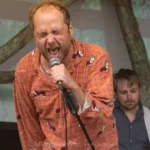
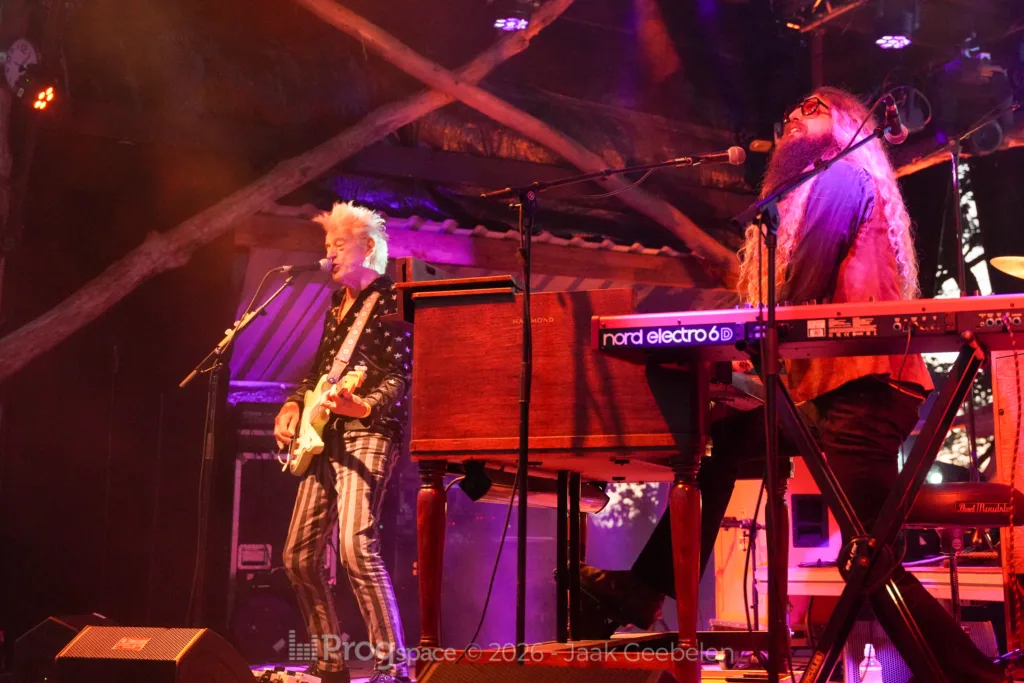
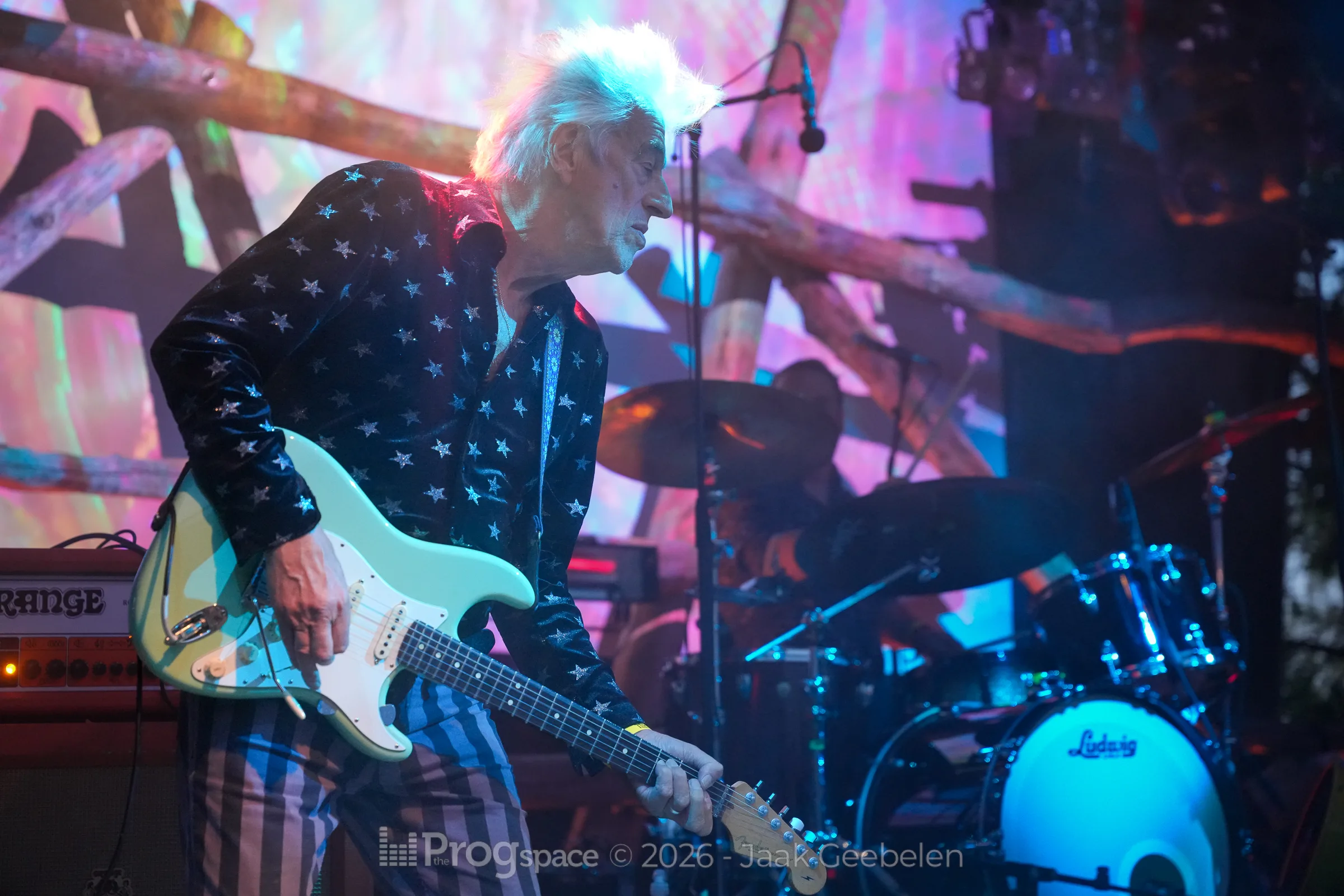
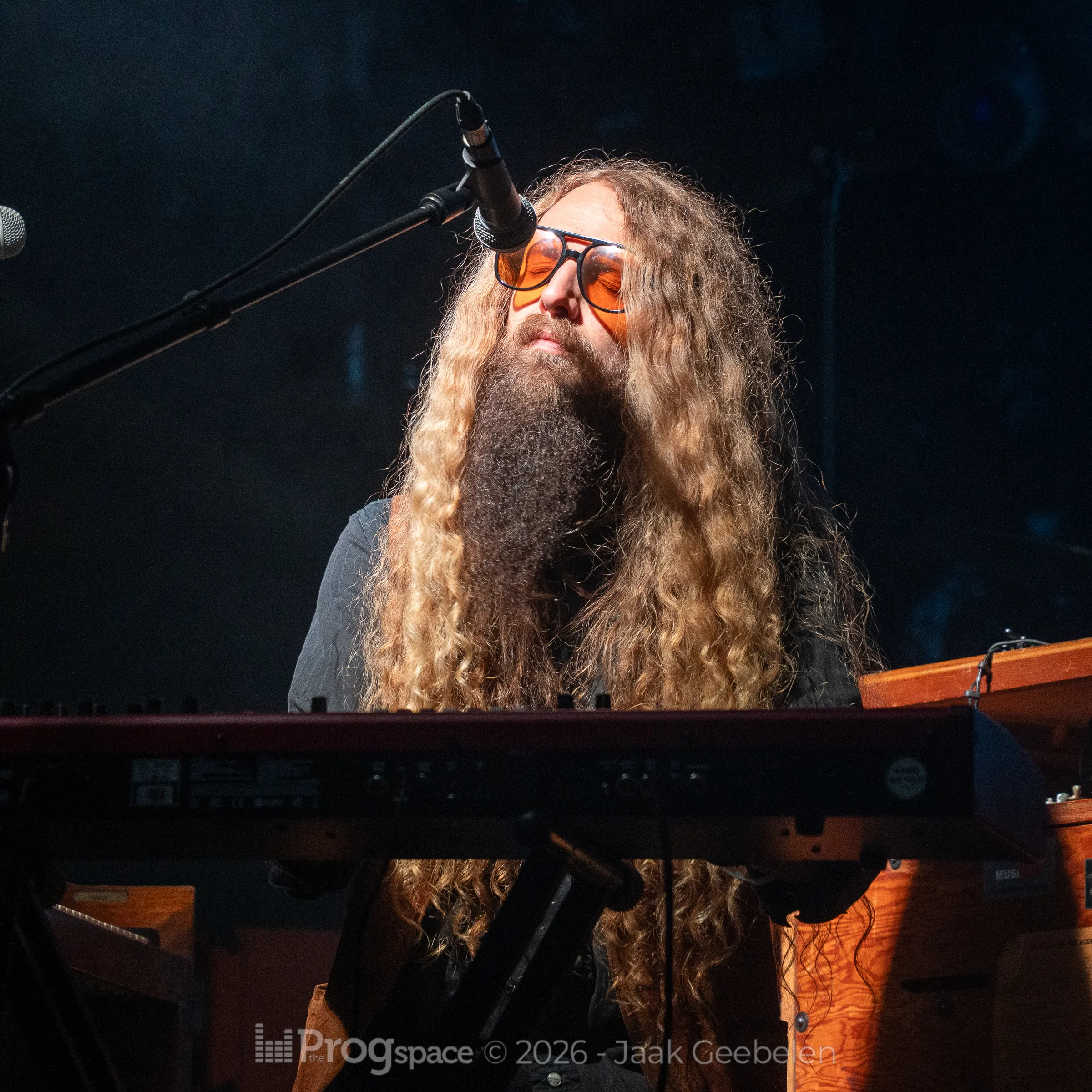
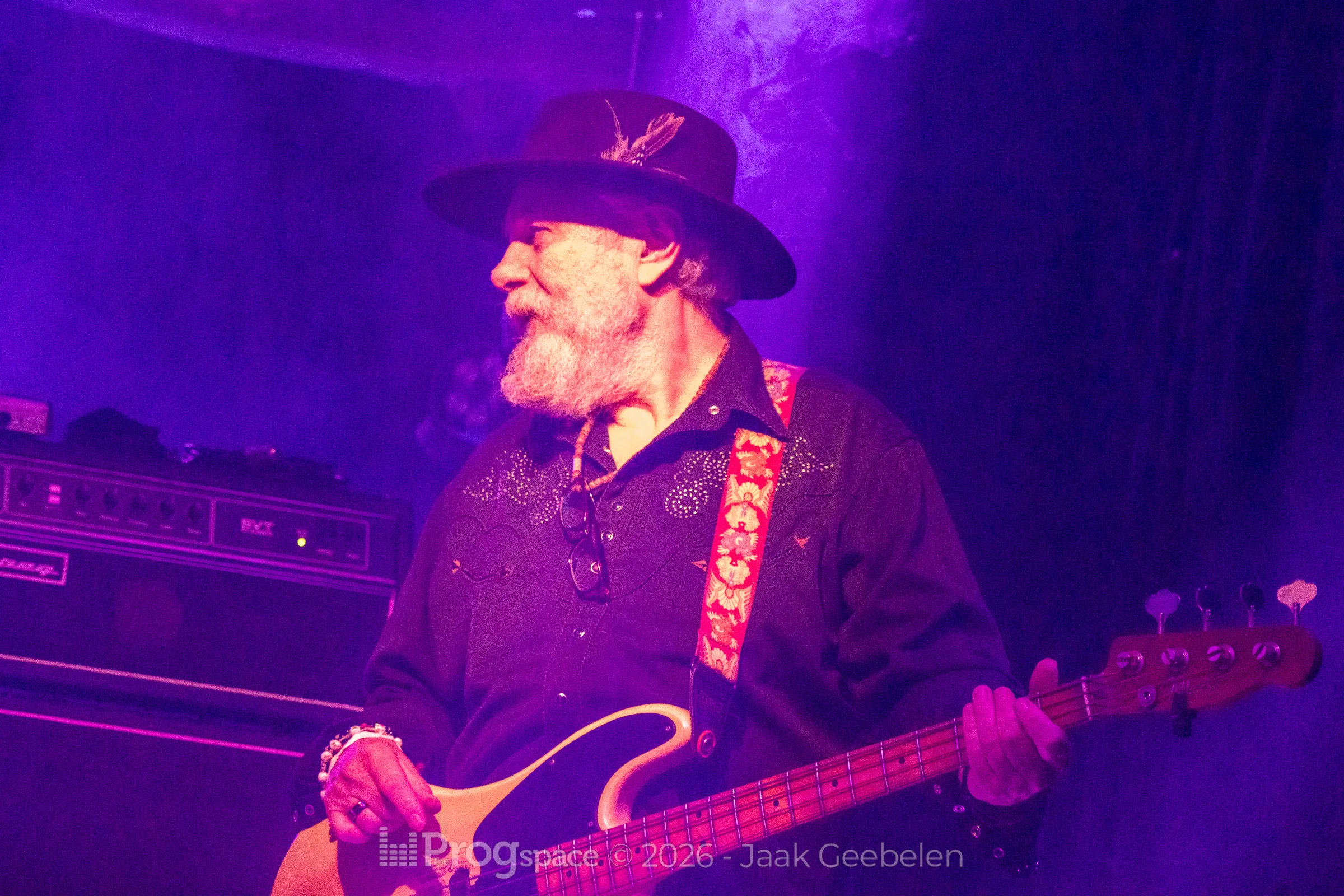
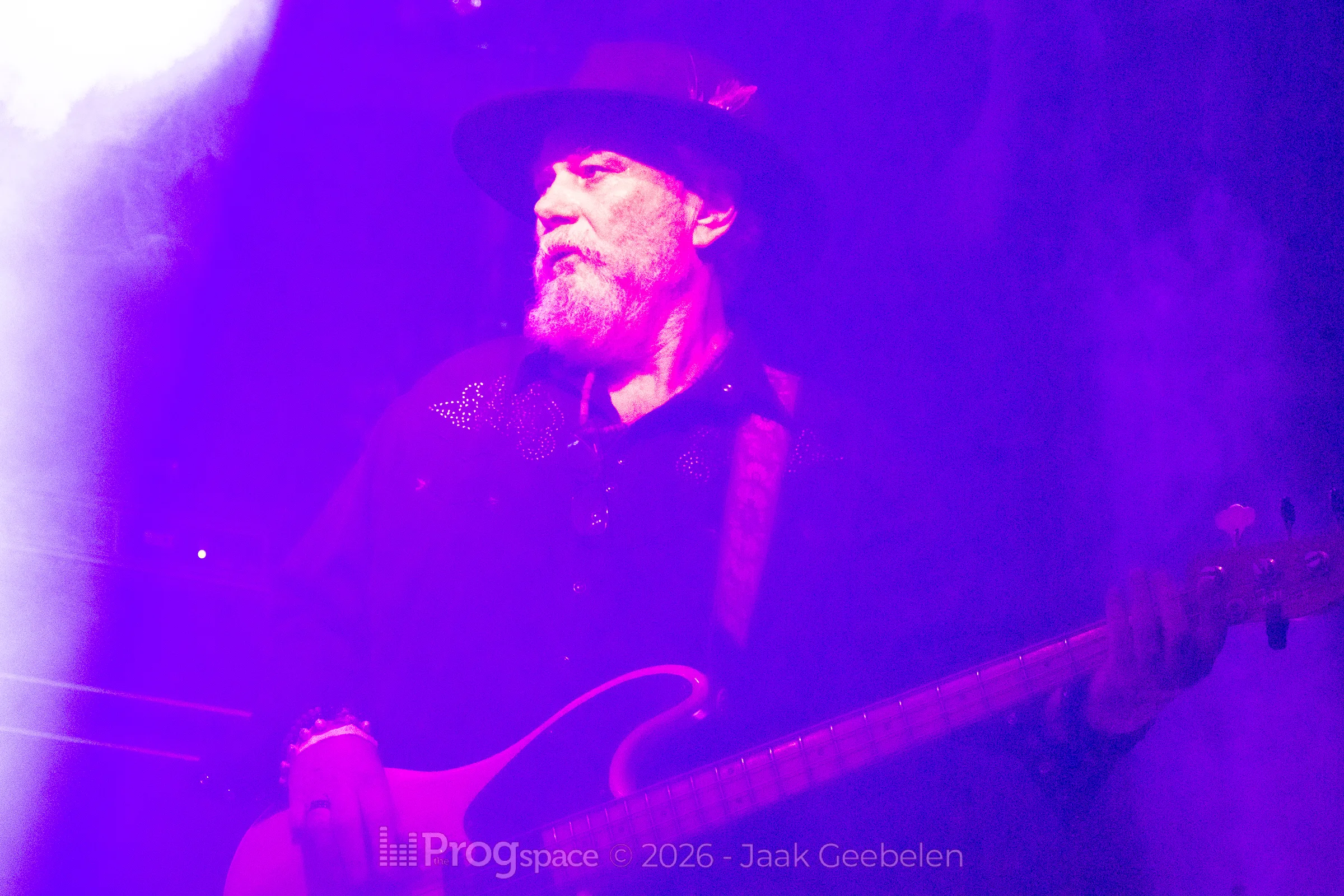
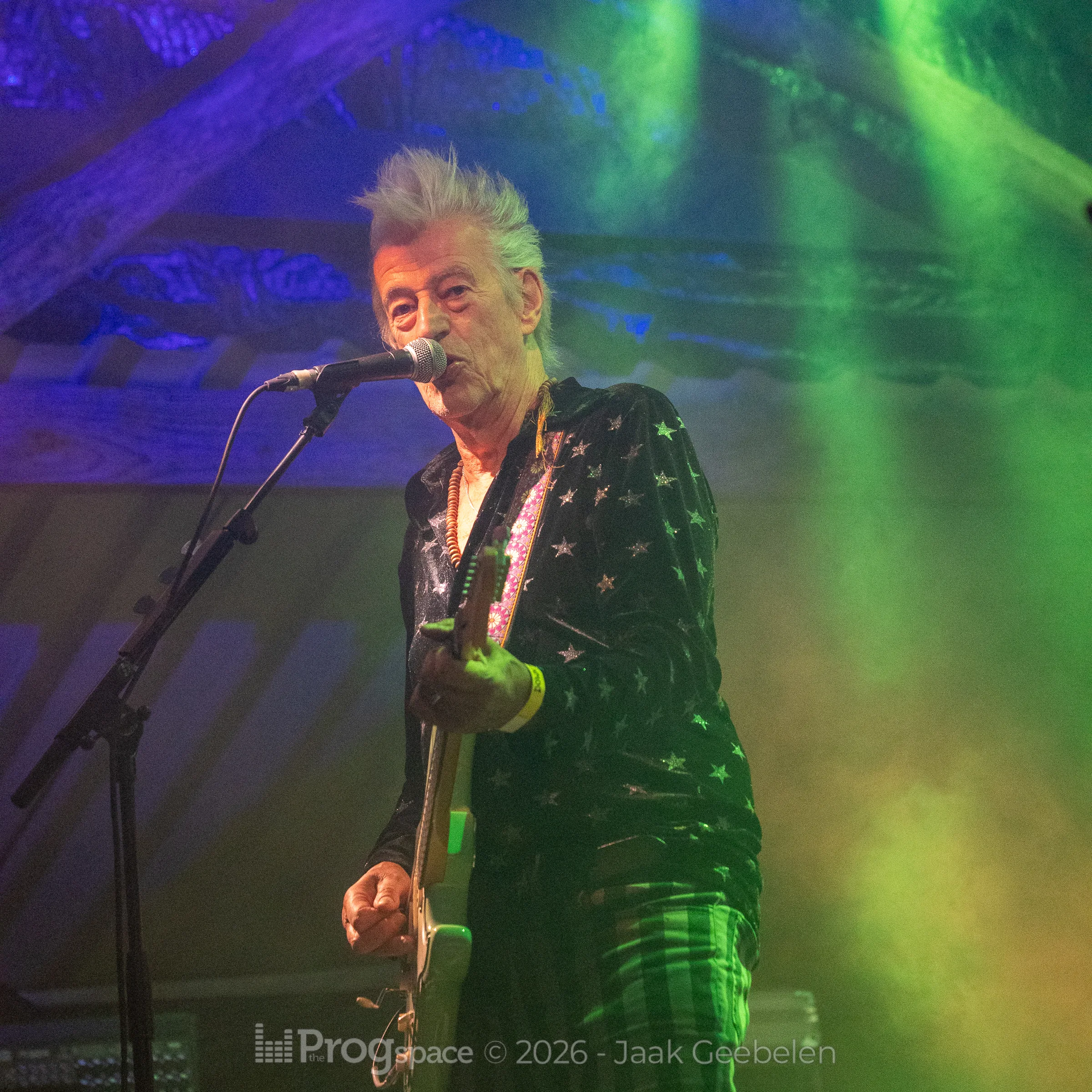
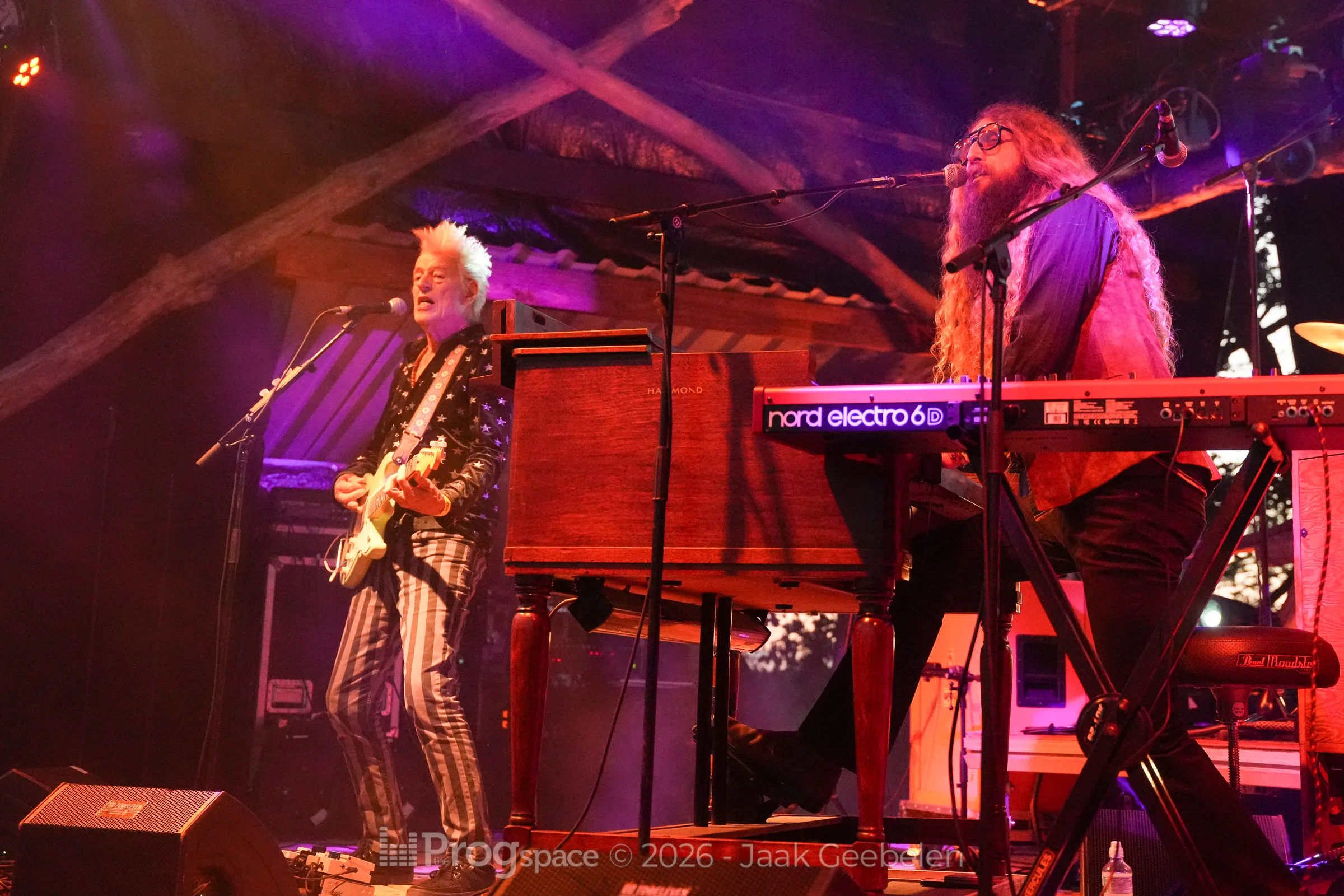
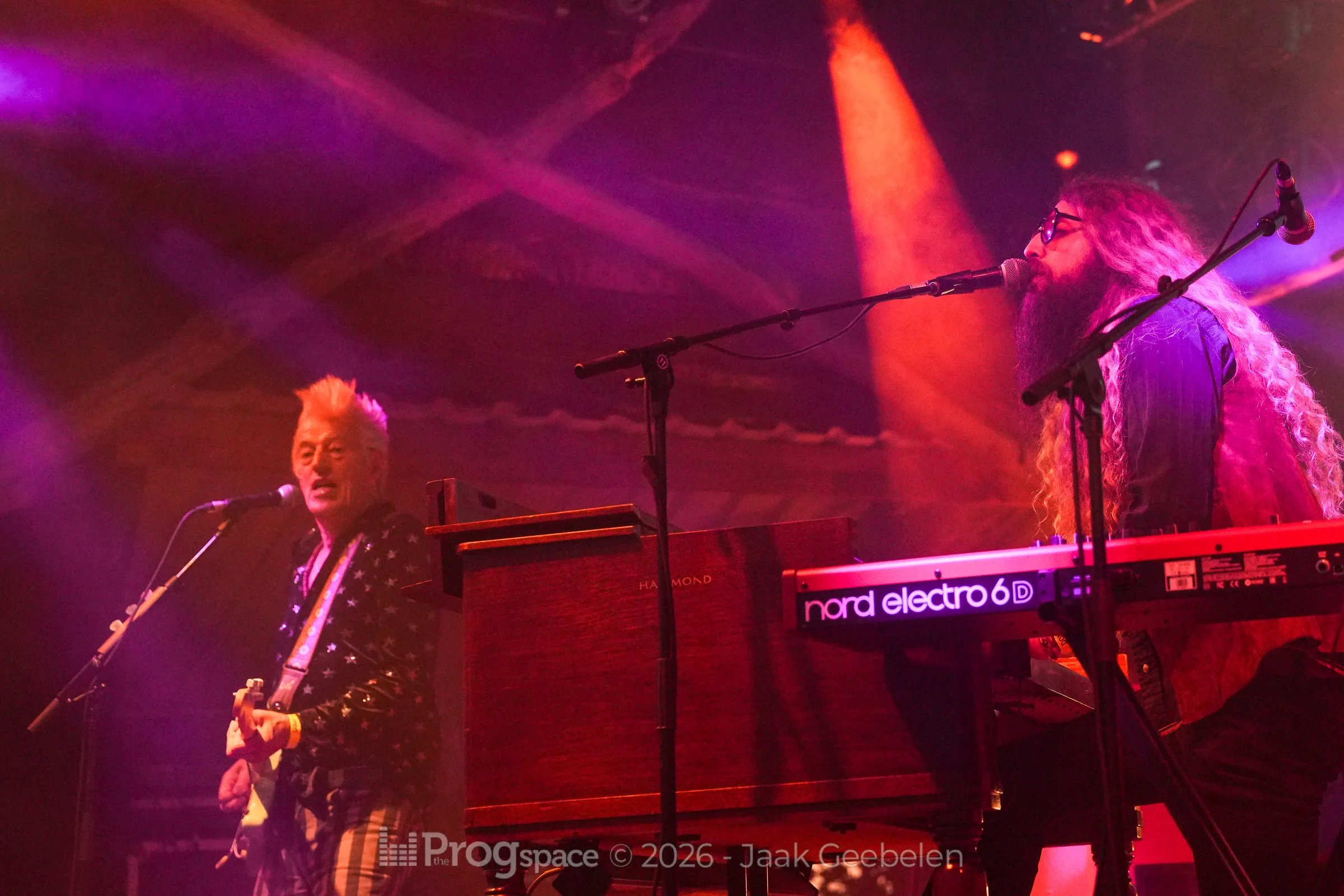
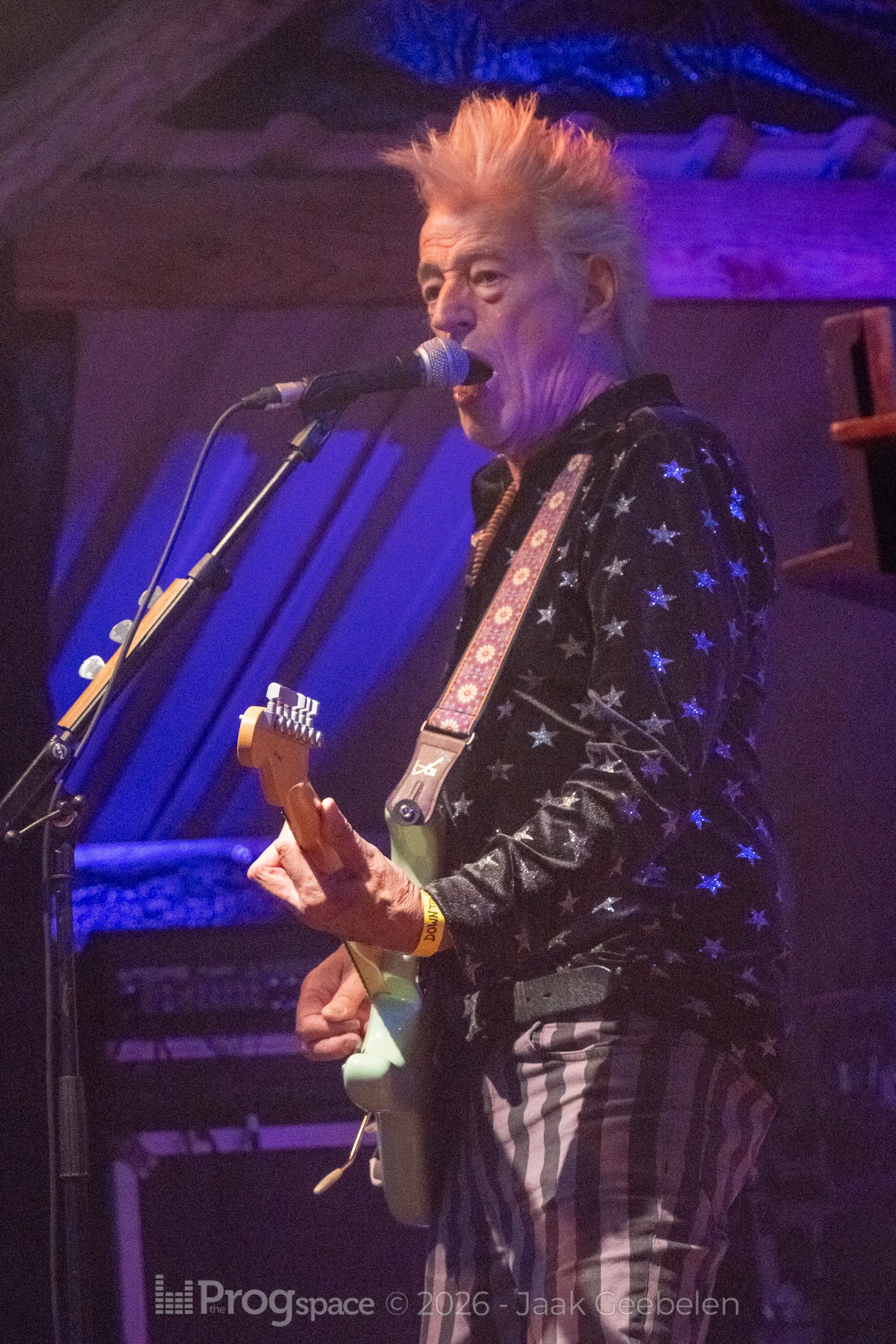
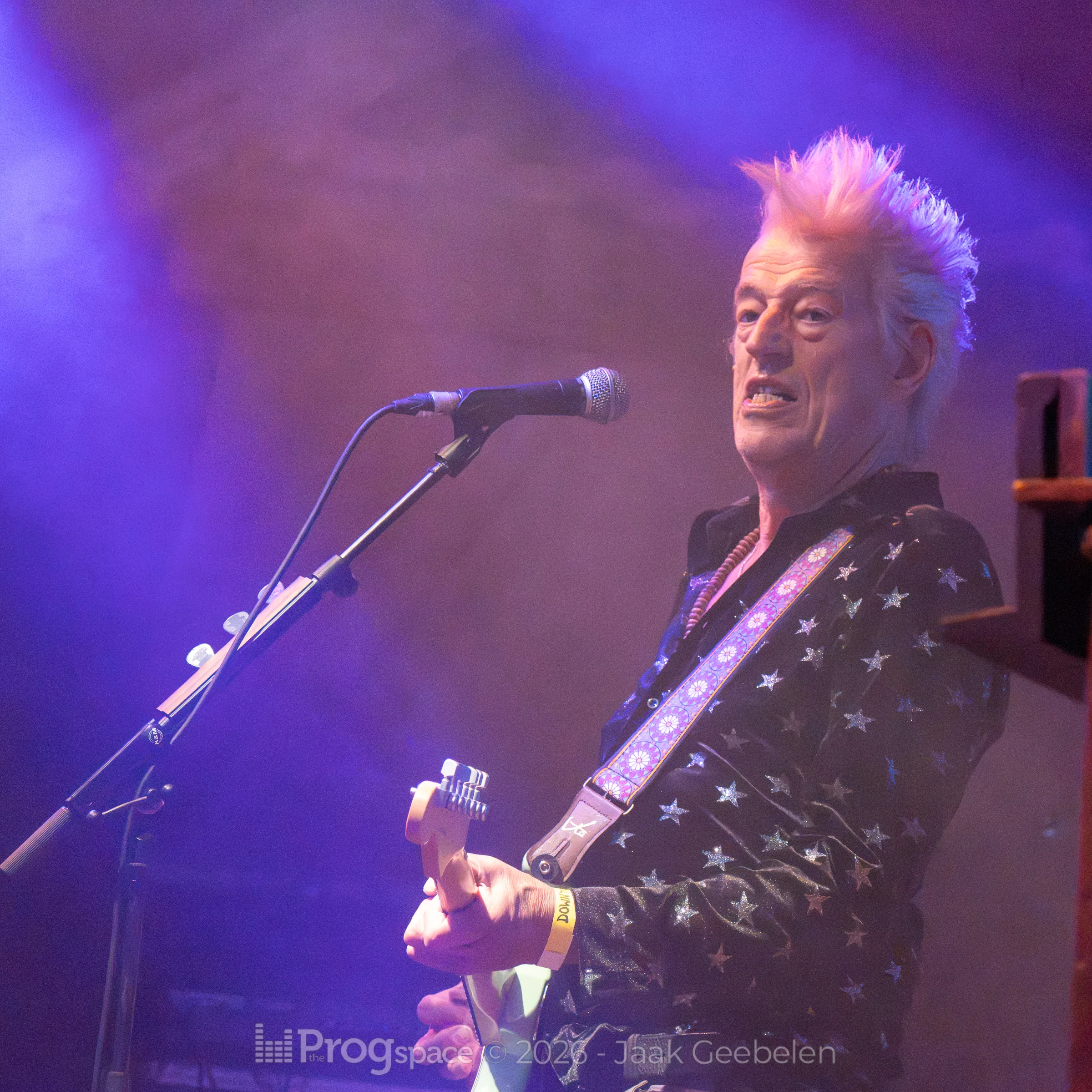
At the centre of the stage stood that imposing wooden Hammond, almost like a tangible survivor from another era. Yet around it unfolded a remarkably lively scene. Bolton, with his characteristic upright grey hair and star-covered jacket, was the most flamboyant presence. With his long hair, beard and sunglasses, Gautrey provided an almost psychedelic counterpoint, while Millidge, in his hat and grey beard, delivered his bass lines with a far more stoic presence.
Smoke and deeply saturated red, purple and green lighting completed the picture. At times, it looked more like a contemporary heavy-psych performance than a show by a band whose roots stretch all the way back to 1969.
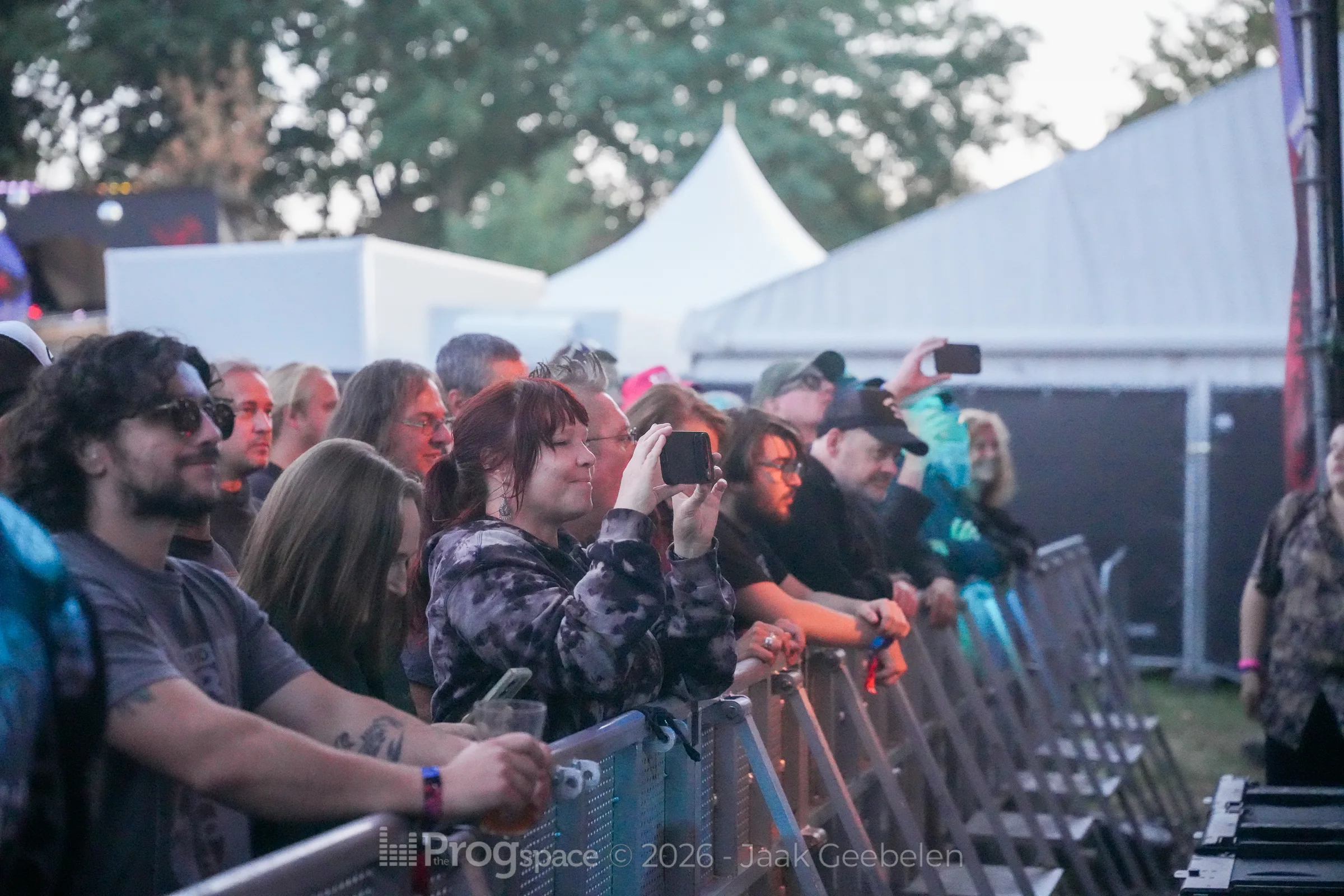
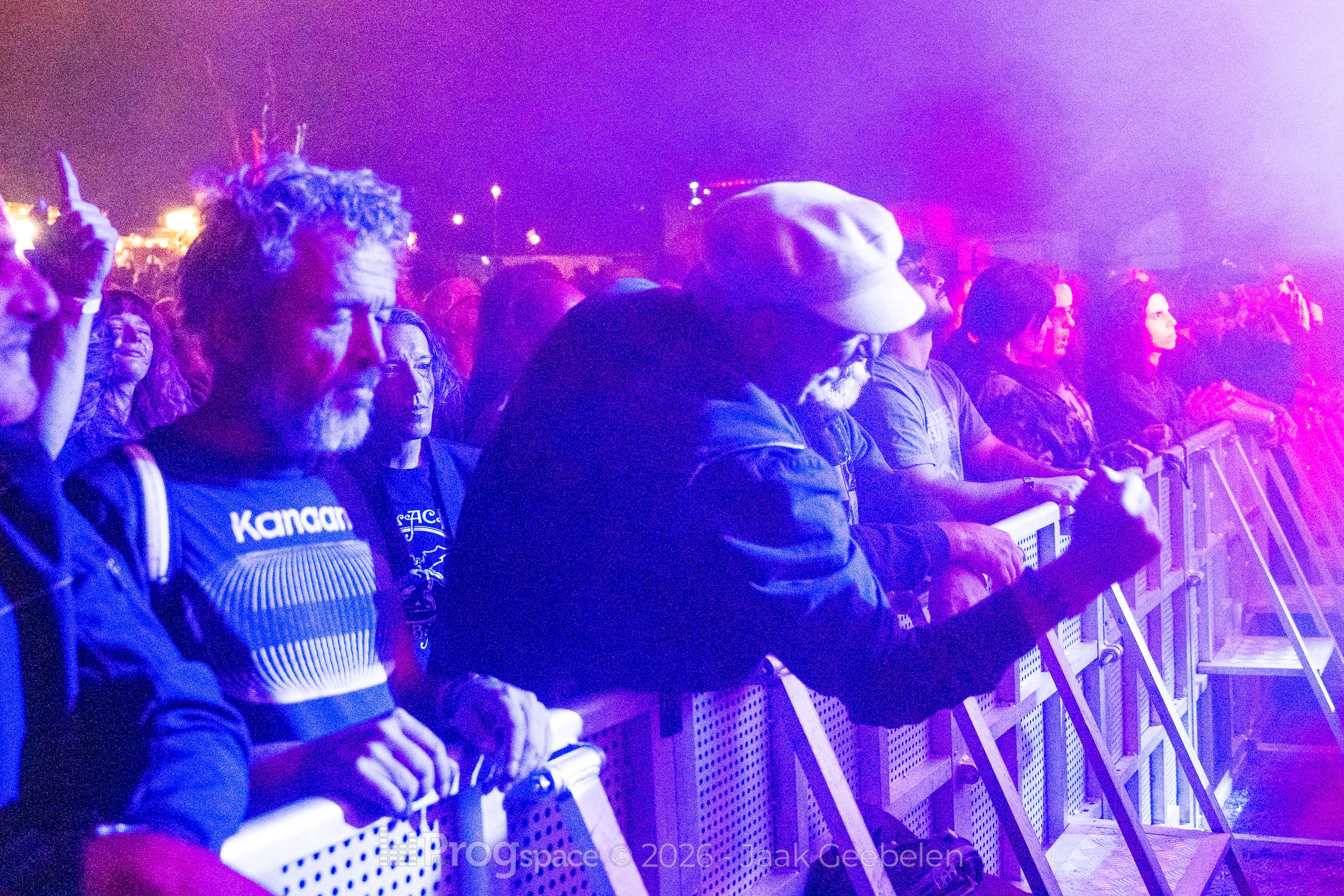
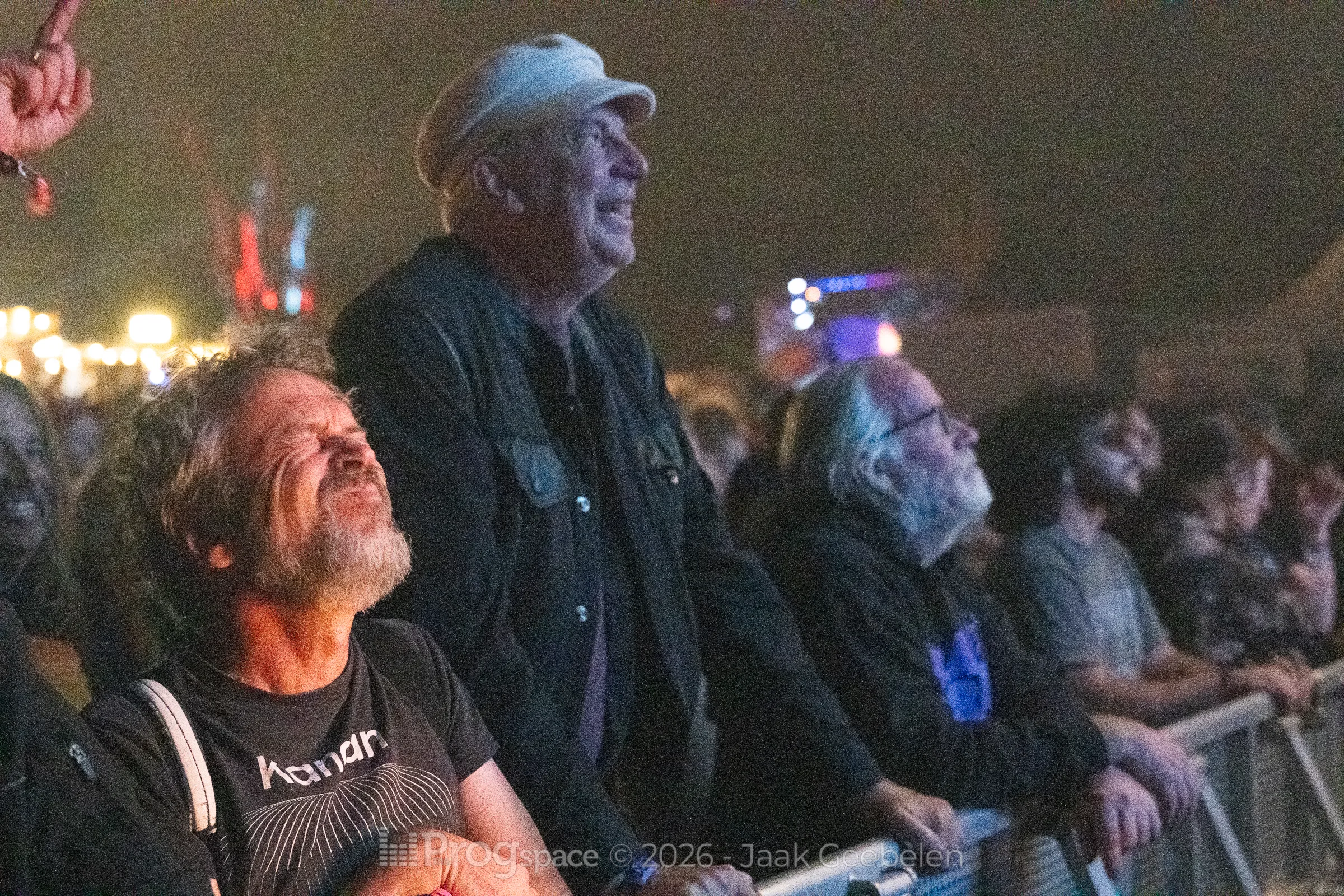
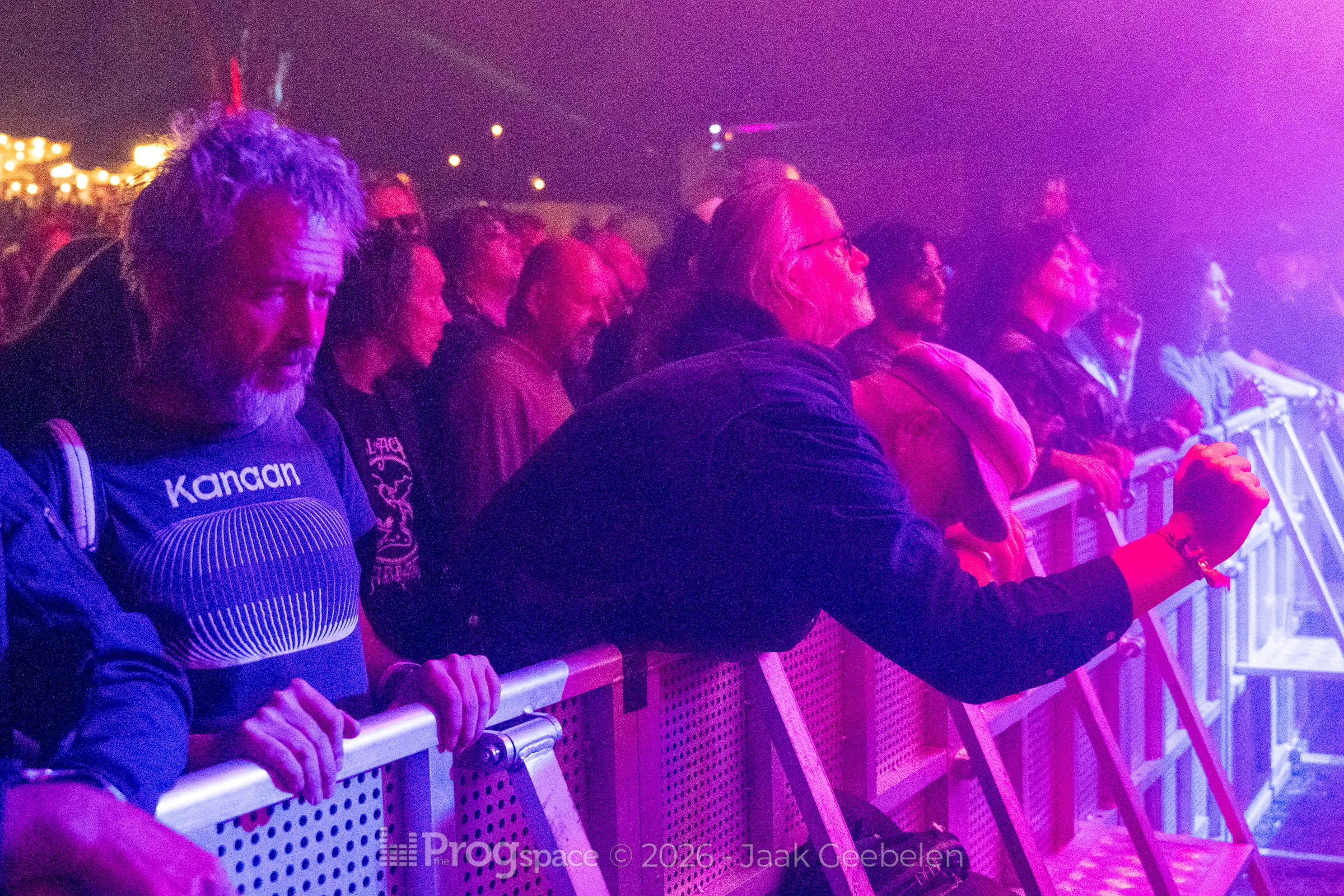
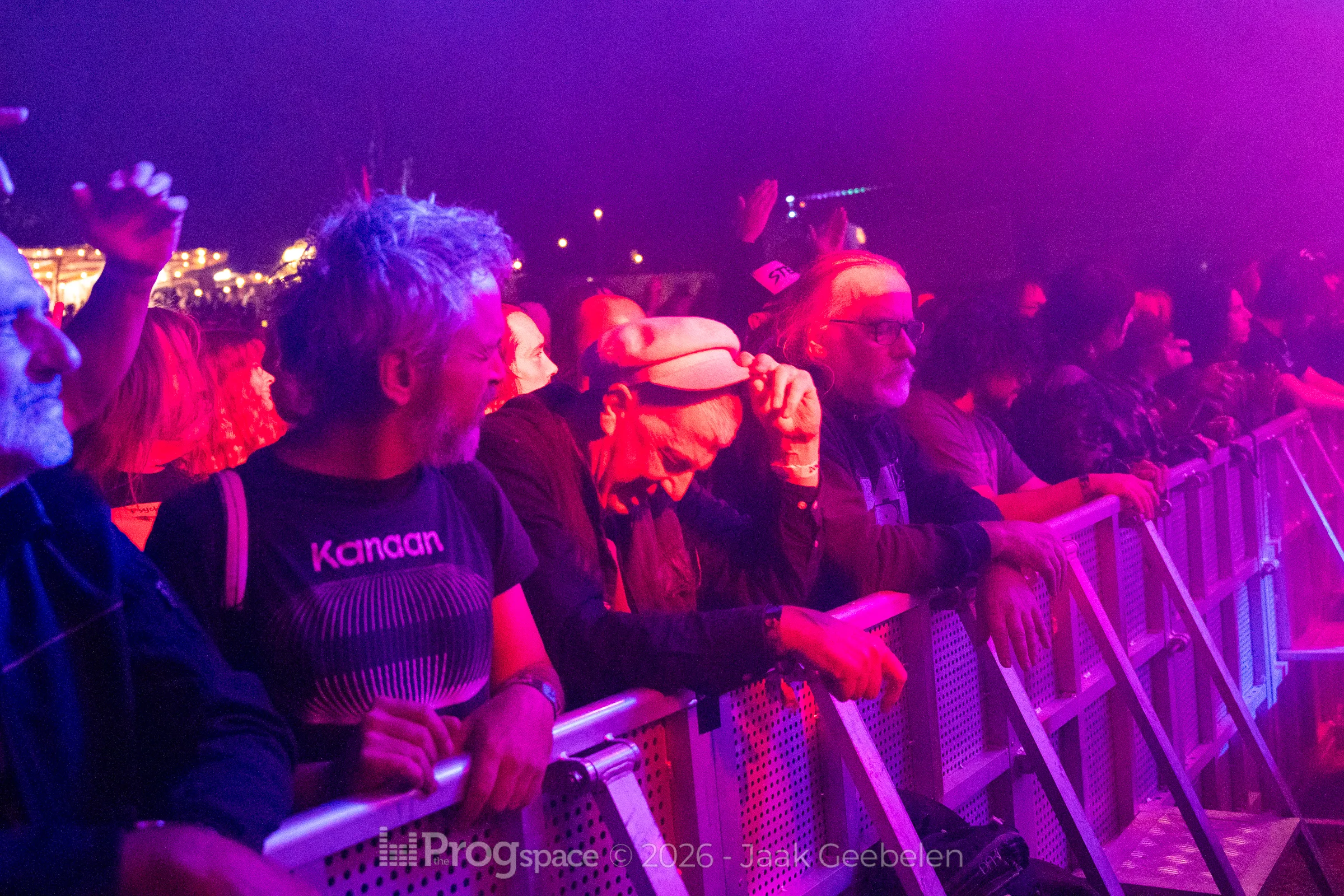
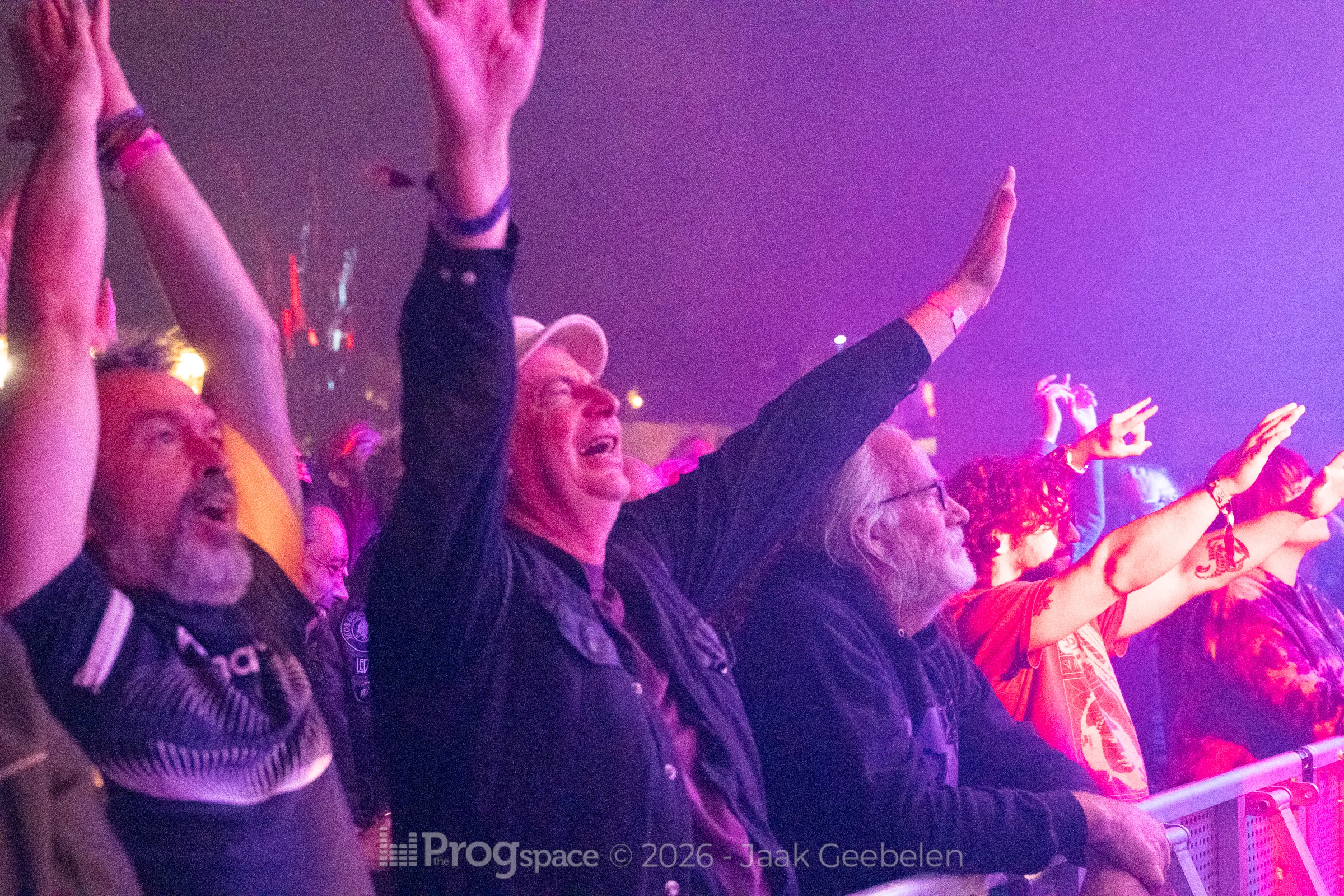
The audience told its own story. Initially, there were mainly concentrated faces along the barrier. As the concert moved towards its classic final section, the atmosphere visibly changed. People sang along, bodies began to move more emphatically and eventually arms were raised into the air.
It perfectly reflected the construction of the set: first the exploration and interweaving of old and new, followed by an increasing sense of recognition and release.
Is This Still Atomic Rooster?
It is a question that cannot entirely be avoided.
Vincent Crane died in 1989. John Du Cann is no longer with us. Of the current musicians, only Bolton actually played in Atomic Rooster during the seventies. At what point does a band cease to be the same band?
Perhaps, however, that is ultimately less interesting than asking whether the music itself remains convincing.
And that is precisely where this Atomic Rooster succeeds.
The quartet have been playing together long enough to sound like a genuine unit rather than a collection of musicians hired to reproduce an old catalogue. More importantly, with Circle The Sun they have created new music that can stand alongside compositions written more than half a century ago without producing an uncomfortable stylistic rupture. The older songs are treated with respect, but never as though they belong under glass.
Atomic Rooster therefore did not come to Down The Hill simply to remind us of what they once were.
They demonstrated why this music can still be relevant today.
And perhaps that was ultimately the biggest surprise of the performance. Surrounded by bands several generations younger, Atomic Rooster never felt like a piece of living music history temporarily removed from a museum display. The old songs still had teeth, the new material needed no excuses, and at the centre of the stage that Hammond continued to growl as though 1970 had never entirely disappeared.
An old rooster, perhaps – but one that can still make itself heard with remarkable conviction.
Setlist
Gershatzer – Fly or Die – Circle the Sun – Save Me – VUG – Black Snake – Rebel Devil – No More – Walk With Me – People You Can’t Trust – Space Cowboy – First Impression – Decision/Indecision – Death Walks Behind You – A Spoonful of Bromide Helps the Pulse Rate Go Down – Devil’s Answer – Tomorrow Night – Breakthrough


 We’re a group of Prog-lovers who started a journey to share with you our thoughts about albums, concerts, tours and festivals, the photo galleries of the Prog concerts we visit, as well interviews with upcoming or established musicians or prog-related people. Follow our Facebook page for frequent updates and news around the Progniverse.