

Needlepoint – Down The Hill Festival, Rillaar, Belgium – 22 August 2026
Sometimes a festival introduces you to a band you already expected to enjoy, only for the live experience to reveal just how much depth and character there really is in the music. Needlepoint was exactly that kind of band for me. Their set at Down The Hill became one of the highlights of the day, and more importantly, one of those performances that makes you think: this is a band I want to keep following closely.
The Norwegians inhabit a space somewhere between Canterbury, jazz rock, psychedelia, pastoral folk and progressive rock, but none of those labels really tells the whole story. What struck me most was how naturally everything blended. The jazz is there in the rhythmic freedom, the Canterbury tradition in the harmonies, keyboard colours and loose interplay, the psychedelia in the subtle sense of disorientation, and the folk influence in the intimacy of the songs.
Within that Canterbury lineage, the connection with Soft Machine felt particularly clear to me. Not as imitation, but as a kind of shared musical instinct: a rhythm section that does far more than simply support, a bass that moves independently, and a drummer who constantly reacts to what is happening around him.
Back to Robert Reverie
It was striking how heavily the set leaned on The Diary of Robert Reverie from 2018. No fewer than five of the nine pieces came from that album: In the Sea, Robert Reverie, On the Floor, All Kinds of Clouds and Grasshoppers.
That album may be one of the best keys to understanding Needlepoint. The character of Robert Reverie was inspired by someone from Bjørn Klakegg’s surroundings: a man with a strong connection to nature and landscape, but less naturally at ease with the social world around him. From that perspective came songs built around small observations: people, sounds, clouds, insects and fields.
That is perhaps where I felt the strongest personal connection to this music.
As a nature researcher, I can spend hours — and quite often entire nights — observing the small world around me. Insects, unexpected movements, patterns and tiny events that most people would probably never notice. The longer you look, the larger that seemingly insignificant world becomes.
Needlepoint seems to listen and observe in much the same way.
They do not need grand mythology or science fiction. A cloud, a grasshopper or a small detail in a landscape can be enough to open up an entire musical world. Perhaps that is also one of the reasons why this performance made such a strong impression on me.
The band opened with In the Sea, immediately drawing us into that dreamlike world. Spacious chords, fluid interplay and a gentle melancholy eased the audience almost imperceptibly into Needlepoint’s own universe.
Next came Robert Reverie, where that Canterbury character became even more apparent. The soft vocals, restless bass and constantly responsive drumming made it clear that this is not a band that relies on a straightforward rock pulse. The music seems to shift direction almost continuously, yet never loses its natural flow.
All Kinds of Clouds
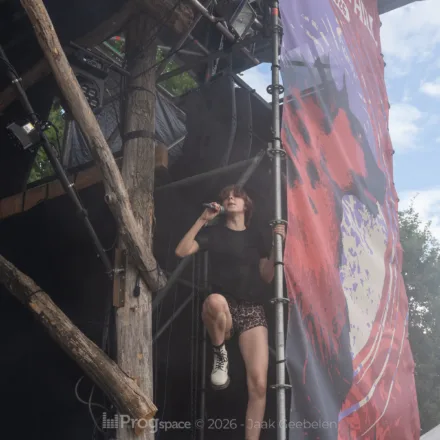
During All Kinds of Clouds, music and surroundings suddenly seemed to meet in a particularly beautiful way.
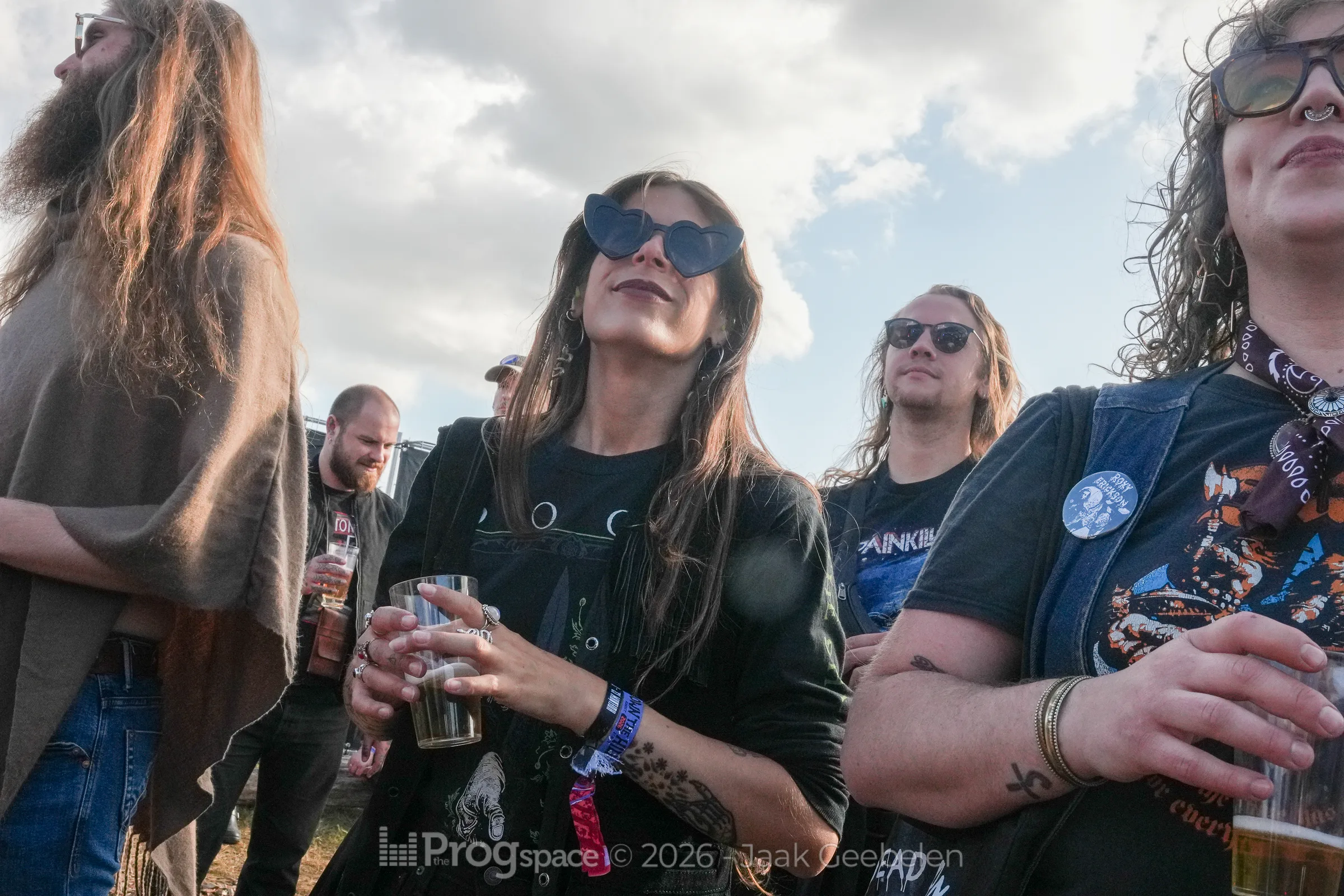
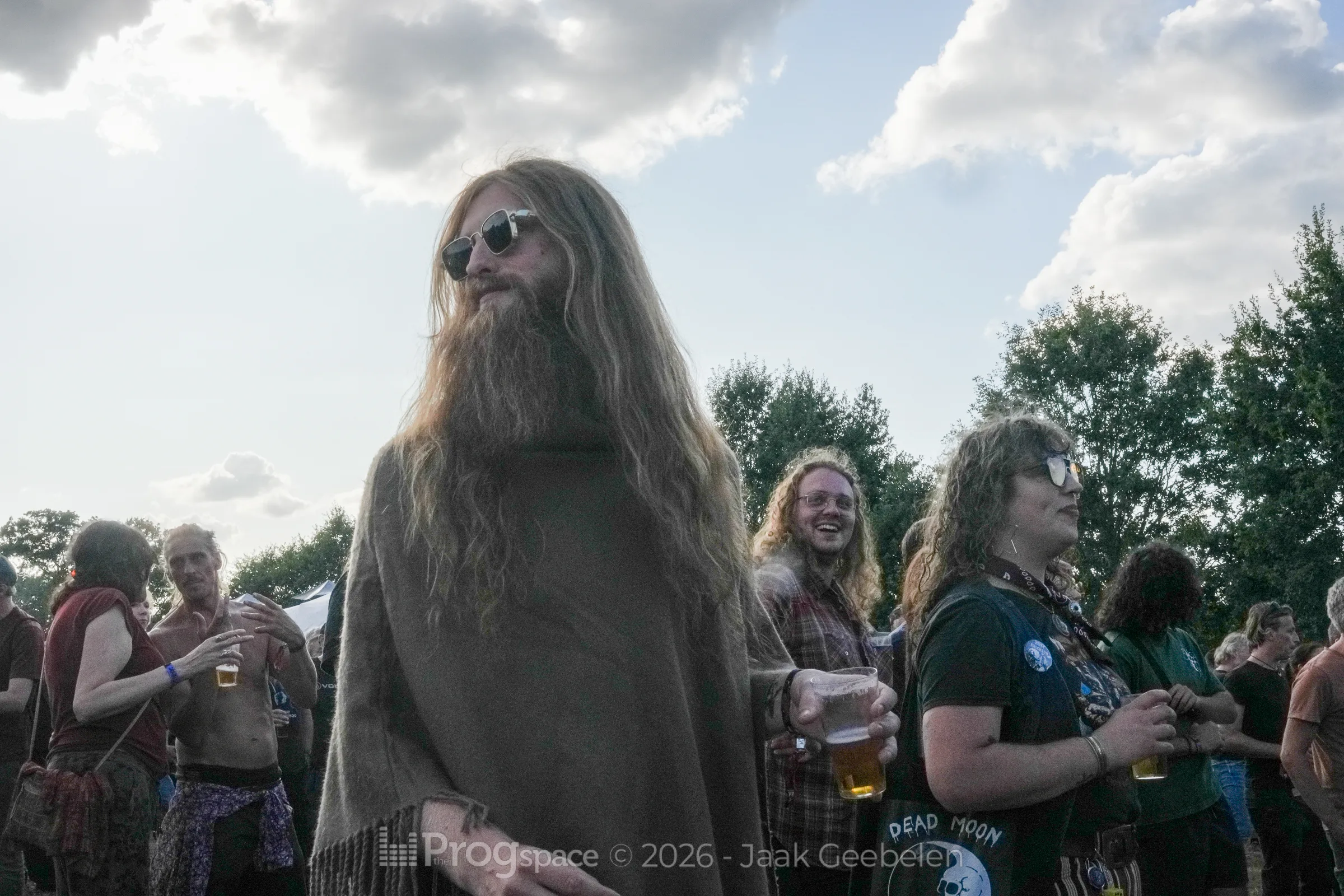
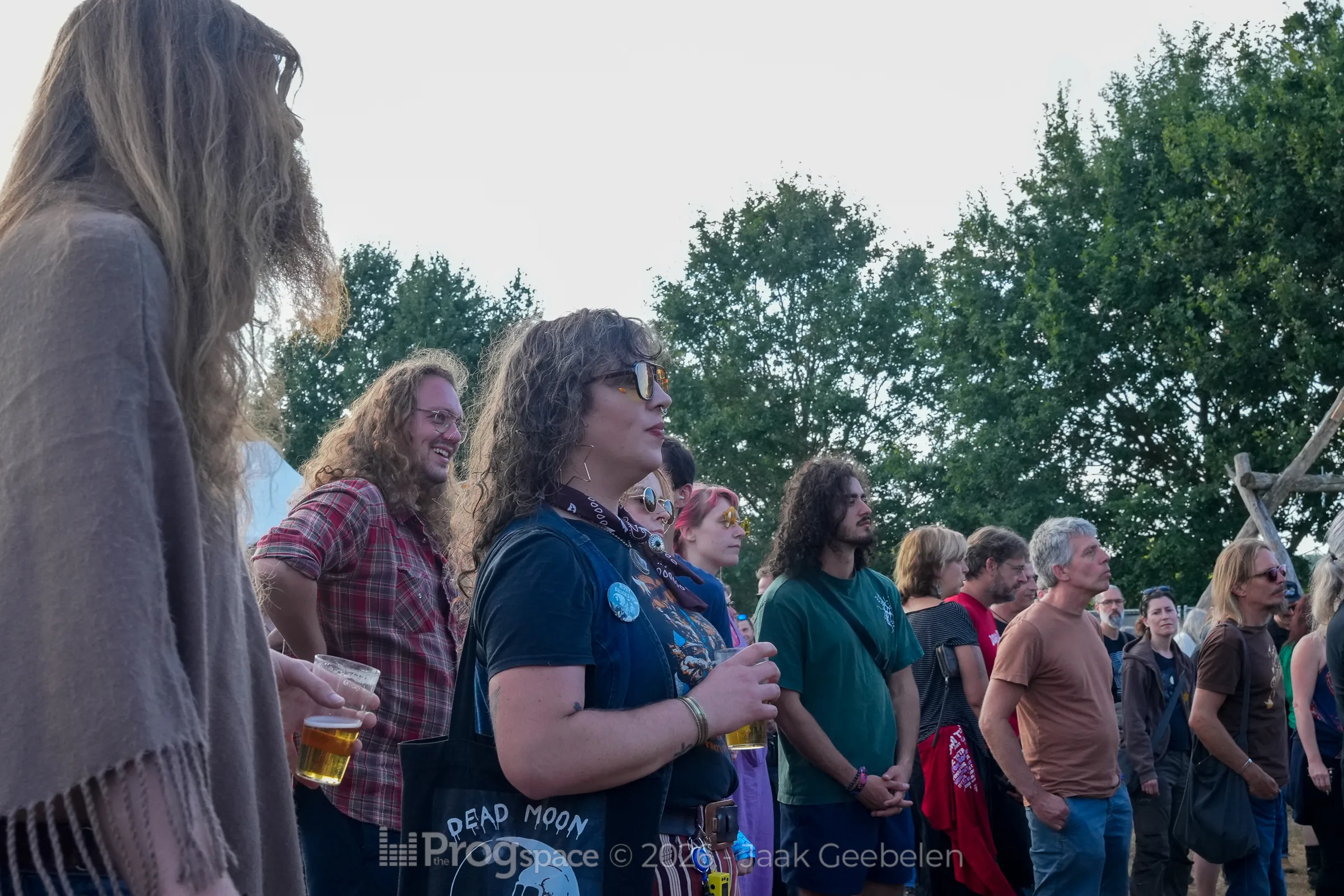
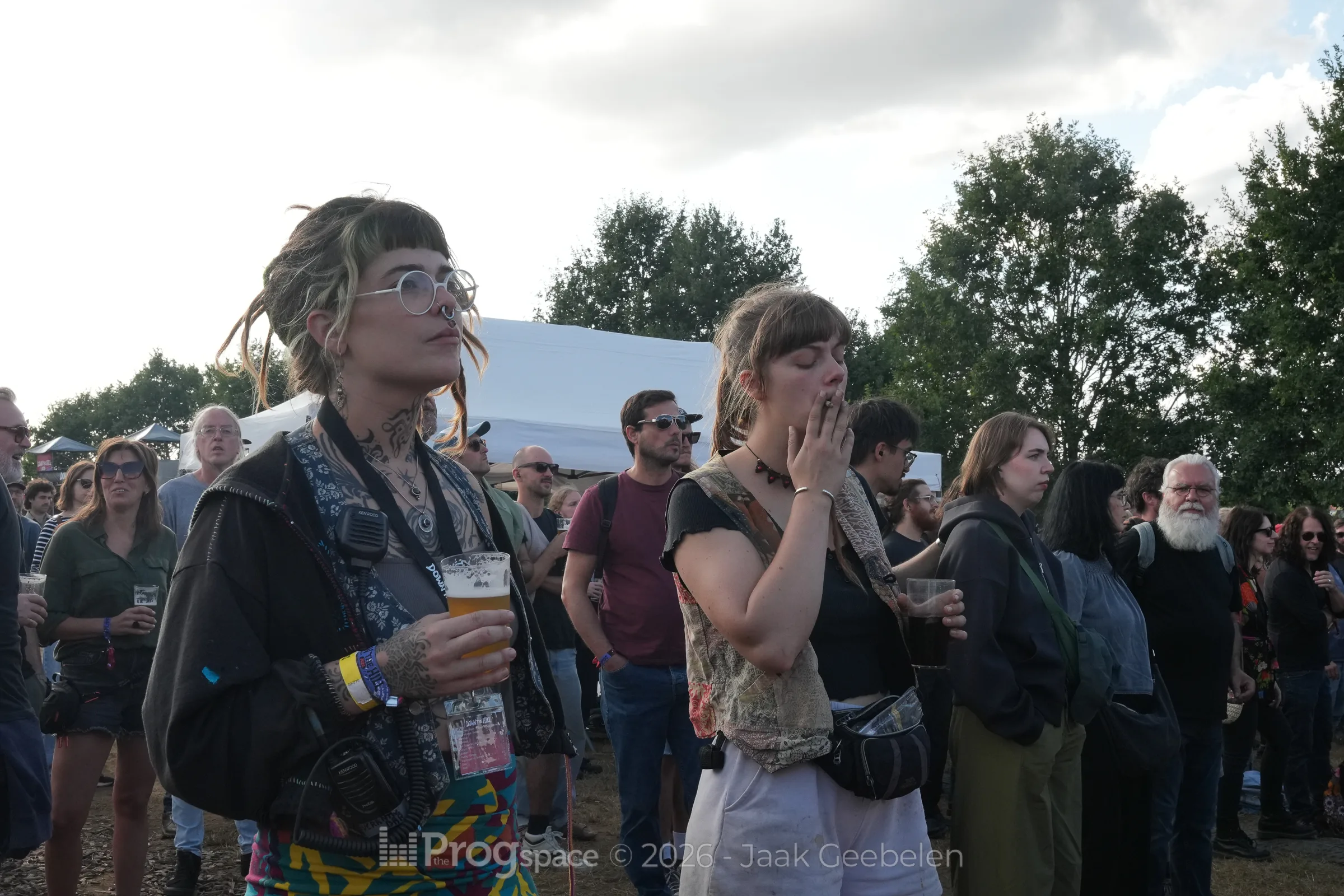
Large white and grey clouds drifted across the sky above the festival site while the audience stood quietly listening among the greenery. The song title almost became literal. For a moment, the landscape around Down The Hill seemed to merge with Needlepoint’s pastoral psychedelia.
It fitted the essence of their music perfectly: wonder at something simple.
Clouds move, change shape and eventually dissolve. Needlepoint’s compositions often behave in much the same way. A simple melody can suddenly turn harmonically in another direction, the bass starts moving around the beat, the drums subtly shift the accents, and before you know it the music has taken you somewhere else.
Grasshoppers belongs to that same world. The very idea of building a song around grasshoppers says something about the way Needlepoint looks at things. Their psychedelia does not necessarily unfold in outer space. It can emerge just as easily among grass, insects and clouds.
Hugh Hopper in the Bass Lines
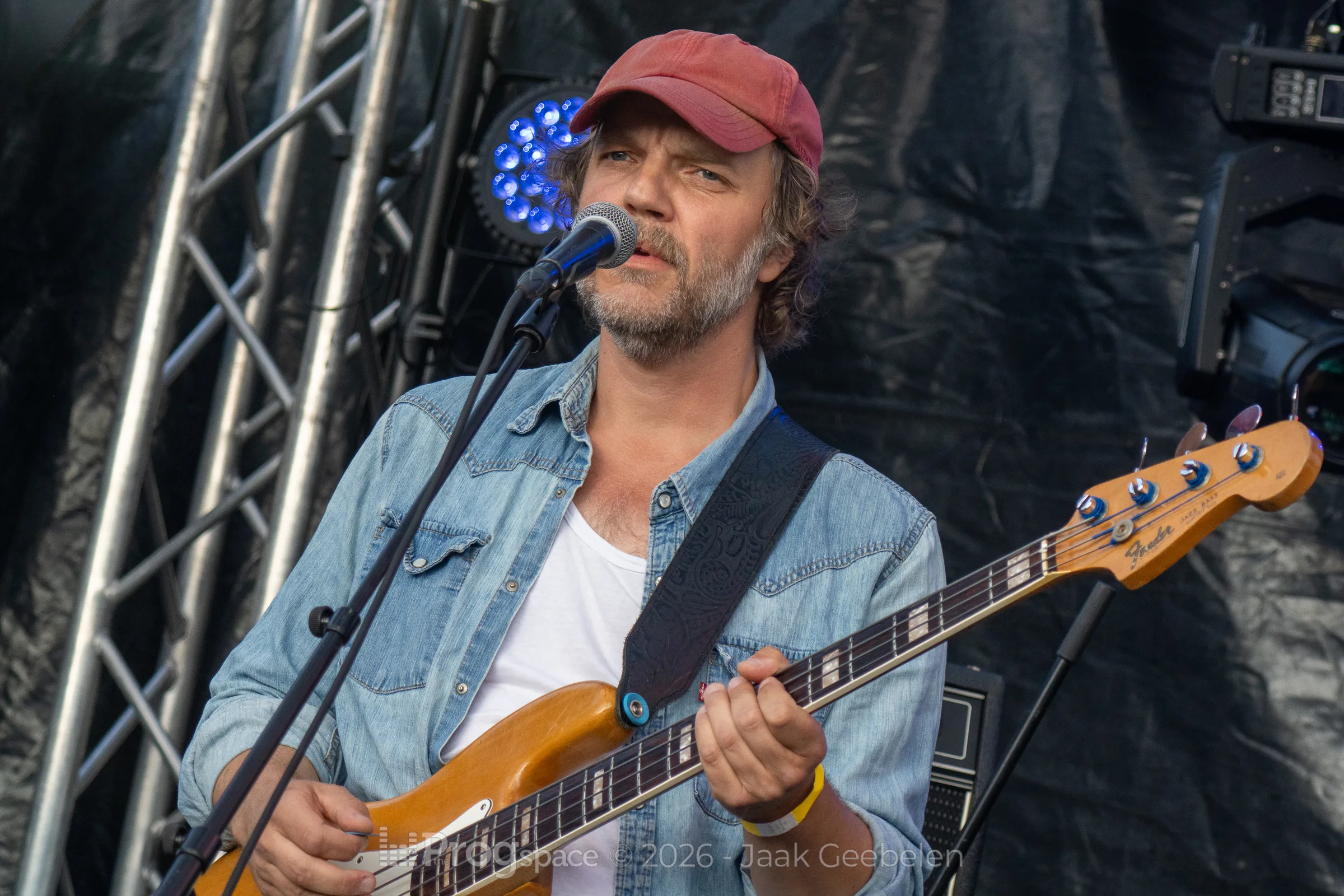
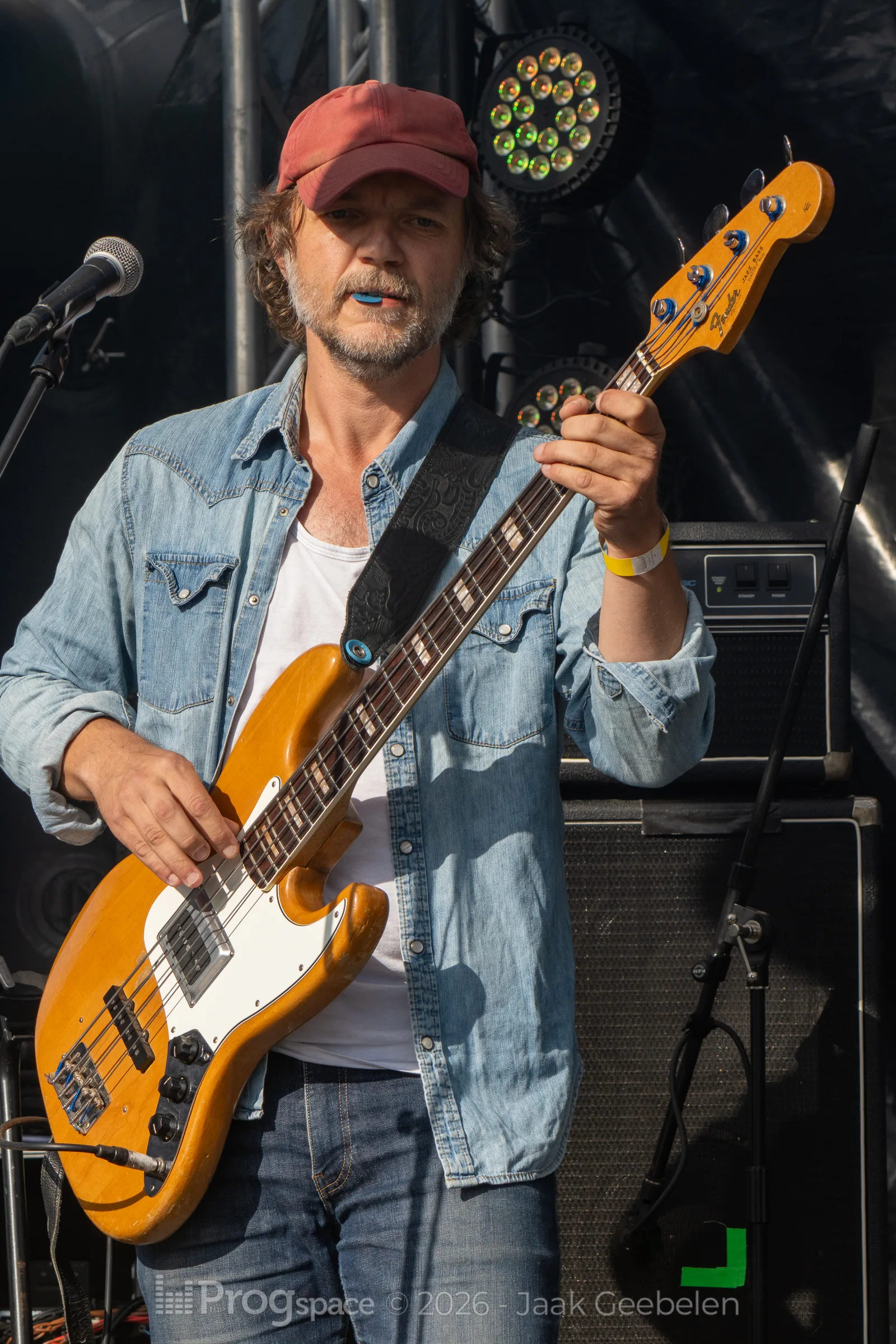
One of the musicians who kept drawing my attention throughout the set was bassist Nikolai Hængsle.
His playing strongly reminded me of Hugh Hopper.
Not because he imitates Hopper, but because of the role the bass takes on. This is not an instrument that stays politely at the bottom of the mix merely supporting the chords. The bass moves independently, looks for counter-lines, nudges the music sideways and can suddenly become almost the melodic centre of a piece.
Especially when Hængsle’s tone became rougher and more abrasive, the Soft Machine association came very naturally. That same combination of fuzz-edged warmth, jazz sensibility and melodic freedom surfaced repeatedly.
That made his interplay with drummer Ola Øverby all the more fascinating.
Ola Øverby and the Canterbury Spirit
Øverby stood out not only musically.
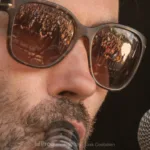
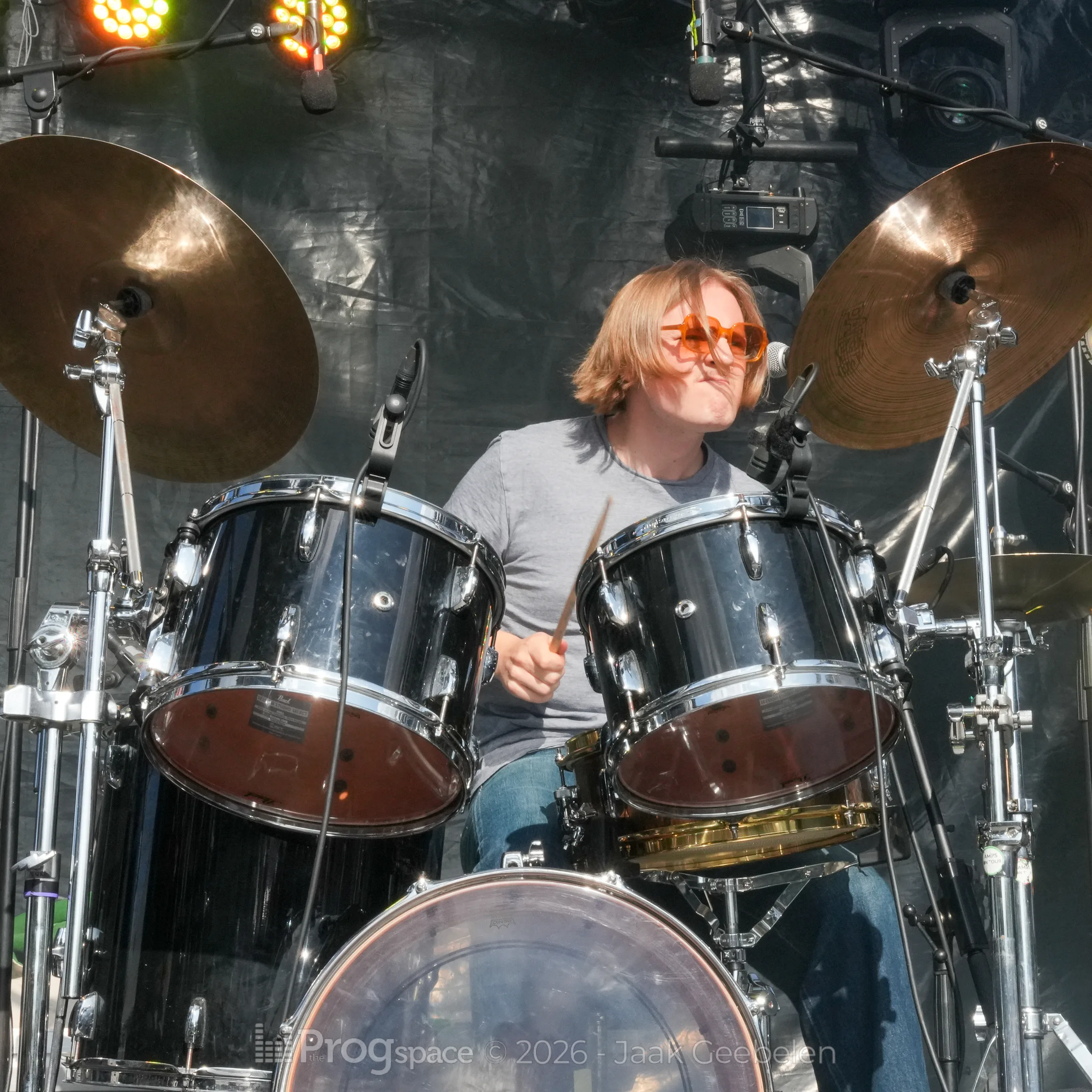
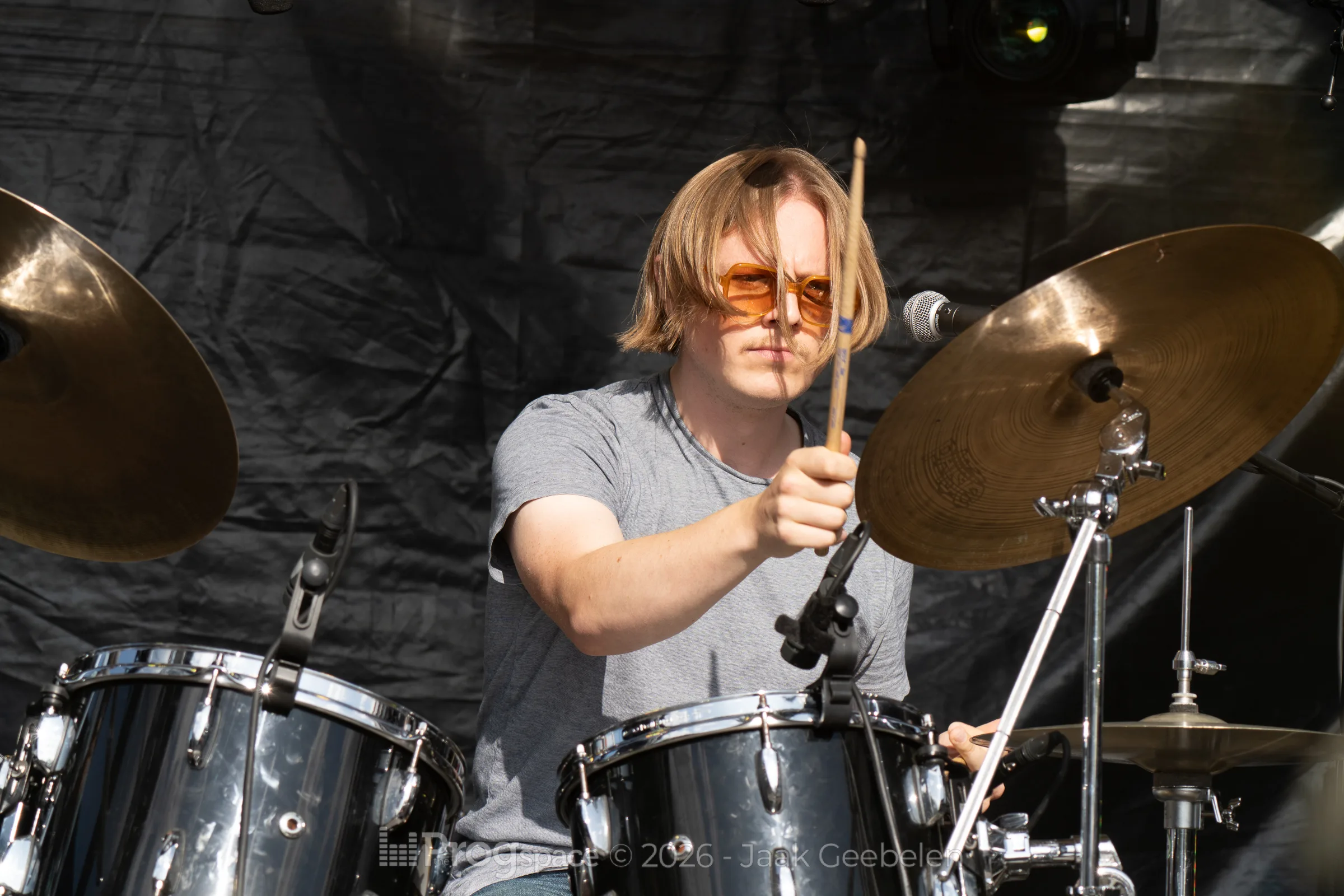
With his shoulder-length hair, moustache and large amber-tinted glasses, he almost looked as if he had stepped out of an early-seventies Canterbury photograph. His drumming also brought Robert Wyatt to mind.
Not because he copies Wyatt, but because of a similar way of thinking behind the kit.
Øverby does not simply drive the music forward. He is constantly reacting to what is happening around him. Cymbal accents become colours, fills become musical phrases, and the pulse can stretch or shift ever so slightly.
His playing can be busy, but it never feels heavy or showy.
Together with Hængsle, he formed a rhythm section that, for me, provided the clearest connection to the Soft Machine side of Canterbury: free, jazzy, occasionally slightly destabilising, yet always in service of the composition.
The Warm Glow of Erlend Slettevoll
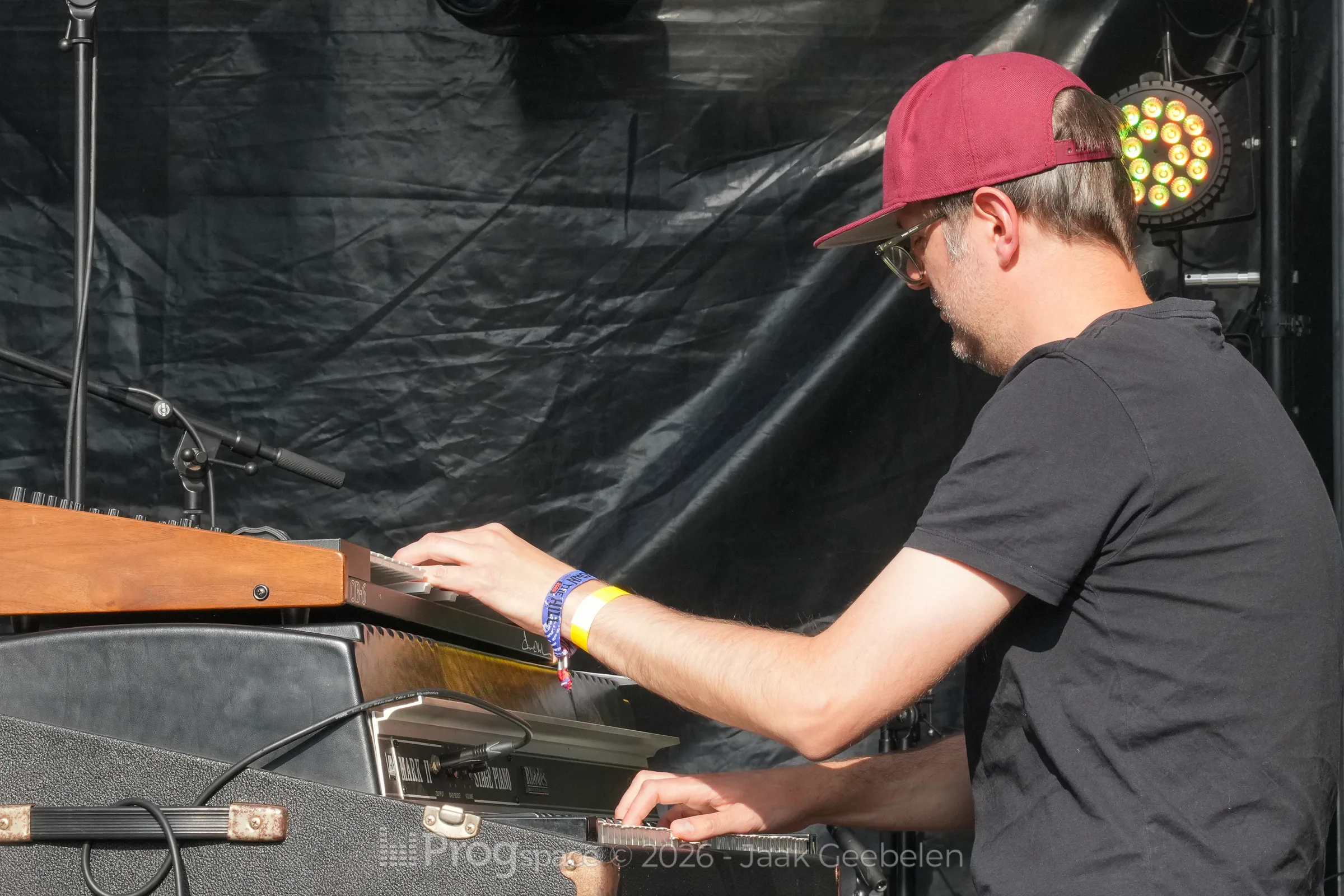
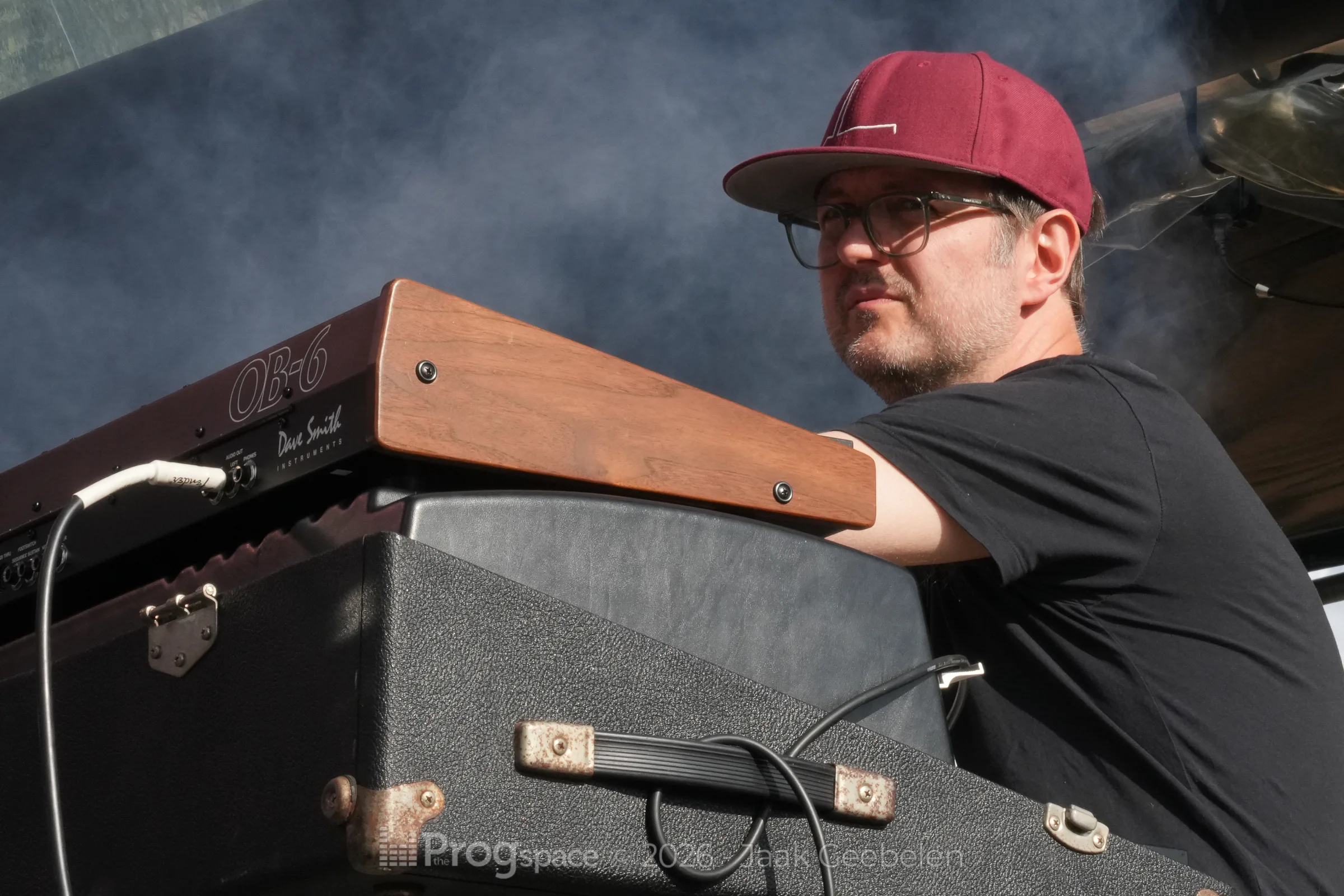
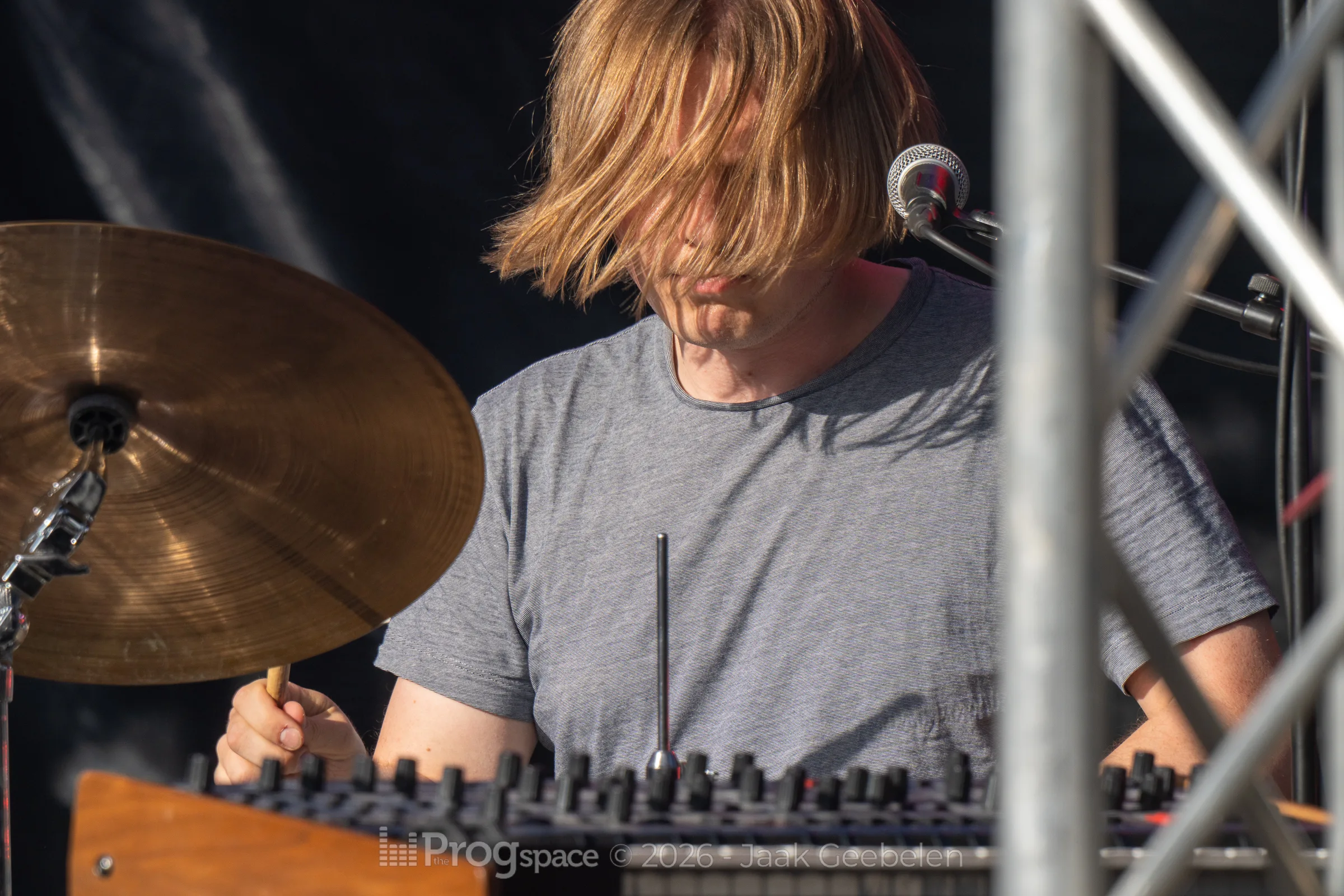
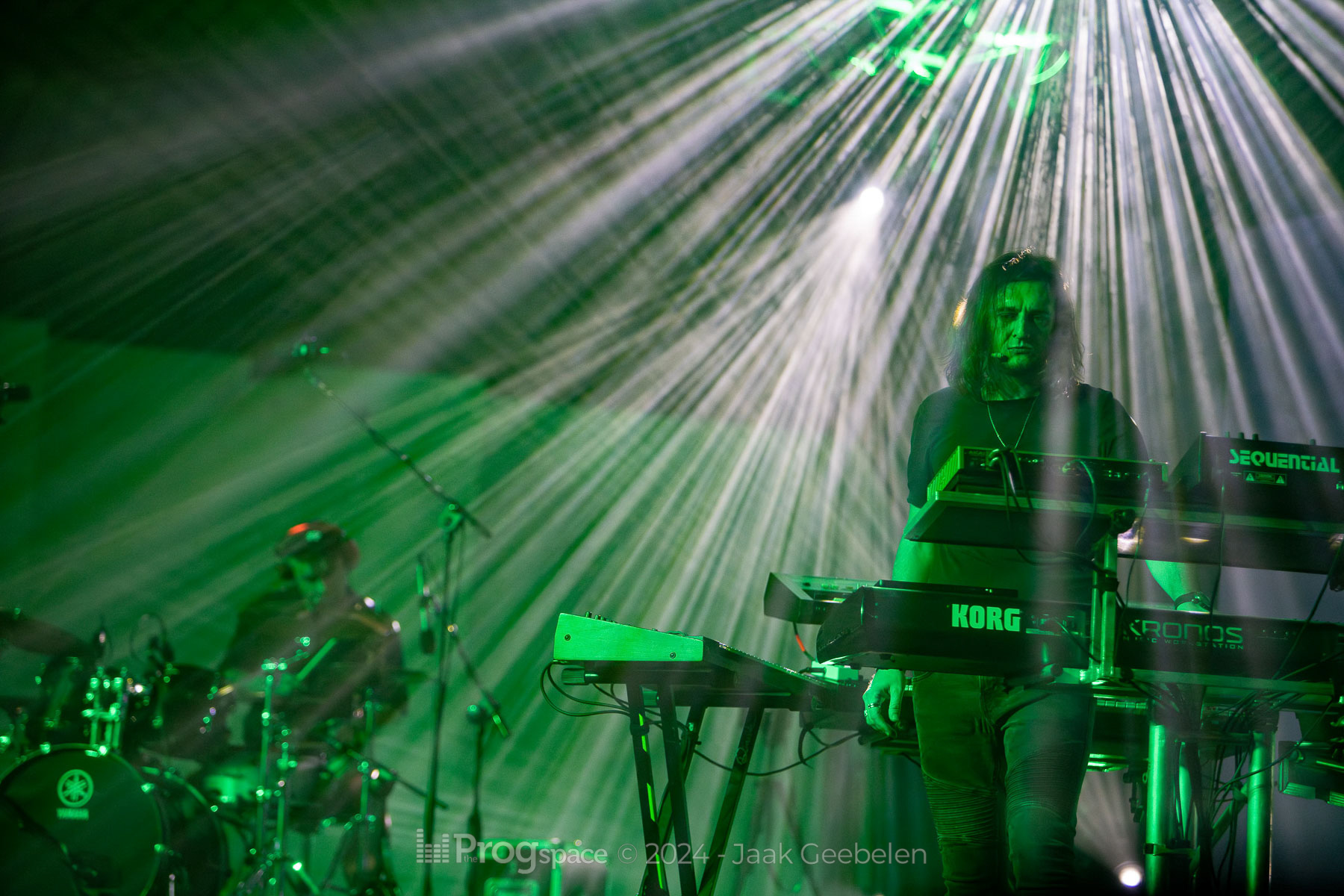
Another defining element was the keyboard work of Erlend Slettevoll.
In front of him stood a beautiful combination of a genuine Rhodes Mark II Stage Piano and a Dave Smith Instruments OB-6.
The Rhodes in particular was essential to the atmosphere. Its warm, slightly grainy electric-piano tone seemed to glow beneath the music. At times it was barely noticeable; at others it became distinctly rhythmic.
The OB-6 added another analogue dimension. Where the Rhodes grounded the music, the synthesizer could open it up towards psychedelia and space.
The word organic fits better here than simply “retro”. Needlepoint does not use this instrumentation as nostalgic decoration. These sounds are fully integrated into the way the four musicians interact.
Bjørn Klakegg at the Side of the Stage
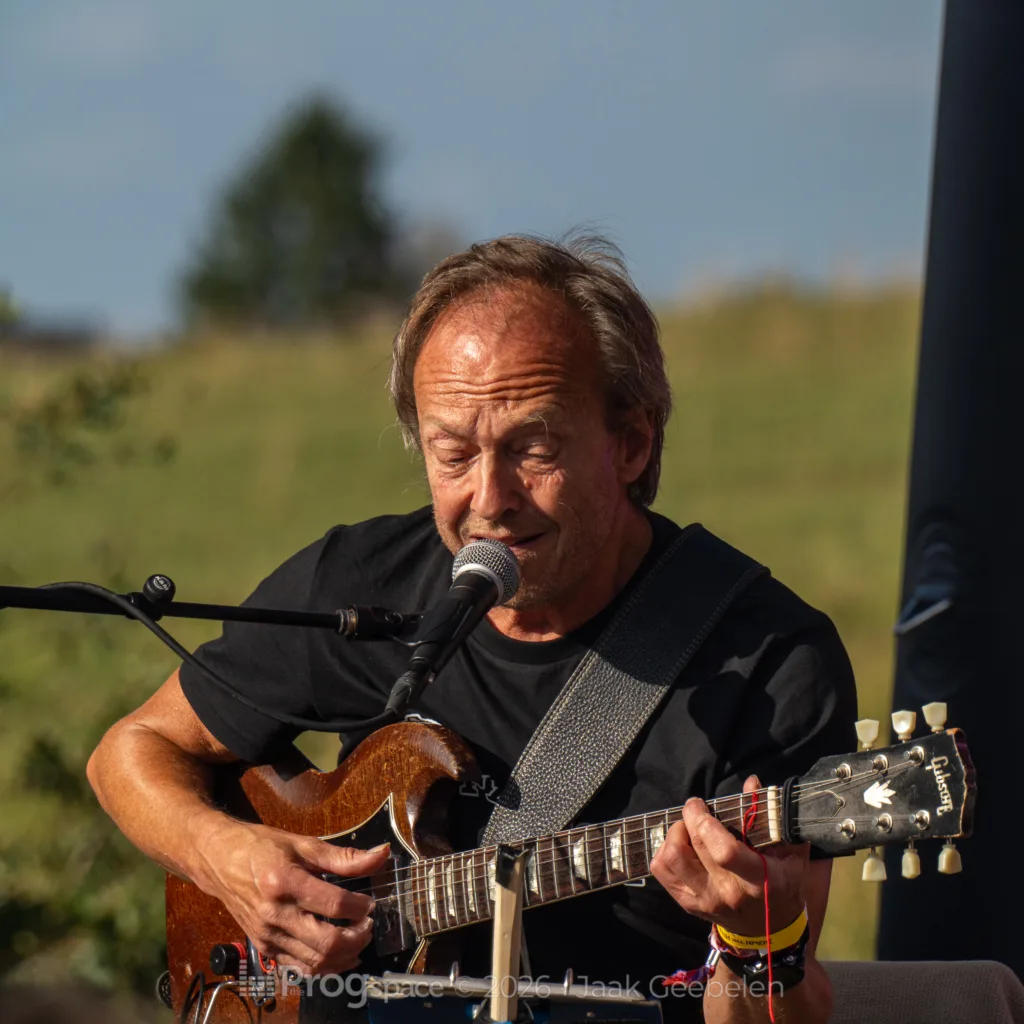
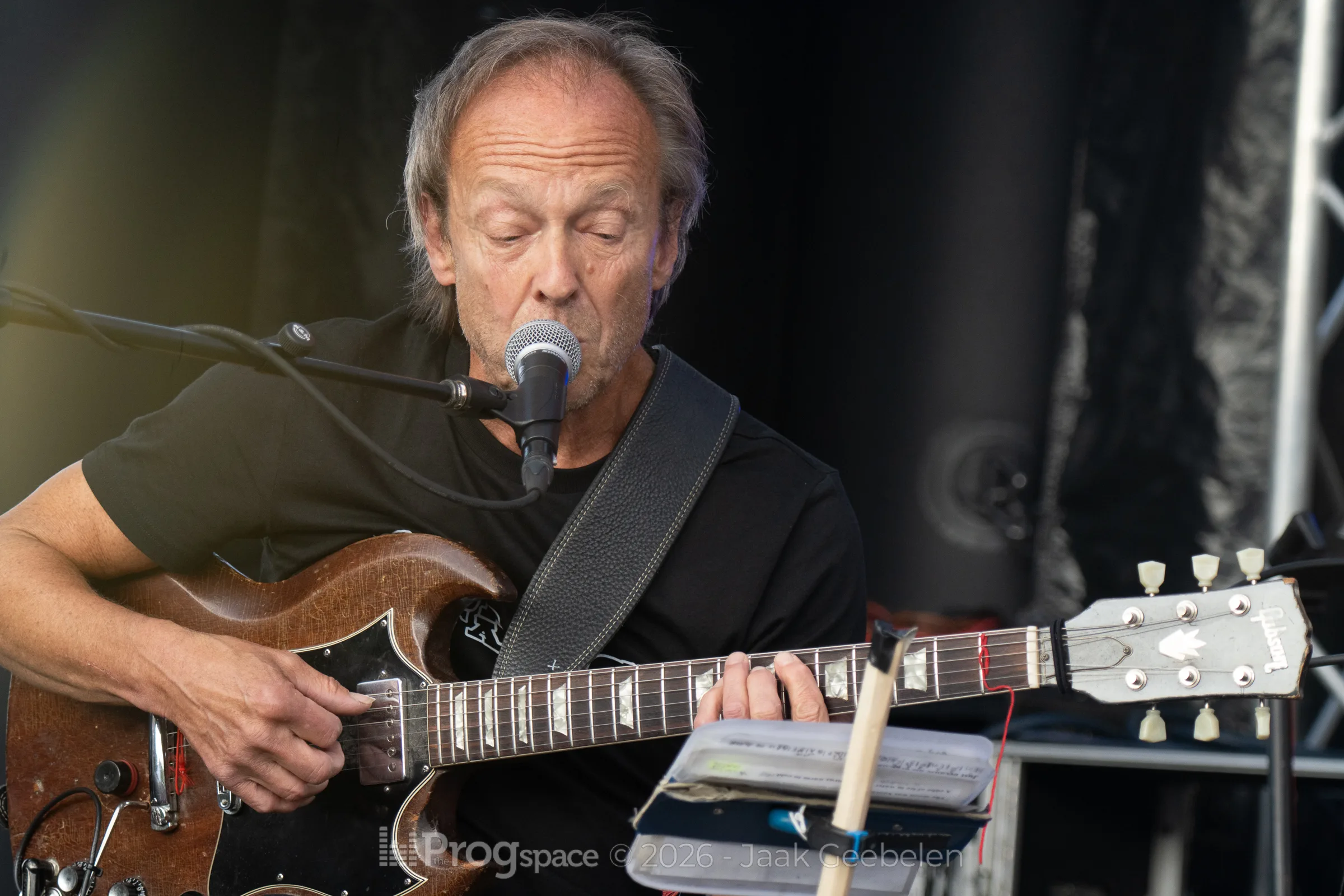
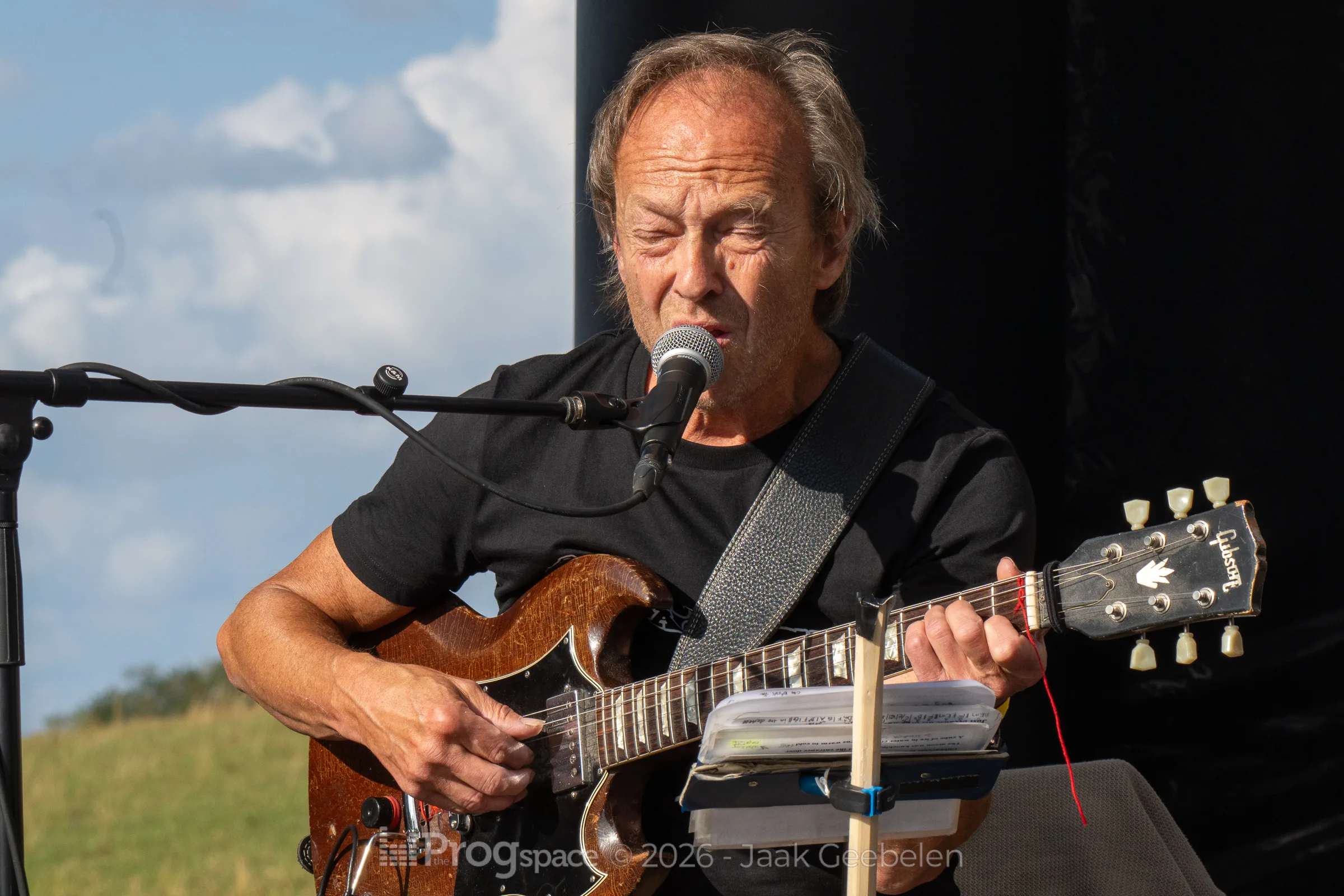
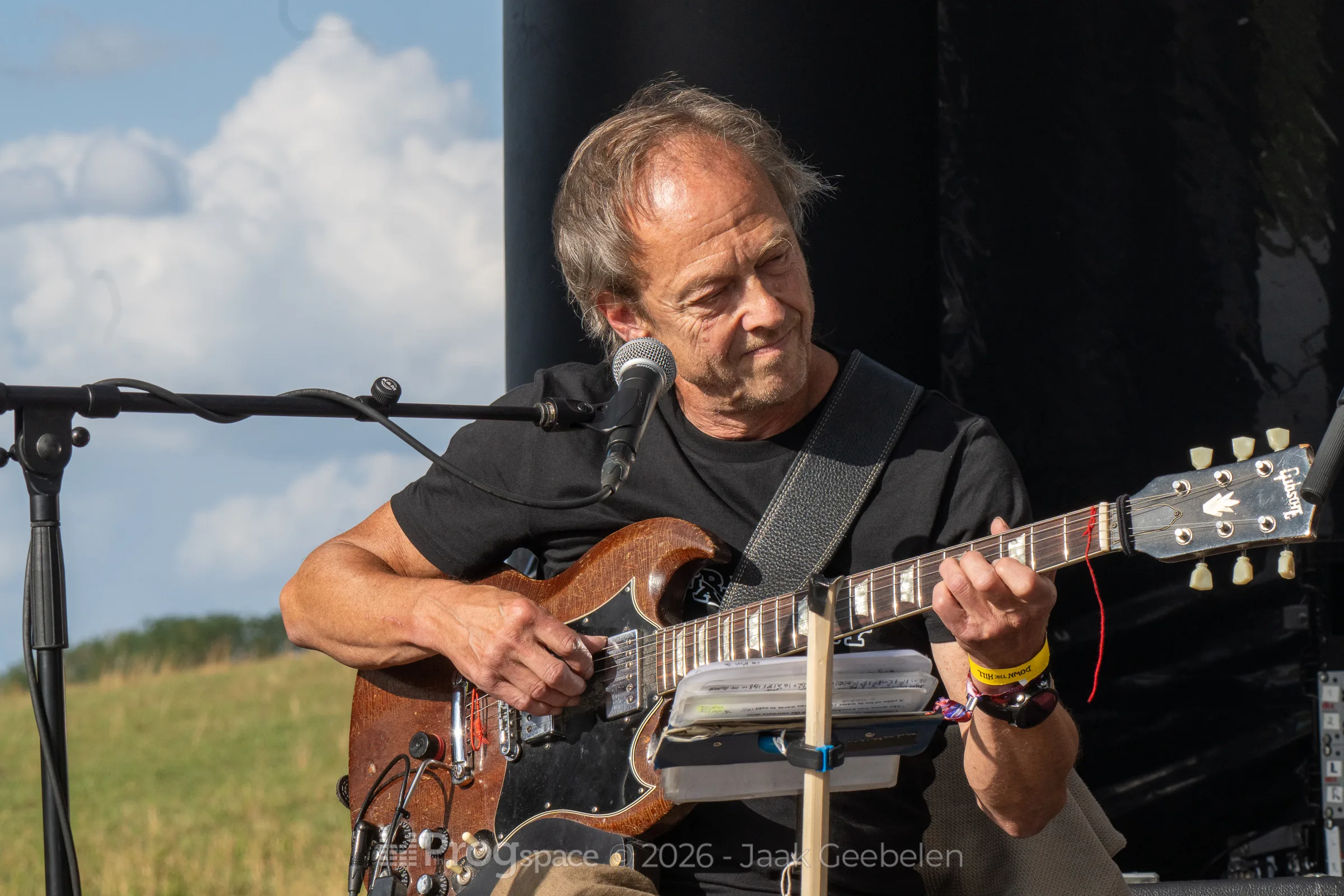
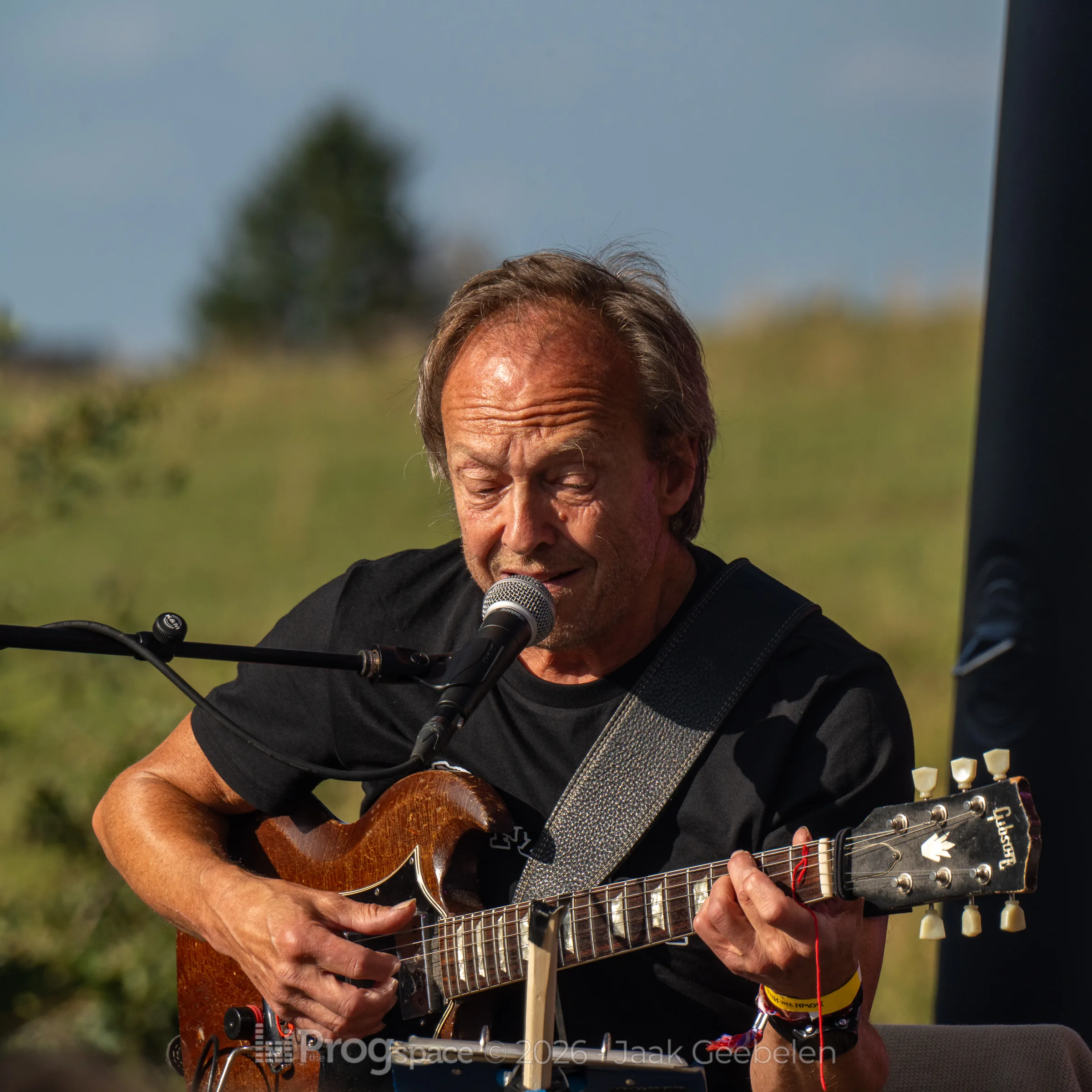
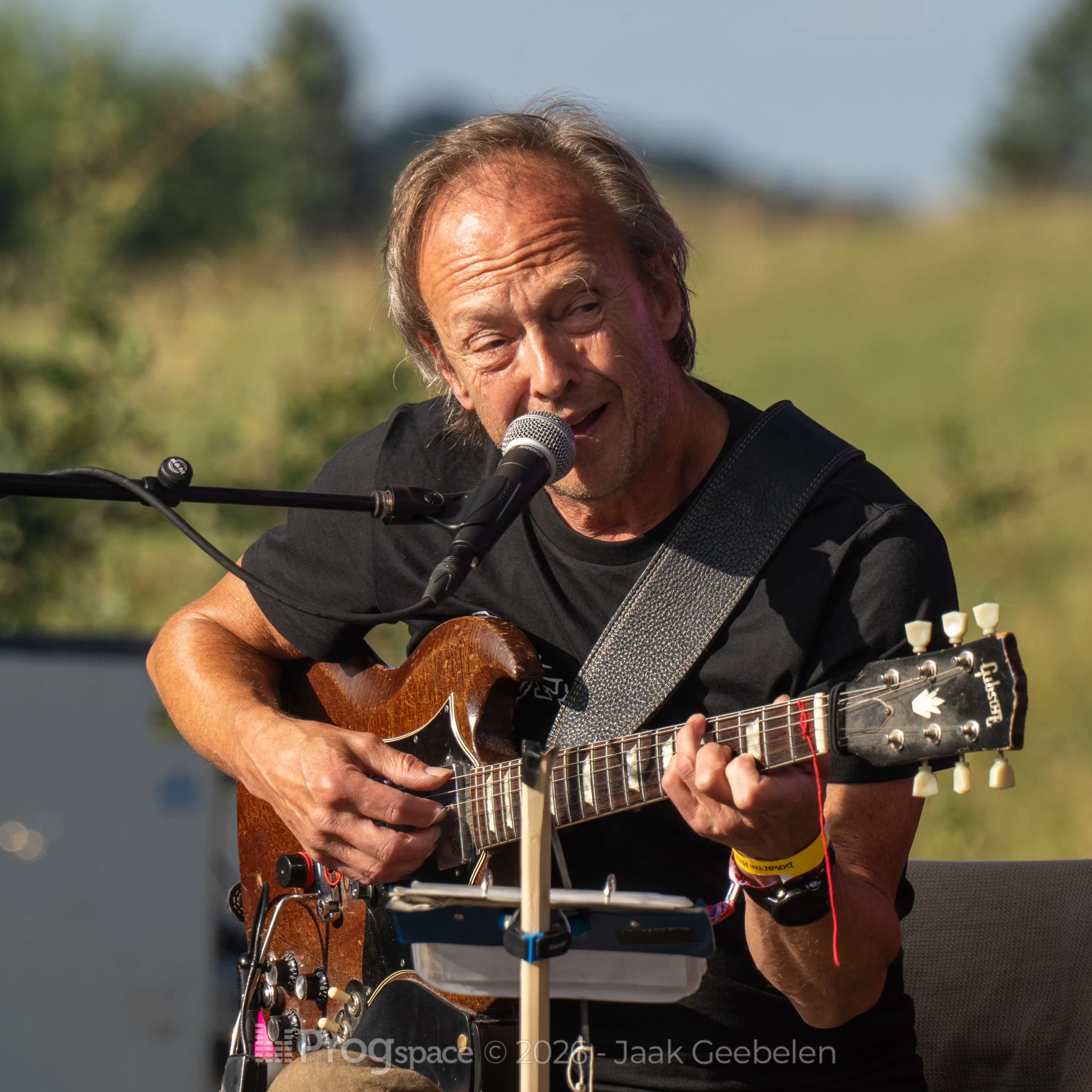
Bjørn Klakegg was seated all the way over on the left-hand side of the stage.
Somehow, that suited his stage presence perfectly.
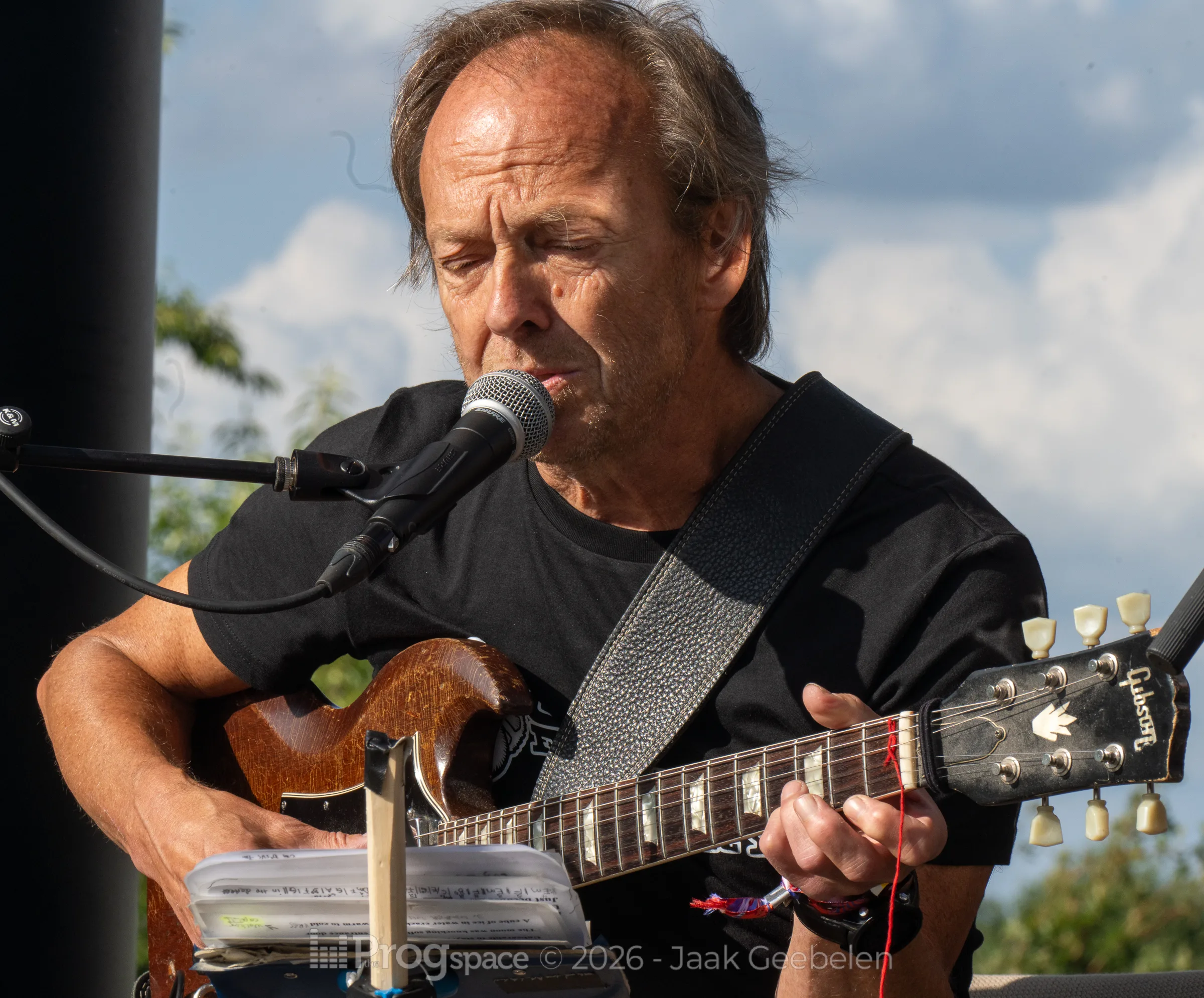
He sang and played the entire set seated, completely focused on guitar, voice and music. In visual terms, he spontaneously reminded me of Andy Latimer the last time I saw him perform: no grand frontman gestures, no need to constantly draw attention to himself, just a musician whose expression comes through tone and phrasing.
His heavily worn Gibson SG suited that image perfectly. Klakegg was never ostentatiously virtuosic, but always tasteful and expressive: sometimes jazzy, sometimes lightly distorted, sometimes almost fragile.
There was, however, one clear drawback.
His vocals did not always come through strongly enough in the mix.
That was a pity, because his soft, fragile voice is an important part of Needlepoint’s identity. Especially in the more intimate passages, the vocals occasionally disappeared too far behind the instruments, and some of the nuance was lost.
It seemed primarily to be an issue of balance in the mix rather than of performance.
A Set Without Remnants of Light
It was also striking that the most recent album, Remnants of Light from 2024, was absent from the final set.
With a festival slot limited to around fifty minutes, the repertoire had clearly been cut back considerably, which shifted the emphasis strongly towards older material.
In the end, that did not hurt the performance.
Alongside the five tracks from The Diary of Robert Reverie, we also heard Soaring and Fear from Aimless Mary, as well as Web of Worry and Walking Up That Valley from the 2021 album of the same name.
Especially in the second half, it became even clearer how effortlessly Needlepoint can move between introspective songwriting and increasingly open-ended interplay.
The set closed with the instrumental middle section of Walking Up That Valley, stretched into a jam. It was a fitting way to end a short festival set: less emphasis on formal song structure and more room for listening, reacting and improvising.
One of the Highlights of the Day
Needlepoint was, without doubt, one of the highlights of Down The Hill for me.
Not because they played the loudest or offered the greatest spectacle. Their strength lay at the opposite end of the spectrum.
In the warm Rhodes floating between bass and guitar. In Hængsle’s bass lines, which repeatedly brought Hugh Hopper to mind. In Øverby’s elastic, almost melodic drumming. In Klakegg, quietly seated at the side of the stage, completely absorbed in his guitar and songs.
And perhaps most of all in that particular way of looking at small things.
A cloud. An insect. A field. A tiny event that may mean nothing to someone else, but which, if observed long enough, suddenly becomes a world in itself.
That is a feeling I recognise very strongly.
Perhaps that is why Needlepoint did more than simply convince me musically that afternoon.
Their music connects with the same sense of wonder that comes from observing a small microcosm and still discovering new details after hours of looking.
Musically, Needlepoint works in much the same way.
The longer you listen, the more there is to discover.
Some festival performances confirm what you already thought about a band. Others open a door.
Needlepoint unquestionably belonged to the second category for me — a band I will be following with particular interest from now on.
Setlist
- In the Sea
- Robert Reverie
- On the Floor
- All Kinds of Clouds
- Soaring
- Grasshoppers
- Web of Worry
- Fear
- Walking Up That Valley – instrumental middle section/jam


 We’re a group of Prog-lovers who started a journey to share with you our thoughts about albums, concerts, tours and festivals, the photo galleries of the Prog concerts we visit, as well interviews with upcoming or established musicians or prog-related people. Follow our Facebook page for frequent updates and news around the Progniverse.