



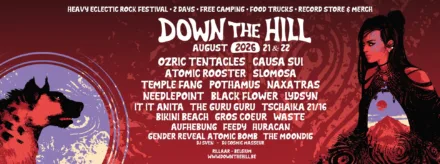

Temple Fang – Down The Hill Festival, Rillaar, Belgium – 22 August 2026
Some bands need an hour to work their way through ten or twelve songs. Temple Fang needed only three. At Down The Hill, their set consisted of “Harvest Angel”, “The River” and “Flood” – three long-form compositions that felt far less like separate songs than one continuous psychedelic journey.
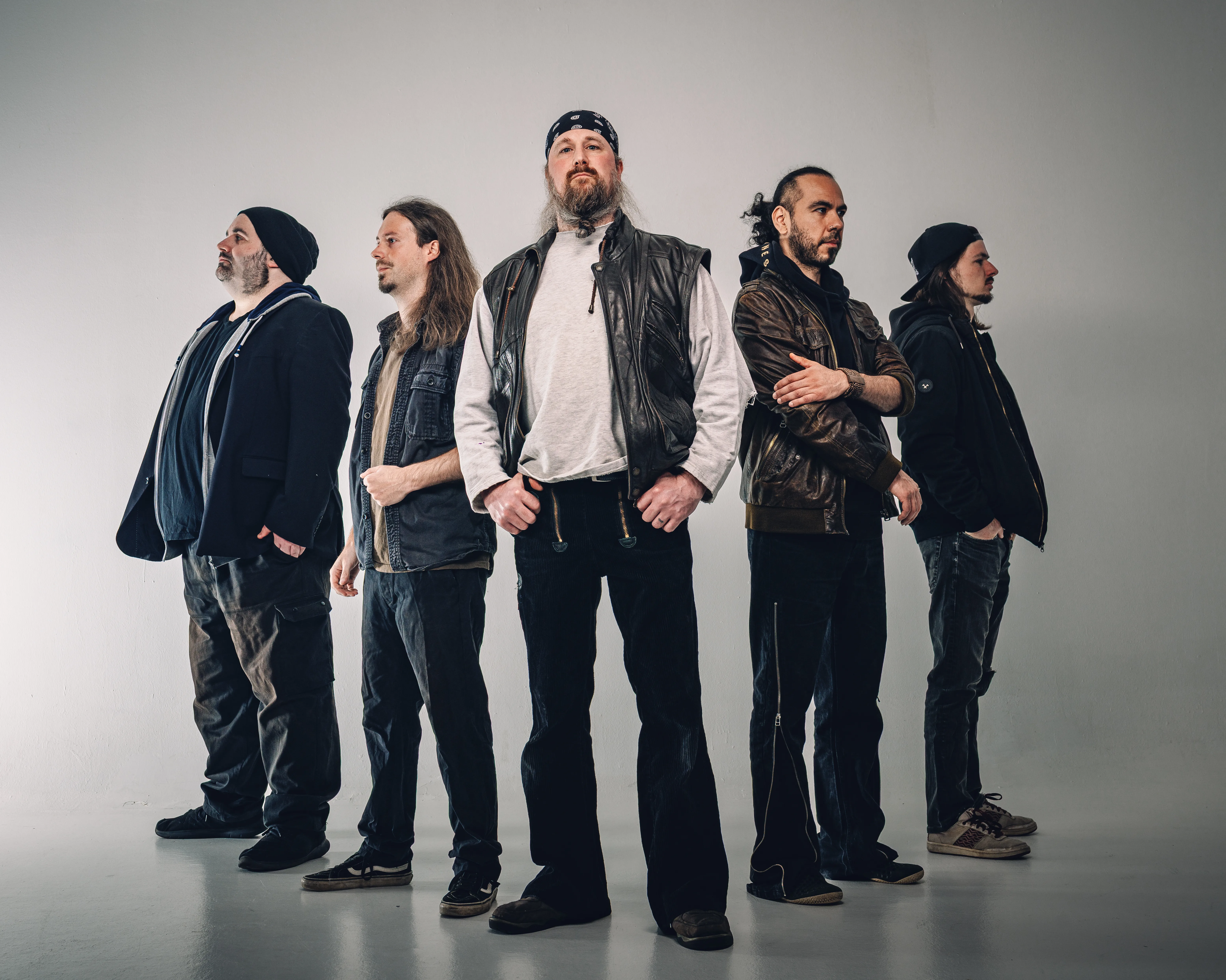
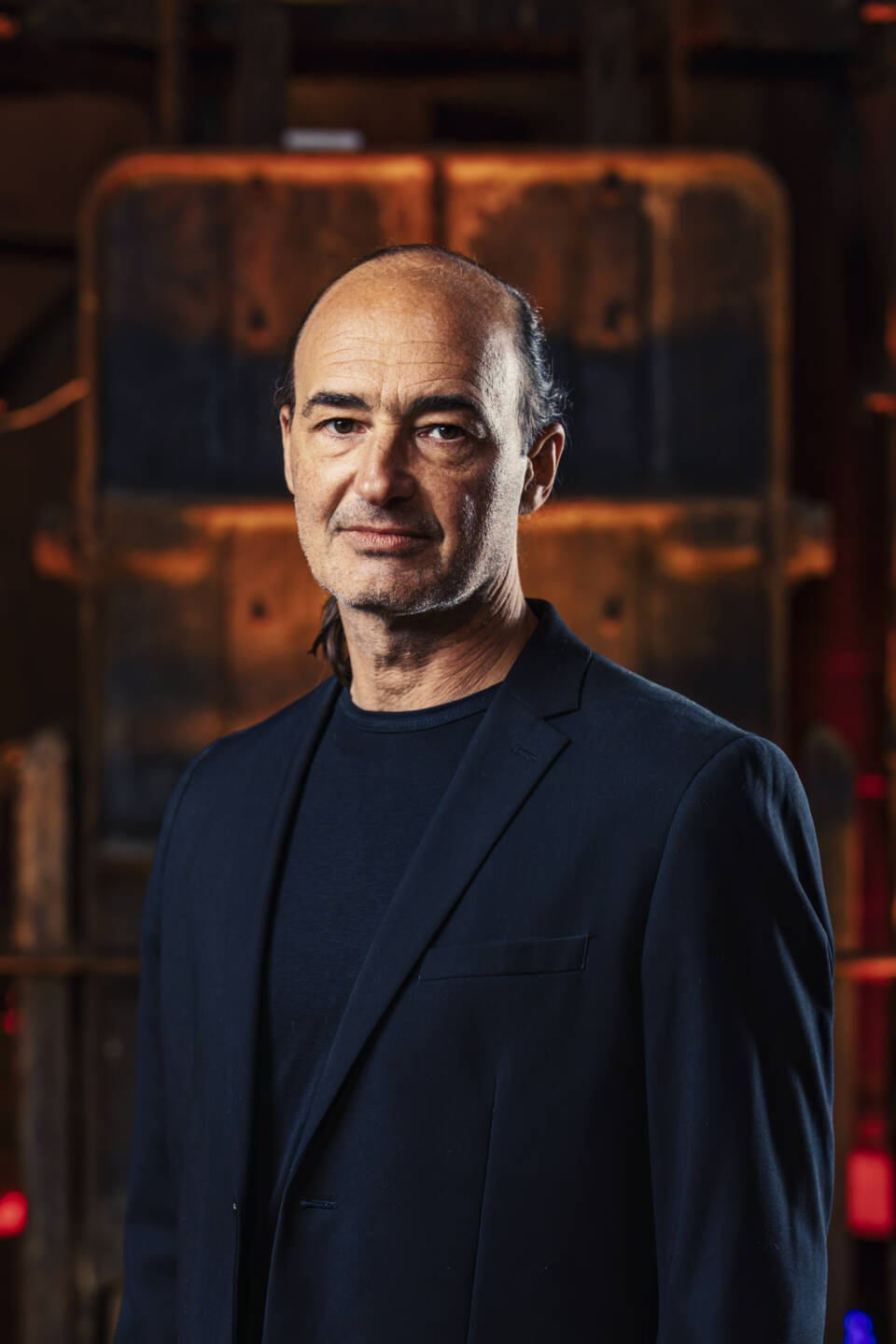
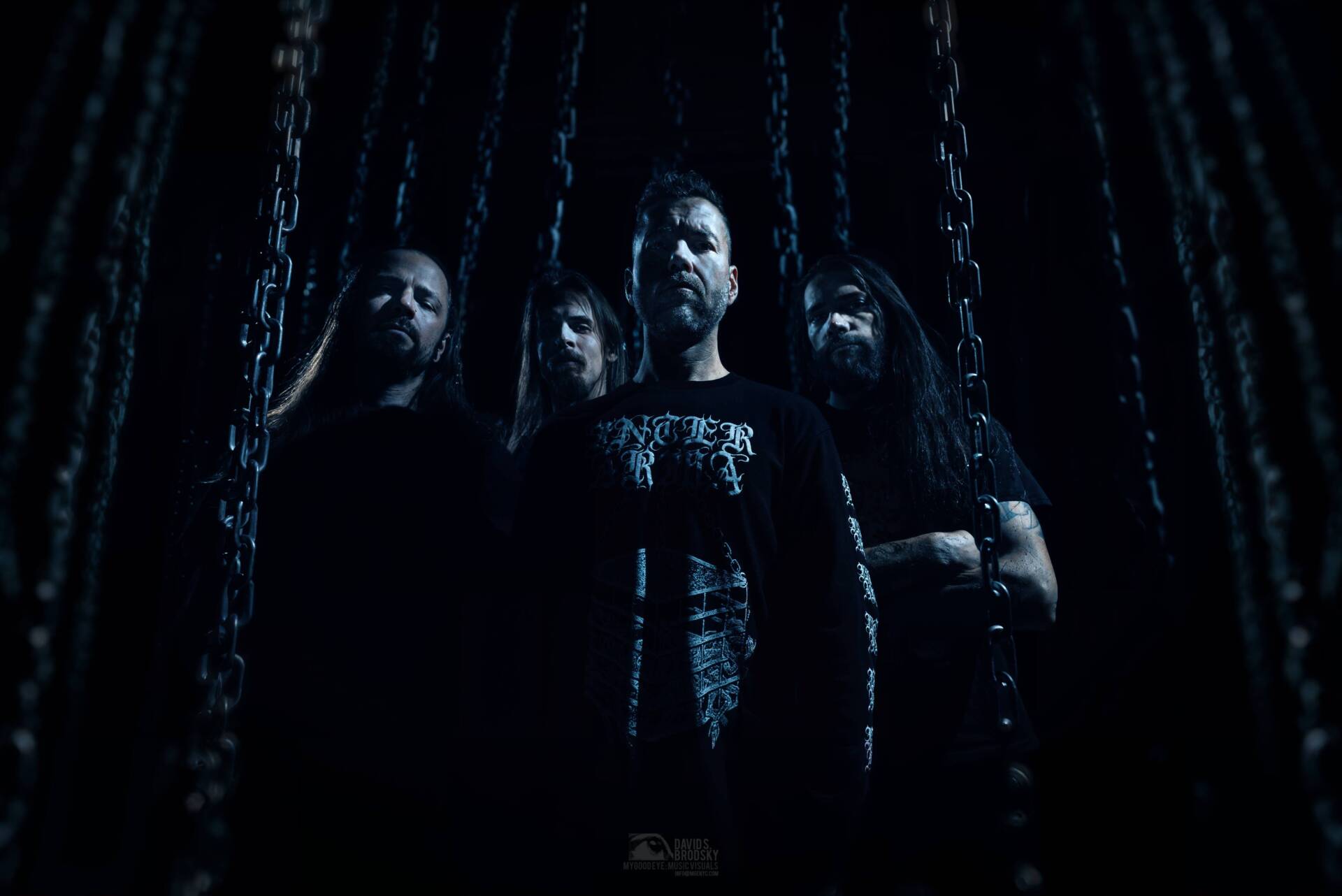
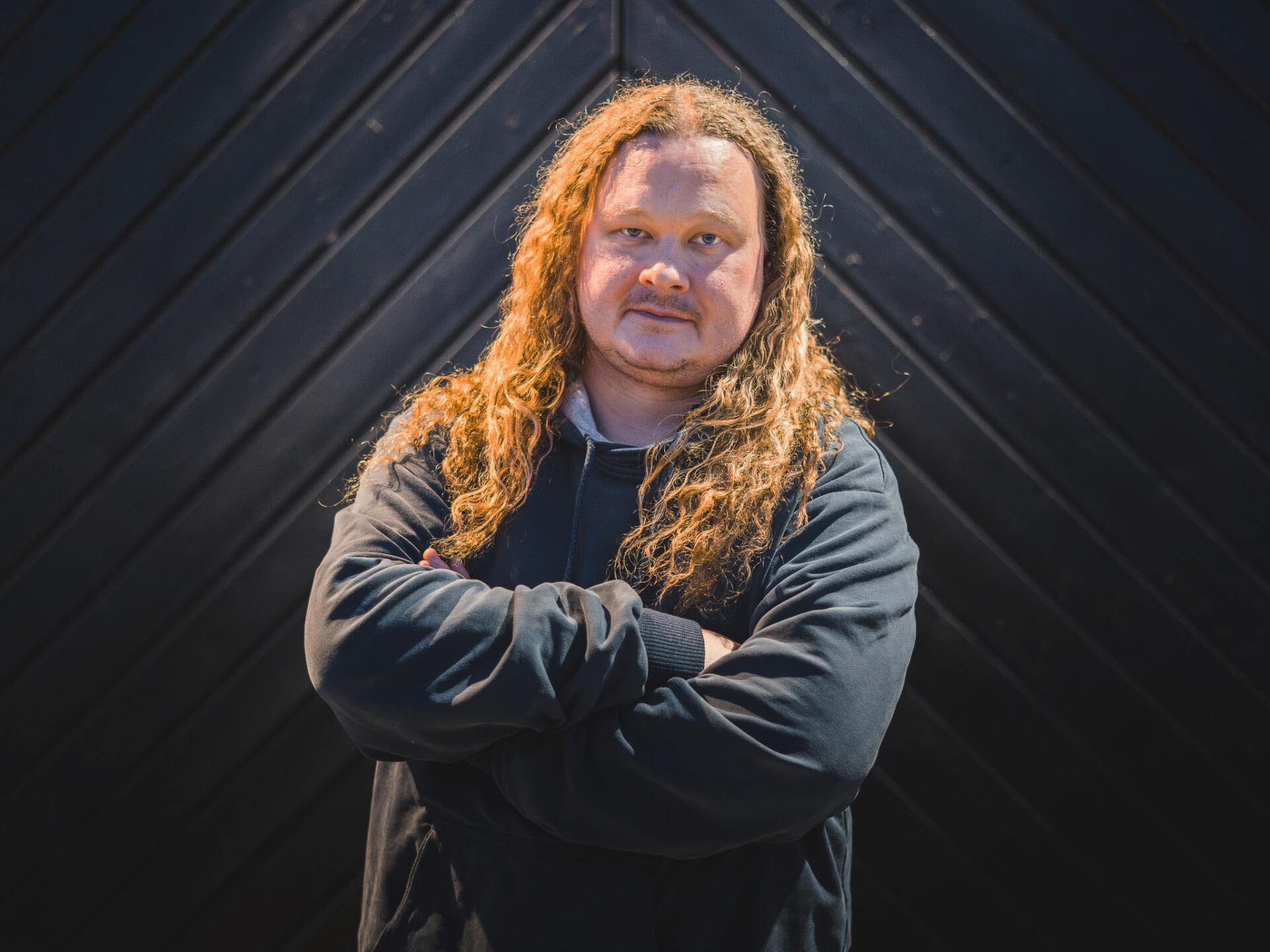
That suits Temple Fang perfectly. The Amsterdam-based band – Dennis Duijnhouwer, Jevin de Groot, Ivy van der Veer and Daan Wopereis – does not think in the conventional logic of verse, chorus and next song. Their music moves, slows down, thickens, opens up again. Themes are not simply repeated, but gradually transformed along the way.
That approach also ties in with the philosophy behind the band. Duijnhouwer has described Temple Fang as a conscious break with the destructive rock ’n’ roll mentality of his earlier years: less ego and control, more trust in the process and in one another. Going with the flow rather than trying to control it.
And that feeling defined this performance.
Harvest Angel
“Harvest Angel” opened the set and immediately showed just how broad Temple Fang’s sound has become. The opening passages felt loose and spacious, almost as if the band first wanted to create room before gradually filling it.
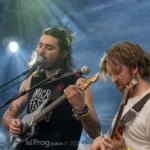
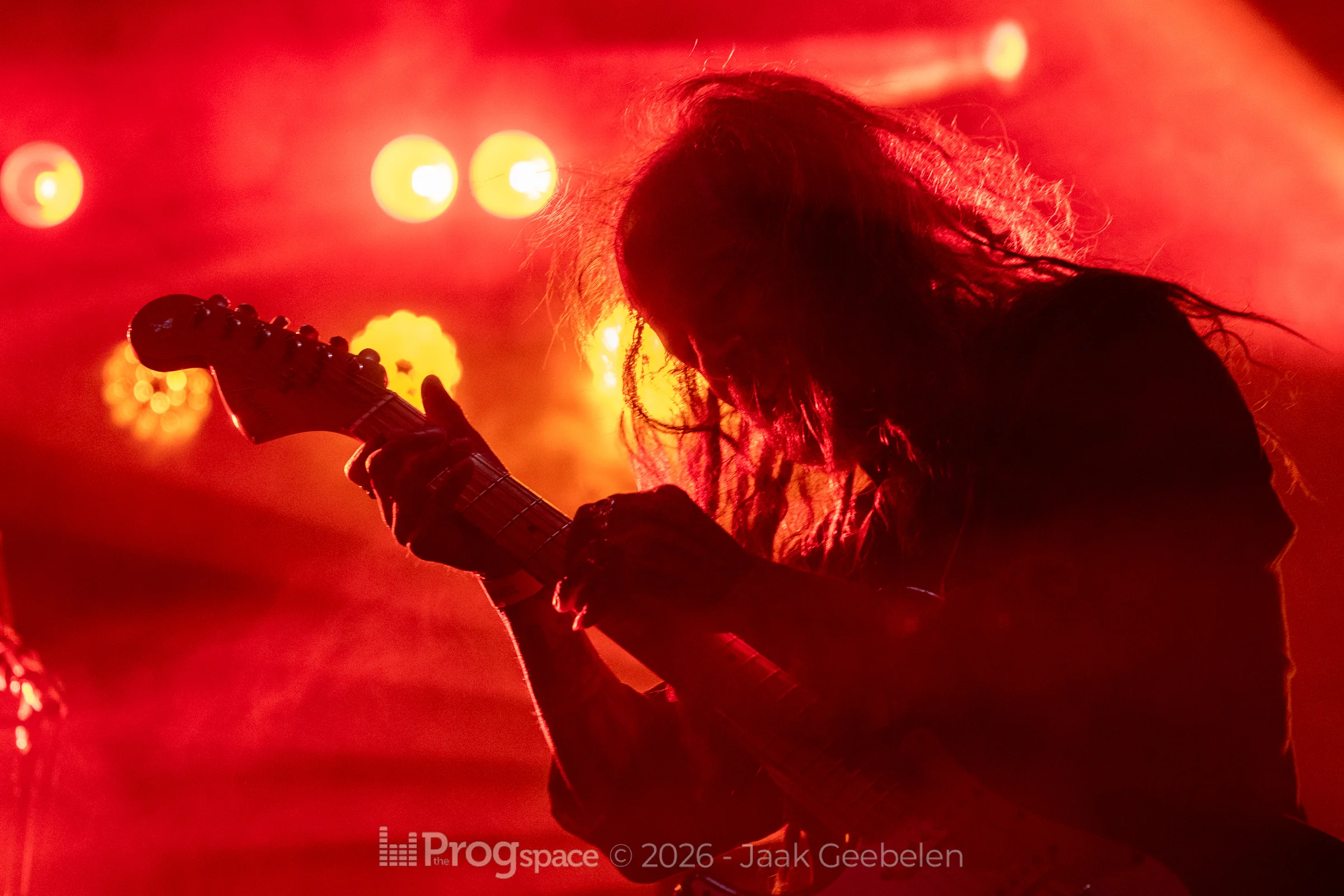
The guitars of Jevin de Groot and Ivy van der Veer moved around and through one another rather than one of them constantly taking the lead. Beneath them sat Dennis Duijnhouwer’s warm, weighty bass, while Daan Wopereis introduced subtle rhythmic shifts that kept changing the sense of movement and intensity.
In passages like these, I occasionally found myself thinking of The Amazing. Not because Temple Fang actually sounds like the Swedish band, but because of that same love of space, layered guitars and melodies that unfold gradually. At moments there was also a distant kinship with Anekdoten: darker progressive shades, a strong bass presence and a certain melancholy that never needs to push itself to the foreground.
Temple Fang, however, remains much more explicitly psychedelic. Their music seems less concerned with arriving somewhere than with continuously changing shape along the way.
The River
With “The River” came the central piece of the set.
The studio version lasts well over eighteen minutes, and live the band gave it all the time it needed to develop. It contains almost everything that makes Temple Fang so compelling: psychedelic space, progressive rock, heavy guitars, harmonies and long instrumental movements.
At times, the association with Pink Floyd from the Meddle and Live at Pompeii era is hard to avoid. Not because Temple Fang is imitating them, but because of the way the guitars spread out and how individual notes can become more important than riffs.
But “The River” never stayed in one place long enough to become nostalgic.
A motif would repeat, the drums would subtly alter direction, the bass would begin to push harder and, almost without noticing, the band would find itself in a much heavier section a few minutes later. That ability to move between states so organically is one of Temple Fang’s greatest strengths. The music rarely switches abruptly; it evolves.
The vocal harmonies were equally important. In many heavy-psych bands, vocals are mainly an additional element between instrumental passages. Temple Fang uses the voices much more as another layer within the composition. That adds warmth and gives even the most expansive sections an emotional centre.
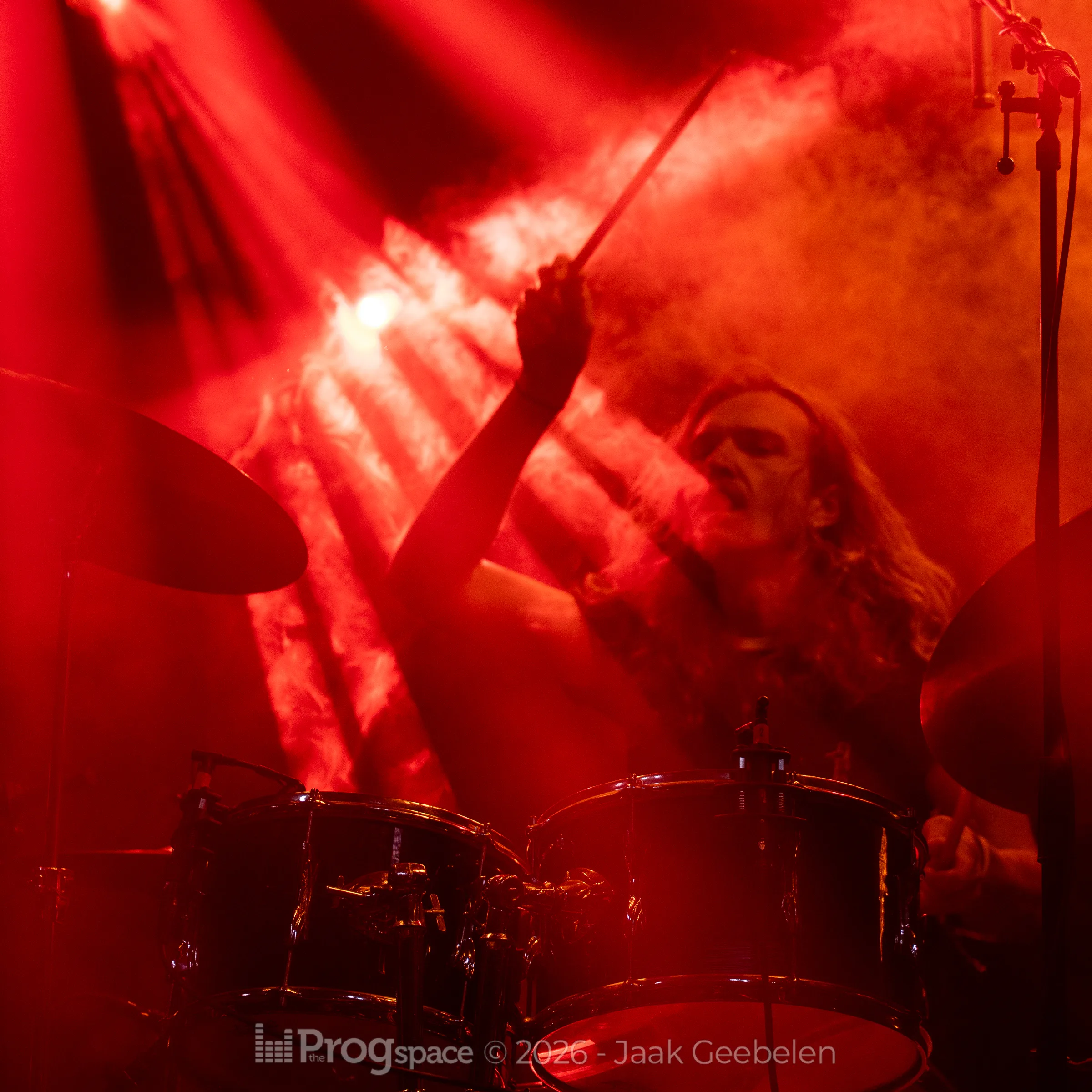
“The River” also made clear how important Wopereis is to the current incarnation of the band. He does not merely hold the tempo together, but constantly influences the way the music breathes. Sometimes he pulls the band forward; at other moments he creates space.
Flood
The most intriguing moment came right at the end.
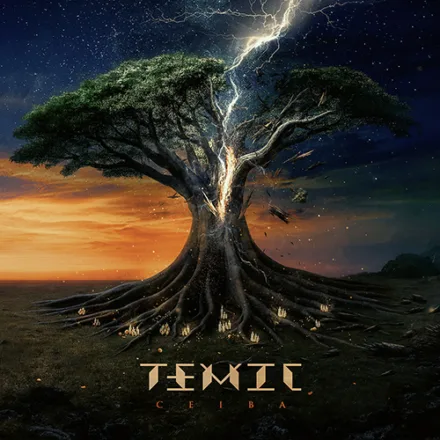
“Flood” was the one piece I did not know beforehand. It is not part of Lifted From The Wind and belongs to the newer material Temple Fang has been trying out live over the past months.
Choosing this unfamiliar piece to close the set turned out to be a particularly strong decision.
Where “Harvest Angel” and “The River” often opened out into wide spaces, “Flood” felt more compact, darker and more physical in the passage I heard. Bass, guitars and drums merged into one thick, propulsive mass. Here, repetition did not create hypnosis through restraint, but through the gradual accumulation of weight.
For a moment, I even heard a distant kinship with ISIS. Not so much in the actual sound – Temple Fang remains far warmer, more psychedelic and less metal-oriented – but in the architecture: a motif returning again and again, growing in force and eventually moving towards catharsis.
Anekdoten also felt closer here than in the more airy sections of the set, especially because of the darker weight of the bass and guitars.
But more than anything, “Flood” sounded like Temple Fang looking ahead.
That may be the most revealing thing about the piece. After an album such as Lifted From The Wind, where the band finally managed to combine its long jams and psychedelic freedom with stronger compositional focus, “Flood” seems to point towards another step forward.
Not shorter.
Not simpler.
But more compact in its impact.
The fact that the band has regularly used the song as a closer in recent performances seems anything but accidental. It has enough weight to function as a finale even after “The River”.
A band that does not pose
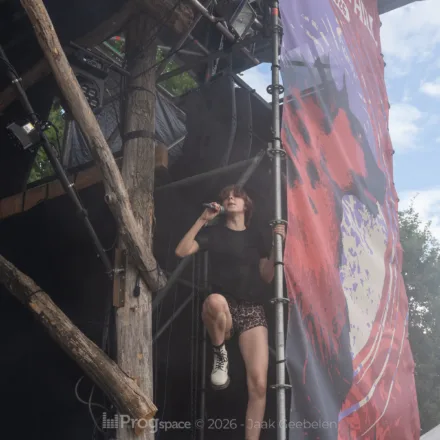
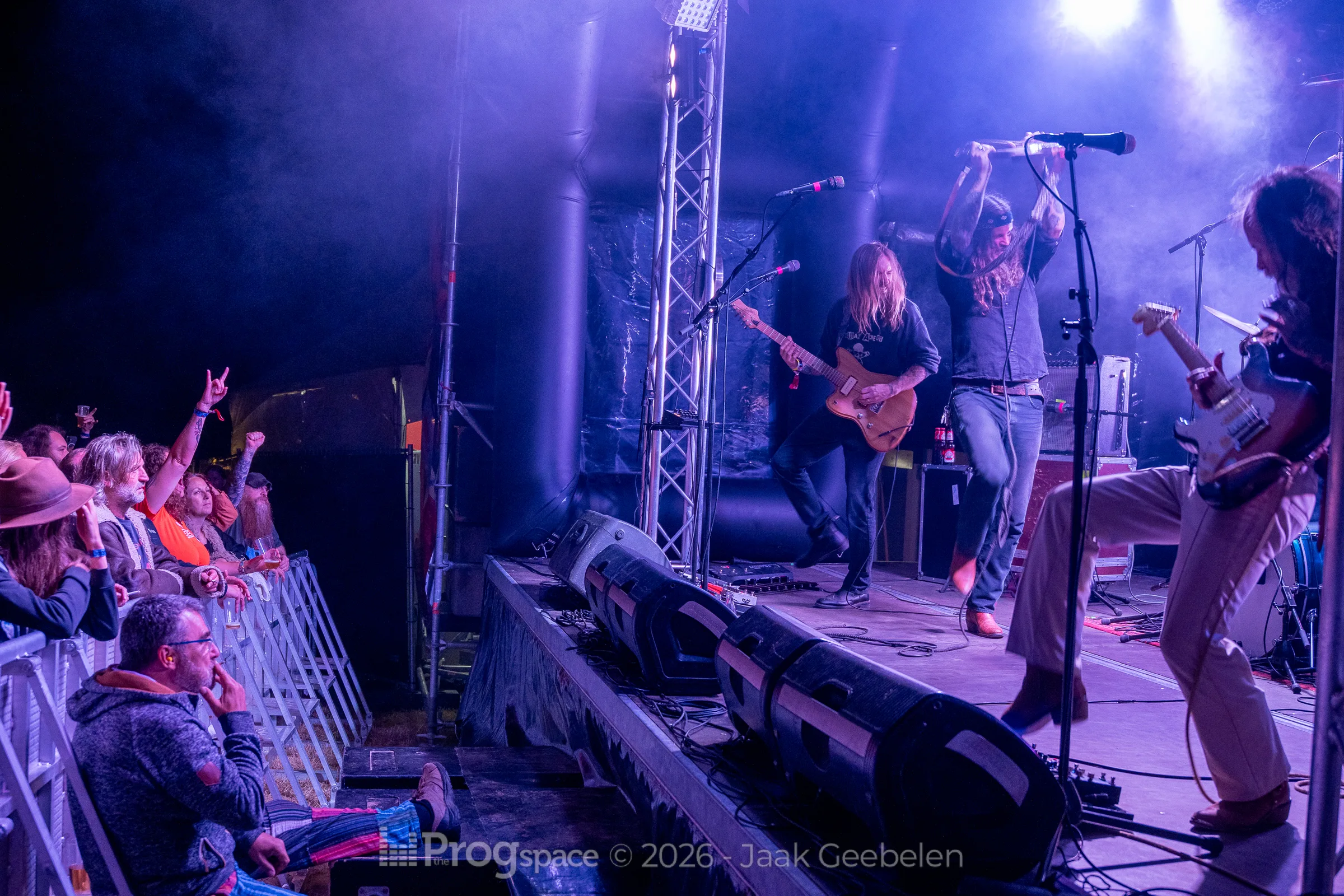
Visually, Temple Fang suited its music remarkably well.
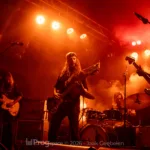
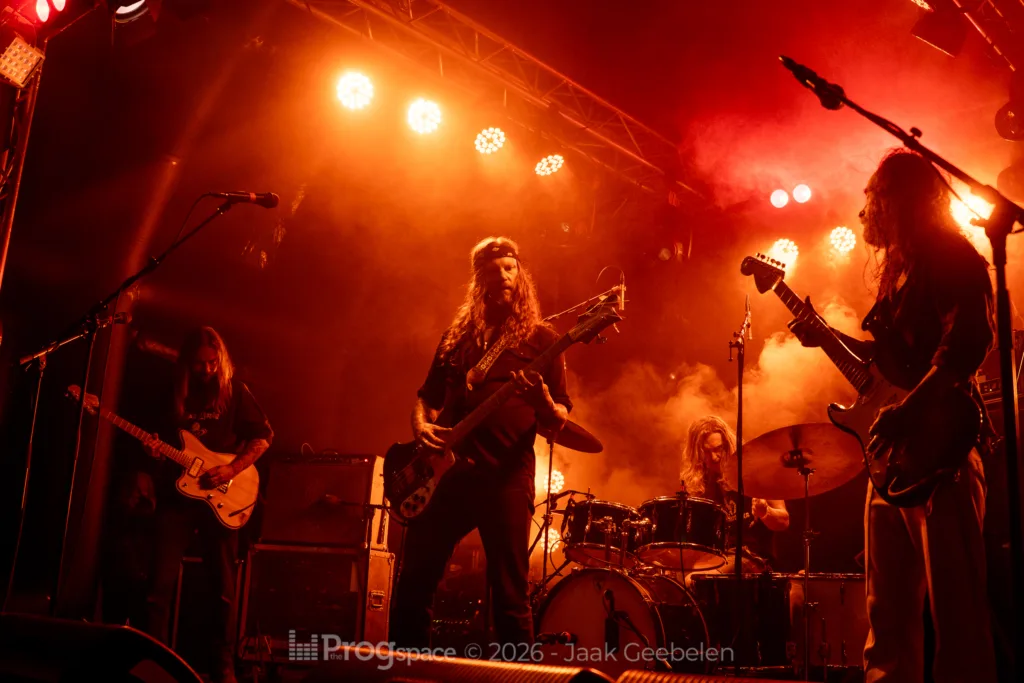
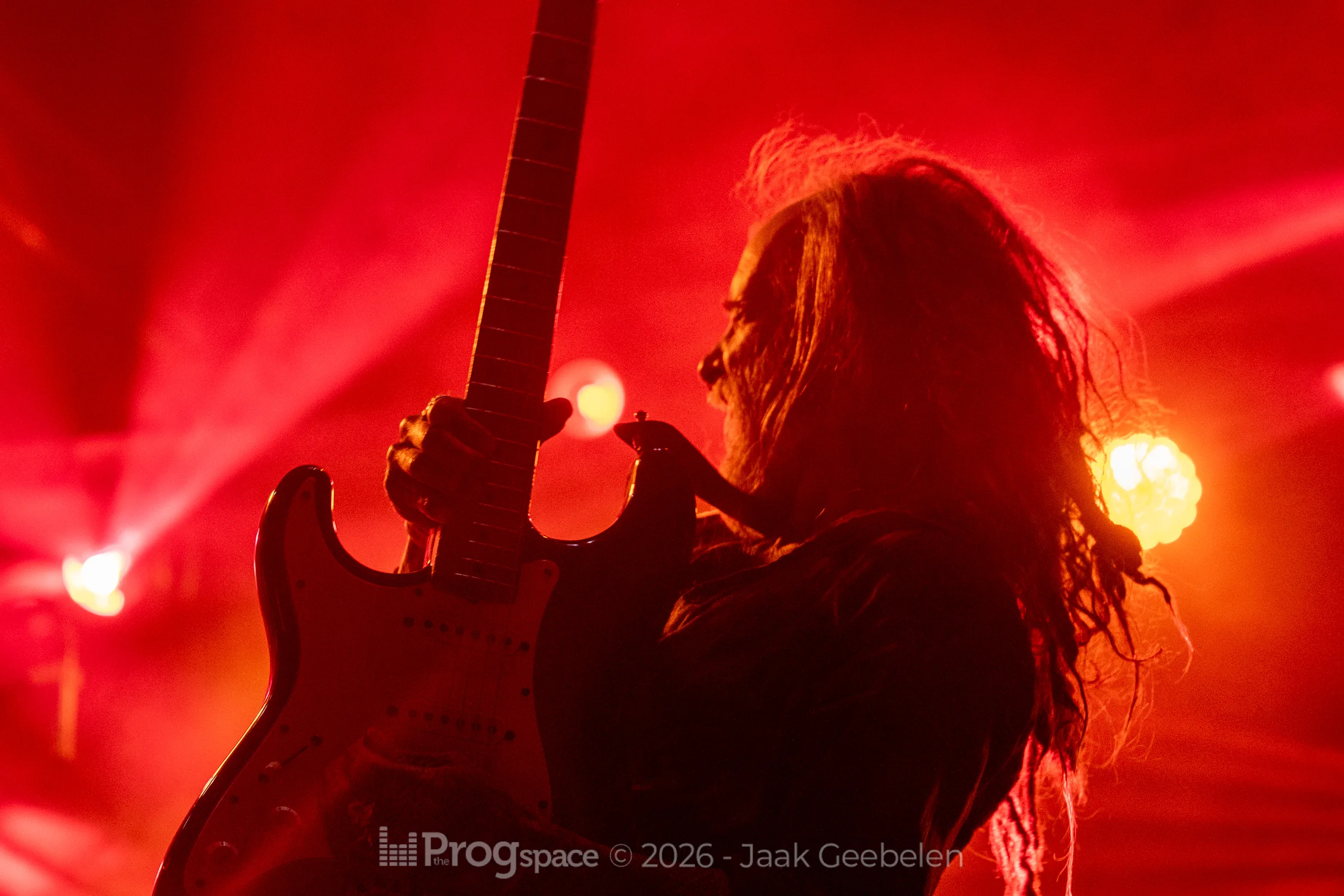
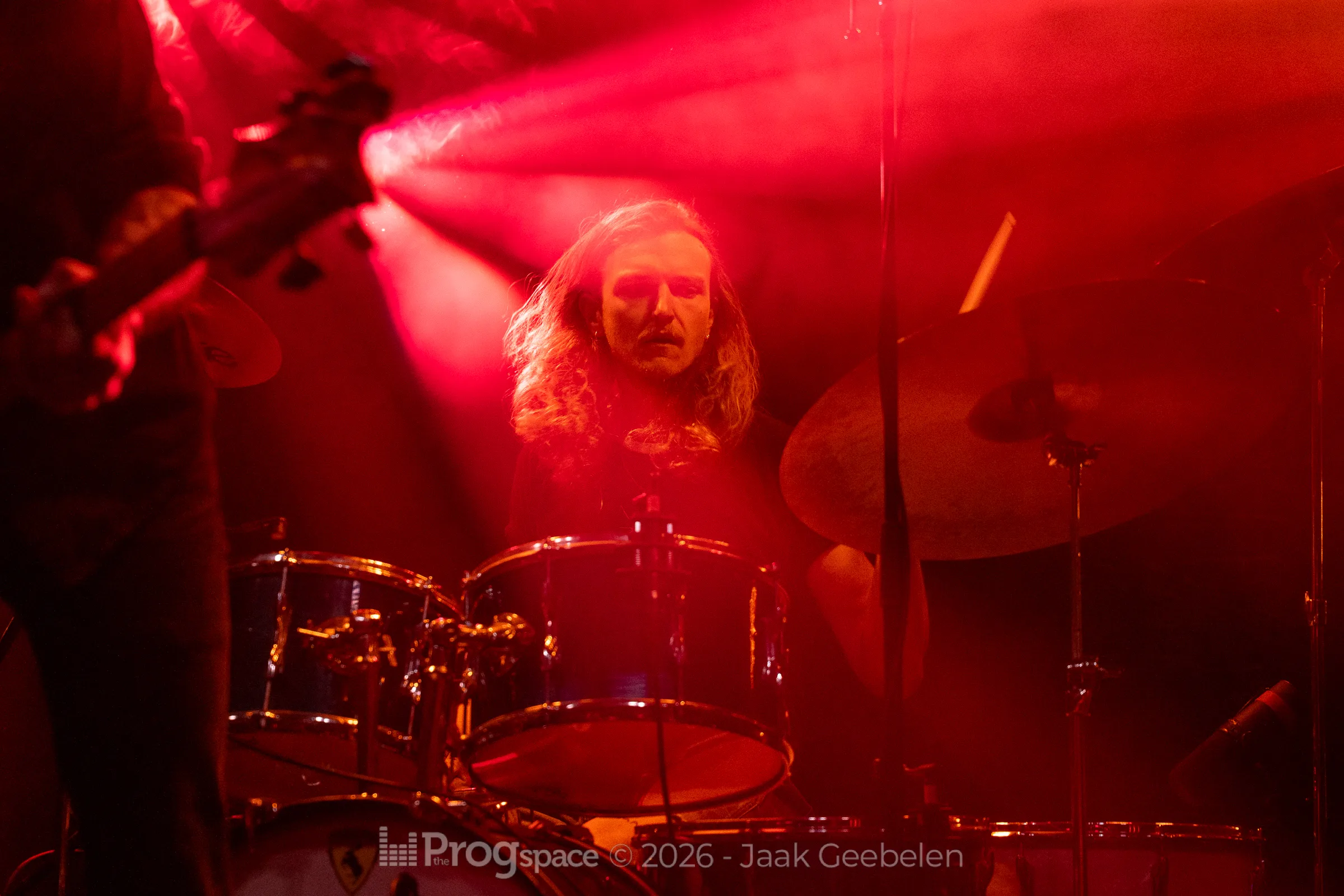
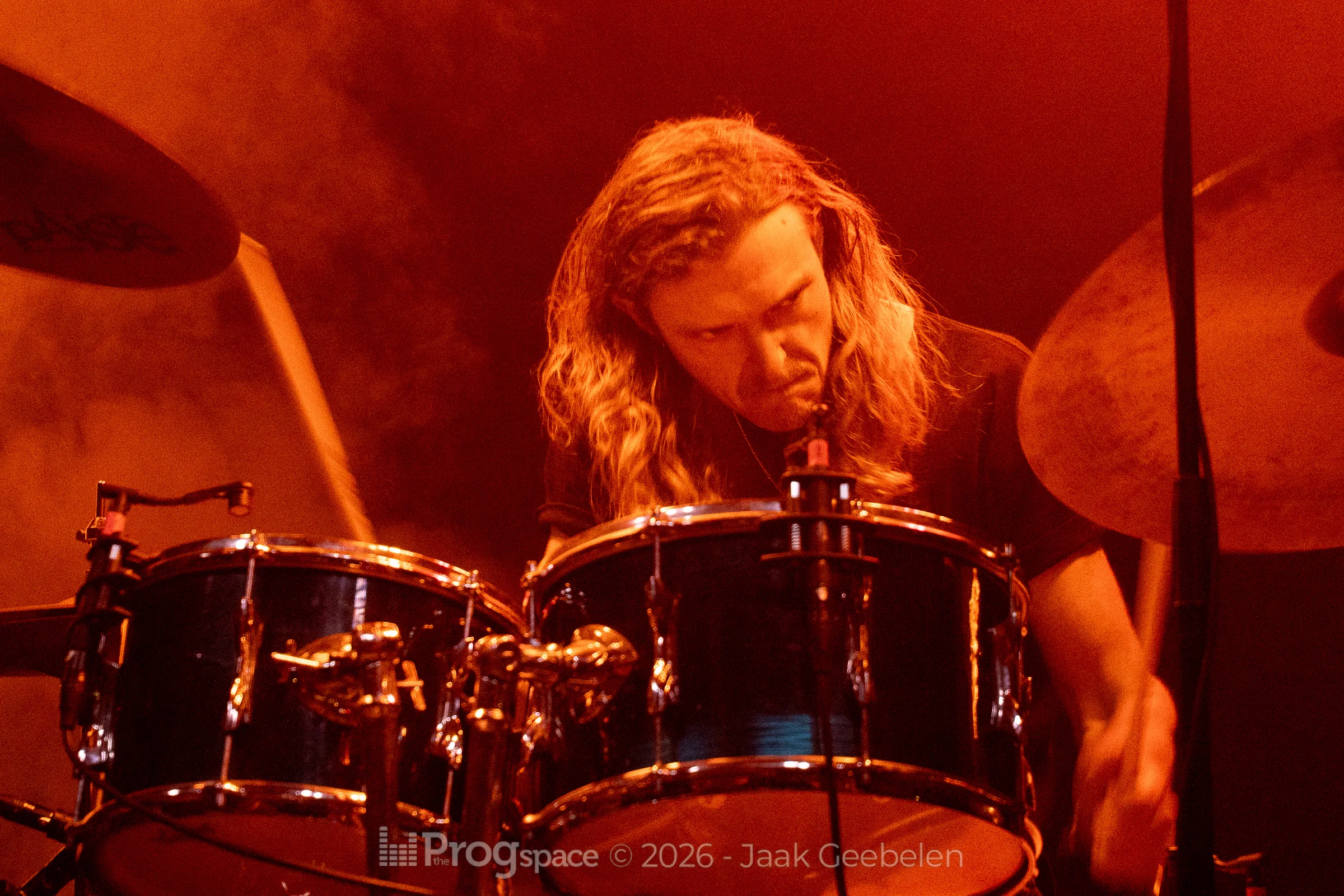
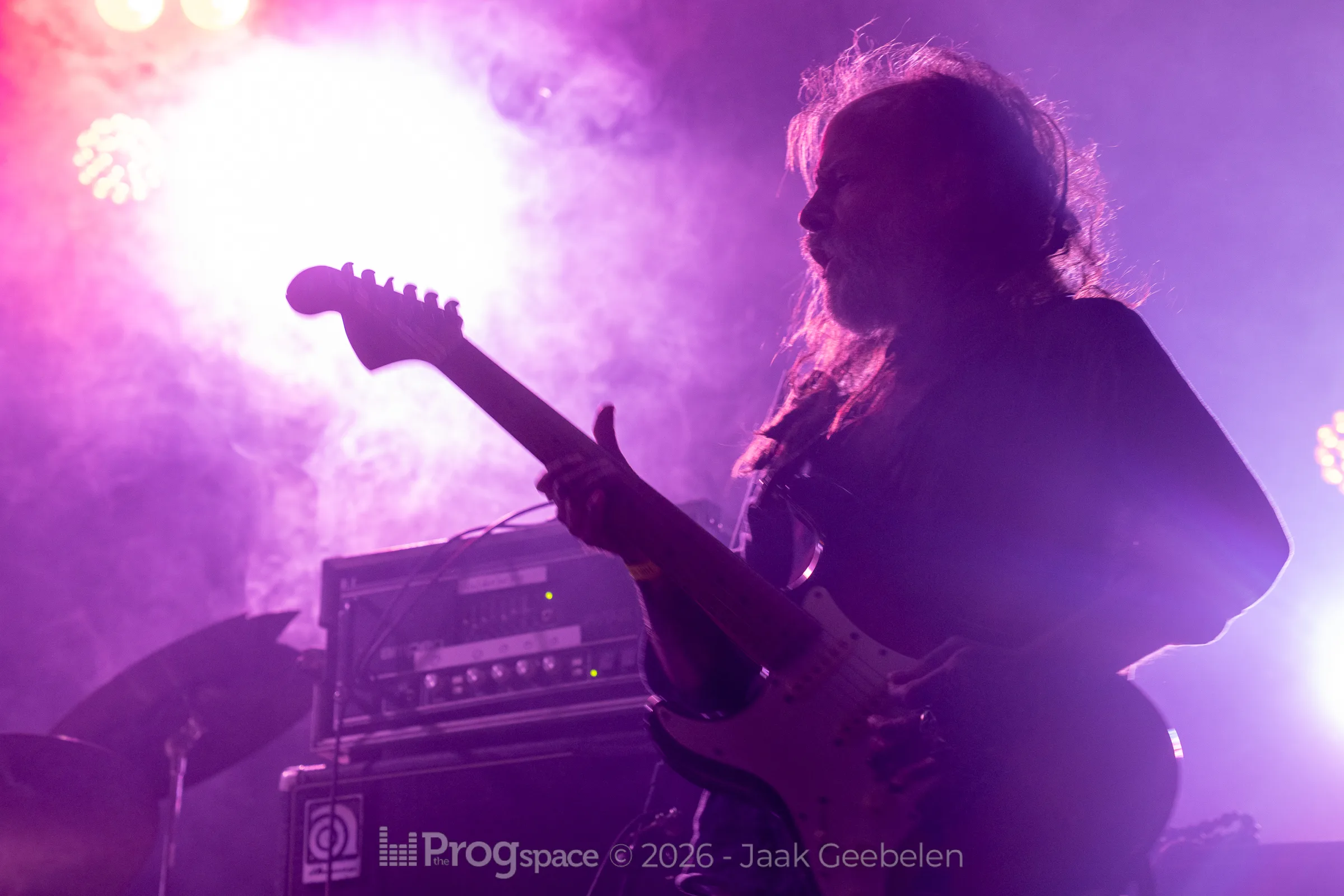
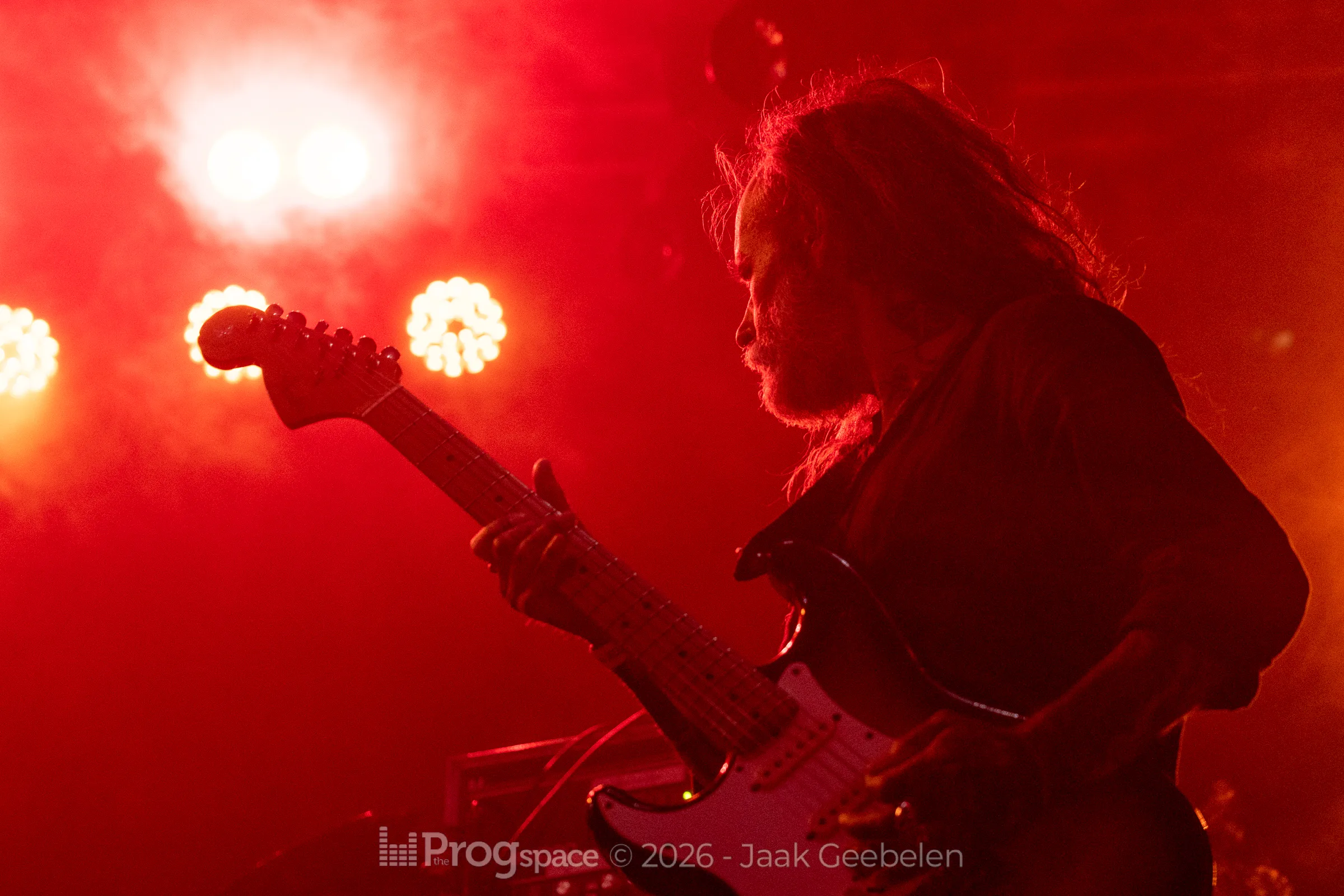
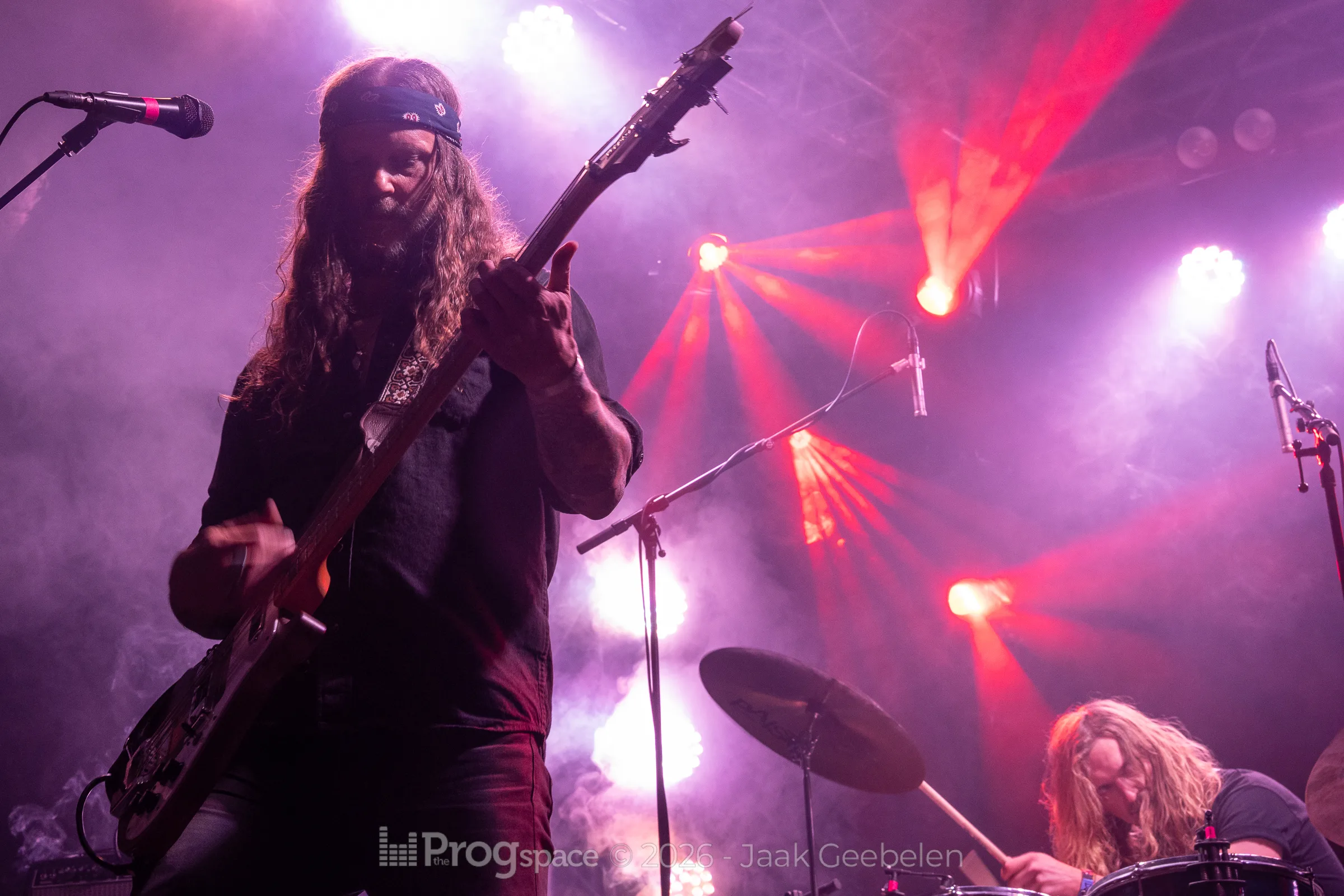
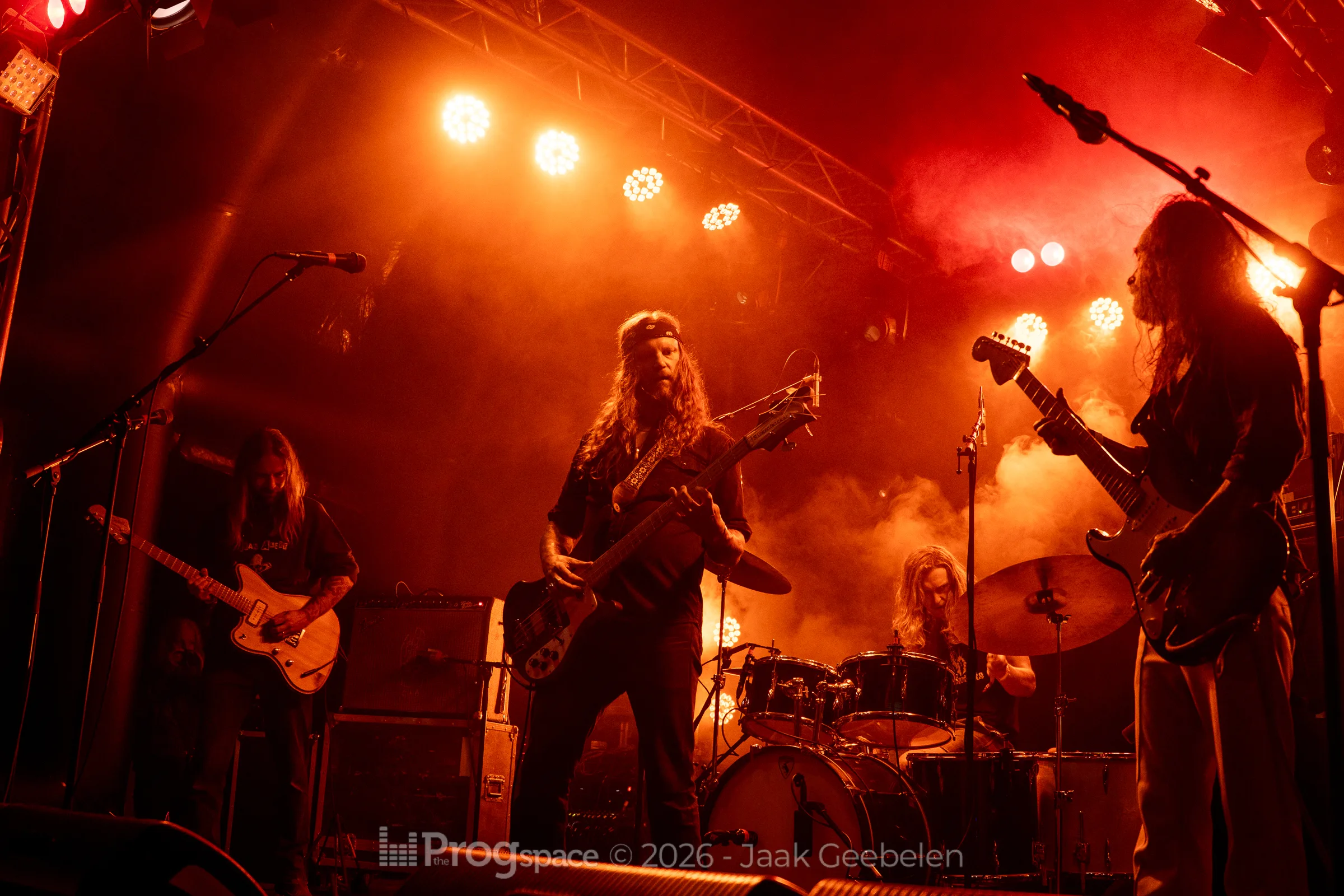
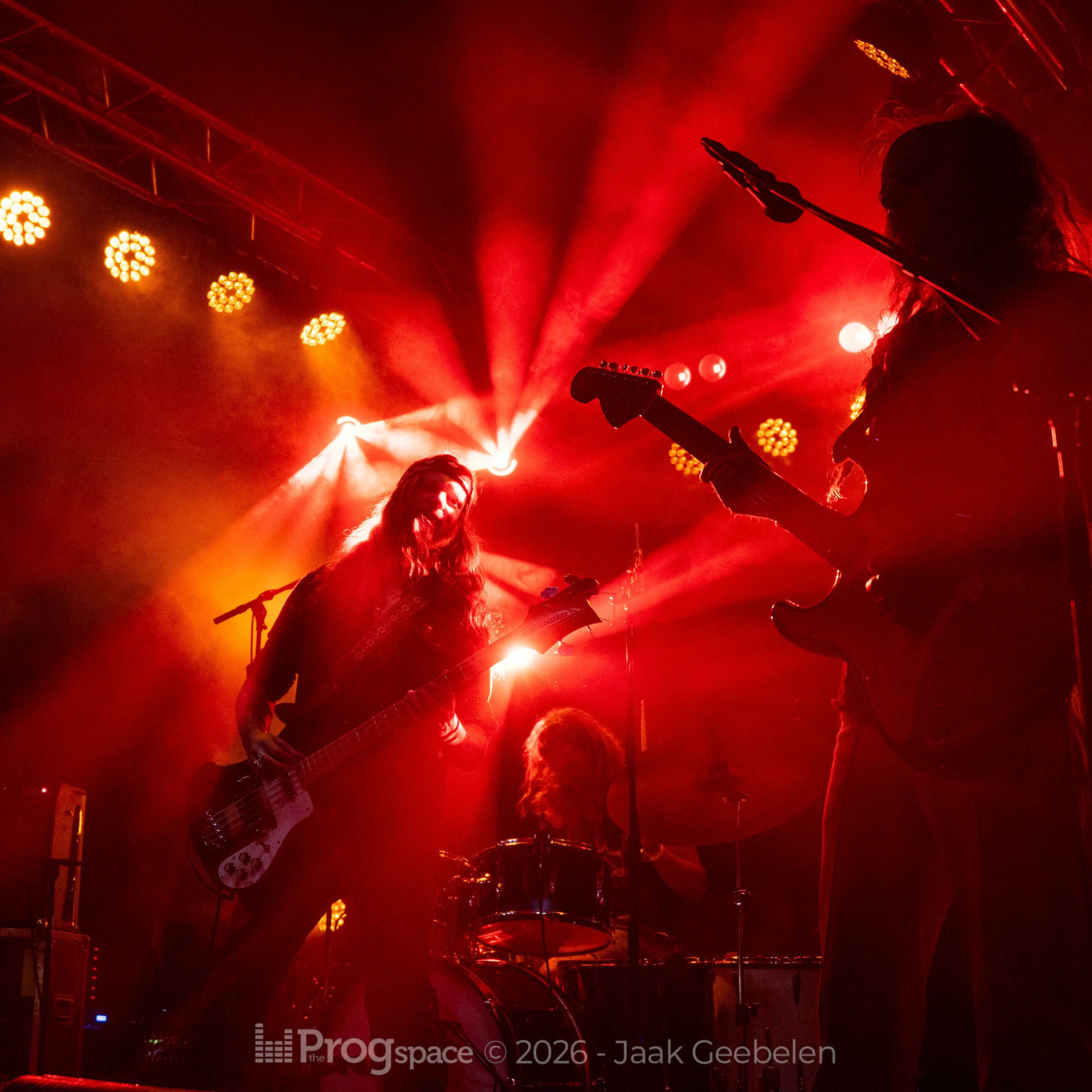
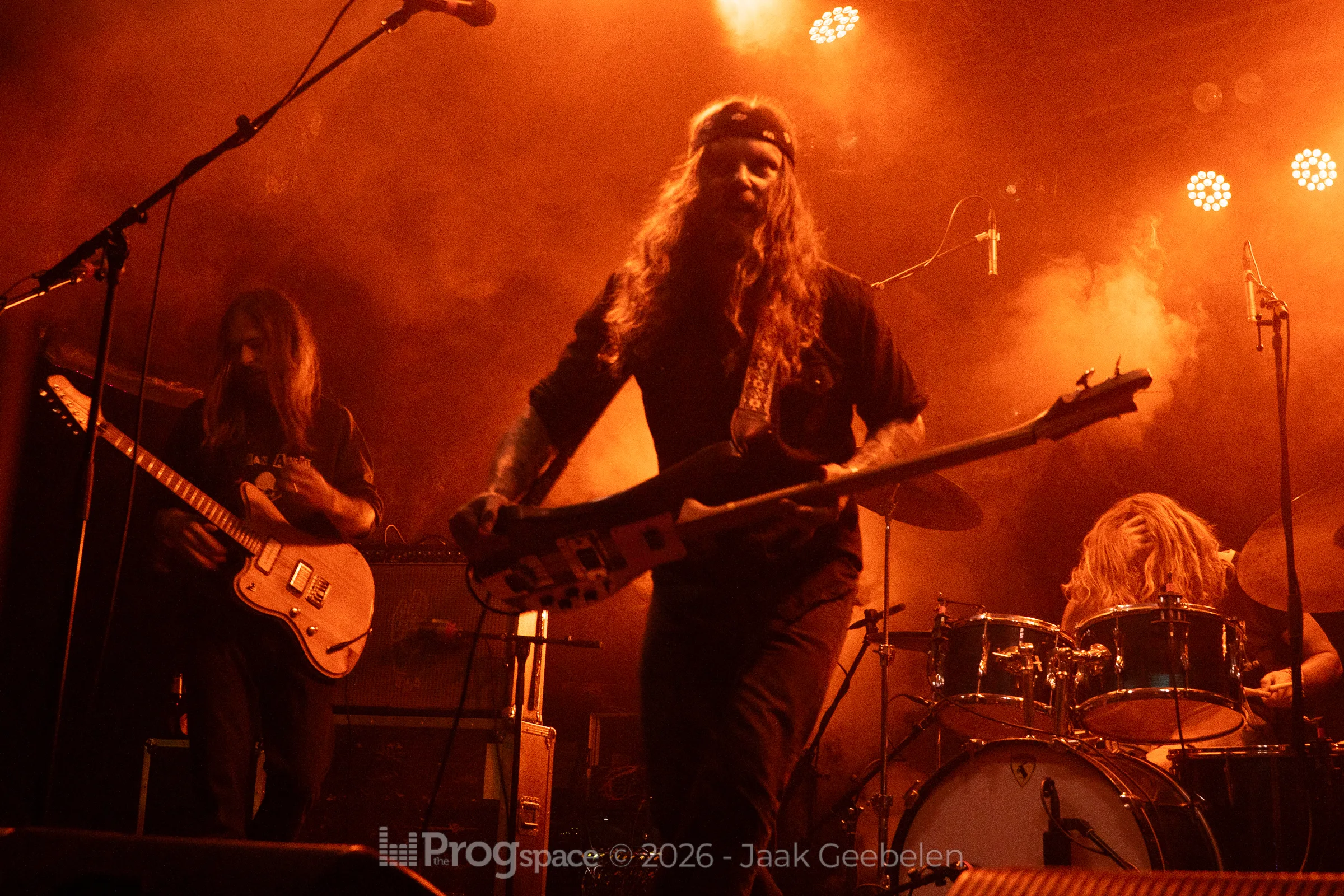
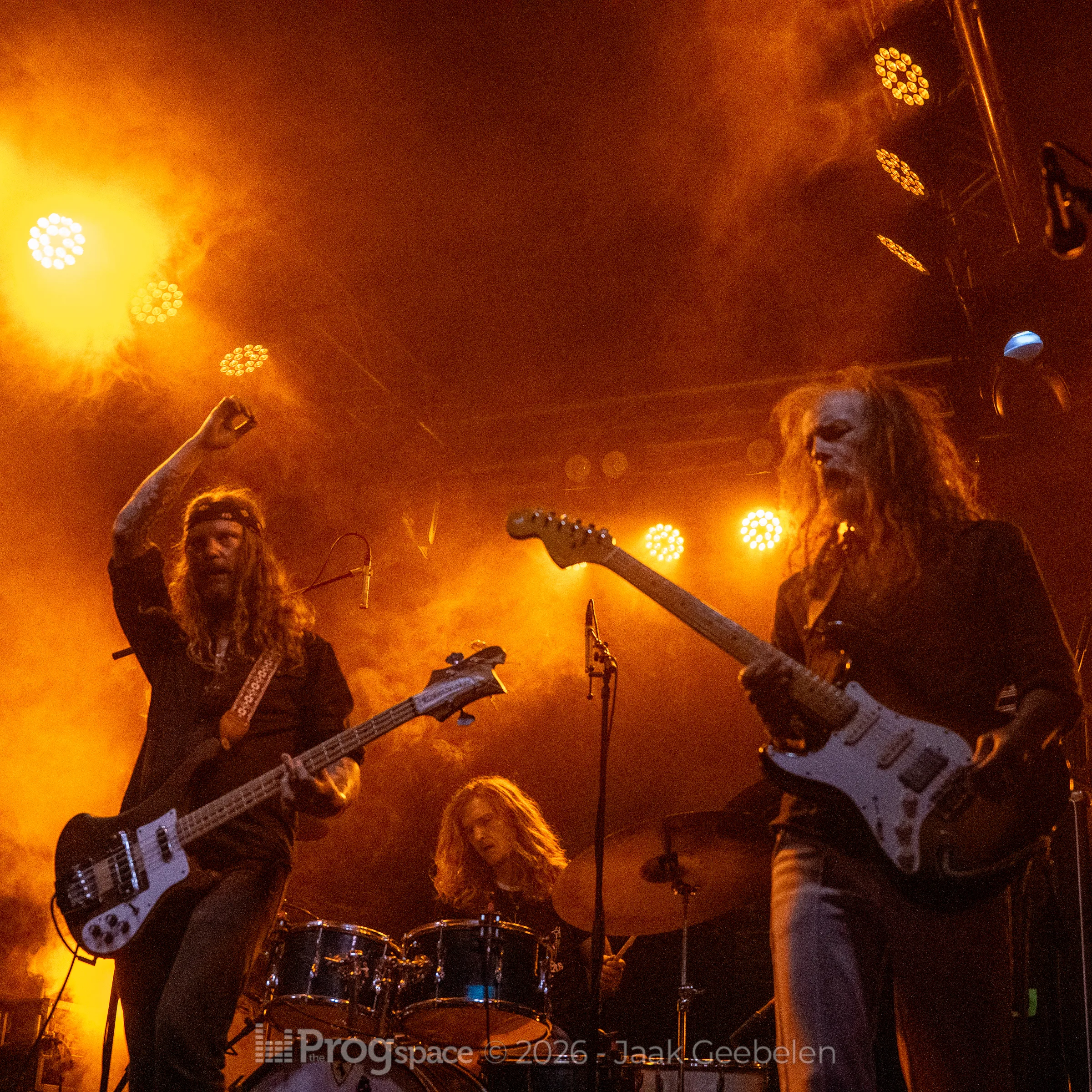
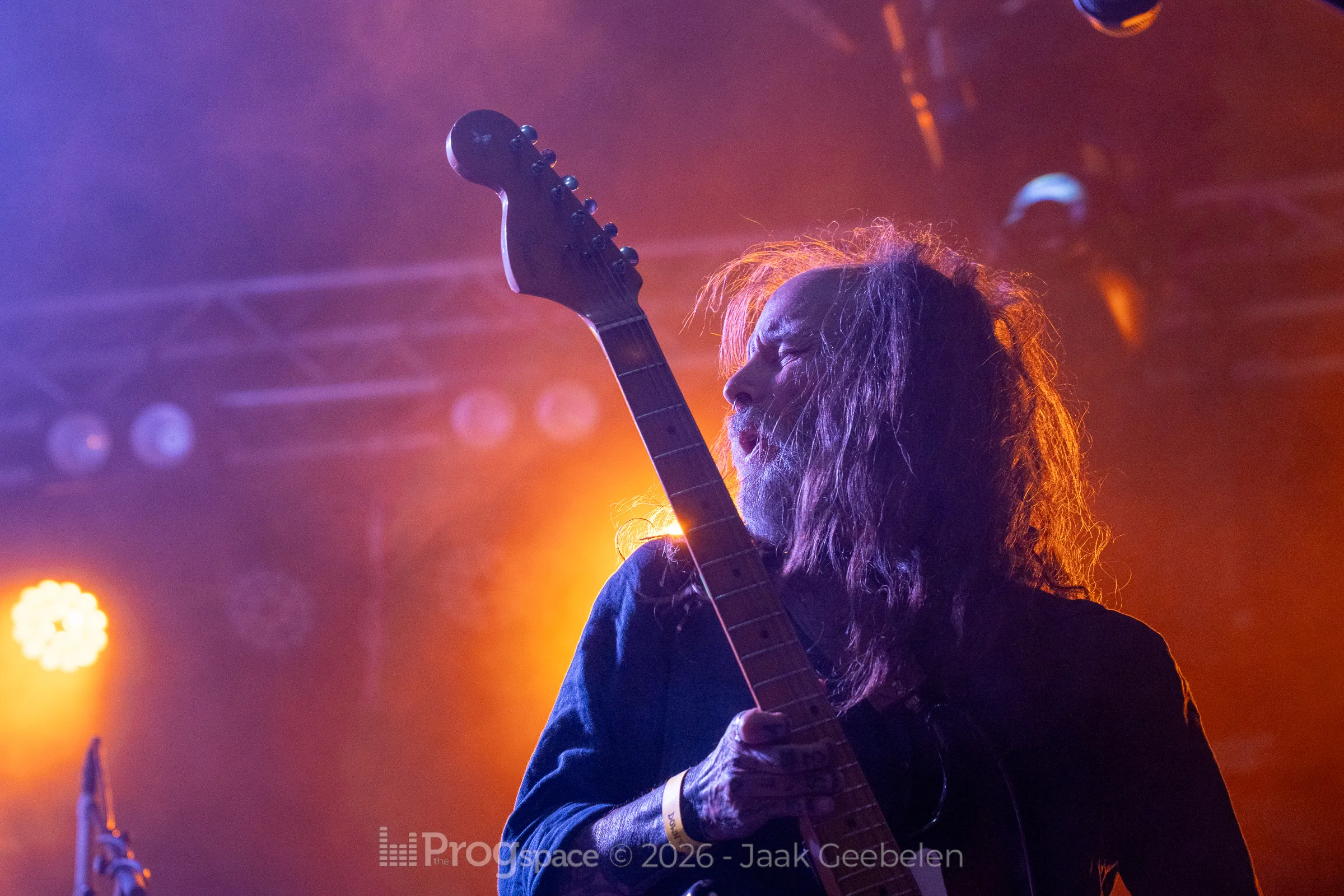
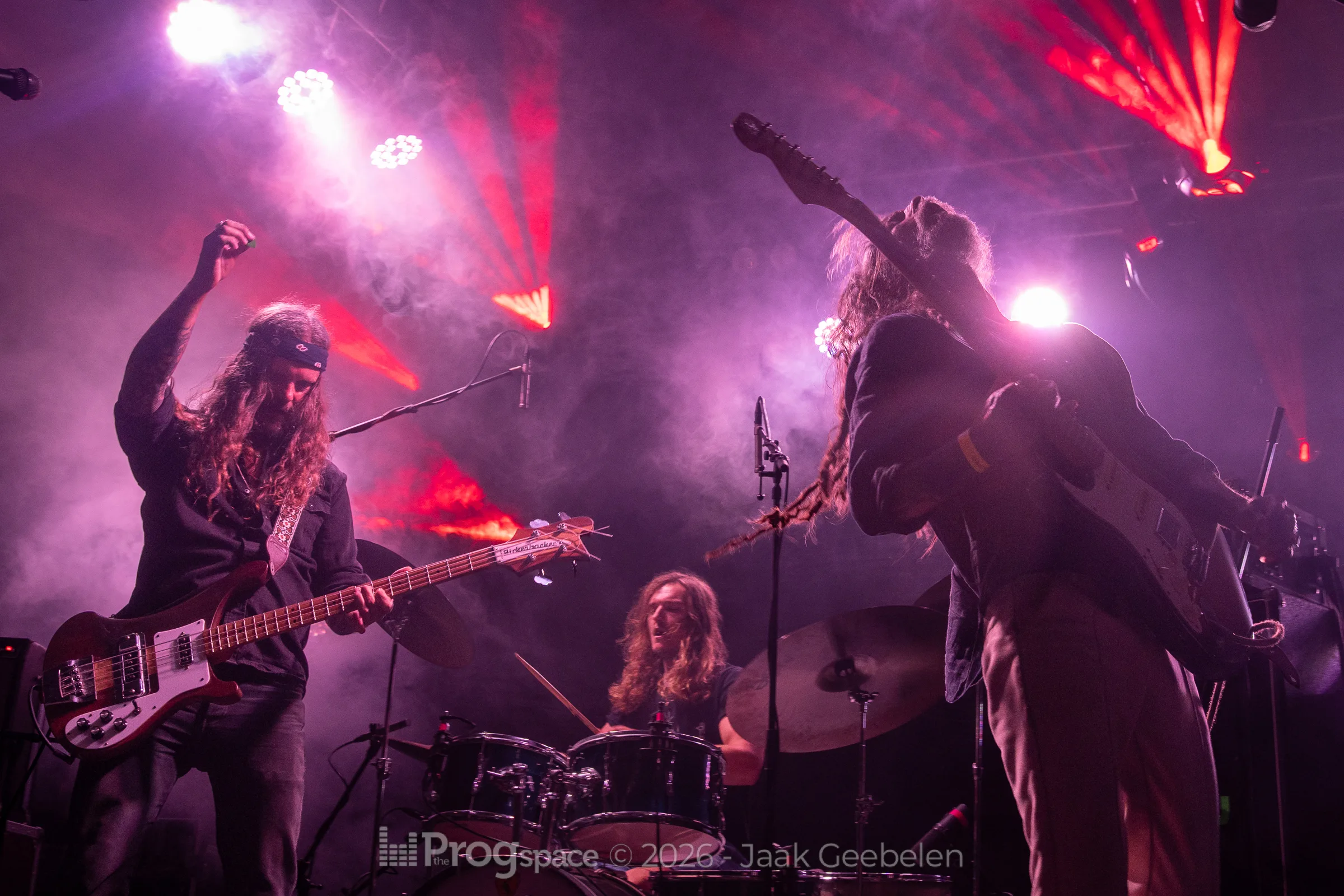
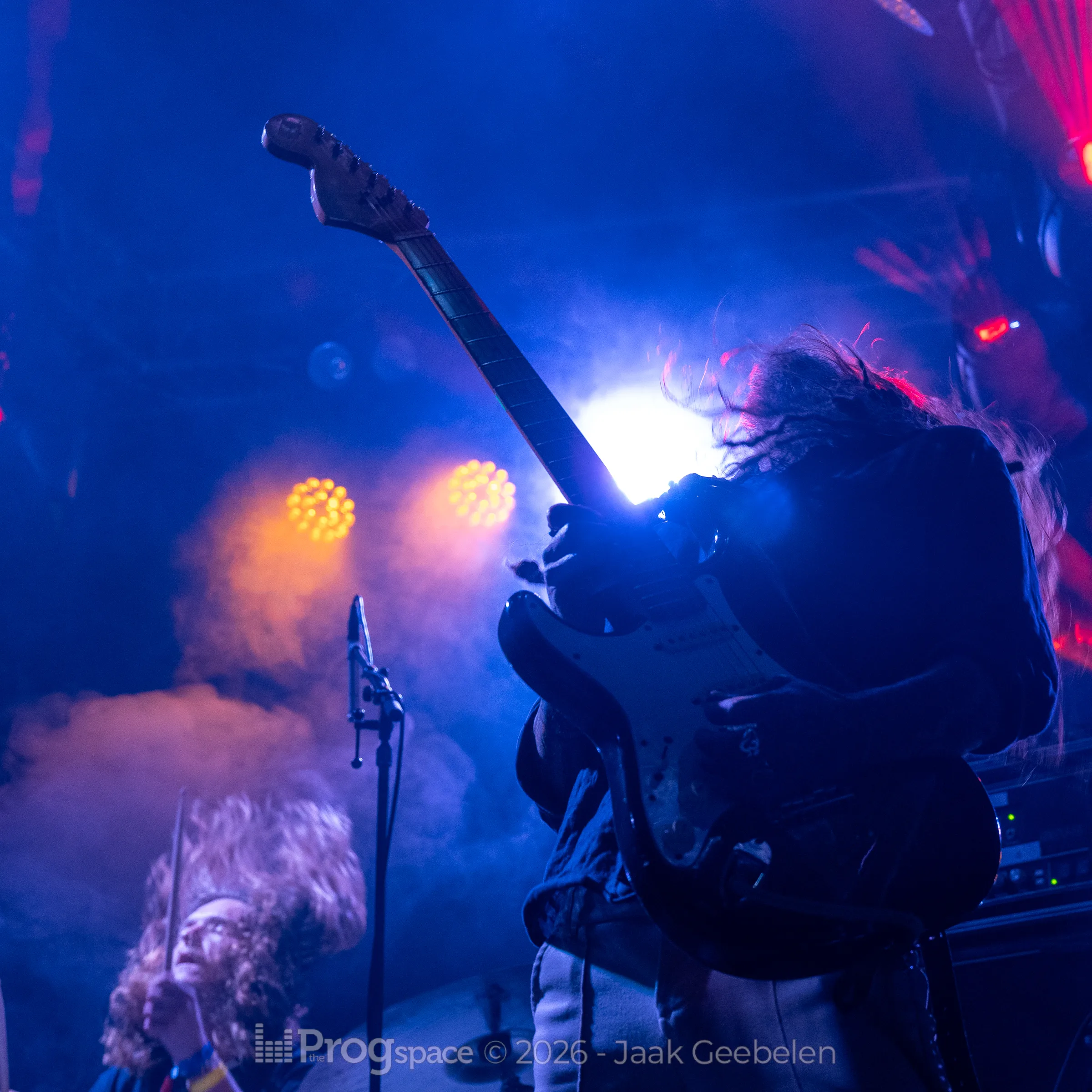
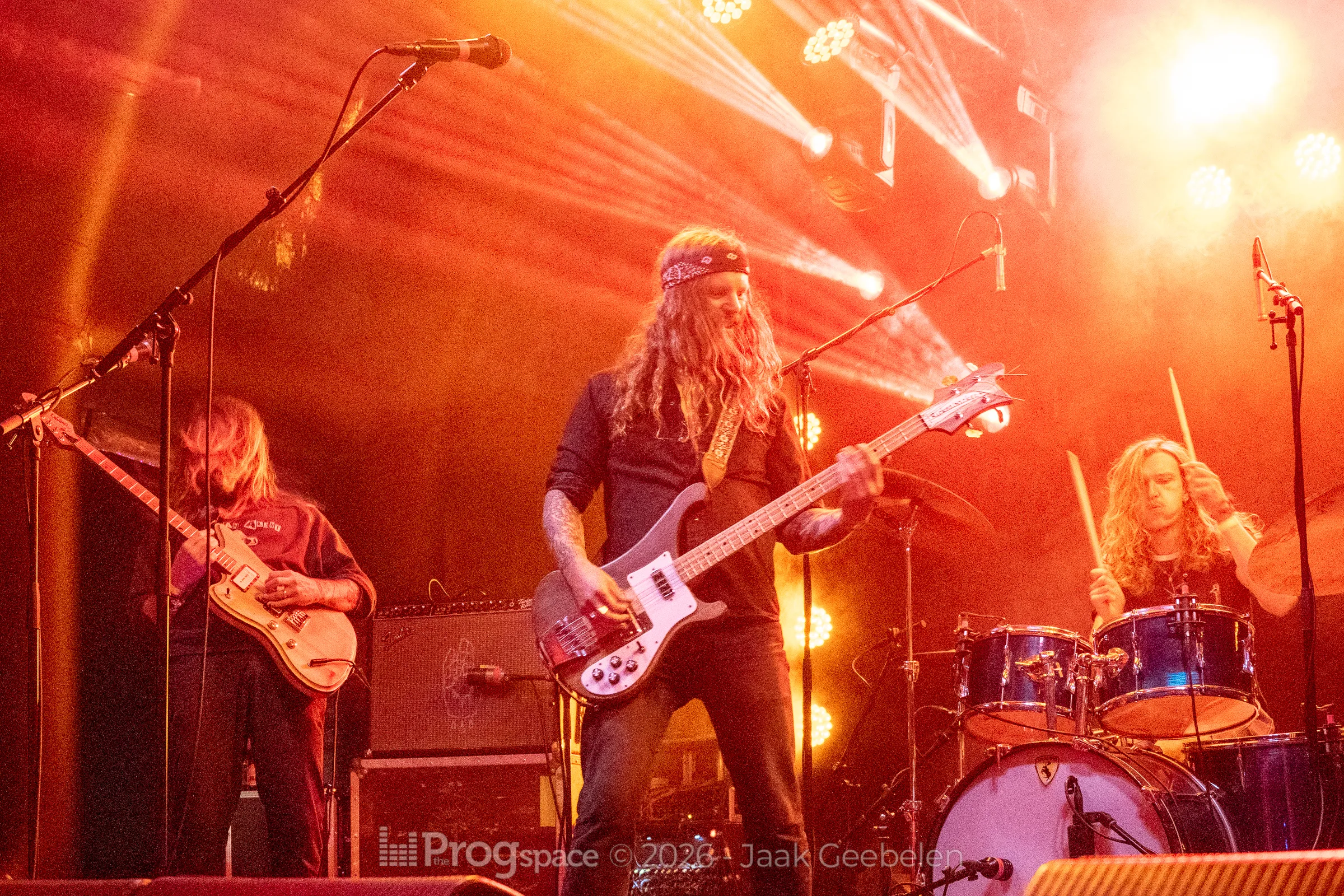
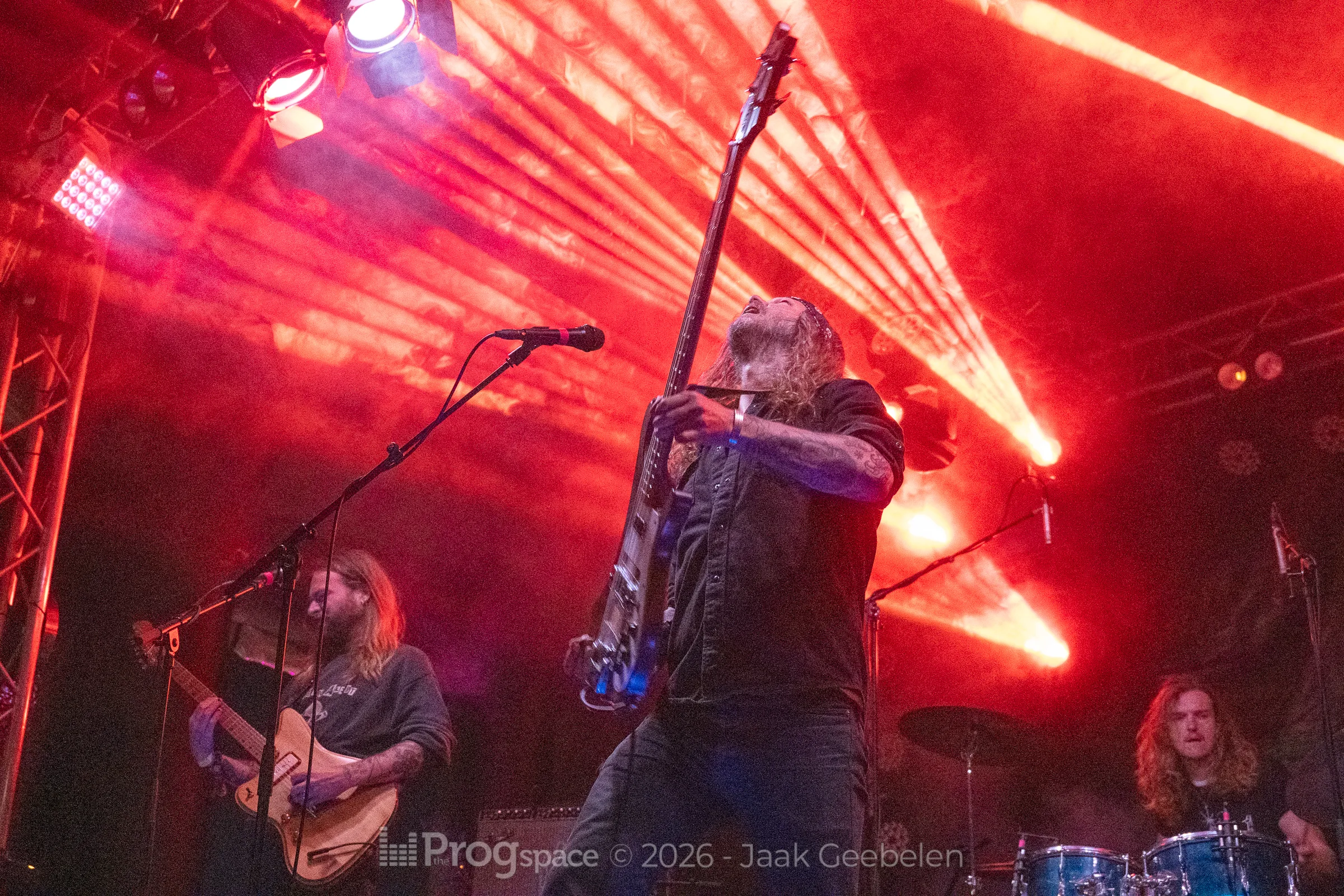
Red, amber and orange dominated the stage. Combined with smoke and strong backlighting, it created a warm, almost ritualistic atmosphere. No elaborate visuals were needed; the band itself and the lighting were enough.
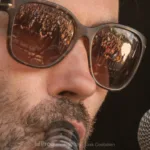
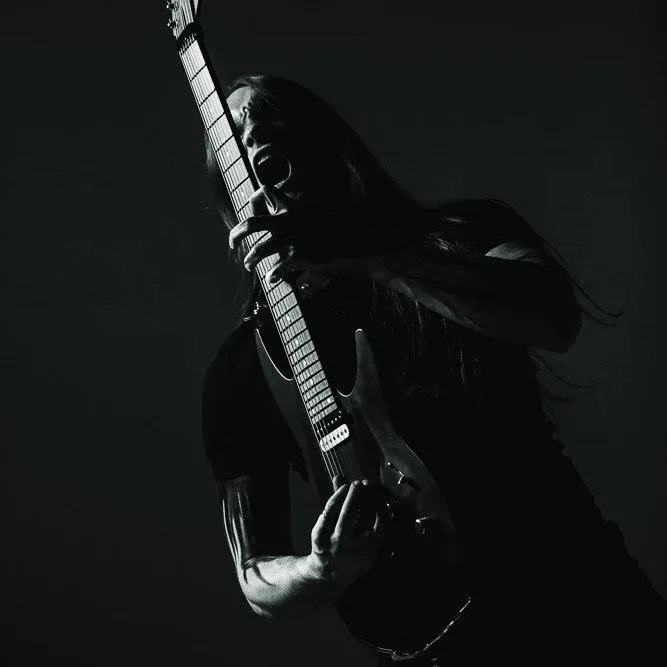
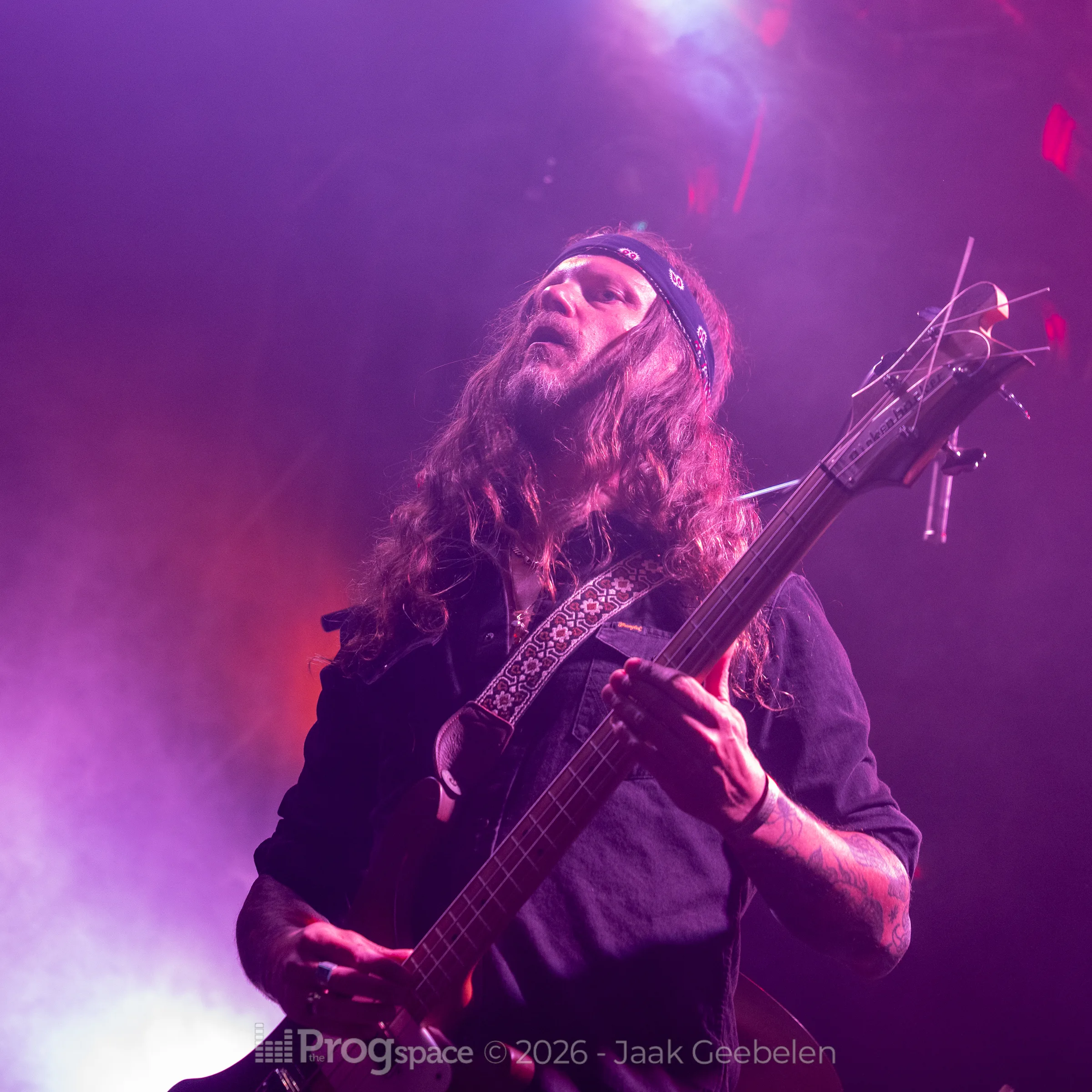
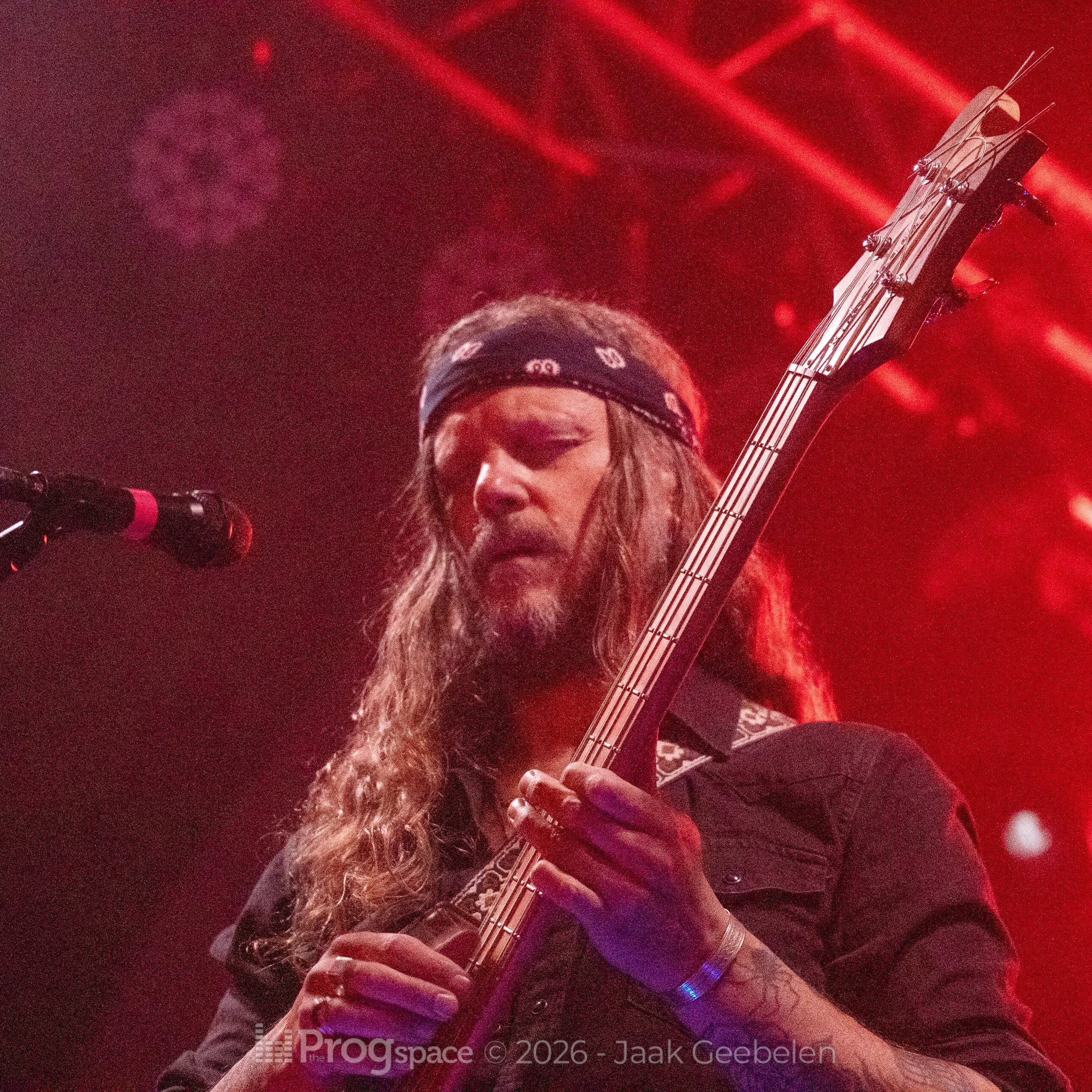
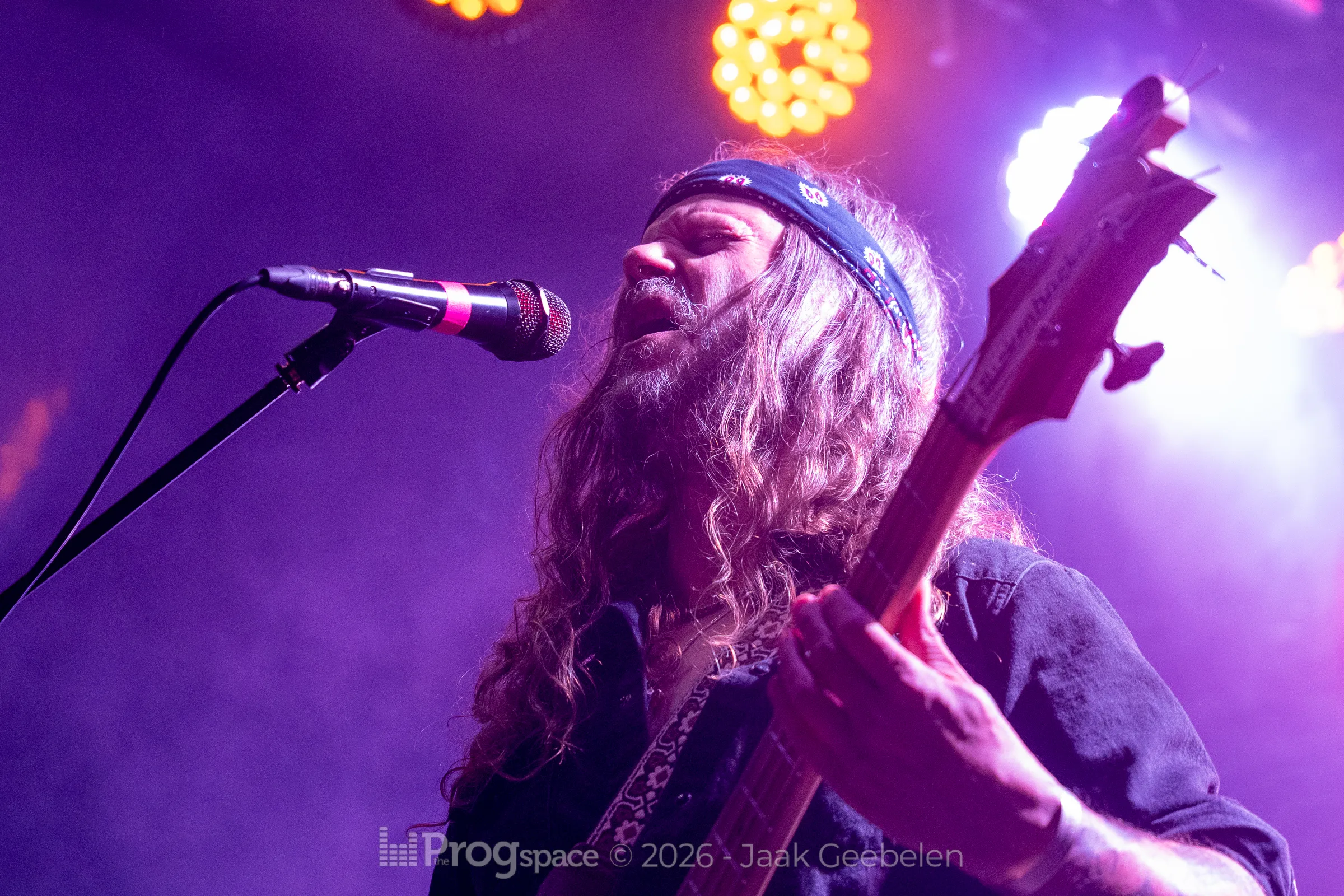
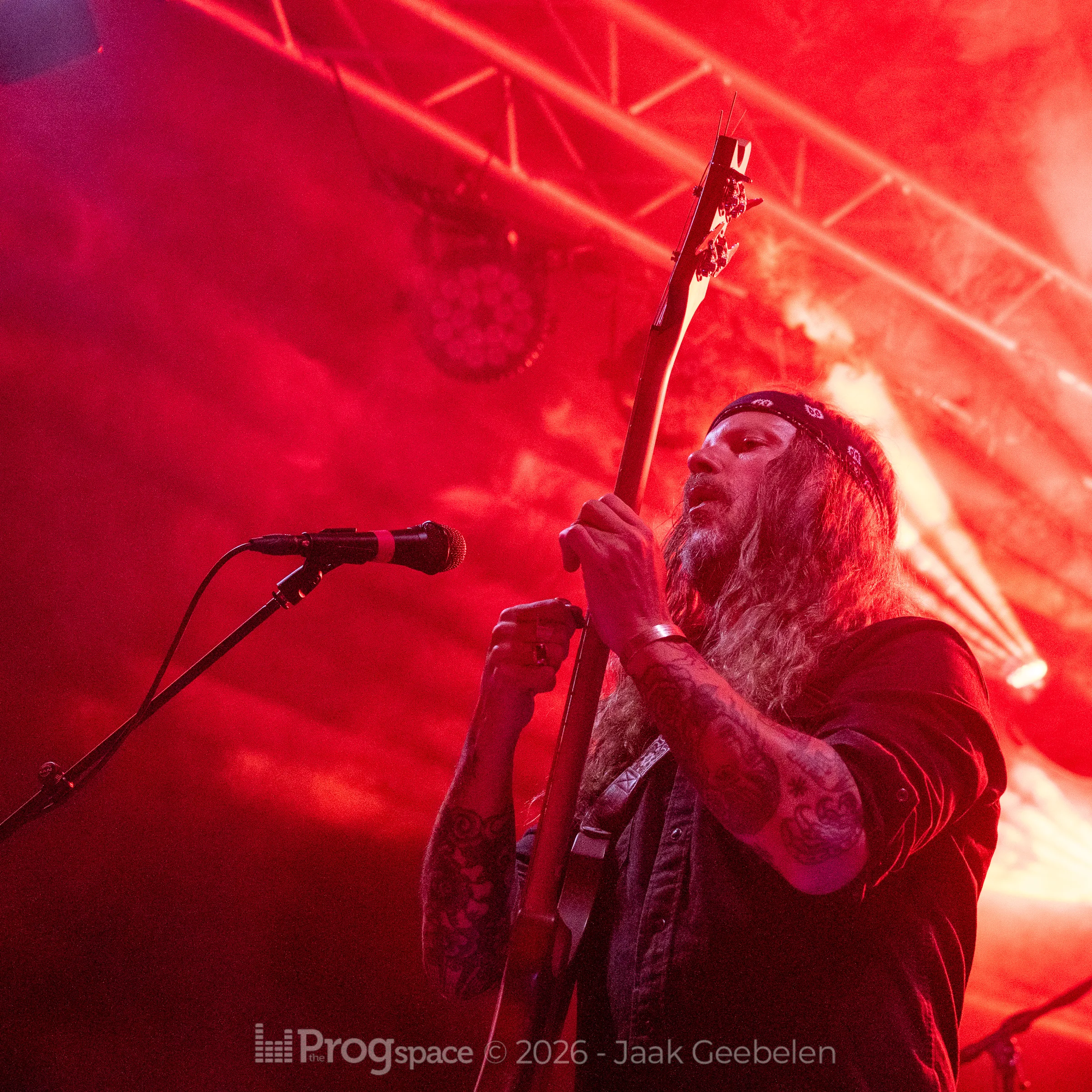
Dennis Duijnhouwer naturally became the visual focal point. With his long hair, bandana, tattoos and the way he sometimes held his bass almost vertically in front of him, he had an imposing presence. Yet he rarely looked as though he was consciously trying to attract attention. He seemed much more absorbed in the music.
The same was true of the whole band.
No exaggerated poses, no frontman constantly demanding applause. Jevin de Groot and Ivy van der Veer remained much more part of the collective sound, while drummer Daan Wopereis radiated concentration above all else.
That works for Temple Fang.
This music does not need show elements placed on top of it. The physical intensity comes from the playing itself.
The audience went with them
And the audience clearly understood that.
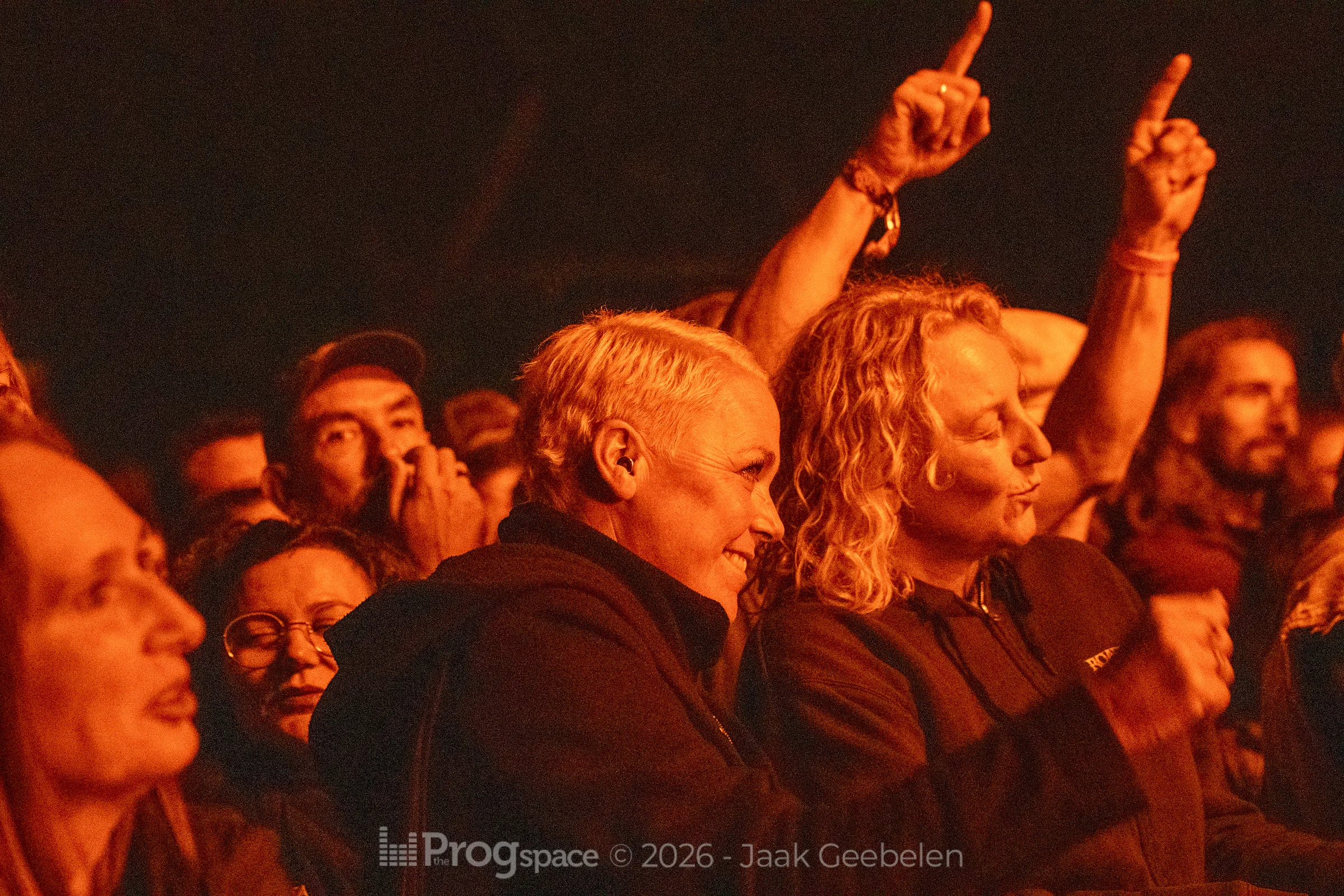
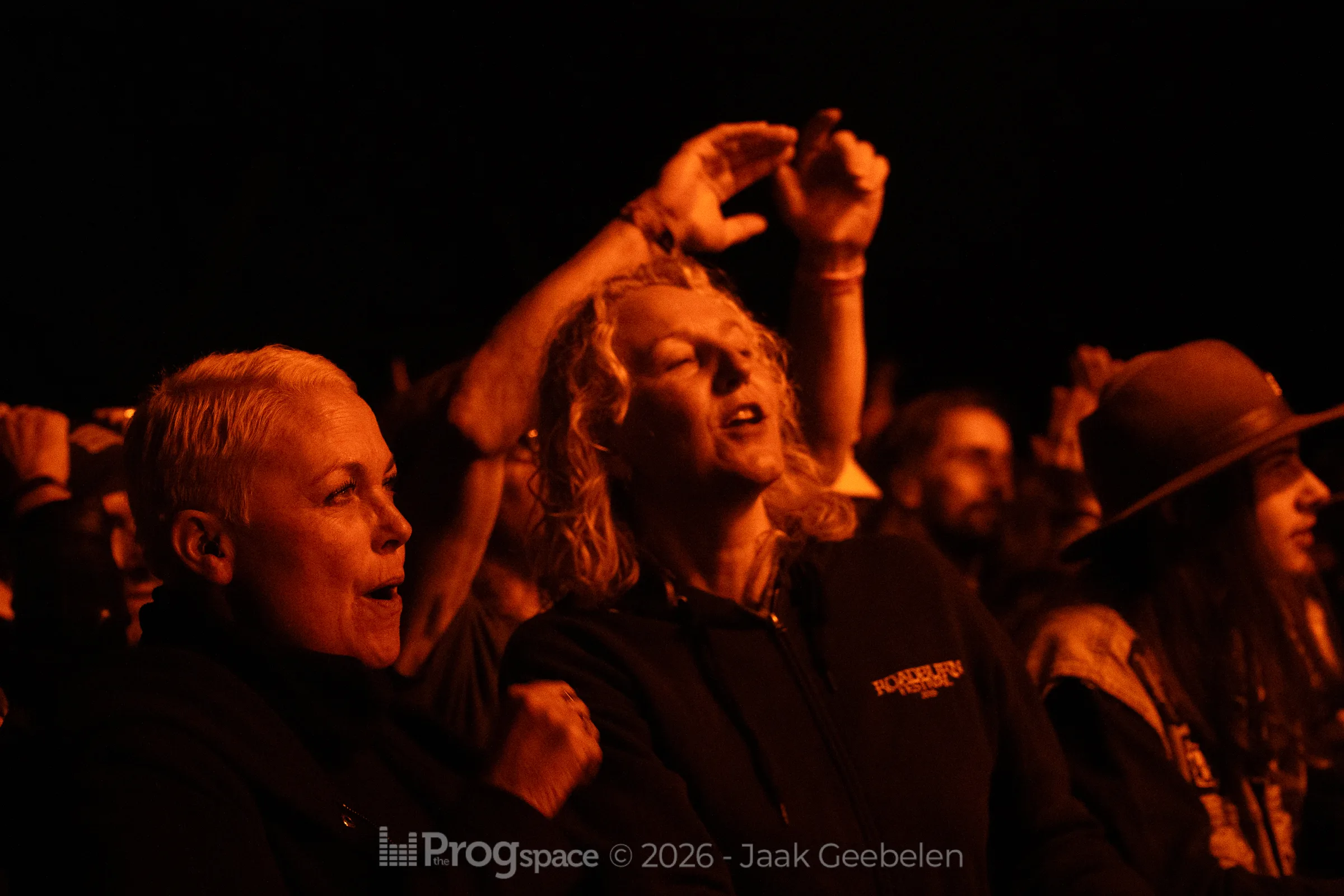
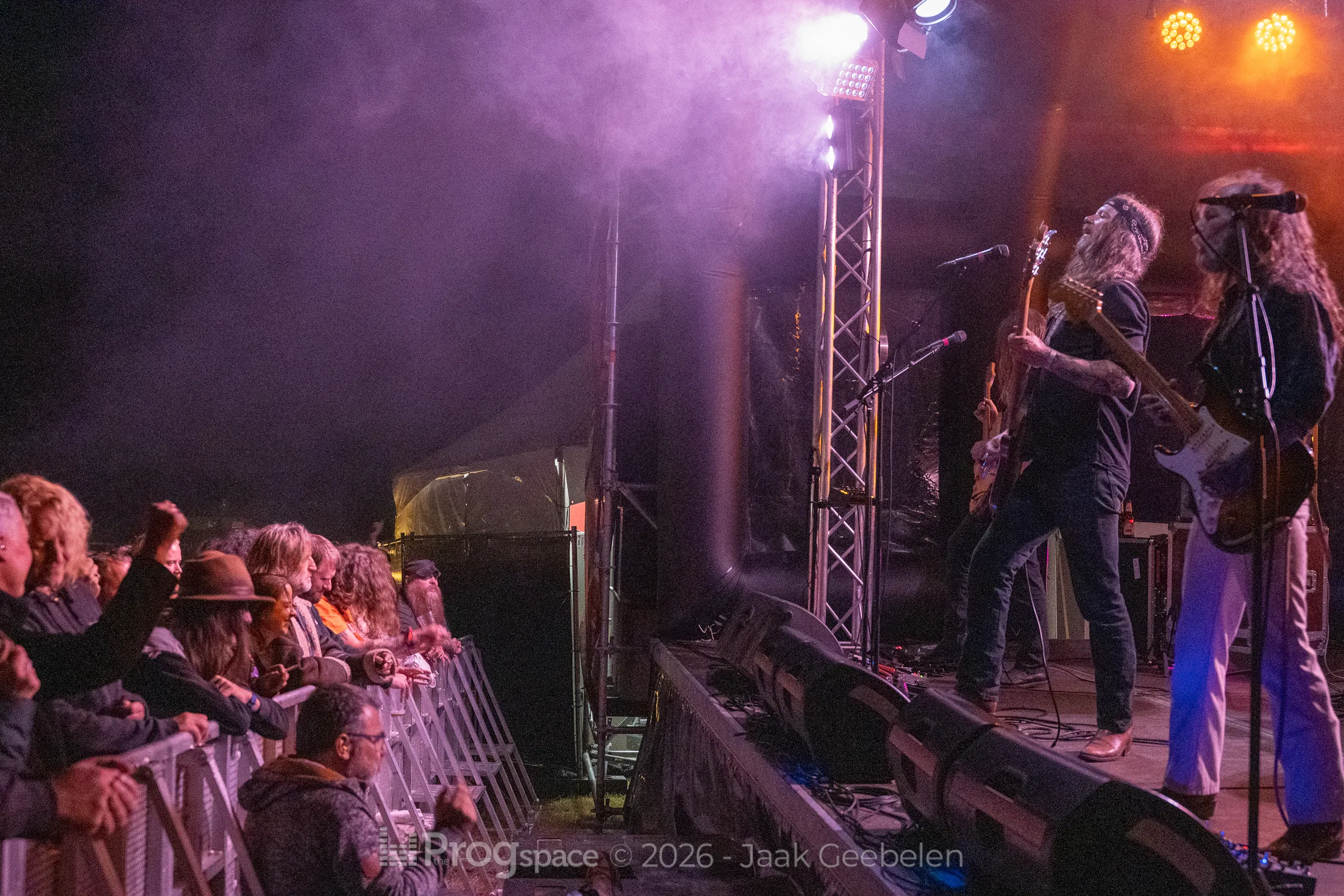
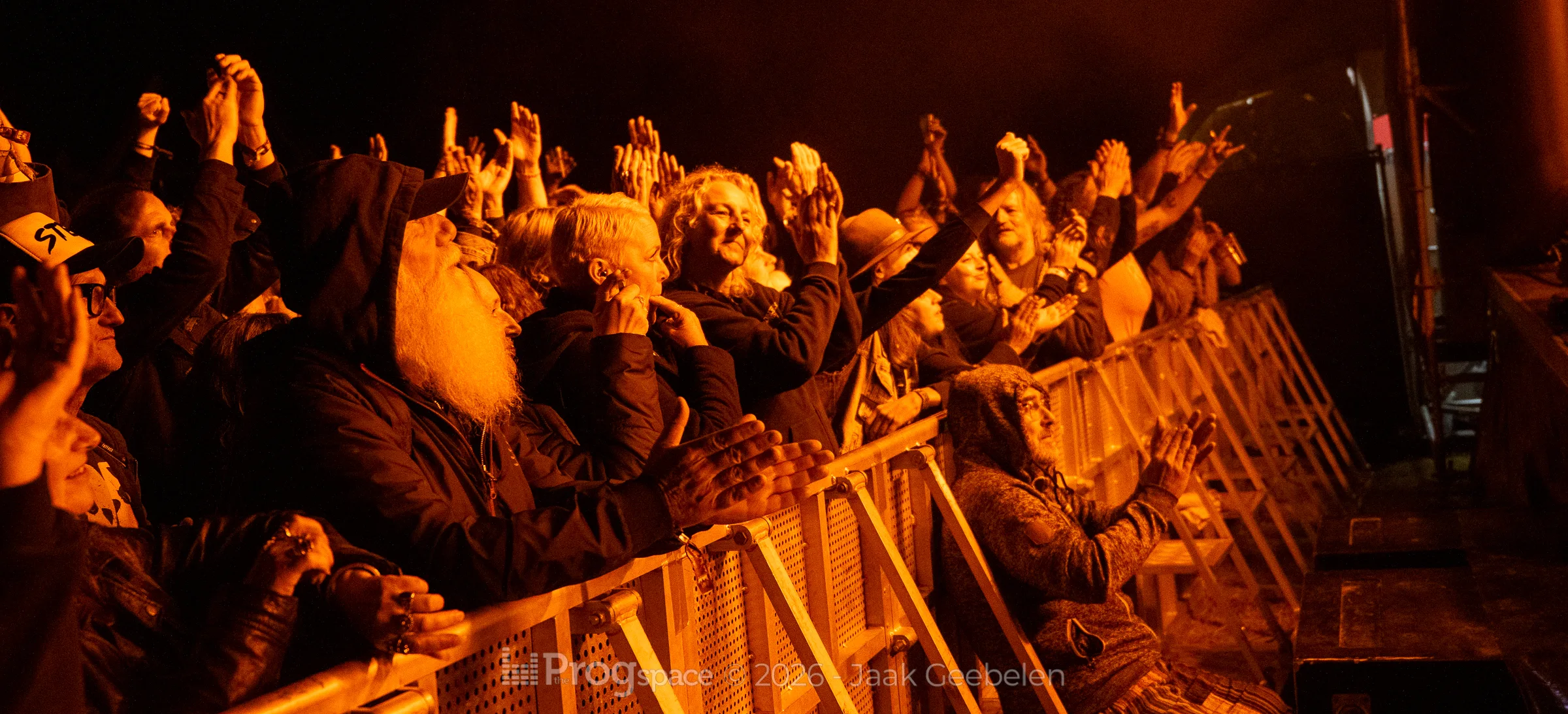
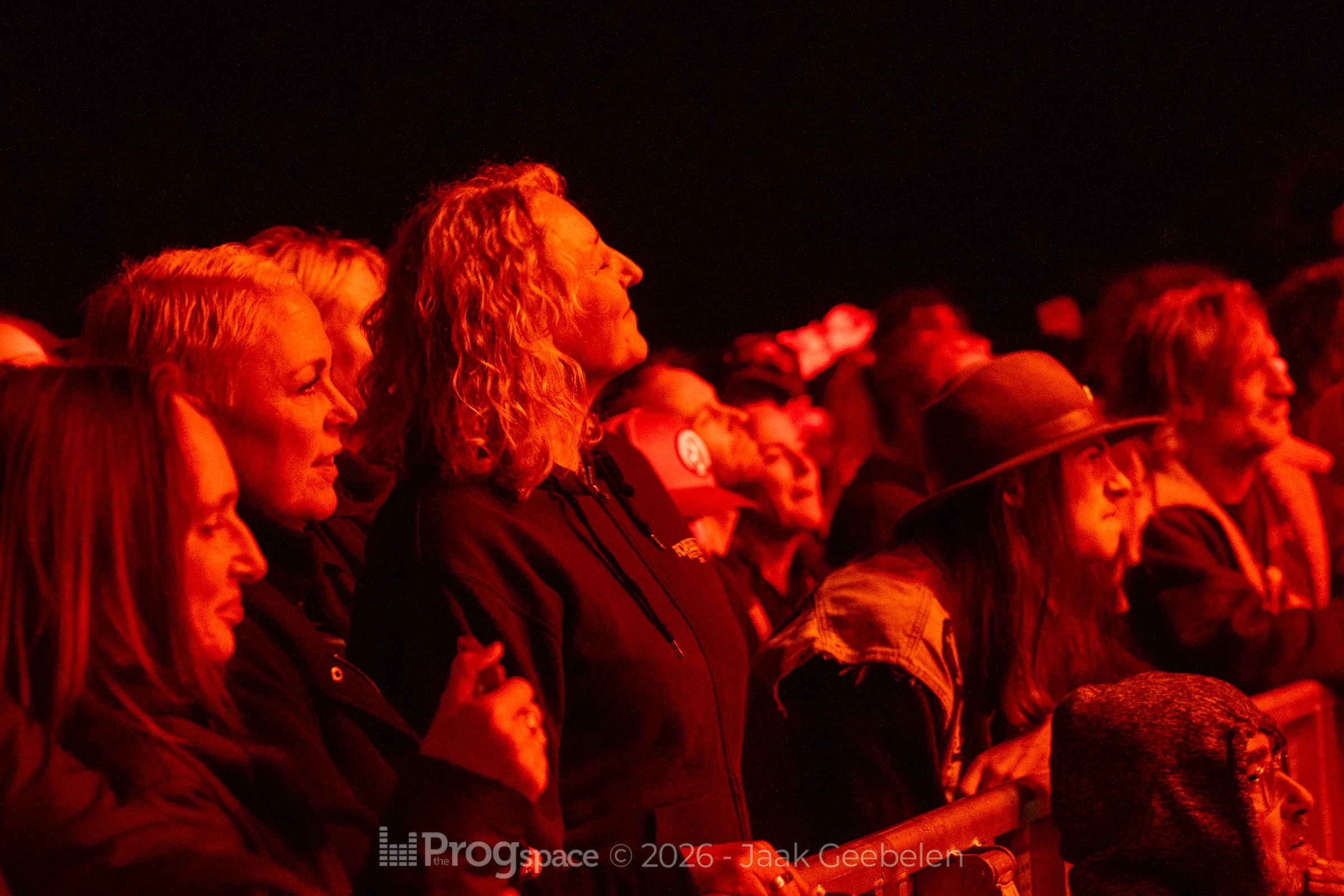
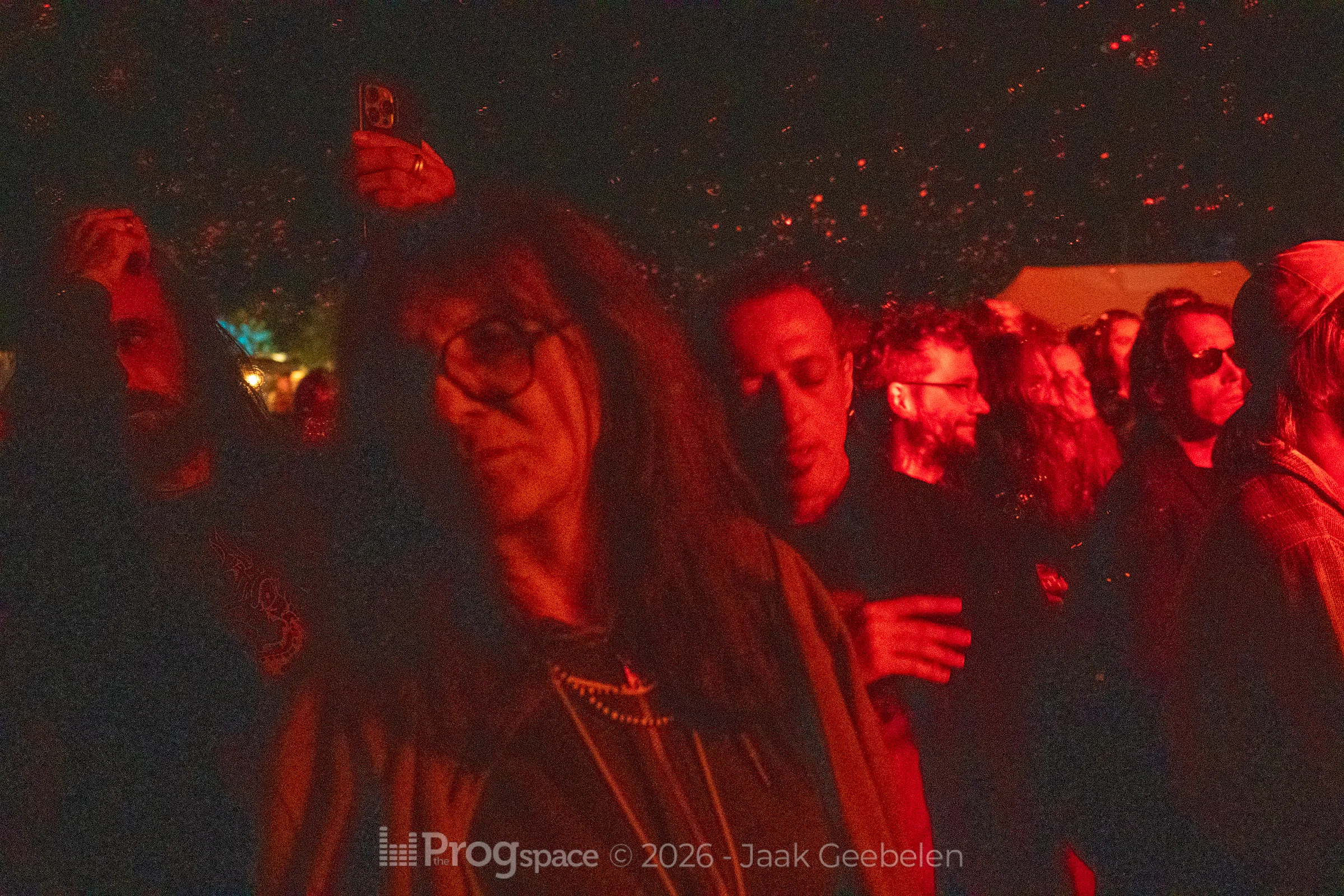
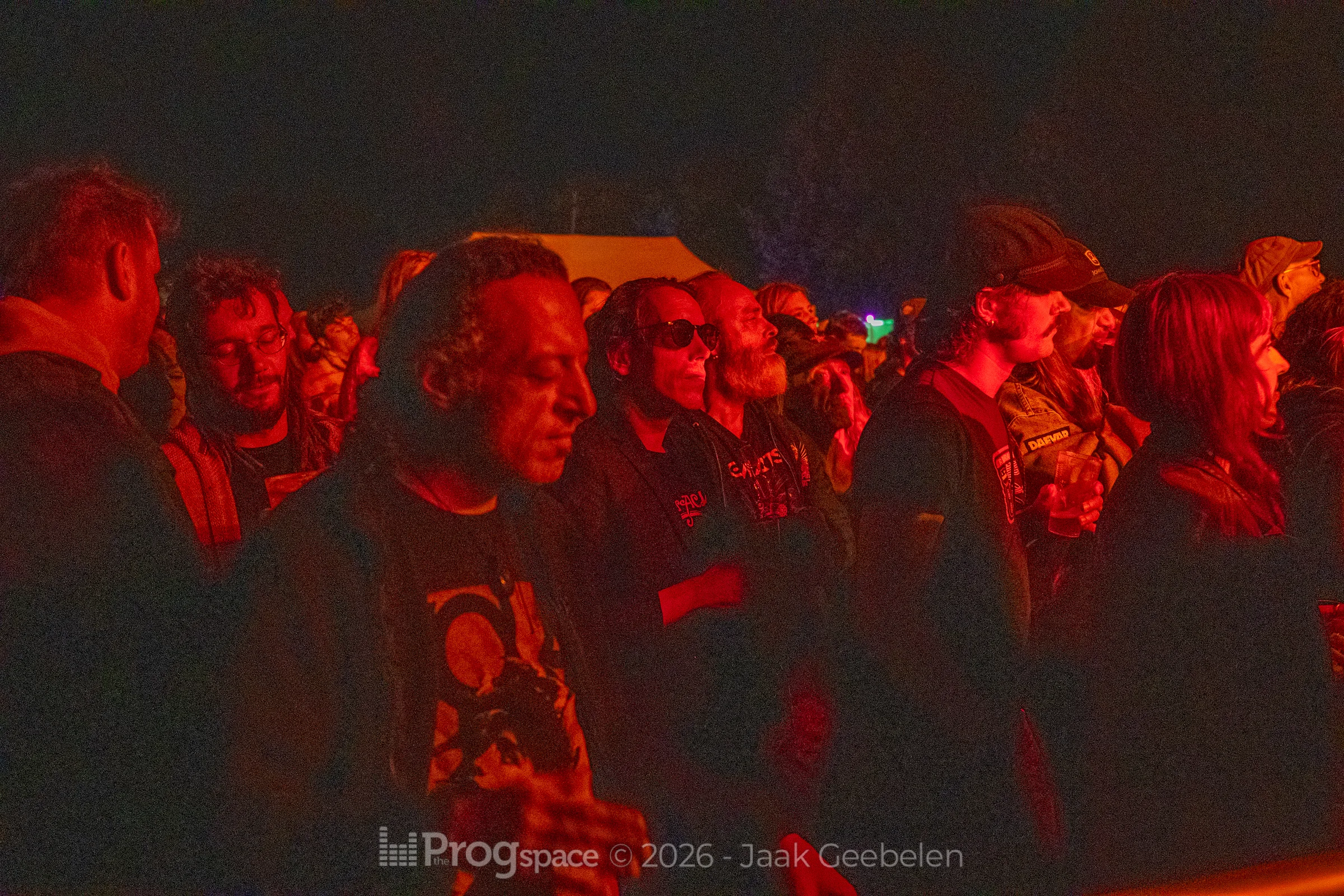
At the front, there was no chaotic eruption, but something much better suited to the music: people with their eyes closed, bodies moving slowly, arms in the air and a very visible level of attention towards what was happening on stage.
Towards the end, that involvement became more exuberant. More hands went up and the sense of release became tangible.
It felt less like a conventional rock show than a shared immersion.
That matches surprisingly well with what Duijnhouwer has said about Temple Fang: that the music should become a kind of emotional trip, with highs and lows, and that the communication between musicians and audience is essential.
Three songs were enough
On paper, the set looks almost absurdly short:
Harvest Angel
The River
Flood
But the number tells you almost nothing.
Temple Fang does not play a collection of songs. They build landscapes in which psych, prog, space rock and heavy rock constantly bleed into one another. At times you hear Pink Floyd, at others Motorpsycho, The Amazing or Anekdoten, and for a brief moment even something of the monumental build-up of ISIS.
But the longer Temple Fang plays, the less necessary those comparisons become.
Because ultimately, this sounds like a band that has increasingly found its own language.
And “Flood”, the only song in the set I did not know beforehand, may have made me more curious than anything else about what comes next.
After their summer run, Temple Fang is heading back, in their own words, “to our bunker to woodshed.”
If “Flood” is any indication of what is taking shape there, they can stay in that bunker for a little while longer.
We’ll wait.
Setlist:
Harvest Angel
The River
Flood
Special thanks to Ela Williamson for her help and support.


 We’re a group of Prog-lovers who started a journey to share with you our thoughts about albums, concerts, tours and festivals, the photo galleries of the Prog concerts we visit, as well interviews with upcoming or established musicians or prog-related people. Follow our Facebook page for frequent updates and news around the Progniverse.