












Naxatras – Down The Hill Festival, Rillaar, Belgium – 22/08/2026
Naxatras – Between Cosmic Precision and Free Psychedelia
Naxatras are one of those bands whose evolution becomes perhaps even clearer on stage than on record. Anyone who mainly knows them from their early, sprawling psychedelic jams might be surprised by how far their current sound has moved towards space rock, prog, electronics and more carefully constructed compositions. At the same time, the band has never completely abandoned that original sense of freedom.
At Down The Hill, all of that came together in a set that looked both backwards and forwards.
With “Spacekeeper”, Naxatras opened with a clear statement. A pulsing rhythmic foundation, synths circling around the groove and guitar lines gradually opening up above it placed the music somewhere between space rock and progressive psychedelia. The comparison with Ozric Tentacles came naturally here, although Naxatras sounded heavier and more grounded. Bass and drums kept the whole thing firmly anchored.
With “Journey to Narahmon”, the mood shifted immediately. This is a track in which Naxatras move much more clearly towards modern, atmospheric prog. The dark melodic undercurrent, the way bass, guitar and keyboards slowly built tension in layers, and the spacious guitar sound strongly reminded me of Riverside. Not as a copy, but in terms of mood: melancholy, space and controlled development. It was one of those moments that showed just how far Naxatras have moved beyond pure jam rock.
“Celestial Gaze” brought more melody into the set. Where the first two pieces relied mainly on instrumental development and atmosphere, the vocals now became more prominent. The warm keyboards and melodic guitar work gave the track a spacious, almost classic progressive feel without ever sounding retro. It was a more accessible moment, but also a logical step in the flow of the concert.
With “Numenia”, the band tried to introduce more colour into the soundscape. The more Eastern-tinged atmosphere that is present in this kind of material was less pronounced live. That probably had a lot to do with the available instrumentation: much of that colour seemed to be carried by keyboards and synthesizers. As a result, the emphasis fell more on groove and electronic texture than on the more exotic details.
“Breathing Fire” then added more weight. The track began with a solid riff and briefly seemed to reconnect with the old heavy-psych DNA of Naxatras, but once again nothing remained static for long. The structure shifted, the rhythm changed and the music eventually moved into a more trance-like atmosphere. That is exactly what makes this newer material so interesting: the band uses heaviness not as a destination, but as a point of departure for something much broader.
In “Legion”, that approach was taken even further. The synths became more prominent and gave the piece a darker, almost electronic character. Repetitive vocals and a tight rhythmic foundation created a kind of trance that felt both cinematic and slightly ominous. Here too, the more Eastern accents were less obvious than they can be on record; live, the electronic textures and rhythmic propulsion dominated.
After that block of more recent material, the character of the set changed fundamentally.
With “Waves”, the band returned to their self-titled 2015 debut. Suddenly, the early Naxatras reappeared: less composed, more dependent on groove and repetition, but no less refined. The track unfolded slowly from a relatively simple basis and gradually expanded through small harmonic shifts and broader guitar lines into something much more spacious. It was exactly the kind of piece that needs time on stage to have its full effect.
The band did not need to keep stacking new ideas on top of each other. The strength lay precisely in circling around a motif until it almost seemed to change shape by itself. That gave “Waves” a very natural, organic quality.
And then came “I Am the Beyonder”.
This may well be the ultimate early Naxatras composition: long, hypnotic, cyclical and almost ritualistic in character. Here I found myself thinking very strongly of Amon Düül II, and especially of the atmosphere of Yeti. Not because Naxatras sound exactly like the German krautrock pioneers, but because both bands can create the same kind of musical intoxication: a groove that keeps revolving, guitar lines gradually breaking free from the fixed structure, and a band slowly blurring the boundary between composition and improvisation.
On Yeti, Amon Düül II often have that sense of music unfolding almost by itself, as if nobody knows exactly where it will end but everyone instinctively feels the same direction. “I Am the Beyonder” had something similar live. Repetition became trance rather than stasis; the rhythms took on something ceremonial, while the guitar moved ever more freely around the core. It created that typical early-krautrock feeling: not a series of neatly separated sections, but a collective movement in which the band gradually seems to disappear into its own music.
At the same time, there was also a clear space-rock component, placing the track somewhere between the free psychedelia of Amon Düül II and the more cosmic side of the genre. For me, this was the point at which the older Naxatras surfaced most clearly.
After such a long and freely expanding piece, one might expect the set to end there. Instead, Naxatras deliberately chose “The Citadel” as the closing track.
That was a smart decision.
“The Citadel” is darker, slower and far more tightly constructed than the spontaneous “I Am the Beyonder”. The riffs gradually became heavier, the atmosphere increasingly threatening, and the track built layer by layer towards an almost monumental climax. Where “I Am the Beyonder” loses itself, “The Citadel” gathers everything back together. Not with an explosive finale, but with weight, tension and, eventually, stillness.
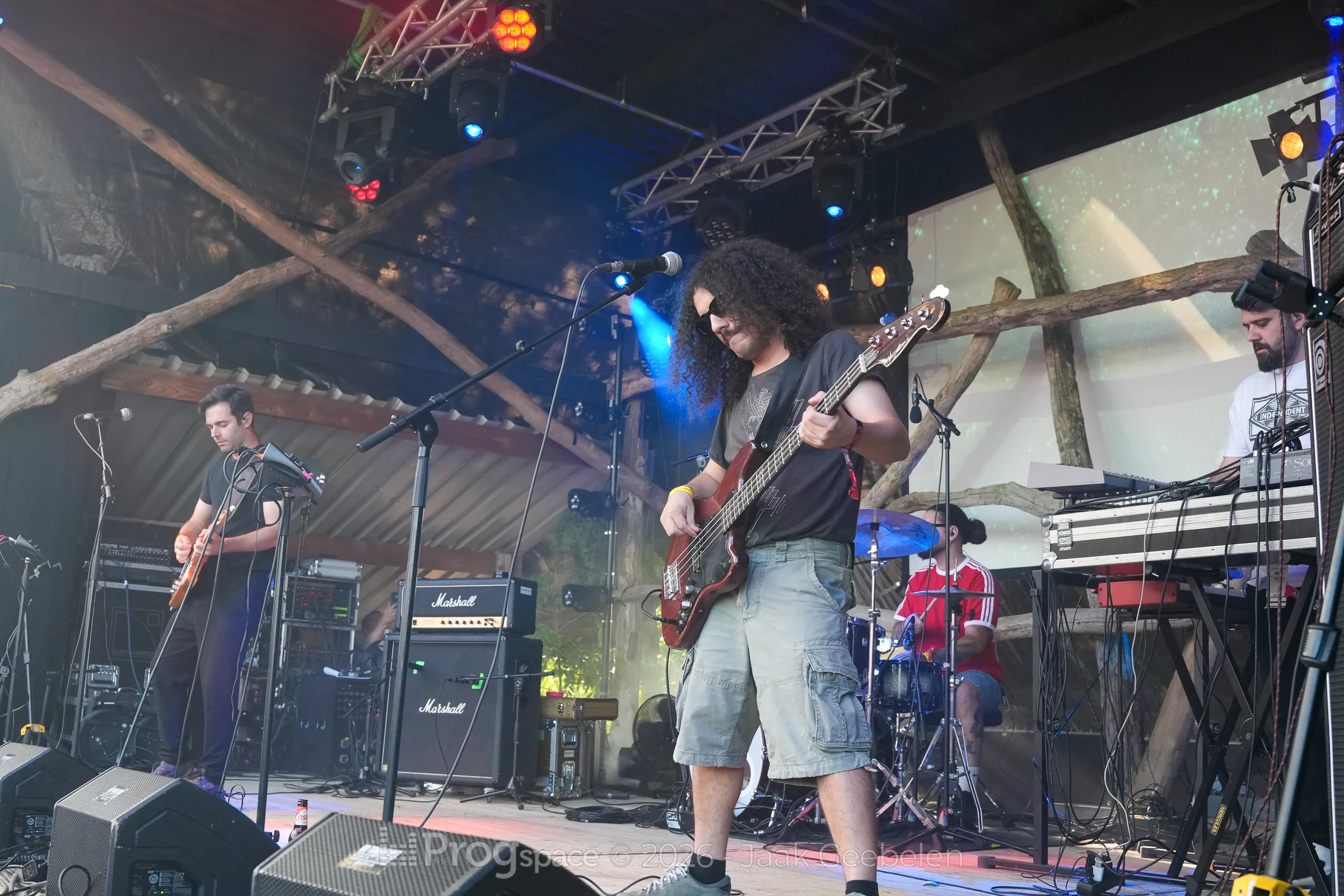
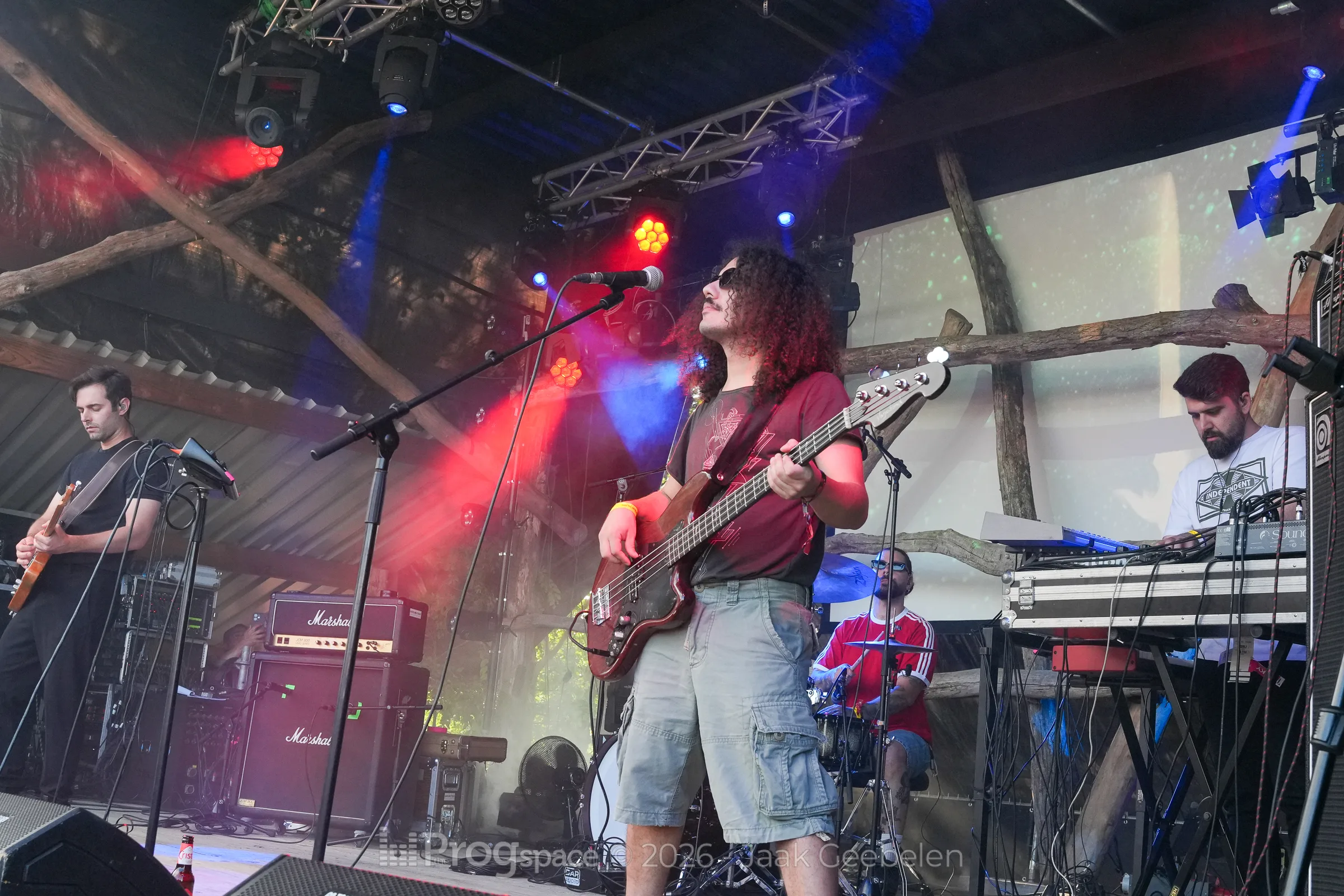
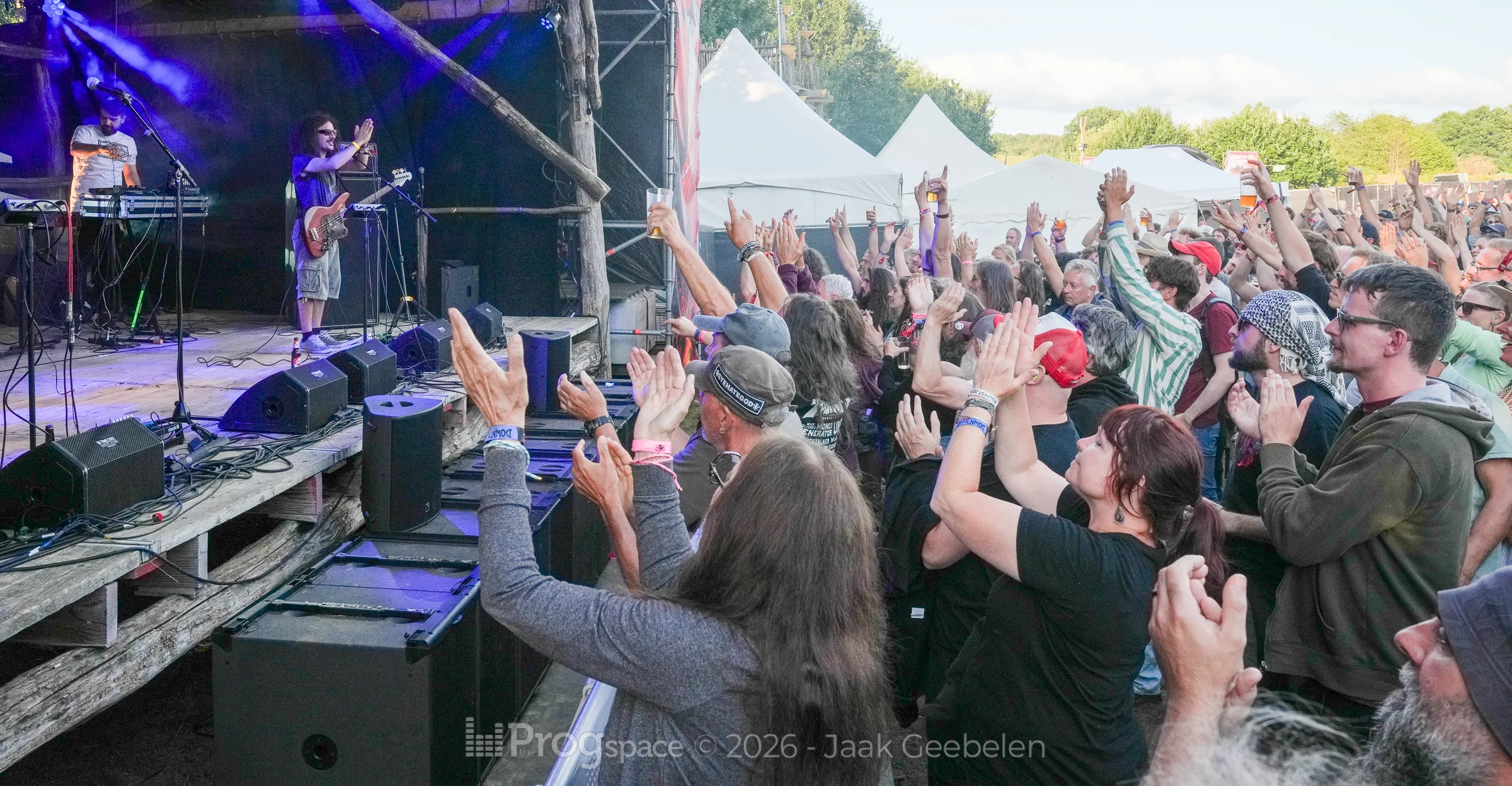
Visually, the concert was less convincing than it was musically. The open wooden festival setting had its own charm, of course, but this is music that, to my mind, would work even better in a darker environment, with lighting designed to support the long tension arcs, cosmic passages and more hypnotic moments. Here, the lighting remained relatively functional and daylight was still very present. For a band that relies so heavily on atmosphere and space, a more intimate venue or a later evening slot with more elaborate projections and layered lighting would have deepened the experience considerably.
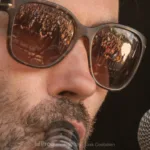
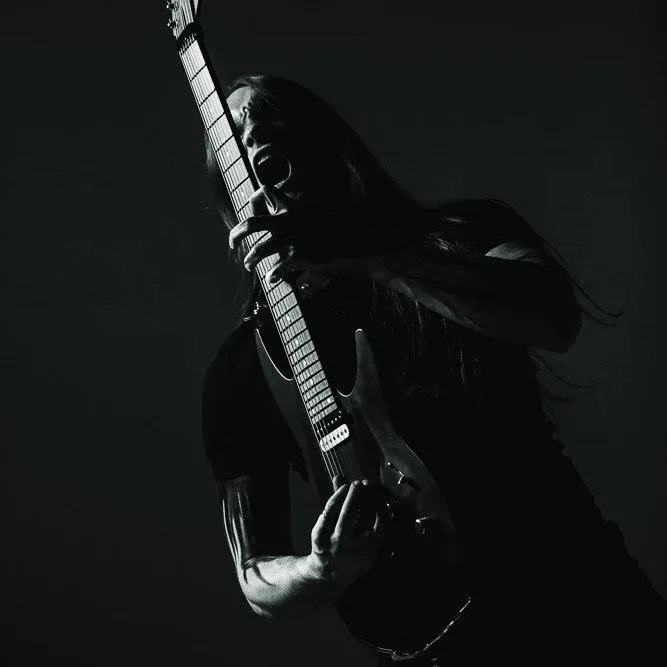
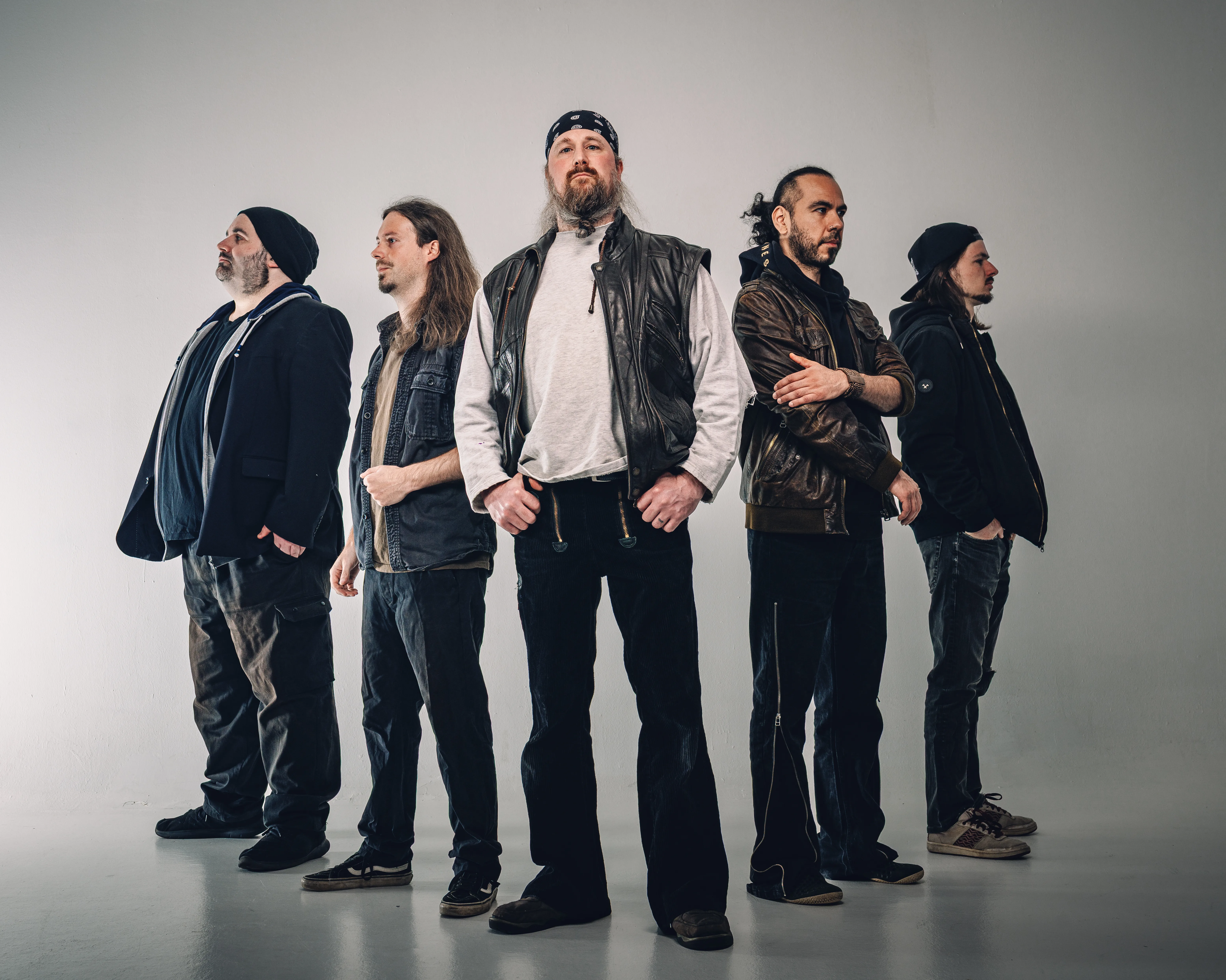
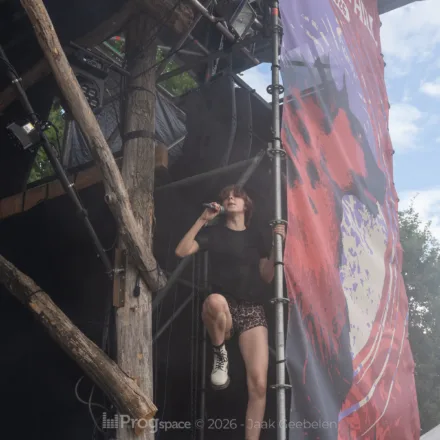
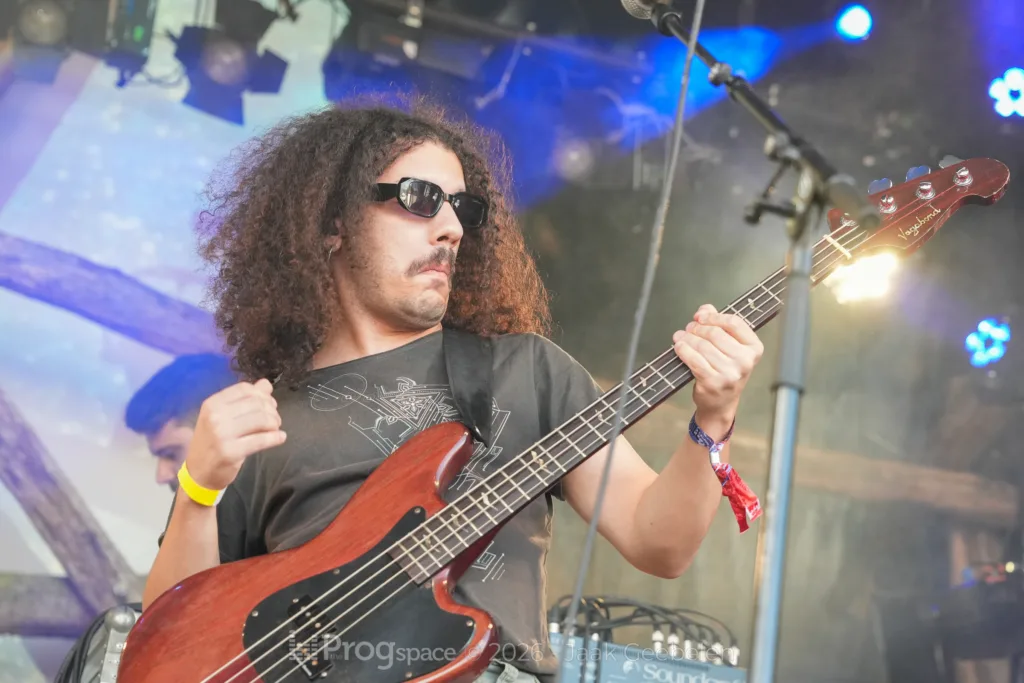
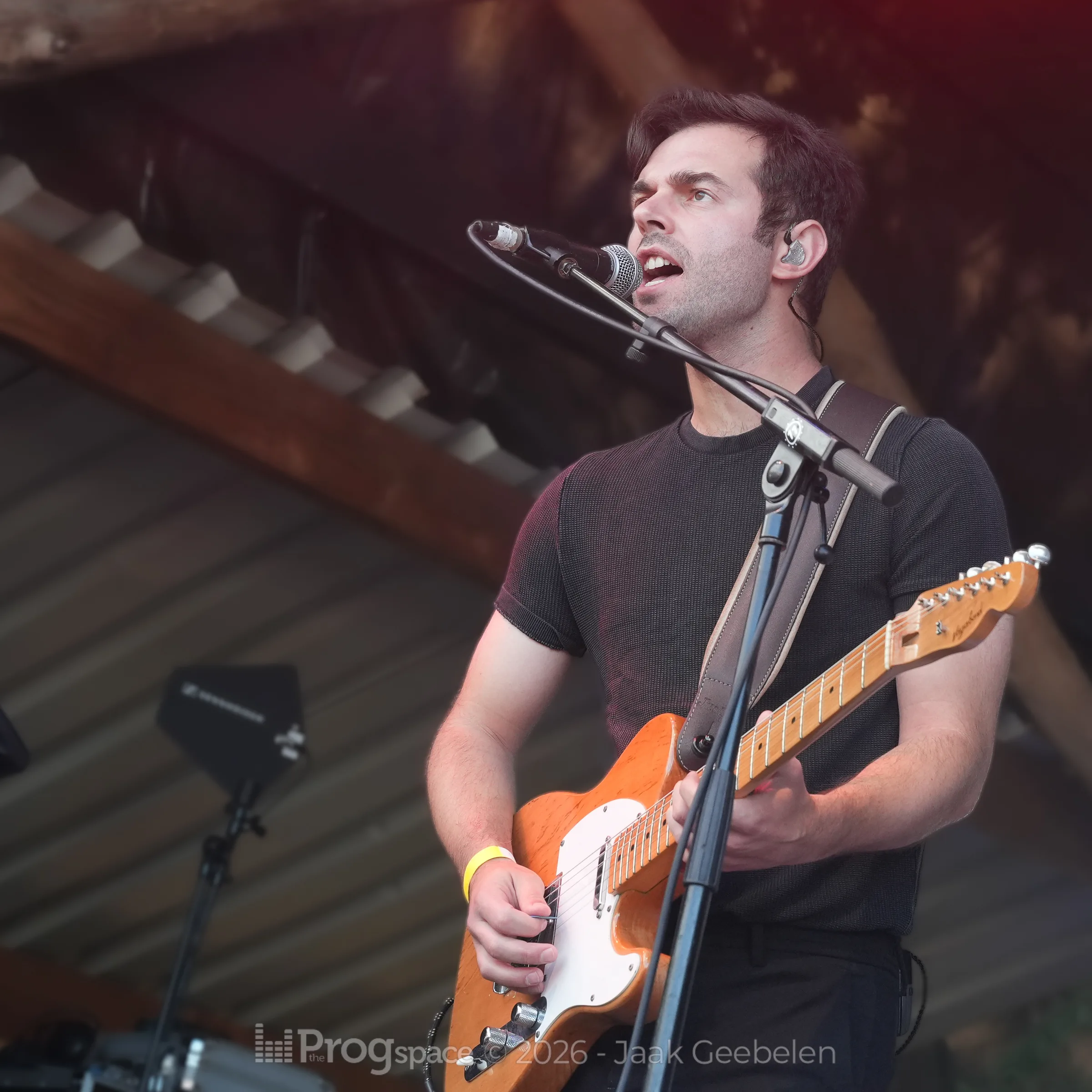
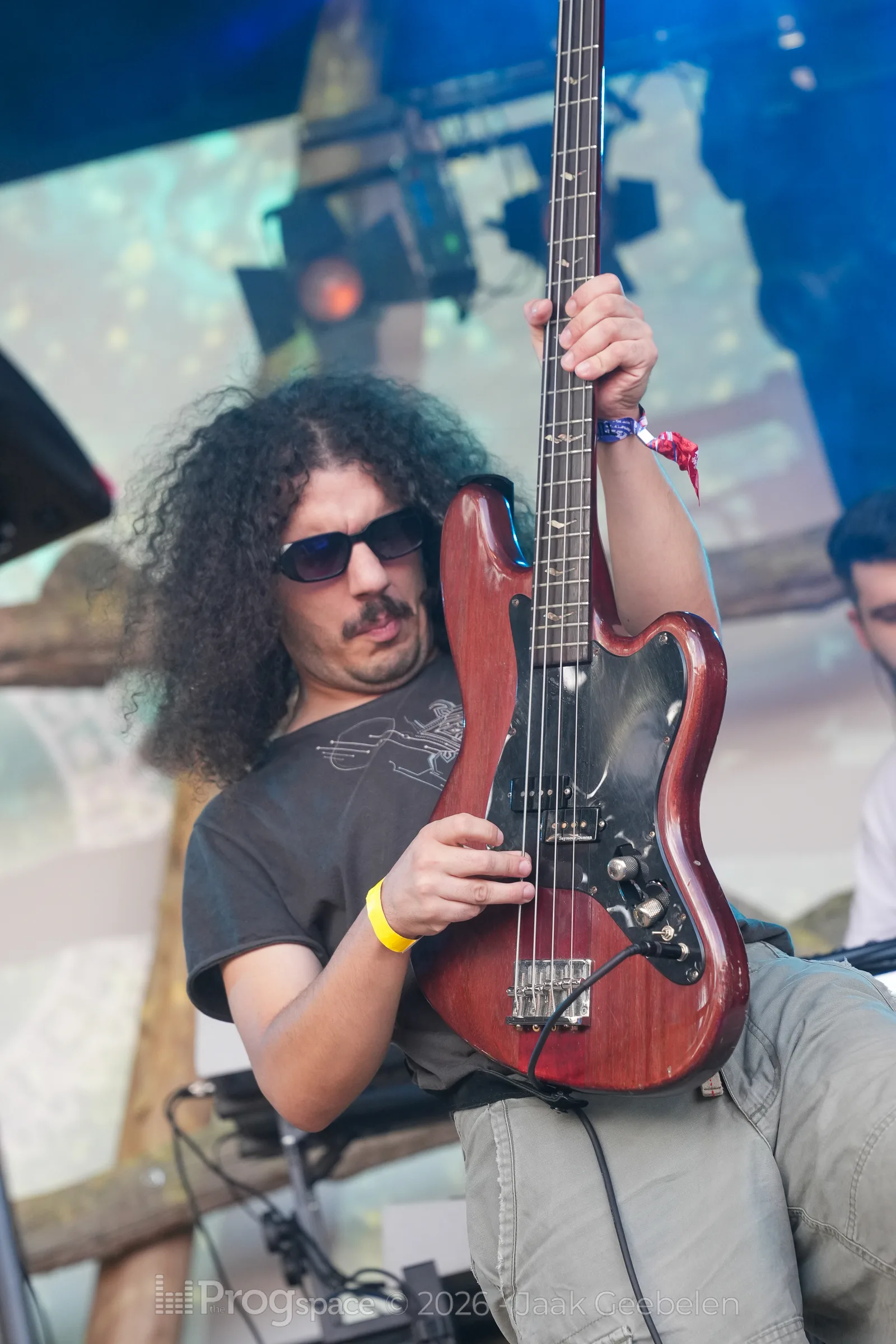
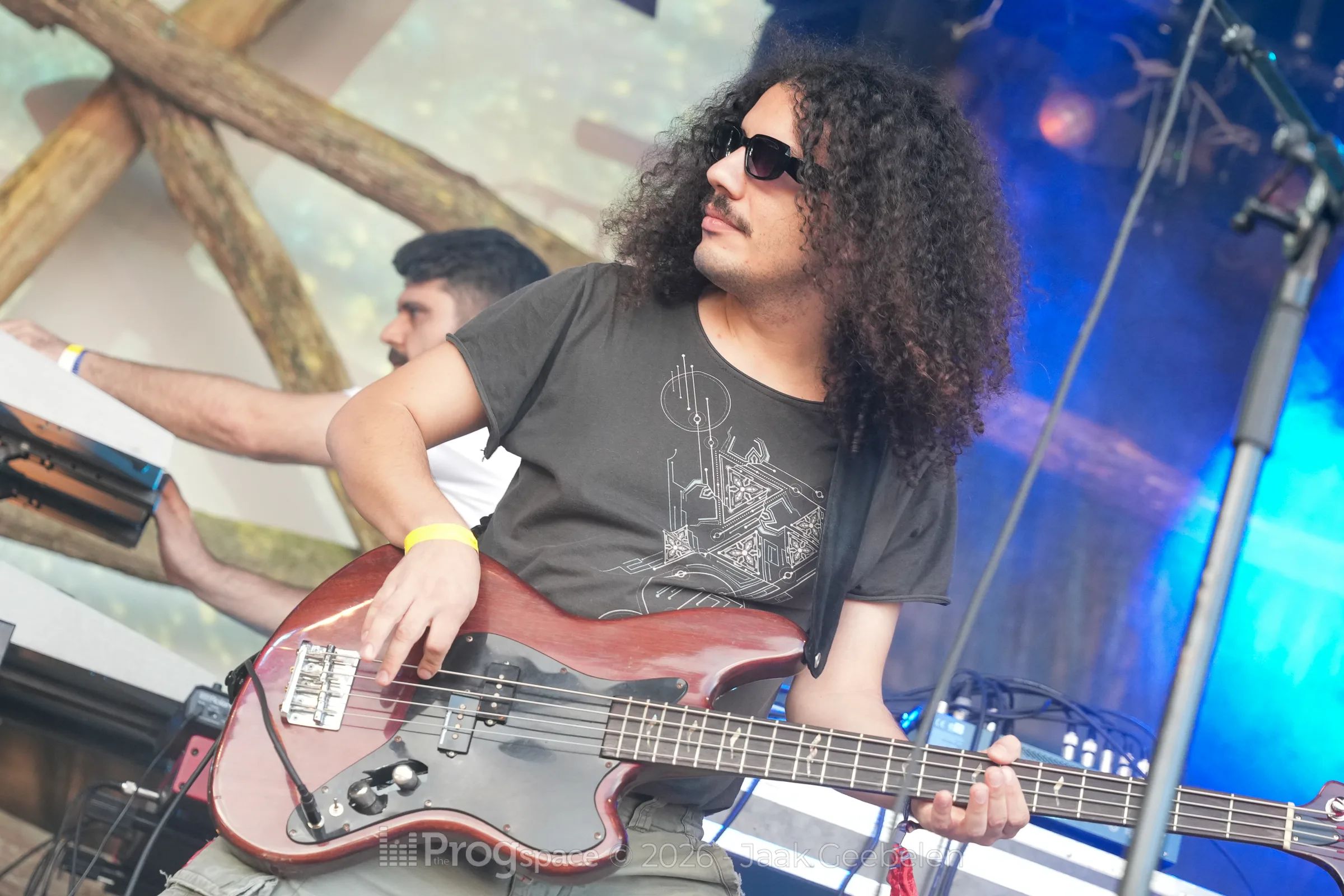
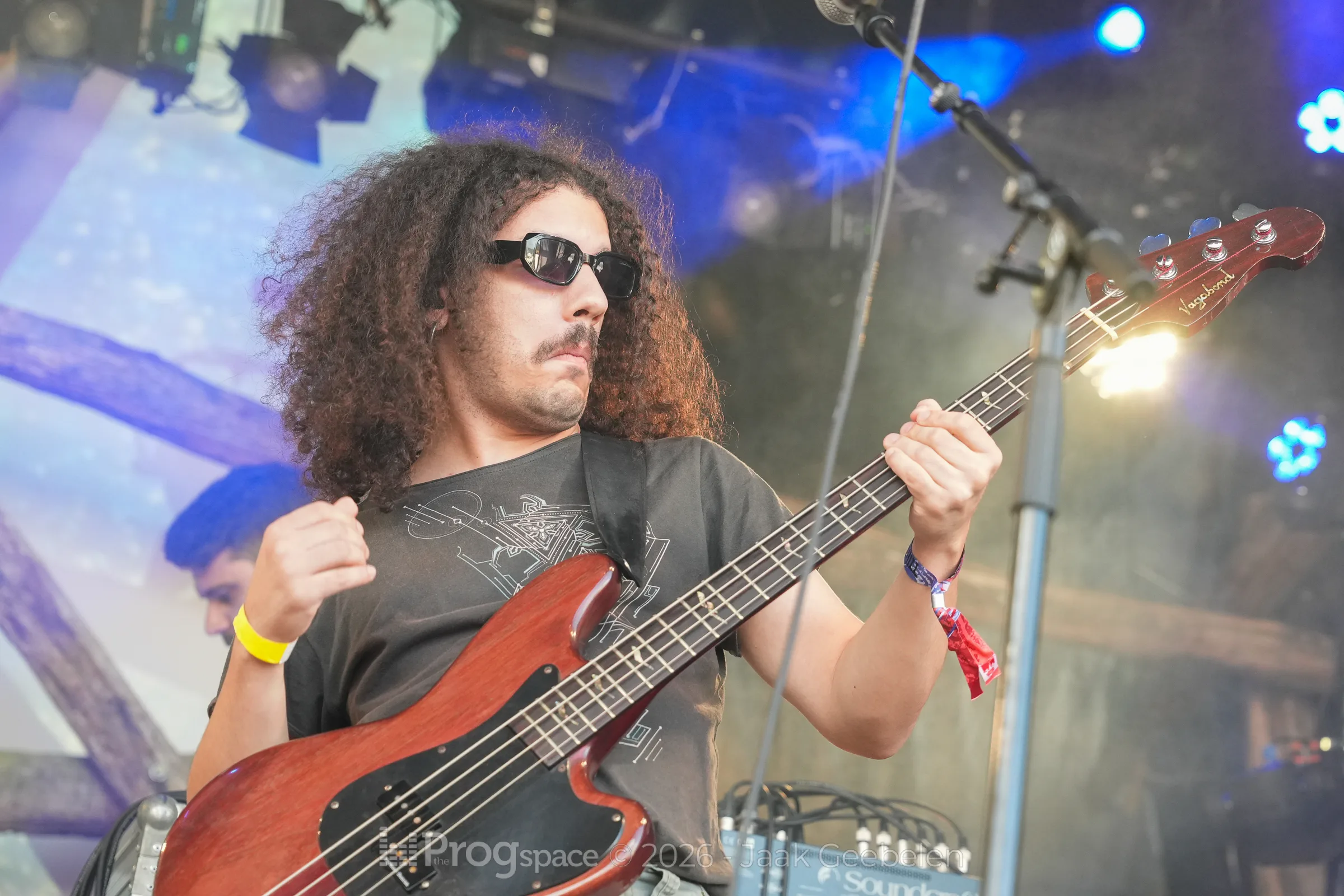
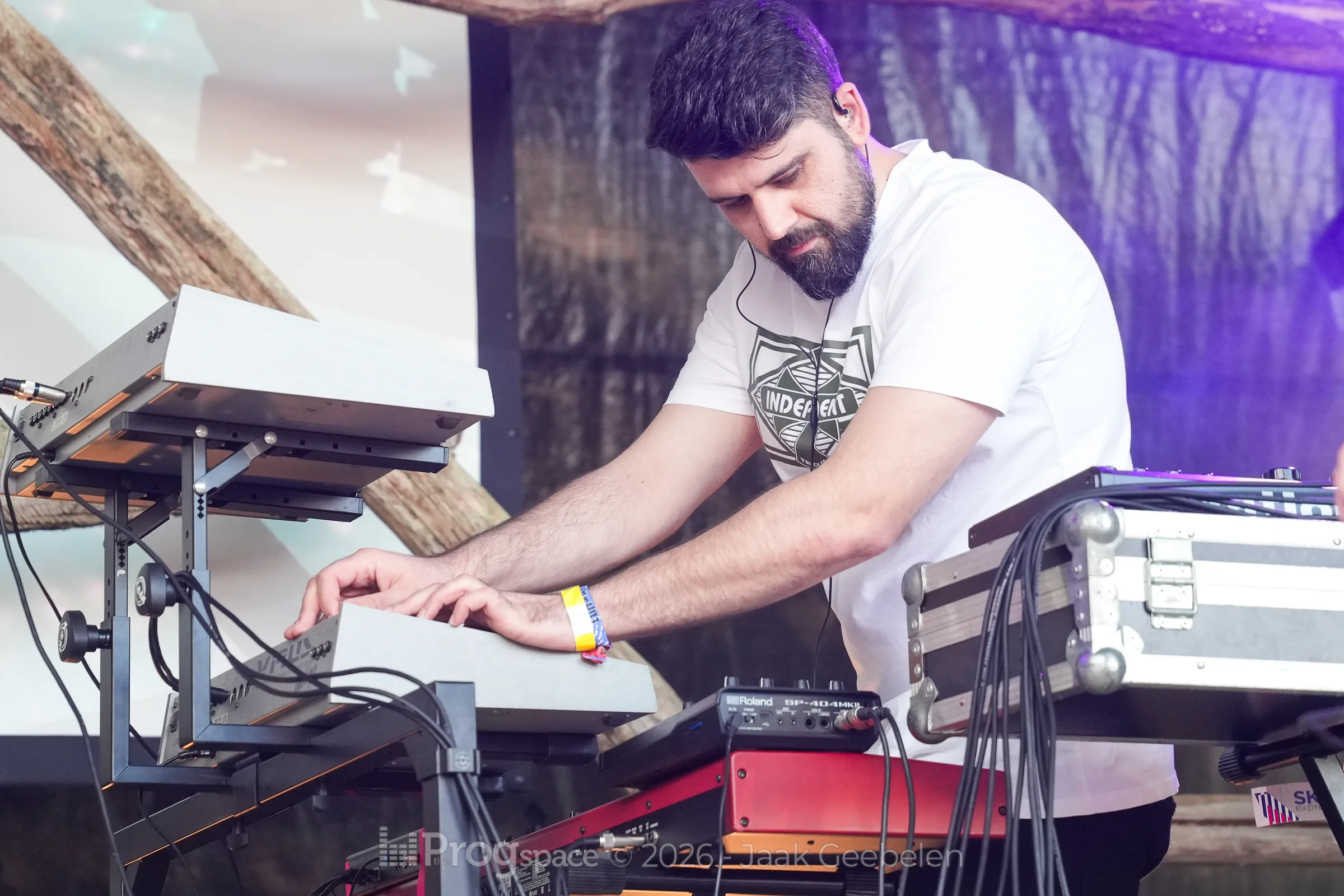
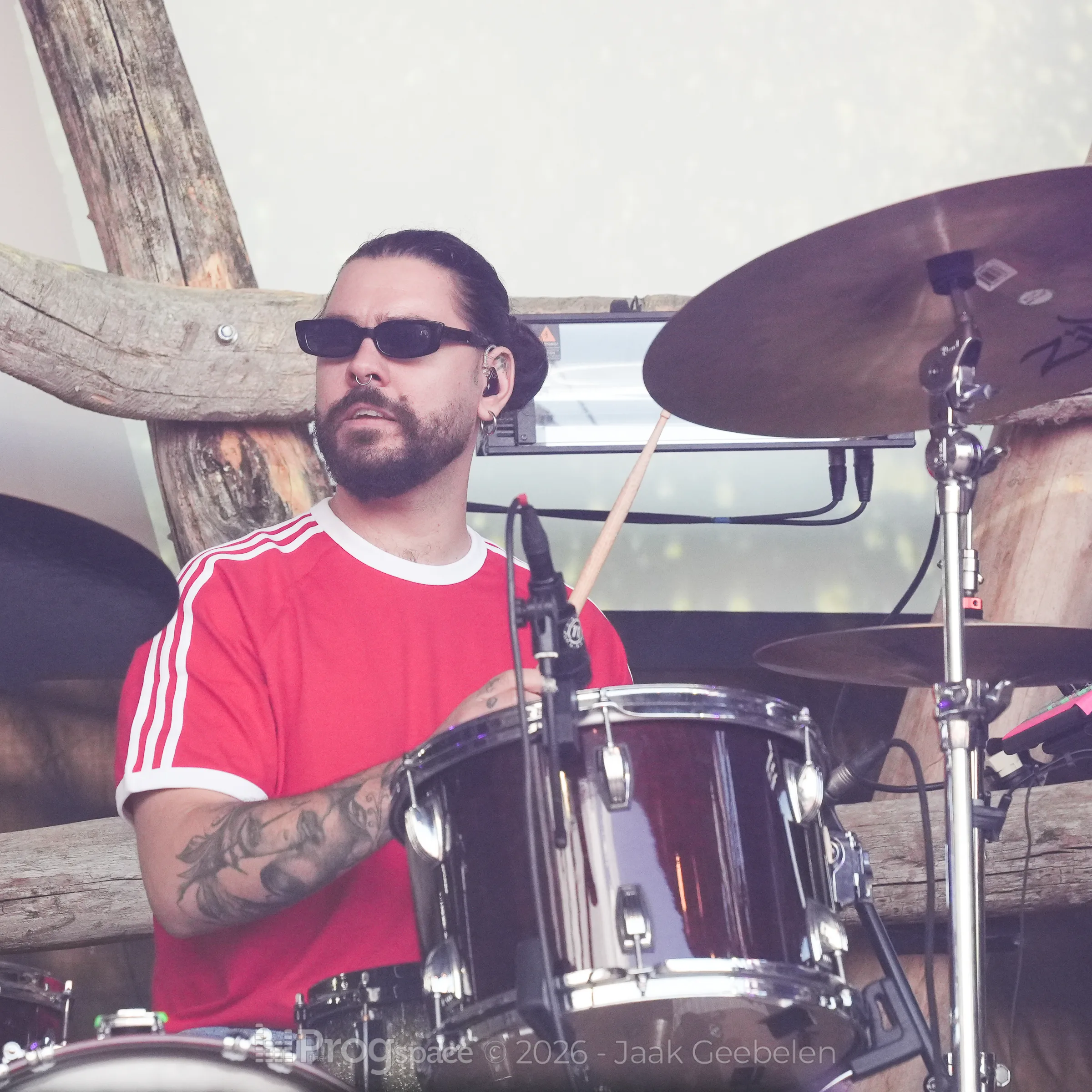
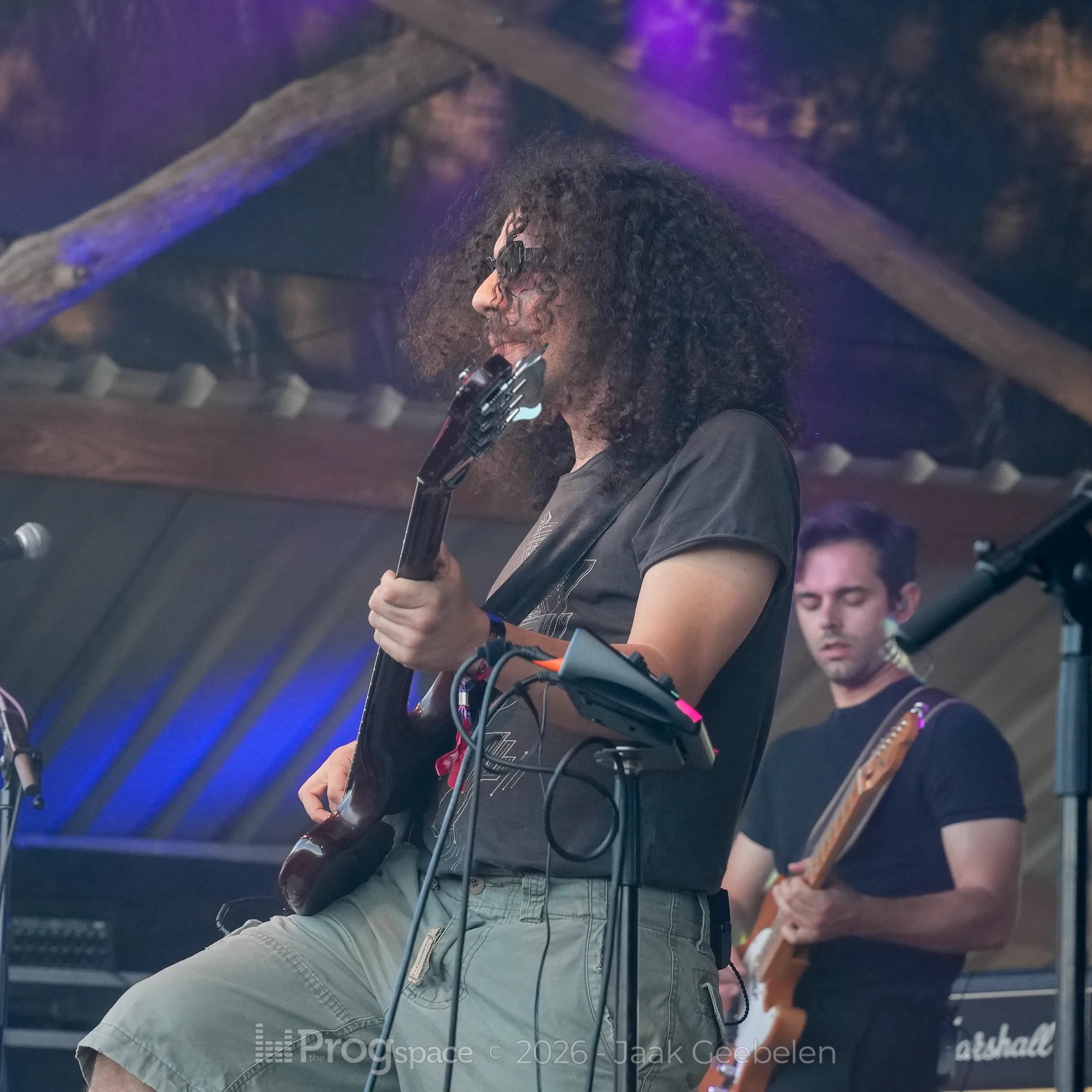
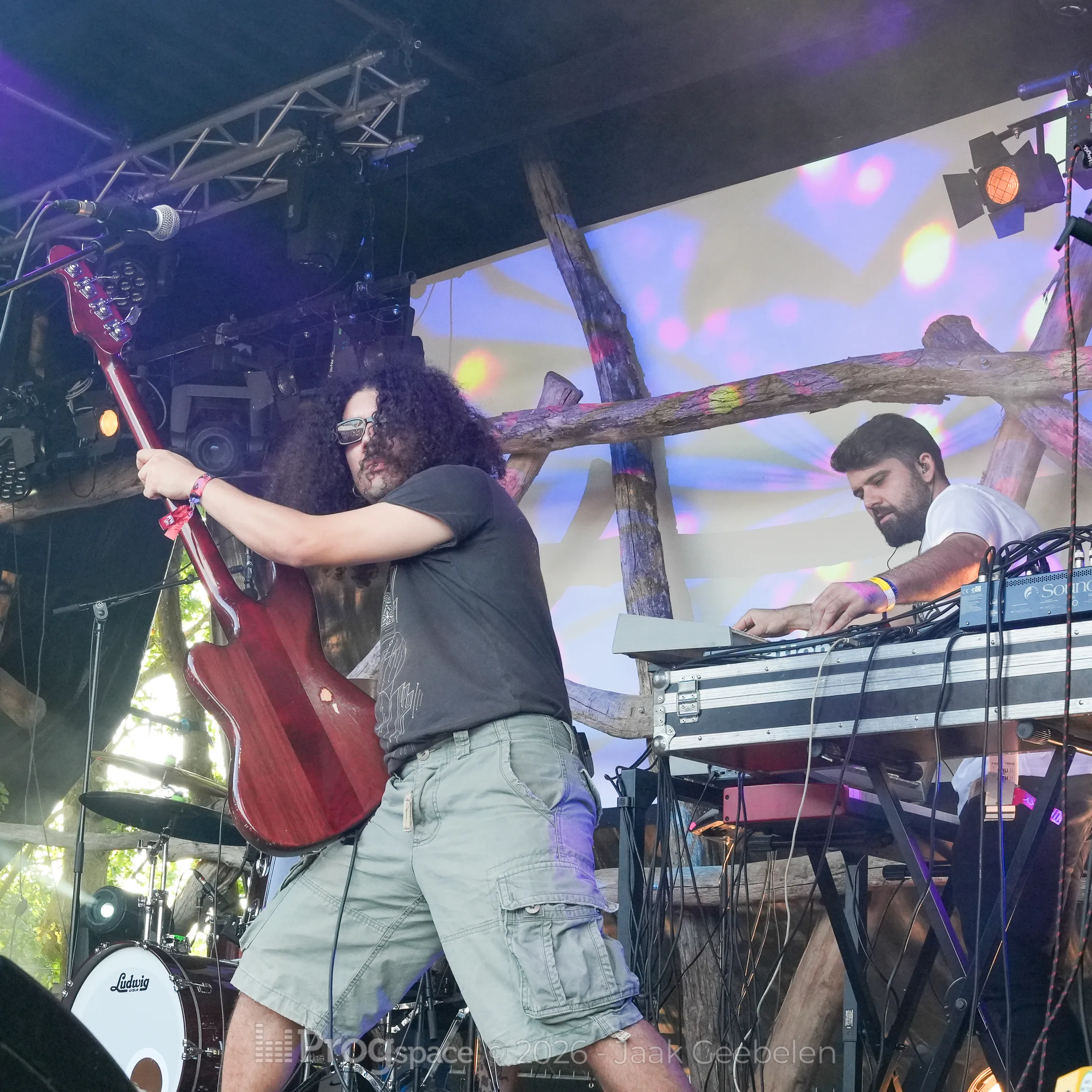
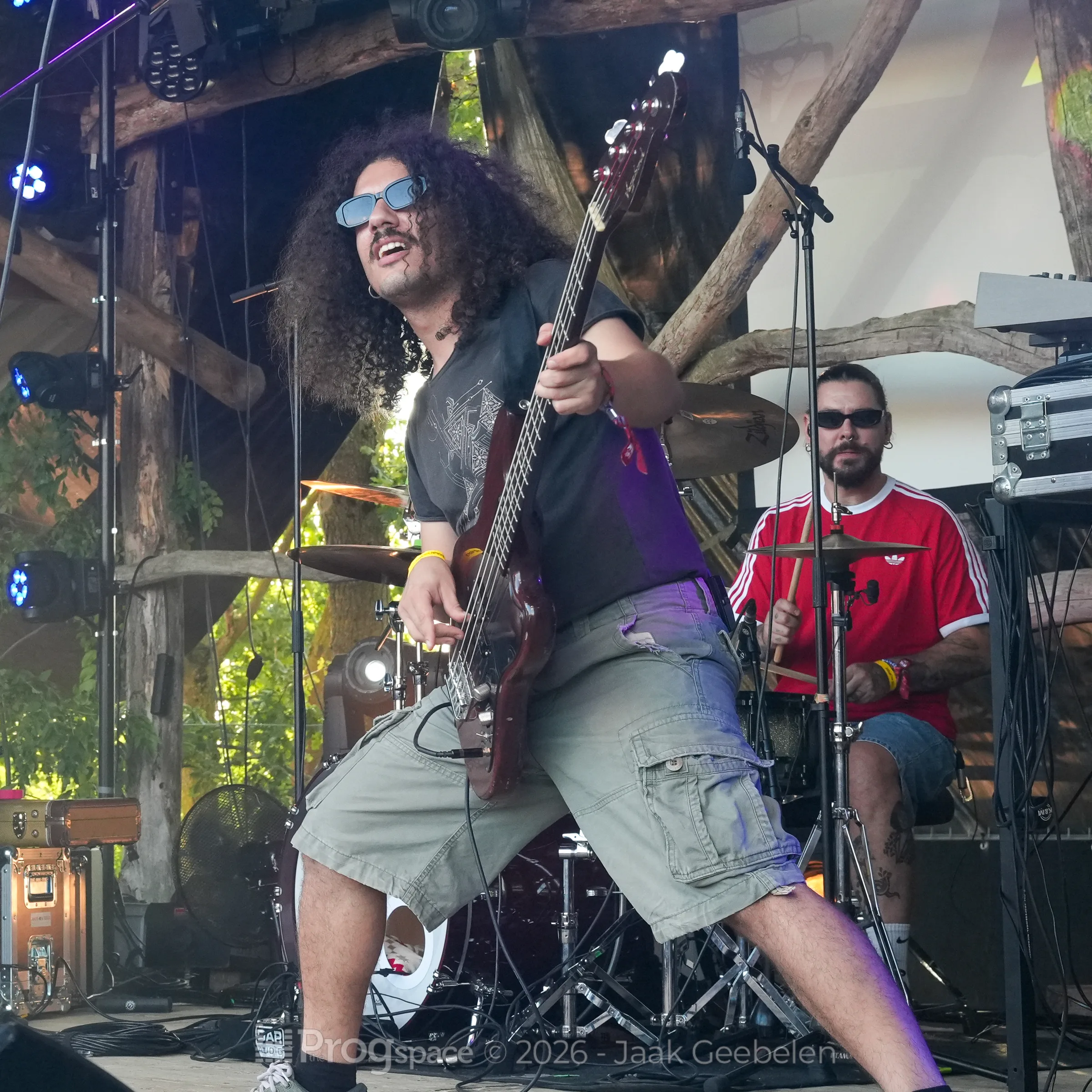
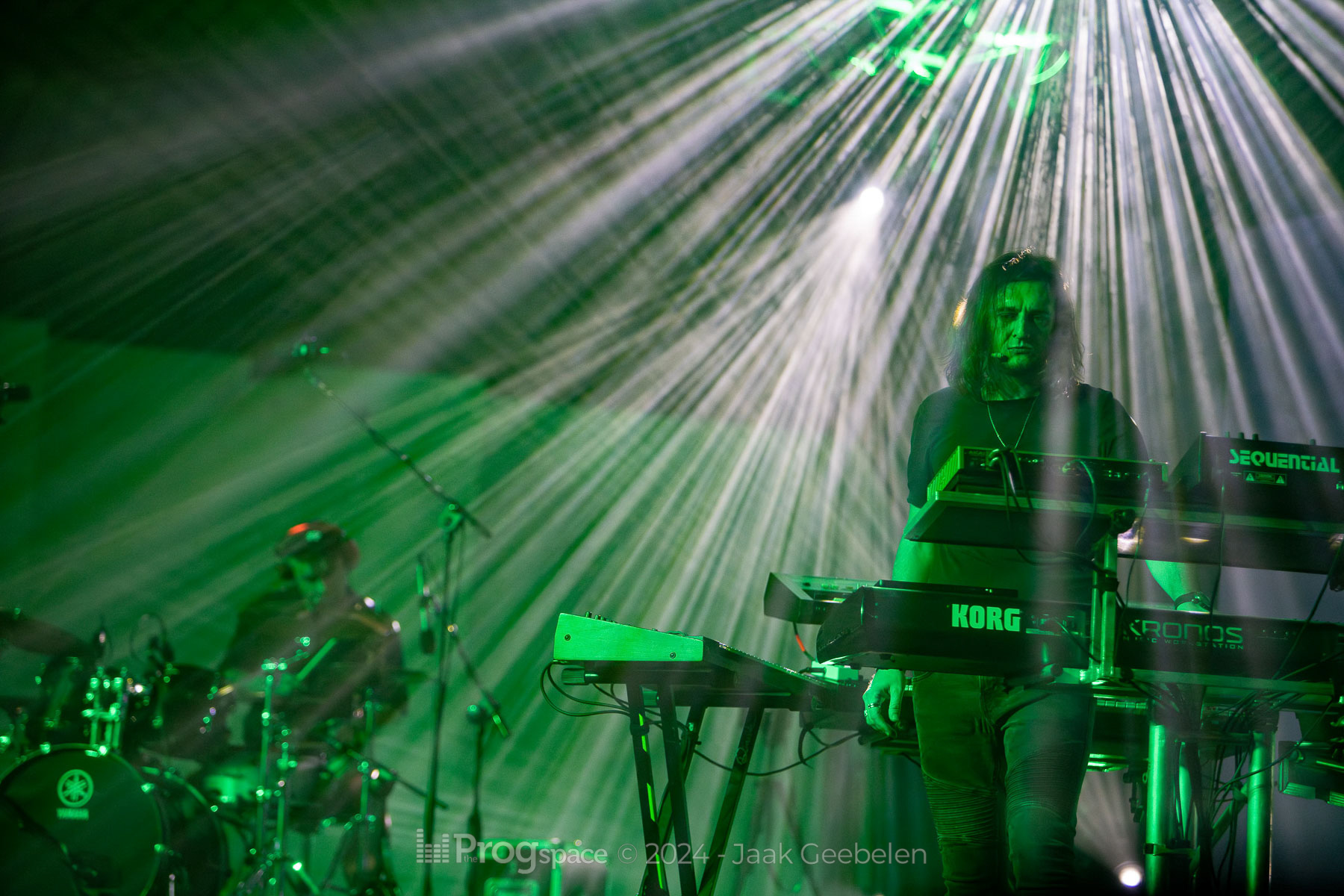
The visual roles within the band were also clearly divided. Guitarist John Delias remained fairly static and focused on his playing. That suited the controlled way in which he built his parts, but as a stage presence he rarely demanded attention. The visual focal point was much more clearly bassist John Vagenas. With his striking appearance, more animated body language and central position, he naturally drew the eye. He gave the concert a face, especially when addressing the crowd or visibly riding the energy of the groove. At the side of the stage, keyboardist Pantelis Kargas almost functioned as the architect of the spacious soundscape, while the drummer kept the whole set tightly connected from the back.
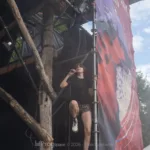
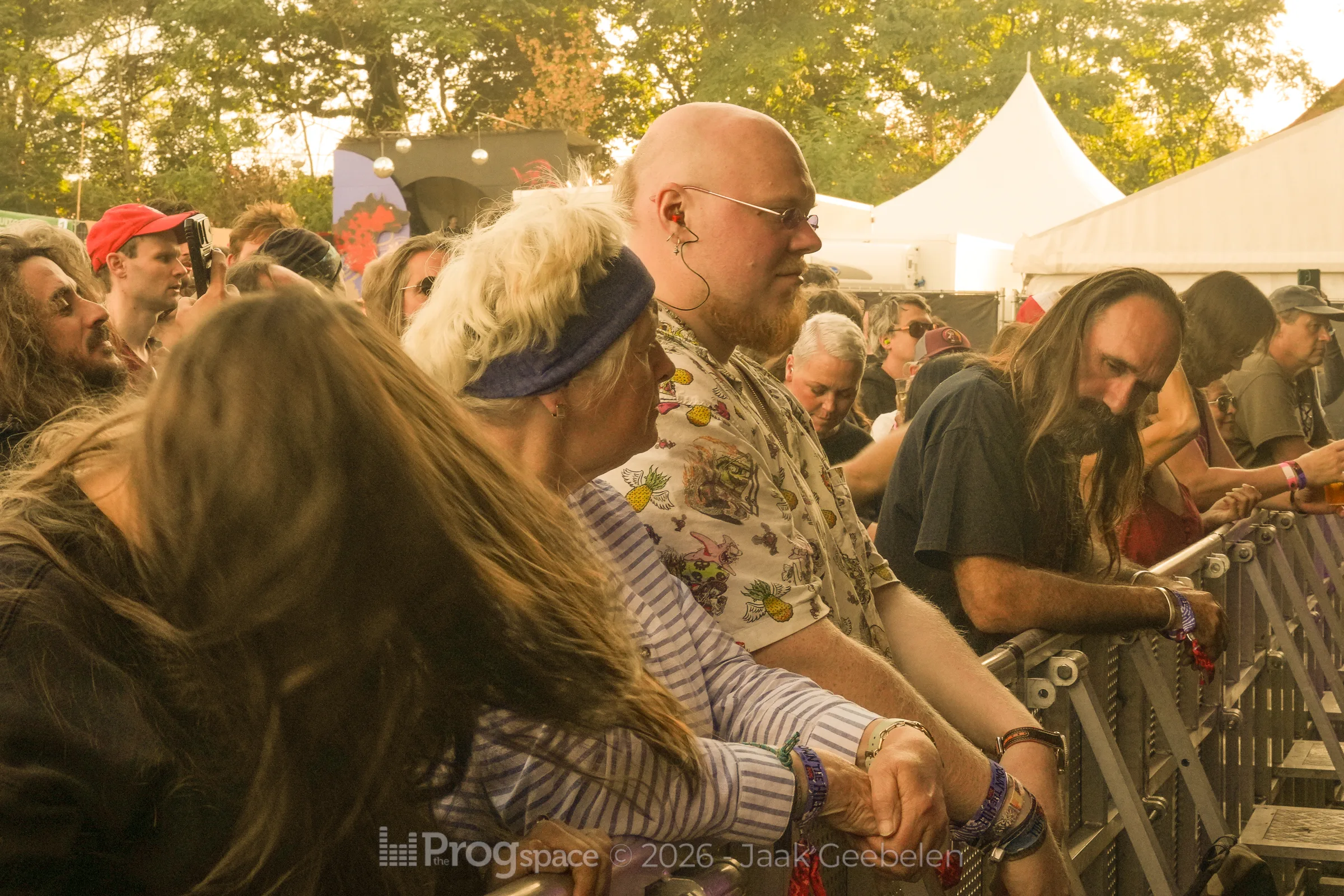
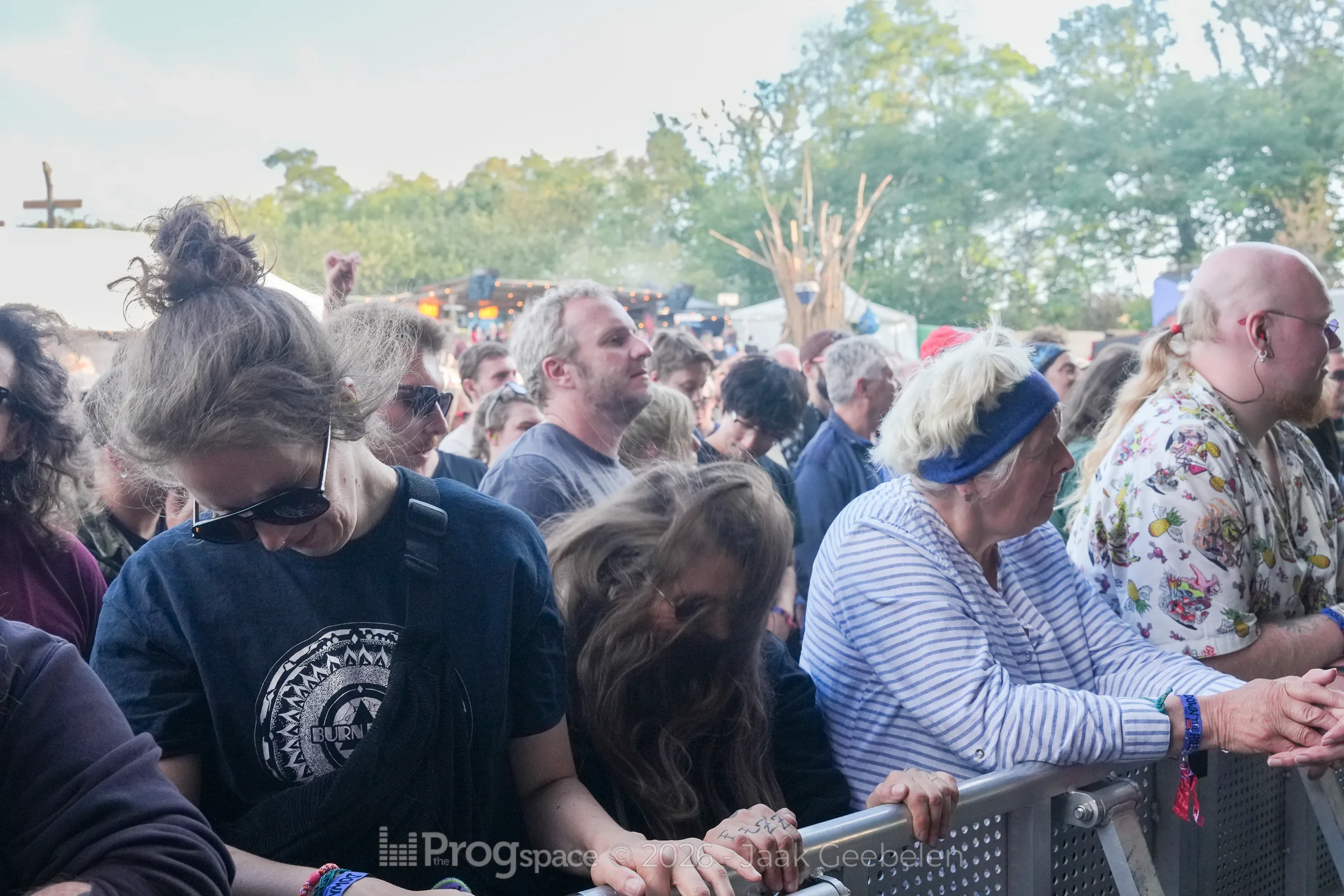
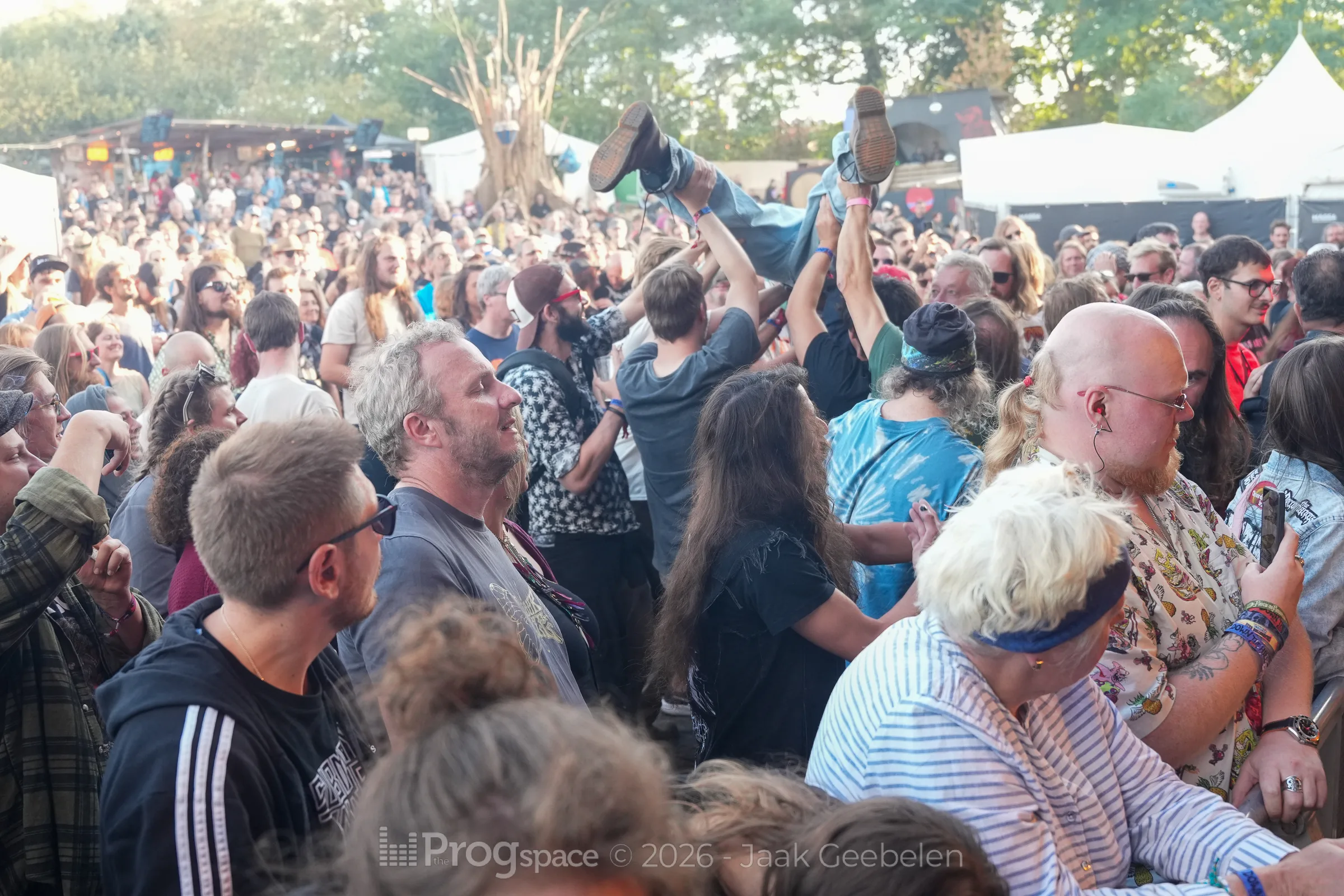
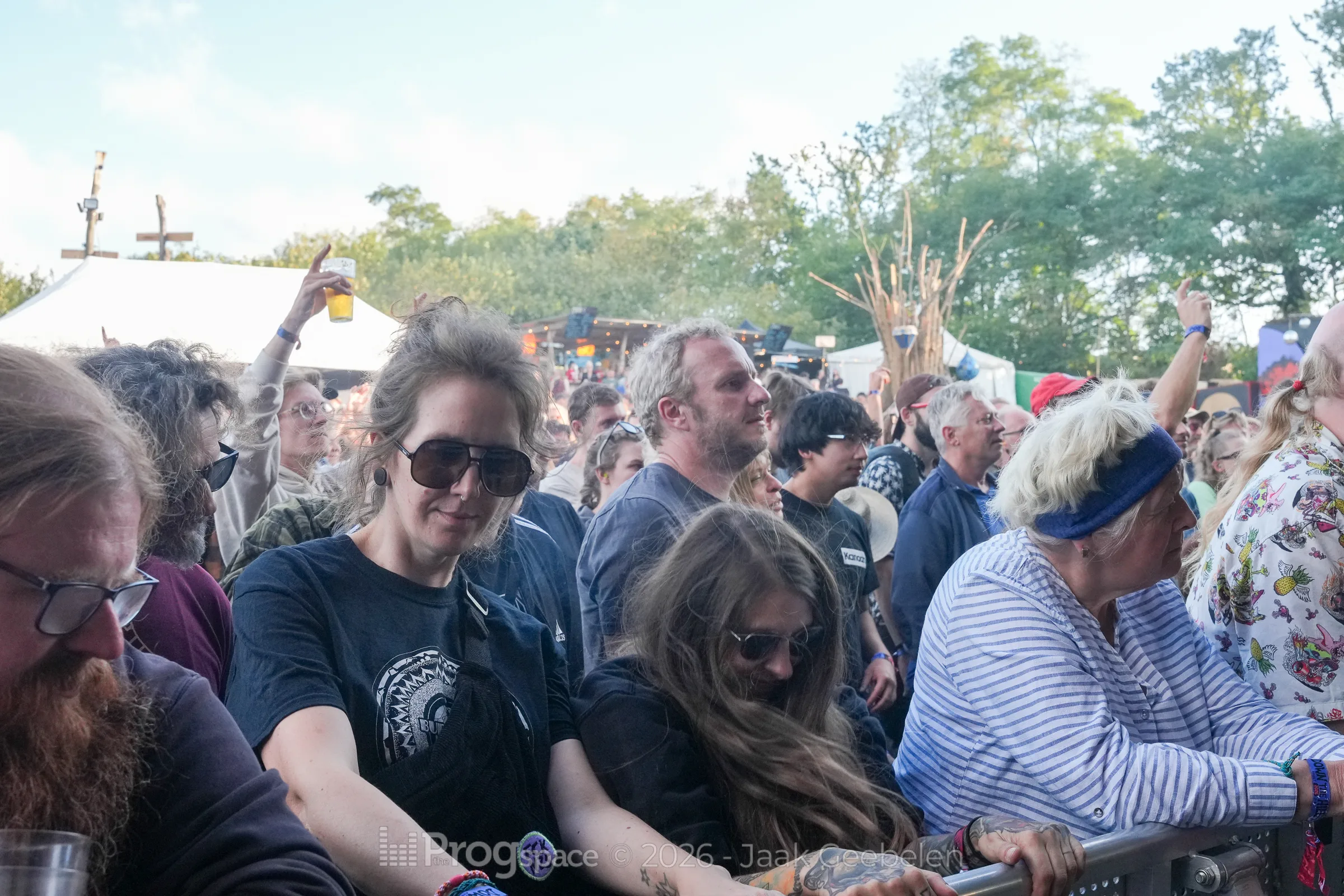
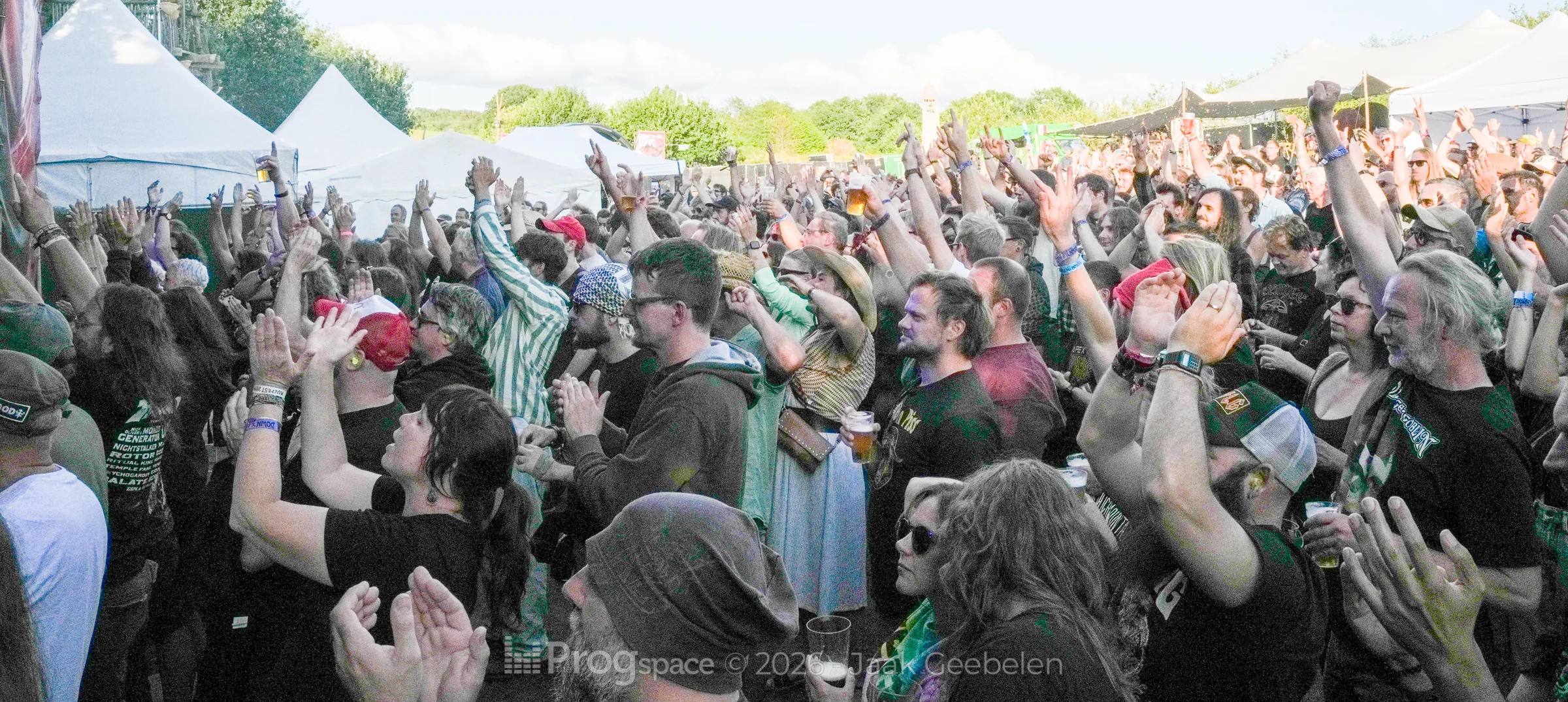
The crowd, meanwhile, was anything but detached. A dense mass had gathered in front of the stage and it was obvious from the opening numbers that they were fully engaged. Heads moved with the grooves, arms regularly went up, and towards the end the atmosphere became noticeably looser. There was even a crowdsurfer being passed over people’s heads — perhaps not the first thing one would associate with a band like Naxatras, but it said a lot about the energy in front of the stage.
That audience response mattered. Naxatras are not a band that constantly asks for participation or relies on big gestures. The music has to do the work itself. And here it clearly did: the people at the front were not merely attentive, they were physically drawn into the pulse. During the longer, more open psychedelic sections, the line between concentrated listening and completely surrendering to the groove seemed to become thinner and thinner.
By the end, arms were raised and the show had taken on something collective.
In that sense, the set told the story of Naxatras remarkably well.
The first six songs showed where the band stands today: more progressive, more electronic, more richly arranged and far less dependent on pure jam structures. The Eastern colours that play an important role in their recent work came across less strongly live, probably because they had to be recreated mainly through keyboards and synthesizers. As a result, the emphasis shifted more towards groove, space rock and electronic atmosphere.
With “Waves” and especially “I Am the Beyonder”, they then returned to their roots, to the organic and freer psychedelia with which they first made their name. And with “The Citadel”, they brought the journey back into the present.
That made this set much more than a sequence of songs.
It felt like a movement through the band’s own history: from cosmic precision to free psychedelia and finally back to dark, carefully constructed prog.
And that is perhaps where Naxatras are at their strongest today: they can still lose themselves completely, but they now know exactly how to find their way back.
A brief thank-you to Ela Williamson, whose support and company throughout the day made this festival experience all the more enjoyable.





 We’re a group of Prog-lovers who started a journey to share with you our thoughts about albums, concerts, tours and festivals, the photo galleries of the Prog concerts we visit, as well interviews with upcoming or established musicians or prog-related people. Follow our Facebook page for frequent updates and news around the Progniverse.