








Hooverphonic – Het Groot Verlof, Oude Markt Leuven, July 10, 2026
Some concerts already have a story before the first note is played. Hooverphonic at Het Groot Verlof was one of those nights. Earlier that evening, the Oude Markt had watched Belgium’s World Cup quarter-final against Spain together. Belgium lost, and for a moment it seemed possible that the disappointment, the noise and the emotional aftermath of the game might overshadow what was still to come. Alex Callier later admitted that he had feared exactly that: that the concert might drown in post-match football chatter.
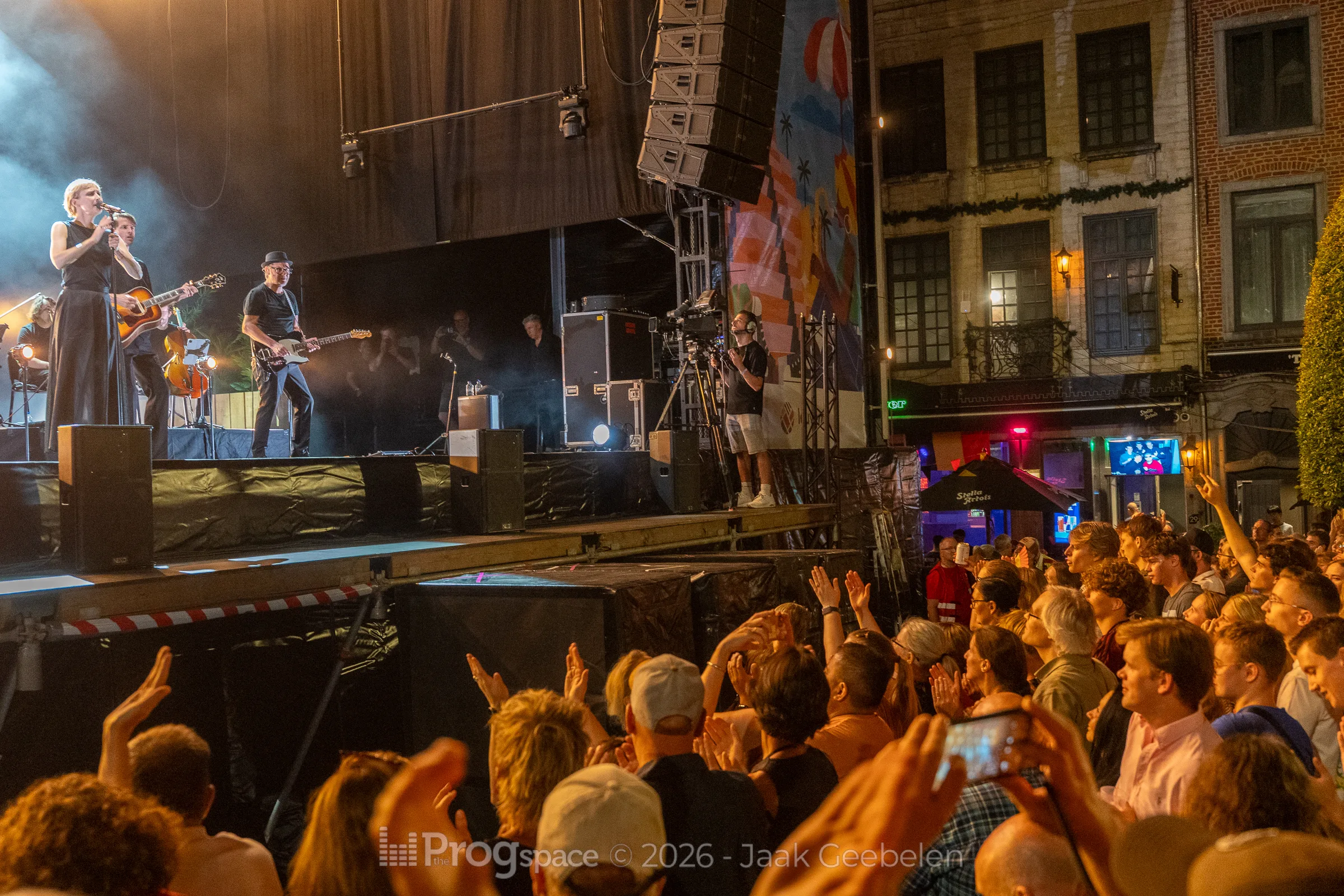
But it did not happen. The audience, filling the Oude Markt from front to back, shifted mood remarkably quickly. The disappointment of elimination gave way to attention, recognition and, eventually, visible enjoyment. A square that had just collectively lost began to listen again.
Before the football match, Emy D’Arc and then Jasper Steverlinck had already performed. Both are artists with exceptionally beautiful voices and impressive vocal range. Steverlinck in particular delivered a tasteful, voice-driven set: sober, precise and carried by tone rather than spectacle. In that sense, Beleuvenissen became more than an evening built around one headliner. It offered three moments of genuine enjoyment: Emy D’Arc, Jasper Steverlinck, and finally Hooverphonic.
A personal return
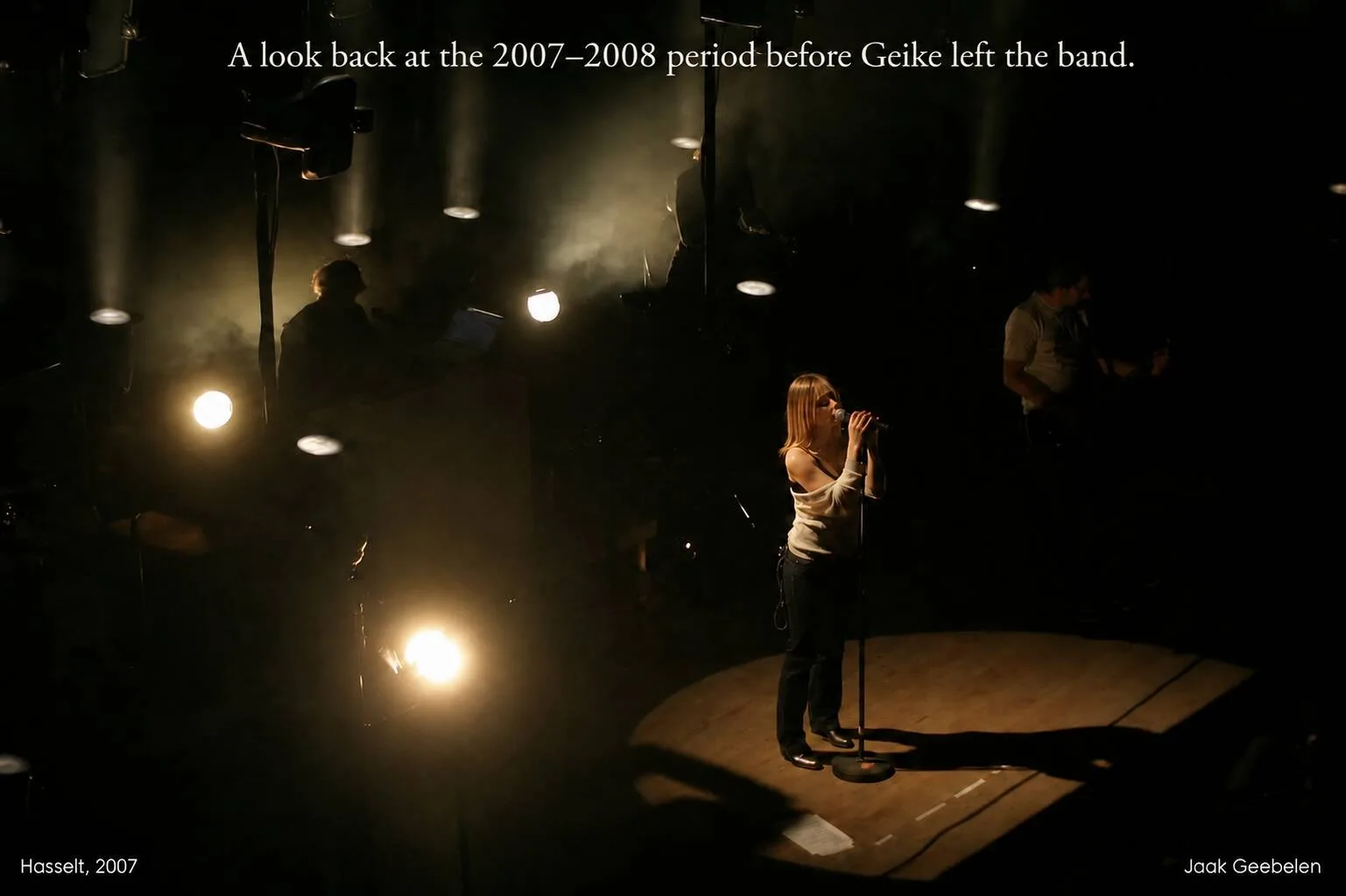
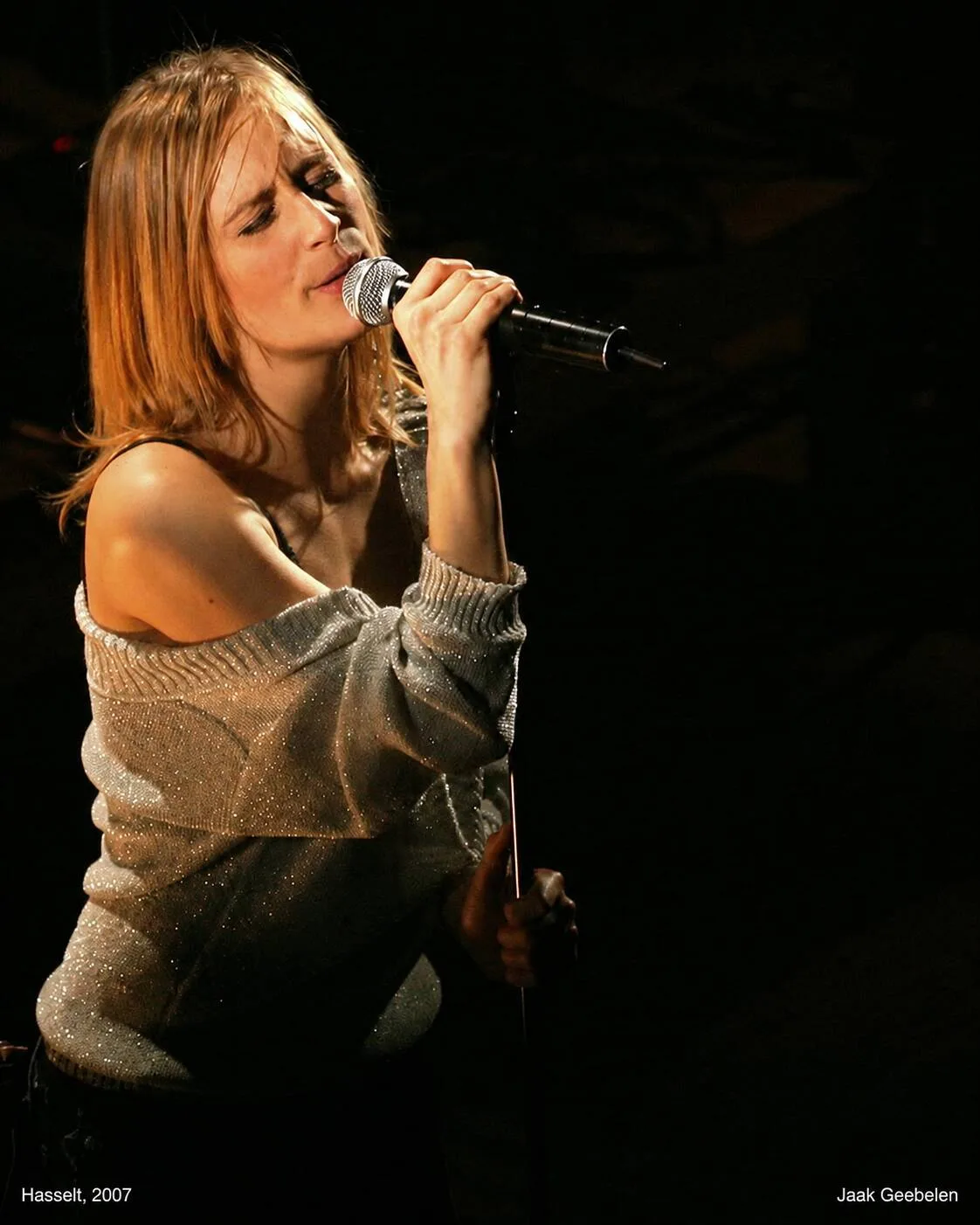
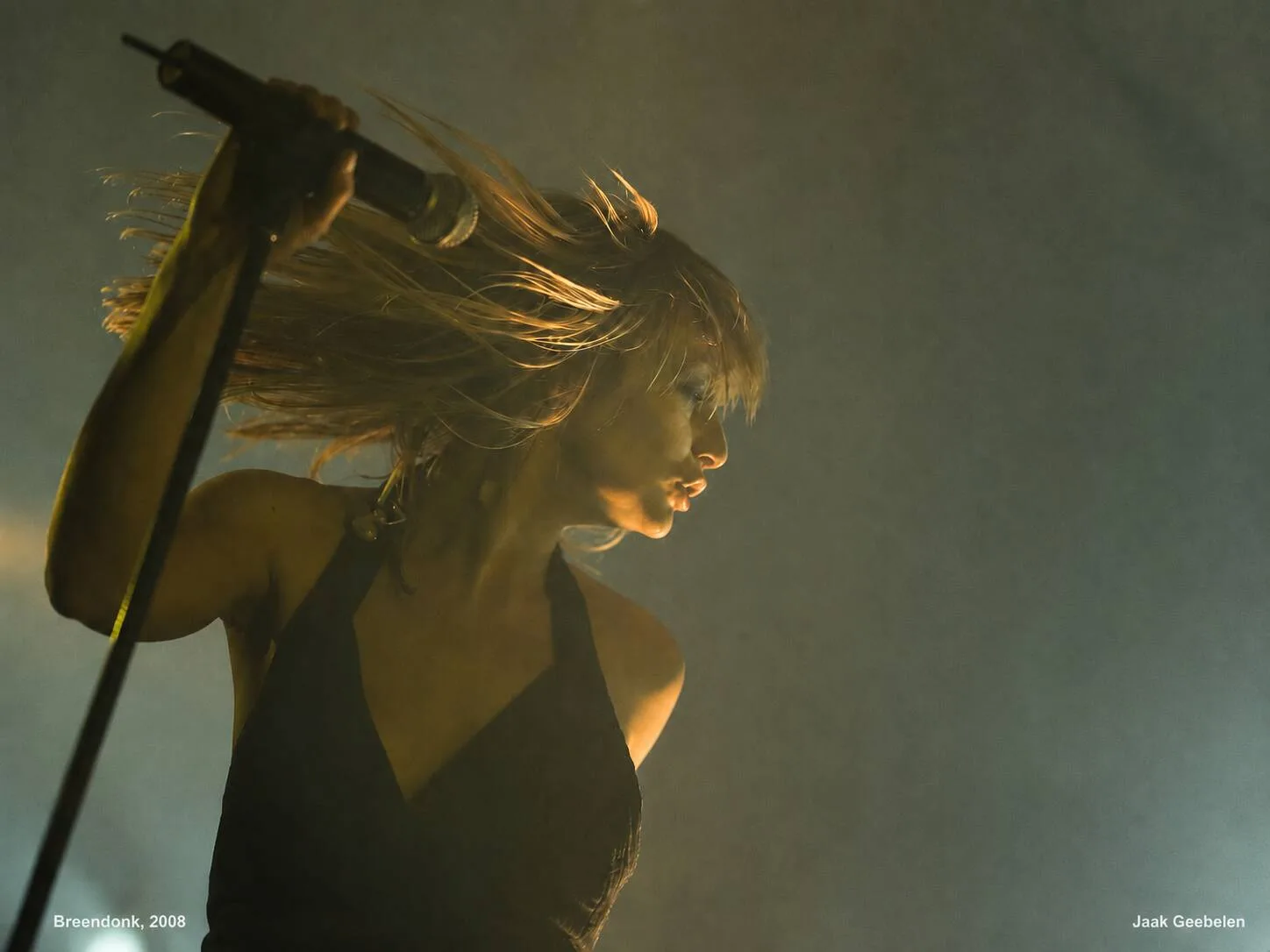
For me, this concert carried an extra layer of meaning. Hooverphonic is one of the bands connected to my early years as a concert photographer. In 2007 I photographed Geike Arnaert and the band at CC Hasselt. One image of Geike alone in a dark, almost sacred stage space has remained, for me, one of the photographs that best captures the atmosphere of Hooverphonic: a small figure in a large dark frame, surrounded by warm light, smoke and shadow, as if the music itself were emerging from the darkness.
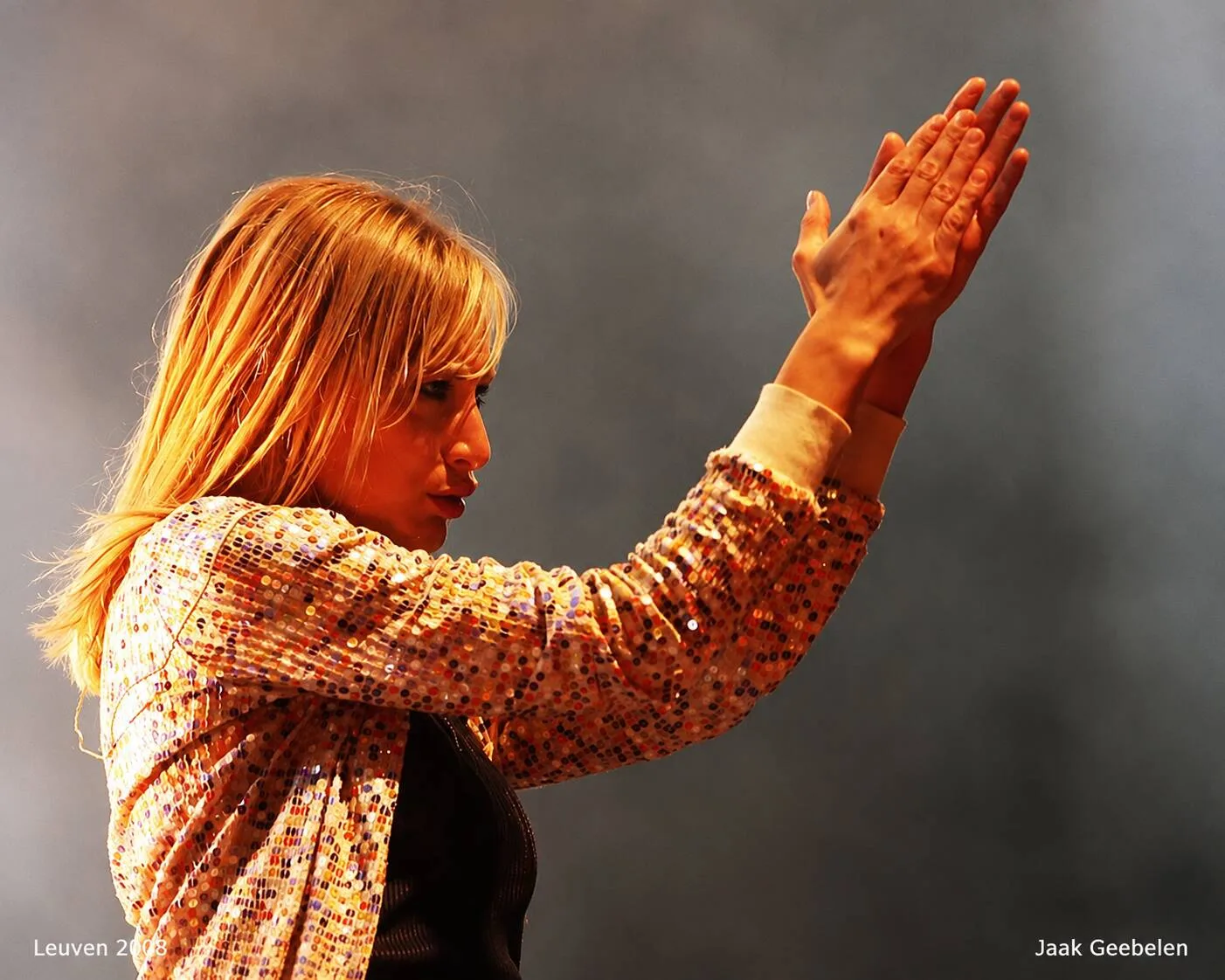
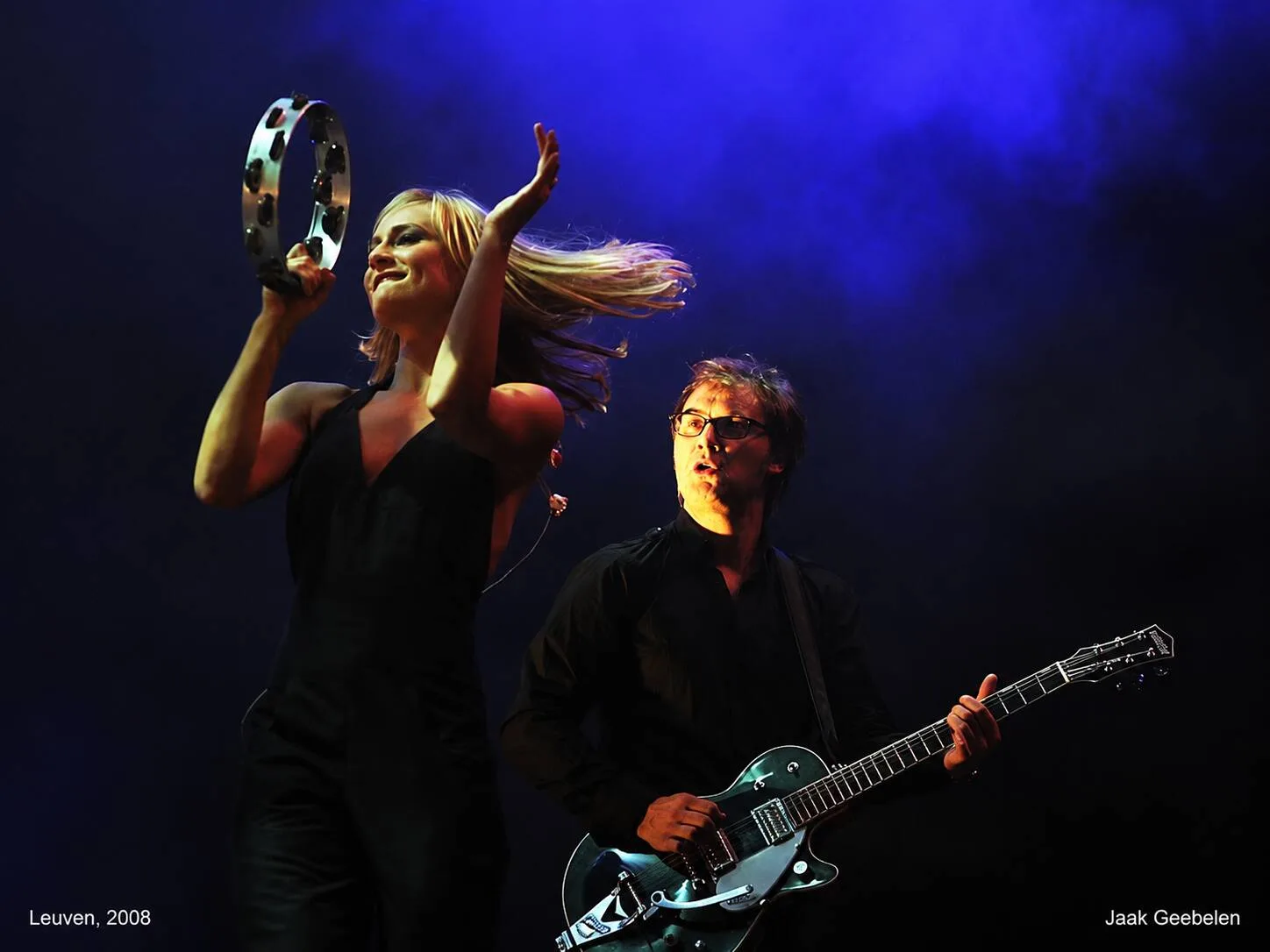
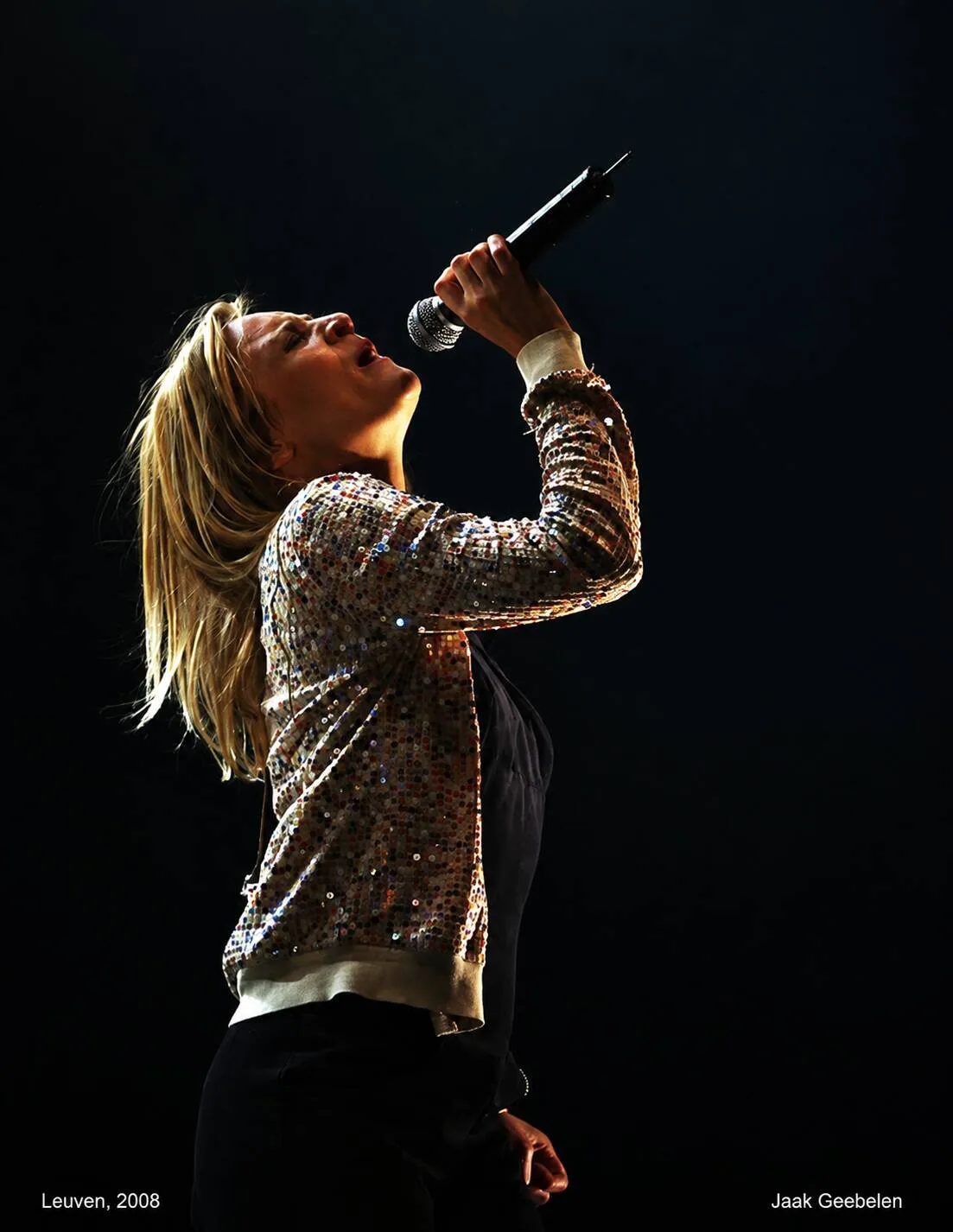
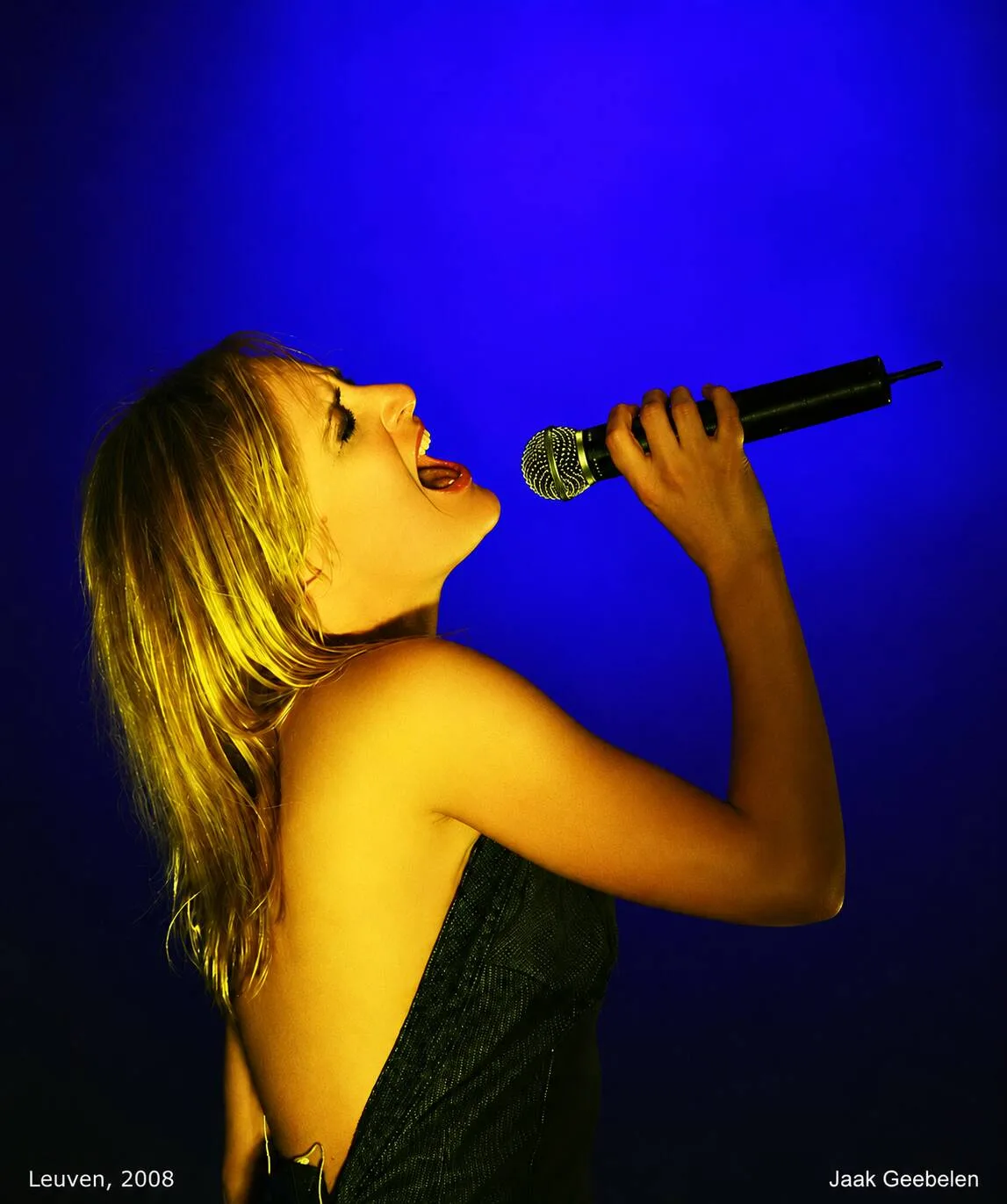
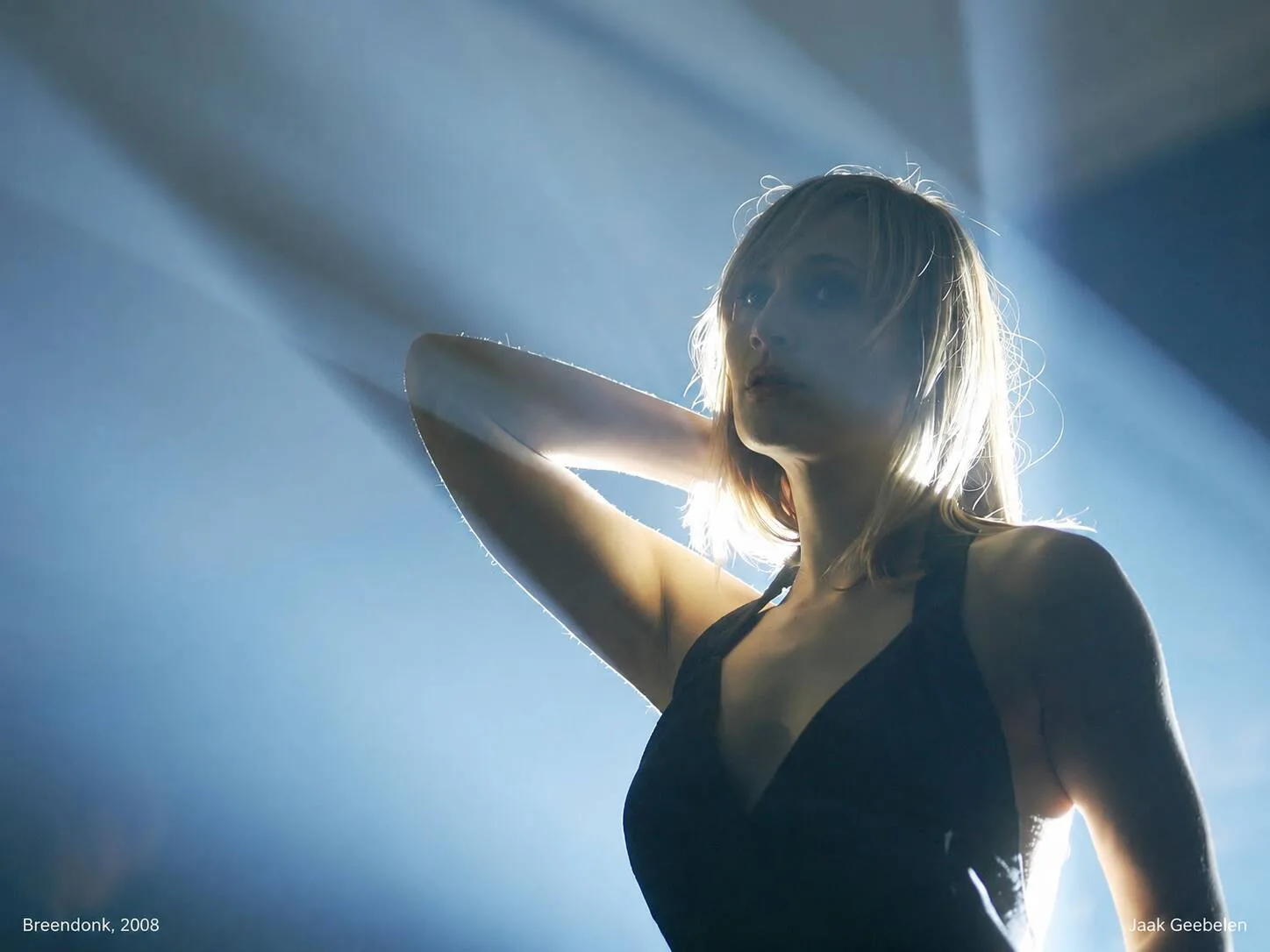
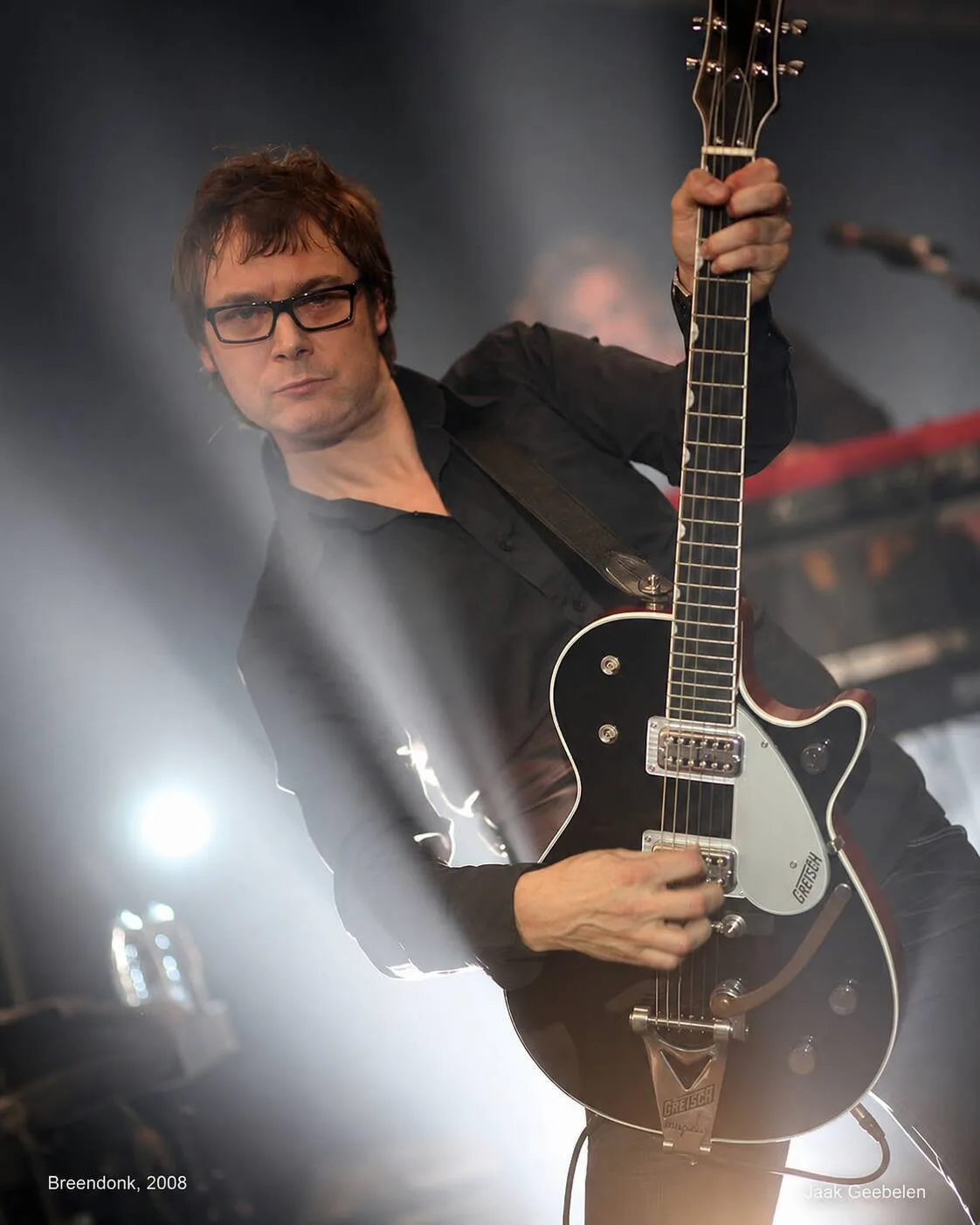
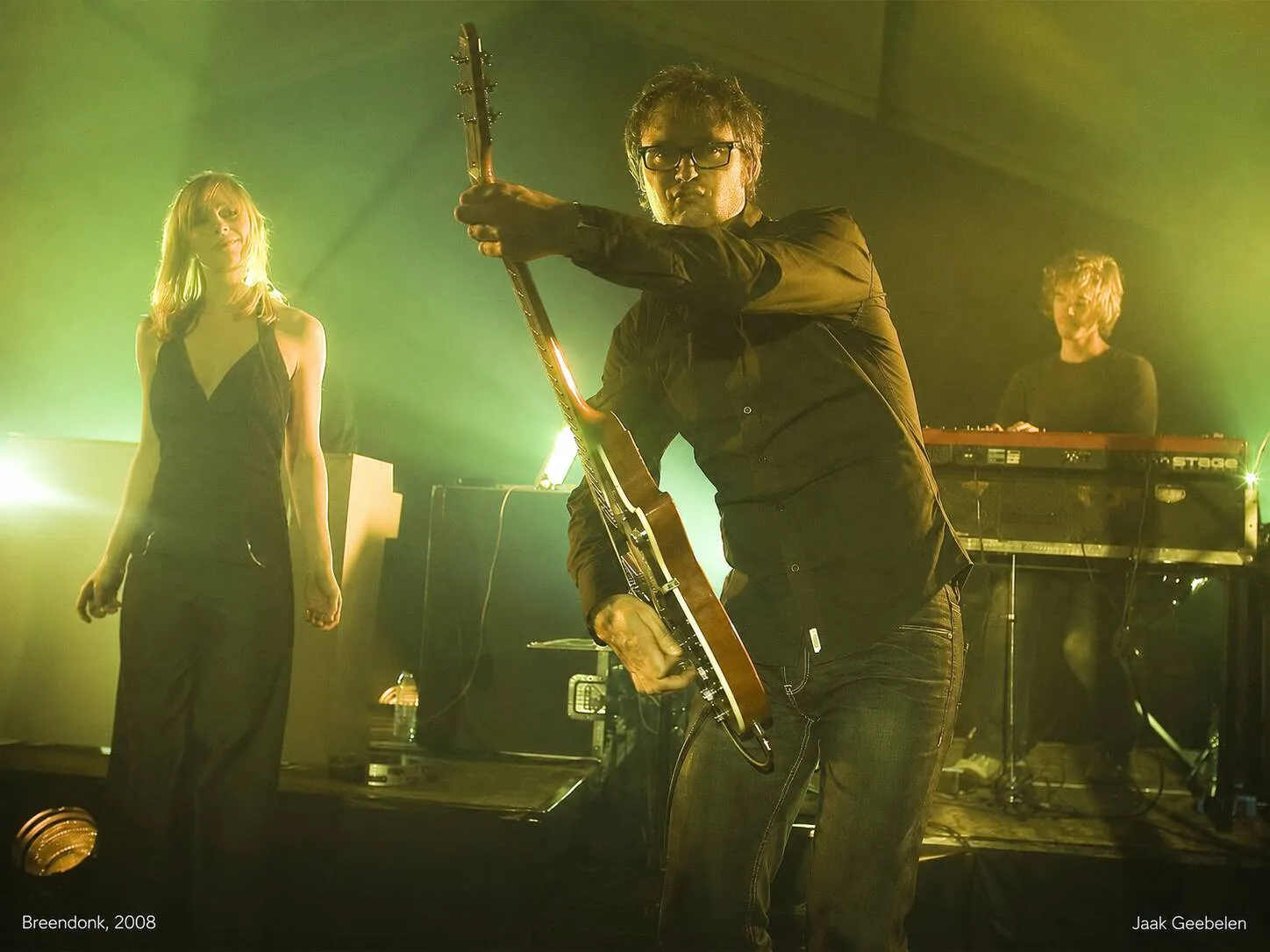
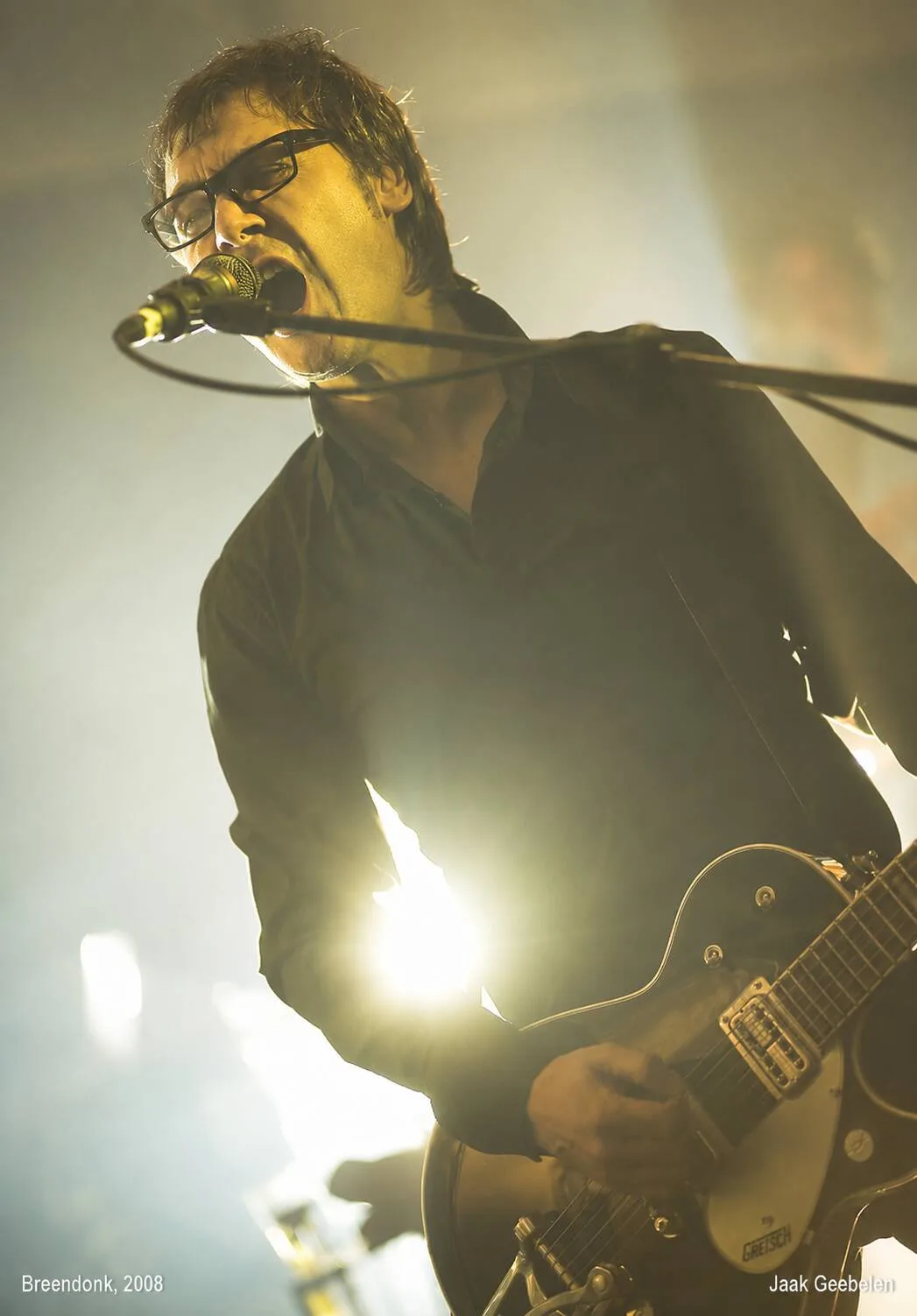
A year later I photographed Hooverphonic on the Oude Markt during Marktrock, near the end of Geike’s first period with the band. The concert in Breendonk, at Rewind, also produced images that stayed in my photographic memory: Geike in backlight, Raymond Geerts in a haze of yellow-green stage light, bodies half visible, half dissolved into smoke and light.
Eighteen years later, I found myself standing almost in the same place again. Not to recover the past, but to confront it. The images from then and the images from now obviously belong to different moments in time, but the atmosphere felt surprisingly familiar: distance, melancholy, elegance, tension and a form of controlled drama that has always belonged to Hooverphonic.
That made the evening feel almost like a mirror. The photographs from 2007–2008 belong to the end of Geike’s first era. Some of them you can see in the gallery below. Het Groot Verlof 2026 felt like a late moment in the closing chapter of her second one. Two chapters, eighteen years apart, connected by the same voice, the same dark elegance, and the same desire to give pop music a cinematic space.
A show with atmosphere.
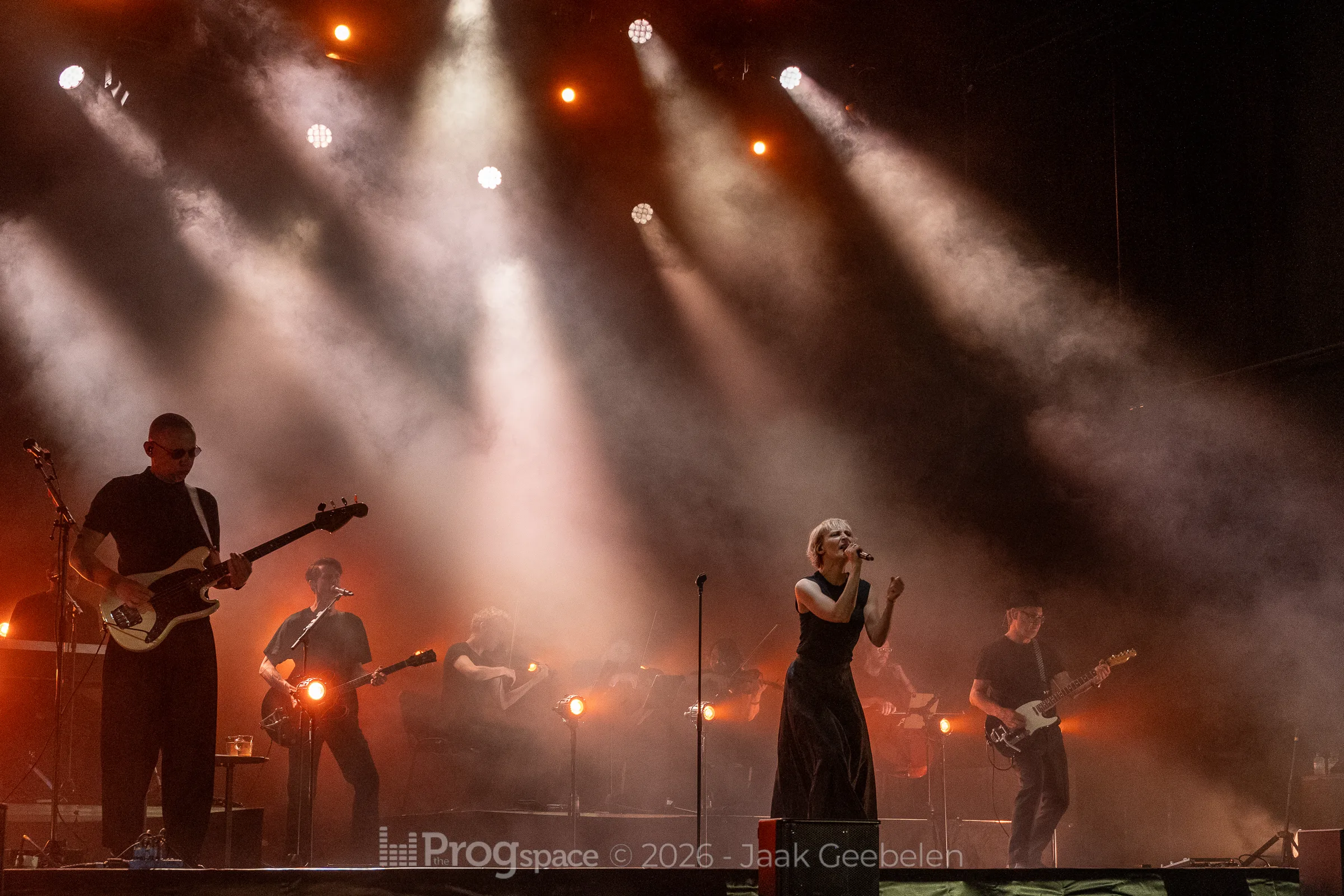
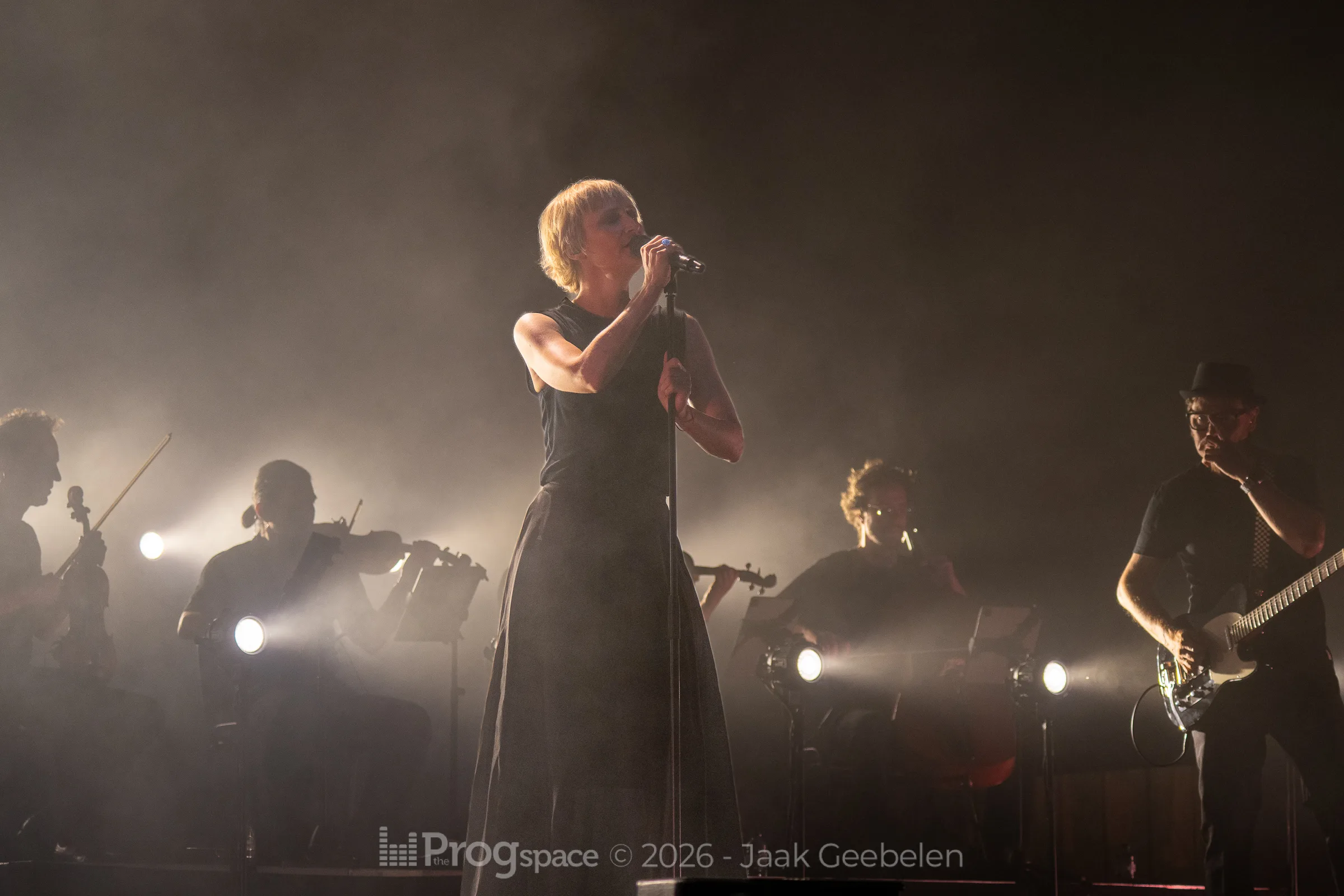
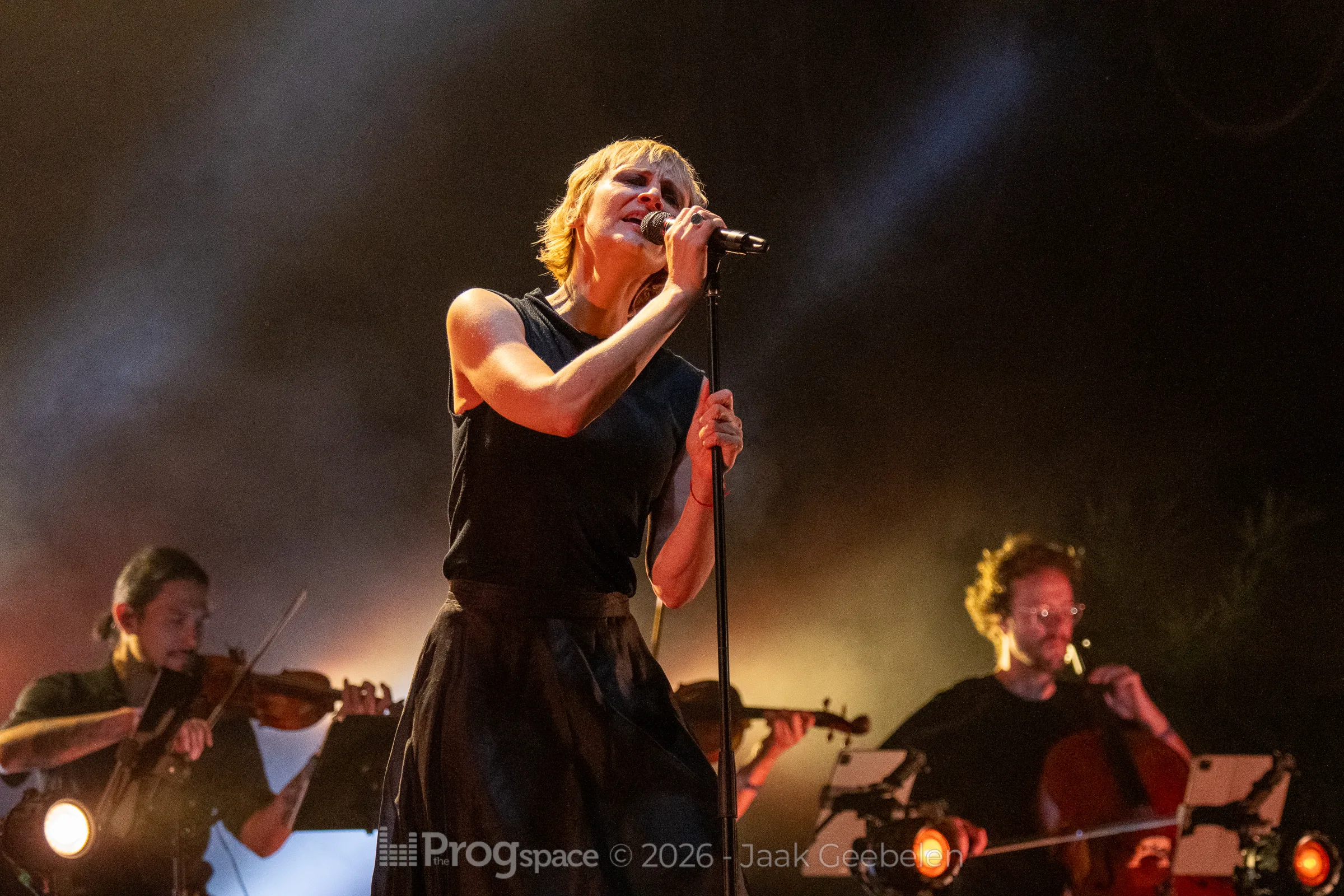
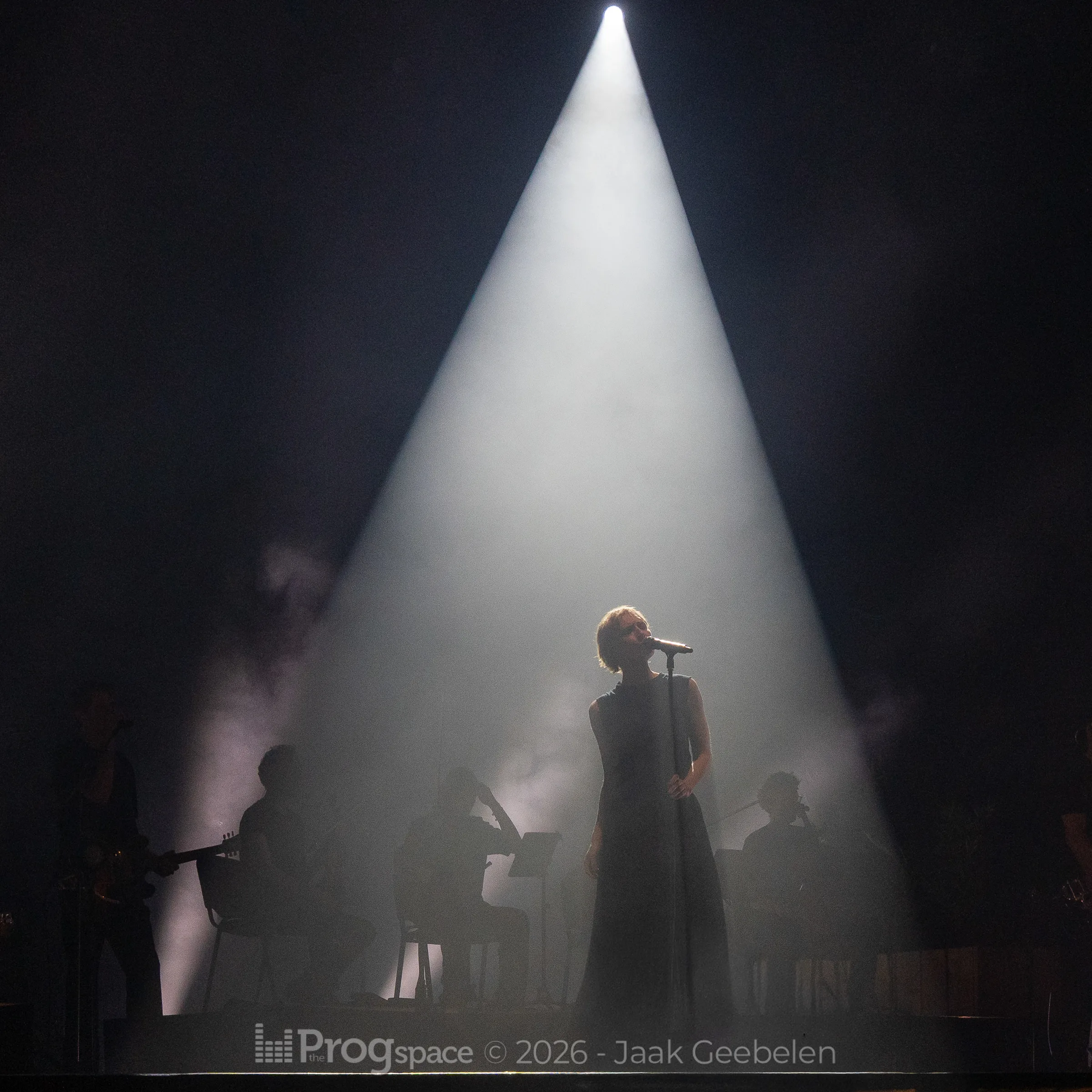
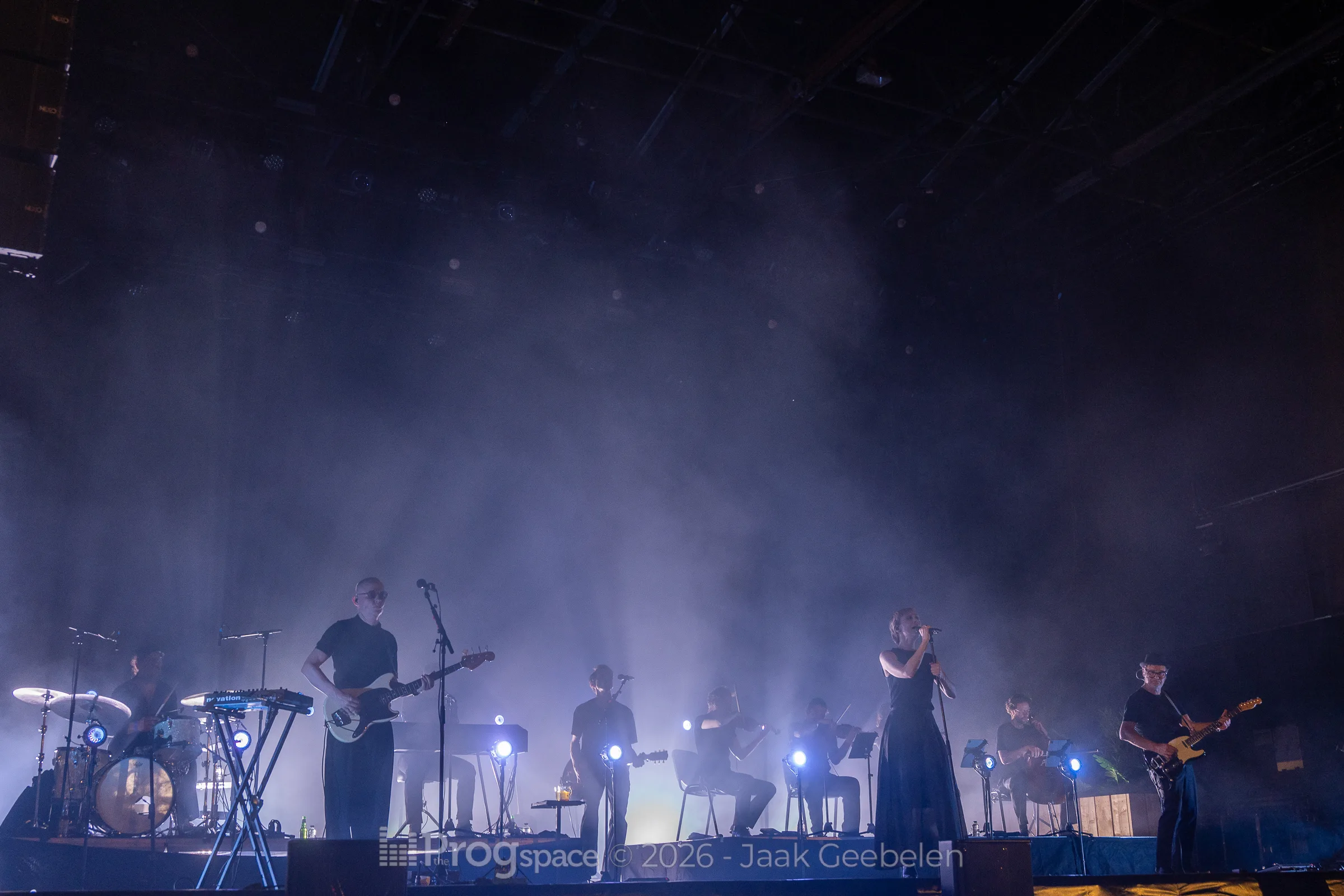
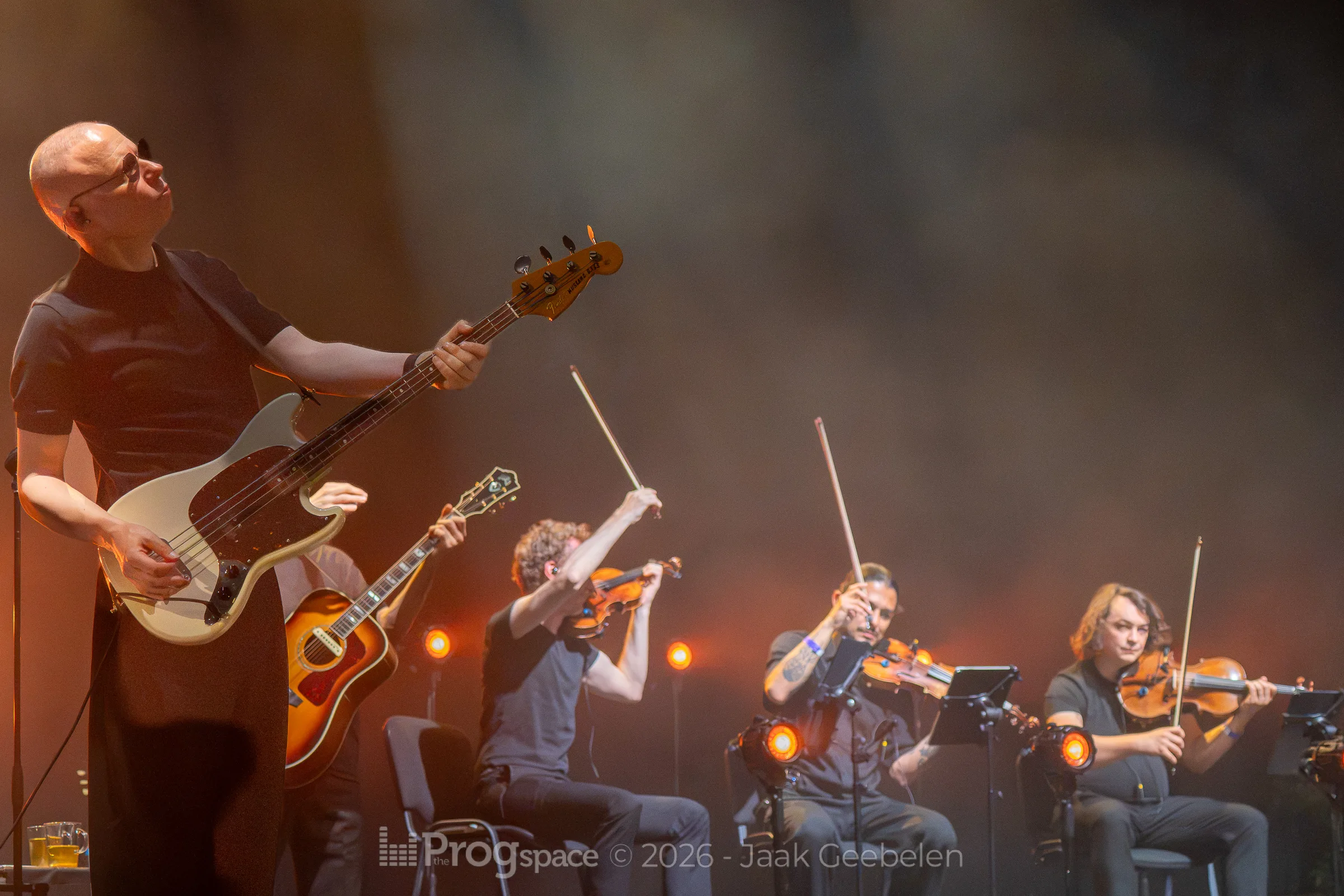
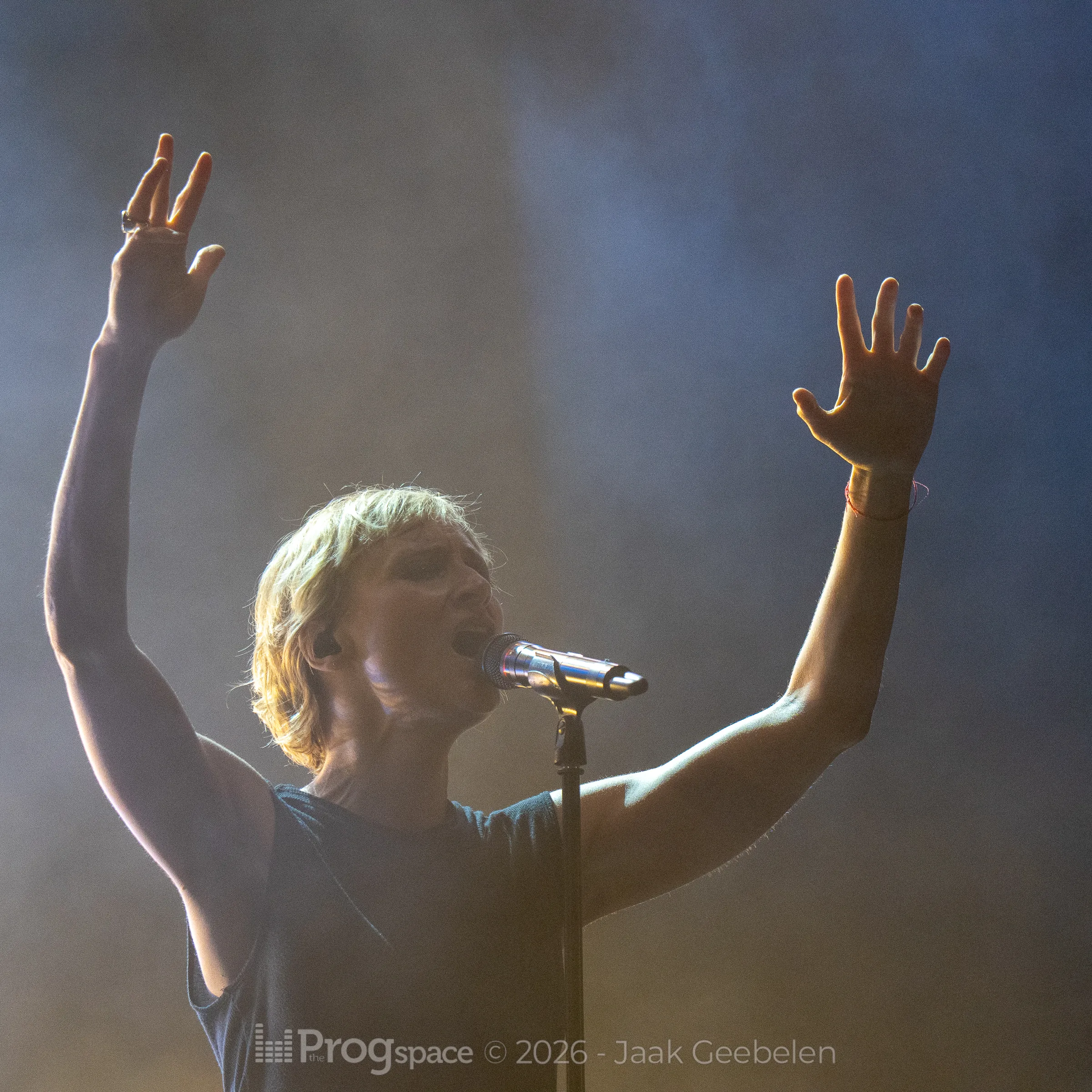
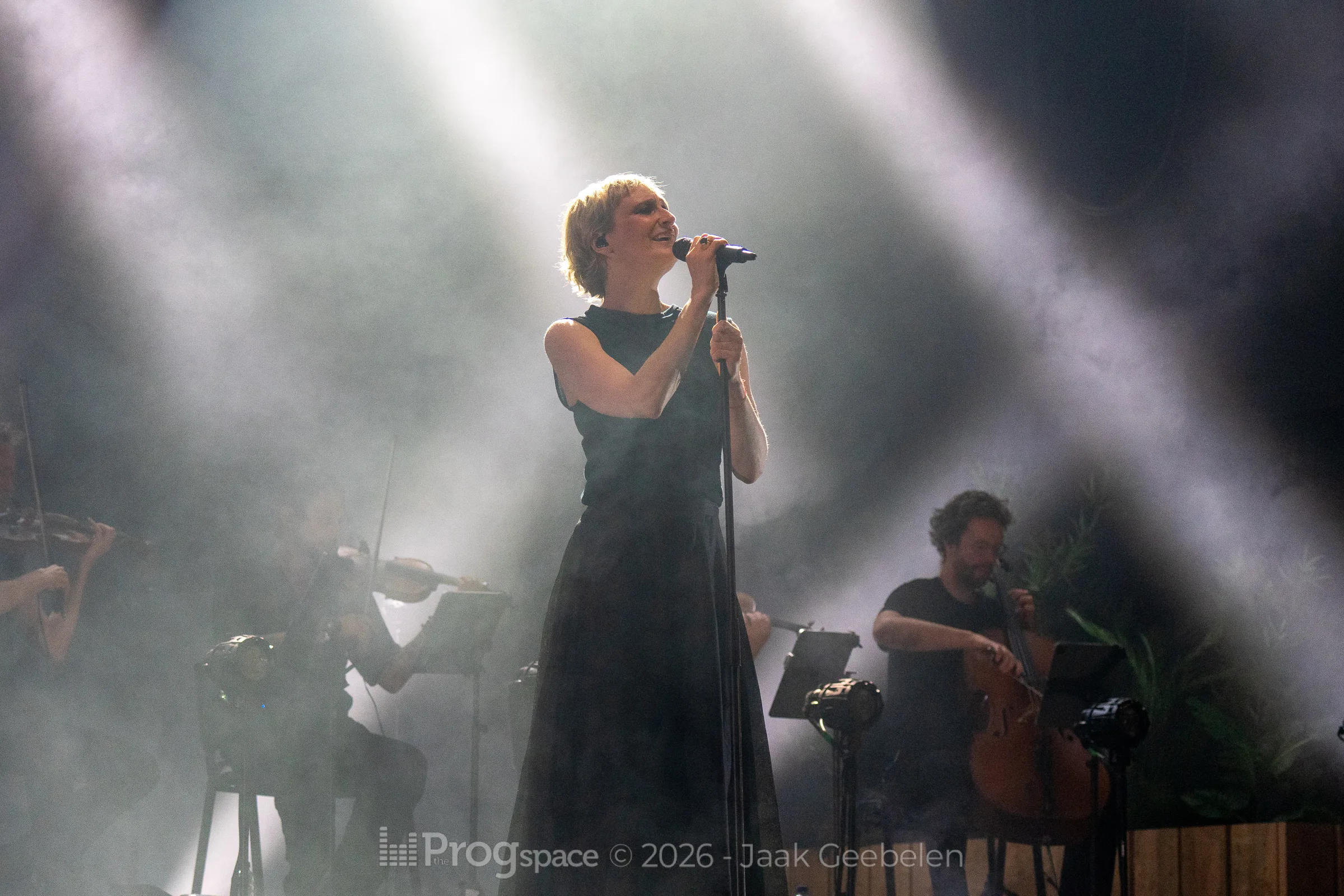
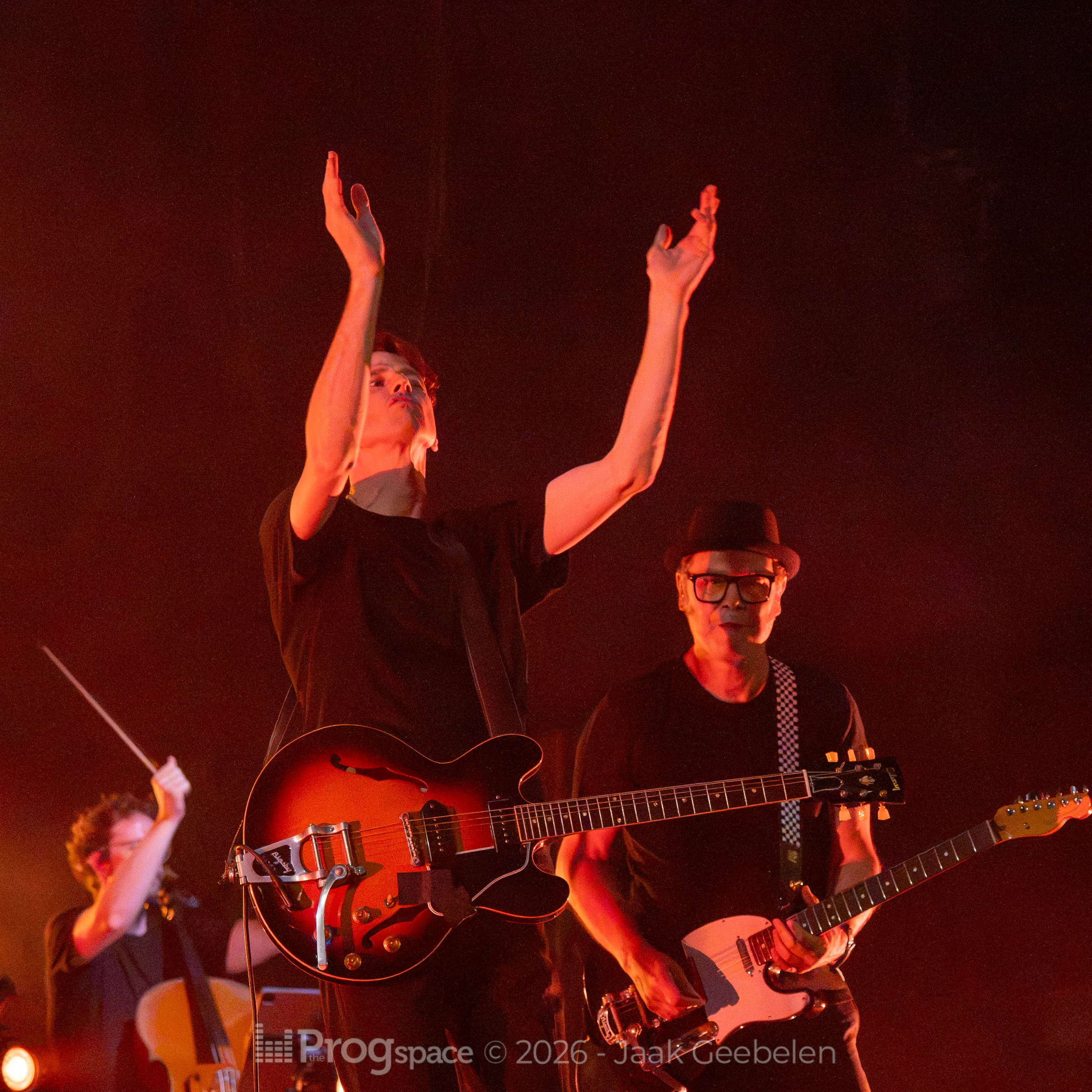
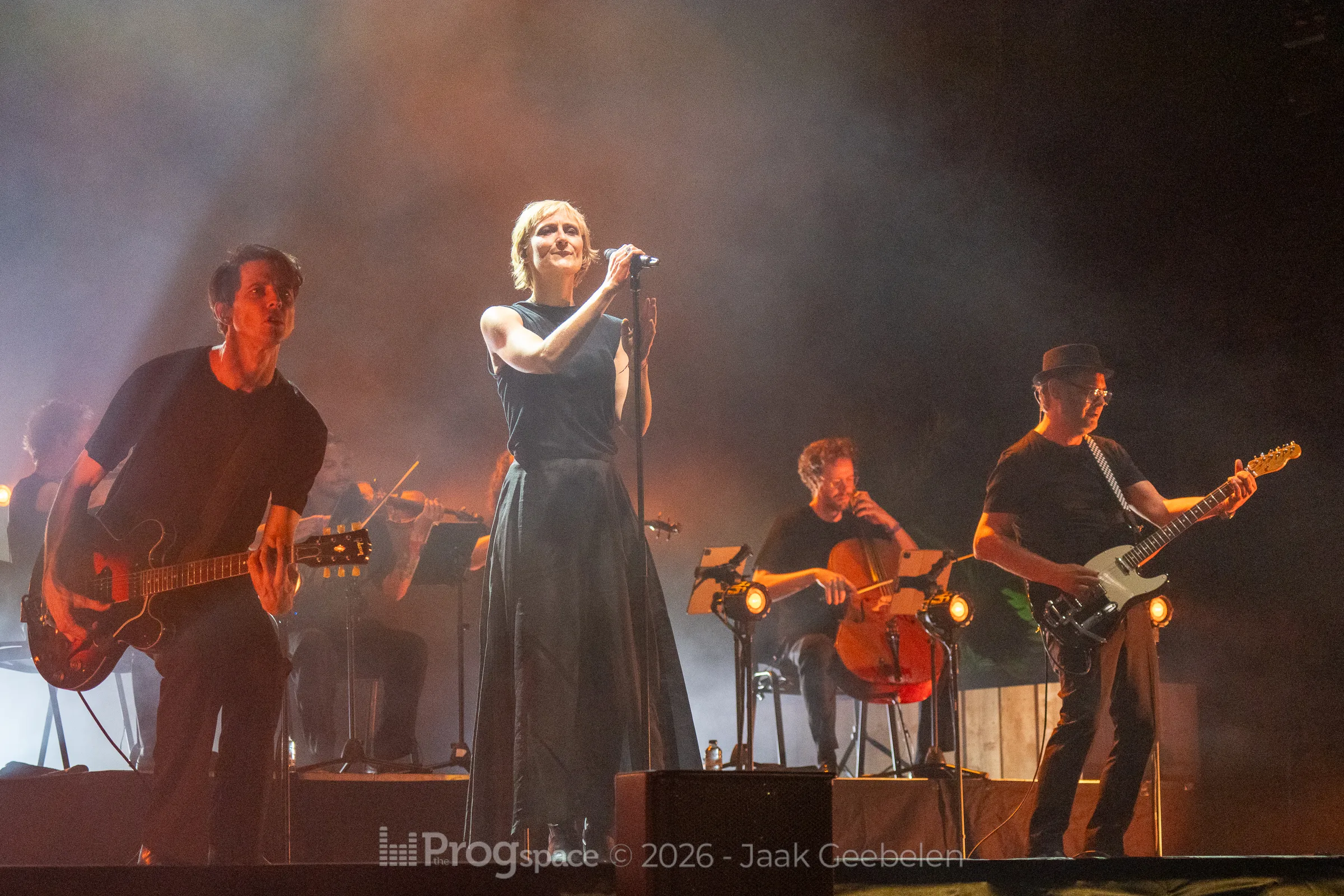
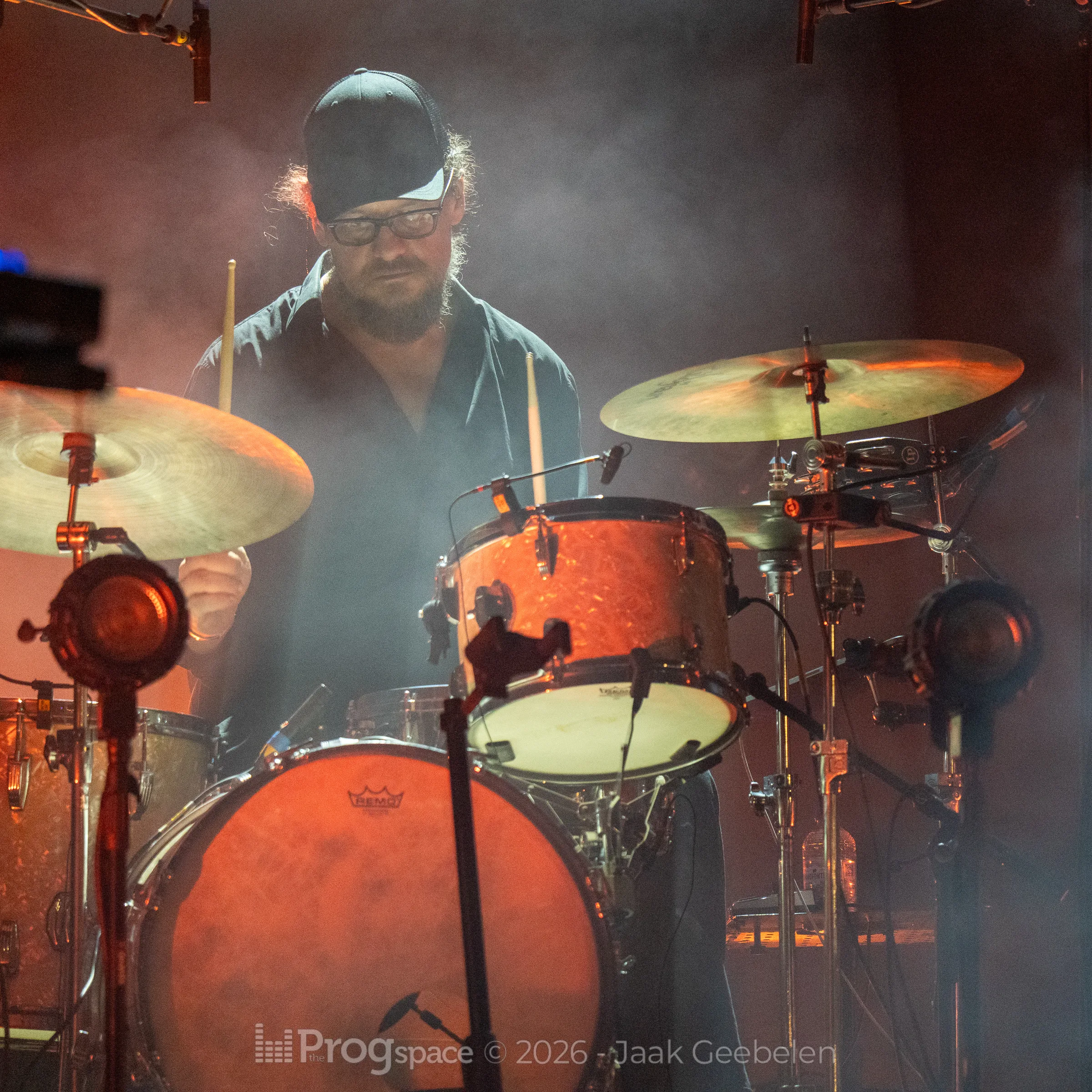
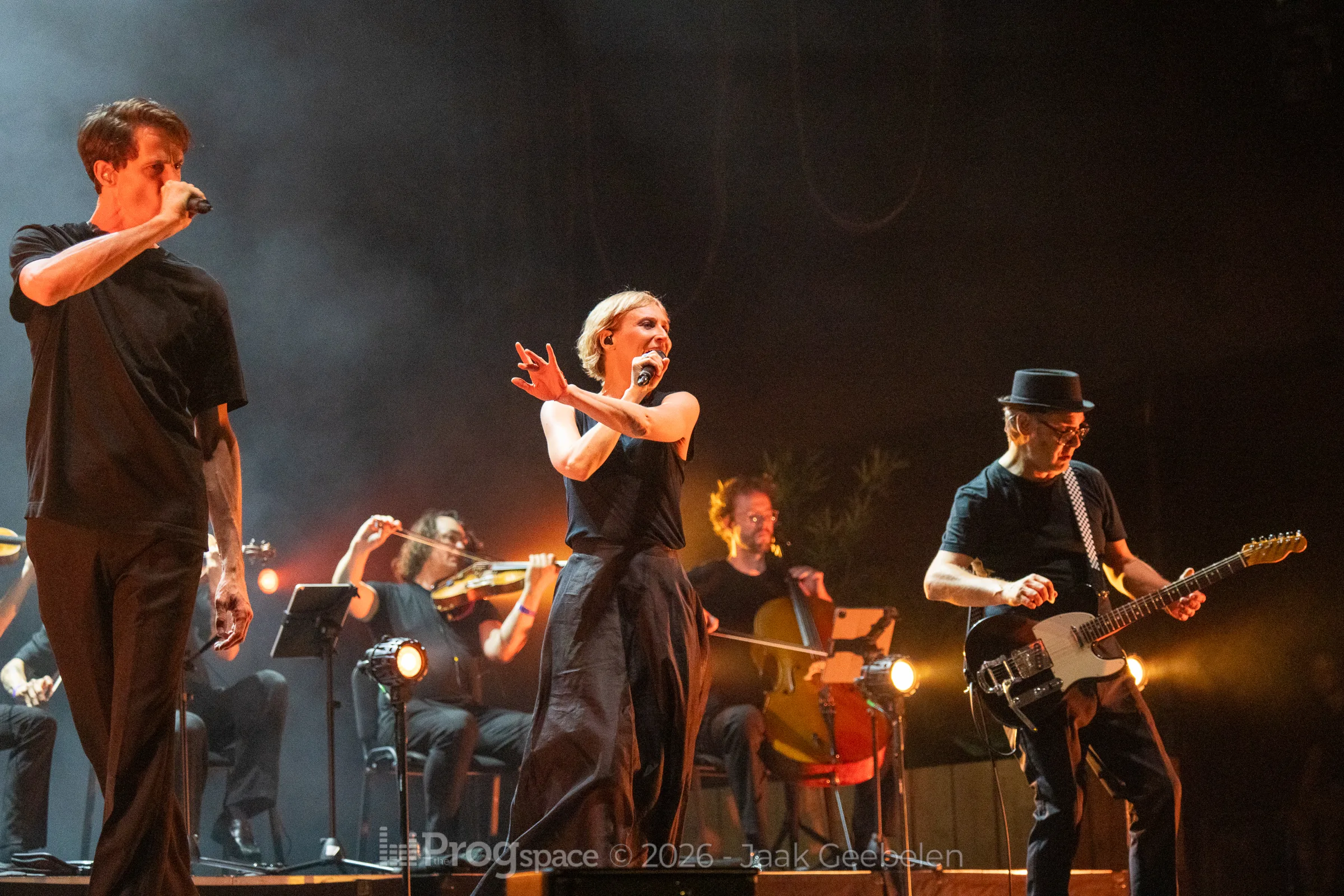
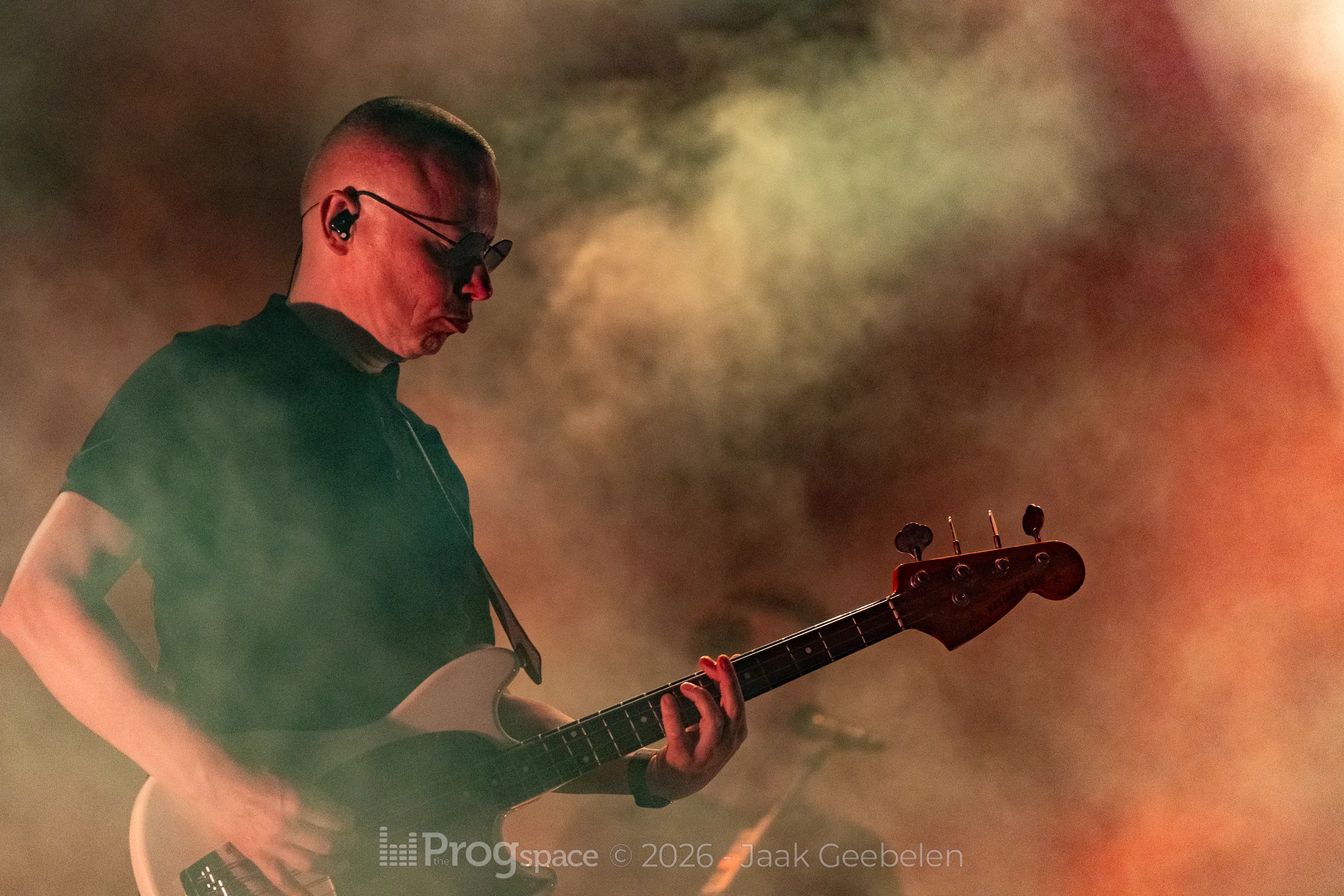
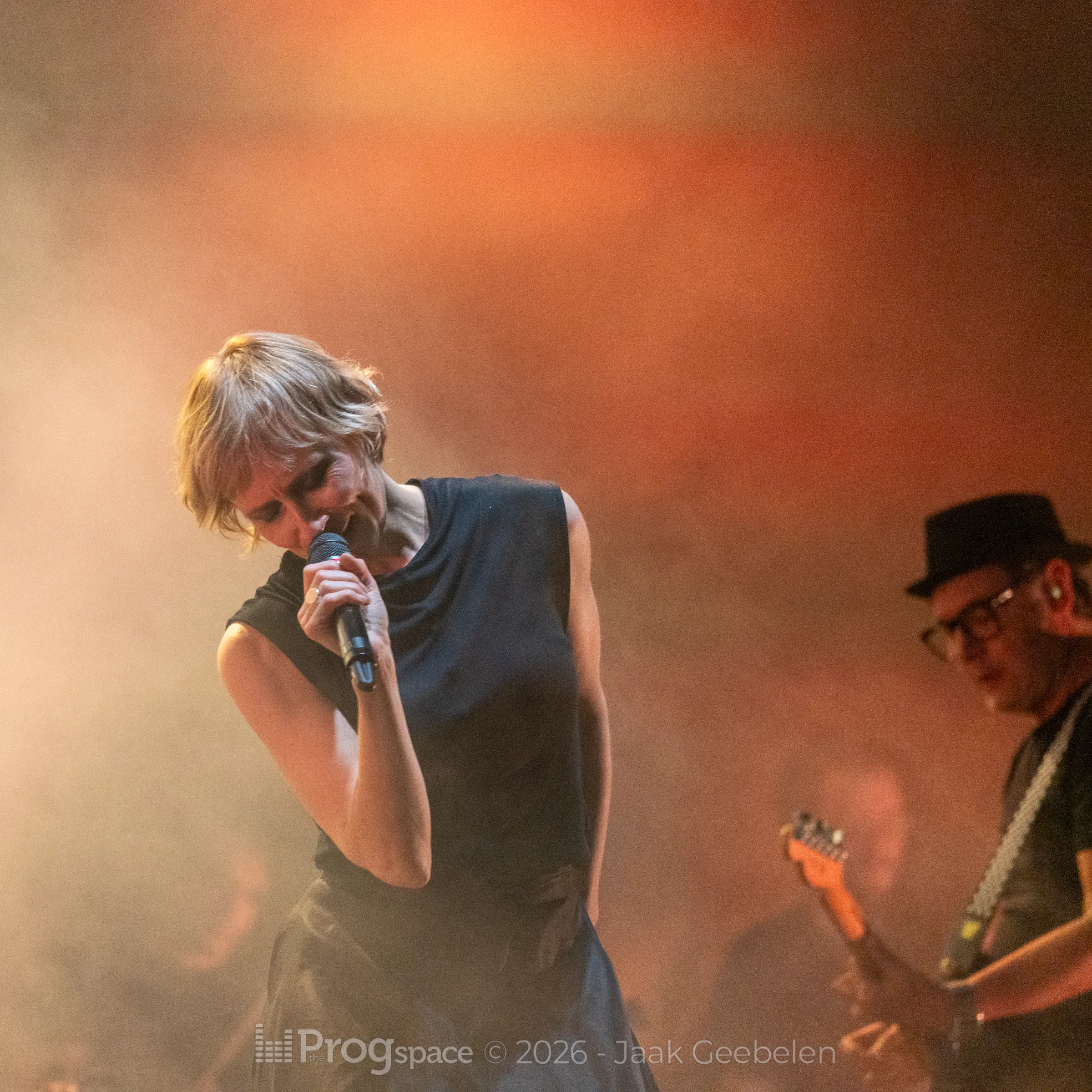
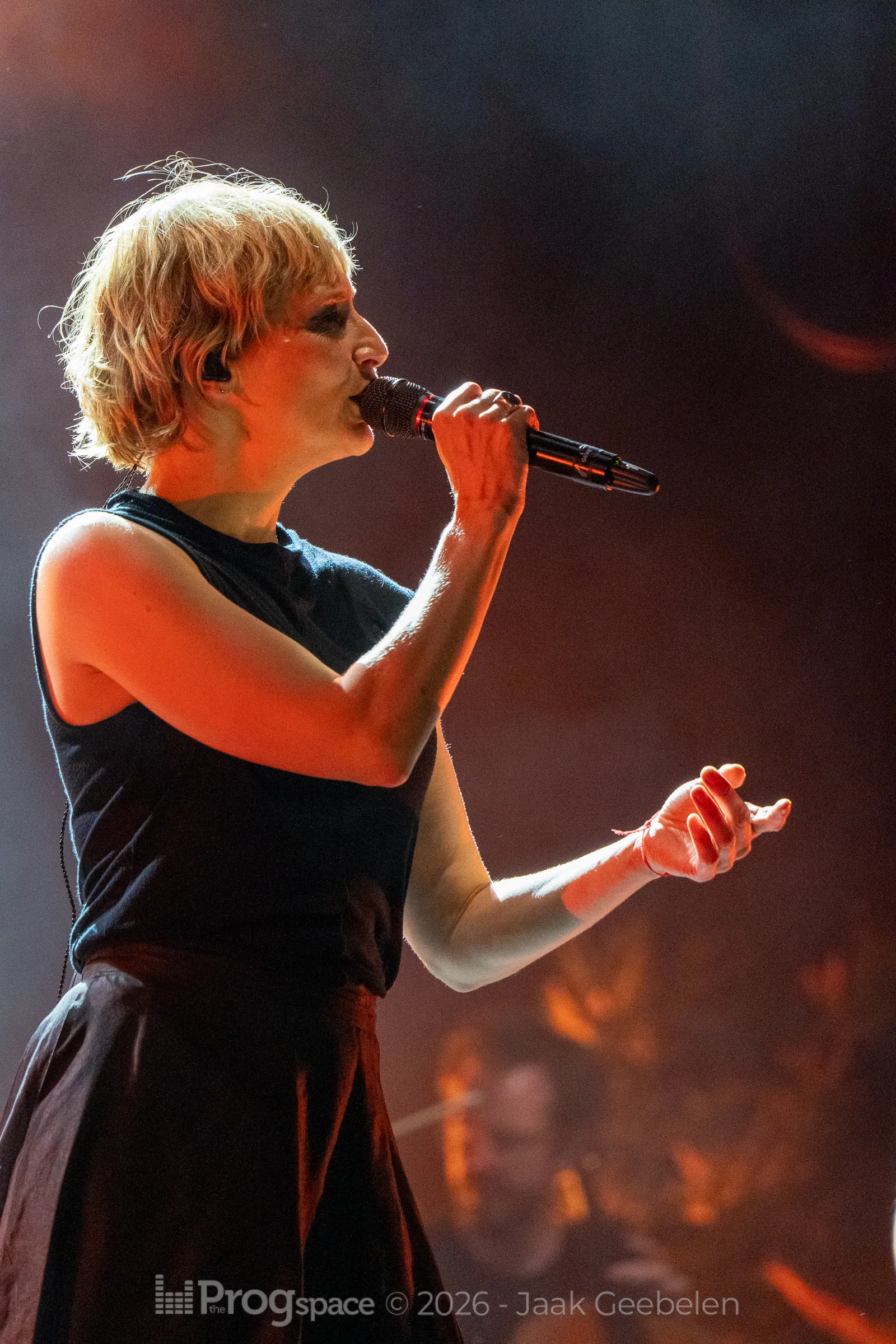
The show relied on atmosphere rather than visual excess. Smoke and backlight did much of the work. At times Geike stood almost alone in a white cone of light, with the band and strings reduced to silhouettes behind her. At other moments the stage was bathed in amber and copper, with guitars, bass, drums and strings appearing as dark outlines in the haze. That lighting strongly reminded me of my old images from 2007 and 2008. Especially the Breendonk photographs, with their diffuse backlight and half-hidden faces, breathe the same world that reappeared here on the Oude Markt.
I had not really seen that specific visual language in the intervening years: that combination of smoke, warm backlight, dark space and chamber-orchestral elegance. In Leuven, it was there again, and it fitted perfectly with the Hooverphonic that had attracted me both visually and musically in the first place.
The strings as a shadow layer
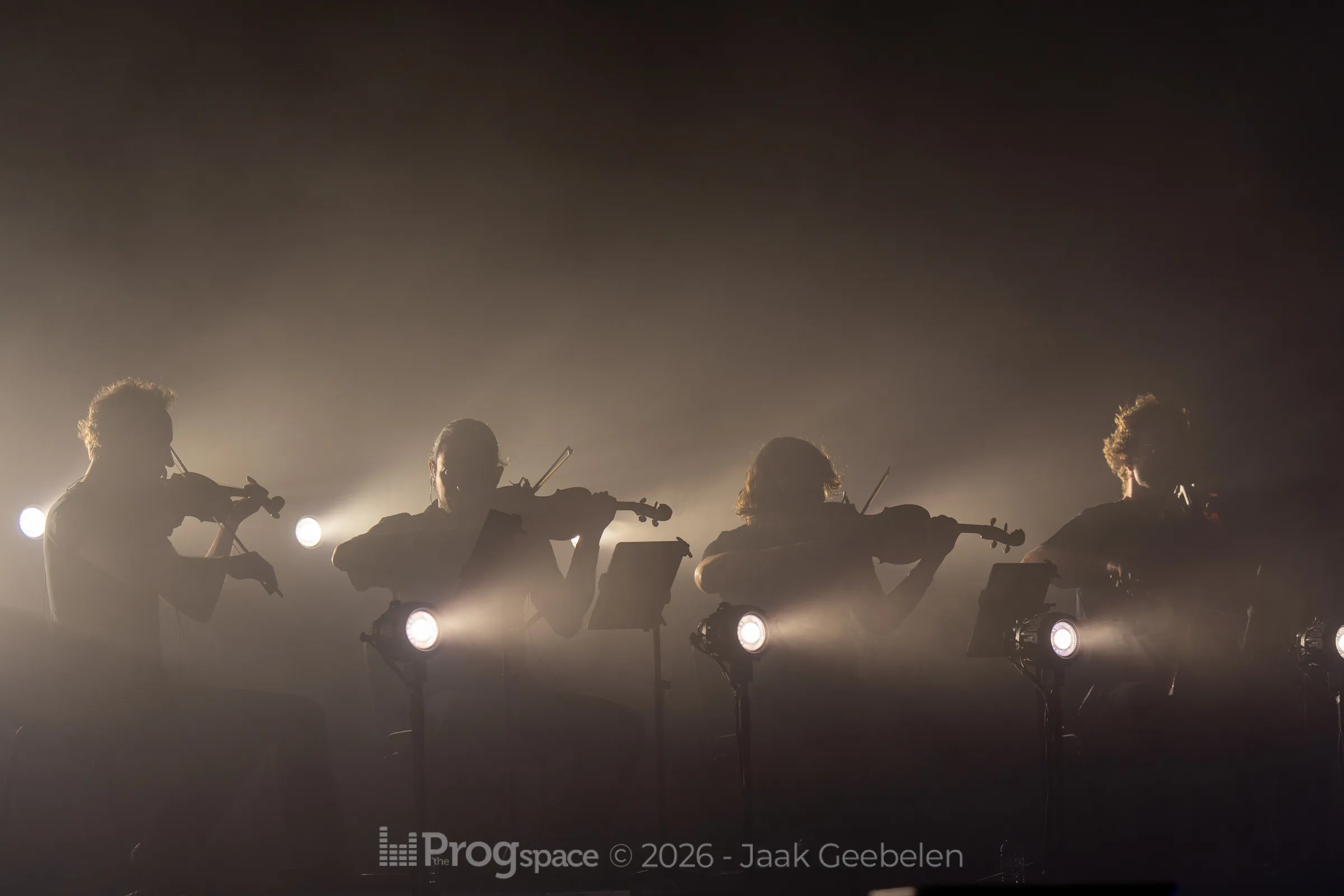
Hooverphonic also did not play as a stripped-down festival version of themselves. Alongside the regular live band, there were four string players on stage. That made a major difference, musically and visually.
The strings were not presented as a classical orchestra in the spotlight. Often they appeared as silhouettes, half hidden by smoke and backlight. They became a kind of shadow layer behind the songs. Their presence gave tracks such as “Eden,” “Vinegar And Salt,” “Mad About You,” “No More Sweet Music,” “Jackie Cane” and “The World Is Mine” the cinematic width that, at its best, separates Hooverphonic from ordinary pop.
Those were exactly the moments that made clear why this music also deserves a place on our website. Not because Hooverphonic suddenly became a progressive rock band, but because the band’s strongest material is built on arrangement, tone colour, dramaturgy and atmosphere. This is music that thinks in scenes: in light and darkness, in arcs of tension, in distance and emotion at the same time.
Geike Arnaert: voice, body and presence
Still, the core of the evening did not lie only in the arrangements or the strings. It lay above all with Geike Arnaert.
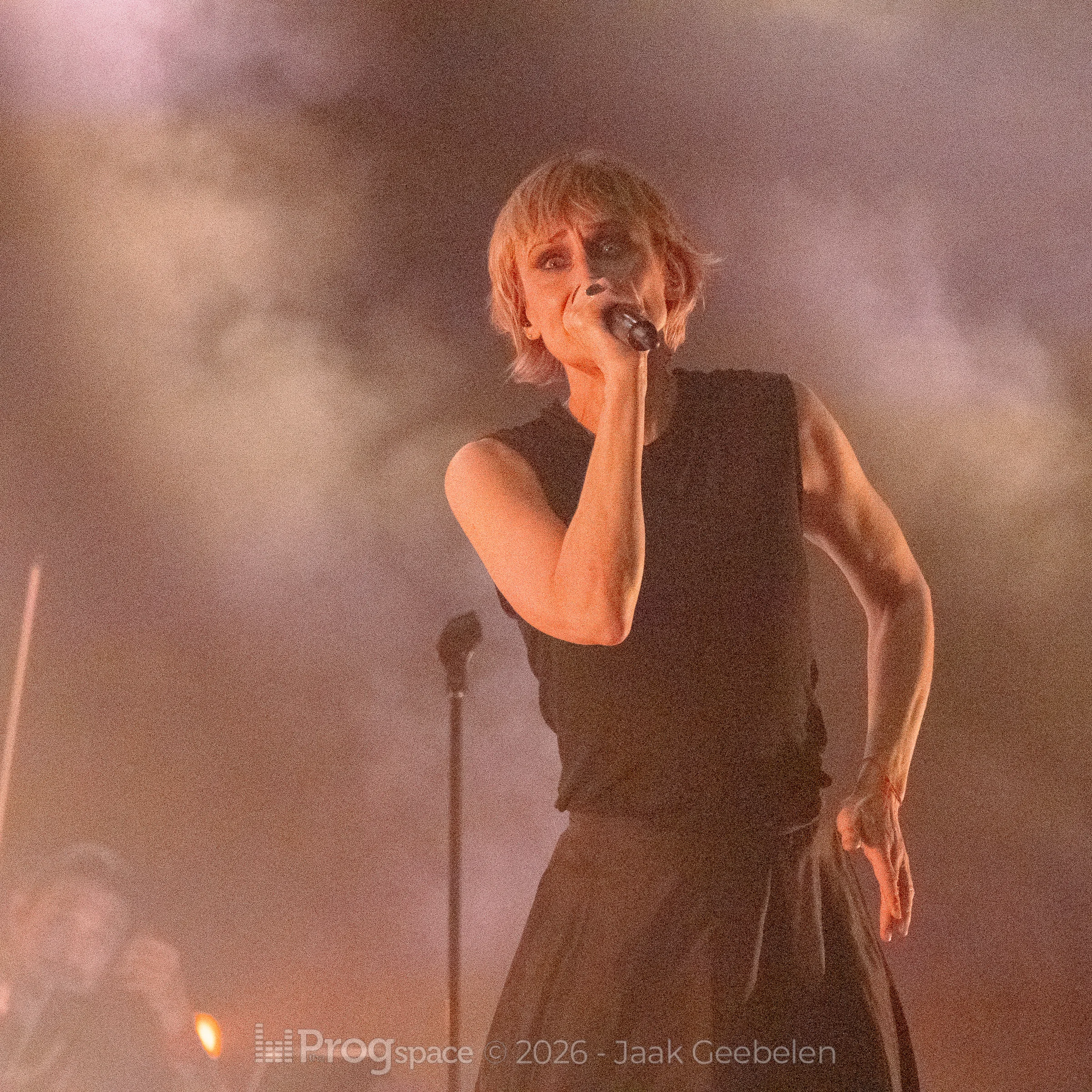
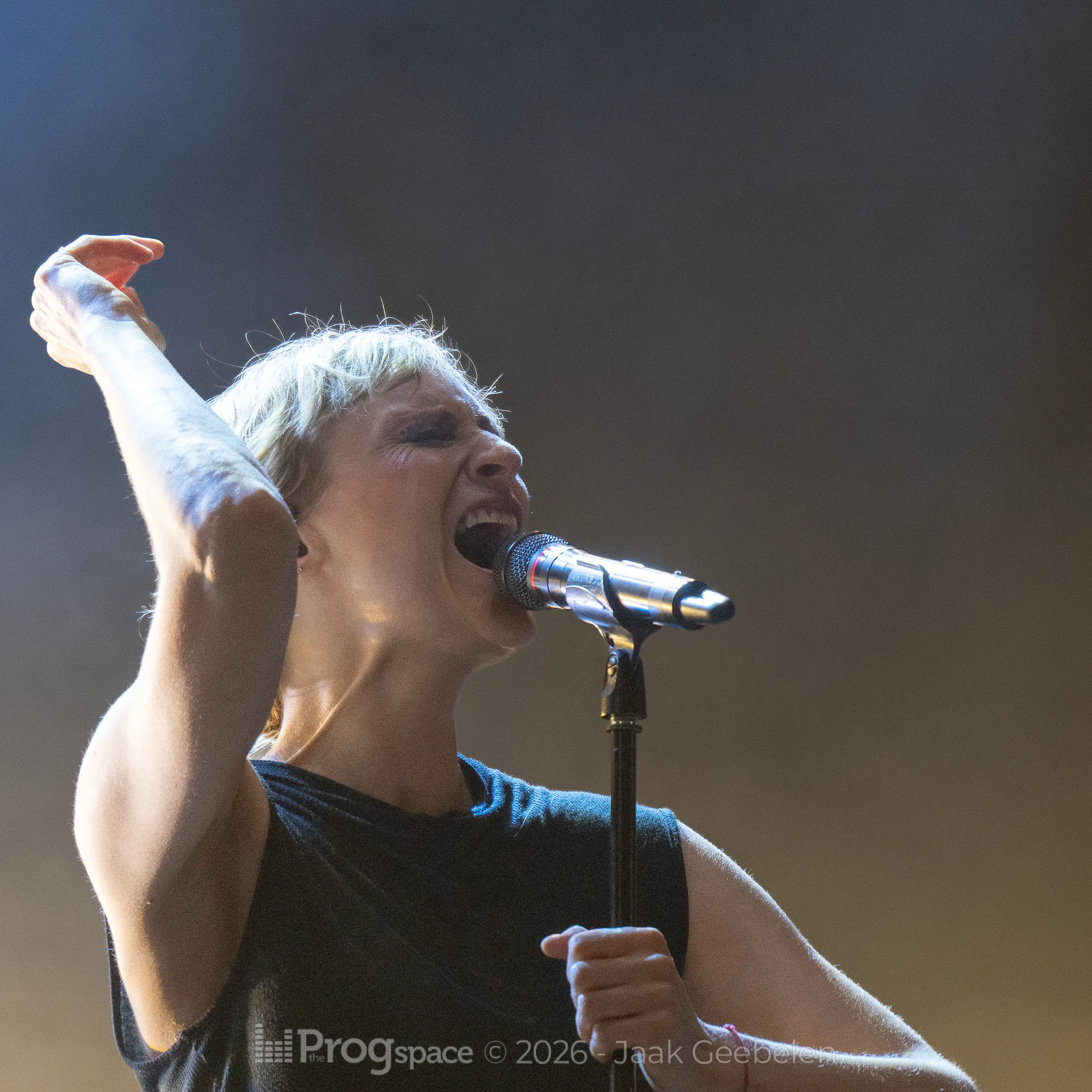
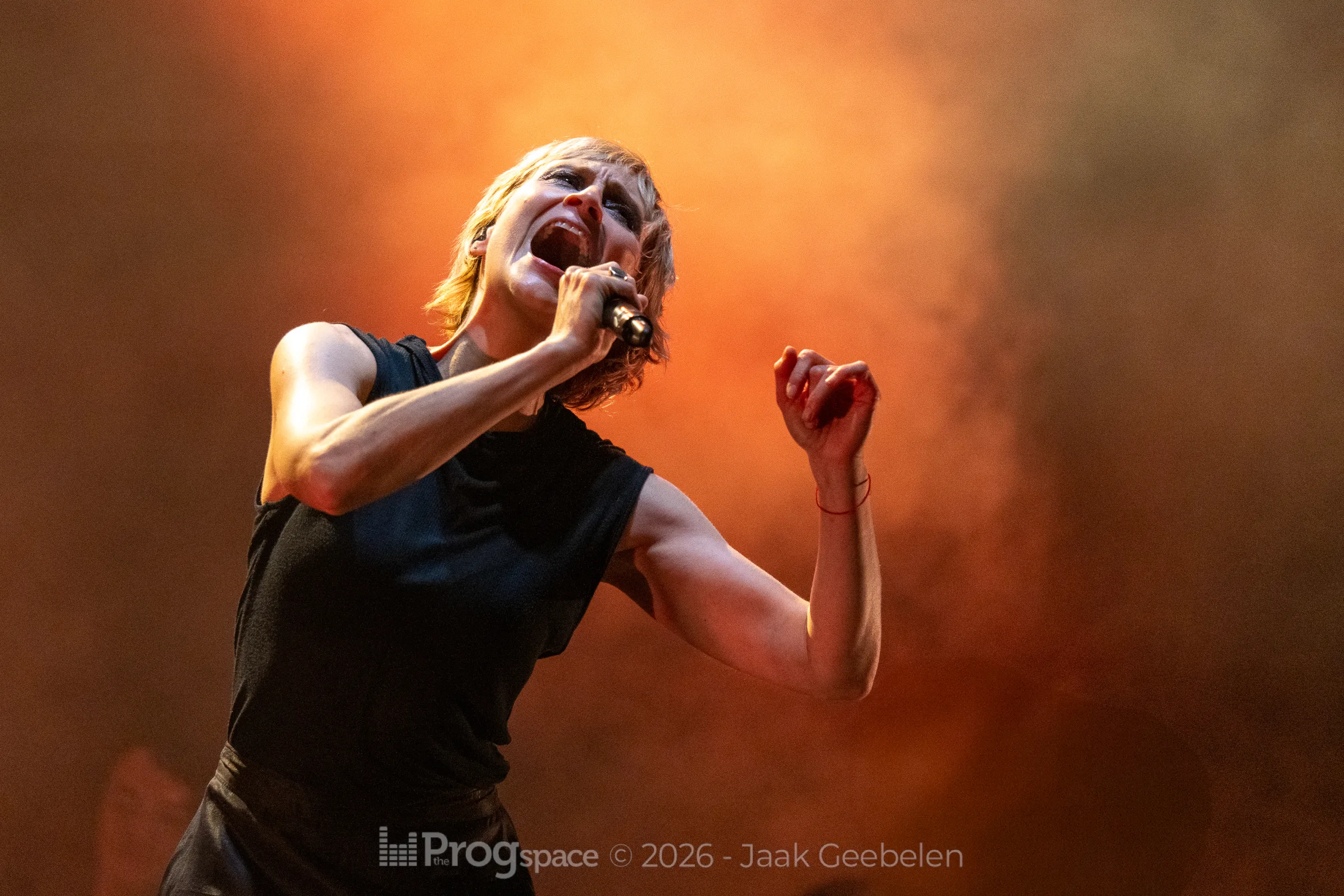
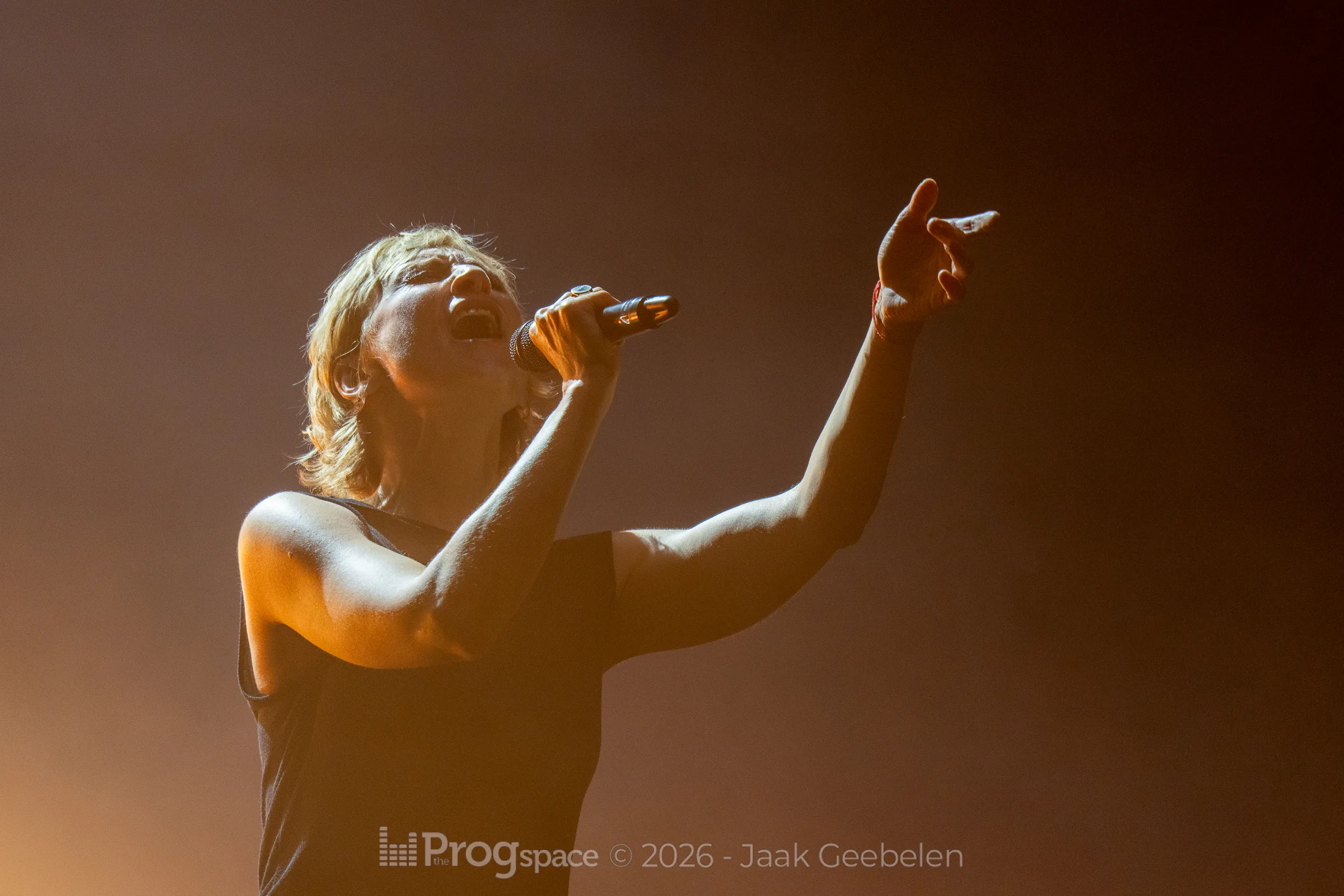
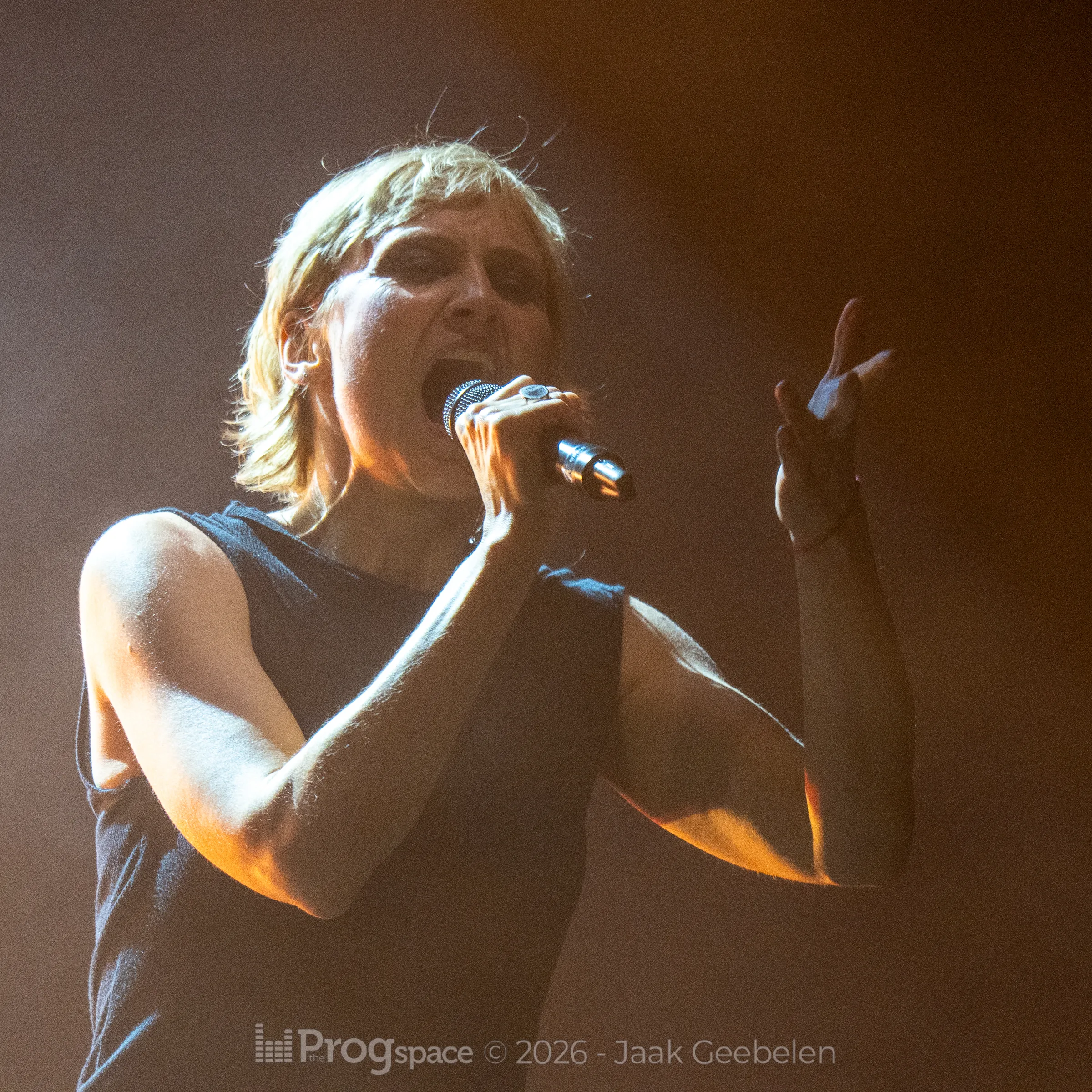
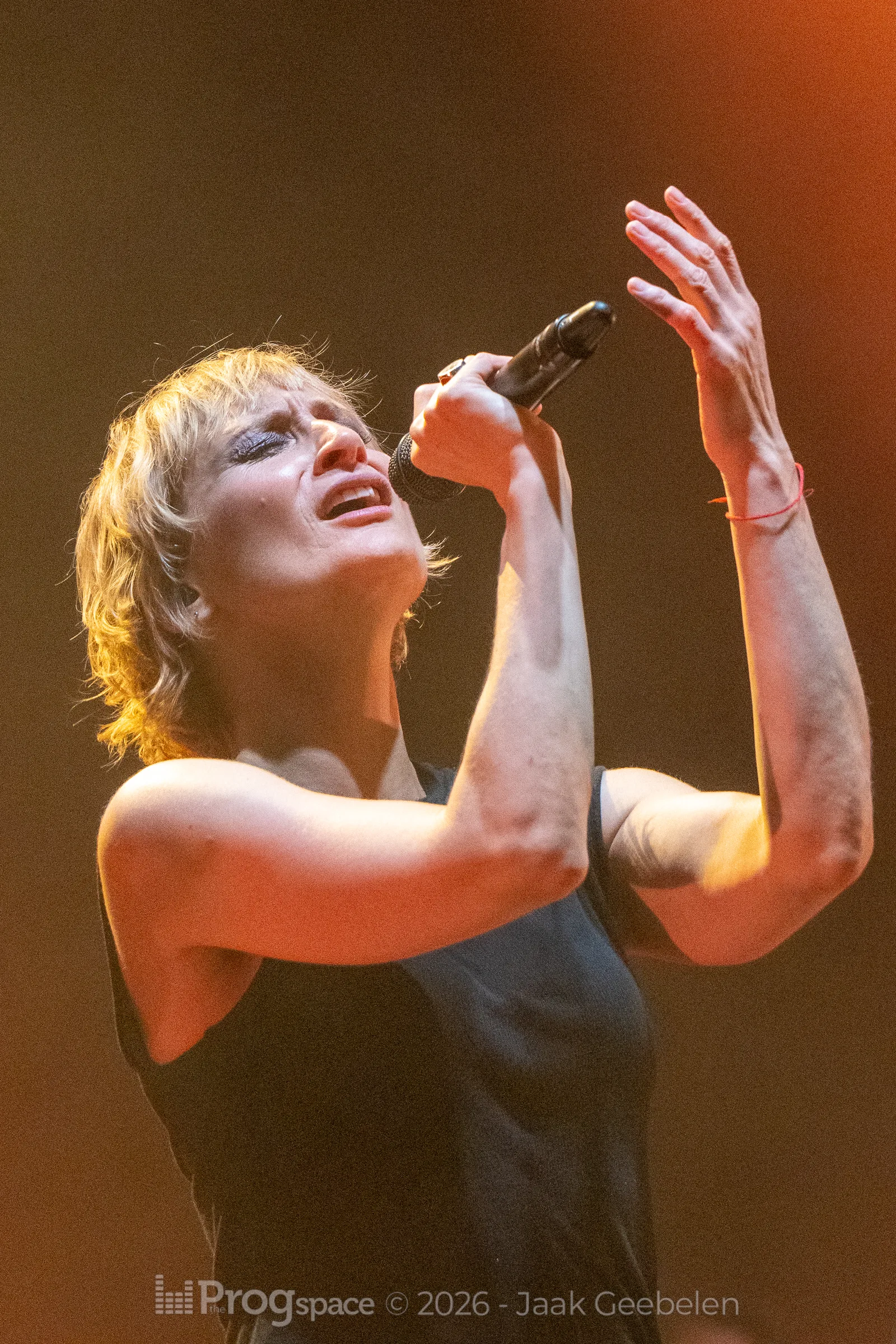
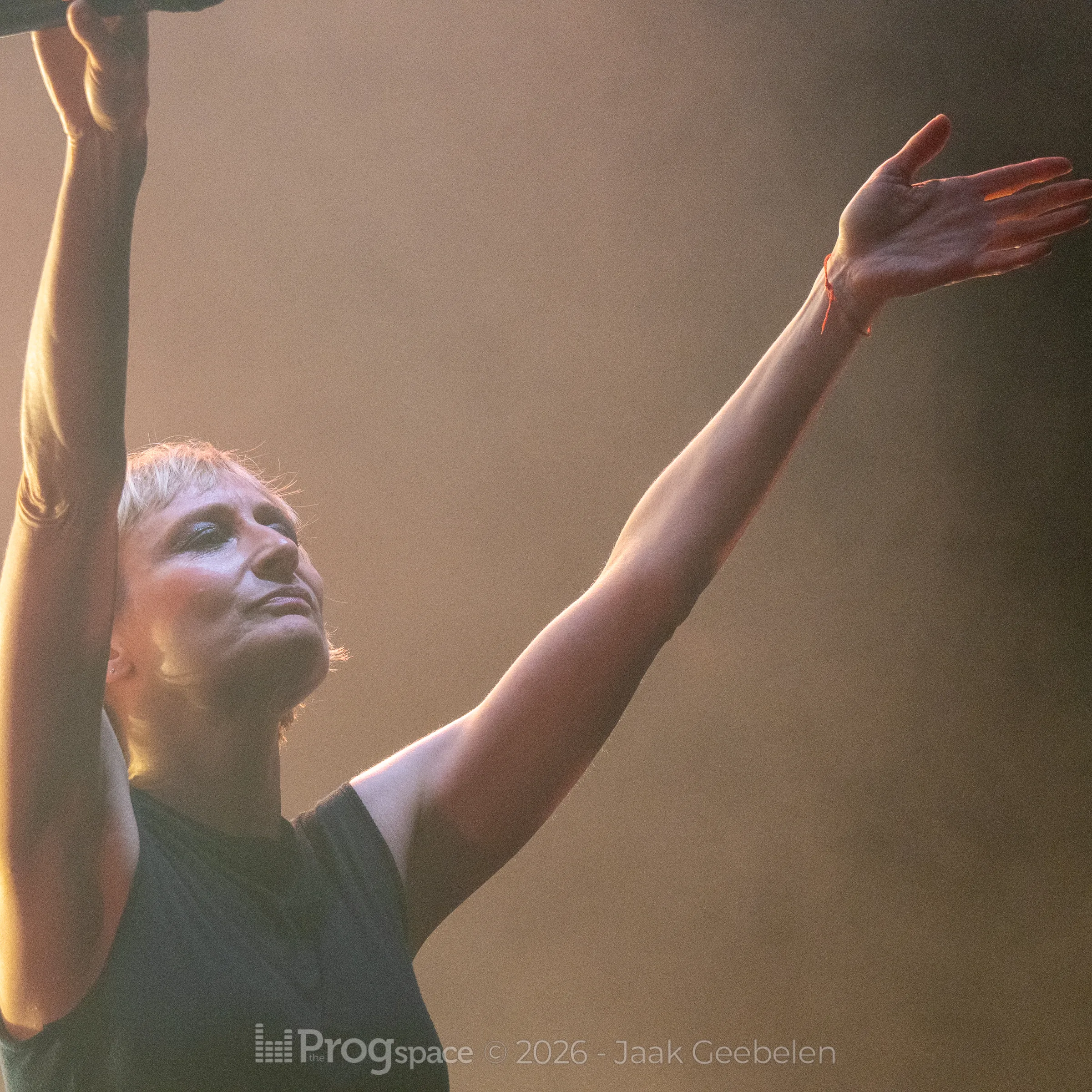
Her voice remains exceptionally beautiful: clear, flexible and recognisable from the very first phrase. But what makes her so special is not only the sound of that voice. It is the way she sings with her entire body. The photographs almost show this better than words can describe it: hands lifted, the body slightly arched backwards, the head caught in the light, the mouth open as if the singing comes not from technique alone, but from a deeper place inside. She does not sing towards the music; she seems to move through it.
There is nothing artificial about it. No grand rock pose, no forced theatricality. The emotion comes straight from within, yet remains refined and elegant. That is a rare combination. Geike can show vulnerability without becoming fragile, intensity without exaggeration, distance without sounding cold. She is not a frontwoman who needs to dominate the audience with gestures. She gives the music its character by being present in a way that is both restrained and magnetic.
In “Eden” she seemed almost to disappear into the melancholy of the song. In “Vinegar And Salt” every movement became smaller, and the tension only increased. In “Mad About You” she carried the audience’s recognition without turning the song into routine. And in the more physical moments, when she opened her arms or allowed her body to move with the music, you could feel that the emotion was not performed.
That kind of presence is rare. Geike is not simply Hooverphonic’s singer. In this line-up, she is the person who gives the music its face.
From trip hop to chamber pop on a city square
Hooverphonic started strongly by not immediately reaching for the biggest crowd moments. “Intro / Autoharp” and “Out Of Sight” opened the concert from the band’s more atmospheric side. No instant festival triumph, but a slow descent into their own sound world. It recalled the period when Hooverphonic still stood close to trip hop, soundtrack music and dark art pop.
“No More Sweet Music” demanded attention early in the set. It is not an easy song for a city square, but that is exactly why it mattered. It showed how Hooverphonic has always connected beauty with a certain coolness and ambiguity. Then “2 Wicky” brought the band back to its origins: slow, threatening, subterranean, still one of their most essential songs.
“The Wrong Place” fitted surprisingly well into that line. Although the song remains linked to a later chapter in the band’s history, live it did not sound like an isolated modern pop moment, but like a compact, dark Hooverphonic song with a bitter undertone.
After that, the set gradually moved towards more direct recognition. “Anger Never Dies” worked because of its almost Bond-like grandeur; “Romantic” brought a lighter touch, without breaking the carefully built atmosphere. The band remained tight, stylish and remarkably controlled.
The heart of the concert
For me, the emotional centre of the evening lay in “Eden,” “Vinegar And Salt” and “Jackie Cane.”
“Eden” remains one of the most refined songs from Geike’s first period with the band. Live, the strings gave it a cool, almost fragile melancholy. Geike did not sing it as a nostalgic moment, but as a song that still breathes. Her voice stayed clear, yet underneath it there was a tension that made the song much more than a beautiful memory.
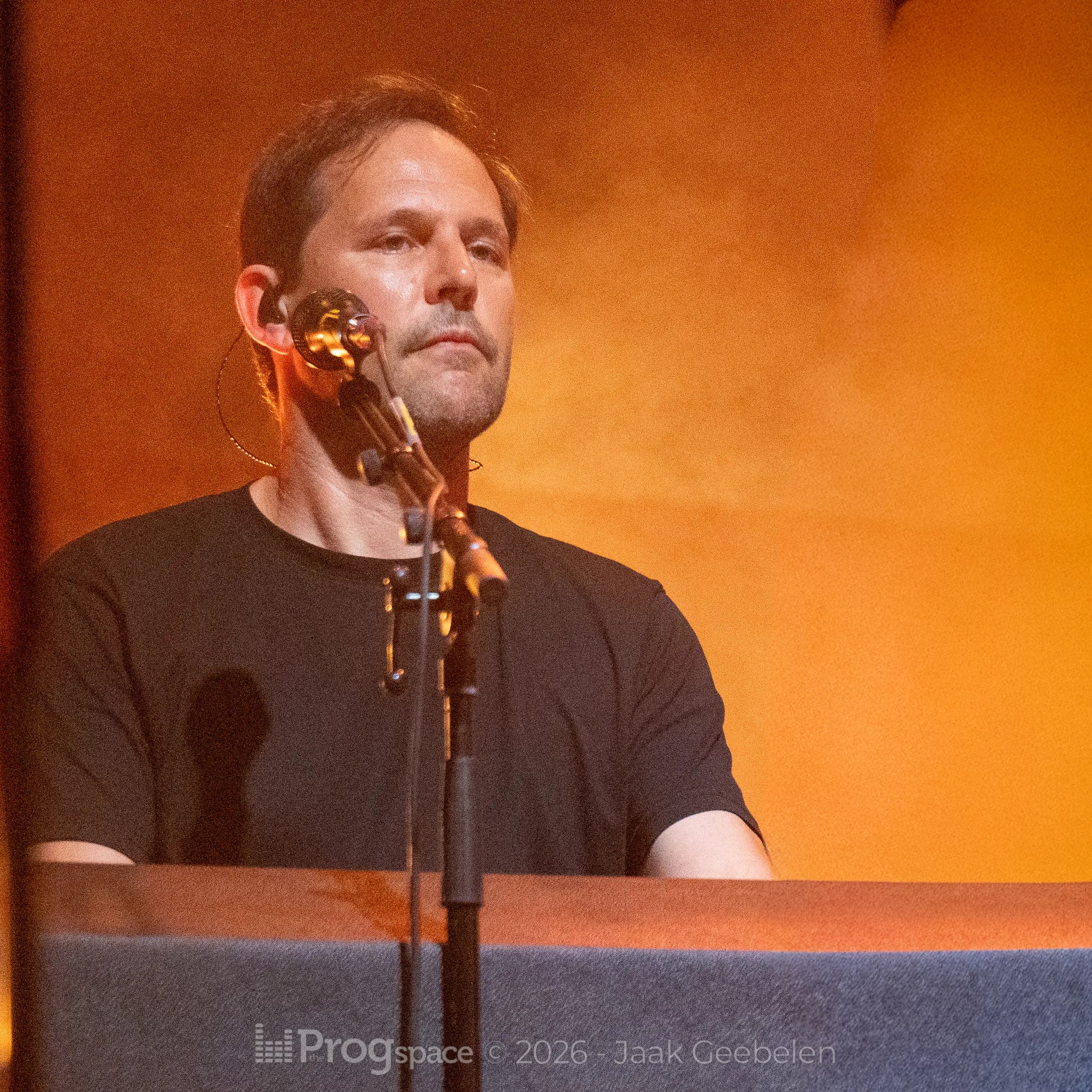
“Vinegar And Salt,” performed in a piano version, was perhaps the most intimate moment of the set. On a large city square filled with people, the band dared to reduce everything to voice, piano and silence. It worked beautifully. Precisely because Geike did not force anything, the emotional weight became stronger. The audience, which had processed football disappointment earlier that evening, listened. That says a great deal about the control Hooverphonic can still exert over a space.
“Jackie Cane” then brought out the band’s more theatrical side. It remains a key song for understanding Hooverphonic as more than a collection of singles. It carries the atmosphere of a concept, of a character, of a tragic and slightly estranged story. Here you hear how close Hooverphonic can come to film, theatre and art pop.
The hits, but not as cheap gestures
Of course, “Mad About You” arrived. The song is too well known to be heard completely innocently now, but live it still stands strong, especially with strings. On the Oude Markt it did not become a cheap sing-along moment, but a wide wave of recognition. The audience visibly surrendered to it, despite the football defeat that had only just happened.
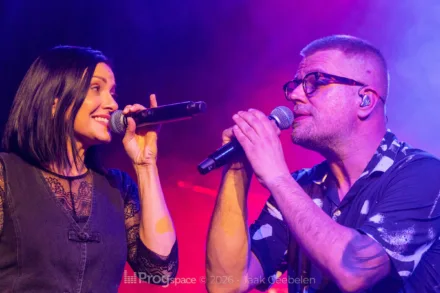
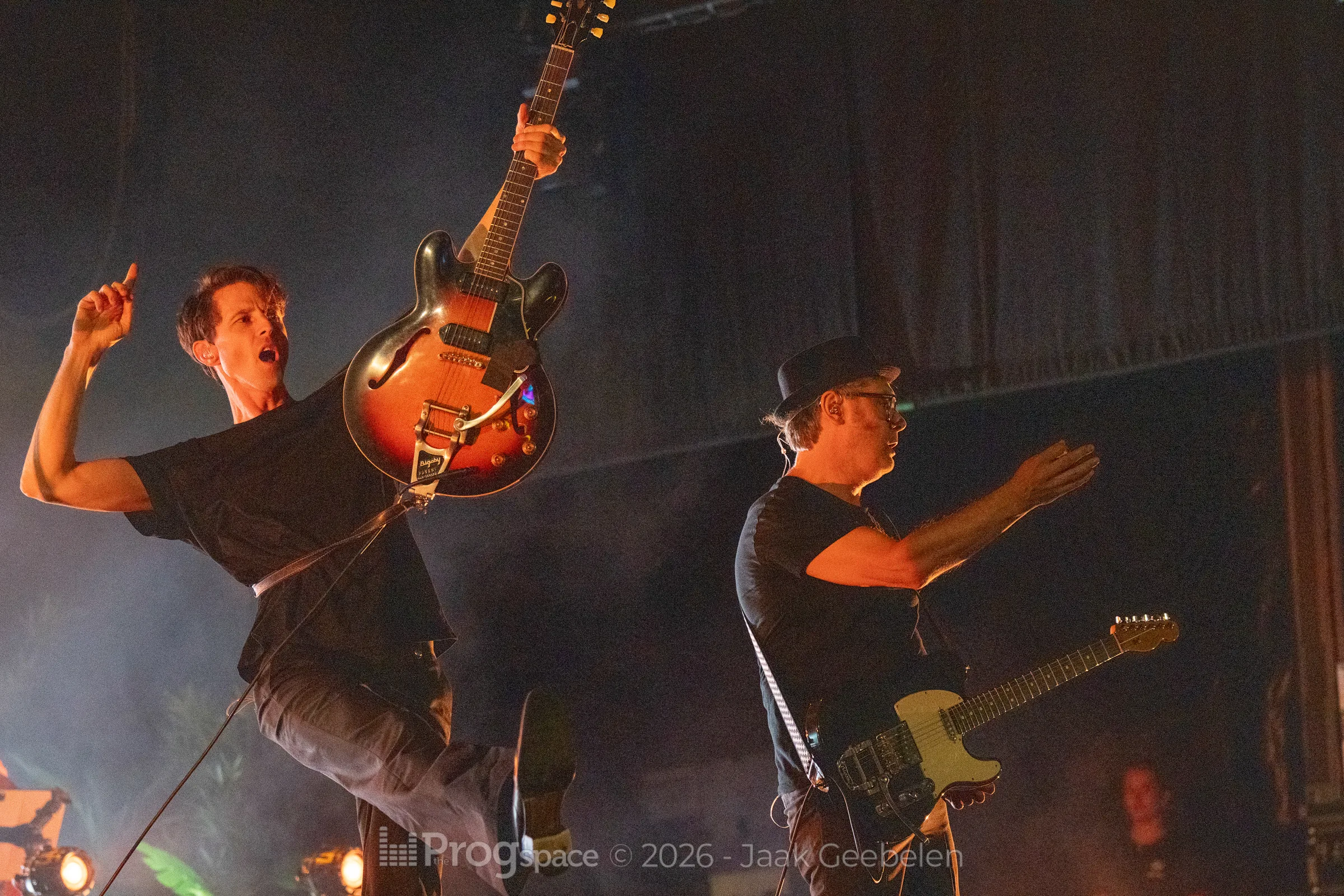
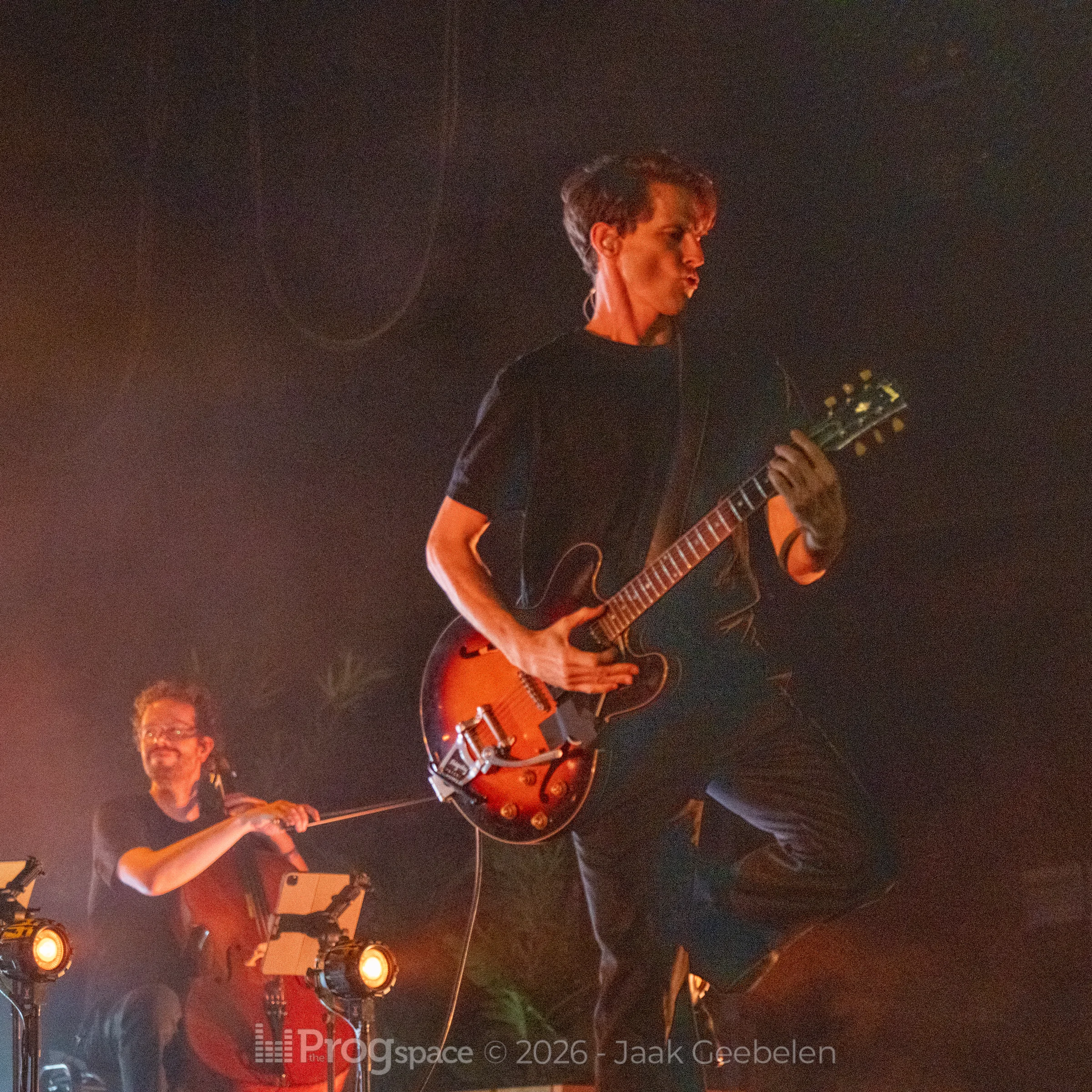
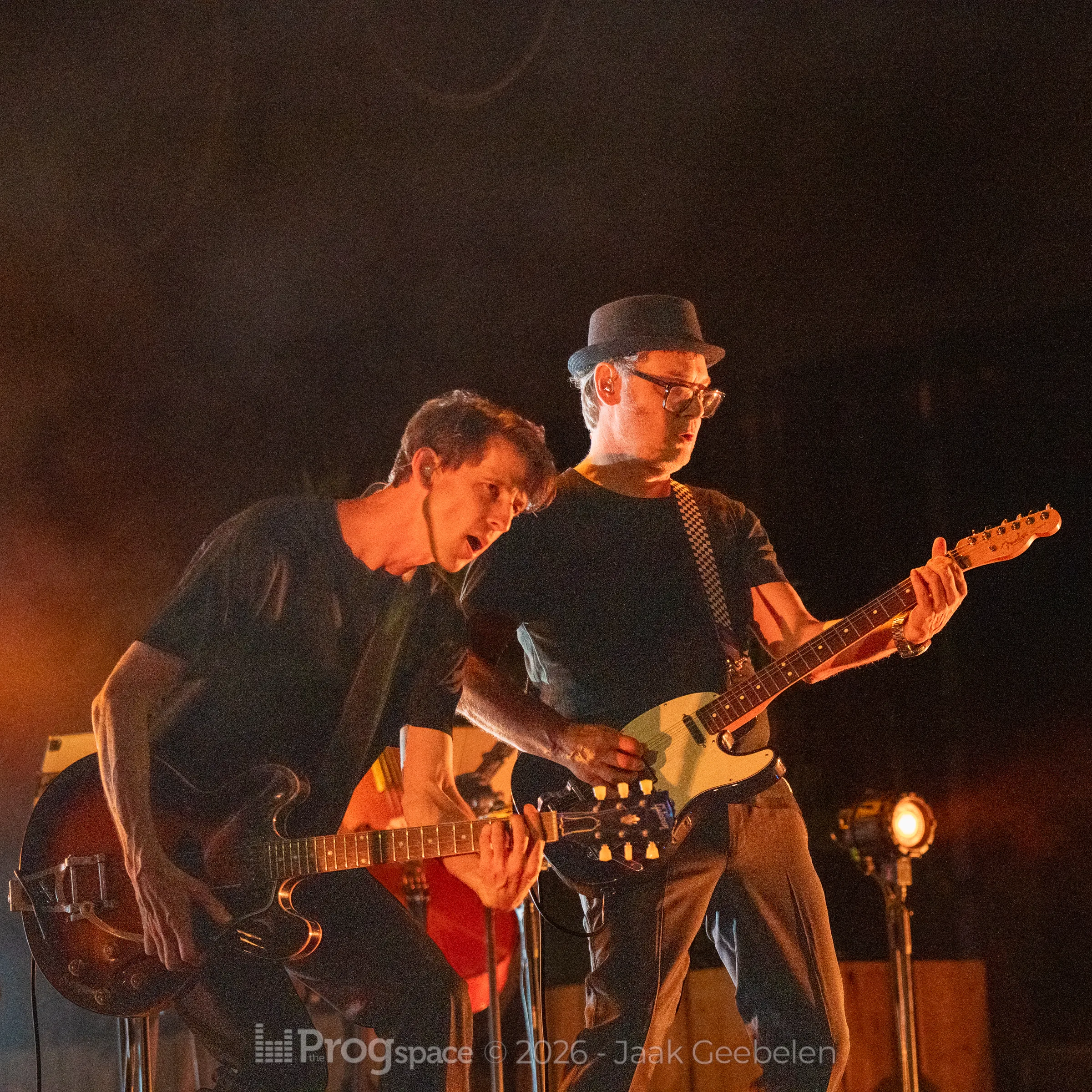
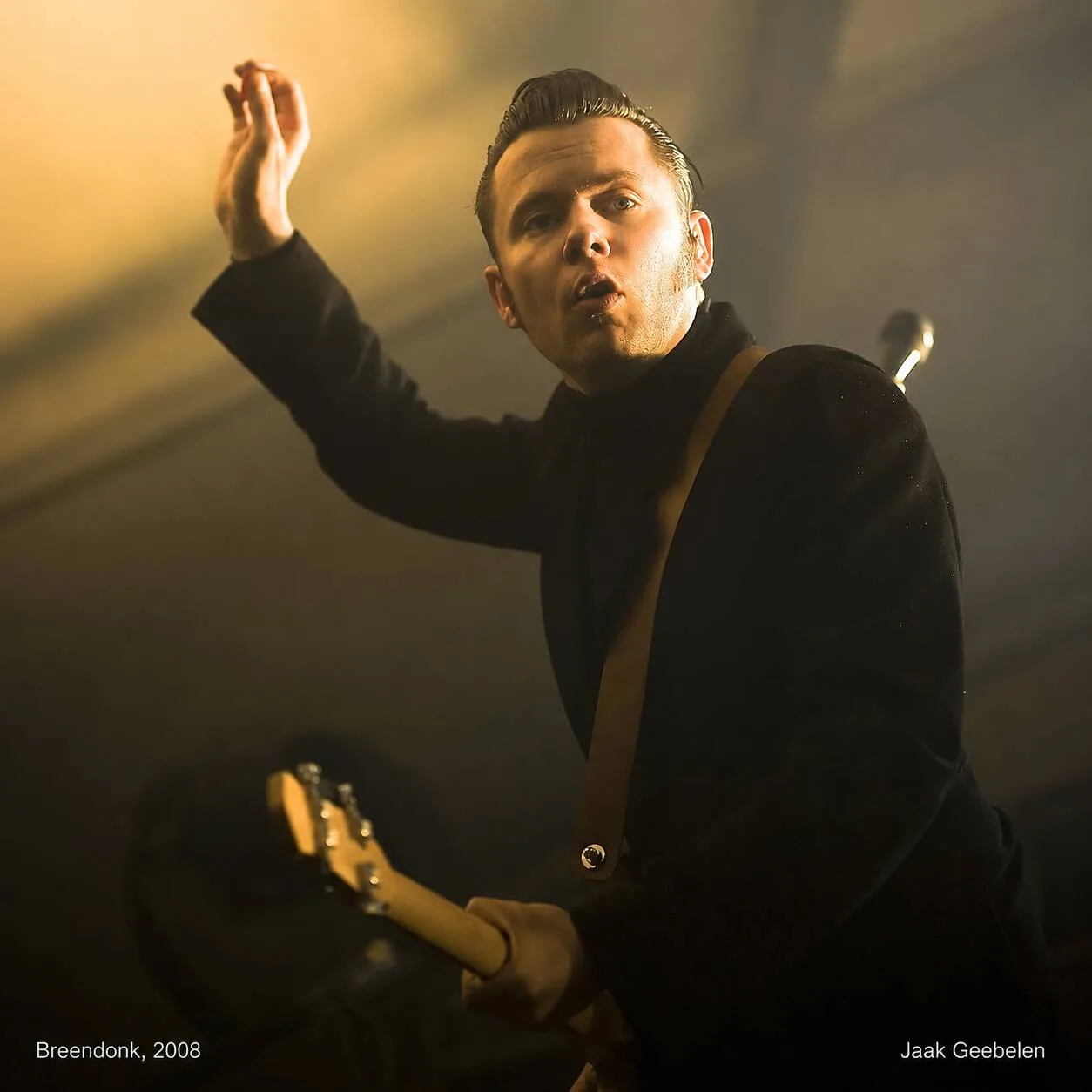
“Badaboum” then brought a more playful moment. Live guitarist and backing vocalist Pieter Peirsman came forward for the duet with Geike. That gave the song an almost theatrical, physical energy. Where Raymond Geerts remains the sober, concentrated guitar figure, Peirsman brought movement and humour into the set. It was one of the moments when Hooverphonic briefly stepped out of its elegant distance.
“Amalfi” brought air and colour, while “Nirvana Blue” restored more drift and atmosphere. The closing sequence with “The World Is Mine” and “Sometimes” felt logical: grand, slightly theatrical and still melancholic. Not a simple triumph, but an ending that felt more like a curtain falling than a fireworks finale.
A band preserving its essence
What struck me during the concert was the confrontation between then and now. In my old images from 2007 and 2008, you see a band at the end of a chapter: Geike in sharp backlight, Raymond Geerts carved out by stage lamps, Alex Callier as the architect in the shadows. The images from now show another moment, but not another essence.
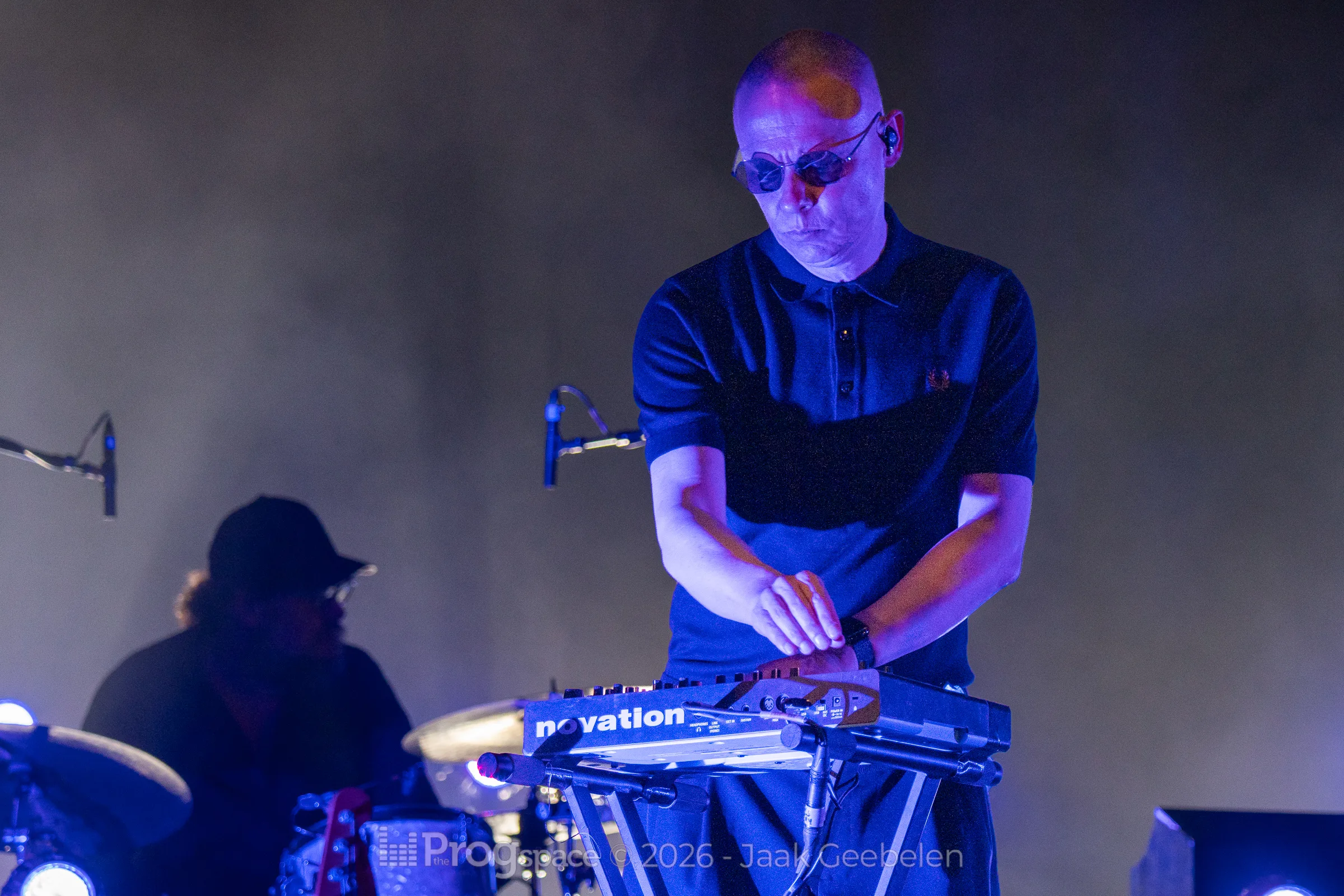
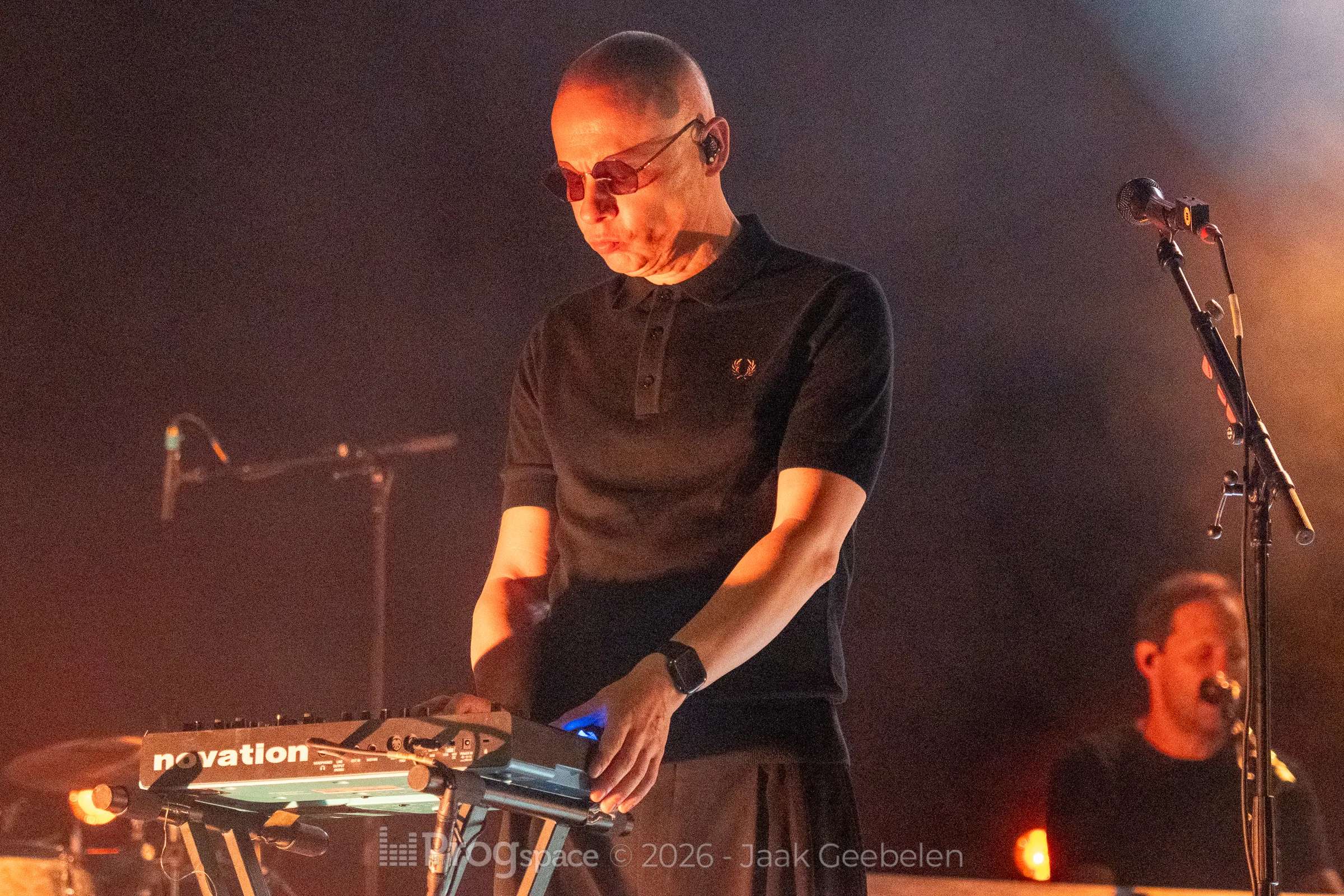
Geike still looks fantastic, but her presence has changed: more sober, more concentrated, perhaps even stronger in the details. Raymond’s playing remains tasteful and precise, without unnecessary gestures. Callier remains the one organising the sound world, guarding the tension and directing the band’s course.
That made the concert anything but a nostalgic reconstruction of 2008. It was a band not trying to replay its history, but carrying that history into a newc chapter. The atmosphere that struck me then was present again, but with more depth and a stronger awareness of time.
Conclusion
Hooverphonic at Het Groot Verlof could easily have disappeared into the circumstances: a lost football match, a packed city square, a free summer festival. Instead, the band chose atmosphere, control and musical care. The presence of four strings, the smoke, the backlight and the restrained stage direction turned the Oude Markt into something more than an anonymous festival setting. It became a cinematic space.
For me, a personal circle also closed. In 2008 I photographed Hooverphonic on that same Oude Markt, near the end of Geike’s first period with the band. Eighteen years later I stood there again, now near the end of her second one. Time has passed, but what was essential remained intact: the voice, the light, the shadow, the melancholy and that rare combination of distance and emotional intensity.
And above all, there was Geike Arnaert. A frontwoman with an exceptionally beautiful voice, but even more with a presence that gives the music direction. She sings with her voice, but also with her hands, her posture, her gaze and her entire body. It comes from within, without pose, without exaggeration. Refined, elegant and deeply emotional.
That is what Hooverphonic still does at its best. They make music that cannot be fully pinned down as pop, trip hop, art pop or soundtrack. They create a space. And on an evening when Leuven first lost with Belgium, then collectively listened, that space proved large enough to lift a packed Oude Markt out of its football disappointment.





 We’re a group of Prog-lovers who started a journey to share with you our thoughts about albums, concerts, tours and festivals, the photo galleries of the Prog concerts we visit, as well interviews with upcoming or established musicians or prog-related people. Follow our Facebook page for frequent updates and news around the Progniverse.