












Quidam @ Midsummer Prog Festival (20.06.2026) – Maastricht (NL)
Some concerts are experienced with your ears. Others are experienced just as much through your memories. Quidam’s performance at Midsummer Prog undoubtedly belonged to the latter category.
My history with the band goes back almost twenty years. Ever since its release in 2007, Alone Together has remained one of my all-time favourite Polish progressive rock albums. I first saw Quidam live in Verviers and later again in Kerkrade, sharing the bill with After and the then up-and-coming Pure Reason Revolution. At that time, Poland was simply a country producing an astonishing amount of high-quality progressive rock.
Only years later would that musical fascination take on a much deeper meaning. A chance encounter after Collage’s performance at Night of the Prog eventually led me to Warsaw. From there I gradually discovered the richness of the Polish progressive rock scene. Bands such as Riverside, Believe, Satellite, Amarok and Quidam suddenly became more than names on CDs—they became musicians I met and came to know personally. Quidam had therefore been part of my musical life long before Poland became an important part of my personal life. Perhaps that explains why this performance meant so much more than just another festival concert.
Quidam’s renewed prominence today is far from accidental. The Polish progressive rock scene is currently going through an important transition. Riverside, for many years the international flagship of Polish progressive rock, now finds itself in a very uncertain situation following the announced departure of Mariusz Duda and later also Maciej Meller. Collage, with Bartosz Kossowicz on vocals, has had to put its activities on hold due to the health problems of drummer and driving force Wojciech Szadkowski. At precisely this moment, Quidam has stepped back into the spotlight—not as a nostalgic reunion act, but as a band reclaiming its rightful place within the Polish progressive rock scene.
That became evident during last year’s successful Double Headliner Tour with Amarok, where both bands toured Poland as equal partners. Midsummer Prog continued that story, with Amarok taking the very same stage less than twenty-four hours later. For anyone who appreciates Polish progressive rock, the festival almost felt like a celebration of one of Europe’s most underrated musical scenes.
From the opening notes of …But Strong Together, Quidam immediately set the tone. Even the title seemed symbolic of the band’s current situation. A powerful opening driven by a solid rhythmic pulse soon gave way to a looser groove coloured by warm Hammond sounds and the unmistakable flute playing of Jacek Zasada. Right from the start it became clear that Quidam still values melody, atmosphere and musicality over empty displays of technical power.
One Day We Find continued in the same spirit. Bartosz Kossowicz’s vocals remained warm and restrained while guitar, flute and keyboards blended seamlessly together. The chorus quietly lodged itself in your memory, and live the song proved even more convincing than on the album thanks to the natural chemistry between the musicians.
The absolute highlight of the afternoon, however, was Depicting Colours of Emotions. The title alone sparks the imagination. How do you express the colours of emotion? Quidam answers that question not with words, but with music. The composition opens almost meditatively. A long, floating flute melody by Jacek Zasada, warm keyboard textures from Zbyszek Florek, and Bartosz’s calm, almost whispered vocals create a pastoral atmosphere that occasionally recalls early Genesis or the finest moments of Collage. Gradually the musical landscape becomes fuller. Mariusz Ziółkowski’s melodic bass lines and Maciej Wróblewski’s subtle drumming steadily increase the momentum, allowing guitar, organ and flute to build towards an impressive climax.
The focus then shifted towards Saiko, an album with which I have always had a somewhat difficult relationship. Perhaps that is precisely why hearing these songs live proved so refreshing.
Walec turned out to be a genuine surprise. Its powerful opening, direct approach and irresistible melodies made a lasting impression. The song demonstrated that Quidam can write excellent, accessible songs without abandoning its progressive roots. If you’re going to write progressive pop, this is exactly how it should sound.
Spotykanie, by contrast, provided the complete opposite. Where Walec delivered energy, Spotykanie embraced pure melancholy. It was only during this performance that I realised this is hardly a typical progressive rock composition at all. The simplicity of its melody, its emotional atmosphere and gradual development even reminded me of Coldplay—not as criticism, but as a compliment. The song possessed a disarming beauty that relied neither on complex structures nor technical wizardry. Its strength lay entirely in its emotional honesty.
With Kinds of Solitude at Night, Quidam returned to the familiar sound of Alone Together. Wonderful melodic hooks, mature songwriting and a remarkably rich sonic palette make it, for me, one of the finest compositions in the band’s entire catalogue. Live it once again proved exactly why it remains such a favourite.
The same applies to Of Illusions, where the band once more demonstrated its remarkable ability to build tension without resorting to theatrical excess. Guitar, flute and keyboards remained in constant dialogue while Bartosz effortlessly carried the emotional thread of the composition.
For the closing piece, Quidam chose They Are There to Remind Us, subtly incorporating a fragment of The Doors’ Riders on the Storm. Rather than feeling like a cover or a gimmick, it became an elegant musical reference that blended perfectly with the atmosphere of the song. The only disappointment was that, due to time constraints, the planned We Are Alone Together had to be omitted. For me, that remains the emotional centrepiece of the album and would have provided the perfect conclusion to the set.
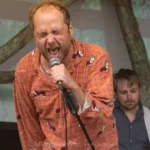
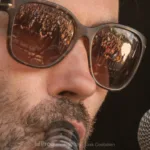
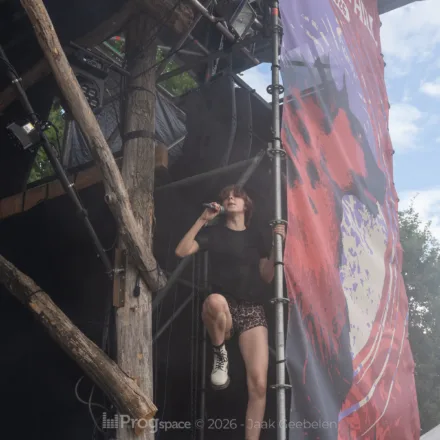
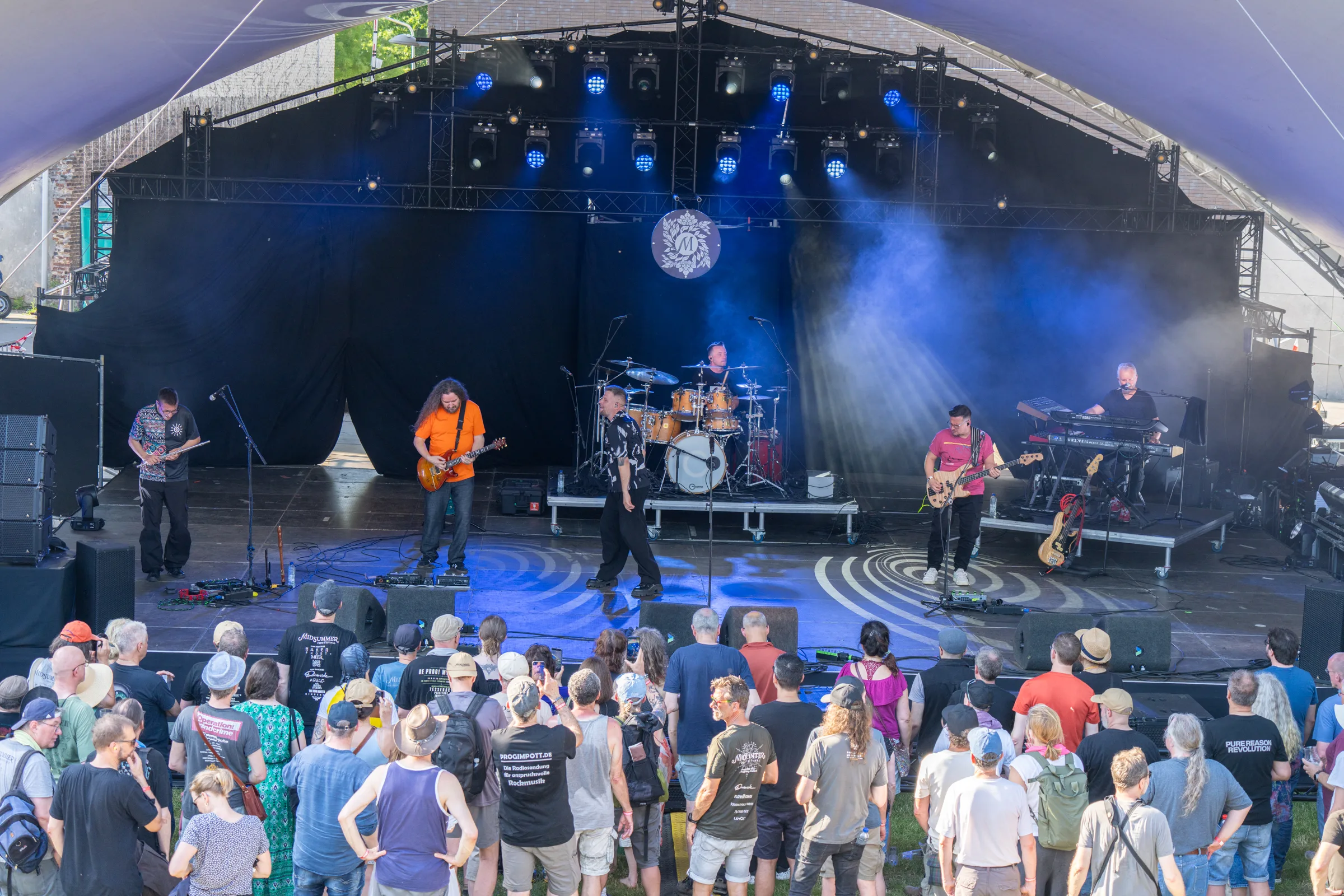
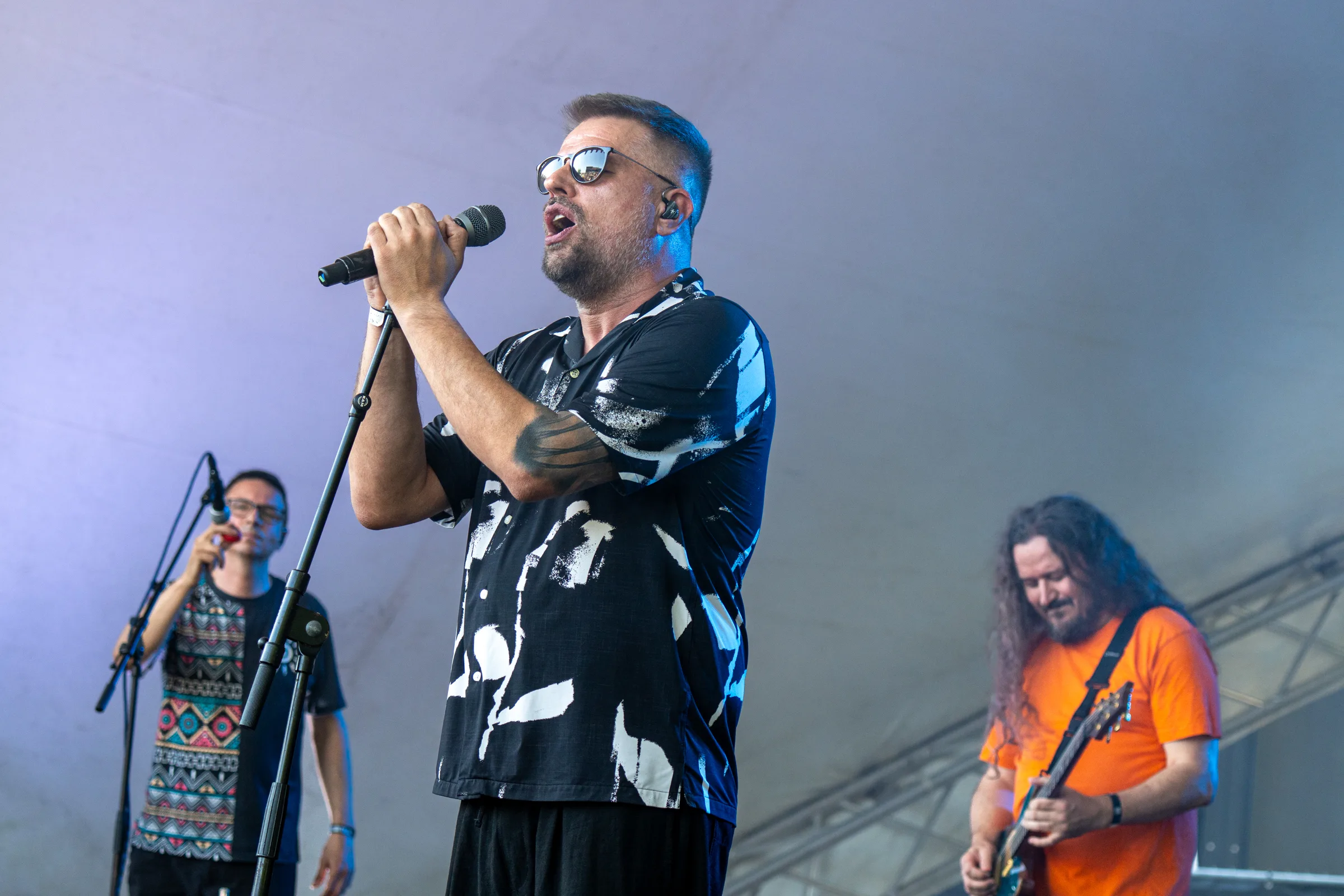
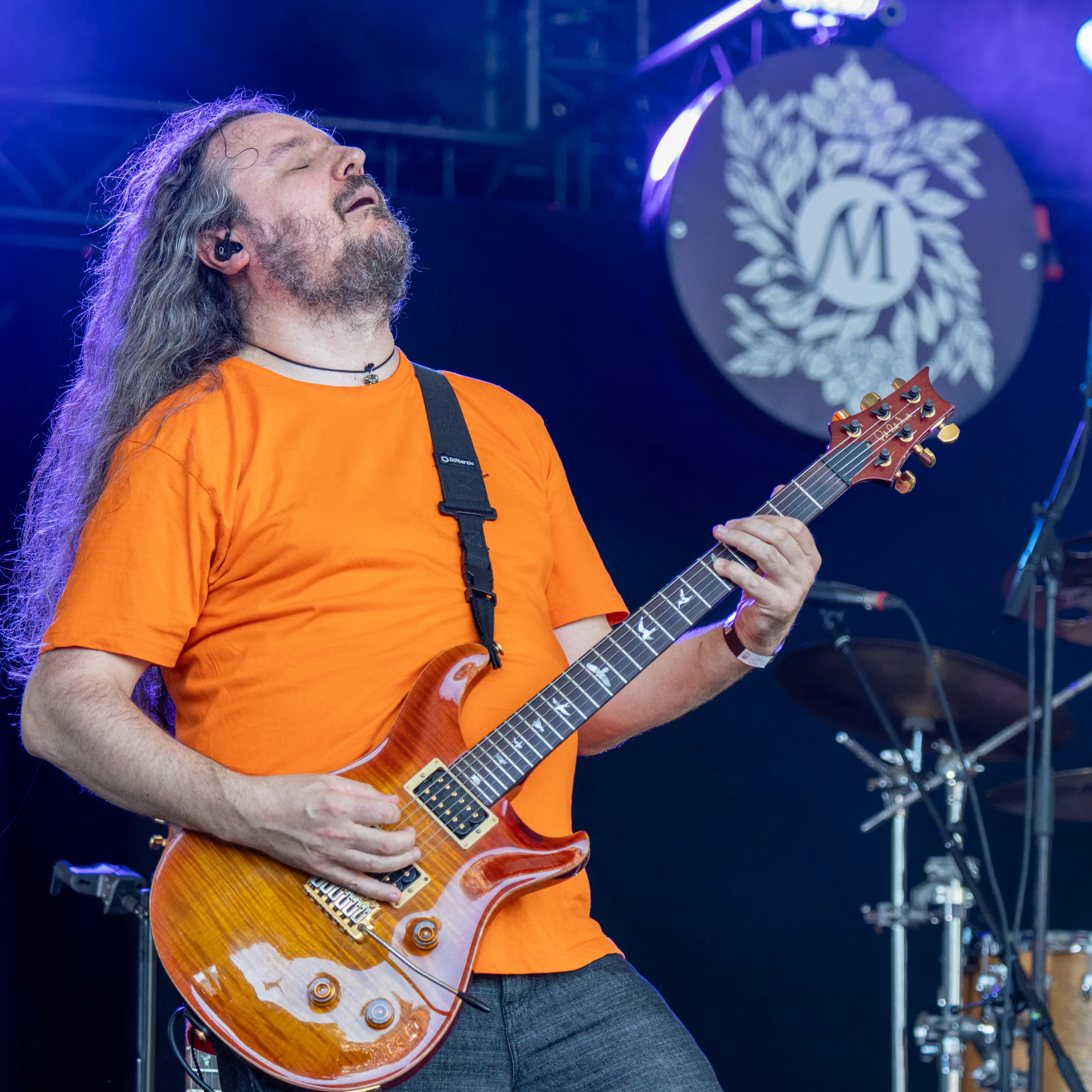
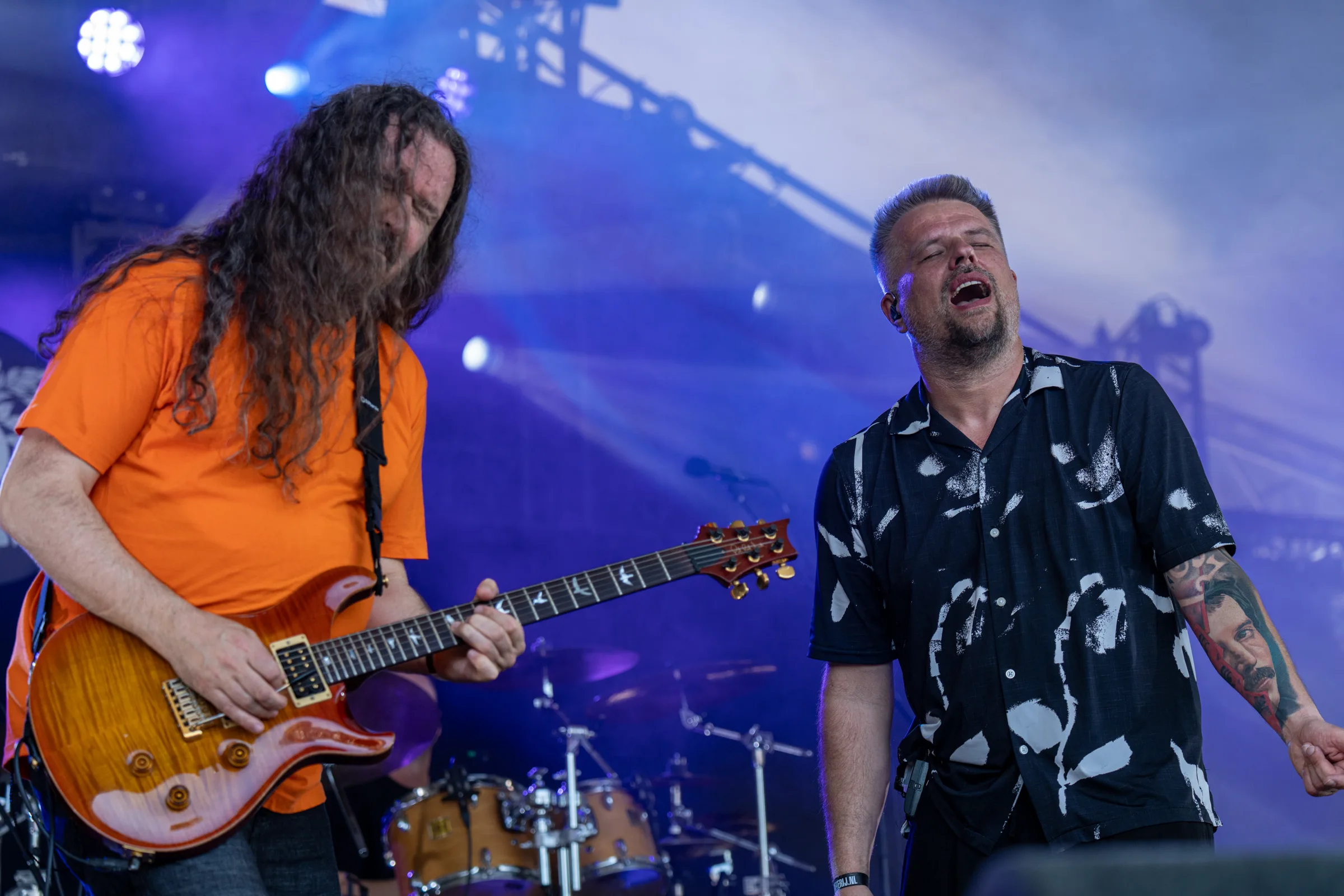
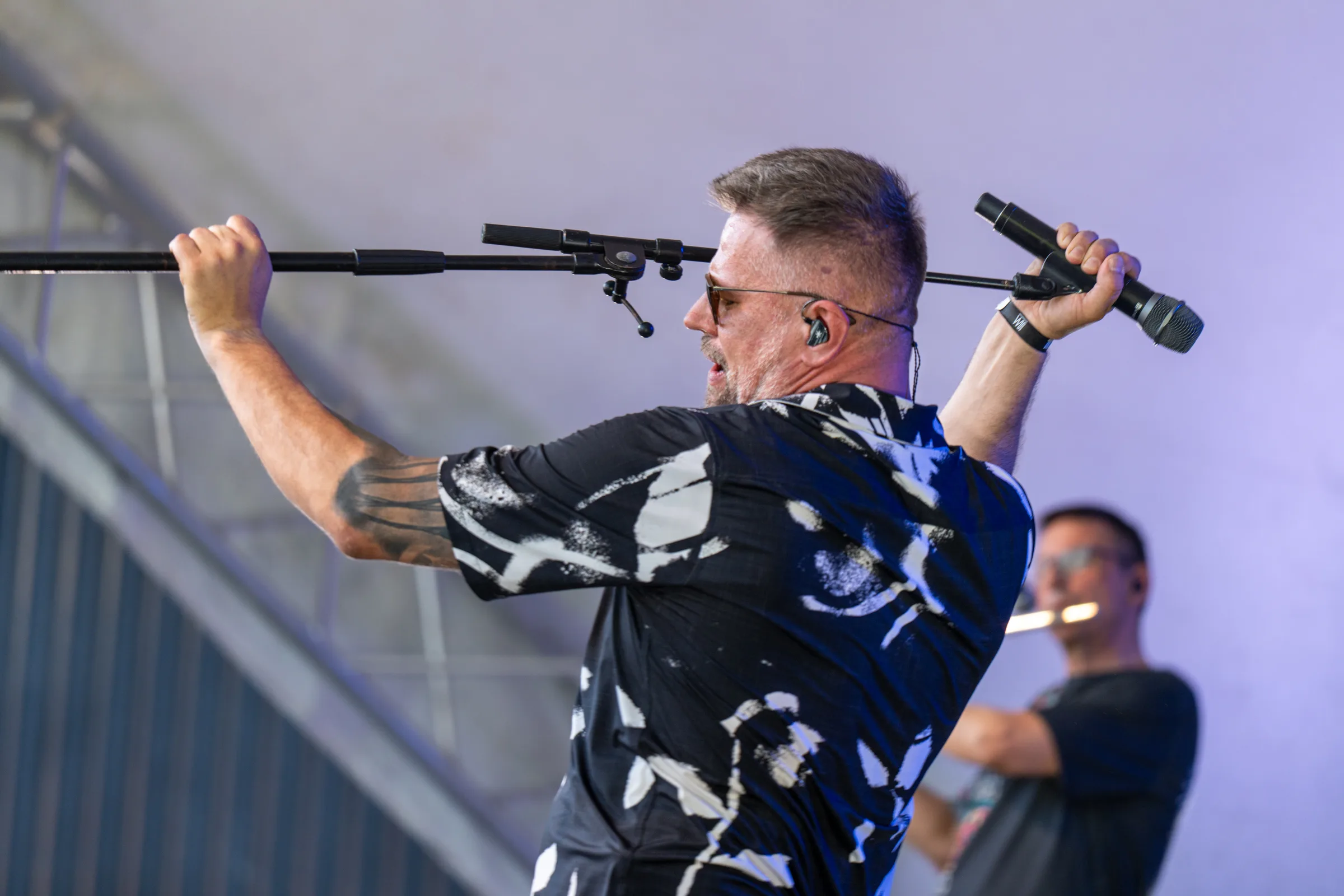
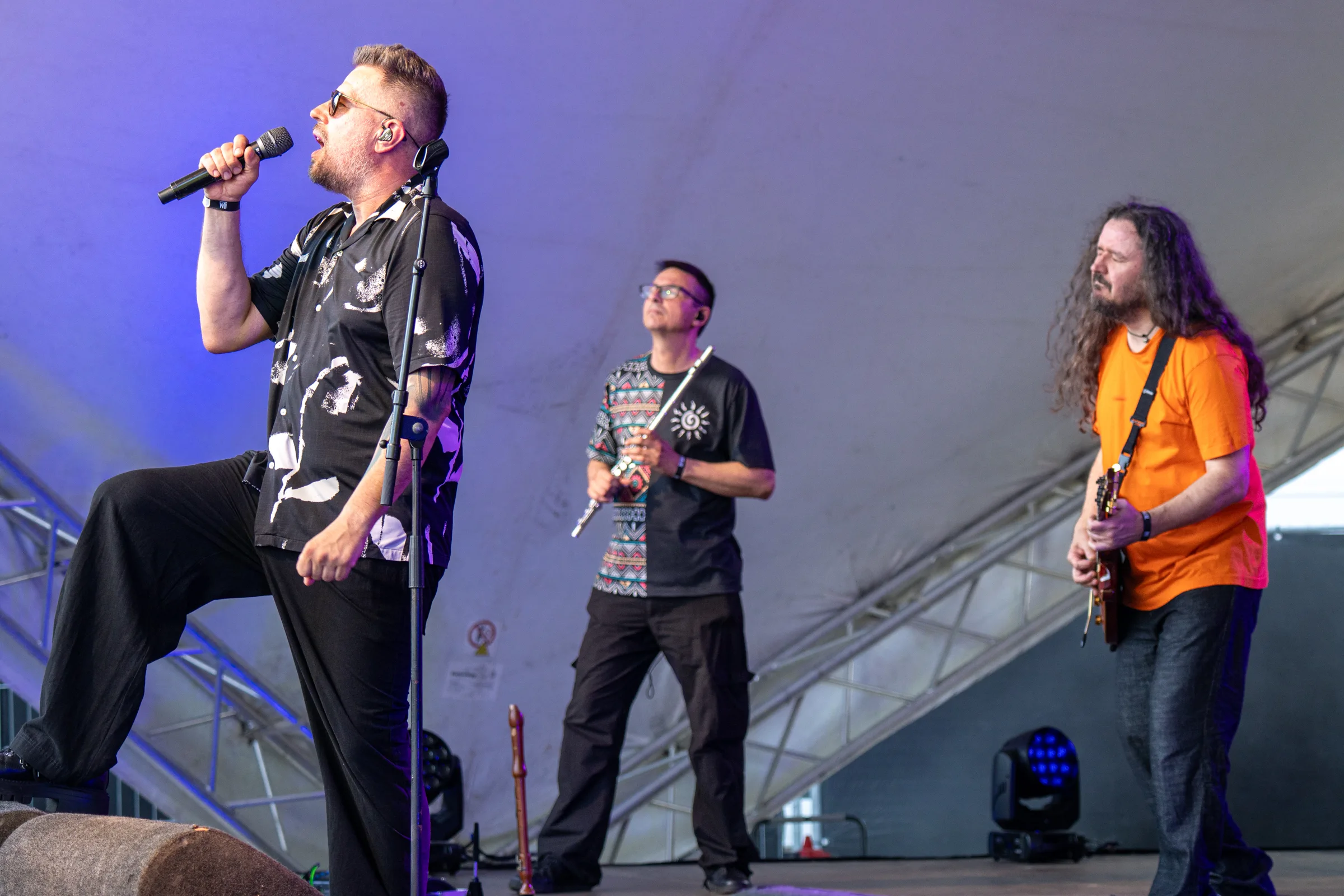
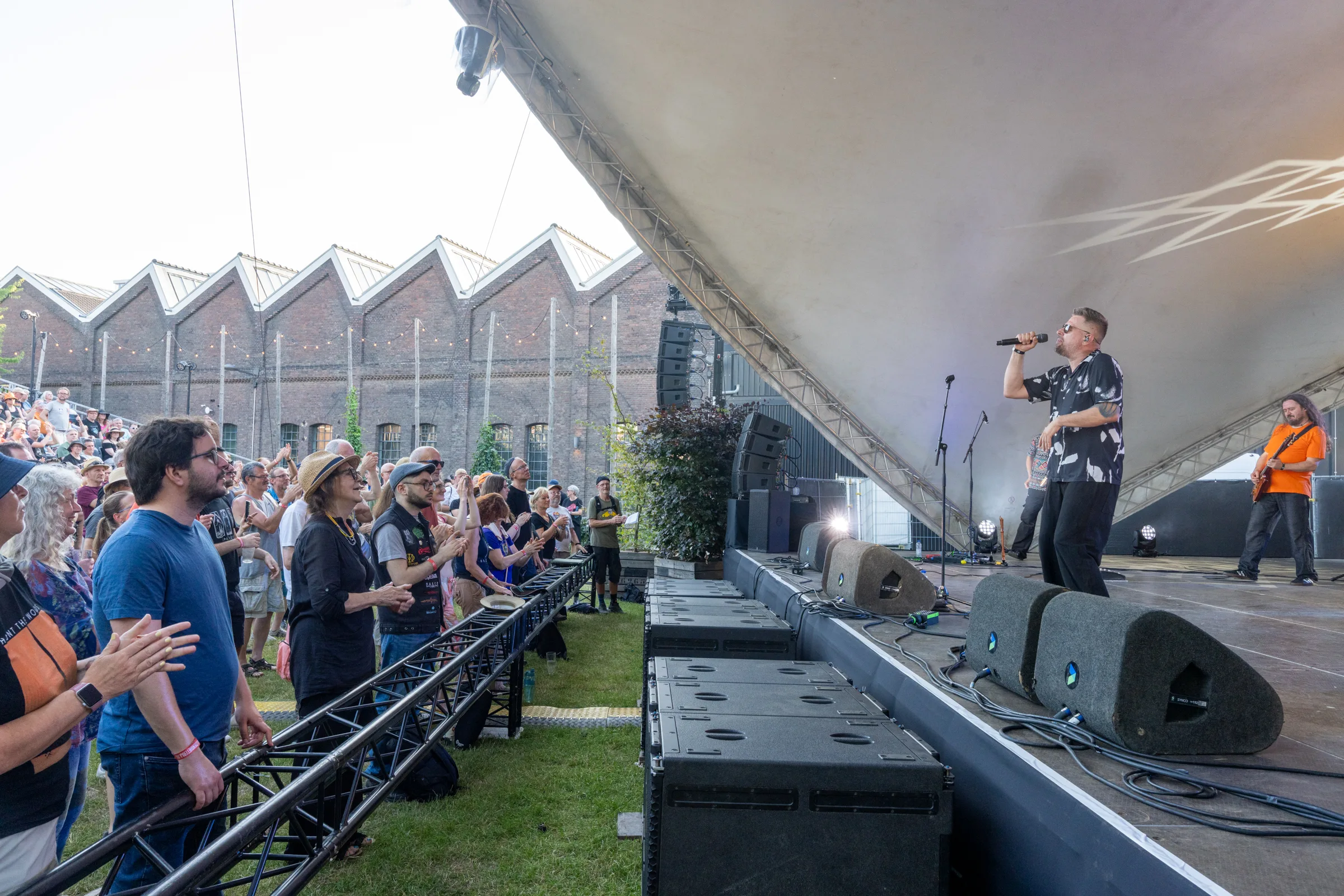
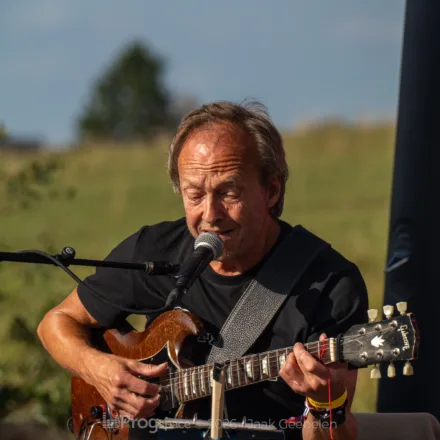
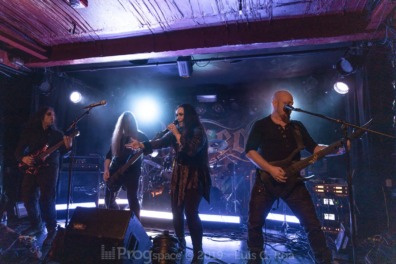
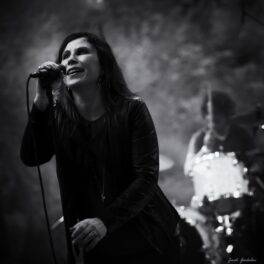
Visually, Quidam remained entirely true to itself. There were no spectacular video walls or elaborate stage effects—only tasteful blue and purple lighting that allowed the music to remain centre stage. The photographs perfectly capture Bartosz Kossowicz constantly engaging with the audience through open gestures, broad smiles and obvious enjoyment despite the sweltering heat.
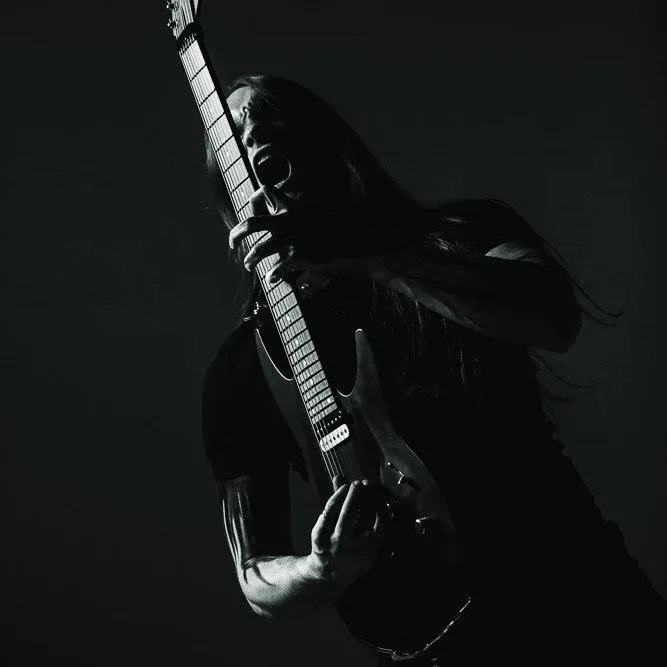
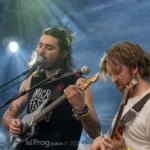
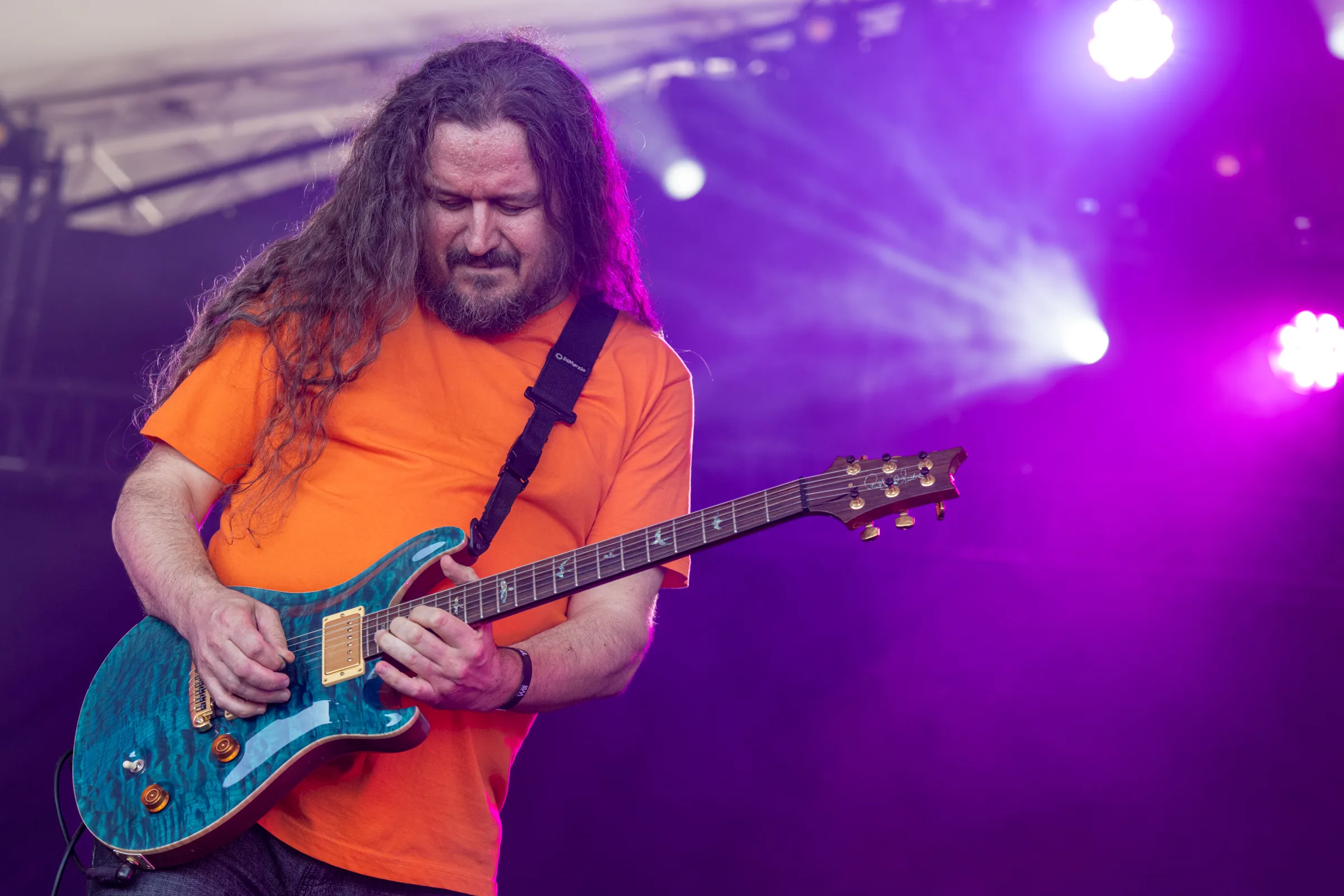
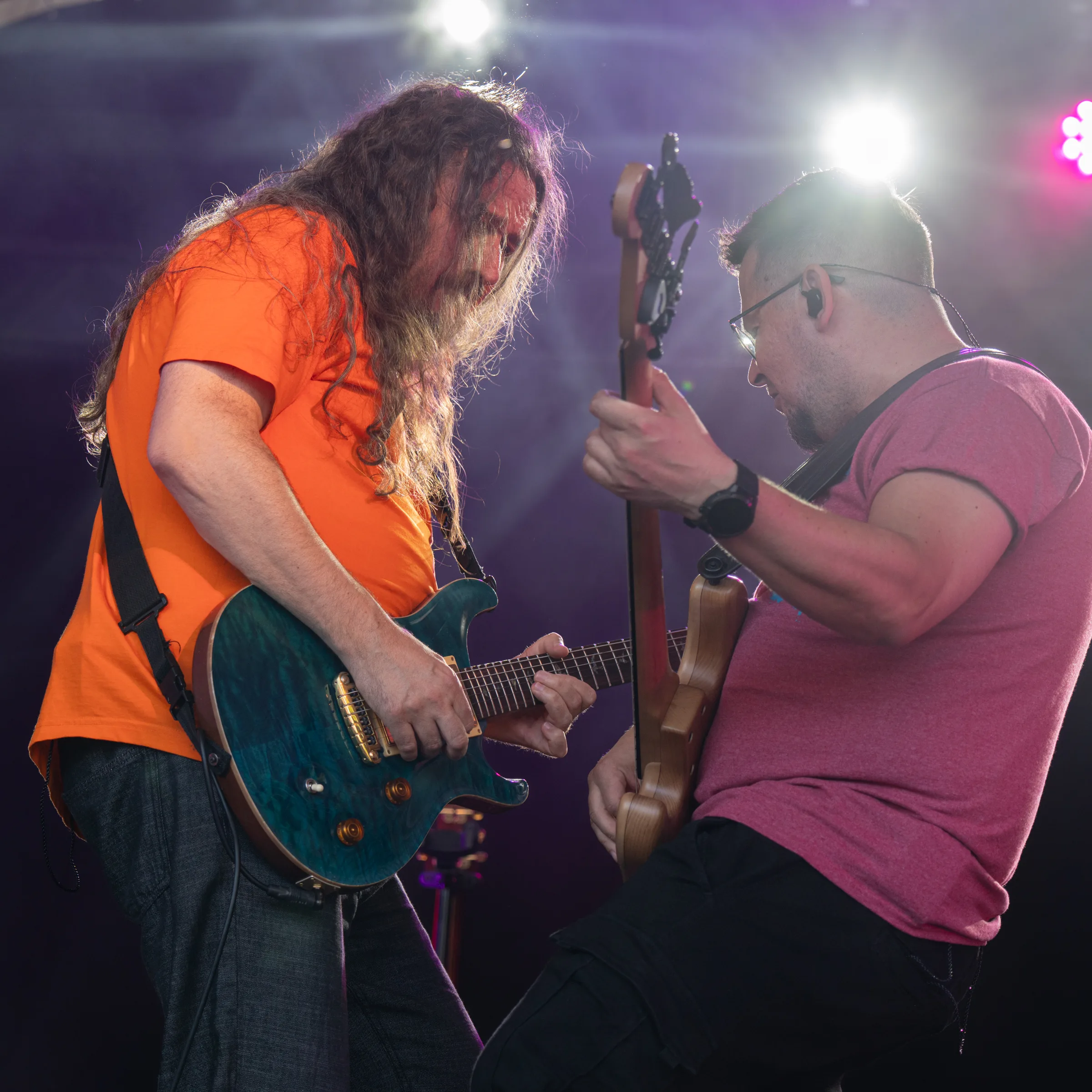
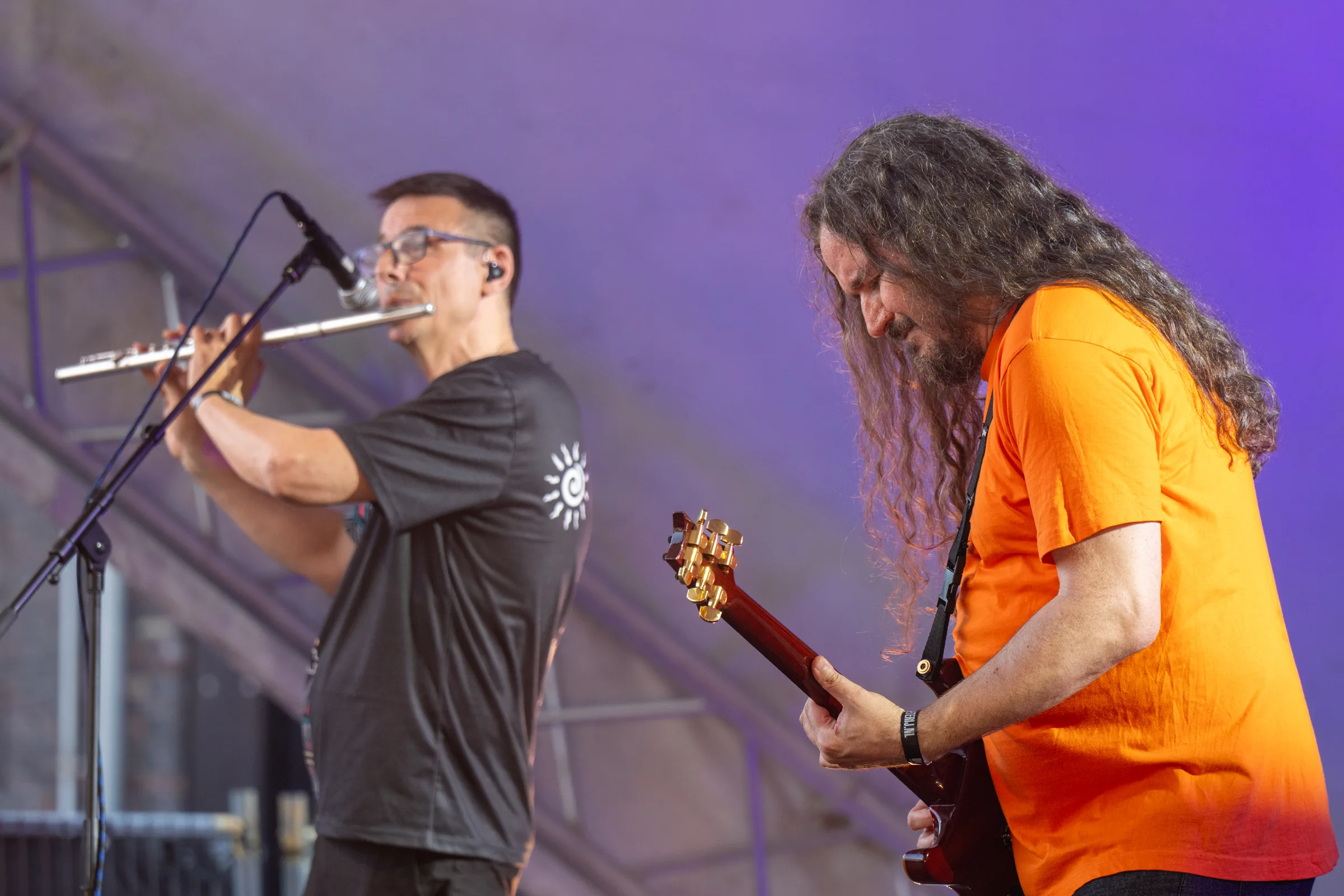
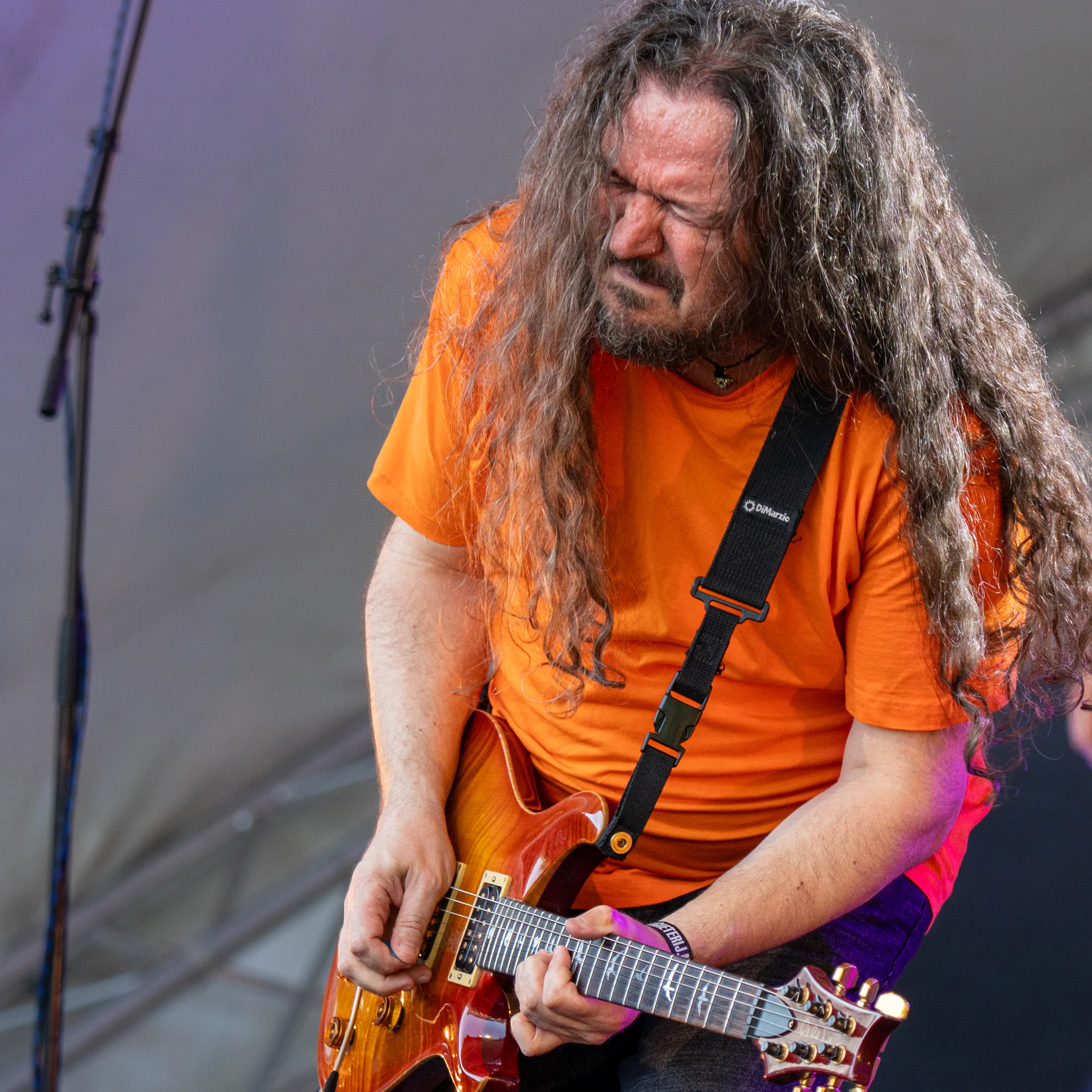
In contrast, Maciej Meller remained almost completely absorbed in his own world. Wearing his striking orange T-shirt, he literally became a splash of colour against the otherwise understated stage. Often playing with his eyes closed, he seemed completely immersed in his guitar—not as a virtuoso seeking applause, but as a musician determined to let every note serve the composition.
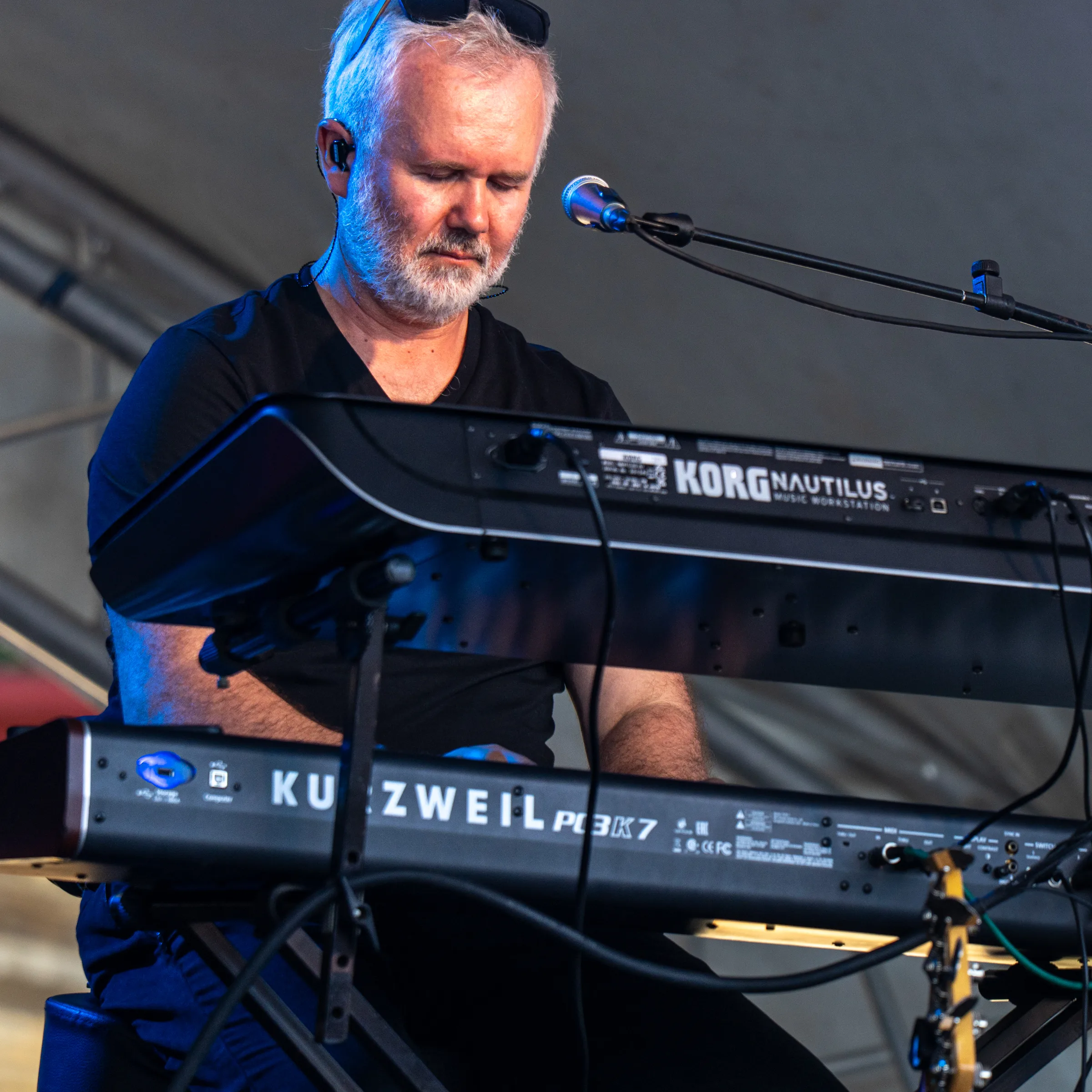
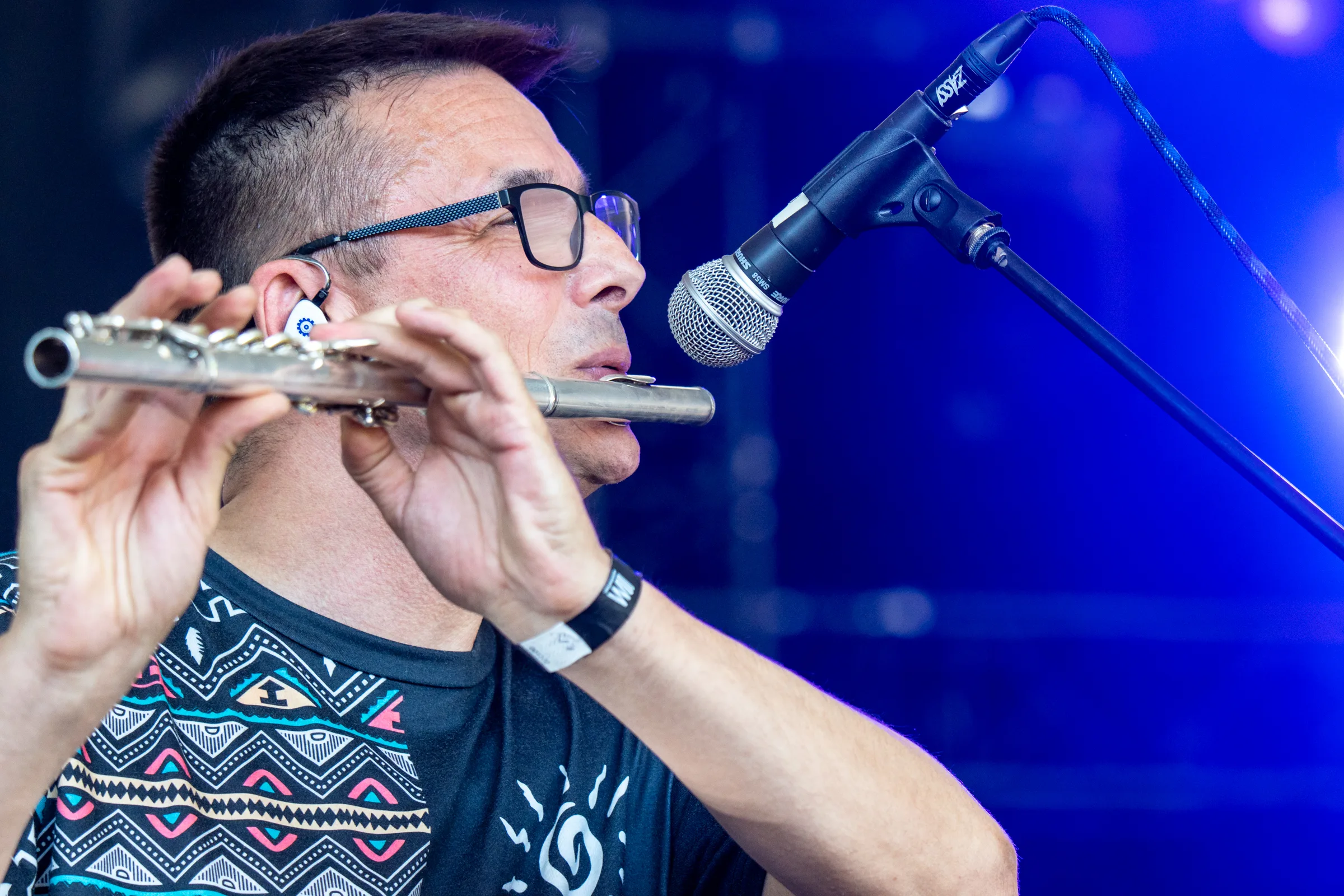
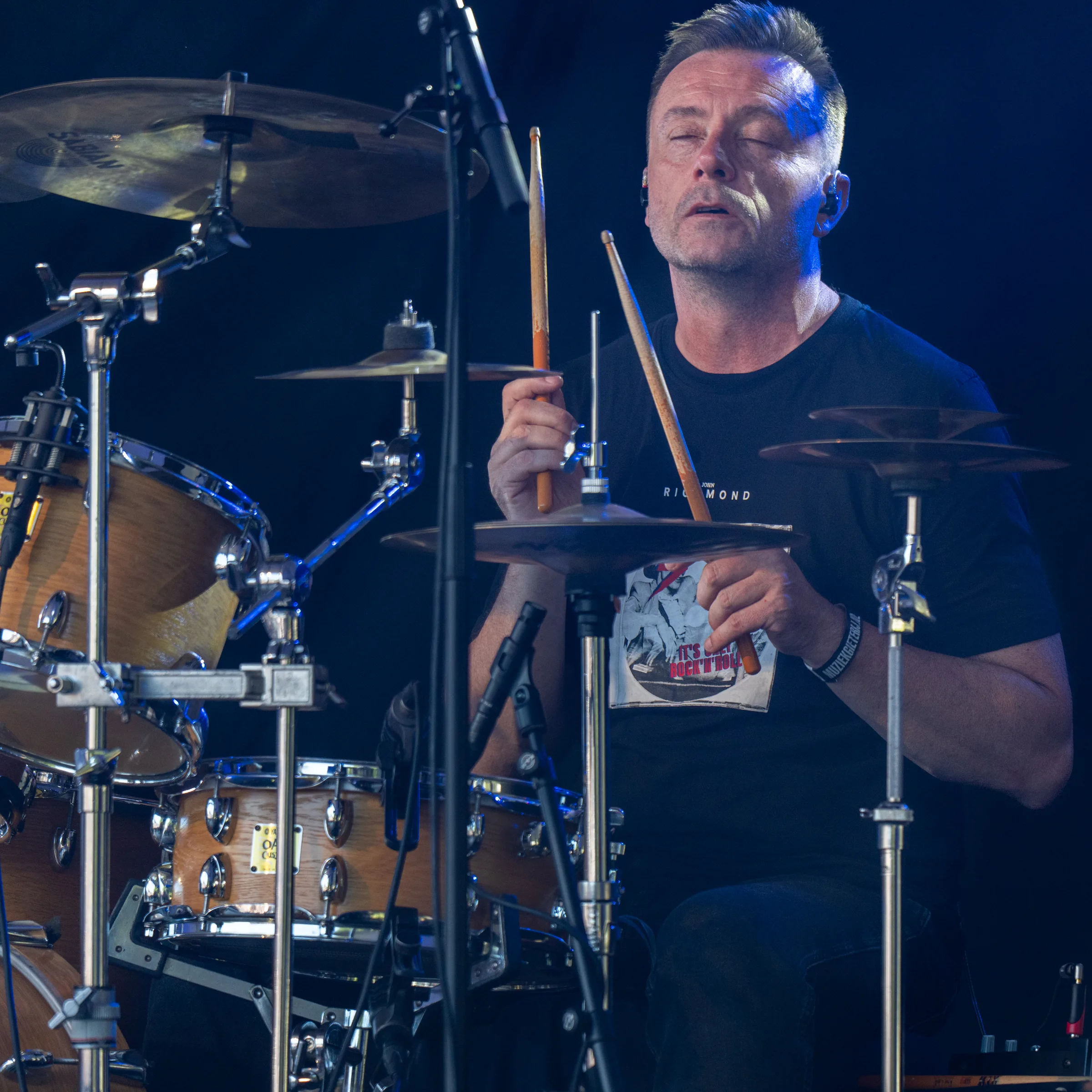
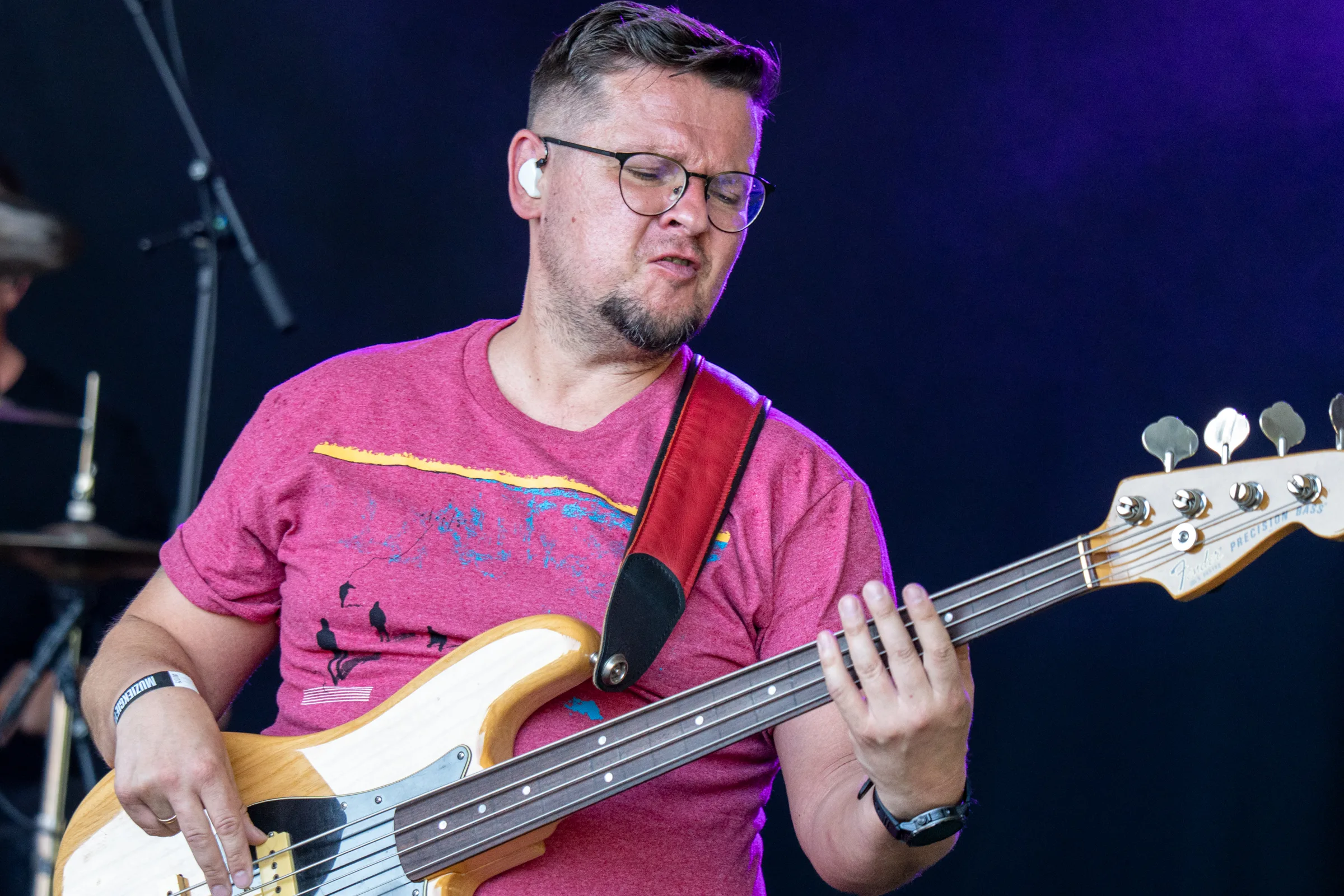
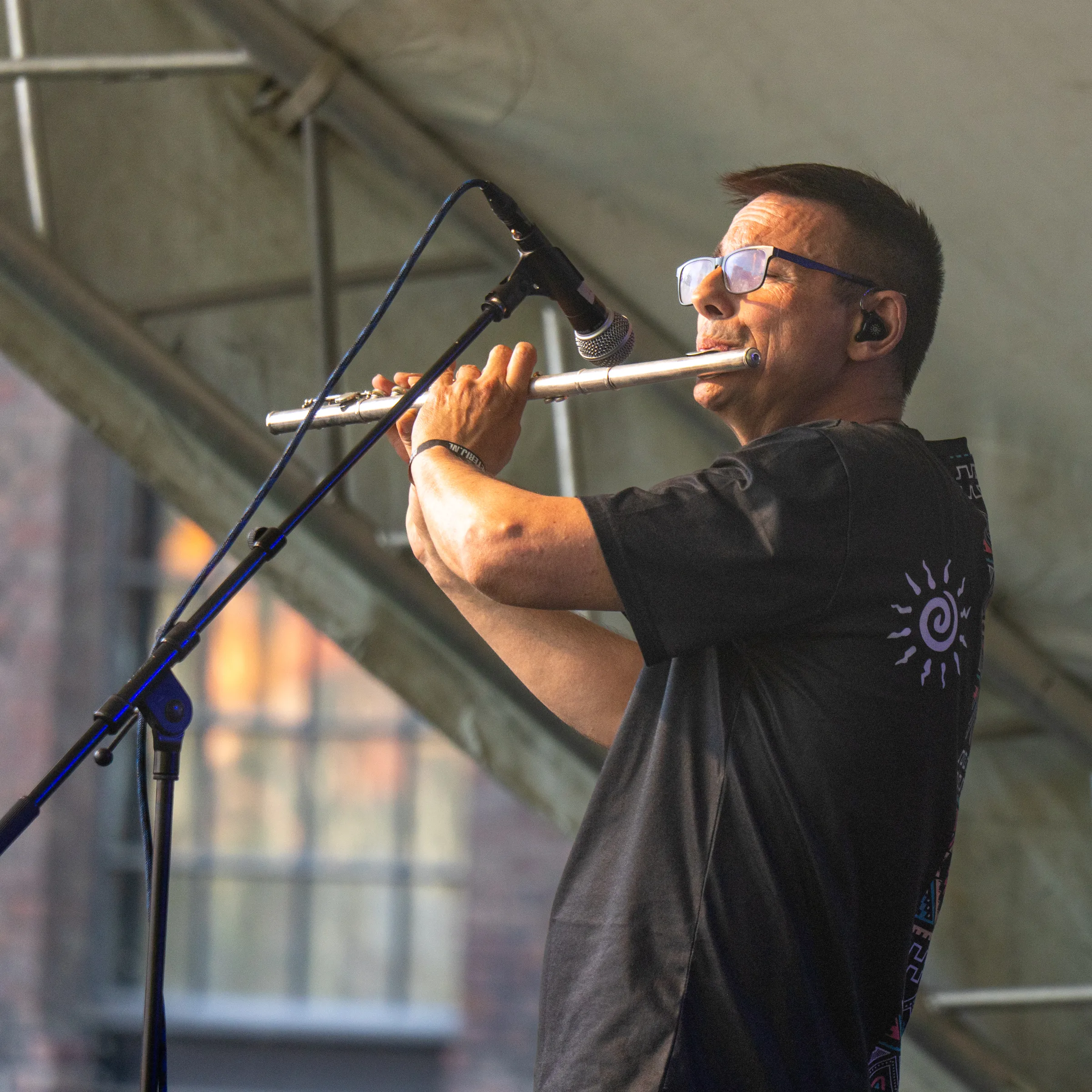
Jacek Zasada displayed the same quiet intensity. Frequently closing his eyes as his flute floated effortlessly above the music, he embodied Quidam’s lyrical heart. Behind him, Zbyszek Florek calmly continued weaving the warm keyboard textures that define the band’s unmistakable sound. Meanwhile, the rhythm section held everything together flawlessly without ever demanding attention. The entire band radiated experience, confidence and complete trust in one another.
The audience responded in exactly the same spirit. There was no festival frenzy—only attentive listening. Every instrumental climax was rewarded with heartfelt applause, as though the audience needed a moment to absorb what they had just experienced.
Quidam proved in Maastricht that truly great progressive rock does not require spectacle. Its strength still lies in outstanding compositions, subtle arrangements and musicians who consistently place the music above their own egos.
And the story is clearly far from over. This autumn Quidam will embark on an extensive 35th Anniversary Tour across Poland, featuring former vocalist Emilia Nazaruk and none other than Colin Bass of Camel as a special guest. It is already one of the tours I am looking forward to the most. But Midsummer Prog still had another chapter in its Polish story waiting to unfold. On Sunday, Amarok would take the stage. After Quidam’s remarkable return, expectations had become exceptionally high. Fortunately, those expectations would not be disappointed.
My thanks to Ela Williamson for her valuable insights and support in preparing this review.







 We’re a group of Prog-lovers who started a journey to share with you our thoughts about albums, concerts, tours and festivals, the photo galleries of the Prog concerts we visit, as well interviews with upcoming or established musicians or prog-related people. Follow our Facebook page for frequent updates and news around the Progniverse.